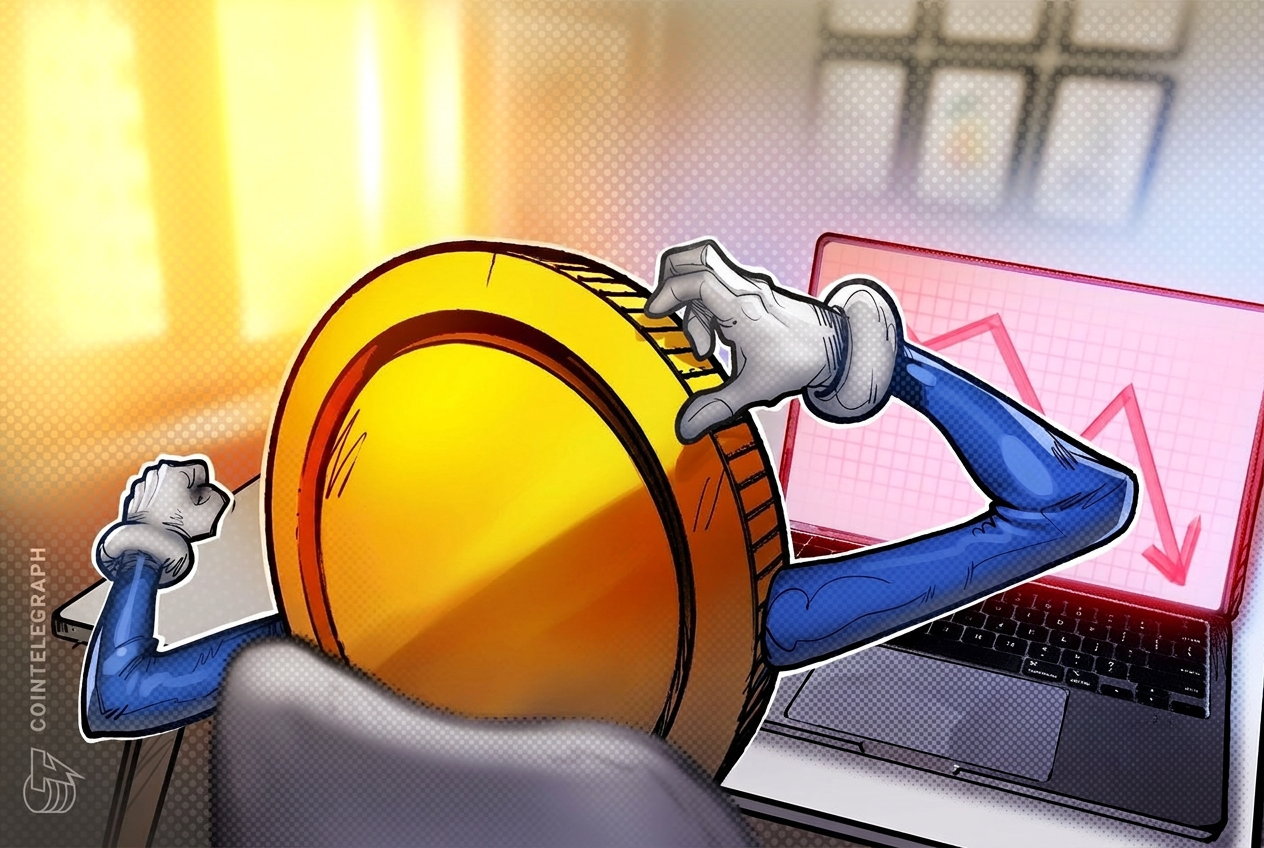
Stablecoins Are Becoming a Bank Run Risk — and Banks Know It

ccn.comPublicado em 2026-02-01Última atualização em 2026-02-01

Resumo

Stablecoins, initially designed as digital dollar equivalents, are now seen as a potential risk for bank runs, prompting regulatory and market responses. In Washington, policymakers are debating legislation that could restrict features like rewards to prevent stablecoins from becoming deposit alternatives, which banks fear could drain hundreds of billions from their funding base. Meanwhile, stablecoins are increasingly used as payment infrastructure, with major firms like Visa and Stripe integrating them into settlement systems. The core conflict revolves around whether stablecoins should remain payment tools or evolve into deposit-like products, balancing innovation against financial stability concerns. Global jurisdictions like the EU and Hong Kong are already implementing regulatory frameworks, increasing pressure on the U.S. to act.

Stablecoins, digital assets designed to track the United States dollar, were supposed to be boring.

A dollar token. A digital cashier’s check. A way to move money without taking a view on the price of Bitcoin (BTC).

Now they are being treated as something else entirely: a live test of who gets to “own” dollars in motion, and whether banks can keep deposits from leaking out of the system.

That tension is showing up in two places at once.

In Washington, stablecoin policy has become a legislative traffic jam, with the White House reportedly convening senior banking and crypto executives to find a path forward on crypto market structure.

In markets, stablecoins are behaving less like a crypto niche and more like payments infrastructure, as major financial and fintech firms put stablecoin settlement and stablecoin payments into production tooling.

The fight looks technical—licensing, reserves, redemption rights, disclosure. The emotional core is not technical at all.

It is deposits.

Try Our Recommended Crypto Exchanges
Sponsored
Disclosure
We sometimes use affiliate links in our content, when clicking on those we might receive a commission at no extra cost to you. By using this website you agree to our terms and conditions and privacy policy.
"}' data-trk="67adf8d4f12aaec7e4808bf5" href="https://links.ccn.com/links?code=693291aa4a5bcb62319448b2" rel="nofollow" target="_blank">
Bitget<\/h3>"}' data-trk="67adf8d4f12aaec7e4808bf5" href="https://links.ccn.com/links?code=693291aa4a5bcb62319448b2" rel="nofollow" target="_blank">

Bitget

promotions
New user rewards up to 6,200 USDT.<\/strong>"}' data-trk="67adf8d4f12aaec7e4808bf5" href="https://links.ccn.com/links?code=693291aa4a5bcb62319448b2" rel="nofollow" target="_blank"> New user rewards up to 6,200 USDT.
Coins
88
Claim Offer
"}' data-trk="6899b9831836d97539c51aa6" href="https://links.ccn.com/links?code=693293fa4a5bcb6231949c97" rel="nofollow" target="_blank">
Bitunix<\/h3>"}' data-trk="6899b9831836d97539c51aa6" href="https://links.ccn.com/links?code=693293fa4a5bcb6231949c97" rel="nofollow" target="_blank">

Bitunix

promotions
Receive up to $100,000 worth of exclusive gifts for newcomers upon registration.<\/strong>"}' data-trk="6899b9831836d97539c51aa6" href="https://links.ccn.com/links?code=693293fa4a5bcb6231949c97" rel="nofollow" target="_blank"> Receive up to $100,000 worth of exclusive gifts for newcomers upon registration.
Coins
151
Claim Offer
"}' data-trk="68f8c175c334f42ea614a1a4" href="https://links.ccn.com/links?code=693294144a5bcb623194a054" rel="nofollow" target="_blank">
BTCC<\/h3>"}' data-trk="68f8c175c334f42ea614a1a4" href="https://links.ccn.com/links?code=693294144a5bcb623194a054" rel="nofollow" target="_blank">

BTCC

promotions
Get up to 10,055 USDT when you register, verify, and make the first deposit and the first trades.<\/strong>"}' data-trk="68f8c175c334f42ea614a1a4" href="https://links.ccn.com/links?code=693294144a5bcb623194a054" rel="nofollow" target="_blank"> Get up to 10,055 USDT when you register, verify, and make the first deposit and the first trades.
Coins
162
Claim Offer
Explore All Offers

Washington Tries To Break the Stablecoin Logjam

The immediate hook is political: Reuters reported the White House is set to meet with executives from major banks and crypto firms as lawmakers attempt to revive a market-structure bill that has bogged down amid open conflict between the two sectors.

The argument is about what stablecoins are allowed to become.

Banks have pushed for hard constraints on anything that makes a stablecoin feel like a better bank account, especially “rewards,” a loose category that can include issuer-paid interest, platform incentives, or yield passed through from third parties.

Crypto firms, by contrast, see restrictions on rewards as protectionism dressed up as stability policy.

In other words, the U.S. is trying to decide whether stablecoins stay in the payments lane, or graduate into a deposit-like product at scale.

Why “Rewards” Are a Red Line for Banks

Banks are not being subtle about the threat model.

A stablecoin that pays something—even indirectly—starts to compete with deposits on the feature most consumers actually care about: “Why should my dollars sit here instead of there?”

Deposits are not just a customer relationship. They are a core funding base. Banks use them to finance lending and to manage liquidity.

If deposits migrate into stablecoins, banks either shrink their balance sheets or pay up to keep customers, both of which can tighten credit and raise funding costs.

Standard Chartered put a number on the scenario in a Reuters-cited note: stablecoins could pull around $500 billion from U.S. bank deposits by the end of 2028, with regional banks most exposed.

The point is not that the figure is destiny. It is that the industry now has a “bank run” narrative with a plausible magnitude attached to it.

Rewards matter because they change behavior. A zero-yield token is easier to frame as a payments tool. A token with incentives starts to look like a money-market substitute that happens to settle 24/7.

A Bank Run, but in One Click

Traditional bank runs are slow until they are not. Stablecoin runs are designed to be fast from the start.

If users decide they would rather hold tokenized dollars than bank deposits, they do not need a branch, a wire, or business hours.

They can convert and move value instantly, any time of day, often inside the same app they already use to trade or pay.

That is the stability anxiety: not simply that money can leave, but that it can leave all at once, in a single interface, with almost no friction.

This is also why reserve composition and redemption mechanics keep returning to the center of policy debates.

A stablecoin’s promise is simple—“$1 in, $1 out”—but keeping that promise under stress depends on how liquid the reserves really are, and how quickly redemptions can be honored.

Research has also started to quantify spillovers.

A 2025 BIS working paper found stablecoin flows can move short-term U.S. Treasury yields, with outflows producing larger yield effects than inflows—an asymmetry that matters in a stress event.

Stablecoins Are Also Becoming a Payments Network

Stablecoins are scaling as settlement rails.

A Bitget Wallet onchain finance report said stablecoins processed roughly $33 trillion in on-chain settlement while total supply grew more than 50% to about $308 billion.

It frames the growth as a post-clarity wave, with regulatory frameworks rolling out across the U.S., EU, and Hong Kong, and it points to a shift in usage.

USDC is overtaking USDT in annual transaction volume, a sign the flow mix is trending toward institutional and B2B settlement rather than retail trading.

Even if you discount headline numbers, the direction is hard to miss: stablecoins are no longer “crypto plumbing.” They are increasingly payments plumbing.

That dual identity is why the policy fight is so sharp.

If stablecoins are a settlement network, policymakers worry about oversight, consumer protection, and illicit finance controls.

If stablecoins are also a deposit alternative, policymakers worry about bank funding, credit creation, and run dynamics.

Both can be true.

Payment Giants Are Quietly Building the Rails

The most consequential adoption stories are not always the loudest. They are the integrations that make stablecoins disappear behind familiar payment experiences.

Visa has been expanding stablecoin settlement, including a push to bring stablecoin settlement capabilities into the U.S. and a broader effort to position stablecoins inside institutional payments workflows.

Stripe, meanwhile, has been rolling out stablecoin payment capabilities, including support aimed at recurring or subscription-style payments, starting with USDC-based flows in initial implementations.

This is what scares banks in a slower, more structural way. A consumer does not need to “adopt crypto” for stablecoins to drain deposits.

They just need a wallet or a checkout flow that makes stablecoin settlement feel like a better version of what they already do.

When stablecoins become the invisible settlement layer, “crypto adoption” turns into “payments modernization,” and the center of gravity shifts.

Stablecoin Regulation Is Getting Clearer Elsewhere

The U.S. is not legislating in a vacuum.

Other jurisdictions have moved ahead with stablecoin regimes that set baselines for reserves, licensing, governance, and disclosure.

  • In the EU, the Markets in Crypto-Assets Regulation (MiCA) phased rollout made stablecoin-related rules applicable before the broader crypto service-provider framework, pushing issuers toward more formal compliance expectations.
  • In Hong Kong, the Hong Kong Monetary Authority (HKMA) describes a licensing regime for fiat-referenced stablecoin issuers under the Stablecoins Ordinance, implemented from Aug. 1, 2025.
  • Global standard setters have also been explicit. The Financial Stability Board’s high-level recommendations call for consistent regulation and oversight of global stablecoin arrangements, specifically because of the financial stability risk they can pose at scale.

That global momentum matters for U.S. politics.

Crypto firms can argue, credibly, that if the U.S. blocks product features too aggressively, activity will route around it.

Banks can argue, credibly, that if the U.S. allows deposit-like stablecoins without bank-grade oversight, it invites instability.

The Real Question: Who Earns the Spread on Digital Dollars?

Underneath the slogans is a very old fight in a very new outfit: who earns the economics of money?

Banks earn on the spread between what deposits cost them and what loans or assets return.

Stablecoin issuers earn on the return from reserves (often Treasuries) net of operational costs, and sometimes share economics with platforms that distribute the coins.

At scale, that is not a side business. It is a parallel model for capturing monetary plumbing profits.

That is why banks keep returning to the same line: stablecoins should not become deposit substitutes without deposit-like regulation.

That is also why crypto firms keep returning to their line: stablecoins are an upgrade to payments and should not be kneecapped to protect incumbents.

What To Watch Next

Three practical signals matter more than rhetoric:

  • How “rewards” gets defined. A narrow ban can be sidestepped via third-party incentives. A broad ban may push activity offshore or into less transparent structures.
  • Reserve and redemption standards. In stress, the mechanics matter more than the marketing.
  • Whether stablecoin settlement becomes normal business infrastructure. Visa and Stripe moving from pilots to repeatable tooling is not about hype—it is about habit formation in payments.

Stablecoins are not just “crypto money.” They are a redesign of how dollars move, and a contest over whether bank deposits remain the default place those dollars live.

And banks, very clearly, are acting like they know it.

Perguntas relacionadas

QWhy are stablecoins considered a bank run risk according to the article?

AStablecoins are considered a bank run risk because they can facilitate the rapid and frictionless movement of funds out of traditional bank deposits. If users decide to hold tokenized dollars instead of bank deposits, they can convert and move value instantly, 24/7, potentially causing a large-scale, rapid withdrawal of deposits that could tighten credit and raise funding costs for banks.

QWhat is the core emotional and non-technical issue at the heart of the stablecoin policy debate in Washington?

AThe core emotional and non-technical issue is deposits. The debate is fundamentally about who gets to 'own' dollars in motion and whether banks can prevent deposits from leaking out of the traditional banking system into stablecoins.

QHow do 'rewards' for stablecoin holders pose a threat to traditional banks?

ARewards, which can include issuer-paid interest or platform incentives, make stablecoins compete directly with bank deposits on a key feature consumers care about: earning a return. This can incentivize users to move their money out of bank accounts and into stablecoins, eroding the core funding base that banks use for lending and liquidity management.

QWhat major financial companies are integrating stablecoins into their payment systems, as mentioned in the article?

AVisa and Stripe are major financial companies integrating stablecoins. Visa is expanding stablecoin settlement capabilities for institutional payments, while Stripe is rolling out stablecoin payment features, including support for recurring subscriptions, starting with USDC.

QAccording to the article, what is the estimated potential impact on U.S. bank deposits from stablecoins by 2028?

AAccording to a note from Standard Chartered cited in the article, stablecoins could pull around $500 billion from U.S. bank deposits by the end of 2028, with regional banks being the most exposed to this risk.

Leituras Relacionadas

$292 Million KelpDAO Cross-Chain Bridge Hack: Who Should Foot the Bill?

On April 18, 2026, an attacker stole 116,500 rsETH (worth ~$292M) from KelpDAO’s cross-chain bridge in 46 minutes—the largest DeFi exploit of 2026. The stolen assets were deposited into Aave V3 as collateral, causing $177–200M in bad debt and triggering a cascade of losses across nine DeFi protocols. Aave’s TVL dropped by ~$6B overnight. This legal analysis argues that KelpDAO and LayerZero Labs share concurrent liability, with fault apportioned 60%/40%. KelpDAO negligently configured its bridge with a 1-of-1 decentralized verifier network (DVN)—a single point of failure—despite LayerZero’s explicit recommendation of a 2-of-3 setup. LayerZero, which operated the compromised DVN, failed to secure its RPC infrastructure against a known poisoning attack vector. Both protocols’ terms of service cap liability at $200 (KelpDAO) or $50 (LayerZero), but these limits are likely unenforceable due to unconscionability, gross negligence exceptions, and potential securities law invalidation (if rsETH is deemed a security under the Howey test). Aave’s governance also faces fiduciary duty claims for raising rsETH’s loan-to-value ratio to 93%—far above competitors’ 72–75%—without adequately assessing bridge risks, amplifying the systemic fallout. Practical recovery targets include LayerZero Labs (a registered Canadian entity), KelpDAO’s founders, auditors, and identifiable Aave governance delegates. The incident underscores escalating legal risks for DeFi protocols, infrastructure providers, and governance participants.

marsbitHá 37m

$292 Million KelpDAO Cross-Chain Bridge Hack: Who Should Foot the Bill?

marsbitHá 37m

Insider Trading in War: 5 People Involved, the Highest Earner Was Arrested

On April 24, the U.S. Department of Justice arrested U.S. Army Special Forces Staff Sergeant Gannon Ken Van Dyke for insider trading related to the capture of Venezuelan President Nicolás Maduro on January 3. Van Dyke allegedly profited over $400,000 by placing bets on a prediction market, Polymarket, using insider knowledge of the covert operation. According to the indictment, Van Dyke registered an account (0x31a5) on December 26 and made a series of bets predicting Maduro’s capture and U.S. military involvement in Venezuela. He withdrew most of his funds on the day of the operation and attempted to obscure his tracks by transferring assets through crypto and brokerage accounts. This case marks the first time the DOJ has prosecuted insider trading on Polymarket. PolyBeats had previously identified five suspicious accounts, including Van Dyke’s—the highest earner—in January. The other accounts, with profits ranging from $34,000 to $145,000, remain under unofficial scrutiny but have not been charged. Their lower profits, indirect access to information, and unclear legal boundaries may complicate prosecution. Polymarket has since strengthened its market integrity rules, explicitly prohibiting trading based on confidential or insider information. Van Dyke’s arrest, nearly four months after his trades, signals increased regulatory attention and the persistent traceability of blockchain-based transactions.

marsbitHá 39m

Insider Trading in War: 5 People Involved, the Highest Earner Was Arrested

marsbitHá 39m

Bitwise: Bullish on Bitcoin's Performance in the Second Half of the Year, AI and Regulation Will Spark a New Altcoin Season

Bitwise CIO Matt Hougan and Research Lead Ryan Rasmussen express strong bullish sentiment on Bitcoin's long-term prospects, suggesting that its $1 million price target may be too conservative. They argue Bitcoin serves a dual role: as digital gold and a potential global settlement asset, especially amid declining trust in traditional monetary systems. Despite a weak Q1 2026 where nearly all crypto assets and prices saw double-digit declines, the analysts remain optimistic due to strong forward-looking catalysts, including institutional adoption via Bitcoin ETFs from major firms like Morgan Stanley and Goldman Sachs. Geopolitical instability, such as Iran’s mention of using Bitcoin for international payments, increases the value of Bitcoin’s “out-of-the-money call option” as a non-political, global settlement currency. This enhances its appeal beyond a mere store of value. . Additionally, Hougan highlights that a clearer regulatory token framework under current SEC leadership, combined with AI efficiency gains and high-performance blockchains, could fuel a new “altseason” by late 2026. This may lead to a wave of legitimate, value-capturing token projects, unlike the earlier ICO boom. . Bitwise also announced an Avalanche ETF, citing its unique architecture and rapid growth in real-world asset (RWA) tokenization, which has surged 10x to nearly $30 billion in two years. The firm believes Layer 1 blockchains are still early in their growth cycle, with significant potential ahead.

marsbitHá 1h

Bitwise: Bullish on Bitcoin's Performance in the Second Half of the Year, AI and Regulation Will Spark a New Altcoin Season

marsbitHá 1h

Trading

Spot
Futuros

Artigos em Destaque

O que é $BANK

Bank AI: Um Passo Revolucionário no Futuro da Banca Introdução Em uma era marcada por avanços rápidos na tecnologia, o Bank AI está na interseção da inteligência artificial (IA) e dos serviços bancários. Este projeto inovador visa redefinir o panorama financeiro, melhorando a eficiência operacional, as medidas de segurança e as experiências dos clientes através do poder da IA. Ao embarcarmos nesta exploração do Bank AI, iremos aprofundar no que o projeto implica, suas dinâmicas operacionais, seu contexto histórico e marcos significativos. O que é o Bank AI? No seu cerne, o Bank AI representa uma iniciativa transformadora com o objetivo de integrar a inteligência artificial em várias operações bancárias. Este projeto aproveita as capacidades da IA para automatizar processos, melhorar os protocolos de gestão de risco e melhorar a interação com os clientes através de serviços personalizados. Os principais objetivos do Bank AI incluem: Automatização das Funções Bancárias: Ao aproveitar as tecnologias de IA, o Bank AI visa automatizar tarefas rotineiras, reduzindo o peso sobre os recursos humanos e aumentando a eficiência. Gestão de Risco Melhorada: O projeto utiliza algoritmos de IA para prever e identificar riscos, fortalecendo assim as medidas de segurança contra fraudes e outras ameaças. Personalização dos Serviços Bancários: O Bank AI foca em oferecer produtos e serviços financeiros ajustados, analisando dados e comportamentos dos clientes. Melhoria da Experiência do Cliente: A implementação de soluções impulsionadas por IA, como chatbots e assistentes virtuais, visa proporcionar aos usuários interações mais humanizadas, revolucionando a forma como os clientes se envolvem com os bancos. Com esses objetivos, o Bank AI posiciona-se como um ator crucial para tornar a banca mais eficiente, segura e centrada no usuário. Quem é o Criador do Bank AI? Os detalhes sobre o criador do Bank AI permanecem desconhecidos. Assim, nenhuma pessoa ou organização específica foi identificada nas informações disponíveis. O anonimato que cerca a origem do projeto levanta questões, mas não diminui a sua ambiciosa visão e objetivos. Quem são os Investidores do Bank AI? Semelhante ao criador do projeto, informações específicas sobre os investidores ou organizações que apoiam o Bank AI não foram divulgadas. Sem essas informações, é difícil delinear o apoio financeiro e institucional que pode estar impulsionando o projeto para frente. No entanto, a importância de ter uma sólida base de investimento é fundamental para sustentar o desenvolvimento em um campo tão inovador. Como Funciona o Bank AI? O Bank AI opera em várias frentes inovadoras, focando em fatores únicos que o diferenciam das estruturas bancárias tradicionais. Abaixo estão as principais características operacionais: Automatização: Ao aplicar algoritmos de aprendizado de máquina, o Bank AI automatiza vários processos manuais dentro dos bancos. Isso resulta na redução dos custos operacionais e permite que os trabalhadores humanos redirecionem os seus esforços para atividades mais estratégicas. Gestão de Risco Avançada: A integração da IA nas práticas de gestão de risco equipa os bancos com ferramentas para prever com precisão potenciais ameaças, como fraudes, garantindo que as informações e ativos dos clientes permaneçam seguros. Recomendações Financeiras Personalizadas: Através do aprendizado contínuo a partir das interações com os clientes, os sistemas de IA desenvolvem uma compreensão sutil das necessidades dos usuários, permitindo oferecer conselhos adaptados sobre decisões financeiras. Interações Melhoradas com os Clientes: Utilizando chatbots e assistentes virtuais alimentados por IA, o Bank AI permite uma experiência de cliente mais envolvente, permitindo que os usuários tenham suas dúvidas resolvidas rapidamente, reduzindo assim os tempos de espera e melhorando os níveis de satisfação. Juntas, estas características operacionais posicionam o Bank AI como um pioneiro no setor bancário, estabelecendo novos padrões para a prestação de serviços e a excelência operacional. Cronologia do Bank AI Compreender a trajetória do Bank AI requer uma análise do seu contexto histórico. Abaixo está uma cronologia que destaca marcos e desenvolvimentos importantes: Início de 2010: A conceituação da integração da IA nos serviços bancários começou a ganhar atenção à medida que instituições bancárias reconheciam os potenciais benefícios. 2018: Ocorreu um aumento significativo na implementação de tecnologias de IA, quando os bancos começaram a usar ferramentas de IA como chatbots para atendimento ao cliente básico e sistemas de gestão de risco para melhorar o tratamento de segurança. 2023: A sofisticação da IA continuou a avançar, com a introdução de IA generativa para tarefas mais complexas, como processamento de documentos e análise de investimentos em tempo real. Este ano marcou um salto significativo nas capacidades proporcionadas aos bancos pela tecnologia de IA. 2024-Estado Atual: Neste ano, o Bank AI está em uma trajetória ascendente, com pesquisas e desenvolvimentos em andamento prontos para aprimorar ainda mais as capacidades nas operações bancárias. A exploração contínua das aplicações de IA sugere desenvolvimentos emocionantes por vir. Pontos Chave Sobre o Bank AI Integração da IA na Banca: O Bank AI foca na adoção da inteligência artificial para simplificar os processos bancários e melhorar as experiências dos usuários. Automatização e Foco em Gestão de Risco: O projeto enfatiza fortemente essas áreas, visando transferir o peso das tarefas rotineiras enquanto melhora as estruturas de segurança através de análises preditivas. Soluções Bancárias Personalizadas: Ao aproveitar os dados dos clientes, o Bank AI possibilita serviços bancários ajustados que atendem às necessidades individuais dos usuários. Compromisso com o Desenvolvimento: O Bank AI permanece comprometido com contínuas pesquisas e esforços de desenvolvimento, garantindo a sua adaptabilidade e relevância contínua à medida que a tecnologia continua a evoluir. Conclusão Em resumo, o Bank AI exemplifica um passo crucial em frente na indústria bancária, aproveitando a inteligência artificial para remodelar paradigmas operacionais, melhorar a segurança e promover a satisfação do cliente. Apesar das lacunas de informação em torno do criador e dos investidores, os objetivos claros e os mecanismos funcionais do Bank AI fornecem uma base sólida para sua evolução contínua. À medida que a tecnologia de IA continua a avançar e se fundir com o setor bancário, o Bank AI está bem posicionado para impactar significativamente o futuro dos serviços financeiros, aprimorando a maneira como entendemos e interagimos com a banca.

40 Visualizações TotaisPublicado em {updateTime}Atualizado em 2024.12.03

O que é $BANK

Como comprar BANK

Bem-vindo à HTX.com!Tornámos a compra de Lorenzo Protocol (BANK) simples e conveniente.Segue o nosso guia passo a passo para iniciar a tua jornada no mundo das criptos.Passo 1: cria a tua conta HTXUtiliza o teu e-mail ou número de telefone para te inscreveres numa conta gratuita na HTX.Desfruta de um processo de inscrição sem complicações e desbloqueia todas as funcionalidades.Obter a minha contaPasso 2: vai para Comprar Cripto e escolhe o teu método de pagamentoCartão de crédito/débito: usa o teu visa ou mastercard para comprar Lorenzo Protocol (BANK) instantaneamente.Saldo: usa os fundos da tua conta HTX para transacionar sem problemas.Terceiros: adicionamos métodos de pagamento populares, como Google Pay e Apple Pay, para aumentar a conveniência.P2P: transaciona diretamente com outros utilizadores na HTX.Mercado de balcão (OTC): oferecemos serviços personalizados e taxas de câmbio competitivas para os traders.Passo 3: armazena teu Lorenzo Protocol (BANK)Depois de comprar o teu Lorenzo Protocol (BANK), armazena-o na tua conta HTX.Alternativamente, podes enviá-lo para outro lugar através de transferência blockchain ou usá-lo para transacionar outras criptomoedas.Passo 4: transaciona Lorenzo Protocol (BANK)Transaciona facilmente Lorenzo Protocol (BANK) no mercado à vista da HTX.Acede simplesmente à tua conta, seleciona o teu par de trading, executa as tuas transações e monitoriza em tempo real.Oferecemos uma experiência de fácil utilização tanto para principiantes como para traders experientes.

364 Visualizações TotaisPublicado em {updateTime}Atualizado em 2025.05.09

Como comprar BANK

Discussões

Bem-vindo à Comunidade HTX. Aqui, pode manter-se informado sobre os mais recentes desenvolvimentos da plataforma e obter acesso a análises profissionais de mercado. As opiniões dos utilizadores sobre o preço de BANK (BANK) são apresentadas abaixo.

活动图片