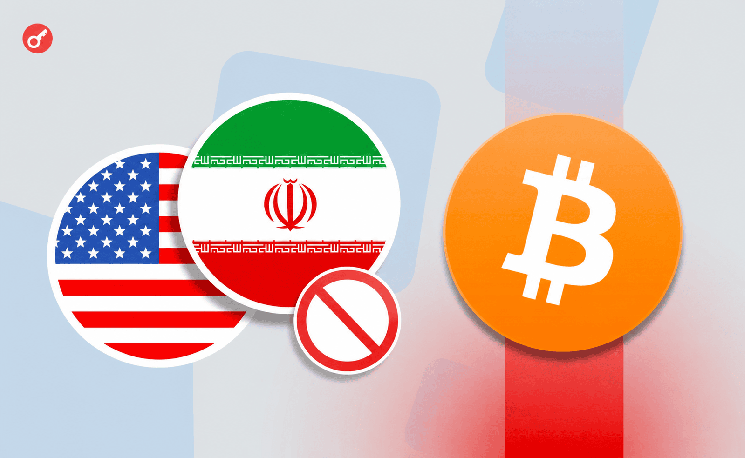
Stablecoin Yield ‘Effectively Off The Table’: White House Narrows Rewards Debate In Latest Meeting

bitcoinistPublicado em 2026-02-21Última atualização em 2026-02-21

Resumo

The White House took a more active role in the latest meeting between the crypto industry and banking sector to resolve the stablecoin yield dispute that has stalled the CLARITY Act. The meeting included representatives from Coinbase, Ripple, a16z, and crypto trade associations, while banks were represented through their industry groups. The White House presented a draft text addressing banking concerns, effectively ruling out earning yield on idle stablecoin balances. The debate now focuses on whether crypto firms can offer rewards linked to specific activities. Banking representatives argued that competitive pressures, rather than deposit flight, are their main concern. The White House also proposed anti-evasion measures, including significant penalties for violations. Further discussions are expected as both sides assess potential compromises.

The White House reportedly took the lead during the latest Crypto Council meeting, narrowing the stablecoin rewards dispute that has delayed progress in the long-awaited crypto market structure bill.

White House Steps In On CLARITY Act Dispute

On Thursday, the White House held another meeting between the crypto industry and the banking sector to negotiate the stablecoin yield dispute that has stalled the crypto market structure bill, known as the CLARITY Act, over the past month.

According to a report from journalist Eleanor Terret, the meeting was smaller than previous ones, with only a few representatives from each side. From the crypto sector, participants included representatives from Coinbase, Ripple, a16z, the Blockchain Association, and Crypto Council for Innovation (CCI).

Meanwhile, no individual bank representatives attended; bank voices were represented through trade associations, such as the American Bankers Association, the Banking Policy Institute (BPI), and the Independent Community Bankers of America (ICBA).

Terret sources affirmed that there was a notable difference in yesterday’s meeting as the White House “took the lead in driving the discussion, rather than letting crypto firms and bank trades steer the discussion, as in prior meetings.”

For context, banks have heavily criticized the landmark stablecoin legislation, the GENIUS Act, due to “loopholes” that could pose risks to the financial system. The framework prohibits interest payments on the holding or use of payment-purpose stablecoins, but it only addresses issuers.

The banking side argues that allowing issuers and platforms to offer interest payments on stablecoins could distort market dynamics and affect credit creation in the country, hurting small- and medium-sized financial institutions in the sector.

To address these concerns, banking associations across the US urged senators to include language in the CLARITY Act that also bans digital asset exchanges, brokers, dealers, and related entities from offering yield on stablecoins.

The Senate Banking Committee’s draft proposed that issuers offer rewards for specific actions, such as account openings and cashback. However, it also prohibited issuers from providing interest payments to passive token holders.

The crypto side criticized the proposed measures, with some industry leaders publicly opposing the draft and withdrawing their support. As a result, a markup session on the Senate Banking Committee’s portion of the bill has been delayed.

Stablecoin Yield Out Of The Picture

At the Thursday meeting, Patrick Witt, executive director of the US President’s Council of Advisors on Digital Assets, reportedly brought a draft text that served as the anchor for the discussion. Sources in the room told Terret that the draft’s language acknowledged banks’ concerns raised in last week’s “Yield and Interest Prohibitions Principles” document.

Based on this, “earning yield on idle balances (...) is effectively off the table,” the journalist affirmed. The draft also clarified that any future restrictions on rewards would be narrow in scope. Therefore, the debate has now narrowed to whether crypto firms can offer rewards linked to specific activities.

An attendee from the crypto industry side reportedly said that banks’ concerns “appear to stem more from competitive pressures than from deposit flight.” Meanwhile, someone from the banking industry told Terret that they are still pushing to include a study examining the growth of payment stablecoins and their potential impact on bank deposits in the draft.

They also noted that the White House proposed anti-evasion language. The measure would give the Securities and Exchange Commission (SEC), the Commodity Futures Trading Commission (CFTC), and the Department of the Treasury authority to enforce a ban on paying yield on idle stablecoin balances, and penalties of up to $500,000 per violation, per day, against companies that breach the ban.

Now, the banking industry representatives “will brief their members on today’s discussions and gauge whether there’s room to compromise on allowing crypto firms to offer stablecoin rewards,” Terret noted, adding that some attendees believe an end-of-month deadline isn’t unrealistic as talks are set to continue in the coming days.
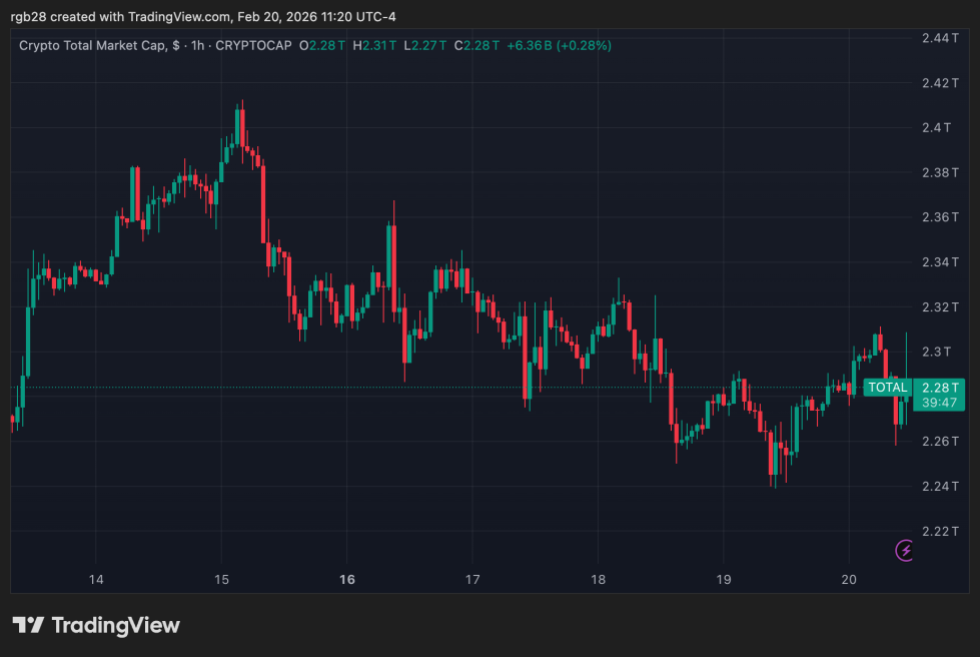
The total crypto market capitalization sits at $2.28 trillion on the one-week chart. Source: TOTAL on TradingView


Criptomoedas em alta

Perguntas relacionadas

QWhat was the main role of the White House in the latest Crypto Council meeting according to the article?

AThe White House took the lead in driving the discussion, rather than letting crypto firms and bank trades steer it as in prior meetings.

QWhich major crypto industry representatives attended the meeting?

ARepresentatives from Coinbase, Ripple, a16z, the Blockchain Association, and Crypto Council for Innovation (CCI) attended.

QWhat is the primary concern of the banking sector regarding stablecoin legislation?

ABanks argue that allowing interest payments on stablecoins could distort market dynamics, affect credit creation, and hurt small- and medium-sized financial institutions.

QWhat was the key outcome regarding 'yield on idle stablecoin balances' from the meeting?

AEarning yield on idle balances is effectively off the table, meaning it is prohibited.

QWhat enforcement measures did the White House propose for violations of the yield ban?

AThe White House proposed giving the SEC, CFTC, and Treasury the authority to enforce the ban with penalties of up to $500,000 per violation, per day.

Leituras Relacionadas

Stocks Fell Even More Violently Than Crypto, Where Did the Money Go?

From June to late July 2026, global stock markets, particularly technology and semiconductor stocks, experienced severe declines, with South Korea's KOSPI index facing historic circuit breakers and shedding 40% from its June peak. Key catalysts included SK Hynix's earnings miss despite record profits and competitive pressures from China's CXMT IPO. A global forced deleveraging event unfolded, devastating highly leveraged instruments like the 2x leveraged SK Hynix ETF, which lost over 80% of its value. Surprisingly, Bitcoin showed relative stability during this period, rising roughly 15% from its July low. The article clarifies this wasn't due to an inflow of equity flight capital but because Bitcoin had already undergone a significant correction in May and June, with U.S. spot Bitcoin ETFs seeing record outflows. True safe-haven flows went to gold, severing Bitcoin's short-term "digital gold" narrative. The sell-off is characterized not as an AI story collapse but a liquidity-driven清算 of crowded leveraged positions, potentially halfway through according to some analysts. For substantial capital to return to Bitcoin, the article cites necessary conditions: eased global liquidity pressure, a soft-landing Fed rate cut, and regulatory clarity from the stalled U.S. CLARITY Act. The conclusion is that Bitcoin is not a current safe haven but a pre-cleared asset. Its decoupling from tech stocks highlights its potential future role as a non-correlated asset for institutional portfolios, positioning it favorably for when global capital reallocates post-crisis.

marsbitHá 45m

Stocks Fell Even More Violently Than Crypto, Where Did the Money Go?

marsbitHá 45m

"The Final Phase Before the New Cycle". What Will Happen to Bitcoin in August

"Bitcoin Faces Crucial Test in August: Experts Predict Consolidation or Further Decline" The price of Bitcoin (BTC) is expected to remain under pressure in August, with experts anticipating either consolidation within a narrow range or a potential drop below $60,000. Despite a double-digit recovery from its July low near $58,000, BTC ended the month trading around $63,500, still roughly 50% below its October 2025 peak of $126,200. Analysts cite several headwinds: a challenging macroeconomic environment with high US interest rates and persistent inflation, which makes fixed-income assets more attractive than speculative ones like crypto. Furthermore, competition for capital is intense, with many investors favoring AI-related stocks. This is reflected in significant outflows from US spot Bitcoin ETFs, with a record $4.5 billion leaving in June and a net outflow of $5.4 billion for the first half of the year. Historically, August is a weak month for crypto, with a median return of -7.49% from 2013 to 2025. Experts also note regulatory uncertainty in the US, particularly the stalled CLARITY Act, as a dampening factor. Despite the bearish near-term outlook, several experts view the current phase as the "last phase before a new Bitcoin cycle" begins, potentially in Q4 2024. This makes it a favorable time for accumulating Bitcoin for the long term. Key price levels to watch are support at $60,000-$61,000, with a break below $58,000 potentially leading to $53,000-$55,000. A move above $67,000 could target $70,000-$75,000, though this is considered a lower probability scenario.

cryptonews.ruHá 51m

"The Final Phase Before the New Cycle". What Will Happen to Bitcoin in August

cryptonews.ruHá 51m

Trading

Spot

Artigos em Destaque

Como comprar HOUSE

Bem-vindo à HTX.com!Tornámos a compra de Housecoin (HOUSE) simples e conveniente.Segue o nosso guia passo a passo para iniciar a tua jornada no mundo das criptos.Passo 1: cria a tua conta HTXUtiliza o teu e-mail ou número de telefone para te inscreveres numa conta gratuita na HTX.Desfruta de um processo de inscrição sem complicações e desbloqueia todas as funcionalidades.Obter a minha contaPasso 2: vai para Comprar Cripto e escolhe o teu método de pagamentoCartão de crédito/débito: usa o teu visa ou mastercard para comprar Housecoin (HOUSE) instantaneamente.Saldo: usa os fundos da tua conta HTX para transacionar sem problemas.Terceiros: adicionamos métodos de pagamento populares, como Google Pay e Apple Pay, para aumentar a conveniência.P2P: transaciona diretamente com outros utilizadores na HTX.Mercado de balcão (OTC): oferecemos serviços personalizados e taxas de câmbio competitivas para os traders.Passo 3: armazena teu Housecoin (HOUSE)Depois de comprar o teu Housecoin (HOUSE), armazena-o na tua conta HTX.Alternativamente, podes enviá-lo para outro lugar através de transferência blockchain ou usá-lo para transacionar outras criptomoedas.Passo 4: transaciona Housecoin (HOUSE)Transaciona facilmente Housecoin (HOUSE) no mercado à vista da HTX.Acede simplesmente à tua conta, seleciona o teu par de trading, executa as tuas transações e monitoriza em tempo real.Oferecemos uma experiência de fácil utilização tanto para principiantes como para traders experientes.

331 Visualizações TotaisPublicado em {updateTime}Atualizado em 2026.06.02

Como comprar HOUSE

Discussões

Bem-vindo à Comunidade HTX. Aqui, pode manter-se informado sobre os mais recentes desenvolvimentos da plataforma e obter acesso a análises profissionais de mercado. As opiniões dos utilizadores sobre o preço de HOUSE (HOUSE) são apresentadas abaixo.

活动图片