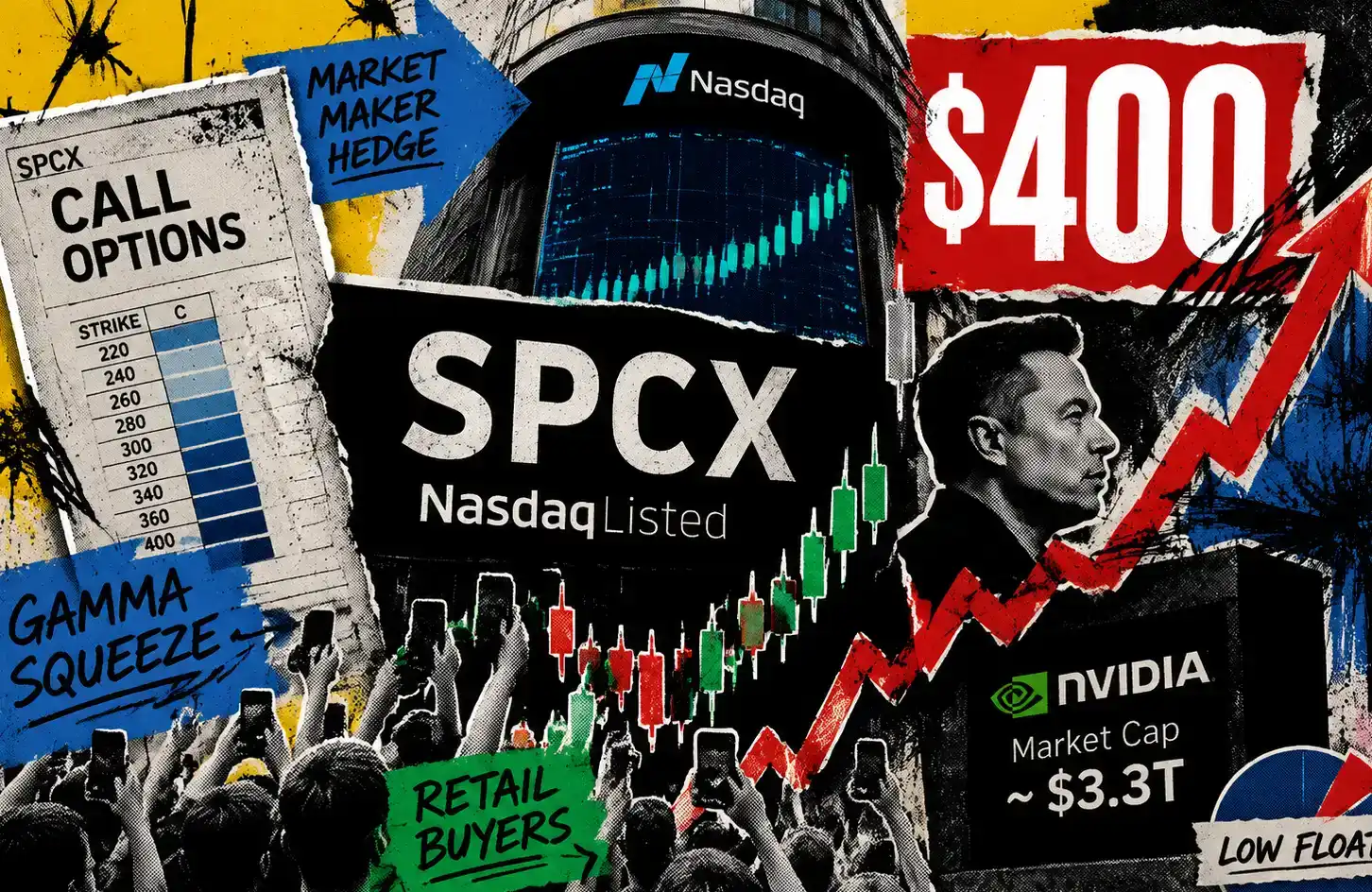
SpaceX IPO Creates Trillion-Dollar Billionaire: Musk's Wealth Equals Half of Crypto Market

Foresight NewsPublicado em 2026-06-15Última atualização em 2026-06-15

Resumo

SpaceX's record-breaking IPO has propelled Elon Musk to become the first modern billionaire with a personal net worth exceeding $1 trillion, reaching $1.11 trillion according to Bloomberg. This staggering wealth surpasses the total market capitalization of all cryptocurrencies excluding Bitcoin and equals roughly half of the entire crypto market's value. The milestone highlights extreme wealth concentration and the significant devaluation of the altcoin market, whose total cap has nearly halved since late 2025 as capital flows into large tech stocks. SpaceX's Nasdaq debut saw its valuation hit $2.2 trillion, with shares soaring from a $135 offer price to close at $161. Its first-day trading volume of $85 billion set a new global IPO record. Musk owns 42% of the company. Despite his wealth dwarfing the altcoin sector, Musk maintains deep ties to digital assets. He personally holds Bitcoin, Ethereum, and Dogecoin, while his companies, SpaceX and Tesla, collectively hold over 30,000 Bitcoin, ranking among the top corporate BTC holders globally. His acquisition and integration of financial data tools into X (formerly Twitter) further connect his ecosystem to the markets. Ultimately, Musk's trillion-dollar status underscores the immense wealth controlled by tech founders, though this fortune remains largely tied to volatile stock prices rather than liquid assets.


Author: Oluwapelumi Adejumo

Compiled by: Saoirse, Foresight News


Key Takeaways


  • After SpaceX's public listing, Elon Musk becomes the first person in modern history with a personal net worth exceeding $1 trillion.
  • His total wealth of $1.11 trillion already surpasses the total market capitalization of all cryptocurrencies excluding Bitcoin, highlighting extreme wealth concentration and the ongoing valuation contraction of altcoins.
  • This wealth milestone remains highly dependent on stock price volatility; meanwhile, several of Musk's companies hold Bitcoin, and he himself remains an active, public figure in the digital asset space.


Elon Musk has become the first person in modern history with a personal net worth exceeding the $1 trillion mark. Last week's record-breaking public listing of SpaceX propelled him past this historic wealth threshold.


According to the Bloomberg Billionaires Index, the total wealth of this tech entrepreneur now stands at $1.11 trillion.


To put the unprecedented scale of this capital into perspective: Musk's personal net worth is already higher than the total market capitalization of the global cryptocurrency market excluding Bitcoin. If the world's largest digital asset, Bitcoin, is included in the statistics, his wealth is exactly equal to half the total market capitalization of the entire crypto industry.
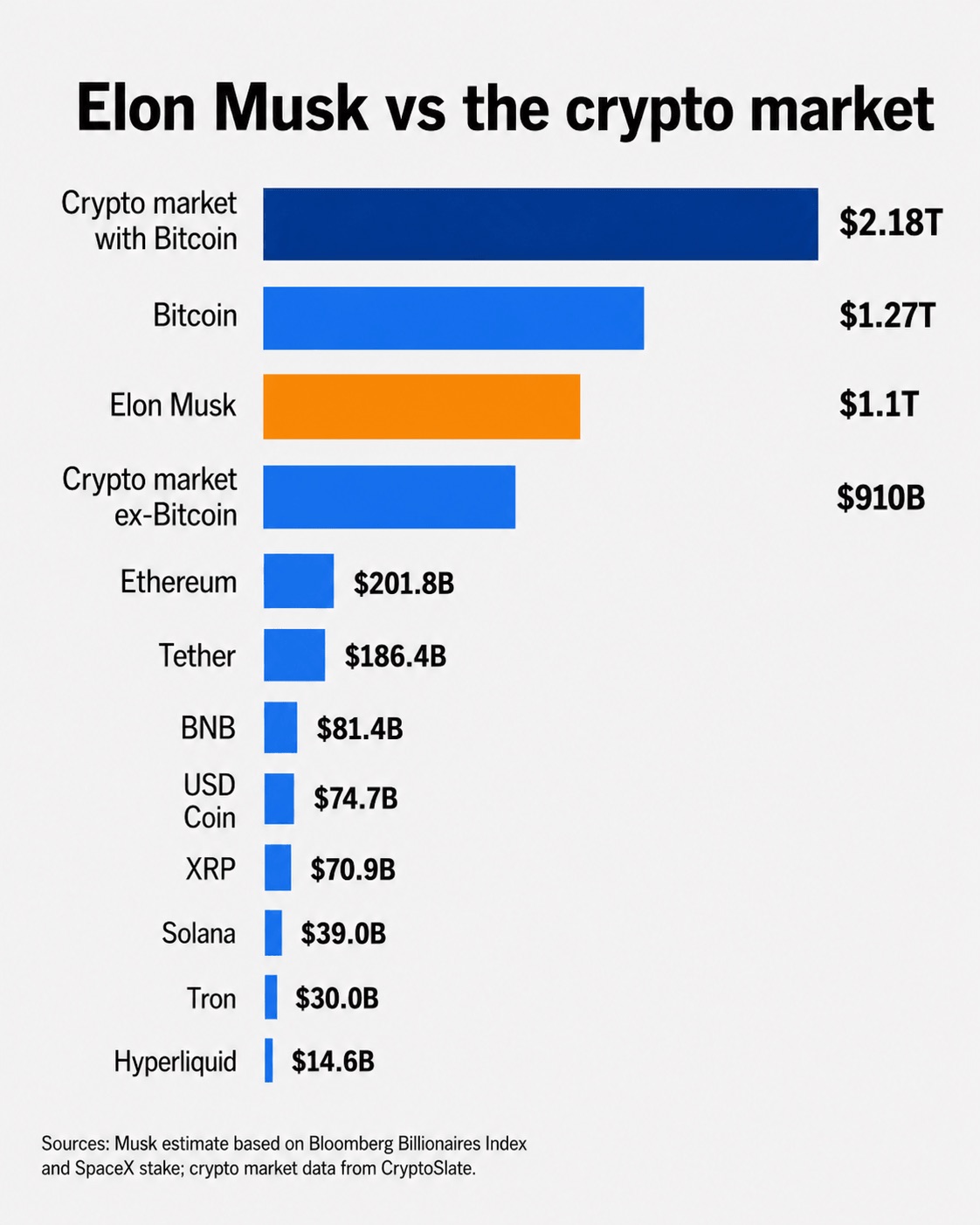


This wealth milestone quickly sparked global discussions about wealth concentration, with the scale of Musk's controlled wealth even exceeding the gross domestic product of several developed nations.


SpaceX IPO Shatters Multiple Records


The direct catalyst for Musk's wealth surge was the highly anticipated Nasdaq listing of SpaceX.


The company, which focuses on rocket development, communication services, and artificial intelligence, reached a staggering valuation of $2.2 trillion post-listing.


Underwriters initially set the offering price at $135 per share, successfully raising $75 billion before trading began.


However, market enthusiasm for the commercial space sector and Musk-related companies was unprecedented. The stock opened at $150, surged to a session high of $176.50 during the day, and ultimately closed at $161 last Friday.


Market observers noted that the stock listing brought unprecedented market liquidity.


Bloomberg ETF analyst Eric Balchunas pointed out that the stock's trading volume on its first day reached $85 billion. This figure set a new global record for single-day IPO trading volume and ranked among the top ten historical single-day trading volumes for any individual stock, surpassing Apple's highest daily trading volume over the past 40 years.
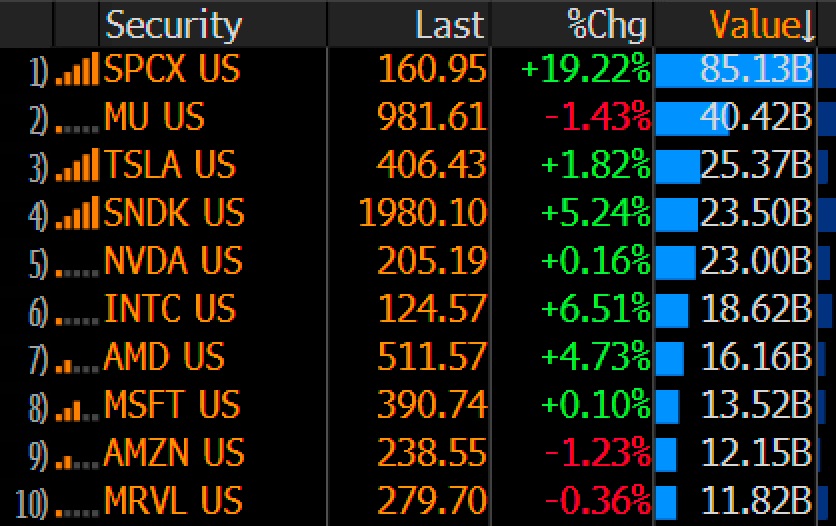

SpaceX Initial Public Offering Trading Volume (Source: Eric Balchunas)


Musk holds a 42% stake in the Hawthorne, California-based company, granting him near-unilateral voting control over its operations and strategic decisions.


Musk's Connection to Cryptocurrency


Comparing Musk's wealth scale to the digital asset market clearly reveals the significant shift in global capital allocation over the past year.


Data from the TradingView TOTAL2 index shows that the total market capitalization of all altcoins (excluding stablecoins) is approximately $880 billion. Musk's $1.11 trillion paper wealth easily surpasses this figure.


Even using the broader statistical scope of data platform CoinGecko—which puts the total global crypto market cap at about $2.27 trillion, with Bitcoin's market cap at $1.28 trillion—the combined value of all remaining altcoins after excluding Bitcoin still falls short of the personal net worth of the SpaceX CEO.


This market cap gap intuitively reflects the significant valuation contraction of mainstream altcoins compared to previous cycles. Data from Tradingview shows that in October 2025, the total market cap of crypto assets excluding Bitcoin once exceeded $1.7 trillion.
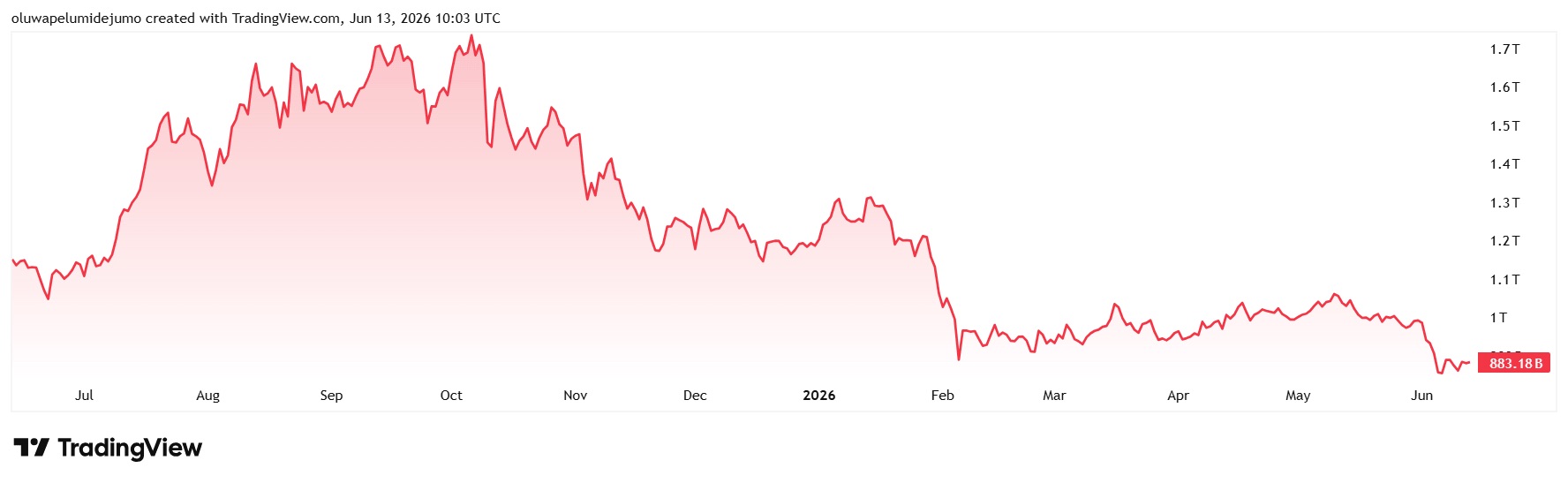

Total Cryptocurrency Market Cap Excluding Bitcoin (Source: Tradingview)


Today, that value has nearly halved. Behind this is the continued liquidity drain in the digital asset market, with institutional capital broadly exiting the crypto sector and flowing into large-cap tech stocks and artificial intelligence-related equities.


Despite his personal wealth now dwarfing the entire altcoin market, Musk remains deeply intertwined with the digital asset ecosystem, both in terms of personal holdings and corporate balance sheets.


Musk has publicly confirmed that he holds Bitcoin, Ethereum, and Dogecoin. Apart from mentioning a gift of 0.25 Bitcoin in 2018, he has never disclosed his full personal portfolio. However, several of his companies hold institutional-scale positions in the crypto market.


Post-listing regulatory filings show that SpaceX's corporate treasury holds 18,712 Bitcoin, with a market value exceeding $1.3 billion. His electric vehicle company Tesla follows a similar strategy, maintaining a long-term holding of 11,509 Bitcoin as part of its corporate liquid reserves.


If the holdings of both companies were combined, the total Bitcoin held would rank fifth globally among listed companies.
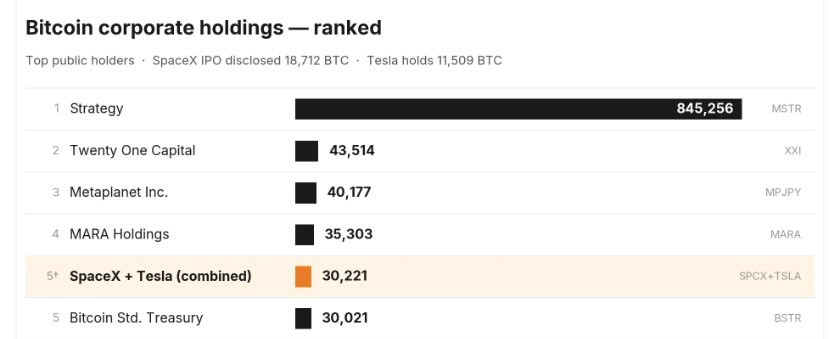

Bitcoin Holdings of SpaceX and Tesla (Source: Bitcoin Treasuries)


Furthermore, Musk's $44 billion acquisition of the social platform X (formerly Twitter) and the embedding of financial data tools within the platform have integrated financial markets directly into the public information stream. The platform's built-in cash tag function displays real-time prices for traditional stocks and various digital assets.


X's official statement clarifies that the platform serves solely as a market data tool and does not directly act as a securities broker or cryptocurrency exchange. Nonetheless, this feature further intertwines Musk's media and commercial ecosystem with the daily operations of financial markets.


Ultimately, Musk's staggering wealth scale reveals the severe concentration of private wealth within founder-controlled tech giants; it is also important to note that this trillion-dollar fortune is essentially tied to stock market prices and is not freely accessible cash assets.


Perguntas relacionadas

QWhat event made Elon Musk the first person in modern history to surpass a $1 trillion net worth?

ASpaceX's record-breaking public listing (IPO) propelled Elon Musk's net worth to over $1 trillion.

QHow does Elon Musk's current wealth compare to the total market capitalization of the cryptocurrency market excluding Bitcoin?

AElon Musk's net worth of $1.11 trillion is greater than the total market capitalization of all cryptocurrencies excluding Bitcoin, which is approximately $880 billion.

QWhich of Elon Musk's companies hold Bitcoin on their balance sheets, and what are their approximate holdings?

ABoth SpaceX and Tesla hold Bitcoin. SpaceX holds 18,712 BTC and Tesla holds 11,509 BTC, giving them a combined holding of over 30,000 BTC.

QWhat was the remarkable trading volume statistic for SpaceX's stock on its first day of public trading?

AOn its first day of public trading, SpaceX's stock reached a trading volume of $85 billion, setting a new record for IPO trading volume.

QWhat broader societal and market trend is highlighted by the comparison between Musk's wealth and the altcoin market's value?

AIt highlights both the extreme concentration of private wealth in founder-led tech giants and the significant valuation decline/contraction (nearly halved) in the altcoin market as capital has flowed towards large-cap tech and AI stocks.

Leituras Relacionadas

After Tokenization of Assets, How to Exit?

Title: How to Exit After Asset Tokenization? Author: Symbiotic Compiled by: Hu Tao, ChainCatcher Summary: Tokenization addresses how assets go on-chain but largely leaves the redemption question unresolved. While tokenized assets can settle instantly, the underlying redemption for assets like treasuries, private credit, or real estate can take from T+1 to 180 days. This gap hinders DeFi adoption of Real World Assets (RWAs). Three emerging models aim to provide instant exit liquidity, differing primarily in their capital structure and efficiency: 1. **Balance Sheet Model (e.g., Grove Basin):** A single entity (like Sky) provides immediate liquidity from its balance sheet, acting as a bridge during the settlement period. It offers simplicity and deep initial liquidity but is constrained by a single entity's capacity and risk appetite. 2. **Asset-Specific Vault Model (e.g., Upshift Clear):** Independent liquidity providers fund dedicated vaults for each supported asset, earning fees. It decentralizes capital sources but isolates liquidity and capital per asset, leading to potential fragmentation. 3. **Shared Liquidity Layer Model (e.g., Symbiotic Liquid Lane):** A shared capital pool supports multiple RWA types simultaneously. Funds remain productive between redemptions (e.g., earning yield in lending markets). Exits are settled via a competitive RFQ market. This model aims for higher capital efficiency, scalability across assets, and serves longer-duration assets like private credit. Key differentiators are: 1) Source of capital and risk bearer, 2) Redemption pricing mechanism, 3) Capital efficiency, 4) Scalability to new asset types, and 5) Composability. The shared liquidity layer model represents a move from piecemeal solutions toward scalable infrastructure, enabling T+0 exits by pooling capital, maintaining yield, and using competitive pricing, thus enhancing RWA utility in DeFi.

marsbitHá 14m

After Tokenization of Assets, How to Exit?

marsbitHá 14m

After Tokenizing Assets, How to Exit?

After tokenization, a key unresolved issue is providing holders with a reliable exit mechanism, as underlying asset settlement (taking days to months) lags far behind on-chain token settlement. Three primary models for instant liquidity have emerged, differing in their capital structure and efficiency: 1. **Balance Sheet Model (e.g., Grove Basin):** A single, well-capitalized entity (like Sky) provides immediate liquidity from its own reserves. This offers simplicity and deep initial liquidity but is constrained by that single balance sheet's capacity and risk appetite, limiting scalability. 2. **Dedicated Vault Model (e.g., Upshift Clear):** Independent liquidity providers (LPs) fund separate vaults for each supported asset. This decentralizes capital sources but isolates liquidity and capital, which becomes inefficient as the number of tokenized assets grows. 3. **Shared Liquidity Layer Model (Symbiotic Liquid Lane):** Independent capital providers fund shared vaults that can support multiple tokenized assets simultaneously. Capital remains productive between redemptions (e.g., earning yield in DeFi markets). Exits are settled via a competitive RFQ market where market makers bid. The article argues that the shared layer model offers superior capital efficiency and scalability. It transforms exit liquidity from an asset-specific patch into shared market infrastructure, allowing liquidity capacity to grow with overall market participation rather than being fragmented per asset. This is particularly valuable for longer-duration assets like private credit, where reliable T+0 exits can significantly enhance their utility in DeFi.

链捕手Há 27m

After Tokenizing Assets, How to Exit?

链捕手Há 27m

Anthropic's Triple Moment: Code Leak, Government Confrontation, and Weaponization

This article analyzes Anthropic's recent conflicts and strategic moves following the U.S. government's emergency halt of its new Fable model, citing national security concerns over potential "jailbreaks." The author argues this incident reveals deeper tensions between AI labs, governments, and the software industry. While critics view Anthropic's safety-focused rhetoric as marketing fear, the author suggests it serves as a commercial moat masking the company's core economic imperative: moving closer to end-users and their valuable data to avoid being commoditized. The piece outlines a coming clash between frontier AI labs like Anthropic and established software companies. Labs need real-world usage data for model improvement via reinforcement learning, creating a cycle where better products attract more users and more data. This threatens software firms who, as Microsoft's Satya Nadella warns, risk having their value captured by a few dominant models. Anthropic's controversial policy changes—initially secretly degrading Fable's performance for LLM development and expanding data retention—are framed as assertions of control, justified by its safety narrative. The company's foundational belief that it alone is sufficiently concerned about superintelligent AI dangers legitimizes its actions, from resisting government demands to shaping usage policies. The author concludes that this alignment of mission, talent, and business strategy is powerful but concerning, as it concentrates immense potential power in the hands of those convinced of their own righteous understanding.

marsbitHá 37m

Anthropic's Triple Moment: Code Leak, Government Confrontation, and Weaponization

marsbitHá 37m

Trading

Spot
Futuros
活动图片