South Korean card giant completes stablecoin payments pilot for foreigners

cointelegraphPublicado em 2025-12-23Última atualização em 2025-12-23

Resumo

BC Card, one of South Korea's largest payment processors, has completed a pilot project enabling foreign users to pay local merchants using stablecoins. The initiative, conducted with partners including Wavebridge and Aaron Group, allowed users to convert overseas stablecoins into digital prepaid cards. The pilot is part of BC Card's broader strategy to implement a stablecoin payment system, responding to evolving regulations in South Korea. The country is actively discussing won-based stablecoins, though regulatory progress has been delayed due to disagreements between the Financial Services Commission and the Bank of Korea. Globally, stablecoins are gaining traction as payment alternatives, with companies like YouTube and Visa adopting them for payouts and settlements.

South Korean payments processor BC Card has completed a pilot project that enabled foreign users to pay local merchants using stablecoins.

BC Card’s pilot project was announced Tuesday and was conducted with blockchain company Wavebridge, wallet provider Aaron group and cross-border remittance provider Global Money Express. The companies had foreign users convert their stablecoins held in overseas wallets, which were partnered with BC Card, into digital prepaid cards.

The company said this pilot was not a short-term project, but part of preparations to implement a stablecoin payment structure. The change is a response to the evolution of South Korean stablecoin regulations, it said.

BC Card is one of South Korea’s largest payment companies, which reportedly processes over 20% of South Korea’s card transactions and covers 3.4 million domestic merchants. Its majority owner is KT Corp, one of the country’s three major telecom companies.

Shehram Khattak, general counsel at Trust Wallet, told Cointelegraph:

Ultimately, banks will have to deal with legacy operations but not only from an operations perspective but also processes; the entire department will have to change how they function.”

Related: US lawmakers propose tax break for small stablecoin payments, staking rewards

South Korea takes stablecoins seriously

In late July, local media reported that credit card companies were scrambling to respond to perceived threats from stablecoins. The nation’s credit card industry reportedly formed a joint task force as local regulators opened discussions regarding the introduction of won-based stablecoins.

BC card reportedly launched an internal team dedicated to tracking trends in both the domestic and international stablecoin markets. Still, local stablecoin regulations are taking longer to take shape than anticipated.

Earlier this month, South Korea’s Financial Services Commission (FSC) failed to submit a draft proposal on stablecoin regulations by the deadline requested by the country’s ruling Democratic Party. Lawmakers said that the delay was caused by disagreements between the FSC and the Bank of Korea (BOK), the nation’s central bank.

The crux of the debate appears to be the BOK’s desire to require banks to own at least 51% of any stablecoin issuer seeking regulatory approval. Other regulators appear to be pushing towards a more diverse ecosystem.

Related: Crypto Biz: Bank stablecoins get a rulebook; Bitcoin gets a land grab

Stablecoins take on the world

Stablecoins are increasingly discussed as an alternative or complementary payment method to traditional solutions such as payment cards or bank wire transfers.

Adoption is moving quickly, with YouTube allowing US content creators to receive payouts in the dollar-pegged PayPal USD (PYUSD), earlier in December.

Meanwhile, Visa launched USD Coin (USDC) settlement services for some US-based financial institutions.
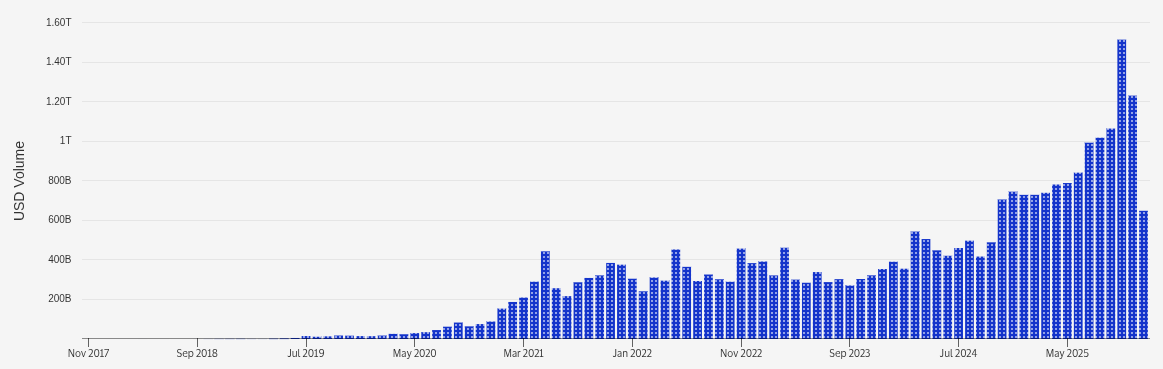
Stablecoin transaction volume. Source: VISA

Related: Galaxy predicts stablecoins will overtake ACH transaction volume in 2026

Perguntas relacionadas

QWhat is the main achievement of BC Card as reported in the article?

ABC Card has completed a pilot project that enabled foreign users to pay local South Korean merchants using stablecoins.

QWhich companies partnered with BC Card for the stablecoin payments pilot?

ABC Card conducted the pilot with blockchain company Wavebridge, wallet provider Aaron Group, and cross-border remittance provider Global Money Express.

QWhy did BC Card initiate this stablecoin pilot project according to the article?

AThe pilot was part of preparations to implement a stablecoin payment structure in response to the evolution of South Korean stablecoin regulations.

QWhat regulatory disagreement is mentioned regarding South Korea's stablecoin framework?

AThe Bank of Korea wants banks to own at least 51% of any stablecoin issuer, while other regulators prefer a more diverse ecosystem, causing delays in regulatory proposals.

QHow are stablecoin adoption trends illustrated in the article beyond South Korea?

AThe article mentions YouTube allowing US creators to receive payouts in PayPal USD (PYUSD) and Visa launching USD Coin (USDC) settlement services for some US financial institutions.

Leituras Relacionadas

Annual Salary of Millions Competing for Electricians, Meta Rushes to Open Its Own Technical School

The AI boom is facing an unexpected bottleneck: a severe shortage of skilled construction workers and electricians. As tech giants like Meta, OpenAI, and Alphabet race to build massive data centers—such as OpenAI's $16 billion "Stargate" project—they are hitting a critical labor wall. The U.S. needs an estimated 130,000 more electricians, 240,000 construction workers, and 150,000 supervisors by 2030 for AI infrastructure alone, but tens of thousands of electrician jobs go unfilled each year. While AI companies offer high premiums, with electricians earning up to $280,000 annually, worker scarcity still causes massive losses—delays on a single project can cost $14.2 million per month. The complexity of building AI data centers, which require immense power (equivalent to powering hundreds of thousands of homes), sophisticated electrical systems, and advanced liquid cooling solutions, demands highly skilled technicians who are in short supply. To combat this, companies are investing heavily in training. Meta has committed $115 million to a free training school offering tuition, housing, and stipends, targeting 5,000 new workers. OpenAI is partnering with unions to secure skilled labor. These efforts are paying off, with a significant rise in Gen Z interest in trade schools over college. However, the power demands are staggering. AI data centers are driving a rapid surge in electricity consumption, projected to account for up to 12% of U.S. power use by 2028 and raising costs for consumers. Furthermore, the construction boom is project-based, leading to a potential future glut of trained workers once building peaks, which could depress wages industry-wide. The race for AI supremacy now depends as much on skilled hands as on advanced chips.

marsbitHá 1h

Annual Salary of Millions Competing for Electricians, Meta Rushes to Open Its Own Technical School

marsbitHá 1h

OpenAI No Longer Sells Its Most Expensive Model for Profit

OpenAI is shifting its business strategy away from promoting its most expensive, flagship models for every task. Recent price cuts—80% for GPT-5.6 Luna and 20% for Terra—signal a deeper change: the company now actively advises users that many tasks don't require the most powerful model. Instead, OpenAI recommends a tiered approach: use the high-end GPT-5.6 Sol for complex planning and analysis, then delegate execution to cheaper models like Luna. This mirrors moves by Anthropic, which recently launched Claude Opus 5 at half the price of its top model, Fable 5. Both companies are de-emphasizing flagship models as primary revenue drivers, using them instead for brand prestige and technological showcases. The industry is entering a "mass-market" phase, similar to automotive, where high-volume, cost-effective models handle daily operations and drive scale. OpenAI's price reductions are partly enabled by AI models themselves optimizing underlying code and infrastructure, creating a self-reinforcing cycle of efficiency gains and cost reduction. Competition is shifting from "who is smartest" to "who offers the best value." The goal is no longer selling individual models but fostering widespread API adoption and ecosystem lock-in. By making AI calls cheap and ubiquitous, companies like OpenAI aim to become the indispensable, utility-like infrastructure powering automated workflows—the "water and electricity" of software, quietly embedded everywhere.

marsbitHá 1h

OpenAI No Longer Sells Its Most Expensive Model for Profit

marsbitHá 1h

Trading

Spot
活动图片





