South Korea Urges Crypto Circuit Breakers After $42B Bithumb Mishap

TheNewsCryptoPublicado em 2026-04-13Última atualização em 2026-04-13

Resumo

South Korea's central bank has recommended implementing cryptocurrency exchange "circuit breakers" following a major incident on Bithumb. In February, the exchange erroneously distributed 620,000 Bitcoin (worth approximately $42 billion) to customers instead of the intended 620,000 Korean won (about $400). This triggered panic selling, causing Bitcoin's price on the platform to plummet. Although Bithumb quickly halted trading and reversed the transactions, nearly $125 million in Bitcoin had already been sold. The Bank of Korea's report emphasizes that the crypto sector lacks the stringent internal controls of traditional finance and calls for mandatory systems to detect and prevent such human errors and discrepancies in asset records. This proposal is part of broader legislative moves in South Korea to enhance the security and transparency of virtual asset exchanges.

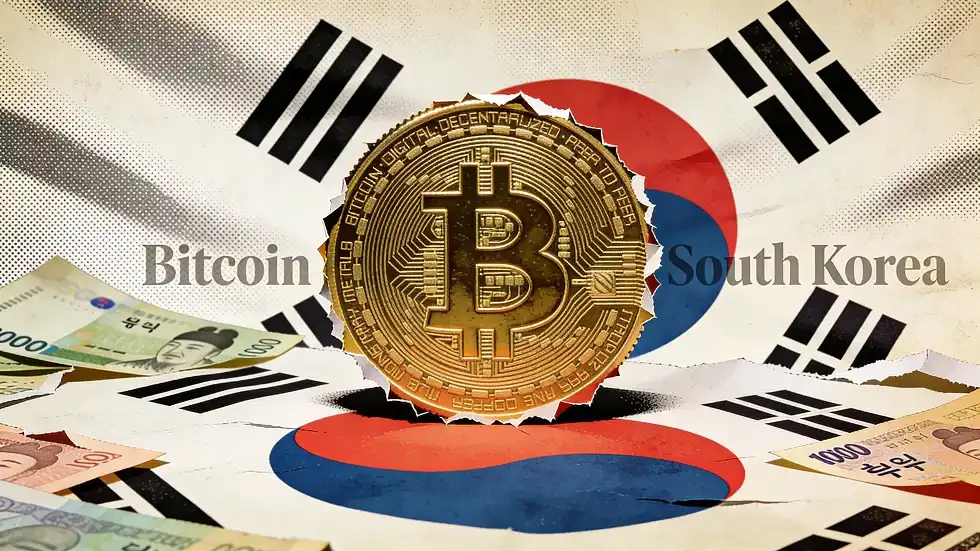
To avoid a recurrence of the market chaos that ensued in February when Bithumb accidentally delivered over $40 billion worth of Bitcoin to its clients, the South Korean central bank has suggested that cryptocurrency exchanges have “circuit breakers” that temporarily suspend trade.

In a payments report released on Monday, the Bank of Korea suggested that legislators think about implementing measures to halt trading in cryptocurrency in the event of unexpected price fluctuations, much as the trading limitations implemented by the Korea Exchange.

Stringent Protocols

According to the bank, the virtual asset sector is currently not well-regulated and does not have the same internal control procedures as more traditional financial institutions. Therefore, the research concluded, stronger applicable policies are required to proactively avoid such instances, as they may happen at other virtual asset exchanges.

This comes at a time when politicians in South Korea are trying to enact legislation that would further regulate cryptocurrency. The Bank of Korea has said that these regulations should include its recommendations to make virtual asset exchange activities more secure and transparent.

Rather than 620,000 Korean won, which was about $400, Bithumb mistakenly transferred 620,000 Bitcoin, which was valued around $42 billion at the time, to clients in early February. According to the bank’s assessment, the price of Bitcoin on Bithumb dropped as consumers hurried to sell, which in turn caused others to panic-sell, further lowering its price.

Within minutes, Bithumb stopped trading and reversed their Bitcoin transfers. However, the exchange clarified that 1,788 BTC, or almost $125 million, had already been sold before it could take any action, and it made up the difference using corporate reserves.

Crypto exchanges should be obligated to have systems that can identify and prevent human error-induced incorrect payments, according to the Bank of Korea. It went on to say that exchanges should also be able to detect and report differences between a platform’s internal assets and those on the blockchain.

Highlighted Crypto News Today:

Bitwise Accelerates Hyperliquid ETF Debut with Revised Filing

TagsAltcoinBitcoinBlockchain

Perguntas relacionadas

QWhat did the Bank of Korea propose to prevent a recurrence of the Bithumb mishap?

AThe Bank of Korea proposed that cryptocurrency exchanges implement 'circuit breakers' to temporarily suspend trade in the event of unexpected price fluctuations.

QWhat was the nature of the error that Bithumb made in February?

ABithumb accidentally transferred 620,000 Bitcoin, valued at approximately $42 billion, to its clients instead of 620,000 Korean won (about $400).

QWhat was the market impact of Bithumb's erroneous transfer?

AThe price of Bitcoin on Bithumb dropped as customers hurried to sell the mistakenly received funds, which triggered panic-selling and further drove down the price.

QAccording to the Bank of Korea, why is the virtual asset sector particularly vulnerable to such incidents?

AThe Bank of Korea stated that the virtual asset sector is not well-regulated and lacks the same internal control procedures as traditional financial institutions.

QWhat specific systems did the Bank of Korea suggest exchanges be obligated to have?

AThe Bank of Korea suggested exchanges should have systems to identify and prevent human error-induced incorrect payments, and to detect and report differences between a platform's internal assets and those on the blockchain.

Leituras Relacionadas

BIT Research: ETF Purchases Have Slowed, Strategy (MicroStrategy) Has Slowed, What Else Can Drive Bitcoin's Rise?

Market Refocus on Inflation and Rate Expectations Weighs on Bitcoin Currently, the market is in a phase of macro-repricing dominated by inflation and interest rate expectations. Bitcoin, which previously benefited from easy liquidity and low inflation, is seeing its core bullish drivers weaken. These drivers were market expectations for interest rate cuts and strong inflows from Bitcoin ETFs and institutions like MicroStrategy (referred to as "Strategy" in the text). The logic has shifted. Recent high inflation data (e.g., CPI hitting 3.8% in a May 2026 report) has caused the market to sharply reduce its rate cut expectations for 2025 and even price in potential hikes. This is a key constraint for Bitcoin, as it lacks cash flows and is highly sensitive to rate expectations. Concurrently, institutional capital flows have slowed significantly. Following the hot CPI data, Bitcoin ETFs saw accelerated outflows, with around $4.3 billion leaving over a period. MicroStrategy's ability to keep adding substantial Bitcoin to its balance sheet is also diminishing. Together, ETF and MicroStrategy holdings total roughly $110 billion, but their momentum as growth engines is cooling. In summary, Bitcoin's current pressure stems not from its own fundamentals but from a changing macro environment. As long as inflation stays elevated, Bitcoin is likely to remain in a consolidating phase. However, historically, inflation eventually peaks. Once it recedes and rate cut expectations rebuild, institutional capital could return, potentially fueling a new and more robust recovery phase for Bitcoin.

marsbitHá 6m

BIT Research: ETF Purchases Have Slowed, Strategy (MicroStrategy) Has Slowed, What Else Can Drive Bitcoin's Rise?

marsbitHá 6m

Earning 1000 Trillion in Half a Year, 'Pocketing' 20 Million per Capita: This Round of Wealth Creation in the Korean Stock Market is Unprecedented in Scale

The South Korean stock market is experiencing an unprecedented wealth surge in 2026, with household equity and fund asset values soaring by over 1,000 trillion KRW (~$730bn) year-to-date. This translates to an average per capita wealth increase of roughly 20 million KRW, fueled by a historic 109% rally in the KOSPI index. The boom is driven by three converging forces: an AI-driven semiconductor supercycle boosting giants like Samsung and SK Hynix; the government's "Value-Up" market reforms addressing long-standing corporate governance issues; and aggressive real estate regulations that have locked capital within financial markets, preventing profits from flowing back into property. This has triggered a wealth effect, boosting high-end consumption significantly. However, the gains are highly concentrated. The two semiconductor behemoths account for over half the index's value, but retail investors own relatively low stakes in them, systematically missing the biggest rallies. Wealth and consumption benefits are skewed towards luxury goods and imported cars, bypassing mainstream retail. Further risks stem from excessive leverage, with high trading volume in leveraged ETFs, and a market sentiment heavily reliant on the AI sector's fortunes and speculative rumors. While this cycle marks a potential shift from real estate to equities as a primary wealth generator for Koreans, its sustainability, amid structural imbalances and leverage, remains a critical test.

marsbitHá 12m

Earning 1000 Trillion in Half a Year, 'Pocketing' 20 Million per Capita: This Round of Wealth Creation in the Korean Stock Market is Unprecedented in Scale

marsbitHá 12m

imToken's 10th Anniversary Unveils Strategic Direction for the Next Decade: Evolving from a Trusted Main Wallet to a Personal Digital Hub

On its tenth anniversary, decentralized wallet imToken announced its strategic vision for the next decade: evolving from a "trusted main wallet" into a "personal control interface." This new direction aims to help users manage not only digital assets but also identity, permissions, and AI agent actions in an increasingly open and intelligent internet. imToken outlined that while the past decade focused on Store, Send, and Stake—securing assets, enabling transfers, and facilitating network participation—the future introduces a fourth core proposition: Sign. This expanded concept goes beyond transaction signing to encompass expressing intent, granting permissions, setting rules, delegating actions, and revoking authorizations. As AI agents gain autonomy, imToken emphasizes the need for clear, verifiable, and revocable user control over their actions. CEO Ben He stated that imToken's mission is shifting from enabling ownership of digital assets to ensuring user sovereignty over their entire digital world in the AI era. The company's core principle has been upgraded from "Digital Assets, Under Your Control" to "Your Digital World, Under Your Control." Future development will focus on three areas: upholding self-custody principles, extending security from transactions to authorizations and automated actions, and building product capabilities for managing permissions, delegations, policies, and revocations. imToken views the wallet's role as expanding into a trusted control interface for human-AI collaboration, where managing keys, signatures, and permissions forms the infrastructure for personal digital sovereignty. Founded in 2016, imToken serves millions of users across 150+ countries, providing non-custodial wallet services supporting over 50 blockchain networks.

marsbitHá 15m

imToken's 10th Anniversary Unveils Strategic Direction for the Next Decade: Evolving from a Trusted Main Wallet to a Personal Digital Hub

marsbitHá 15m

Trading

Spot
Futuros
活动图片