Silver Is Soaring, Can Tokenized Silver Amplify Leverage Further?

Odaily星球日报Publicado em 2026-01-27Última atualização em 2026-01-27

Resumo

Silver prices have surged dramatically, breaking historical records by surpassing $117 per ounce and achieving a cumulative gain of approximately 517% since 2017—outperforming both Bitcoin and gold. With a market cap of around $6.18 trillion, silver is now the second most valuable asset globally after gold. This explosive growth has increased interest in tokenized silver as an alternative investment, particularly through leveraged contracts on exchanges and perpetual decentralized platforms (Perp DEX). Currently, the tokenized silver market has a total capitalization of about $446 million. Two tokens dominate in terms of liquidity: - **Kinesis Silver (KAG)**, with a market cap of $406 million, is backed by physically allocated and audited silver, each token representing one ounce. - **iShares Silver Trust (SLV)**, with a $39.5 million market cap, is tied to BlackRock’s SLV ETF and allows instant creation/redemption for non-U.S. users. Both tokens are traded on multiple centralized exchanges, and SLV also supports futures with up to 10x leverage. For higher leverage, platforms like Hyperliquid, Binance, and Bitget offer silver perpetual contracts with up to 20x leverage. Hyperliquid’s SILVER/USDC pair alone has seen over $1 billion in 24-hour trading volume. The rally is driven by expectations of U.S. interest rate cuts, silver’s new classification as a critical mineral (raising potential tariffs), geopolitical tensions, and its role as a more accessible safe-haven...

Original|Odaily Planet Daily(@OdailyChina)

Author|Wenser(@wenser 2010)
Silver, this precious metal asset once known as "poor man's gold," is sweeping through global markets with a storm-like momentum. The reason is none other than its terrifying surge.

Recently, the price of silver once broke through $117 per ounce intraday, hitting a record high. As a result, since the peak of the 2017 crypto cycle, silver has officially surpassed Bitcoin's gains (about 500%) and gold's gains (slightly less than 300%) with a cumulative increase of approximately 517%. According to data from the 8marketcap website, the current price of silver is around $110, with a market capitalization reaching $6.18 trillion, ranking second among global assets, second only to gold. Such an astonishing trend naturally triggers a frenzy in the market. Besides buying silver funds or physical silver through traditional brokerages or offline stores, tokenized silver might also be an option, especially the leveraged contracts on exchanges and on-chain Perp DEXs.

Current State of Silver Tokens: Only 2 Targets Have Relatively Good Liquidity

According to data from the Coingecko website, the overall market capitalization of the tokenized silver sector is temporarily reported at approximately $446 million, with a 24-hour increase of about 5.6%; specifically, the silver tokens with relatively good liquidity are the following 2 types:

Kinesis Silver (KAG): Market Cap Temporarily Reported at $406 Million

Like the gold token KAU, the KAG silver token is launched by Kinesis, a British digital asset utility platform registered in the Cayman Islands. Major trading platforms include Kinesis Money, BitMart, the UAE exchange Emirex, and others.

It is understood that KAG is backed by fully insured and regularly audited vaults (globally distributed storage), with each token pegged to 1 ounce of investment-grade silver; it supports global real-time payments; supports physical silver redemption; and has no storage fees.

Its potential risks are similar to those of the Tether company, which issues the XAUT gold token. This token is highly dependent on the asset credibility of the issuer and faces certain regulatory uncertainties. Furthermore, limited by its small market capitalization, the market depth is relatively average, and market fluctuations may lead to premiums or discounts, making it more reliant on trading platforms to manage order matching.

Nevertheless, information on the Coingecko website shows that KAG's 24-hour trading volume is approximately $5.5 million, already ranking second in the silver token market by trading volume.

iShares Silver Trust(SLV): Market Cap Temporarily Reported at $39.5 Million

A silver token pegged to the iShares Silver Trust, launched by Ondo Finance, holds the corresponding physical gold through the BlackRock iShares Silver Trust (SLV) ETF.

Its advantages lie in tracking a regulated traditional SLV ETF, having good liquidity, and supporting instant minting or redemption (for users outside the US); it combines traditional finance with blockchain convenience; has institutional-level endorsement; and does not require direct handling of physical silver.

Its potential risks include: heavy reliance on the asset credibility of issuers like BlackRock and Ondo; it does not support physical silver ownership or direct redemption; includes certain ETF fund management fee costs; US users are restricted from trading, and it faces potential securities regulatory restrictions.

Main trading platforms include Gate, Bitmart, Bitget, AscendEX, and other centralized exchanges.

It is worth mentioning that SLV also supports contract trading, with leverage of up to 10x.

Coingecko website information shows that SLVON's 24-hour trading volume is approximately $21.2 million, ranking first in the silver token market by trading volume.

Apart from the two major silver tokens KAG and SLVON, the silver token Silver rStock (SLVR) launched by the Solana生态 stock tokenization platform Remora Market, and the silver token Gram Silver (GRAMS) pegged to 1 gram of silver launched by Token Teknoloji A.Ş, also belong to spot tokens, but their market capitalization and liquidity are extremely low. Compared to KAG and SLVON, their price difference from the physical silver price is larger, and participation in trading is not recommended.

Silver Leverage Trading Platforms: Hyperliquid, Binance, Bitget, and Other Exchanges

In addition to spot silver tokens, many US stock tokenization trading platforms, on-chain Perp DEXs, CEXs, and DEXs have already opened leveraged contract trading related to silver, supporting leverage of up to 20x. The following are specific trading platforms for readers' reference:

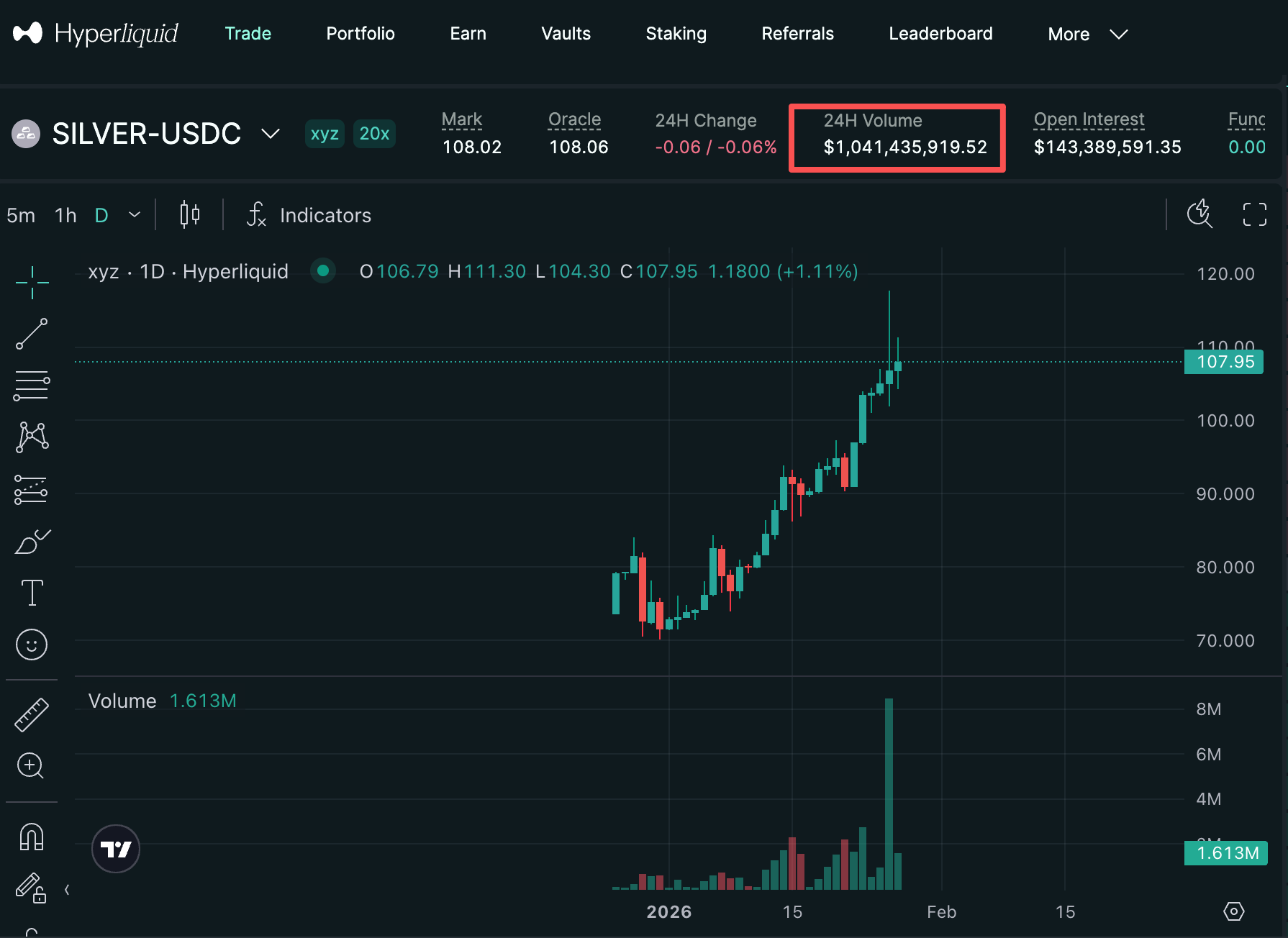
Channel One——Hyperliquid: https://app.hyperliquid.xyz/trade/xyz:SILVER, the Silver/USDC contract trading pair has a 24-hour trading volume exceeding $1 billion;
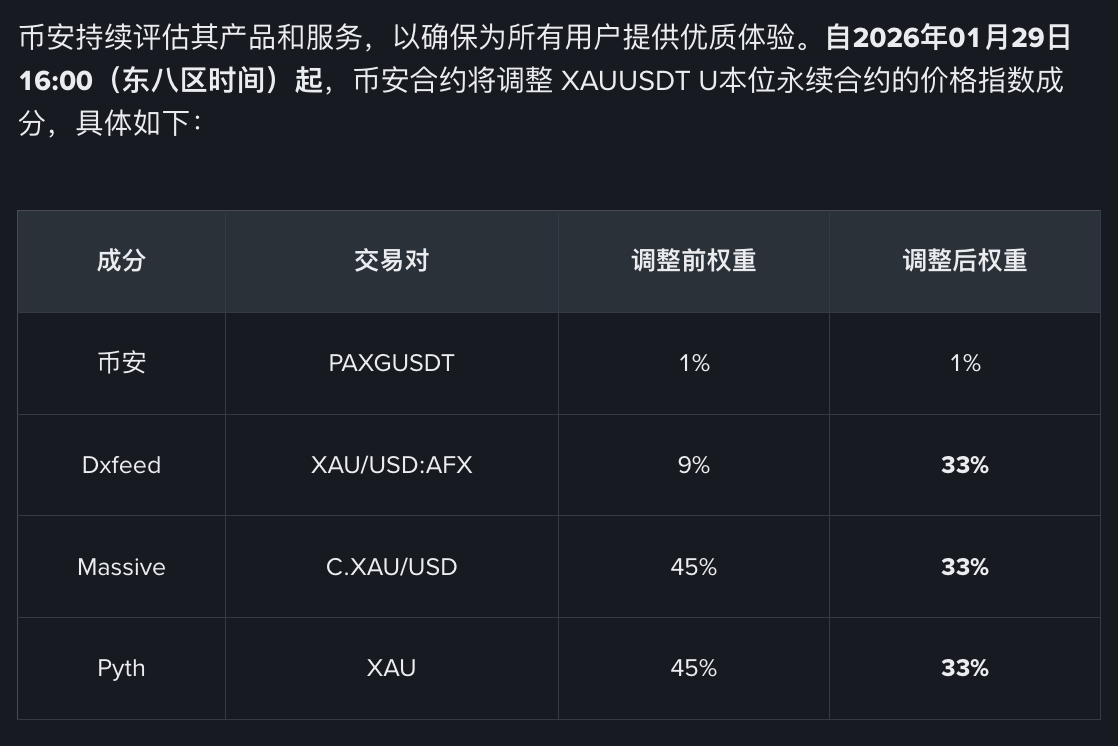
Channel Two——Binance:https://www.binance.com/zh-CN/futures/XAGUSDT, supports leveraged trading for the XAG/USDT trading pair, with leverage of up to 20x. Currently, the 24-hour trading volume is $1.32 billion. According to the official announcement, this trading pair was officially opened on January 7th; the latest news shows that Binance will change the price index composition of this contract on January 29, 2026.
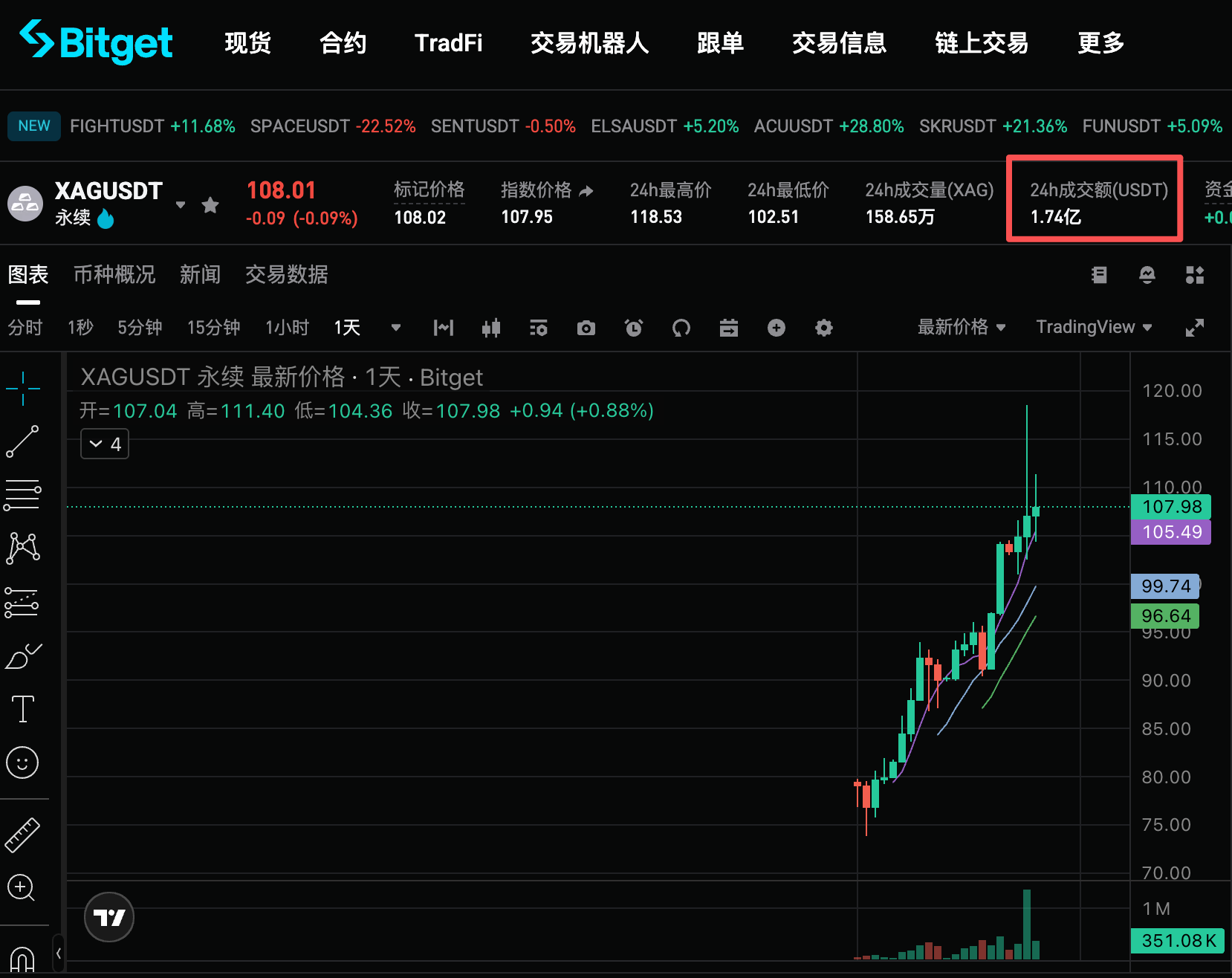
Channel Three——Bitget:https://www.bitget.site/zh-CN/futures/usdt/XAGUSDT, supports leveraged trading for the XAG/USDT trading pair, with leverage of up to 20x. Currently, the 24-hour trading volume is $174 million.
Conclusion: Trump's Hawkish Policies and Preference for Rate Cuts Will Be the Best Catalyst for Precious Metals

Looking back, Trump's rise to power, which led to tensions in the international political and economic situation, the turmoil of tariff trade wars, and his preference for Federal Reserve interest rate cuts, is the best catalyst for the rise in precious metal prices. Specifically for silver, beyond the past reasons of supply tightness and its importance as a basic raw material, risk-off assets and the US attitude are crucial.

J. Safra Sarasin strategist Claudio Wewel pointed out that the continuous surge in silver prices stems from the market's reduced expectations for US interest rate cuts and the new key mineral status that silver has acquired. The US Department of the Interior listed silver as a key mineral in November, increasing the possibility of the US imposing tariffs on this metal. He noted that this exacerbates the long-term supply tightness and prompts US importers to accelerate silver purchases. At the same time, retail investors, finding it difficult to buy gold due to its historically high prices, are turning to silver as a safe-haven asset.

In other words, the main rise in silver comes from both "scarcity" and "safe-haven nature." Combined with the recently tense situation in the Middle East again, the price peak of silver may be far from over.


Perguntas relacionadas

QWhat are the two tokenized silver assets with relatively good liquidity mentioned in the article?

AThe two tokenized silver assets with relatively good liquidity are Kinesis Silver (KAG) and iShares Silver Trust (SLV).

QWhich platform offers a silver contract with up to 20x leverage and had a 24-hour trading volume of 13.2 billion USDT?

ABinance offers the XAG/USDT perpetual contract with up to 20x leverage, which had a 24-hour trading volume of 13.2 billion USDT.

QAccording to the article, what are the two main drivers behind the recent surge in silver prices?

AThe two main drivers are its 'scarcity' due to supply tensions and its 'safe-haven' nature amid geopolitical tensions and economic uncertainty.

QWhat key factor did J. Safra Sarasin strategist Claudio Wewel attribute to the reason for the price surge?

AClaudio Wewel attributed the surge to weakened market expectations for U.S. interest rate cuts and silver's new designation as a 'critical mineral' by the U.S. Department of the Interior, which increased the possibility of tariffs.

QWhat is the main potential risk associated with investing in the Kinesis Silver (KAG) token?

AThe main potential risk is its high reliance on the asset credibility of the issuer (Kinesis) and facing certain regulatory uncertainties.

Leituras Relacionadas

Must-Watch Events Next Week|CLARITY Act Could Face Senate Vote; SpaceX, Circle to Report Earnings (8.3-8.9)

**Summary: Key Events and Developments to Watch (August 3-9)** The upcoming week is marked by significant financial disclosures, key legislative deadlines, and notable product updates. **Major Financial Events:** Several companies are scheduled to release their Q2 2026 earnings. American Bitcoin (ABTC) will report on August 3, followed by SpaceX and Hut 8 Mining Corp. on August 4, and Circle on August 5. Notably, a significant portion of SpaceX shares (up to 12% of total shares) will be unlocked on August 6 following their earnings release. **Key Legislative Deadline:** The U.S. Senate faces an August 7 deadline to secure 60 votes for the CLARITY Act, a bipartisan bill aiming to establish a federal regulatory framework for cryptocurrencies. The Senate may hold a full vote on the bill during the week. **Economic Data:** The U.S. July Non-Farm Payrolls report will be released on August 7, providing crucial labor market data. **Technology & Product Updates:** * **Shutdowns:** DeFi portfolio tracker Zapper and wallet app Ctrl Wallet will cease operations on August 3. * **Upgrades:** LayerZero will deprecate its v1 relayers on August 3. XRP Ledger's new version 3.3.0, featuring five new functions, is expected next week. * **AI:** Elon Musk announced that the advanced Grok 4.6 AI model is set for release around August 7. * **Bitcoin:** The BIP-110 forced signaling for a potential Bitcoin network change is scheduled to begin around August 8. **Other Notable Events:** Chinese robotics firm Unitree Tech has set its preliminary price inquiry for its IPO for August 5. South Korean exchange Upbit will delist AQT and AERGO tokens on August 3.

marsbitHá 2h

Must-Watch Events Next Week|CLARITY Act Could Face Senate Vote; SpaceX, Circle to Report Earnings (8.3-8.9)

marsbitHá 2h

Stocks Are Plummeting More Sharply Than Cryptocurrencies. Where Has the Money Gone?

Stock Markets Plunge Deeper Than Cryptocurrencies: Where Did the Money Go? In late July, Seoul's Kospi index triggered circuit breakers for two consecutive days, plummeting over 40% from its June high. The collapse was led by heavyweight stocks like SK Hynix, whose record profits still disappointed investors, and devastating leveraged ETFs, with one major product losing over 83% of its value. This signaled a global, forced deleveraging targeting the most crowded trades. Interestingly, while stocks exhibited extreme volatility akin to crypto markets, Bitcoin rose nearly 15% in July after a prior steep drop. Analysis shows the money fleeing equities did not flow into Bitcoin. Instead, Bitcoin had already absorbed its sell-off in May-June, when U.S. spot Bitcoin ETFs saw historic outflows. The true safe-haven beneficiary was gold, whose price rose over 20% year-on-year, highlighting a decoupling between Bitcoin and gold as "digital gold." The sell-off was a targeted unwinding of leveraged positions in tech and semiconductors, accelerated by broker-dealer risk management and shifts in the AI narrative, including new competition from Chinese memory chipmakers. The retreat path was clear: from high-valuation tech stocks to cash and U.S. Treasuries, then to gold. For Bitcoin to attract sustained institutional inflows, conditions like eased global liquidity pressure, a "soft-landing" Fed rate cut, and U.S. regulatory clarity via legislation like the stalled CLARITY Act are needed. Currently, Bitcoin is not a safe haven but an already-cleared asset. Its low correlation with tech stocks, however, makes it a potential diversification play for institutional portfolios once the storm passes. The money isn't here yet, but the positioning is underway.

marsbitHá 2h

Stocks Are Plummeting More Sharply Than Cryptocurrencies. Where Has the Money Gone?

marsbitHá 2h

In Conversation with Ray Dalio: We Are Currently in an AI Bubble, with 1% of My Portfolio in Bitcoin

Ray Dalio, founder of Bridgewater Associates, warns in an interview that the current AI boom shows classic bubble characteristics, which could lead to significant economic downturns as seen in past cycles like 1929 or 2000. He explains that speculative enthusiasm, fueled by debt and overvaluation, often precedes a crash when rising rates or taxation force asset sales, causing widespread losses and recession. Dalio also outlines his "Big Cycle" theory, describing an approximate 80-year pattern where widening wealth gaps, massive government deficits, and shifting geopolitical power (like China's rise) create internal conflict and global instability. He emphasizes that we are in a late-cycle, transitional phase where traditional powers like the US and UK face decline. For personal wealth protection, Dalio advises diversification beyond cash into assets like stocks, bonds, real estate, and particularly gold, which he prefers over Bitcoin. While he holds about 1% of his portfolio in Bitcoin as a non-printable hard asset, he views gold as more secure from technological or governmental threats. Regarding AI's impact, Dalio believes it will disproportionately benefit capital owners, worsening inequality by replacing both physical and cognitive labor. He suggests that human intuition and emotional intelligence, combined with AI, will be key for future workers. On taxation, Dalio argues that wealth taxes are impractical and risk triggering asset sell-offs, reducing productive investment. He points to the UK as a cautionary example of debt, low productivity, and political strife. Geopolitically, Dalio foresees a more regionalized world, with the US showing weakness in prolonged conflicts like with Iran, akin to past imperial declines. The ideal outcome, he suggests, is coexisting powerful blocs (e.g., Americas, China-Asia Pacific) without major war.

marsbitHá 5h

In Conversation with Ray Dalio: We Are Currently in an AI Bubble, with 1% of My Portfolio in Bitcoin

marsbitHá 5h

Trading

Spot
活动图片




