Silent Payments: A New Era of Bitcoin Privacy

marsbitPublicado em 2026-01-20Última atualização em 2026-01-20

Resumo

Silent Payments: A New Era for Bitcoin Privacy Silent Payments, as proposed in BIP 352, offer a method for receiving Bitcoin without revealing private information like balance or transaction history to anyone viewing a public address. This innovation addresses the privacy drawbacks of address reuse, a common practice that exposes all transaction details on the public blockchain. The concept, evolving from earlier ideas like "stealth addresses" and BIP 47, provides a more efficient and private solution. Unlike stealth addresses, which require adding data to the blockchain for every transaction, or BIP 47, which needs an initial on-chain notification transaction, Silent Payments generate a unique, one-time address for each payment using cryptographic techniques. This allows a single, reusable public address to be shared, while ensuring only the sender and receiver know the transaction details. For users, the process is simple: generate and share a Silent Payment code (e.g., as a QR code). The receiver's wallet must scan new Taproot transactions to detect payments, a process optimized for efficiency. The address structure uses bech32m encoding with an "sp1" prefix and contains two public keys to generate a Taproot script. Early adopters include Cake Wallet and BitBox, which have implemented support. A feature called "labeling" allows users to distinguish between different senders or purposes (e.g., donations from different platforms) without sacrificing privacy, adding flexi...

Author: Area Bitcoin

Compiled by: Felix, PANews

Summary: Silent Payments can reduce address reuse and enhance overall privacy.

The privacy of Bitcoin transactions is receiving increasing attention. As the demand for more secure and private ways to conduct on-chain transactions grows, a new proposal has emerged: Silent Payments.

This article will explore what Silent Payments are, their importance to the Bitcoin network, and the structure of Silent Payment addresses, among other topics.

What are Silent Payments?

Silent Payments are a method of receiving Bitcoin that does not leak private information, such as your balance or transaction history, to anyone who can see your public address.

This concept originates from a proposal called BIP 352, which suggests using reusable addresses in Bitcoin.

Imagine you want to accept Bitcoin donations or need to receive payments multiple times throughout the year. Currently, you would either need to create a new address for each transaction or reuse the same address, sacrificing privacy and allowing anyone to track all incoming and outgoing records of that address via a blockchain explorer.

However, with Silent Payments, you simply provide a public key address that can be reused without worrying about privacy leaks.

The concept of Silent Payments was first proposed in March 2022. Recently, this BIP was integrated into the official codebase, marking a significant milestone in the development of this technology.

This integration indicates that the technology has undergone sufficient review, and wallet developers can begin implementation, although some minor adjustments may still be needed.

Why is this important?

Bitcoin addresses are currently similar to bank account numbers. However, because the blockchain is completely transparent, anyone can view all transactions associated with an address through a block explorer.

If you reuse the same address, every payment you receive will be public.

Silent Payments change this: you only need to share a public address, and the transaction details are visible only to the sender and receiver. This is achieved through a cryptographic technique that allows the receiver to receive funds to a completely different, unique address each time, and only the receiver can identify and access these funds.

"Silent Payments" is not a completely new idea; it evolved from the concept of "stealth addresses" proposed in 2012.

However, until now, this idea had not been effectively implemented in Bitcoin.

Stealth addresses were mentioned earlier, but what exactly are they?

Stealth Addresses and BIP 47: The Challenges and Limitations in the Pursuit of Privacy

Bitcoin transaction privacy has been a core concern since the network's inception. Over time, various proposals to enhance privacy have emerged, with stealth addresses and BIP 47 being notable, initially proposed by Peter Todd.

The following explores the limitations and challenges these methods face in the pursuit of greater anonymity and transaction efficiency.

Stealth Addresses

Stealth addresses were one of the earliest attempts to improve Bitcoin transaction privacy.

The idea is simple: allow the recipient to generate a unique and private address that only they can access through encryption.

But there was a major obstacle: for the system to work, an additional key needed to be added to the blockchain, typically using the OP_RETURN field.

This presented two serious drawbacks:

  • Loss of Anonymity: Adding extra data to the blockchain makes it obvious that this is a transaction using a stealth address. Any observer can identify this technique, compromising anonymity.

  • Inefficiency and High Cost: Increasing the blockchain data volume makes transactions bulkier, less efficient, and more expensive, contradicting Bitcoin's principle of being lightweight and easily accessible.

An alternative emerged at the time: utilizing an existing key in the transaction to avoid adding extra data.

But due to technical complexity and the lack of efficient tools at the time (e.g., libraries like Lipsack P that simplify these calculations today), this idea was shelved.

BIP 47

Over time, another proposal aimed at solving these issues emerged: BIP 47.

BIP 47 introduced the concept of a notification system instead of adding data to the blockchain with every payment. In this approach, the sender only needs to upload data to the blockchain once, and the receiver can identify this data and use this "key" to simplify future payment processes.

Advantages of BIP 47:

  • Clear Identification for Receiver: The receiver can easily identify which part of the on-chain data is intended for them, making the verification process simpler.

  • Reduced Extra Data: Notification data is only added the first time, saving more space and resources compared to stealth addresses adding data every time.

Disadvantages of BIP 47:

  • More Complex for Sender: Each payment requires the sender to first send an on-chain notification, equivalent to an extra transaction, which becomes very cumbersome at scale.

  • Inefficient Blockchain Usage: The data added for notification is unrelated to the actual payment, considered inefficient.

  • Payment Linkability: If paying the same person multiple times, the receiver might discover the funds come from the same source, compromising anonymity (whereas in Silent Payments the sender is completely anonymous).

  • Identity Exposure: In the notification transaction, the sender's payment code is exposed to the receiver, which can be problematic in situations requiring high anonymity (e.g., donations to sensitive causes).

Although BIP 47 has its advantages (like clarity for the receiver), significant drawbacks such as extra transactions and lack of full anonymity limited its adoption.

Silent Payments aim to address these issues, offering a more intuitive and private user experience. The only disadvantage compared to BIP 47 is the need to scan the blockchain, but this might be a worthwhile trade-off for a significant privacy boost.

In summary, both stealth addresses and BIP 47 contributed to Bitcoin privacy, but their respective limitations hindered widespread adoption.

Silent Payments now emerge as a promising solution, trying to combine the best of both:

  • Strong Privacy

  • High Efficiency

  • Simplified User Experience

How do Silent Payments work?

For the user, the operation is very simple.

Suppose you have a Bitcoin wallet connected to your own node. You generate an SP (Silent Payment) code, which can be shared as a QR code. Anyone who supports Silent Payments can scan the QR code or enter the code to make a payment... it's that simple.

For receivers running a full node, the cost is almost zero due to optimizations that make the process efficient.

However, the recipient has to do a bit more work. The recipient must check every new Taproot transaction on the network to determine if it contains a payment to their Silent Payment address, which requires more processing by the wallet software.
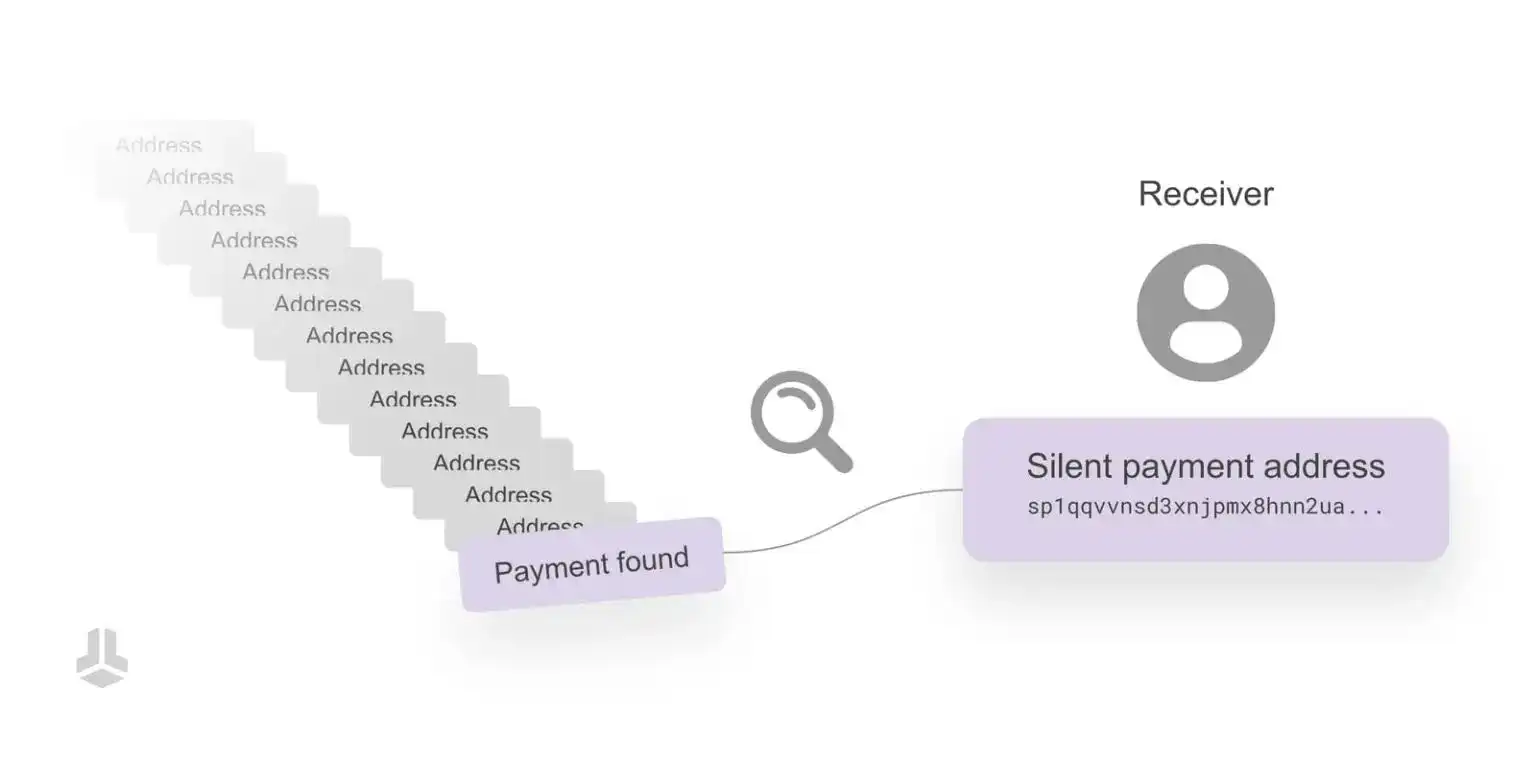
What does a Silent Payment address look like?

The structure of a Silent Payment address is the same as a Taproot address. Taproot addresses use the "bc" prefix, indicating a Bitcoin address, followed by a "1" and a version number, with the rest using bech32m encoding.

Silent Payments also use bech32m encoding, but with the prefix "sp1" (indicating it is a Silent Payment address), and this address contains two public keys. These two public keys do not directly show the destination of the Bitcoin but provide instructions for generating a Taproot public key script.

In practice, users can generate, share, and securely reuse Silent Payment addresses just like a regular Bitcoin address, without sacrificing privacy, which is its core advantage.

Which wallets support this address?

Currently, wallets that support Silent Payment addresses include Cake Wallet and BitBox.

As the Silent Payment feature is still under development and not yet widely adopted, Cake Wallet is one of the first wallets to implement Bitcoin Silent Payments. The wallet is already available in public beta on Android and iOS.

Here's how to use Silent Payments in Cake Wallet:

Click the "Silent Payments" button on the card/box on the wallet's main page to start scanning the blockchain for these transactions.

It is important to note that because Silent Payment transactions are anonymous, the wallet must actively scan the blockchain to search for transactions.
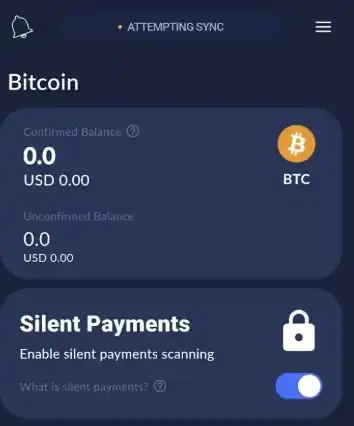
Once the scan is complete, Silent Payment verification automatically turns off upon reaching the latest block.

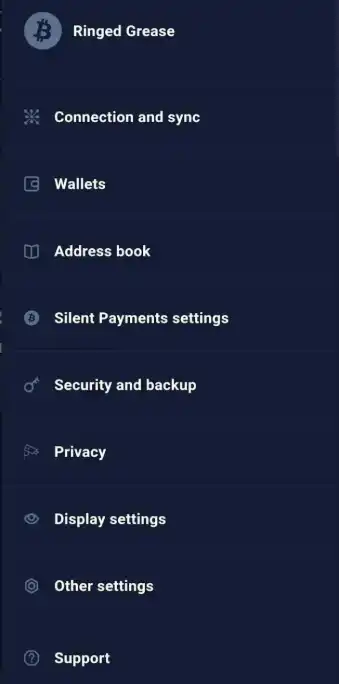
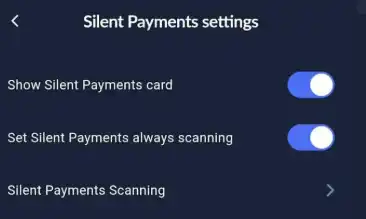
If you want the wallet to continue automatically checking new blocks for Silent Payments, go to "Menu" -> "Silent Payment Settings" and enable the "Always Scan for Silent Payments" option.
BitBox

Like the hot wallet Cake Wallet, BitBox is one of the first hardware wallets to support Silent Payments, greatly enhancing user privacy protection.

Through Silent Payments, the sender can generate a unique address from the receiver's fixed public key. This is particularly useful for activists, NGOs, and charities: they can share a reusable address to receive donations without exposing the identity of the donor or the amount received.

This integration allows BitBox users to support various causes and make payments while avoiding exposing financial activities to unnecessary third parties.

The Role of Labeling

An initial challenge with Silent Payments was how to identify who sent the payment. The solution was the introduction of Labeling.

So, what is Labeling?

Labeling allows you to distinguish between different senders when using a single Silent Payment address, without sacrificing privacy or significantly increasing scanning costs.

This technology allows adding additional information to a Silent Payment address without compromising user privacy. It works by deterministically tweaking the spending key.

Simply put, the spending key is like a digital signature authorizing the use of funds in the address. By tweaking this key slightly, different payment sources can be identified.

For example, suppose you have two Silent Payment addresses:

  • One for activity on X

  • Another for activity on Nostr

With labeling, the first half of these two addresses is the same (indicating they both belong to you), but the second half is slightly different, helping you identify the source of the payment.

This way, when viewing your funds, you can see that some payments came from X users and some from Nostr.

This flexibility strikes a balance between protecting privacy and collecting useful transaction information.

Of course, if you want complete anonymity, you can also just use a standard Silent Payment address without labels, ensuring the sender has no identifiable information. But if you need to track the source of payments, labeling provides an efficient way.

This technology can be applied to various scenarios such as exchanges, social media platforms, personal use, allowing you to manage multiple online identities without creating obvious links, or simply to get more payment information when needed.

Exchange Silent Payment Example

Interesting application scenarios would emerge if exchanges adopted this technology.

Suppose you deposit funds into an exchange. With Silent Payments, instead of giving you a reusable deposit address, the exchange generates a Silent Payment address for you.

Every time you send a payment to this address, the exchange can automatically identify it as yours (through the labeling mechanism), without you having to manage multiple addresses. Furthermore, this technology is also very useful for automatic withdrawals.

You can reuse the same Silent Payment address across platforms without managing different extended public keys (xPubs) for each platform, greatly simplifying the process.

Conclusion

Silent Payments have the potential to revolutionize the way Bitcoin is used, offering a simpler, more intuitive experience while significantly enhancing privacy.

If this technology is widely adopted, the rate of on-chain address reuse could drop significantly, thereby creating a safer and more private environment for everyone.

Silent Payments provide a great opportunity to align user incentives with best privacy practices, making future Bitcoin payments more covert and secure than ever before.

Related reading: Over 1.7 million BTC potentially under direct attack? Bitcoin faces quantum controversy again, public chains begin defense battle


Perguntas relacionadas

QWhat are Silent Payments and how do they improve privacy in Bitcoin transactions?

ASilent Payments are a method for receiving Bitcoin that allows users to reuse a single public address without revealing transaction history or balance information to third parties. They generate unique, one-time addresses for each transaction using cryptographic techniques, ensuring that only the sender and receiver can see the transaction details, thereby reducing address reuse and enhancing overall privacy.

QHow do Silent Payments differ from previous privacy solutions like Stealth Addresses and BIP 47?

ASilent Payments address limitations of earlier solutions: Stealth Addresses required adding extra data to the blockchain (e.g., via OP_RETURN), reducing anonymity and efficiency. BIP 47 introduced a notification system but required additional on-chain transactions for each sender, complicating the process and exposing sender identities. Silent Payments eliminate these issues by leveraging Taproot transactions and deterministic key adjustments, offering stronger privacy, efficiency, and simpler user experience without extra on-chain data or notifications.

QWhat is the structure of a Silent Payment address and how is it used?

AA Silent Payment address uses the same structure as a Taproot address, with a 'bc' prefix for Bitcoin, followed by '1' and a version number, encoded in bech32m. However, it specifically uses the prefix 'sp1' and includes two public keys that provide instructions for generating a Taproot script. Users can generate, share, and reuse this address securely without privacy compromises, as each payment derives a unique on-chain address.

QWhich wallets currently support Silent Payments, and how do they implement the feature?

ACake Wallet and BitBox are among the first wallets to support Silent Payments. Cake Wallet (available on Android and iOS) allows users to scan blocks for Silent Payment transactions through a dedicated interface, with options for continuous scanning. BitBox, a hardware wallet, integrates Silent Payments to enable private donations and transactions, particularly useful for activists and organizations. Both wallets require scanning the blockchain to detect incoming Silent Payments due to their anonymous nature.

QWhat is the role of 'labeling' in Silent Payments, and how does it enhance functionality?

ALabeling in Silent Payments allows recipients to distinguish between different senders or contexts (e.g., donations from Twitter vs. Nostr) while maintaining privacy. It works by deterministically tweaking the spending key, creating slight variations in the address that identify the payment source without revealing sensitive information. This enables users to manage multiple identities or track transactions efficiently, balancing privacy with practical needs like exchange deposits or automated withdrawals.

Leituras Relacionadas

Trading

Spot
Futuros

Artigos em Destaque

O que é BITCOIN

Compreender o HarryPotterObamaSonic10Inu (ERC-20) e a Sua Posição no Espaço Cripto Nos últimos anos, o mercado de criptomoedas assistiu a um aumento na popularidade das moedas meme, cativando não apenas os traders, mas também aqueles que procuram envolvimento comunitário e valor de entretenimento. Entre estes tokens únicos está o HarryPotterObamaSonic10Inu (ERC-20), um projeto intrigante que mistura referências culturais no tecido das criptomoedas. Este artigo explora os principais aspetos do HarryPotterObamaSonic10Inu, examinando os seus mecanismos, a sua ética orientada pela comunidade e o seu envolvimento com o vasto panorama cripto. O que é o HarryPotterObamaSonic10Inu (ERC-20)? Como o nome sugere, o HarryPotterObamaSonic10Inu é uma moeda meme construída na blockchain Ethereum, classificada sob o padrão ERC-20. Ao contrário das criptomoedas tradicionais, que podem enfatizar a utilidade prática ou o potencial de investimento, este token prospera no valor de entretenimento e na força da sua comunidade. O projeto visa promover um ambiente onde utilizadores envolvidos possam reunir-se, partilhar ideias e participar em atividades inspiradas por diversos fenómenos culturais. Uma característica notável do HarryPotterObamaSonic10Inu é a zero taxa sobre transações. Este elemento atraente visa encorajar a negociação e o envolvimento da comunidade, isento de encargos adicionais que podem desencorajar os traders de pequena escala. A oferta total da moeda está fixada em mil milhões de tokens, uma cifra que marca a sua intenção de manter uma circulação substancial dentro da comunidade. Criador do HarryPotterObamaSonic10Inu (ERC-20) As origens do HarryPotterObamaSonic10Inu estão um pouco envoltas em mistério; os detalhes sobre o criador permanecem desconhecidos. O desenvolvimento deste token carece de uma equipa identificável ou de um plano explícito, o que não é raro no setor das moedas meme. Em vez disso, o projeto surgiu de forma orgânica, com o seu progresso a depender fortemente do entusiasmo e da participação da sua comunidade. Investidores do HarryPotterObamaSonic10Inu (ERC-20) No que diz respeito a investimentos externos e apoios, o HarryPotterObamaSonic10Inu também permanece ambíguo. O token não lista quaisquer fundações de investimento conhecidas ou apoio organizacional significativo. Em vez disso, o “sangue vital” do projeto é a sua comunidade de base, que informa o seu crescimento e sustentabilidade através da ação coletiva e do envolvimento no espaço cripto. Como Funciona o HarryPotterObamaSonic10Inu (ERC-20)? Como uma moeda meme, o HarryPotterObamaSonic10Inu opera principalmente fora dos quadros tradicionais que muitas vezes governam o valor dos ativos. Existem vários aspetos distintivos que definem como o projeto funciona: Transações Sem Taxas: Sem taxas sobre transações, os utilizadores podem comprar e vender o token livremente, sem a preocupação de custos ocultos. Envolvimento da Comunidade: O projeto prospera na interação da comunidade, aproveitando plataformas de redes sociais para criar entusiasmo e facilitar a participação. Discussões, partilha de conteúdo e envolvimento são elementos cruciais que ajudam a expandir o seu alcance e a fomentar a lealdade entre os apoiantes. Sem Utilidade Prática: Deve ser notado que o HarryPotterObamaSonic10Inu não oferece utilidade concreta dentro do ecossistema financeiro. Em vez disso, é classificado como um token principalmente para entretenimento e atividades comunitárias. Referência Cultural: O token incorpora de forma inteligente elementos da cultura popular para atrair interesse, conectando-se tanto com entusiastas de memes como com seguidores de criptomoedas. HarryPotterObamaSonic10Inu exemplifica como as moedas meme operam de forma diferente de projetos de criptomoedas mais tradicionais, entrando no mercado como construções sociais inovadoras em vez de ativos utilitários. Linha do Tempo do HarryPotterObamaSonic10Inu (ERC-20) A história do HarryPotterObamaSonic10Inu é marcada por vários marcos notáveis: Criação: O token surgiu de um meme viral, capturando a imaginação de muitos entusiastas de criptomoedas. Datas específicas de criação não estão disponíveis, sublinhando a sua ascensão orgânica. Listagem em Exchanges: O HarryPotterObamaSonic10Inu conseguiu entrar em várias exchanges, permitindo um acesso e negociação mais fáceis pela comunidade. Iniciativas de Envolvimento da Comunidade: Atividades contínuas direcionadas a melhorar a interação comunitária, incluindo concursos, campanhas em redes sociais e geração de conteúdo por fãs e defensores. Planos de Expansão Futura: O roteiro do projeto inclui o lançamento de uma coleção de NFTs, mercadorias e um site de eCommerce relacionado aos seus temas culturais, envolvendo ainda mais a comunidade e tentando adicionar mais dimensões ao seu ecossistema. Pontos-Chave sobre o HarryPotterObamaSonic10Inu (ERC-20) Natureza Orientada pela Comunidade: O projeto prioriza a contribuição coletiva e a criatividade, assegurando que o envolvimento dos utilizadores está na vanguarda do seu desenvolvimento. Classificação como Moeda Meme: Representa o epítome da criptomoeda baseada em entretenimento, destacando-se dos veículos de investimento tradicionais. Sem Afiliação Direta com o Bitcoin: Apesar da semelhança no nome do ticker, o HarryPotterObamaSonic10Inu é distinto e não tem qualquer relação com o Bitcoin ou outras criptomoedas estabelecidas. Foco na Colaboração: O HarryPotterObamaSonic10Inu é projetado para criar um espaço de colaboração e partilha de histórias entre os seus detentores, proporcionando uma via para a criatividade e o fortalecimento da comunidade. Perspectivas Futuras: A ambição de expandir além da sua premissa inicial para NFTs e mercadorias delineia um caminho para o projeto potencialmente entrar em avenidas mais mainstream dentro da cultura digital. À medida que as moedas meme continuam a capturar a imaginação da comunidade cripto, HarryPotterObamaSonic10Inu (ERC-20) destaca-se devido aos seus laços culturais e abordagem centrada na comunidade. Embora possa não se encaixar no molde típico de um token orientado para utilidade, a sua essência reside na alegria e camaradagem fomentadas entre os seus apoiantes, destacando a natureza em evolução das criptomoedas em uma era cada vez mais digital. À medida que o projeto continua a desenvolver-se, será importante observar como as dinâmicas comunitárias influenciam a sua trajetória no panorama em constante mudança da tecnologia blockchain.

1.2k Visualizações TotaisPublicado em {updateTime}Atualizado em 2024.12.03

O que é BITCOIN

Como comprar BTC

Bem-vindo à HTX.com!Tornámos a compra de Bitcoin (BTC) simples e conveniente.Segue o nosso guia passo a passo para iniciar a tua jornada no mundo das criptos.Passo 1: cria a tua conta HTXUtiliza o teu e-mail ou número de telefone para te inscreveres numa conta gratuita na HTX.Desfruta de um processo de inscrição sem complicações e desbloqueia todas as funcionalidades.Obter a minha contaPasso 2: vai para Comprar Cripto e escolhe o teu método de pagamentoCartão de crédito/débito: usa o teu visa ou mastercard para comprar Bitcoin (BTC) instantaneamente.Saldo: usa os fundos da tua conta HTX para transacionar sem problemas.Terceiros: adicionamos métodos de pagamento populares, como Google Pay e Apple Pay, para aumentar a conveniência.P2P: transaciona diretamente com outros utilizadores na HTX.Mercado de balcão (OTC): oferecemos serviços personalizados e taxas de câmbio competitivas para os traders.Passo 3: armazena teu Bitcoin (BTC)Depois de comprar o teu Bitcoin (BTC), armazena-o na tua conta HTX.Alternativamente, podes enviá-lo para outro lugar através de transferência blockchain ou usá-lo para transacionar outras criptomoedas.Passo 4: transaciona Bitcoin (BTC)Transaciona facilmente Bitcoin (BTC) no mercado à vista da HTX.Acede simplesmente à tua conta, seleciona o teu par de trading, executa as tuas transações e monitoriza em tempo real.Oferecemos uma experiência de fácil utilização tanto para principiantes como para traders experientes.

3.9k Visualizações TotaisPublicado em {updateTime}Atualizado em 2025.03.21

Como comprar BTC

O que é $BITCOIN

OURO DIGITAL ($BITCOIN): Uma Análise Abrangente Introdução ao OURO DIGITAL ($BITCOIN) OURO DIGITAL ($BITCOIN) é um projeto baseado em blockchain que opera na rede Solana, com o objetivo de combinar as características dos metais preciosos tradicionais com a inovação das tecnologias descentralizadas. Embora partilhe um nome com o Bitcoin, frequentemente referido como “ouro digital” devido à sua percepção como uma reserva de valor, o OURO DIGITAL é um token separado projetado para criar um ecossistema único dentro da paisagem Web3. O seu objetivo é posicionar-se como um ativo digital alternativo viável, embora os detalhes sobre as suas aplicações e funcionalidades ainda estejam em desenvolvimento. O que é o OURO DIGITAL ($BITCOIN)? OURO DIGITAL ($BITCOIN) é um token de criptomoeda explicitamente projetado para uso na blockchain Solana. Em contraste com o Bitcoin, que fornece um papel amplamente reconhecido como armazenamento de valor, este token parece focar em aplicações e características mais amplas. Aspectos notáveis incluem: Infraestrutura Blockchain: O token é construído na blockchain Solana, conhecida pela sua capacidade de lidar com transações de alta velocidade e baixo custo. Dinâmicas de Oferta: O OURO DIGITAL tem um fornecimento máximo limitado a 100 quatrilhões de tokens (100P $BITCOIN), embora os detalhes sobre o seu fornecimento circulante ainda não tenham sido divulgados. Utilidade: Embora as funcionalidades precisas não estejam explicitamente delineadas, existem indicações de que o token poderia ser utilizado para várias aplicações, potencialmente envolvendo aplicações descentralizadas (dApps) ou estratégias de tokenização de ativos. Quem é o Criador do OURO DIGITAL ($BITCOIN)? Neste momento, a identidade dos criadores e da equipa de desenvolvimento por trás do OURO DIGITAL ($BITCOIN) permanece desconhecida. Esta situação é típica entre muitos projetos inovadores no espaço da blockchain, particularmente aqueles alinhados com finanças descentralizadas e fenómenos de moedas meme. Embora tal anonimato possa fomentar uma cultura orientada pela comunidade, intensifica as preocupações sobre governança e responsabilidade. Quem são os Investidores do OURO DIGITAL ($BITCOIN)? As informações disponíveis indicam que o OURO DIGITAL ($BITCOIN) não tem apoiantes institucionais conhecidos ou investimentos proeminentes de capital de risco. O projeto parece operar num modelo peer-to-peer focado no apoio e adoção da comunidade, em vez de rotas de financiamento tradicionais. A sua atividade e liquidez estão principalmente situadas em exchanges descentralizadas (DEXs), como a PumpSwap, em vez de plataformas de negociação centralizadas estabelecidas, destacando ainda mais a sua abordagem de base. Como Funciona o OURO DIGITAL ($BITCOIN) A mecânica operacional do OURO DIGITAL ($BITCOIN) pode ser elaborada com base no seu design de blockchain e nas características da rede: Mecanismo de Consenso: Ao aproveitar o exclusivo proof-of-history (PoH) da Solana combinado com um modelo de proof-of-stake (PoS), o projeto assegura uma validação eficiente das transações, contribuindo para o alto desempenho da rede. Tokenomics: Embora mecanismos deflacionários específicos não tenham sido extensivamente detalhados, o vasto fornecimento máximo de tokens implica que pode atender a microtransações ou casos de uso de nicho que ainda estão por definir. Interoperabilidade: Existe o potencial para integração com o ecossistema mais amplo da Solana, incluindo várias plataformas de finanças descentralizadas (DeFi). No entanto, os detalhes sobre integrações específicas permanecem não especificados. Cronologia de Eventos Chave Aqui está uma cronologia que destaca marcos significativos relacionados ao OURO DIGITAL ($BITCOIN): 2023: O lançamento inicial do token ocorre na blockchain Solana, marcado pelo seu endereço de contrato. 2024: O OURO DIGITAL ganha visibilidade ao tornar-se disponível para negociação em exchanges descentralizadas como a PumpSwap, permitindo que os utilizadores o negociem contra SOL. 2025: O projeto testemunha atividade de negociação esporádica e potencial interesse em envolvimentos liderados pela comunidade, embora não tenham sido documentadas parcerias ou avanços técnicos notáveis até ao momento. Análise Crítica Forças Escalabilidade: A infraestrutura subjacente da Solana suporta altos volumes de transações, o que pode aumentar a utilidade do $BITCOIN em vários cenários de transação. Acessibilidade: O potencial preço de negociação baixo por token pode atrair investidores de retalho, facilitando uma participação mais ampla devido a oportunidades de propriedade fracionada. Riscos Falta de Transparência: A ausência de apoiantes, desenvolvedores ou um processo de auditoria publicamente conhecidos pode gerar ceticismo em relação à sustentabilidade e confiabilidade do projeto. Volatilidade do Mercado: A atividade de negociação depende fortemente do comportamento especulativo, o que pode resultar em volatilidade significativa dos preços e incerteza para os investidores. Conclusão O OURO DIGITAL ($BITCOIN) surge como um projeto intrigante, mas ambíguo, dentro do ecossistema em rápida evolução da Solana. Embora tente aproveitar a narrativa do “ouro digital”, a sua divergência do papel estabelecido do Bitcoin como reserva de valor sublinha a necessidade de uma diferenciação mais clara da sua utilidade pretendida e estrutura de governança. A aceitação e adoção futuras dependerão provavelmente da abordagem da atual opacidade e da definição mais explícita das suas estratégias operacionais e económicas. Nota: Este relatório abrange informações sintetizadas disponíveis até outubro de 2023, e desenvolvimentos podem ter ocorrido além do período de pesquisa.

92 Visualizações TotaisPublicado em {updateTime}Atualizado em 2025.05.13

O que é $BITCOIN

Discussões

Bem-vindo à Comunidade HTX. Aqui, pode manter-se informado sobre os mais recentes desenvolvimentos da plataforma e obter acesso a análises profissionais de mercado. As opiniões dos utilizadores sobre o preço de BTC (BTC) são apresentadas abaixo.

活动图片













