Should Bitcoin rush its move to post-quantum cryptography?

ambcryptoPublicado em 2026-04-08Última atualização em 2026-04-08

Resumo

The Bitcoin community is divided on the urgency of migrating to post-quantum cryptography (PQC) by the 2029 deadline. JAN3 founder Samson Mow warns against rushing untested PQC solutions, arguing it could expose Bitcoin to attacks from classical computers, reduce transaction throughput due to larger signature sizes, and potentially introduce hidden backdoors. He advocates for solving the quantum computing (QC) problem later rather than sooner. This debate follows a Google Quantum AI report suggesting quantum processors could break Bitcoin's encryption sooner than previously estimated, potentially requiring only 1,200–1,450 logical qubits. Google urges a PQC upgrade by 2029 to protect nearly 7 million BTC. In contrast, figures like Adam Back and Grayscale's Zach Pandl believe practical quantum computers are still years away, posing no immediate threat. However, they agree efforts to prepare for a post-quantum future should accelerate. The issue is complicated by Bitcoin's history of contentious protocol changes and potential for significant technical trade-offs.

The Bitcoin community is divided on whether there is really a need to rush to meet the 2029 deadline of migrating to a quantum-secure network.

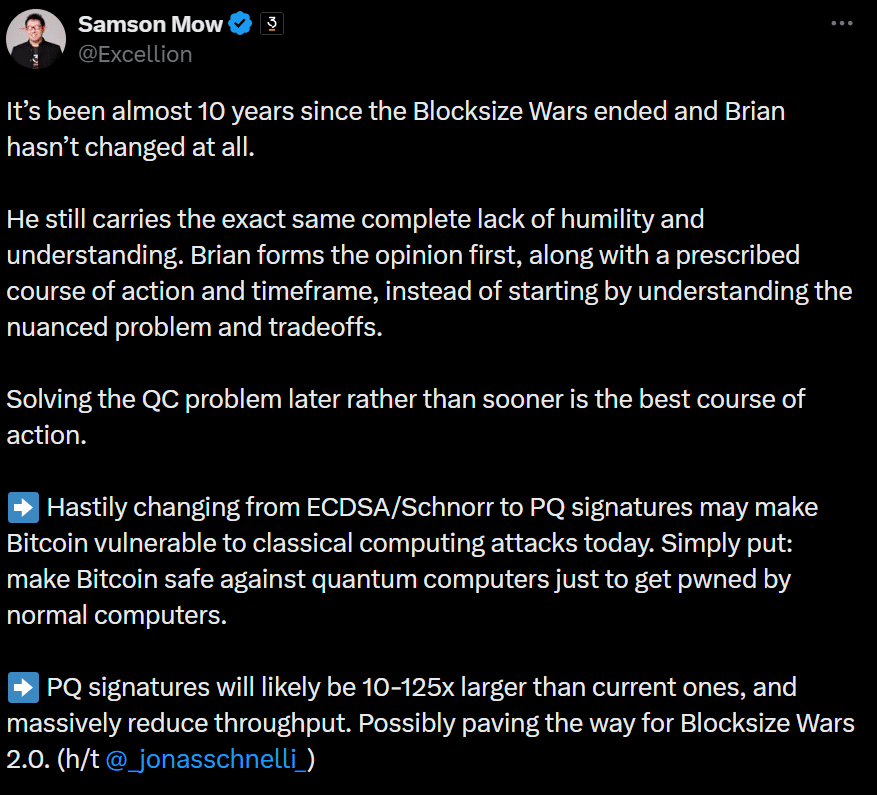
For his part, Samsom Mow, founder of JAN3, an advisory for nation-state BTC adoption, has warned against a hurried push for untested and unverified post-quantum (PQ) solutions. He cautioned that,

Solving the QC problem later rather than sooner is the best course of action.
Source: X/Samson Mow

Mow slammed Coinbase CEO Brian Armstrong’s call for a ‘sooner’ PQ upgrade. He stated that it could expose BTC to attack from current classical computers.

Additionally, the proposed PQ solutions would reduce Bitcoin transactions due to larger block sizes.

PQ signatures will likely be 10-125x larger than current ones, and massively reduce throughput. Possibly paving the way for Blocksize Wars 2.0.

In fact, Solana, one of the fastest blockchains, has reported a potential 90% slowdown if current PQ solutions are implemented.

Finally, Mow pointed out the possibility of the U.S. NSA (National Security Agency) pushing current PQ solutions as standards with hidden ‘backdoors’ to infiltrate future systems.

Google urges fast PQ Bitcoin upgrade before 2029

The renewed debate follows a recent report by Google Quantum AI, which found that Bitcoin and most blockchain encryption could be broken sooner than earlier estimates suggested.

According to the findings, advanced quantum processors may require around 500,000 physical qubits or 1,200–1,450 stable logical qubits to compromise crypto security.

This was contrary to the prior estimates of millions of qubits. Google had urged a PQ upgrade by 2029 to prevent nearly 7 million BTC from being at risk.

In short, there is less than three years before further quantum advancement threatens BTC.

Bitcoin’s history complicates this. Protocol changes often take time and spark disagreement.

In fact, Charles Edwards of Capriole Investment projected that BTC will never reach a new all-time high unless it migrates to PQ.

However, some crypto and cypherpunks like Adam Back still hold that physical quantum computers are years away from hitting the market despite recent advancements.

Grayscale’s head of research, Zach Pandl, reinforced a similar stance and noted,

Investors should not fret. In our view, there is no security threat to public blockchains from quantum computers today. But it’s time to accelerate efforts to prepare for our post-quantum future.
Source: Grayscale

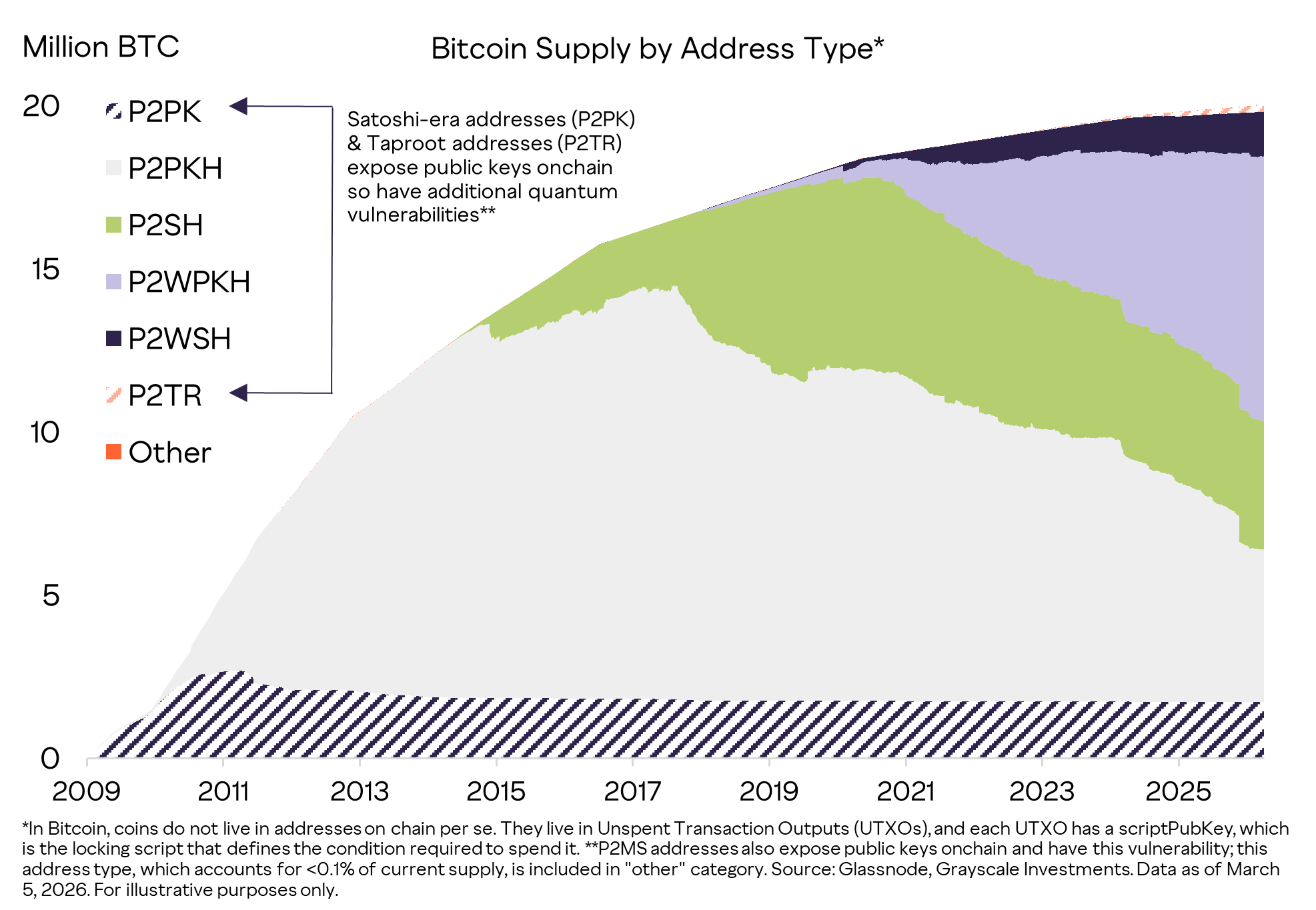
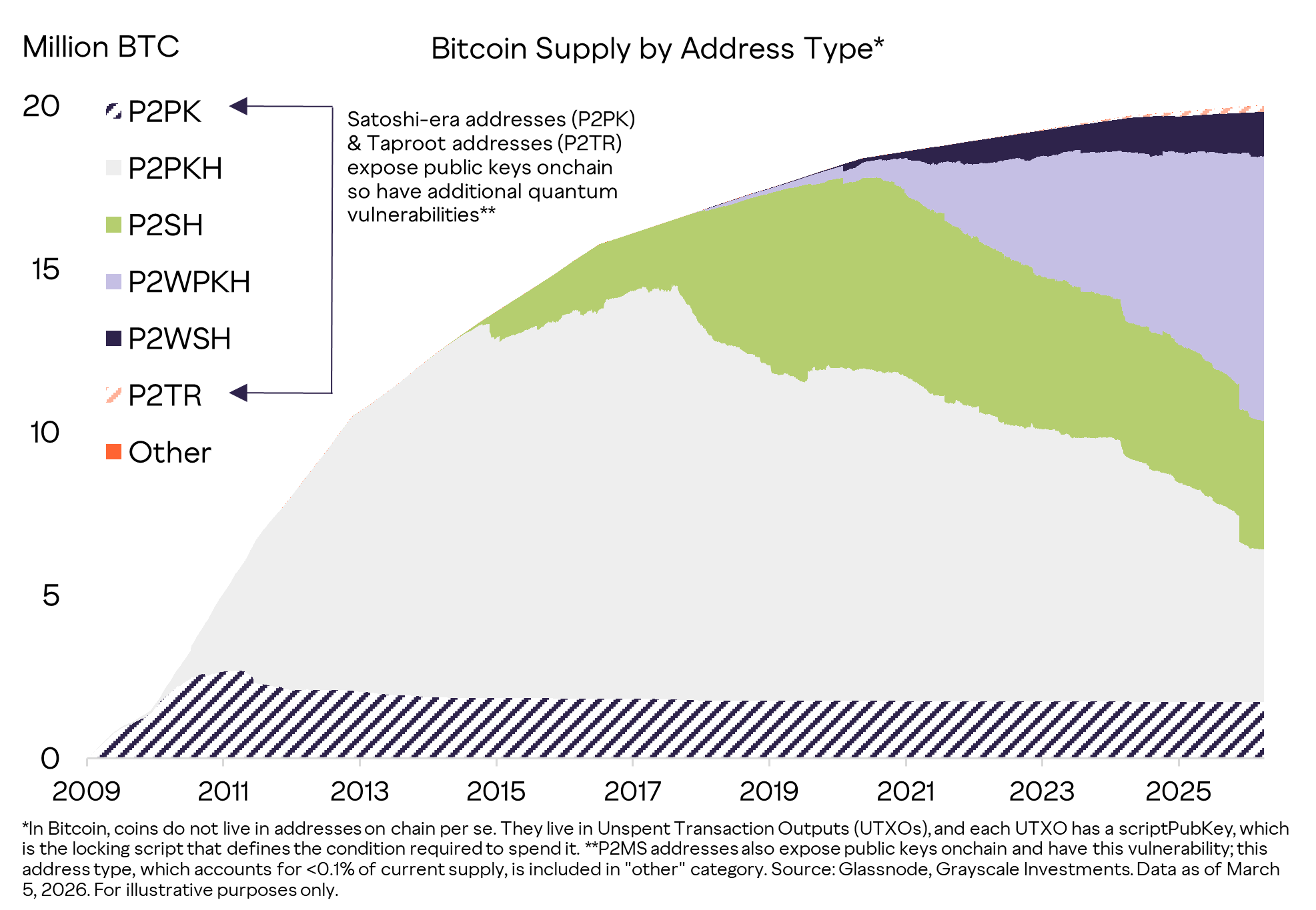
Apart from the Satoshi-era and Taproot wallets, most investors have migrated to relatively more resistant addresses (Segwit, P2WPKH).


Final Summary

  • Jan3’s Samson Mow blasted Coinbase CEO for rushed push for PQ upgrade for Bitcoin, citing transfer speed risks and further attacks.
  • Grayscale said QC was not a problem just yet, but urged players to accelerate PQ upgrades.

Perguntas relacionadas

QWhat is the main point of disagreement within the Bitcoin community regarding post-quantum cryptography?

AThe Bitcoin community is divided on whether there is a need to rush to meet the 2029 deadline for migrating to a quantum-secure network, with some warning against hurriedly implementing untested solutions.

QAccording to Samson Mow, what are the two main risks of rushing a post-quantum upgrade for Bitcoin?

ASamson Mow warned that a rushed upgrade could expose Bitcoin to attacks from current classical computers and that the proposed solutions would reduce transaction throughput due to significantly larger signature sizes.

QWhat did the Google Quantum AI report find regarding the threat to Bitcoin's encryption?

AThe Google Quantum AI report found that advanced quantum processors may require far fewer qubits than previously estimated (around 500,000 physical or 1,200–1,450 stable logical qubits) to compromise crypto security, urging an upgrade by 2029.

QWhat is the stance of Grayscale's head of research, Zach Pandl, on the quantum computing threat?

AZach Pandl stated that quantum computers pose no security threat to public blockchains today, but he urged the community to accelerate efforts to prepare for a post-quantum future.

QWhat potential negative impact did Samson Mow suggest a post-quantum upgrade could have on Bitcoin's network?

AMow suggested that post-quantum signatures, being 10-125x larger than current ones, would massively reduce transaction throughput and could potentially lead to a 'Blocksize Wars 2.0'.

Leituras Relacionadas

20 Billion Valuation, Alibaba and Tencent Competing to Invest, Whose Money Will Liang Wenfeng Take?

DeepSeek, an AI startup founded by Liang Wenfeng, is reportedly in talks with Alibaba and Tencent for an external funding round that could value the company at over $20 billion. This marks a significant shift, as DeepSeek had previously relied solely on funding from its parent company,幻方量化 (Huanfang Quantitative), and had resisted external investment. The potential valuation would place DeepSeek among the top-tier AI model companies in China, comparable to competitors like MoonDark (valued at ~$18 billion) and ahead of recently listed firms like MiniMax and Zhipu. The funding—which could range from $600 million (for a 3% stake) to $2 billion (for 10%)—is seen as a move to secure resources for model development, retain talent, and support infrastructure needs, particularly as competition in inference models and AI agents intensifies. Both Alibaba and Tencent are eager to invest, not only for financial returns but also to integrate DeepSeek into their broader AI ecosystems. However, DeepSeek’s leadership is cautious about maintaining independence and may prefer financial investors over strategic ones to avoid being locked into a specific tech ecosystem. Alternative options, such as state-backed funds, offer longer-term capital and policy support but may come with slower decision-making and potential constraints on global expansion. With competing AI firms accelerating their IPO plans, DeepSeek’s window for securing optimal terms may be narrowing. The final decision will reflect a trade-off between capital, resources, and strategic independence.

marsbitHá 21m

20 Billion Valuation, Alibaba and Tencent Competing to Invest, Whose Money Will Liang Wenfeng Take?

marsbitHá 21m

After Losing 97% of Its Market Value, iQiyi Attempts to Use AI to Forcefully Extend Its Lifespan

After losing 97% of its market value since its 2018 peak, iQiyi is aggressively pivoting to AI in a desperate attempt to survive. At its 2026 World Conference, CEO Gong Yu announced an "AI Artist Library" with over 100 virtual performers and a new AIGC platform, "NaDou Pro," promising faster production and lower costs. This shift comes as the company faces severe financial distress: its market cap sits near delisting thresholds at $1.36 billion, with significant losses, declining membership revenue, and depleted cash flow. The AI strategy has sparked controversy. Top actors have issued legal threats against unauthorized digital replicas, while in Hengdian, over 134,000 background actors are seeing their already scarce job opportunities vanish as AI replaces them for background roles. iQiyi's move represents a fundamental shift from being a high-cost content buyer to a landlord" to becoming a "platform capitalist" that transfers production risk to creators. This contrasts with competitors like Douyin (TikTok's Chinese counterpart), which is investing heavily in *real* actor-led short dramas, betting that authentic human connection retains users better than AI-generated content. The article draws a parallel to the 1920s transition to "talkies," which made cinema musicians obsolete but ultimately enriched the art form. In contrast, iQiyi's AI drive is framed not as an artistic evolution but as a cost-cutting measure that could degrade storytelling, replacing genuine human emotion with algorithmically calculated stimulation and potentially numbing audiences' capacity for empathy. The core question remains: can a company focused solely on financial survival preserve the art of storytelling?

marsbitHá 24m

After Losing 97% of Its Market Value, iQiyi Attempts to Use AI to Forcefully Extend Its Lifespan

marsbitHá 24m

Only a 50% Chance of Passing This Year, Can the CLARITY Bill Succeed Before the Midterm Elections?

The CLARITY Act, which passed the House in July 2025 with strong bipartisan support (294-134), faces a critical juncture in the Senate. The Senate Banking Committee is expected to hold a markup soon, but key issues remain unresolved, including stablecoin yield provisions, DeFi regulations, and securing full Republican committee support. Other contentious points involve the Blockchain Regulatory Certainty Act (BRCA), ethics amendments for government officials, and SEC-related matters. The legislative calendar is tight, with limited time before the midterm elections. If the committee markup is delayed beyond mid-May, the chances of passage in 2026 drop significantly. Senator Cynthia Lummis has warned that failure this year could delay comprehensive crypto market structure legislation until 2030 or later. Galaxy estimates the probability of the CLARITY Act becoming law in 2026 is only about 50%. The bill provides crucial regulatory clarity by defining jurisdictional boundaries between the SEC and CFTC, establishing a path for decentralization, and bringing digital commodity intermediaries under federal regulation. Its passage is seen as vital before potential power shifts in the next Congress, which could bring less favorable leadership to key committees. The timeline is compressed, and the bill must compete for floor time with other priorities like Iran authorization and DHS appropriations. Key hurdles include finalizing the stablecoin yield compromise text, addressing law enforcement concerns about BRCA, and navigating political dynamics around SEC nominations. The outcome of the Banking Committee markup and the level of bipartisan support will be critical indicators of its future success.

marsbitHá 1h

Only a 50% Chance of Passing This Year, Can the CLARITY Bill Succeed Before the Midterm Elections?

marsbitHá 1h

Trading

Spot
Futuros

Artigos em Destaque

Como comprar MOVE

Bem-vindo à HTX.com!Tornámos a compra de Movement (MOVE) simples e conveniente.Segue o nosso guia passo a passo para iniciar a tua jornada no mundo das criptos.Passo 1: cria a tua conta HTXUtiliza o teu e-mail ou número de telefone para te inscreveres numa conta gratuita na HTX.Desfruta de um processo de inscrição sem complicações e desbloqueia todas as funcionalidades.Obter a minha contaPasso 2: vai para Comprar Cripto e escolhe o teu método de pagamentoCartão de crédito/débito: usa o teu visa ou mastercard para comprar Movement (MOVE) instantaneamente.Saldo: usa os fundos da tua conta HTX para transacionar sem problemas.Terceiros: adicionamos métodos de pagamento populares, como Google Pay e Apple Pay, para aumentar a conveniência.P2P: transaciona diretamente com outros utilizadores na HTX.Mercado de balcão (OTC): oferecemos serviços personalizados e taxas de câmbio competitivas para os traders.Passo 3: armazena teu Movement (MOVE)Depois de comprar o teu Movement (MOVE), armazena-o na tua conta HTX.Alternativamente, podes enviá-lo para outro lugar através de transferência blockchain ou usá-lo para transacionar outras criptomoedas.Passo 4: transaciona Movement (MOVE)Transaciona facilmente Movement (MOVE) no mercado à vista da HTX.Acede simplesmente à tua conta, seleciona o teu par de trading, executa as tuas transações e monitoriza em tempo real.Oferecemos uma experiência de fácil utilização tanto para principiantes como para traders experientes.

279 Visualizações TotaisPublicado em {updateTime}Atualizado em 2025.03.21

Como comprar MOVE

Discussões

Bem-vindo à Comunidade HTX. Aqui, pode manter-se informado sobre os mais recentes desenvolvimentos da plataforma e obter acesso a análises profissionais de mercado. As opiniões dos utilizadores sobre o preço de MOVE (MOVE) são apresentadas abaixo.

活动图片