Shiba Inu SOU Recovery System Goes Live After Shibarium Hack

bitcoinistPublicado em 2026-02-17Última atualização em 2026-02-17

Resumo

Shiba Inu has launched its SOU (Shib Owes You) recovery system to compensate users affected by the 2025 Shibarium bridge exploit. The on-chain NFT-based framework allows users to claim verifiable records of their losses, which are tradable, mergeable, and splittable on Ethereum. The system distinguishes between principal repayments and bonus rewards, funded through ecosystem revenues and community donations. It aims to provide transparency and liquidity options, enabling affected participants to either wait for full reimbursement or sell their claims on secondary markets.

Shiba Inu has put its long-trailed SOU recovery framework into production, opening claims for users affected by last year’s Shibarium bridge exploit and turning those claims into transferable, on-chain NFTs on Ethereum. The launch matters because it moves the project’s compensation effort from a promised structure into a live system with visible balances, payout mechanics, and a secondary-market option for anyone who wants liquidity now.

The SOU concept itself isn’t new. In a year-end letter dated Dec. 29, 2025, Shibarium developer Kaal Dhairya introduced “SOU: Shib Owes You” while stressing it was “Not live yet, beware of scammers,” describing it as a system where “every affected user has an SOU NFT — an on-chain, verifiable record of exactly what the ecosystem owes them.”

Shiba Inu ‘Shib Owes You’ Goes Live

That warning is now being replaced by a go-live announcement. Via X, the official Shiba Inu account wrote:

“SOU is live. Introducing SOU (Shib Owes You) an onchain NFT built as a good-faith effort to support impacted users with payouts, donations, and occasional rewards. Transparent. Tradable. On-chain. You can transfer it, split it, merge it, or trade it on marketplaces. Claim your SOUs: https://shib.io/sou”

In Shib’s documentation, the system is framed as an attempt to make the recovery ledger public, auditable, and mechanically enforced rather than tracked in private databases. “SOU (Shib Owes You) is more than just a name; it is a commitment,” the docs say.“It represents the Shib ecosystem’s dedication to making users whole through a transparent, audited, and on-chain recovery system. Activity Notifications: The system provides a real-time activity feed, notifying the community whenever a new donation is received or a payout is distributed, ensuring complete visibility into the recovery progress.”

The mechanism hinges on two balances: “Original Principal,” the immutable historical record of what a user lost, and “Current Principal,” which declines as payouts are claimed or contributions flow in. The docs also draw a hard distinction between debt repayment and incentives. “Payout” reduces principal as compensation, while a “Reward” is additive and “No Change” to the owed balance, positioning rewards as bonuses on top of repayment rather than substitutes.

SOU is also designed to be a financial instrument, not just a receipt. Claims can be merged or split to manage position sizing, transferred between wallets, or sold on marketplaces, effectively enabling a market in discounted claims for users who don’t want to wait for recovery flows.

Shib’s docs also describe a funding model that routes ecosystem revenues and community donations into a common pool, with donations applied proportionally across affected claims, and optional creator fees on secondary sales directed back to payouts or rewards.

The backdrop is the September 2025 Shibarium bridge incident, where Shib’s own security update said “unauthorized validator signing power” was used to push a malicious exit through the PoS bridge, enabling withdrawals of multiple assets.

At press time, Shiba Inu traded at $0.00000656.
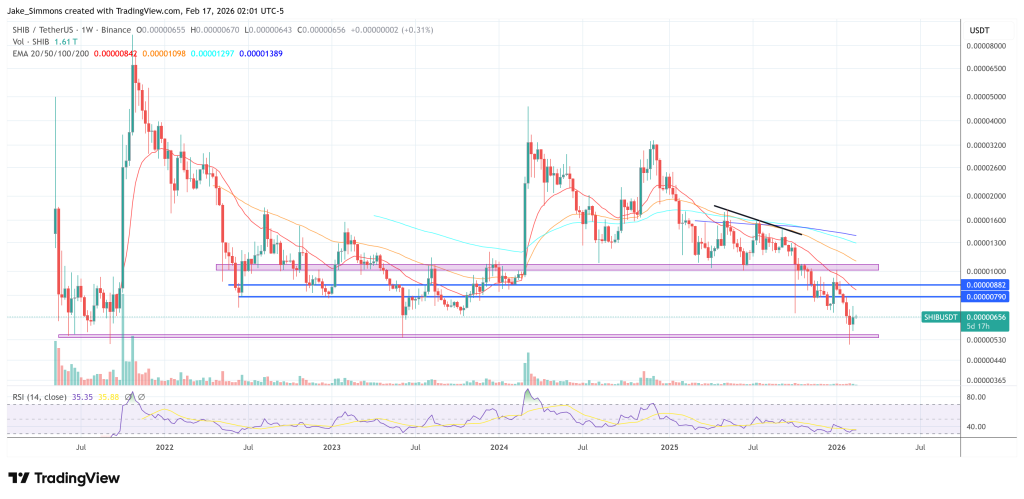
Shiba Inu trades near historical lows, 1-week chart | Source: SHIBUSDT on TradingView.com

Leituras Relacionadas

New Wall Street Play: Yen Shorts Still Adding, But Japan Stocks Don't Rely on Carry Trade Unwinding

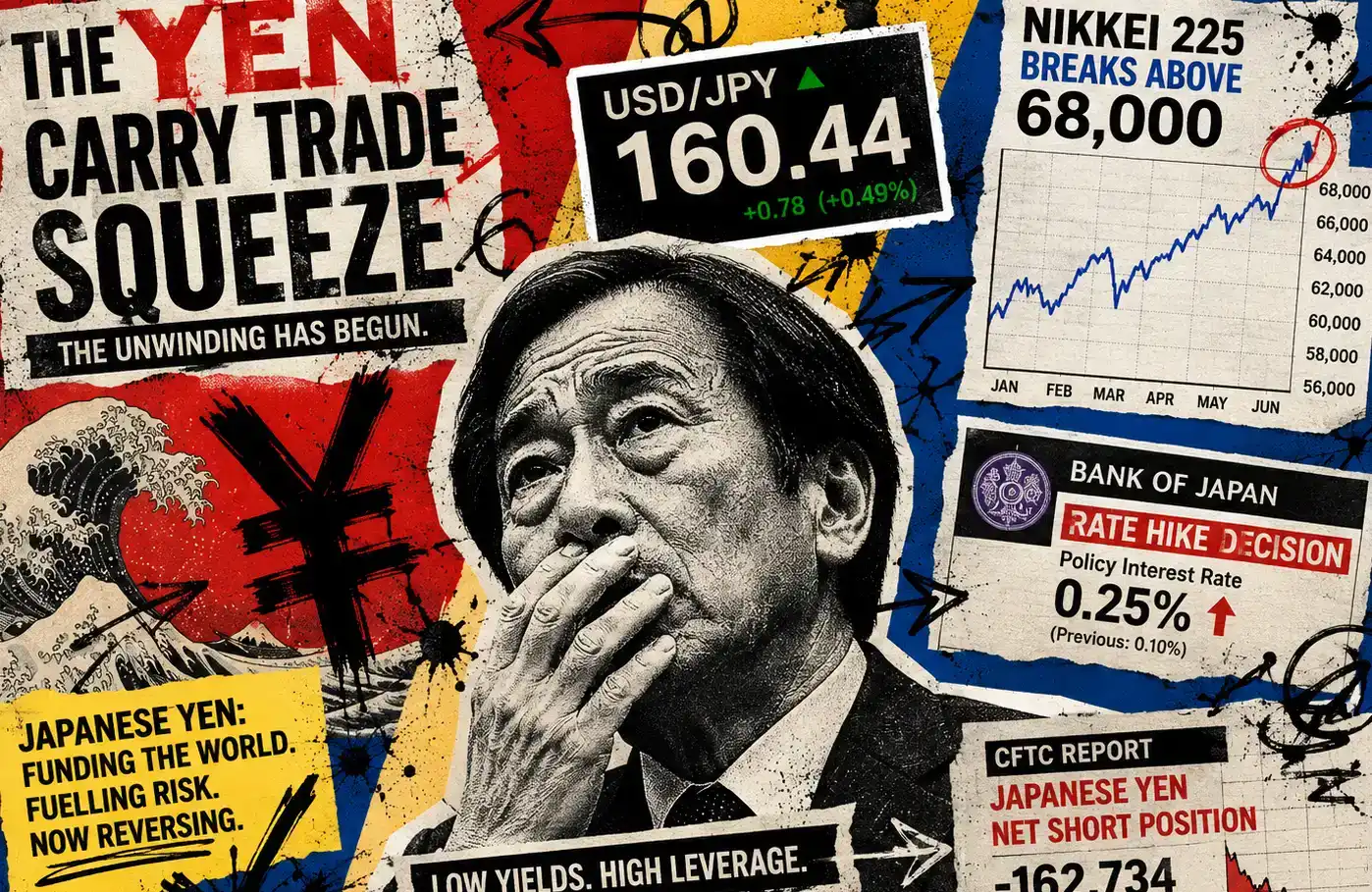
On June 3rd, USD/JPY hit 160.44, its highest level since July 2024, while the Nikkei 225 surged past 68,000 points. Contrary to popular narratives of an imminent "carry trade unwind" akin to August 2024, data reveals a more complex picture. Speculative net short positions in yen futures have actually increased, reaching -114,667 contracts by late May, suggesting traders are doubling down rather than retreating. Meanwhile, Japan's Finance Ministry conducted its largest-ever single-round FX intervention (11.73 trillion yen) in April-May but failed to hold the 160 yen line. The Nikkei's rally is not driven by carry trade dynamics. Foreign investors are aggressively buying Japanese stocks, with net purchases in 2026 running nearly 16 times higher than 2025 levels. This inflow is concentrated in AI and semiconductor-related stocks like SoftBank and Socionext, fueled by positive sector outlooks, rather than being a flight from unwinding yen shorts. Furthermore, the Nikkei has continued climbing despite the Bank of Japan's (BOJ) rate hikes to 0.75%. This disconnect exists because the current equity boom is fueled by AI-driven foreign investment, not reliant on cheap yen funding. However, this relationship remains fragile. Should the BOJ hike rates further (e.g., to 1.0%) while dollar weakness increases carry trade costs, the trajectories of the yen and Japanese stocks could reconverge, potentially triggering volatility.

marsbitHá 1m

New Wall Street Play: Yen Shorts Still Adding, But Japan Stocks Don't Rely on Carry Trade Unwinding

marsbitHá 1m

Broadcom's Q3 Guidance Misses Expectations by $12 Billion, After-Hours Trading Plummets Over 13%, AI Narrative "Cooling"?

On June 3, Broadcom released record Q2 FY26 results with revenue of $22.19B, up 48% YoY, and AI chip sales of $10.8B, up 143%. Adjusted EPS of $2.44 beat estimates. However, its Q3 AI semiconductor revenue guidance of $16B, while up over 200% YoY, fell roughly $1.2B (7%) short of analyst consensus expectations of $17.2B. This miss, coupled with slightly weaker-than-expected software revenue, triggered a severe market reaction. CEO Hock Tan maintained the FY26 AI revenue outlook of over $100B but did not raise it, disappointing investors who had priced in more robust growth. The stock plummeted over 13% in after-hours trading, erasing roughly $270B in market cap. The sell-off extended to peers like Marvell. A key concern for markets, particularly for Chinese optical module suppliers, was Tan's comment that the contribution of AI networking (e.g., Ethernet switches, optical interconnect chips) to AI revenue, currently near 40%, is expected to normalize to around 30% over time, signaling a potential peak in growth for that segment. Despite the guidance shortfall, Tan reiterated that AI demand remains "insatiable" and reaffirmed the long-term target of exceeding $100B in AI revenue by FY27. The reaction highlights the heightened sensitivity and premium valuation placed on AI-exposed stocks, where anything less than stellar guidance can prompt significant profit-taking. The broader question is whether this represents a cooling AI narrative or a correction in overstretched valuations.

marsbitHá 1m

Broadcom's Q3 Guidance Misses Expectations by $12 Billion, After-Hours Trading Plummets Over 13%, AI Narrative "Cooling"?

marsbitHá 1m

Fei-Fei Li's Team Clarifies the Concept of 'World Models', Sora Merely a Renderer

"World Models" has become a widely used yet confusing term in AI. To address this, a team led by Fei-Fei Li and World Labs proposed a functional taxonomy based on the Partially Observable Markov Decision Process framework. This taxonomy categorizes systems called "world models" into three distinct projections: Renderers, Simulators, and Planners. Renderers, like OpenAI's Sora and other video generation models, focus on producing photorealistic visual outputs for human perception. They prioritize visual fidelity over physical accuracy. Simulators, such as NVIDIA Omniverse, aim to compute precise future environmental states for computational tasks like engineering analysis or digital twins. Planners, like Vision-Language-Action models, take in observations and goals to output executable actions for robots or agents. The article clarifies that most current "world models," including Sora, are primarily Renderers. They generate convincing visuals but lack the core ability to simulate state transitions based on actions, a key requirement for a true world model in classic reinforcement learning definitions. This conceptual confusion has practical implications, leading to potential misalignment in technology selection, investment, and public understanding of AI capabilities. Clear categorization is crucial. It helps enterprises avoid costly mistakes (e.g., using a renderer for robot training), allows investors to accurately assess markets, and enables researchers to build comparable benchmarks. While future systems may integrate these functions, recognizing current boundaries is essential for honest assessment and progress.

marsbitHá 1h

Fei-Fei Li's Team Clarifies the Concept of 'World Models', Sora Merely a Renderer

marsbitHá 1h

Trading

Spot
Futuros
活动图片