Shiba Inu Lead Dev Issues Must-Read Year-End Letter: What You Must Know

bitcoinistPublicado em 2025-12-30Última atualização em 2025-12-30

Resumo

Shiba Inu lead developer Kaal Dhairya published a year-end letter describing the project's most difficult period, marked by a hack and leadership departures. He confirmed engagement with federal law enforcement and outlined technical recovery steps, including reactivating the Plasma Bridge with enhanced security. Dhairya introduced the SOU ("Shib Owes You") system, an on-chain NFT-based claims process on Ethereum to track and repay affected users. He stressed that ecosystem revenue must be directed toward repayments as an obligation, not an option. The letter calls for a shift from hype to focused rebuilding and financial accountability in the year ahead.

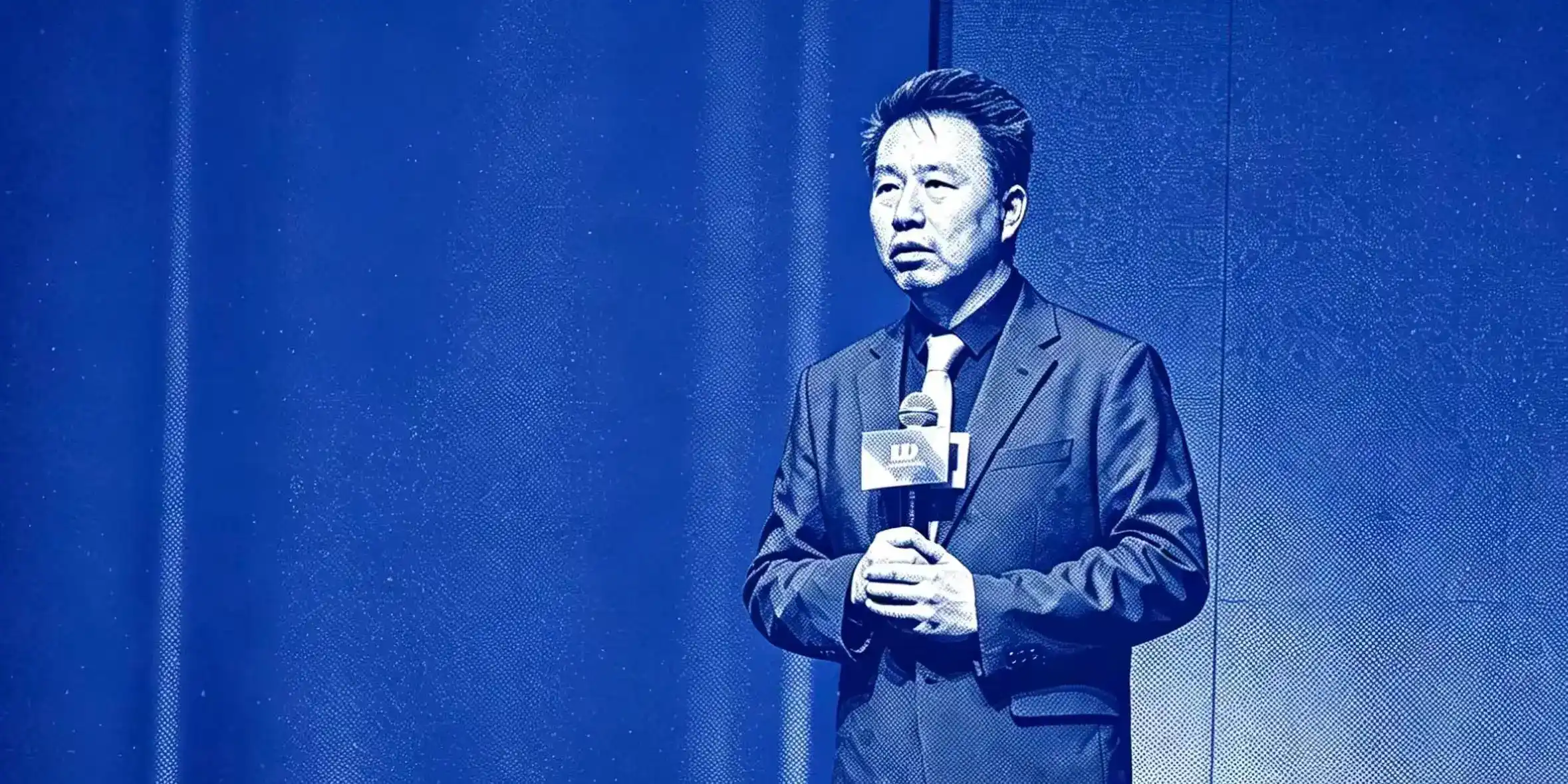
Shiba Inu lead developer Kaal Dhairya published a year-end letter on Dec. 29 describing what he called the most difficult period in the project’s history, outlining post-hack recovery steps, law-enforcement engagement, and a proposed on-chain claims system meant to track repayment to affected users.

Shiba Inu’s Team Year-End Letter

“This year — especially the last few months — has been the hardest period in Shiba Inu’s history,” Dhairya wrote. “The hack happened. The leadership that was supposed to be here and help us through this difficult time — isn’t. They left, without accountability, and without looking back. I stayed.”

Dhairya said he is not writing as Shiba Inu’s “official ‘leader,’” but argued the community deserves a direct update on what has been done, what is still unresolved, and what changes internally. He described the team working “around the clock — all-nighters, weekends, holidays,” and positioned the letter as an accountability-driven reset focused on repayment and core infrastructure.

Addressing claims that the team failed to file official complaints, Dhairya said a formal process is underway and pushed back on demands for public proof. “I have personally been interviewed by not one, not two, but three federal agents,” he wrote. “I passed on everything I have — all the information, all the OSINT, all the details we gathered during and after the incident. The official process is happening. It has been happening.”

He declined to share a complaint ID and said he would not continue “defending” the response to opportunistic critics, arguing some are “looking to sell their snake oil and keep extracting from you.”

Dhairya said “the technical recovery is largely complete,” detailing changes made after the hack. He wrote that the Plasma Bridge is back online with new safeguards, including “blacklisting, 7-day withdrawal delays, and hardened contracts,” and said more than 100 critical contracts have been moved to hardware custody. Hexens reviewed “every major change,” he added, and the checkpoint system is functioning again.

He also flagged a longer-term architecture change: “We’re also decoupling the bridge from the validators,” describing it as foundational work intended to enable decentralization of Shibarium. Even with that, he cautioned that malicious validators remain a risk and decentralizing the chain “won’t be easy.” Dhairya drew a hard distinction between restoring infrastructure and repaying users. “But technical recovery is not the same as making people whole,” he wrote.

SOU: ‘Shib Owes You’ Claims Via NFT

To address repayment, Dhairya introduced SOU (“Shib Owes You”), a system he stressed is “not live yet” and likely to attract scammers pretending otherwise. Under the proposal, every affected user receives an “SOU NFT” that records what the ecosystem owes them as an on-chain claim on Ethereum.

“This isn’t a promise in a database somewhere,” Dhairya wrote. “It’s cryptographic proof that you own a claim, recorded permanently on the Ethereum blockchain where no one can manipulate it or make it disappear.”

Each SOU tracks a principal amount that declines as payouts occur or donations are applied, with progress visible “in real time” and verifiable. Dhairya said SOUs can be “merged, split, or transferred,” including the option to sell a claim for liquidity on supported marketplaces. He added that the system’s components—“minting, payouts, donations, transfers”—have been audited by Hexens.

Dhairya argued the system only works if cash flow is routed into it, and said that should be treated as an obligation for ecosystem participants, particularly those controlling official distribution channels. “For SOU to function — for affected users to actually get made whole — revenue has to flow into the system,” he wrote. “That means everyone who benefits from the Shiba Inu ecosystem needs to contribute back. Not optionally. As an obligation.”

He said he will pause or sunset projects that are not generating revenue or reaching break-even, and prioritize initiatives that can fund repayment. “Revenue flows to SOU. SOU pays back affected users. If a project doesn’t fit that chain, it waits,” Dhairya wrote. He also previewed potentially contentious changes, including revisiting tokenomics and restructuring or merging systems to redirect value “back to the network and to the users who were affected.”

In closing, Dhairya said he has personally committed significant time and funds to keep the ecosystem running, but cannot do so indefinitely. “I cannot keep doing this forever,” he wrote, calling for others to step up if they believe Shib should be “a decentralized network” rather than “a meme” or “a pump.”

“The year ahead won’t be about hype,” Dhairya added. “It will be about repair, focus, and building something that can actually last.”

At press time, Shiba Inu traded at $0.00000721.
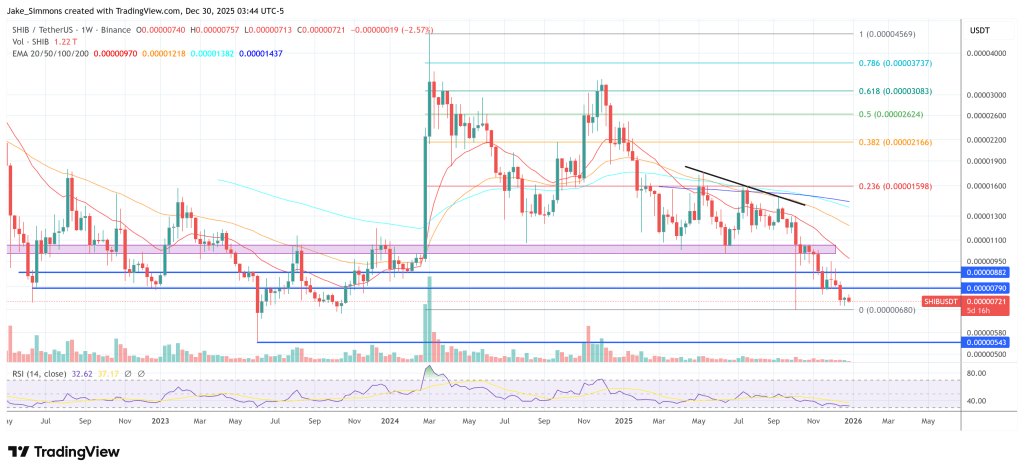
Shiba Inu remains in deep bearish territory, 1-week chart | Source: SHIBUSDT on TradingView.com

Leituras Relacionadas

In-Depth Report on the On-Chain Lending Market: When Off-Chain Credit Meets On-Chain Liquidation

The on-chain lending market has evolved from a peripheral DeFi niche into core financial infrastructure. As of early 2026, total value locked (TVL) in on-chain lending protocols has reached $64.3 billion, accounting for 53.54% of total DeFi TVL, making it the largest and most mature vertical within decentralized finance. Aave dominates the sector with approximately $32.9 billion in TVL, commanding nearly half of the market—a leadership position that is unlikely to be challenged in the foreseeable future. However, the path of on-chain lending forward is not without risk. Liquidation cascades, credit defaults, and cross-chain vulnerabilities remain systemic threats hanging over the industry. At the same time, a deeper structural transformation is underway: on-chain lending is shifting from a “leverage tool for crypto-native users” to a “compliant gateway for institutional capital”. The scale of RWA (Real World Asset) lending has surpassed $18.5 billion, with U.S. Treasuries and government securities increasingly serving as core collateral. Institutional capital inflows are reshaping both the user base and risk appetite of the sector. This report systematically analyzes the evolution of on-chain lending definitions, competitive dynamics, core risks, and future trends, providing a comprehensive industry outlook for investors and trade practitioners. Key findings suggest that the “one dominant player with several strong challengers” structure will persist in the short term, while fixed-rate lending, compliant collateral, and institutional credit underwriting will define the next phase of competition. For investors focused on DeFi infrastructure, three key opportunity tracks stand out, namely, the Aave ecosystem (Morpho, Spark), RWA lending protocols (Ondo, Maple) and fixed-rate innovation (Notional, Pendle).

HTX LearnHá 13m

In-Depth Report on the On-Chain Lending Market: When Off-Chain Credit Meets On-Chain Liquidation

HTX LearnHá 13m

Fu Peng's First Public Speech in 2026: What Exactly Are Crypto Assets? Why Did I Join the Crypto Asset Industry?

Fu Peng, a renowned macroeconomist and now Chief Economist at New火 Group, delivered his first public speech of 2026 at the Hong Kong Web3 Festival. He explained his perspective on crypto assets and why he joined the industry, framing it within the context of macroeconomic trends and financial evolution. Fu emphasized that crypto assets are transitioning from an early, belief-driven phase to a mature, institutionally integrated asset class. He drew parallels to the 1970s-80s, when technological advances (like computing) revolutionized traditional finance, leading to the rise of FICC (Fixed Income, Currencies, and Commodities). Similarly, current advancements in AI, data, and blockchain are reshaping finance, with crypto assets becoming part of a new "FICC + C" (C for Crypto) framework. He noted that institutional capital, including traditional hedge funds, avoided early crypto due to its speculative nature but are now engaging as regulatory clarity emerges (e.g., stablecoin laws, CFTC classifying crypto as a commodity). Fu predicted that 2025-2026 marks a turning point where crypto becomes a standardized, financially viable asset for diversified portfolios, akin to commodities or derivatives in traditional finance. Fu defined Bitcoin not as "digital gold" in a simplistic sense but as a value-preserving, financially tradable asset. He highlighted that crypto's future lies in regulated, institutional adoption, moving away from retail-dominated trading. His entry into crypto signals this maturation, where traditional finance integrates crypto into mainstream asset management.

marsbitHá 1h

Fu Peng's First Public Speech in 2026: What Exactly Are Crypto Assets? Why Did I Join the Crypto Asset Industry?

marsbitHá 1h

Justin Sun Sues Trump Family: What $75 Million Bought Was Only a Blacklist

Justin Sun, founder of Tron, has filed a lawsuit in federal court against World Liberty Financial (WLF), alleging he was made the "primary target of a fraudulent scheme" after investing $75 million. Sun claims the investment secured him an advisor title and WLFI tokens, which were later frozen by WLF, causing "hundreds of millions in losses." The dispute began in late 2024 when Sun's investment helped revive WLF's struggling token sale, which ultimately raised $550 million. Shortly after, the SEC dropped its lawsuit against Sun following Donald Trump's inauguration. However, relations soured when Sun refused WLF's demands for additional funding. In August 2025, WLF added a "blacklist" function to its smart contract, allowing it to unilaterally freeze tokens. Sun's holdings, worth approximately $107 million, were frozen, and he was threatened with token destruction. The lawsuit highlights WLF's structure, which directs 75% of token sale profits to the Trump family, who had earned $1 billion by December 2025. WLF's CEO is Zach Witkoff, son of U.S. Middle East envoy Steve Witkoff. The project faces scrutiny for opaque operations, including a controversial loan arrangement on the Dolomite platform, co-founded by a WLF advisor. Despite Sun's history with the SEC, the case underscores centralization risks within DeFi, as WLF controls governance and holds powers to freeze assets arbitrarily. Sun's tokens remain frozen as legal proceedings begin.

marsbitHá 1h

Justin Sun Sues Trump Family: What $75 Million Bought Was Only a Blacklist

marsbitHá 1h

Trading

Spot
Futuros

Artigos em Destaque

Como comprar CFG

Bem-vindo à HTX.com!Tornámos a compra de Centrifuge (CFG) simples e conveniente.Segue o nosso guia passo a passo para iniciar a tua jornada no mundo das criptos.Passo 1: cria a tua conta HTXUtiliza o teu e-mail ou número de telefone para te inscreveres numa conta gratuita na HTX.Desfruta de um processo de inscrição sem complicações e desbloqueia todas as funcionalidades.Obter a minha contaPasso 2: vai para Comprar Cripto e escolhe o teu método de pagamentoCartão de crédito/débito: usa o teu visa ou mastercard para comprar Centrifuge (CFG) instantaneamente.Saldo: usa os fundos da tua conta HTX para transacionar sem problemas.Terceiros: adicionamos métodos de pagamento populares, como Google Pay e Apple Pay, para aumentar a conveniência.P2P: transaciona diretamente com outros utilizadores na HTX.Mercado de balcão (OTC): oferecemos serviços personalizados e taxas de câmbio competitivas para os traders.Passo 3: armazena teu Centrifuge (CFG)Depois de comprar o teu Centrifuge (CFG), armazena-o na tua conta HTX.Alternativamente, podes enviá-lo para outro lugar através de transferência blockchain ou usá-lo para transacionar outras criptomoedas.Passo 4: transaciona Centrifuge (CFG)Transaciona facilmente Centrifuge (CFG) no mercado à vista da HTX.Acede simplesmente à tua conta, seleciona o teu par de trading, executa as tuas transações e monitoriza em tempo real.Oferecemos uma experiência de fácil utilização tanto para principiantes como para traders experientes.

204 Visualizações TotaisPublicado em {updateTime}Atualizado em 2026.03.19

Como comprar CFG

O que é WL

I. Introdução ao ProjetoWorldLand é uma L2 ou side chain do Ethereum, concebida como uma solução de baixo para cima para melhorar o ecossistema Ethereum.II. Informação sobre o Token1) Informação BásicaNome do token: WL (WorldLand)III. Links RelacionadosWebsite:https://worldland.foundation/Exploradores:https://bscscan.com/address/0x8aaB31fbc69C92fa53f600910Cf0f215531F8239Redes Sociais:https://x.com/WorldLand_space Nota: A introdução ao projeto provém dos materiais publicados ou fornecidos pela equipa oficial do projeto, que é apenas para referência e não constitui aconselhamento de investimento. A HTX não se responsabiliza por quaisquer perdas diretas ou indiretas resultantes.

173 Visualizações TotaisPublicado em {updateTime}Atualizado em 2026.03.28

O que é WL

Como comprar WL

Bem-vindo à HTX.com!Tornámos a compra de WorldLand (WL) simples e conveniente.Segue o nosso guia passo a passo para iniciar a tua jornada no mundo das criptos.Passo 1: cria a tua conta HTXUtiliza o teu e-mail ou número de telefone para te inscreveres numa conta gratuita na HTX.Desfruta de um processo de inscrição sem complicações e desbloqueia todas as funcionalidades.Obter a minha contaPasso 2: vai para Comprar Cripto e escolhe o teu método de pagamentoCartão de crédito/débito: usa o teu visa ou mastercard para comprar WorldLand (WL) instantaneamente.Saldo: usa os fundos da tua conta HTX para transacionar sem problemas.Terceiros: adicionamos métodos de pagamento populares, como Google Pay e Apple Pay, para aumentar a conveniência.P2P: transaciona diretamente com outros utilizadores na HTX.Mercado de balcão (OTC): oferecemos serviços personalizados e taxas de câmbio competitivas para os traders.Passo 3: armazena teu WorldLand (WL)Depois de comprar o teu WorldLand (WL), armazena-o na tua conta HTX.Alternativamente, podes enviá-lo para outro lugar através de transferência blockchain ou usá-lo para transacionar outras criptomoedas.Passo 4: transaciona WorldLand (WL)Transaciona facilmente WorldLand (WL) no mercado à vista da HTX.Acede simplesmente à tua conta, seleciona o teu par de trading, executa as tuas transações e monitoriza em tempo real.Oferecemos uma experiência de fácil utilização tanto para principiantes como para traders experientes.

235 Visualizações TotaisPublicado em {updateTime}Atualizado em 2026.03.28

Como comprar WL

Discussões

Bem-vindo à Comunidade HTX. Aqui, pode manter-se informado sobre os mais recentes desenvolvimentos da plataforma e obter acesso a análises profissionais de mercado. As opiniões dos utilizadores sobre o preço de A (A) são apresentadas abaixo.

活动图片