ShapeShift founder denies $260mln whale accumulation – Here’s what we know!

ambcryptoPublicado em 2026-03-23Última atualização em 2026-03-23

Recent on-chain data suggests that large investors are quietly building strong positions in Ethereum.

Over the past two weeks, a major whale, reportedly linked to Erik Voorhees, Founder of ShapeShift, has deployed nearly $260 million in USDT to accumulate more than 120,000 ETH.

This buying pattern points to a steady accumulation strategy rather than a one-time trade. For instance, in the latest transaction, the whale spent $4.29 million to purchase ETH at $2,134.
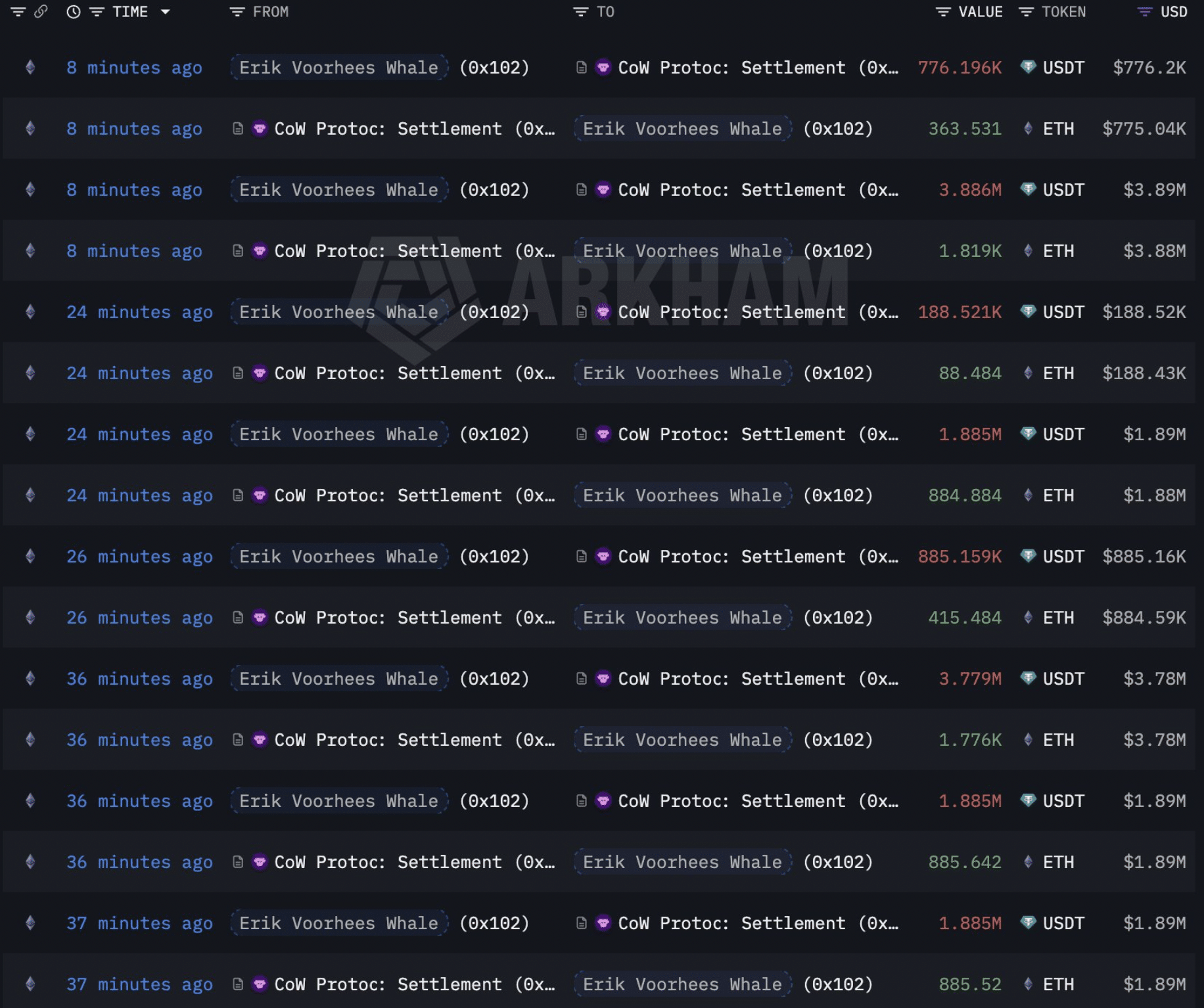
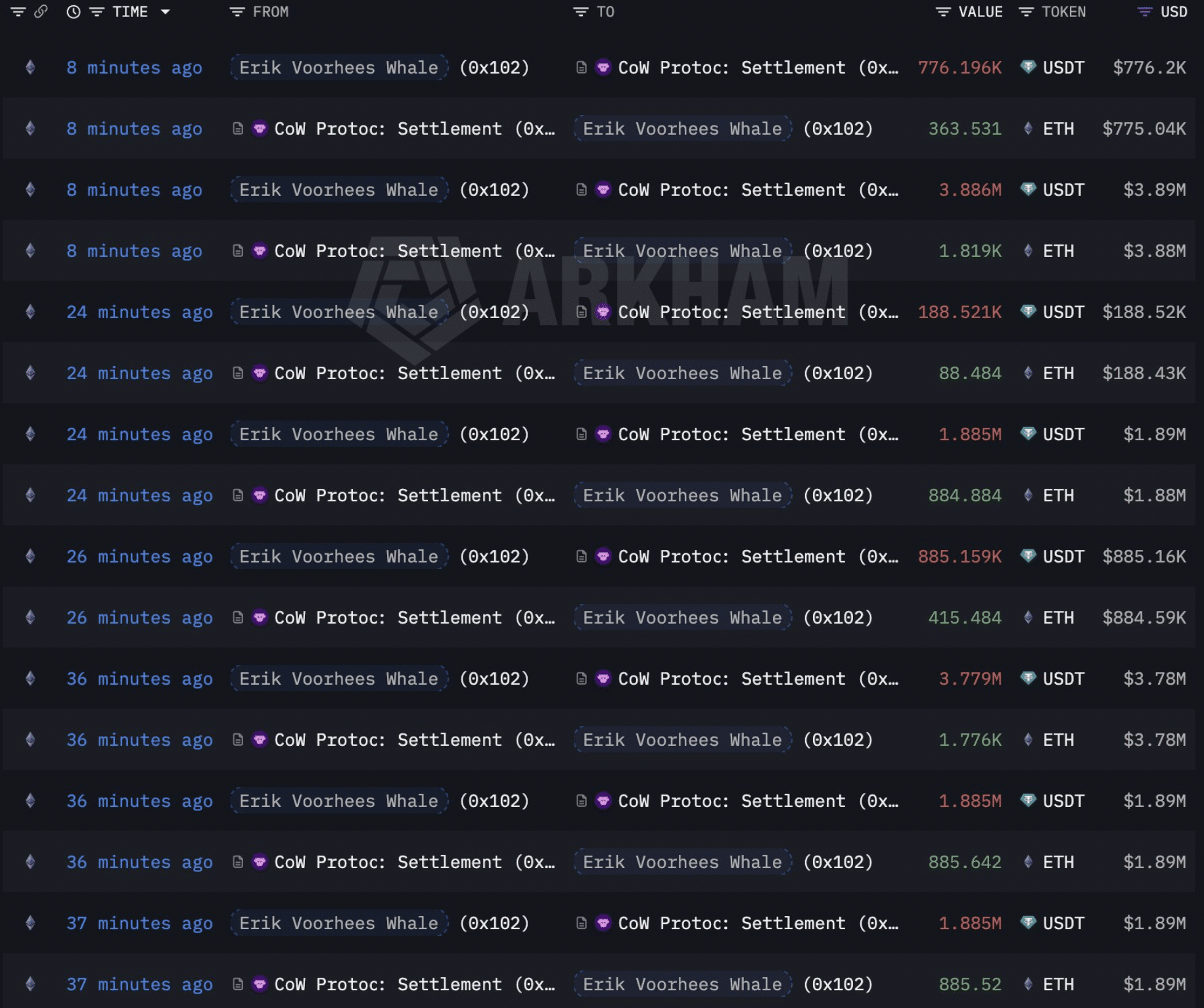
Source: Lookonchain/X

Overall, the average buying price stands at around $2,162, which now acts as a key support level for the market.

Such moves signal strong confidence that Ethereum may be nearing its bottom, with expectations of potential upside in the coming months.

Notably, this accumulation is happening even as ETH trades at $2,071.67, down over 3% in the last 24 hours. This paints a clear divergence between short-term price action and long-term investor sentiment.

Retail vs whale behavior

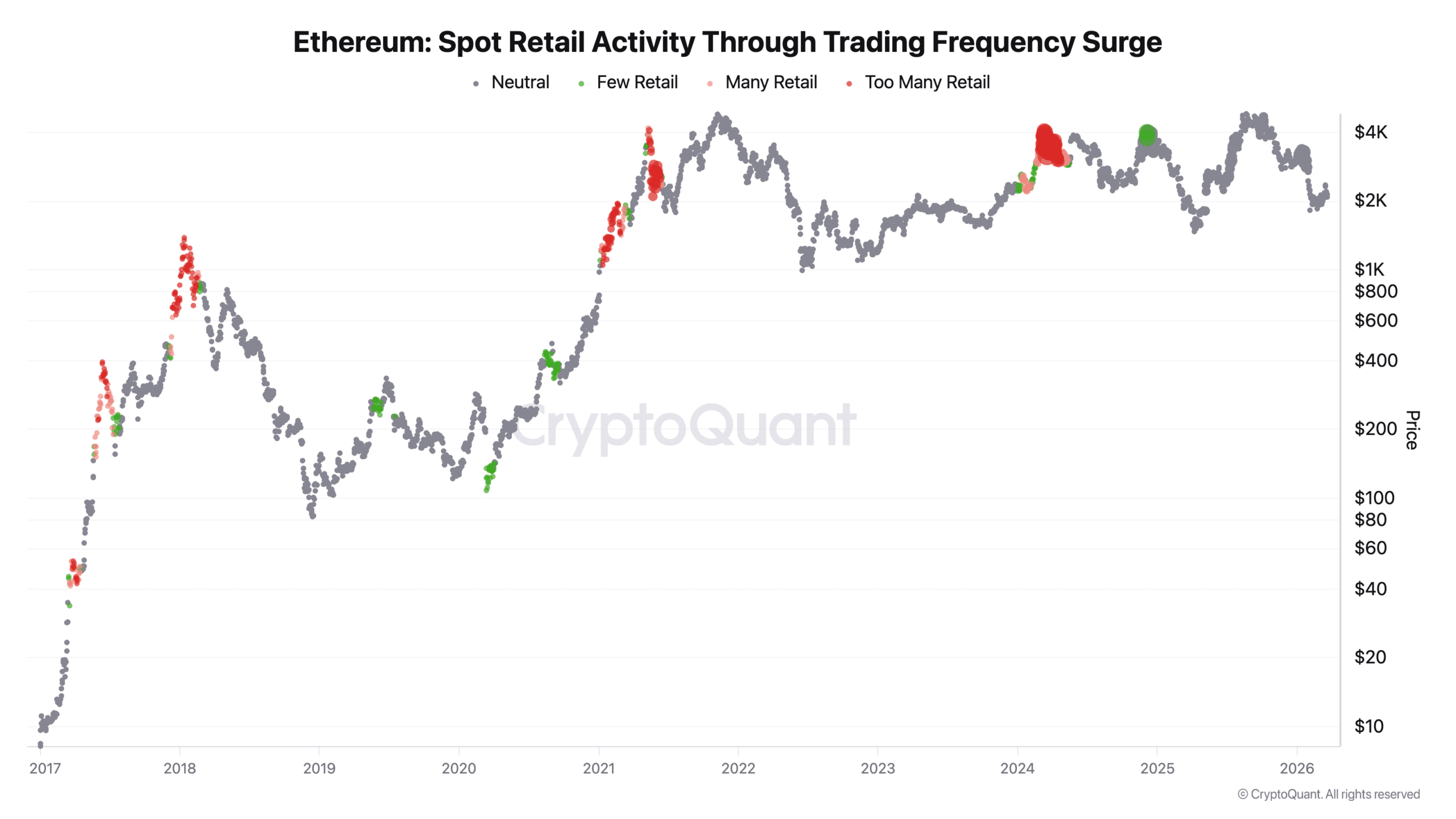
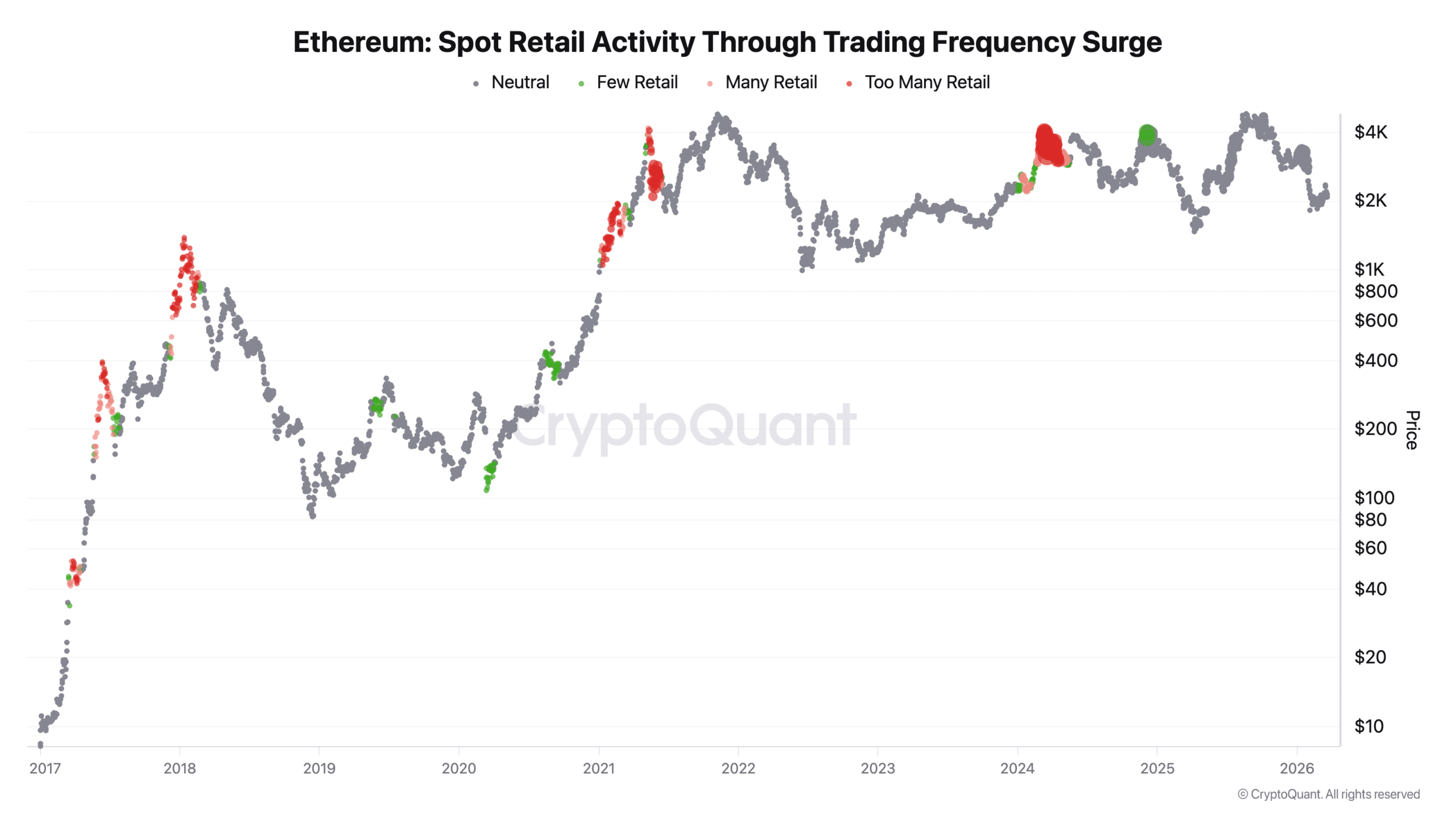
To understand this better, let’s analyse the Spot Retail Activity by CryptoQuant.

Historically, smaller investors tend to buy when prices are already high, driven by FOMO. This happened in past cycles like 2018, 2021, and even 2024.
Source: CryptoQuant

Right now, retail activity is relatively low, which is actually a good sign. It means the market is in a quieter phase where large investors are accumulating, while the public is still on the sidelines.

Interestingly, while this whale has been aggressively buying Ethereum [ETH], ETFs have been seeing money flow out, which may seem negative at first.
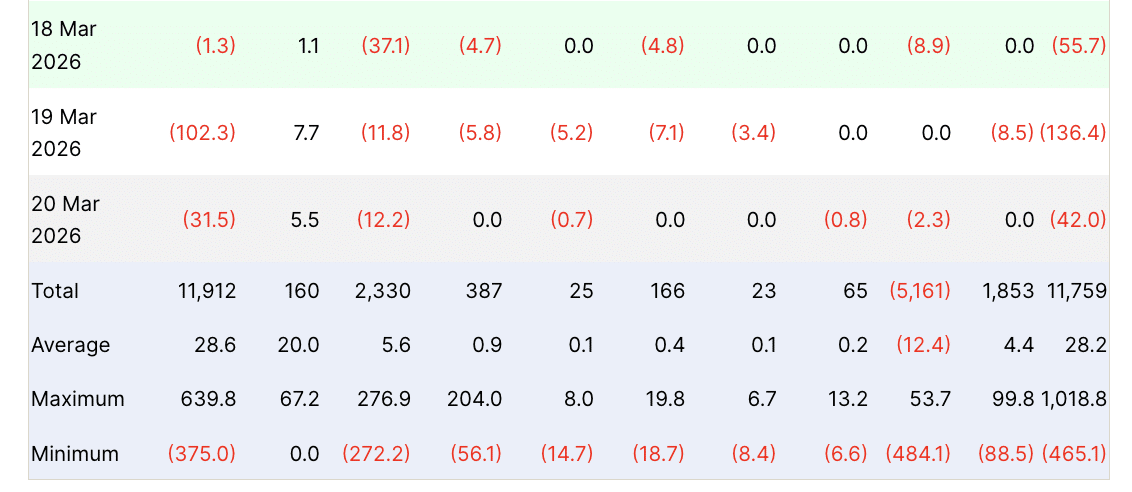
Source: Farside Investors

However, a closer look reveals that large whales are steadily increasing their holdings, while mid-sized investors seem to be selling or redistributing.

Meanwhile, retail investors remain inconsistent, often buying at higher levels and selling during dips.
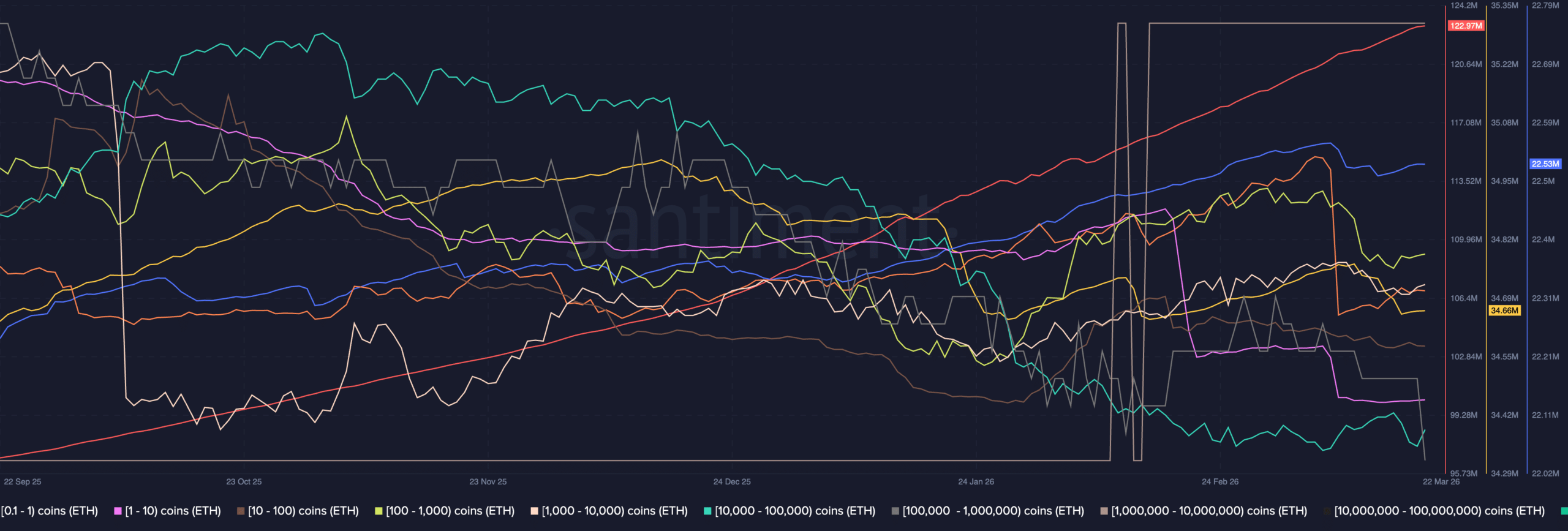
Source: Santiment

Overall, this indicates that Ethereum is gradually moving from weaker hands to stronger, long-term holders, which is typically a bullish sign for the market.

Voorhees’ past whale move and a crazy plot twist

For those unaware, this whale activity began on the 16th of March and intensified on the 20th of March, when the Voorhees-linked whale made another major move.
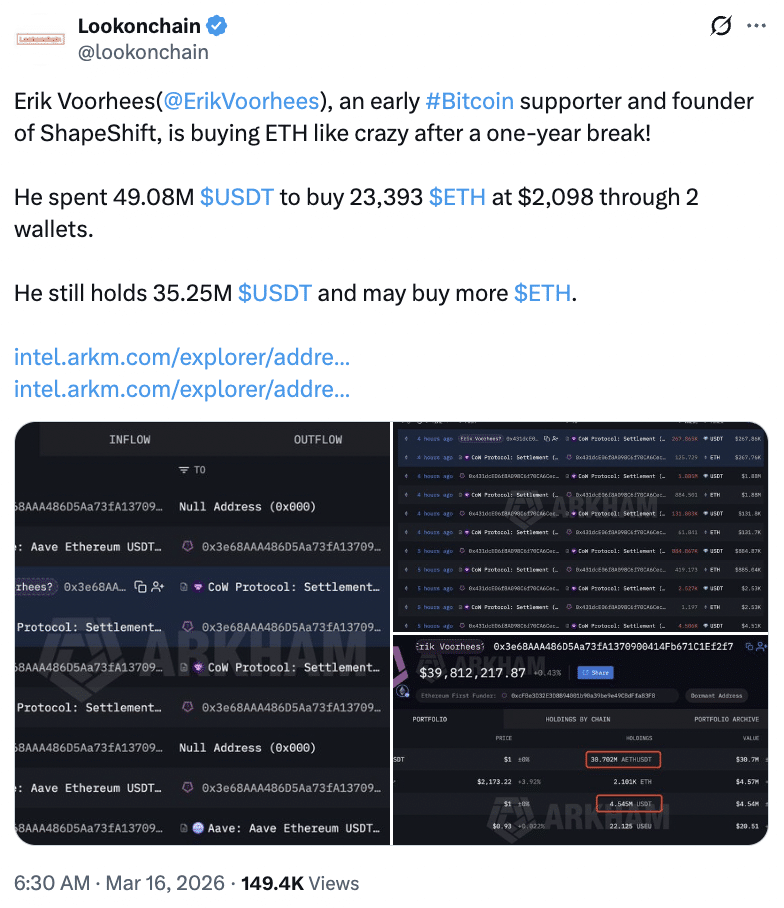
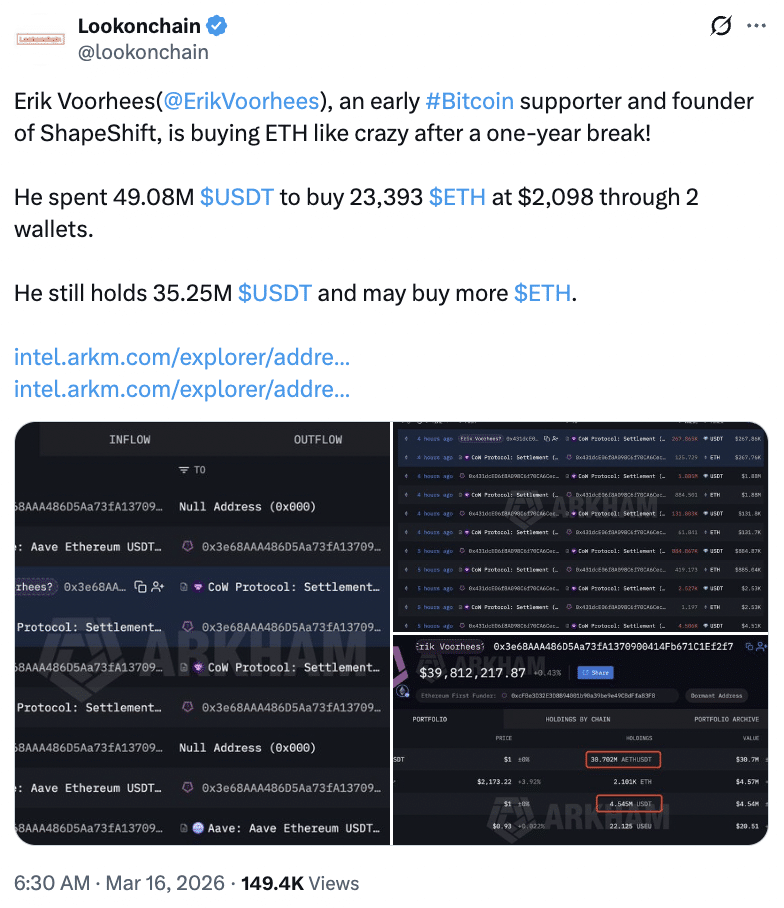
Source: Lookonchain/X

However, the narrative took a sharp turn when Voorhees publicly denied any involvement and said,

I did not buy any eth and those tracking sites are a scam.

Now, this throws darts at two opposite possibilities. In the first case, it could be a different investor with similar wallet activity, or simply a misidentification by tracking platforms.

However, another possibility is stealth accumulation, where large investors buy quietly to avoid moving the market.

Whatever the possibilities may be, such whale movements do impact how investors perceive and feel about the token’s future.


Final Summary

  • Price weakness is being used as an opportunity by large players, not a warning sign.
  • ETF outflows may look bearish, but on-chain data shows whales are steadily increasing holdings.

Perguntas relacionadas

QWhat recent on-chain activity is linked to a major whale, and how much ETH was accumulated?

ARecent on-chain data suggests a major whale, reportedly linked to Erik Voorhees, deployed nearly $260 million in USDT to accumulate more than 120,000 ETH over the past two weeks.

QWhat is the average buying price for the whale's ETH accumulation, and why is it significant?

AThe average buying price for the whale's accumulation stands at around $2,162, which now acts as a key support level for the market.

QHow does the current retail activity for Ethereum compare to the behavior of large whales, according to the article?

ARetail activity is currently low, which is a sign the market is in a quieter phase where large investors are accumulating, while retail investors tend to buy at higher prices and sell during dips.

QWhat was Erik Voorhees's public response to the reports linking him to the whale activity?

AErik Voorhees publicly denied any involvement, stating, 'I did not buy any eth and those tracking sites are a scam.'

QWhat is one possible explanation given in the article for the whale's activity if it is not Voorhees?

AOne possibility is that it could be a different investor with similar wallet activity, or simply a misidentification by tracking platforms. Another possibility is stealth accumulation, where large investors buy quietly to avoid moving the market.

Leituras Relacionadas

In Jinjiang, Fujian, a Storage Super Unicorn Lies Quiet

In Fujian's Jinjiang, a city known for sportswear, lies a quiet semiconductor giant: Fujian Jinhua Integrated Circuit Co. (JHICC). Once a promising domestic DRAM manufacturer alongside Yangtze Memory and ChangXin Memory Technologies (CXMT), its journey was derailed in 2018 when the U.S. placed it on an Entity List and filed criminal charges for alleged trade secret theft. This halted production for years. A turning point came in February 2024 when a U.S. federal court found JHICC not guilty. However, it had lost crucial time. While CXMT soared to become a top-valued A-share company in 2024, JHICC, with an estimated valuation of 80 billion RMB, was just restarting. Its current output is primarily customized DDR4 chips, not the advanced DDR5/HBM demanded for AI, but it still benefits from the broader memory chip upcycle. JHICC's story is tied to Chen Zhengkun, a veteran engineer who left Micron to lead the venture. Founded in 2016 with state-backed funding, JHICC partnered with Taiwan's UMC to develop DRAM technology. Rapid progress was cut short by the U.S. actions, which Micron initiated, partly due to its heavy reliance on the Chinese market. Post-sanctions, Chen's team worked to rebuild the production line with reduced reliance on U.S. technology. According to its records, JHICC achieved small-scale production and revenue growth under immense pressure. It now focuses on the stable "niche" DRAM market (e.g., TVs, routers) with a monthly capacity of ~40,000 wafers, aiming for 60,000 by 2026. It holds over 1,000 patents but remains on the Entity List. For Jinjiang, investing in JHICC was a bold industrial leap. The local government provided unwavering financial and logistical support during the crisis, helping the company survive. JHICC has become the anchor for a growing local semiconductor cluster. Though its scale lags behind domestic peers, JHICC's persistence symbolizes a hard-won foothold in a global market long dominated by Samsung, SK Hynix, and Micron. Having missed one boom, it seeks a place in the new AI-driven memory supercycle.

marsbitHá 1h

In Jinjiang, Fujian, a Storage Super Unicorn Lies Quiet

marsbitHá 1h

Trading

Spot
活动图片





