Senator Defends CLARITY Act As Developer Protection Debate Heats Up

bitcoinistPublicado em 2026-03-29Última atualização em 2026-03-29

Resumo

A crypto developer's case is driving a key regulatory debate in Washington. Roman Storm, co-founder of Tornado Cash, was convicted in 2025 for operating an unlicensed money-transmitting business, causing concern among developers. This has fueled a public dispute between Senator Cynthia Lummis and crypto attorney Jake Chervinsky over the CLARITY Act. Chervinsky argues that Title 3 of the bill contains broad language that could classify non-custodial software developers as money transmitters, subjecting them to KYC obligations and undermining intended protections. Lummis defends recent bipartisan revisions, calling the act the "strongest protection for DeFi and developers ever enacted." However, the latest text remains unpublished, leaving the industry awaiting concrete details amid high stakes for developer liability. The bill is gaining momentum and is expected to undergo a Senate committee markup in April.

A crypto developer was convicted last year for running an unlicensed money-transmitting business. That case — and others like it — is now driving one of the sharpest disagreements in Washington over how the US plans to regulate decentralized finance.

The Conviction That Changed The Conversation

Roman Storm, co-founder of the cryptocurrency mixing platform Tornado Cash, was found guilty in August 2025 of conspiracy charges tied to the operation of an unlicensed money-transmitting service.

His conviction sent a chill through the developer community. It also made the legal definitions buried inside pending crypto legislation feel a lot more urgent.

That backdrop is now shaping a public dispute between Senator Cynthia Lummis and prominent crypto attorney Jake Chervinsky over whether the Digital Asset Market Clarity Act — widely known as the CLARITY Act — actually protects the developers it claims to defend.
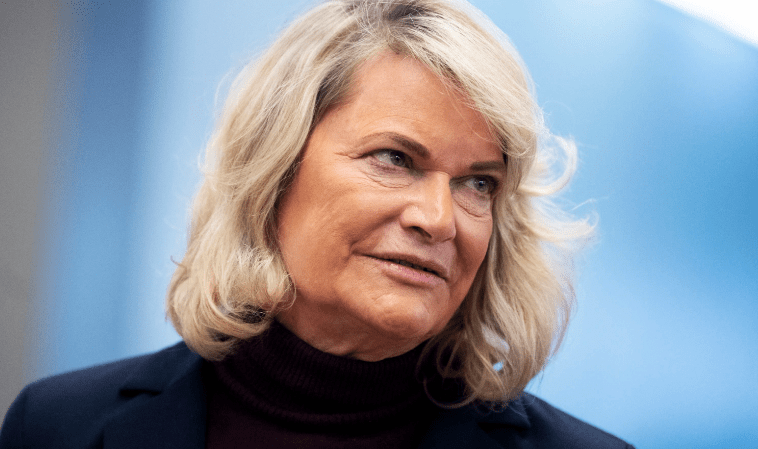
Sen. Cynthia Lummis. Image: Tom Williams/CQ Roll Call via AP file

CLARITY Act: What Chervinsky Gets At

Chervinsky’s concern is specific. Title 3 of the current Senate Banking Committee draft, he argues, contains money transmitter language broad enough to pull non-custodial software developers into Bank Secrecy Act territory — meaning KYC obligations and the regulatory exposure that comes with them.

His position: that result would effectively hollow out the Blockchain Regulatory Certainty Act, which was written precisely to keep non-custodial builders out of that category.

“The biggest challenge is ensuring non-custodial software developers aren’t misclassified as money transmitters,” Chervinsky said. He called the issue non-negotiable for DeFi, and said it remains unsettled.

The tension he’s flagging isn’t small. Section 604 of the CLARITY Act does incorporate the BRCA, which states that developers who don’t hold or control user funds should not be treated as financial institutions. But Chervinsky’s read is that other language in Title 3 creates enough ambiguity to undo that protection in practice.

On Friday, Lummis fired back directly. She said recent bipartisan revisions to Title 3 make the bill the strongest protection for DeFi developers ever put into law.

“Don’t believe the FUD,” she posted on X, urging supporters to back the legislation’s passage.

BTCUSD now trading at $66,508. Chart: TradingView

Text Still Not Public

While earlier drafts of the CLARITY Act have been made public, the latest negotiated revisions referenced by Cynthia Lummis have not yet been fully released. That means the specific changes she is describing cannot be independently verified — at least for now.

What is known: the bill is gaining momentum. Bipartisan progress on stablecoin rewards provisions has pushed it closer to a Senate Banking Committee markup, expected sometime in April.

Chervinsky has noted that those stablecoin provisions have consumed most of the public attention, leaving the developer protection debate in the background despite its significance.

For developers watching closely, the stakes could not be more concrete. The question of whether writing non-custodial software qualifies someone as a money transmitter is not theoretical.

Roman Storm found that out in court. Until the revised CLARITY Act text is available for review, the industry’s only assurance is a senator’s word on social media.

Featured image from Pexels, chart from TradingView

Perguntas relacionadas

QWhat was Roman Storm convicted of in August 2025?

ARoman Storm, co-founder of Tornado Cash, was convicted of conspiracy charges tied to the operation of an unlicensed money-transmitting service.

QWhat is the core of Jake Chervinsky's concern regarding Title 3 of the CLARITY Act draft?

AChervinsky's concern is that Title 3 contains money transmitter language broad enough to subject non-custodial software developers to KYC obligations and Bank Secrecy Act regulations, which would undermine the intended protections of the Blockchain Regulatory Certainty Act (BRCA).

QHow did Senator Cynthia Lummis respond to the criticism of the CLARITY Act?

ASenator Lummis fired back on social media, stating that recent bipartisan revisions to Title 3 make the bill the 'strongest protection for DeFi and developers ever enacted' and urged supporters to 'Don't believe the FUD' and back the legislation's passage.

QWhy can the specific changes to the CLARITY Act that Lummis referenced not be independently verified?

AThe latest negotiated revisions to the bill have not yet been fully released to the public, so the specific changes she described cannot be independently verified.

QWhat real-world case exemplifies the high stakes of the developer protection debate for the crypto industry?

AThe conviction of Tornado Cash co-founder Roman Storm for running an unlicensed money-transmitting business is the concrete example that shows the question of whether writing non-custodial software qualifies someone as a money transmitter is not theoretical.

Leituras Relacionadas

In-depth: The Foreign Guest Genspark

The article "The Foreign Guest: Genspark" investigates the identity and business practices of AI startup Genspark, which presents itself as a Palo Alto-based "AI Costco" offering a subscription bundle of over 70 models and numerous AI agent tools. Despite its official Silicon Valley narrative, Genspark's founding team has deep roots in Chinese tech giant Baidu, a history systematically downplayed in its branding. The company actively cultivates an image as an elite US firm, heavily publicizing partnerships and endorsements from OpenAI, Anthropic, and Microsoft, while distancing itself from the Chinese AI community and obscuring its connections to Chinese investors and open-weight models (like those from DeepSeek, Moonshot AI, and MiniMax) that power its services. Genspark's core strategy involves rapidly cloning and integrating successful AI product concepts (e.g., from Perplexity, Manus, Plaud) into its unified platform, supported by aggressive marketing, including Super Bowl ads and paid native content in publications like The Wall Street Journal. Critically, the article suggests a significant portion of its engineering and product development is conducted by a team in Beijing, operating outside its official US corporate structure. This duality allows Genspark to leverage Chinese talent and models for efficiency and cost reduction while constructing a public facade as a purely American success story. The piece concludes that Genspark's most effective agent is its own corporate identity, meticulously engineered to obscure its Chinese underpinnings and be perceived solely as a Silicon Valley company.

marsbitHá 40m

In-depth: The Foreign Guest Genspark

marsbitHá 40m

Debate: Korean Workers Fear Unemployment, While Musk Envisions a Society 'Without Work'?

While South Korean auto workers fear job losses from robotics, Elon Musk envisions a future where AI and robots render most work optional. This article explores the growing tension between immediate anxieties over automation and long-term visions of a post-work society. The piece begins with recent strikes at Hyundai's Korean plants, where unions, amid standard wage negotiations, also sought job guarantees against advancing robotics—specifically mentioning Boston Dynamics' Atlas. This reflects how anxiety about technological displacement is emerging even before robots are fully capable of replacing skilled labor on assembly lines. The author argues that while current robotics still struggle with the nuanced, experiential knowledge of veteran workers, the *perception* of imminent replacement is fueling social conflict prematurely. This modern "Luddite" sentiment is compared to the 19th-century English textile workers who smashed machines. Historically, Luddites weren't simply anti-technology; they were protesting the rapid devaluation of their skills and the unequal distribution of productivity gains. Similarly, today's workers ask who will bear the cost of transition and share in the new wealth created by machines. In contrast, figures like Elon Musk propose an optimistic endpoint: with AI and robotics driving extreme abundance, the link between work and survival could break. He suggests concepts like "Universal High Income" could allow society to share the technological bounty, transforming work from a necessity into a choice. The core challenge, however, lies in the transition. The author notes that technology's benefits diffuse slowly, while its disruptive costs—job losses, skill obsolescence—can be concentrated and immediate. The risk is a painful interim period where productivity gains are captured by a few before new social contracts, safety nets, and retraining systems are established. The conclusion calls for proactive governance. Just as past industrial revolutions gave rise to labor standards and social safety nets, the robotics era needs its own frameworks. These should address job transition support, distribution of productivity gains, safety liability, and ethical deployment. Embracing such "constraints" is not opposition to progress but a necessary step to ensure technology benefits society broadly. The discussion sparked by Hyundai's workers, therefore, is not premature but essential.

marsbitHá 53m

Debate: Korean Workers Fear Unemployment, While Musk Envisions a Society 'Without Work'?

marsbitHá 53m

Trading

Spot
活动图片