SEC Proposal a ‘Significant’ Step Forward From ‘Ill-Suited’ Crypto Rules: Commissioner Peirce

cryptonews.ruPublicado em 2026-08-19Última atualização em 2026-08-19

Resumo

A U.S. Securities and Exchange Commission (SEC) commissioner, Hester M. Peirce, has called a new SEC proposal a significant improvement over what she termed a "misfit" set of crypto rules. Peirce stated that a whole generation has struggled due to the SEC's insistence on applying unsuitable regulations to cryptocurrencies, but the new proposal moves toward "clear, sensible, and enforceable rules for crypto offerings." SEC Chairman Paul S. Atkins also welcomed the initiative, noting in a separate statement that the agency's previous enforcement-heavy approach had driven investment overseas, limiting investor protections domestically. The proposal, announced on Tuesday, outlines new rules aimed at creating a clear and purposeful framework for certain investment contracts involving crypto assets, designed to allow organizations to raise capital while protecting investors. This move comes shortly after the U.S. Senate failed to advance the comprehensive Digital Asset Market Clarity (CLARITY) Act. Atkins had previously stated the SEC was prepared to develop rules for digital assets if the Senate could not pass the CLARITY Act. Meanwhile, Galaxy Digital has lowered its estimated odds of the CLARITY Act passing by 2026 to just 10%, citing numerous unresolved policy questions and the Senate's limited time—only about two to three weeks after reconvening on September 14—to pass it.

A new proposal by the U.S. Securities and Exchange Commission (SEC) is a significant step forward from the complex of ‘ill-suited’ crypto rules, according to Commissioner Hester M. Peirce.

“An entire generation has struggled under the SEC’s persistent course” and the application of “a set of ill-suited rules to crypto,” but the SEC’s new crypto guidelines bring “clear, sensible, and workable rules for crypto offerings” closer, Peirce said in a statement published on Tuesday.

SEC Chairman Paul S. Atkins also welcomed the initiative. The agency’s previous approach, largely based on enforcement, “has pushed investment overseas, limiting the types of protections we can provide investors here,” he said in a separate statement.

In a notice published on Tuesday, the SEC proposed new rules to create a “clear and goal-appropriate framework for certain investment contracts related to crypto assets.” It will allow organizations to raise capital while maintaining investor protection.

The proposal came just days after the U.S. Senate failed to advance the Digital Asset Market Clarity (CLARITY Act) bill. The document is intended to create a comprehensive framework for financial regulators overseeing the crypto industry.

On July 27, Atkins told CNBC that the agency was “ready, willing, and able to develop rules” for digital assets if the Senate could not pass the CLARITY Act.

Meanwhile, Galaxy Digital lowered its estimate of the chances of the CLARITY Act being passed in 2026 to 10%. The company warned that numerous policy questions remained unresolved, and after resuming work on September 14, the Senate would have only about two to three weeks to pass it.

Journal:Why Meta is Choosing Partners, Not Power in Its 2026 Stablecoin Push

end-content

Perguntas relacionadas

QWhat is SEC Commissioner Hester M. Peirce's view on the SEC's new proposal for crypto?

ASEC Commissioner Hester M. Peirce stated that the new SEC proposal is a significant step forward compared to the previous set of 'unsuitable' crypto rules. She believes it moves towards 'clear, reasonable, and enforceable rules for cryptocurrency offerings.'

QAccording to former SEC Chairman Paul S. Atkins, what was the consequence of the agency's previous enforcement-heavy approach to crypto?

AFormer SEC Chairman Paul S. Atkins stated that the agency's previous enforcement-heavy approach 'pushed investments overseas, limiting the types of protections we can provide to investors here' in the United States.

QWhat is the main goal of the new rules proposed by the SEC according to its published notice?

AThe main goal of the new rules proposed by the SEC is to create a 'clear and purpose-appropriate framework for certain investment contracts related to crypto-assets.' This framework is intended to allow organizations to raise capital while maintaining investor protections.

QWhat major legislative effort failed in the U.S. Senate just before the SEC announced its new crypto proposal?

AJust before the SEC announced its new proposal, the U.S. Senate failed to advance a bill called the Digital Asset Market Clarity (CLARITY Act), which aimed to create a comprehensive framework for financial regulators overseeing the crypto industry.

QWhat is Galaxy Digital's current assessment of the chances for the CLARITY Act to pass, and what are the reasons given?

AGalaxy Digital has lowered its assessment of the chances for the CLARITY Act to pass in 2026 to just 10%. The company warned that numerous policy issues remain unresolved and that, after Congress resumes work on September 14th, the Senate will only have about two to three weeks to pass it.

Leituras Relacionadas

Meme Coins Peak in 17.2 Days on Average: Ephemeral Fervor and the Great Capital Migration

Meme Coins' Average Peak: 17.2 Days - A Fleeting Frenzy and a Capital Exodus A Bloomberg analysis reveals the stark reality behind meme coin mania: extreme short-term speculation. On average, a new meme coin reaches its all-time high (ATH) a mere 17.2 days after its first trade. Alarmingly, 25% of projects peak within just 38.4 hours. The subsequent decline is brutal, with the median time to drop 95% from the peak and enter dormancy being 370 days. Only about 3% ever break their previous ATH again. This drastic compression of the speculative lifecycle is driven by zero-barrier token creation on platforms like Pump.fun and automated trading tools like sniper bots, which enable instant deployment and rapid pump-and-dump schemes. The market is saturated, diluting liquidity and forcing a predatory, player-versus-player environment where early holders quickly exit with minimal gains. As the odds of success in traditional meme coins diminish, speculative capital is migrating. Decentralized prediction markets like Polymarket, offering transparent, event-driven betting, are attracting significant liquidity. Concurrently, AI agent tokens are drawing funds with their combination of high volatility and long-term narrative tied to artificial intelligence. This capital shift marks a move away from simplistic "greater fool" assets toward platforms with clearer mechanisms or dynamic technological themes.

marsbitHá 26m

Meme Coins Peak in 17.2 Days on Average: Ephemeral Fervor and the Great Capital Migration

marsbitHá 26m

CoreWeave Default Probability Exceeds 60%! Huang Renxun 'Puts Out Fire': Financing Costs Declining, No Need for NVIDIA to Provide Backstop

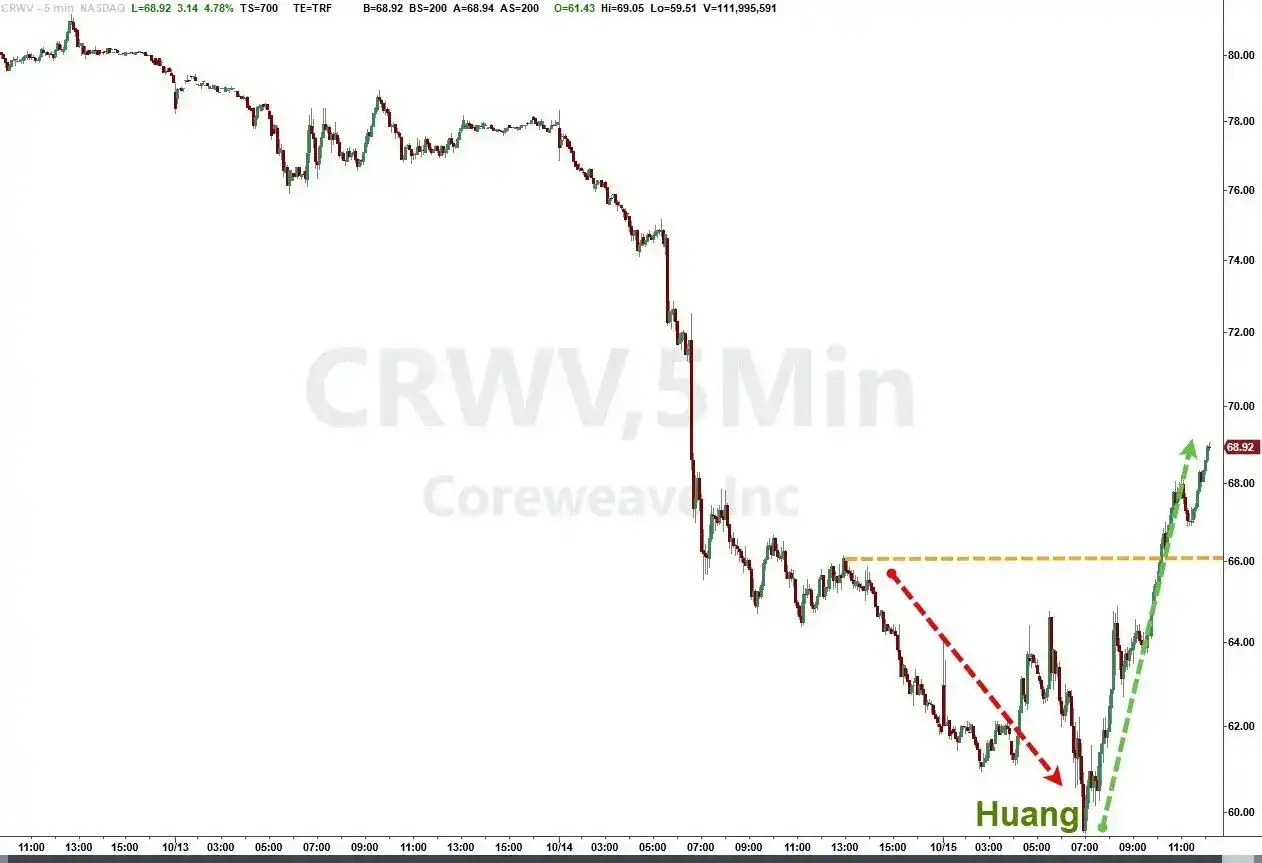
CoreWeave, a major AI cloud service provider and key NVIDIA customer, is facing heightened credit market concerns. Its five-year credit default swap (CDS) spreads soared to a record high of over 1190 basis points, implying a perceived default probability exceeding 60%. Concurrently, its bond prices plummeted, with yields surging above 15-16%, reflecting intense investor worries about its ability to service nearly $50 billion in debt while remaining unprofitable. This stress is spreading within the AI infrastructure sector. CDS spreads for companies like Oracle, SoftBank, NVIDIA, and others also widened significantly, indicating a broader market reassessment of the debt risks behind massive AI capital expenditures. In response, NVIDIA CEO Jensen Huang publicly expressed confidence in CoreWeave, stating its "financial strength is growing daily" and its cost of capital is declining. He explicitly stated NVIDIA sees no need to provide a financial backstop for CoreWeave, in which it holds a roughly 10% stake. His comments helped CoreWeave's stock recover from early losses. The core issue under scrutiny is whether the future cash flows from AI investments can cover the enormous upfront costs and interest burdens, especially as financing becomes more expensive. The situation highlights a critical shift in market focus: from purely evaluating AI compute demand to questioning the sustainability of the debt-fueled expansion models used to build that capacity.

marsbitHá 46m

CoreWeave Default Probability Exceeds 60%! Huang Renxun 'Puts Out Fire': Financing Costs Declining, No Need for NVIDIA to Provide Backstop

marsbitHá 46m

Trading

Spot
活动图片