ROBO airdrop under scrutiny as $8M linked to suspected sybil wallets

ambcryptoPublicado em 2026-03-20Última atualização em 2026-03-20

Resumo

Fabric Protocol's ROBO token airdrop is under scrutiny after blockchain analytics from Bubblemaps revealed that approximately 7,000 wallets, exhibiting identical transaction patterns, claimed 199 million ROBO tokens (40% of the airdrop), valued at around $8 million at launch. The analysis identified a coordinated funding structure where new wallets were created, funded with similar amounts of ETH from at least seven exchanges, and routed through multiple intermediary layers before claiming the airdrop, strongly suggesting a Sybil attack by a single entity. While no evidence links this activity to the project's core teams, the incident highlights persistent vulnerabilities in airdrop mechanics and could introduce future sell pressure from the concentrated tokens. Despite the findings, the token's price has shown short-term resilience.

Fabric Protocol’s ROBO token is facing scrutiny after on-chain data suggested that a single entity may have captured a significant portion of its airdrop through coordinated wallet activity.

According to blockchain analytics platform Bubblemaps, more than 7,000 wallets displaying similar transaction patterns collectively claimed around 199 million ROBO tokens, representing 40% of the total airdrop.

At launch, this allocation was valued at approximately $8m.

The ROBO token launched on 27 February as part of Fabric Protocol’s broader push to build a robotics-focused network layer powered by Openmind.

7,000 wallets, one pattern

Bubblemaps’ analysis identified a consistent funding and transaction structure across thousands of wallets.

Roughly two months before the token launch, around 7,500 newly created wallets were funded with amounts of ETH similar to those. These wallets then routed funds through multiple intermediary addresses before ultimately claiming the ROBO airdrop.

The activity followed a repeatable pattern:

  • Fresh wallets funded with near-identical ETH amounts
  • Funds routed through three layers of intermediary wallets
  • Final wallets used to claim airdropped ROBO tokens

In total, these wallets accounted for a large share of the distribution, raising concerns about a coordinated sybil attack. In this attack, a single entity uses multiple addresses to game allocation systems.

Exchange funding points to coordinated effort

The report further noted that at least seven exchanges were used to fund the wallets involved.

According to Bubblemaps, similarities in timing, funding sources, and transaction flows suggest the wallets were controlled by a single entity rather than independent users.

Such behavior is commonly associated with attempts to exploit airdrop mechanics, allowing one participant to capture a disproportionate share of tokens intended for broader distribution.

No evidence of team involvement

Bubblemaps clarified that it found no evidence linking the activity to Fabric Protocol or Openmind’s core teams.

The analytics firm said it shared its findings with Fabric Protocol before publication, describing the team as “open and cooperative” during the process.

Market reaction remains mixed

Despite the findings, ROBO’s price has shown resilience in the short term.

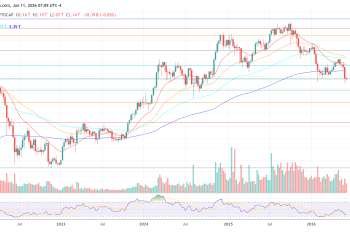
At press time, the token was trading around $0.025. Since its launch, it has gained roughly 14%, according to CoinMarketCap data. However, the broader chart shows a volatile trajectory since launch, with prices trending lower from early March highs.

The concentration of tokens among a small group of wallets could introduce future sell pressure, particularly if those holdings are gradually distributed into the market.

Airdrop design under pressure

The incident highlights ongoing challenges with token distribution models, particularly for projects that rely on airdrops to bootstrap community participation.

Sybil attacks remain one of the most persistent issues, as sophisticated actors use automated wallet creation and funding strategies to bypass eligibility filters.

While no wrongdoing has been attributed to the project team, the scale of the activity may renew calls for stronger anti-sybil mechanisms across the industry.


Final Summary

  • Bubblemaps data suggests a single entity may have captured 40% of the ROBO airdrop through coordinated wallet activity.
  • The case underscores persistent vulnerabilities in airdrop design, even as projects attempt broader token distribution.


Criptomoedas em alta

Perguntas relacionadas

QWhat percentage of the total ROBO airdrop was captured by the suspected sybil wallets according to Bubblemaps?

A40% of the total airdrop, which was 199 million ROBO tokens.

QWhat was the estimated USD value of the ROBO tokens captured by the 7,000+ suspicious wallets at launch?

AThe allocation was valued at approximately $8 million at launch.

QWhat consistent pattern did the analysis identify across the thousands of wallets involved?

AThe pattern involved: fresh wallets funded with near-identical ETH amounts, funds routed through three layers of intermediary wallets, and the final wallets used to claim the airdropped ROBO tokens.

QDid the analysis find any evidence linking this activity to the core teams of Fabric Protocol or Openmind?

ANo, Bubblemaps clarified that it found no evidence linking the activity to Fabric Protocol or Openmind’s core teams.

QWhat is one potential market consequence of the concentration of tokens among this small group of wallets?

AThe concentration could introduce future sell pressure, particularly if those holdings are gradually distributed into the market.

Leituras Relacionadas

Can Generative Models Finally Be Trained End-to-End? The Core Is a For Loop

This article introduces a novel training paradigm for generative models called Explorative Modeling (XM), which enables true end-to-end training. Traditionally, powerful generative models like autoregressive and diffusion models are not trained end-to-end. They are trained to predict a single small step but require iterative multi-step sampling for inference. This "exposure bias" leads to error accumulation and limits performance. The core challenge XM addresses is "mode blurring." In generative tasks, a single input (e.g., "generate a dog") corresponds to many valid outputs (multiple modes). Standard training objectives like reconstruction loss force the model to average these modes, producing unrealistic, blurry outputs. To avoid this, existing models break generation into many small, almost deterministic steps, sacrificing end-to-end training. XM tackles this by restructuring the training loop itself. Its key insight is to amplify "generative expressivity." For each training input, instead of generating one sample, the model generates K candidate outputs. Only the candidate closest to the real data is used for computing the loss and updating the model via backpropagation. This simple "best-of-K" mechanism is implemented as a short for-loop. By exploring multiple possibilities, the model learns to distribute its guesses across different modes rather than collapsing to their uninformative average. The paper demonstrates that "exploration" acts as a new, powerful scaling axis. Gains from XM increase with model size, data scale, and compute. Experiments show improvements in FID scores for image generation and significant efficiency gains, sometimes outperforming larger models without exploration. When pushed to the limit, XM enables fully single-step, end-to-end generative models. In robotics tasks, an "Explorative Policy" matched the performance of a 100-step Diffusion Policy with a single forward pass, drastically improving inference speed. While the best-of-K concept is not entirely new, the authors' contribution lies in formally understanding it as a direct method to boost generative expressivity without fragmenting the generation process. This work suggests that as models scale, enhancing exploration during training may become crucial for overcoming fundamental performance bottlenecks.

marsbitHá 8m

Can Generative Models Finally Be Trained End-to-End? The Core Is a For Loop

marsbitHá 8m

Annual Salary of Millions Competing for Electricians, Meta Rushes to Open Its Own Technical School

The AI boom is facing an unexpected bottleneck: a severe shortage of skilled construction workers and electricians. As tech giants like Meta, OpenAI, and Alphabet race to build massive data centers—such as OpenAI's $16 billion "Stargate" project—they are hitting a critical labor wall. The U.S. needs an estimated 130,000 more electricians, 240,000 construction workers, and 150,000 supervisors by 2030 for AI infrastructure alone, but tens of thousands of electrician jobs go unfilled each year. While AI companies offer high premiums, with electricians earning up to $280,000 annually, worker scarcity still causes massive losses—delays on a single project can cost $14.2 million per month. The complexity of building AI data centers, which require immense power (equivalent to powering hundreds of thousands of homes), sophisticated electrical systems, and advanced liquid cooling solutions, demands highly skilled technicians who are in short supply. To combat this, companies are investing heavily in training. Meta has committed $115 million to a free training school offering tuition, housing, and stipends, targeting 5,000 new workers. OpenAI is partnering with unions to secure skilled labor. These efforts are paying off, with a significant rise in Gen Z interest in trade schools over college. However, the power demands are staggering. AI data centers are driving a rapid surge in electricity consumption, projected to account for up to 12% of U.S. power use by 2028 and raising costs for consumers. Furthermore, the construction boom is project-based, leading to a potential future glut of trained workers once building peaks, which could depress wages industry-wide. The race for AI supremacy now depends as much on skilled hands as on advanced chips.

marsbitHá 1h

Annual Salary of Millions Competing for Electricians, Meta Rushes to Open Its Own Technical School

marsbitHá 1h

Trading

Spot

Artigos em Destaque

Como comprar ROBO

Bem-vindo à HTX.com!Tornámos a compra de Fabric Protocol (ROBO) simples e conveniente.Segue o nosso guia passo a passo para iniciar a tua jornada no mundo das criptos.Passo 1: cria a tua conta HTXUtiliza o teu e-mail ou número de telefone para te inscreveres numa conta gratuita na HTX.Desfruta de um processo de inscrição sem complicações e desbloqueia todas as funcionalidades.Obter a minha contaPasso 2: vai para Comprar Cripto e escolhe o teu método de pagamentoCartão de crédito/débito: usa o teu visa ou mastercard para comprar Fabric Protocol (ROBO) instantaneamente.Saldo: usa os fundos da tua conta HTX para transacionar sem problemas.Terceiros: adicionamos métodos de pagamento populares, como Google Pay e Apple Pay, para aumentar a conveniência.P2P: transaciona diretamente com outros utilizadores na HTX.Mercado de balcão (OTC): oferecemos serviços personalizados e taxas de câmbio competitivas para os traders.Passo 3: armazena teu Fabric Protocol (ROBO)Depois de comprar o teu Fabric Protocol (ROBO), armazena-o na tua conta HTX.Alternativamente, podes enviá-lo para outro lugar através de transferência blockchain ou usá-lo para transacionar outras criptomoedas.Passo 4: transaciona Fabric Protocol (ROBO)Transaciona facilmente Fabric Protocol (ROBO) no mercado à vista da HTX.Acede simplesmente à tua conta, seleciona o teu par de trading, executa as tuas transações e monitoriza em tempo real.Oferecemos uma experiência de fácil utilização tanto para principiantes como para traders experientes.

442 Visualizações TotaisPublicado em {updateTime}Atualizado em 2026.06.02

Como comprar ROBO

Discussões

Bem-vindo à Comunidade HTX. Aqui, pode manter-se informado sobre os mais recentes desenvolvimentos da plataforma e obter acesso a análises profissionais de mercado. As opiniões dos utilizadores sobre o preço de ROBO (ROBO) são apresentadas abaixo.

活动图片