Robinhood CEO Interview: Meme Coin Boom Was Unexpected, My Investment Portfolio Is Quite Diverse

Odaily星球日报Publicado em 2026-08-24Última atualização em 2026-08-24

Resumo

Interview with Robinhood CEO Vlad Tenev on The Iced Coffee Hour podcast. Tenev discussed Robinhood Chain, calling it the future of finance. He highlighted its recent launch, rapid growth in TVL, and support for tokenized stocks tradable globally. He noted the unexpected popularity of meme coins on the chain and unique product combinations created by developers. Tenev addressed concerns about AI and stock market bubbles, stating his young user base often views market dips as opportunities. He acknowledged the complexity of balancing investments in chips and energy sectors. He identified optimizing the unified user experience across Robinhood's expanding product lines as the company's biggest current challenge. Responding to criticism, Tenev explained Robinhood's focus on three areas: improving core infrastructure, adding standard financial products it currently lacks, and pioneering innovations like prediction markets and AI-agent trading. He emphasized user personalization, allowing features like prediction markets to be hidden. On personal investment, Tenev stated his portfolio is diversified and he enjoys cryptocurrency trading. He expressed long-term optimism about Bitcoin's unique first-mover status and brand strength, while avoiding specific price predictions. In his personal life, Tenev focuses on teaching his children math, maintaining his health through sauna and cold therapy routines, and building better sleep habits by journaling and reading physical books befor...

Podcast from The Iced Coffee Hour

Compiled / Odaily Planet Daily Golem(@web 3_golem)
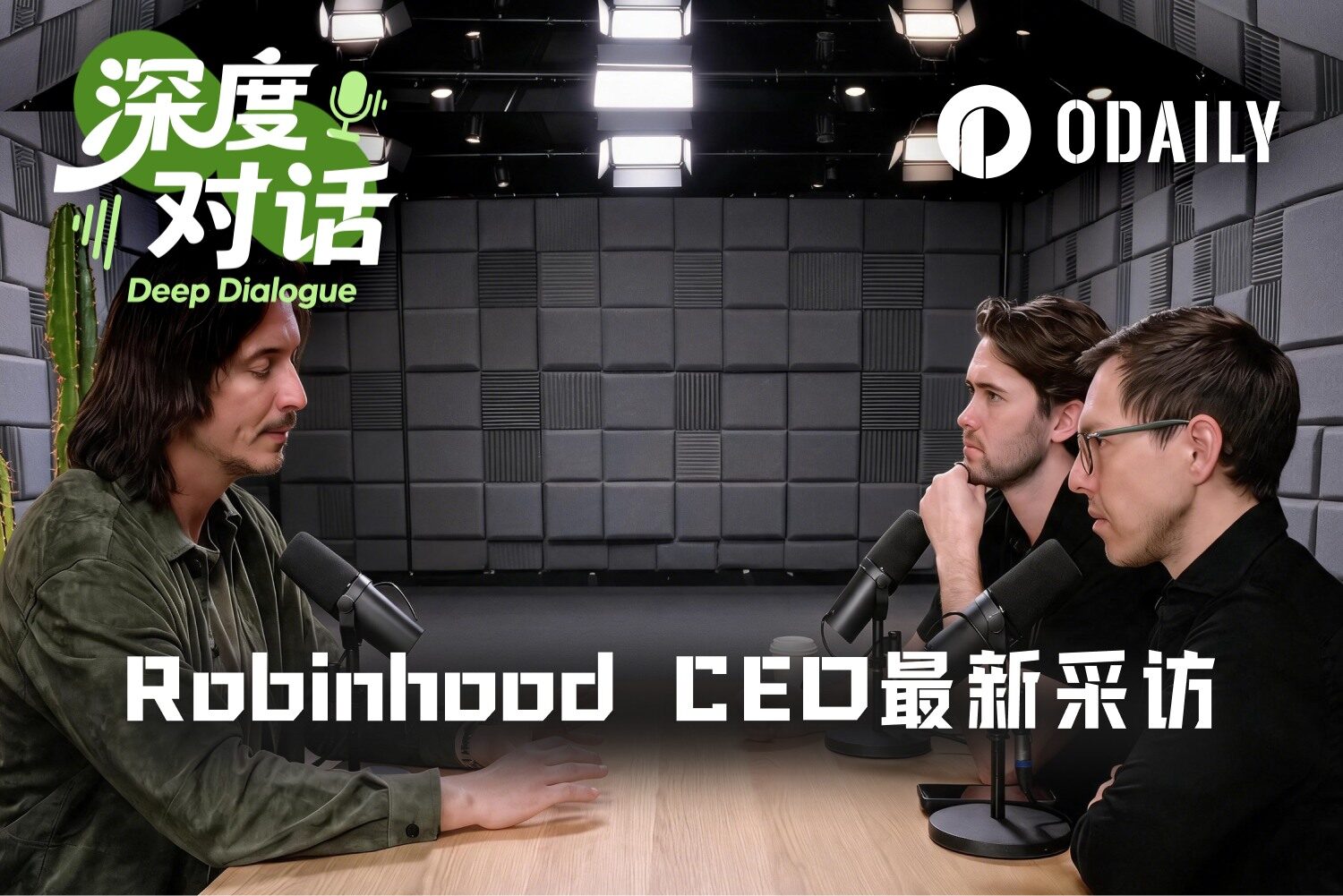
Editor's Note: On August 24th, Robinhood CEO Vlad Tenev was interviewed in a video by the overseas podcast The Iced Coffee Hour. In the interview, Vlad Tenev shared his vision for Robinhood Chain, his views on the current stock market, Robinhood's biggest current challenges, and responded to market criticism about the company launching prediction markets. Vlad Tenev emphasized that the Meme coin boom on Robinhood Chain was unexpected by the team, but he personally likes cryptocurrency, having dabbled in crypto trading for a while, and enjoys the feeling of camaraderie. Vlad Tenev also expressed his long-term optimism about Bitcoin.

In this interview, Vlad Tenev also shared aspects of his personal life. Outside of work, he focuses on teaching his children math, has recently become a fan of saunas, cold baths, and contrast therapy, and to break the habit of endlessly scrolling on his phone before bed, he is persevering with writing a diary and reading physical books before sleep... Odaily Planet Daily has compiled and edited the core content of the interview as follows, enjoy~

Robinhood Chain Is What the Future of Finance Looks Like

Host: What will the future of finance look like?

Vlad Tenev: I think Robinhood Chain is it. I don't know if you're familiar with Robinhood Chain, but it's basically the hottest chain in the crypto space right now. We launched it a few weeks ago, and it has consistently ranked in the top five for DEX trading volume, with its TVL growing rapidly. One advantage of Robinhood Chain is its support for stock tokens, which are tokenized versions of stocks. Even though they are currently only available to users outside the U.S., they can be traded in over 120 countries/regions globally.

If you hold stock tokens for Tesla, Nvidia, or other companies on Robinhood Chain, you can essentially do everything with them that you can do with on-chain cryptocurrencies. You can send them to other addresses on the chain, just like you would with Bitcoin or Ethereum, and you can also trade them in liquidity pools. Uniswap has some very active liquidity pools on Robinhood Chain, allowing users to provide liquidity and lend.

Although the tax policies in these 120+ countries/regions vary slightly, as long as someone creates a liquidity pool for swapping stock tokens and cryptocurrencies, users can directly exchange them. We initially used stablecoins like USDG, but later developers created various niche pools and built all sorts of protocols that we never imagined would exist.

For example, if a user holds a certain Meme coin, they might directly receive an airdrop of stock tokens. They have linked Meme coins, mainstream cryptocurrencies, and stock tokens to create some unique products, products we ourselves probably wouldn't have thought to create.

Robinhood Chain is a combination of a developer platform with high-yield financial primitives like stock tokens, and we will continue to add to these features.

The problem with other brokerages today is that they are too large. There are many competitors in this field, and the old giants are massive, with assets in the trillions of dollars, but Robinhood delivers products faster and in a more modern way. This means we can attract a younger customer base whose wealth will grow over the coming decades. So, in a way, Robinhood is also a beneficiary of this ongoing wealth transfer wave.

Views on AI and Stock Market Bubbles?

Host: Are you worried about AI and stock market bubbles bursting and having a negative impact on Robinhood?

Vlad Tenev: I think alarm bells are already ringing in some respects. We constantly receive a huge number of feature requests from customers. While a segment of users wanted overseas stock trading features, for a long time, this demand didn't even make the top ten. But about a month or two ago, the most common question I was asked in every interview became, "When are you going to list Korean stocks?"

Investors wanted to trade Korean stocks; no one was asking for prediction markets or cryptocurrencies. While we will list Korean stocks, having so many people ask for it simultaneously was indeed concerning, and as expected, the Korean stock market experienced significant volatility shortly after.

However, our customers have always prioritized innovation. In the past, they were among the early investors in electric vehicles. Now they are clearly interested in cryptocurrencies and AI, but directly investing in AI companies is challenging. We are addressing this through Robinhood Ventures. Previously, everyone was focused on semiconductors; now many are discussing energy. So I think investors need to strike a very delicate balance with chips and energy.

On one hand, AI demand continues to grow, which will inevitably impact chips and all production stages in the underlying tech stack. On the other hand, traders are also buying chips, including some hedge funds who buy them knowing they can resell them at a higher price even if they don't need them. Whether something is undervalued depends on many factors, but if a significant portion of the supply is bought by speculators, problems can arise even in areas with massive growth potential like AI chips.

Host: Do you think the current high stock market is disadvantageous for people in their 20s and 30s?

Vlad Tenev: I think opportunities exist at any time. In 2020, around the time of the COVID-19 pandemic, the stock market crashed, but our customers were buying while customers of other brokerages were selling. Ultimately, our customers bought because they are younger, focused on long-term investment, and saw opportunities. They still hold a fundamental optimism about the national economy, are bullish on the various projects being developed at the time, and the opportunities the stock market offers.

Many people have asked me if I worry about a market correction. Honestly, I'm not too worried because our past experience shows that our young customer base tends to view market corrections as opportunities.

That doesn't mean I hope for a correction. I don't even want consistently declining prices; that's unfortunate for the economy and investors. Everyone hopes for stable, rising prices, but that's not reality. I believe for traders, any market environment holds opportunities that can be seized, though predicting these opportunities and timing them is not easy.

Optimizing User Experience is Robinhood's Biggest Challenge Today

Host: What was your biggest mistake in the past year?

Vlad Tenev: Honestly, I've made plenty of small mistakes, but my approach has always been about how to move forward. I don't like dwelling on the past. Constantly rehashing past decisions only holds you back. What's important is where we are now. Sometimes I even prefer being in a catching-up position, being the underdog, because I feel it gives us a clear target to sprint towards.

Over the past year, for active traders, we launched our prediction markets business. This is an interesting new vertical for us, but we weren't the first player to launch such a product.

Before Robinhood existed, stock trading had been around for decades; even electronic trading was already common. We just optimized it, brought it to smartphones, and made it commission-free. We weren't early in crypto trading either; we launched the service in 2018. Compared to traditional finance companies, that's early, but many crypto-native companies started in 2012 or even earlier. For example, Bitstamp, which we acquired, is one of the longest-operating cryptocurrency exchanges.

So in prediction markets, we're not the first movers either. However, when this type of business gained legal status in the U.S., we were among the first to launch a product. We built and shipped it in just a few weeks, then continuously iterated and expanded. Now it's an annual revenue stream of hundreds of millions of dollars and has been our fastest-growing product line ever.

A challenge I spend a lot of time thinking about now is: since we have so many product lines, how do we ensure a cohesive, unified core experience for users? We are also investing more in personalization and refining the app experience to make the interface cleaner.

Host: How will Robinhood improve in the future in response to market criticism?

Vlad Tenev: There's been criticism that our products lack cohesion and the company's purpose and positioning aren't clear or easy to understand. This criticism is valid, and we've received some similar feedback. People always want new features, like supporting Korean stocks. That request is fine; I even think we should not only support Korean stocks but also stocks from various regional markets. It's just that there are too many things we haven't had time to address because the list of features to build is endless. Our work broadly falls into three categories.

The first category is infrastructure optimization to enhance existing experiences, like faster performance, cleaner and more aesthetically pleasing UI, more reliable UX, so we can better handle traffic spikes, etc. Just in the past year, we've made significant progress in this area.

The second category includes products that other brokerages have but Robinhood doesn't, such as trust accounts, overseas stocks (available on some competitor platforms), and fixed-income products. We have many products not yet launched, and these are quite important components of a customer's investment portfolio.

Beyond that, there's a third category. Not many companies are currently operating in this space, but the core question is, can we innovate, can we be the first among our peers to bring new products to market? Prediction markets, Robinhood Ventures, Robinhood Chain, and Robinhood Earn fall into this category.

We also want to include some completely unexpected products on Robinhood, like AI agent trading. Currently, there aren't any significant, heavyweight institutions or teams doing research in this area, except for us.

Users Who Don't Want to See Prediction Markets Can Choose to Turn Them Off

Host: There's also criticism that Robinhood is too focused on prediction markets, which are seen by some as not much different from gambling. What's your response to that?

Vlad Tenev: Actually, the criticism we receive is two-sided. There is a segment of users who simply don't want to see the prediction markets feature at all. To address this need, we introduced personalization settings and a series of related measures. It's not just about letting users directly turn off the feature; more importantly, it's about ensuring the app shows users what they want to see when they want to see it.

So this is a major focus for us, not just for prediction markets but for many of our different products and features. The core problem to solve is that users often don't even know we've launched a great feature that could benefit them.

So two voices exist: one is "I don't want to see this product (prediction markets)"; the other is "I want to see it more easily; it's buried too deep in the product pages. I don't want to navigate three clicks to find it; I want to see current dynamics immediately." And we believe personalization is the solution to this problem.

Additionally, we are experimenting with another approach. In some cases, if the experience is significantly different, we split the feature into a separate app, like with our banking business. So if a user wants a banking and debit card-focused experience, they can use the banking app; if they want a trading-first experience, they can use the green Robinhood App; if they want full crypto functionality, Robinhood Wallet offers a native DeFi experience.

Personal Investing: Loves Crypto Trading, Optimistic About Bitcoin

Host: Do you personally trade on Robinhood? Or do you keep all your Robinhood shares on the Robinhood platform?

Vlad Tenev: I do not hold my Robinhood shares on the Robinhood platform. That's because my own shares, and the shares of all our employees, are managed by specialized institutions. Employee stock ownership plans have specific management requirements, and there are so-called 10b5-1 plans. I cannot freely trade my Robinhood shares; I must trade according to a specific, pre-established plan that I file in advance. This is a regulatory requirement.

But I do personally use Robinhood to trade. However, I have to be extra careful now when trading individual stocks; I find ETFs much more straightforward. I previously dabbled in cryptocurrency for a while because I genuinely like cryptocurrency. I love crypto trading and enjoy the camaraderie of being in the trenches with everyone. Unfortunately, I don't post on Reddit much anymore; I used it when I first started with Robinhood.

Host: What cryptocurrencies do you hold?

Vlad Tenev: I think cryptocurrency is an interesting asset class to trade. But again, I am not recommending any specific cryptocurrency. My investment portfolio is quite diversified.

Bitcoin is unique in many ways. It's the first crypto asset, the original Meme coin. Its brand is incredibly strong. Imitators can create many Bitcoin knockoffs, but no one can ever replace its status as the first and most trusted crypto asset. When companies think about building crypto reserves, hedging against inflation, or conducting various operations, Bitcoin is the first crypto asset that comes to mind. So, I am optimistic about Bitcoin in the long term. I believe its uniqueness gives it an advantage over its peers, but I cannot predict specific price figures like it reaching $1 million.

Personal Life: Focuses on Teaching Kids Math, Persists with Bedtime Journaling and Reading

Host: Apart from Robinhood, what are your personal goals?

Vlad Tenev: I've been focusing recently on teaching my kids math. I've always believed math is important. I want them to love learning and stay curious, so whenever I have time with them—though far less than I'd like—I try to talk to them about history, encourage them to do math problems, and understand what's going on at school.

They have some advantages I didn't have as a child. For example, they have access to the best tutors, can communicate with anyone they want. What I always worry about is how they can enjoy these benefits without developing too many negative side effects. Growing up as my children, things will likely seem easy, and perhaps they won't have the same driving hunger to advance that I had.

If I didn't work hard back then, my parents would tell me very bluntly: we don't have money for your college, you'll likely need a scholarship, you must get all these things right yourself. Also, we were living in the country on a visa, so our status was very precarious. There was always this underlying tension: if we don't perform well, the whole family might have to move back to Bulgaria.

Now that pressure is somewhat less, which is good in a way. But on the flip side, if the urgency isn't inherently there, forcing it on kids isn't good either. But honestly, I'm really proud of them. Even without that pressure, they've turned out to be wonderful people.

As for other goals, I focus on my health. As I get older, I need to ensure both my body and mind stay in good condition. I've had full-body MRIs, I get regular blood tests, try to exercise consistently, and have recently become a fan of saunas, cold baths, and contrast therapy.

I've also been working hard to establish a consistent bedtime routine because I easily get caught up picking up my phone or iPad, scrolling through the company's Slack, reading documents until the moment I close my eyes, with the phone almost hitting my face. So now, before bed, I write in my journal for 10 to 15 minutes, then read a physical book for 15 to 20 minutes to gradually wind down.

Recommended Reading:

13 Business Lines Achieve $100M+ in Annualized Revenue, Robinhood Advances Towards "Super Financial App"


Criptomoedas em alta

Perguntas relacionadas

QAccording to Vlad Tenev, what is the financial future represented by, and what is one unique feature it enables?

AAccording to Vlad Tenev, the financial future is represented by Robinhood Chain. A unique feature it enables is the trading of tokenized stocks, which are tokenized versions of real stocks, allowing users to perform actions like sending them to other addresses, trading them in liquidity pools, and using them in DeFi protocols, even across over 120 countries/regions.

QWhat is Vlad Tenev's attitude towards potential stock market corrections?

AVlad Tenev is not overly concerned about potential stock market corrections. He states that based on past experience, Robinhood's younger user base tends to view market downturns as opportunities for long-term investment. However, he clarifies he does not desire a downturn, as stable growth is preferable for the economy and investors.

QWhat does Vlad Tenev identify as the biggest challenge for Robinhood currently?

AVlad Tenev identifies optimizing the core user experience across Robinhood's many product lines as the biggest current challenge. He is focused on ensuring a unified, clean, and personalized experience so users can easily discover and access the features that benefit them.

QHow did Vlad Tenev respond to criticisms that Robinhood's prediction markets are akin to gambling?

AVlad Tenev responded by noting they receive feedback from both sides. To address users who dislike prediction markets, Robinhood introduced personalization settings allowing users to turn the feature off. The goal is to tailor the app experience, ensuring users see what they want to see. He also mentioned they consider splitting distinct experiences into separate apps, as done with their banking services.

QWhat is Vlad Tenev's personal view and experience with cryptocurrency trading?

AVlad Tenev personally likes and enjoys cryptocurrency trading. He used to trade crypto actively, appreciating the community and 'fighting alongside everyone' feeling. While he maintains a diversified portfolio, he is optimistic about Bitcoin long-term due to its unique position as the first, most trusted crypto asset and its brand strength, though he avoids specific price predictions.

Leituras Relacionadas

Grayscale Reassesses Zcash: In the Era of AI Surveillance, What is Financial Privacy Worth?

Grayscale Research reevaluates Zcash (ZEC) in the context of AI-powered financial surveillance. The report posits that stablecoins, transparent blockchains, and AI analytics tools are increasing the traceability of digital finance, potentially reigniting mainstream demand for financial privacy as a core monetary attribute. While AI could drive a third wave of privacy concern, Zcash's investment thesis hinges on whether this theoretical demand translates into sustained adoption. Zcash, operational for nearly a decade, uses zero-knowledge proofs to offer users a choice between transparent and shielded transactions, placing control of information disclosure back in users' hands. Recent infrastructure improvements—like wallet enhancements, mining pool expansions, and protocol upgrades—have reduced usability barriers. On-chain data shows shielded transactions comprise ~90% of transaction count, with ~25% of circulating ZEC in shielded pools, indicating existing use. However, significant risks remain. These include regulatory hurdles for exchanges and custodians dealing with shielded assets, past protocol vulnerabilities (theoretical, now patched), long-term quantum computing threats, and execution risks for future scalability upgrades. Grayscale's analysis suggests ZEC's current low market share (~0.6% of the "digital currency" crypto sector) offers valuation upside *if* the market reprices privacy. A scenario analysis notes that capturing 5% of this sector could imply a ~9x valuation increase, though this is a simplified sensitivity test, not a price target. Ultimately, Zcash's opportunity lies in the unresolved question: in an AI-monitored era, what price will the market assign to financial privacy? Validating the thesis requires monitoring growth in real shielded usage, wallet usability, upgrade timelines, and regulatory accessibility, not just price appreciation.

marsbitHá 1h

Grayscale Reassesses Zcash: In the Era of AI Surveillance, What is Financial Privacy Worth?

marsbitHá 1h

AI Democratizes Hacking, Bitcoin Red Team White Hats Race in Speed-Based Attack-Defense Contest

AI is democratizing powerful hacking tools, putting them in the hands of those with little cybersecurity expertise. Cryptocurrency developers are now in a race to find system vulnerabilities before attackers do. The Bitcoin Red Team, a group of 20-25 volunteers including anonymous developers like Calle, has formed to urgently address these AI-augmented security threats within the Bitcoin ecosystem. Calle emphasizes that while the Bitcoin core protocol itself is secure, the real risk lies in the wallets, applications, services, and other third-party software built on top of it—the software most users interact with. Incidents like the Coldcard wallet hack and the emergence of powerful Chinese AI models have accelerated their proactive security auditing efforts. The team both accepts audit requests from Bitcoin projects and proactively scans major open-source projects. They report found vulnerabilities to developers and refine their classification standards. Notably, Calle states the team frequently uses Chinese AI models over US counterparts, as the latter's strict safety guardrails often block cybersecurity research tasks, hindering their utility for finding or fixing vulnerabilities. Calle warns that AI is erasing the information asymmetry that previously protected some vulnerabilities. It lowers the technical barrier, allowing non-experts to exploit simple flaws. He describes the current state of Bitcoin software as "on fire" and believes the direct financial incentive of cryptocurrency makes it a first target in this industry-wide shift, with other sectors to follow. The era of security through obscurity is over.

marsbitHá 1h

AI Democratizes Hacking, Bitcoin Red Team White Hats Race in Speed-Based Attack-Defense Contest

marsbitHá 1h

Trading

Spot

Artigos em Destaque

O que é MEME 2.0

Memecoin 2.0: A Ascensão do $MEME 2.0 no Mundo das Criptomoedas Introdução No panorama em constante evolução das criptomoedas, um novo concorrente surgiu. Memecoin 2.0, simbolizado como $MEME 2.0, eleva o conceito de moedas meme a um novo nível emocionante. Como um subproduto do Memecoin original, este projeto capturou a atenção da comunidade crypto ao mudar o foco de incentivos financeiros típicos para uma experiência envolvente e divertida. Operando na blockchain Ethereum, Memecoin 2.0 redefine audaciosamente o envolvimento da comunidade na esfera crypto. O que é Memecoin 2.0, $MEME 2.0? No seu cerne, Memecoin 2.0 é um projeto de criptomoeda que prioriza o espírito comunitário e a diversão associada à cultura meme. Ao contrário das criptomoedas convencionais, que se concentram em casos de uso práticos e benefícios tangíveis, Memecoin 2.0 distingue-se ao abraçar o lado mais leve da moeda digital. O projeto existe sem promessas de utilidade, um roteiro estruturado ou retornos financeiros, focando em vez disso em fomentar uma comunidade vibrante centrada em memes e no prazer partilhado. Ao fazer isso, aproveita a crescente tendência da cultura meme no espaço online, tornando-se num jogador único no mundo dos ativos digitais. Criador do Memecoin 2.0, $MEME 2.0 Apesar de extensa pesquisa sobre as origens do Memecoin 2.0, a identidade explícita do seu criador continua desconhecida. Esta anonimidade não é incomum na comunidade crypto, onde muitos projetos são liderados por indivíduos ou grupos que preferem ficar nos bastidores. A falta de informações publicamente disponíveis sobre o criador pode ser vista como um movimento estratégico, colocando os holofotes no envolvimento da comunidade em vez de na notoriedade individual dentro do espaço. Investidores do Memecoin 2.0, $MEME 2.0 As informações sobre os investidores ou o financiamento do Memecoin 2.0 são escassas. Esta ausência de detalhes pode sugerir que o projeto é autofinanciado ou que o seu foco na comunidade, em vez de estruturas de investimento tradicionais, atraiu um tipo diferente de apoiador. Como o mundo das moedas memes geralmente envolve mais envolvimento de base do que investimento institucional, esta abordagem alinha-se ao ethos de projetos orientados pela comunidade. Como Funciona o Memecoin 2.0, $MEME 2.0? O Memecoin 2.0 opera inteiramente na blockchain Ethereum, aproveitando as suas robustas características de segurança e escalabilidade. Ao aproveitar os pontos fortes da Ethereum, o Memecoin 2.0 pode oferecer um ambiente seguro para interações dos utilizadores enquanto assegura que as transações são eficientes e custo-efetivas. Uma das características únicas do Memecoin 2.0 reside na sua estrutura orientada pela comunidade. O valor e a popularidade do token $MEME 2.0 derivam da participação ativa dos seus utilizadores, em vez de uma utilidade inerente. Este design reforça o foco do projeto no aspecto de entretenimento das criptomoedas, implicando que o riso e o envolvimento da comunidade são as verdadeiras moedas que impulsionam o seu sucesso. Além disso, o projeto insere-se no ecossistema mais amplo das moedas meme, onde o valor de cada moeda meme oscila com base na cultura, nas tendências e no envolvimento da comunidade, em vez de nos princípios económicos tradicionais. Linhas do Tempo do Memecoin 2.0, $MEME 2.0 Para melhor entender a evolução e os marcos do Memecoin 2.0, aqui está uma linha do tempo que destaca eventos significativos na sua história: 2024: O início do Memecoin 2.0 é reconhecido como um desdobramento do Memecoin original, estabelecendo-se dentro do contexto próspero das moedas meme enquanto opera na blockchain Ethereum. 13 de Julho de 2024: O Memecoin 2.0 posiciona-se oficialmente como uma moeda meme centrada na comunidade na rede Ethereum, enfatizando a sua abordagem centrada no entretenimento que convida os utilizadores a participar e envolver-se no seu crescimento. Pontos Chave Sobre o Memecoin 2.0, $MEME 2.0 Várias características críticas definem o Memecoin 2.0: Abordagem Centrada na Comunidade: A missão primária do Memecoin 2.0 é criar uma experiência comunitária divertida e envolvente, capitalizando o prazer coletivo derivado da cultura meme. Construído na Ethereum: Operar na blockchain Ethereum fornece ao projeto uma infraestrutura essencial que garante segurança e escalabilidade. Falta de Utilidade ou Roteiro: Numa notável divergência das criptomoedas tradicionais, o Memecoin 2.0 não promete quaisquer características utilitárias ou retornos financeiros, reafirmando o seu compromisso com o envolvimento da comunidade e a participação social. Foco na Cultura Meme: Ao abraçar os aspectos humorísticos e culturais do fenómeno meme, o Memecoin 2.0 fornece uma plataforma para que os utilizadores se envolvam com a crypto offline e online. Contexto Adicional: A Importância das Moedas Meme As moedas meme emergiram como uma classe distinta de criptomoeda, frequentemente impulsionadas pelo humor e por uma abordagem leve ao comércio. Estas moedas geralmente carecem de utilidade significativa ou roteiros de desenvolvimento, atraindo os utilizadores com a promessa de diversão, interação comunitária e relevância cultural. No panorama do ecossistema crypto mais amplo, as moedas meme revive a importância do envolvimento da comunidade, resistindo contra abordagens exclusivamente orientadas para o lucro. Projetos como o Memecoin 2.0 inauguram uma era em que o entretenimento pode harmonizar-se com aspirações financeiras, transformando a blockchain numa plataforma para criatividade e interação social. Conclusão O Memecoin 2.0, ou $MEME 2.0, representa uma nova onda de criptomoeda que prioriza o envolvimento da comunidade em detrimento de estruturas financeiras rígidas. Com um foco no humor e na interação social, capitaliza a fascinação em torno da cultura meme. Ao operar na blockchain Ethereum, o Memecoin 2.0 aproveita as capacidades da tecnologia, enquanto mantém um compromisso firme com o valor de entretenimento da moeda digital. À medida que o espaço em torno das criptomoedas continua a evoluir, o Memecoin 2.0 serve como um testemunho da ideia de que o futuro dos ativos digitais pode muito bem depender de experiências partilhadas, risadas e conexões comunitárias sólidas. No mundo imprevisível da crypto, talvez a alegria possa ser tão valiosa quanto o ganho financeiro tradicional.

203 Visualizações TotaisPublicado em {updateTime}Atualizado em 2024.12.03

O que é MEME 2.0

Como comprar MEME

Bem-vindo à HTX.com!Tornámos a compra de Memeland (MEME) simples e conveniente.Segue o nosso guia passo a passo para iniciar a tua jornada no mundo das criptos.Passo 1: cria a tua conta HTXUtiliza o teu e-mail ou número de telefone para te inscreveres numa conta gratuita na HTX.Desfruta de um processo de inscrição sem complicações e desbloqueia todas as funcionalidades.Obter a minha contaPasso 2: vai para Comprar Cripto e escolhe o teu método de pagamentoCartão de crédito/débito: usa o teu visa ou mastercard para comprar Memeland (MEME) instantaneamente.Saldo: usa os fundos da tua conta HTX para transacionar sem problemas.Terceiros: adicionamos métodos de pagamento populares, como Google Pay e Apple Pay, para aumentar a conveniência.P2P: transaciona diretamente com outros utilizadores na HTX.Mercado de balcão (OTC): oferecemos serviços personalizados e taxas de câmbio competitivas para os traders.Passo 3: armazena teu Memeland (MEME)Depois de comprar o teu Memeland (MEME), armazena-o na tua conta HTX.Alternativamente, podes enviá-lo para outro lugar através de transferência blockchain ou usá-lo para transacionar outras criptomoedas.Passo 4: transaciona Memeland (MEME)Transaciona facilmente Memeland (MEME) no mercado à vista da HTX.Acede simplesmente à tua conta, seleciona o teu par de trading, executa as tuas transações e monitoriza em tempo real.Oferecemos uma experiência de fácil utilização tanto para principiantes como para traders experientes.

463 Visualizações TotaisPublicado em {updateTime}Atualizado em 2026.06.02

Como comprar MEME

Discussões

Bem-vindo à Comunidade HTX. Aqui, pode manter-se informado sobre os mais recentes desenvolvimentos da plataforma e obter acesso a análises profissionais de mercado. As opiniões dos utilizadores sobre o preço de MEME (MEME) são apresentadas abaixo.

活动图片