Ripple Gains UK Regulatory Approval Ahead Of FCA’s New Crypto Licensing Regime

bitcoinistPublicado em 2026-01-10Última atualização em 2026-01-10

Resumo

Ripple has secured a regulatory approval from the UK’s Financial Conduct Authority (FCA) through its subsidiary Ripple Markets UK Ltd. The company obtained an Electronic Money Institution (EMI) license under the Money Laundering Regulations (MLR), allowing it to provide payment services and issue electronic money. However, the approval comes with restrictions: Ripple cannot operate crypto-fiat automated exchange machines, offer services to retail clients, or issue e-money to consumers without prior written consent from the FCA. This approval aligns with the UK’s broader effort to integrate crypto into its financial framework. The FCA will introduce a new crypto licensing regime under the Financial Services and Markets Act starting September 2026. Ripple and other crypto firms must reapply for authorization under the new rules by October 2027 to continue regulated activities.

In a significant development, Ripple has expanded its footprint in regulated markets after gaining regulatory approval from the UK’s financial authorities to provide payment services.

Ripple Obtains FCA Approval

On Friday, Ripple secured a major regulatory victory in the UK by officially obtaining its registration approval with the Financial Conduct Authority (FCA) through its subsidiary Ripple Markets UK Ltd.

According to the FCA’s official records, the company obtained an Electronic Money Institution (EMI) license under the country’s Money Laundering Regulations (MLR). Therefore, it will be able to conduct certain crypto-related activities in the UK.

The EMI registration will allow Ripple to provide payment services and issue electronic money, according to the FCA website. However, it will remain subject to key restrictions without the financial authority’s approval.

First, “Ripple Markets UK Ltd will not, without the prior written consent of the Authority, provide the following services: 1. The firm will not operate a machine which utilises any automated processes to exchange cryptoassets for money or money for cryptoassets 2. Offer or commence any services to retail clients,” the records read.

In addition, the company cannot appoint any agents or distributors, and “will not issue electronic money, or provide payment services, to a consumer, micro-enterprise or charity.”

Ripple’s regulatory approval comes amid the authorities’ efforts to develop a comprehensive financial services regulation that integrates crypto assets into the existing framework, positioning the UK as a global crypto hub.

As reported by Bitcoinist, the UK Treasury is set to extend existing laws to cover crypto firms, moving exchanges, wallet providers, and other crypto service companies from the current anti-money-laundering registration to the regulatory regime of banks and brokers.

FCA To Start New Registration Regime In September

Ahead of the new rules’ implementation, set to take effect in October 2027, the FCA recently unveiled a timeline for crypto firms to comply with the new registration regime, which could affect Ripple’s recent victory.

On January 8, the financial regulator published a notice informing that it expects to open the application period for crypto firms requesting authorization in September 2026.

Notably, firms seeking to undertake any of the new crypto asset regulated activities will need new approvals to undertake those activities authorized by the FCA under the Financial Services and Markets Act 2000 (FSMA).

Therefore, crypto companies operating in the UK must secure approval or a variation of the existing permission. The FCA emphasized that “firms that are registered with us under the MLRs should note that there will be no automatic conversion and that they will need to secure authorisation by us under FSMA prior to the commencement of the new regime.”

Based on this, Ripple’s UK subsidiary will need to reapply in September to continue conducting regulated crypto activities under the new regime. Firms that apply during the established window are expected to receive a decision before the rules take effect. Nonetheless, companies that have not received approval by October 2027 will be allowed to continue operating until a decision is made.

Meanwhile, companies that miss the application period or are not authorized before the new rules are enacted will enter a “transitional provision.” This will allow them to continue fulfilling existing contracts, but they won’t be able to conduct new regulated crypto activities in the UK until they are authorized.
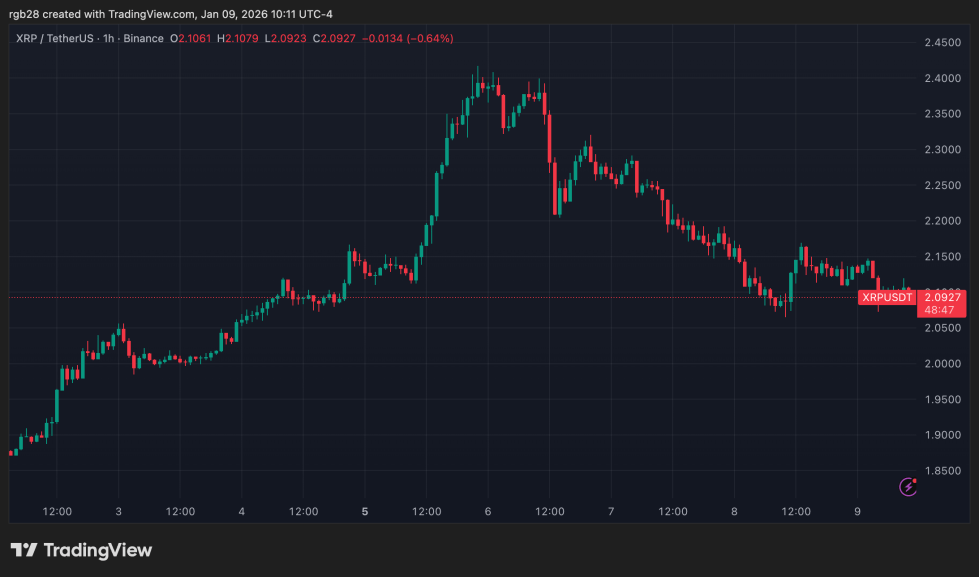
XRP trades at $2.09 in the one-week chart. Source: XRPUSDT on TradingView


Perguntas relacionadas

QWhat type of regulatory approval did Ripple obtain from the UK's Financial Conduct Authority (FCA)?

ARipple obtained an Electronic Money Institution (EMI) license under the UK's Money Laundering Regulations (MLR) through its subsidiary Ripple Markets UK Ltd.

QWhat are the key restrictions placed on Ripple Markets UK Ltd despite the FCA approval?

AThe company cannot operate automated crypto-to-fiat exchange machines, offer services to retail clients, appoint agents or distributors, or issue electronic money or provide payment services to consumers, micro-enterprises, or charities without prior written consent from the FCA.

QWhen will the FCA open the application period for crypto firms seeking authorization under the new regime?

AThe FCA expects to open the application period for crypto firms requesting authorization in September 2026.

QWhat must Ripple's UK subsidiary do to continue conducting regulated crypto activities under the new regime starting October 2027?

ARipple's UK subsidiary will need to reapply for authorization under the Financial Services and Markets Act 2000 (FSMA) in September 2026, as there is no automatic conversion from the current MLR registration.

QWhat happens to crypto companies that are not authorized by the FCA before the new rules take effect in October 2027?

ACompanies not authorized by October 2027 will enter a 'transitional provision' allowing them to fulfill existing contracts but not conduct new regulated crypto activities until they receive authorization.

Leituras Relacionadas

CPU Makes a Comeback to the Table, A $170 Billion "Power Seizure" Drama Begins

A new era is dawning for the server CPU (Central Processing Unit), driven by the shift from AI model training to large-scale reasoning and the rise of Agentic AI. This article explores how the CPU is reclaiming a central role in the AI data center. For years, the focus has been on the GPU (Graphics Processing Unit) for AI training. However, as AI moves to the inference and Agent phase—where tasks involve complex, multi-step reasoning, tool calls, and data management—the workload balance is flipping. Studies show CPUs now handle over 70% of the workload in Agentic AI, up from 10-30% in training. This is because Agent tasks generate massive intermediate data (KV Cache) that exceeds GPU memory, forcing it to be offloaded to the CPU's larger, more scalable memory pools. This increased importance is translating into market changes. Major players are taking note: NVIDIA launched its first standalone CPU line, Vera, based on ARM architecture and optimized for Agent performance. AMD doubled its server CPU market forecast to over $1200 billion by 2030. Analyst reports project the total server CPU market could reach $1700 billion by 2030, with AI-driven demand being a primary driver. Furthermore, the classic ratio of CPUs to GPUs in AI servers is rapidly changing, converging from 1:8 toward 1:1 for Agent deployments. This surge in demand has led to a rare industry-wide price increase of 10-15% for server CPUs from Intel and AMD, breaking a decade-long trend of "more performance for the same price." Demand is bifurcating into high-core-count CPUs for in-rack GPU support and moderate-core CPUs for standalone Agent task orchestration. In China, this global trend presents an opportunity for domestic CPU manufacturers like Hygon (海光信息) and Huawei Kunpeng, who are bolstered by both growing AI infrastructure needs and national policies promoting technological self-reliance ("xin chuang"). The maturity of their software ecosystems is also accelerating, evidenced by faster adaptation to new AI models. In conclusion, the narrative is shifting from a GPU-centric view to one where CPU-GPU synergy is critical. The CPU is no longer a peripheral component but a performance-defining bottleneck and a key growth driver in the AI hardware stack, opening a massive new market estimated in the hundreds of billions of dollars.

marsbitHá 8h

CPU Makes a Comeback to the Table, A $170 Billion "Power Seizure" Drama Begins

marsbitHá 8h

TechFlow Intelligence: AMD AI Director Publicly Criticizes Claude Code for "Becoming Dumber and Lazier", Trump Claims Full Ceasefire in Hormuz But Strait Still Has 80 Unexploded Mines

TechFlow Intelligence Report: This daily digest covers key developments in AI, crypto, hardware, and geopolitics. In AI, SK Telecom faces US export control scrutiny over its partnership with Anthropic, while a Gemini user reports being misled in a scam scenario, sparking safety debates. China's Z.AI launches the GLM-5.2 model, rivaling Claude Opus without NVIDIA chips. In crypto, Bithumb lists ReProtocol, and Upbit delists KernelDAO. On the hardware front, MIT researchers build a custom OS to study chips, ASML denies US claims its advanced lithography machines are in China, and Amazon considers selling its in-house AI chips. Apple's future A21 Pro chip may use TSMC's latest N2P process. Major tech issues include 10,000 GitHub repositories distributing malware and Apple patching a critical eavesdropping flaw in Beats earbuds. US stocks rise, led by semiconductors, with Intel surging 10.6%, while SpaceX falls 3.5%. Geopolitically, despite a US-Iran deal, the Strait of Hormuz remains risky with ~80 uncleared mines, stalling 80M barrels of oil on standby tankers. Iran postpones Switzerland talks, and Trump calls the agreement an "unconditional surrender." The report highlights a contrast: temporary geopolitical calm versus the ongoing, fundamental restructuring of tech supply chains and chip independence.

marsbitHá 8h

TechFlow Intelligence: AMD AI Director Publicly Criticizes Claude Code for "Becoming Dumber and Lazier", Trump Claims Full Ceasefire in Hormuz But Strait Still Has 80 Unexploded Mines

marsbitHá 8h

Trading

Spot
Futuros
活动图片