PwC Drops Guard On Crypto After US Digital Asset Rule Changes

bitcoinistPublicado em 2026-01-06Última atualização em 2026-01-06

Resumo

PwC, one of the Big Four accounting firms, has reversed its cautious approach toward cryptocurrency following new U.S. regulatory developments, including the Genius Act which regulates stablecoins. The firm is now actively promoting the use of digital asset technology, particularly stablecoins, to improve payment efficiency. This shift reflects growing institutional acceptance of crypto assets, especially stablecoins, which have seen increased adoption globally—including in Hong Kong, Japan, and Europe. Despite recent market consolidation, the stablecoin market cap remains strong near its all-time high at $307 billion. Meanwhile, Bitcoin is trading around $92,900, up 6% over the past week.

Big Four accounting firm PwC has reversed its cautious stance on crypto after regulatory developments related to the space in the United States.

PwC Has Softened Its Stance On Crypto

According to a report from the Financial Times, PwC has changed its strategy around digital assets following the new laws passed by Donald Trump’s administration. PricewaterhouseCoopers, PwC in short, is a multinational professional services network headquartered in London. It provides services such as audits, tax planning, and business consulting to companies worldwide.

PwC is the second-largest firm of its kind and part of the Big Four accounting firms. Previously, the British company steered clear of crypto-related work in the US like other Big Four firms, but it seems that stance has now changed. The shift has come as the US has made advancements in its crypto regulatory framework. Among the new laws is the Genius Act, which regulates stablecoins, digital assets pegged to a fiat currency like the US Dollar (USD).

“The Genius Act and the regulatory rulemaking around stablecoin, I expect, will create more conviction around leaning into that product and that asset class,” said Paul Griggs, senior partner at PwC US, in an interview with FT.

Griggs added that PwC has been pitching companies on how they can use digital asset technology, with stablecoins as a means of improving payment systems’ efficiency, cited as one example.

PwC and other Big Four firms budging on crypto showcases the legislative momentum that the industry has had recently, with traditional finance increasingly unable to ignore the sector. Stablecoins, in particular, have been witnessing growing adoption. Beyond the American Genius Act, this class of digital assets also attracted regulatory attention in other parts of the world.

Hong Kong introduced a stablecoin issuer licensing framework last year, while Japan observed the launch of its first yen-based token. In Europe, major banks have come together to work on a euro-pegged coin, aiming to challenge the sector’s USD dominance. The positive regulation in 2025 meant that the space witnessed some sharp growth, with the market cap exploring new records, as data from DefiLlama shows.
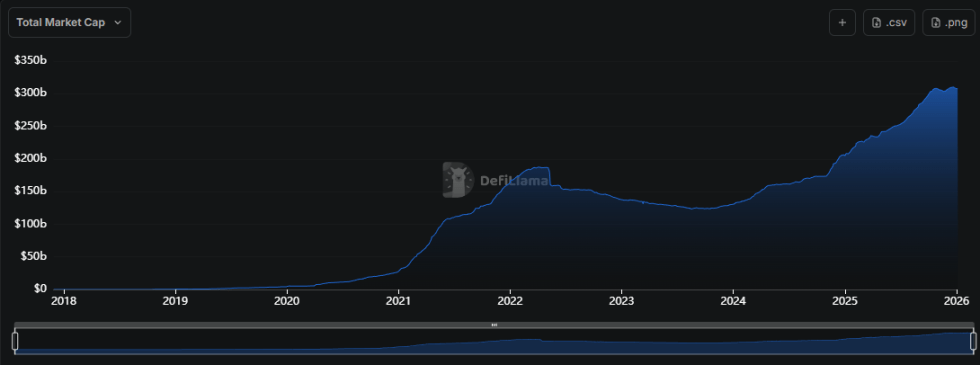
The trend in the market cap of all stablecoins over the last several years | Source: DefiLlama

The sector hasn’t been unaffected by the wider slowdown in crypto since October, however. From the above chart, it’s visible that the stablecoin market cap has seen consolidation in the last few months.

Nonetheless, while other parts of the market have shrunken, these fiat-tied tokens still have their combined market cap sitting at $307 billion today, which is very close to the all-time high (ATH).

Bitcoin Price

At the time of writing, Bitcoin is trading around $92,900, up nearly 6% over the last week.

Looks like the price of the coin has shot up over the last few days | Source: BTCUSDT on TradingView


Perguntas relacionadas

QWhy has PwC reversed its cautious stance on crypto in the US?

APwC reversed its cautious stance on crypto due to new regulatory developments in the United States, including the Genius Act which regulates stablecoins, providing more clarity and conviction for the asset class.

QWhat is the Genius Act mentioned in the article?

AThe Genius Act is a new US law that regulates stablecoins, which are digital assets pegged to a fiat currency like the US Dollar.

QHow does PwC plan to help companies with digital asset technology?

APwC has been pitching companies on how they can use digital asset technology, with stablecoins cited as a means to improve payment systems' efficiency.

QWhat is the current market cap of all stablecoins according to the article?

AThe combined market cap of all stablecoins is $307 billion, which is very close to the all-time high.

QWhat was the price of Bitcoin at the time of writing the article?

AAt the time of writing, Bitcoin was trading around $92,900, up nearly 6% over the last week.

Leituras Relacionadas

Why Bitcoin Holds Above $64,000 After Fed's Hard Pause

**Bitcoin Stabilizes Near $64,000 Following Hawkish Fed Pause** The cryptocurrency market, led by Bitcoin, remained stable around $64,000 despite a volatile reaction to the latest U.S. Federal Reserve meeting. The Fed paused interest rates but signaled a hawkish stance, with three committee members voting for an increase—the highest dissent since 2016. This limits risk appetite but hasn't triggered panic selling. Key market highlights include Bitcoin ETFs seeing a net inflow of $32.1 million, breaking a streak of outflows, while Ethereum ETFs experienced outflows of $18.65 million. Liquidations affected about 90,000 traders. Technically, Bitcoin finds support around $63,000-$63,500, with major resistance near $66,000. While its price is about 49% below its all-time high, institutional demand via ETFs and the absence of mass capitulation support a potential recovery scenario in the second half of the year. Major altcoins showed mixed movements, with Solana attracting capital while Ethereum faced selling pressure despite strong on-chain metrics like a growing staking queue. Regulatory news took a pause as the U.S. Senate delayed the CLARITY Act vote until at least autumn. For the final trading day of July, U.S. inflation and consumer spending data will be crucial. Bitcoin's key levels to watch are $63,000 support and $66,000 resistance. Sustained ETF inflows and Bitcoin holding above $63,000 are seen as positive signs for a potential market recovery later in the year.

cryptonews.ruHá 2h

Why Bitcoin Holds Above $64,000 After Fed's Hard Pause

cryptonews.ruHá 2h

Trading

Spot
活动图片




