Pump.fun surges 12% as holder count hits record high – 2 metrics could cap gains

ambcryptoPublicado em 2026-06-29Última atualização em 2026-06-29

Resumo

The token of memecoin launch platform Pump.fun (PUMP) surged 12% as sentiment improved alongside renewed interest in memecoins. On-chain data showed strong investor participation, with the holder count reaching a record high of 122,440. Total Value Locked (TVL) also saw a significant increase of roughly $15.7 million, rising to $217.7 million and indicating fresh capital inflows. However, key protocol performance metrics contrasted with this positive price action and investor growth. Data revealed substantial declines in launchpad volume (down 86.7% to $5.8M), generated fees (down 35.6% to $587,200), and protocol revenue (down 23% to $147.8M). These drops suggest underlying user activity and platform utility remain weak. While the recent surge is supported by growing holder numbers and TVL, the sustainability of the rally is uncertain. For gains to be firmly supported, a recovery in fundamental protocol usage metrics is likely needed.

Sentiment around cryptocurrency memecoin launch platform Pump.fun [PUMP] has turned positive again following renewed interest in memecoins over the past day.

The platform’s native token moved alongside that momentum, with PUMP surging 12% over the past day.

Even so, the rally remained tied to the platform’s underlying health, leaving investors exposed if protocol activity failed to recover.

Why are investors buying PUMP?

PUMP’s recent rally has coincided with growing investor participation. The token’s holder count reached a record 122,440, while retail investors accounted for roughly 38% of holders.

That increase also appeared in on-chain data, suggesting fresh capital supported the recent move.
Source: DeFiLlama

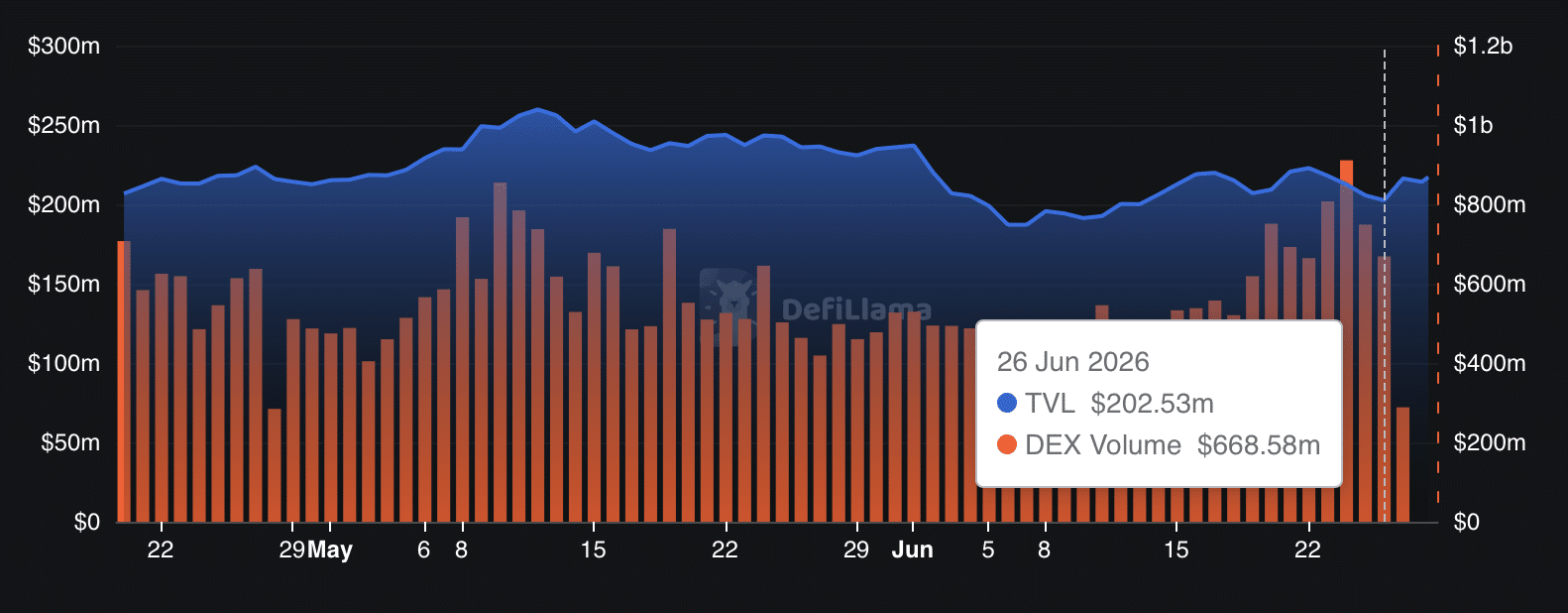
Between the 26th of June and now, investors added roughly $15.7 million to Total Value Locked (TVL), lifting it to $217.7 million. Those inflows suggested investors committed more capital despite recent volatility.

Total Value Locked measures assets deposited into DeFi protocols. Rising TVL often reflects stronger long-term conviction while investors earn yield.

Is the protocol keeping up?

However, rising TVL did not match the protocol’s underlying performance.

Pump.fun continued underperforming across key metrics, including revenue, fees, and launchpad volume.

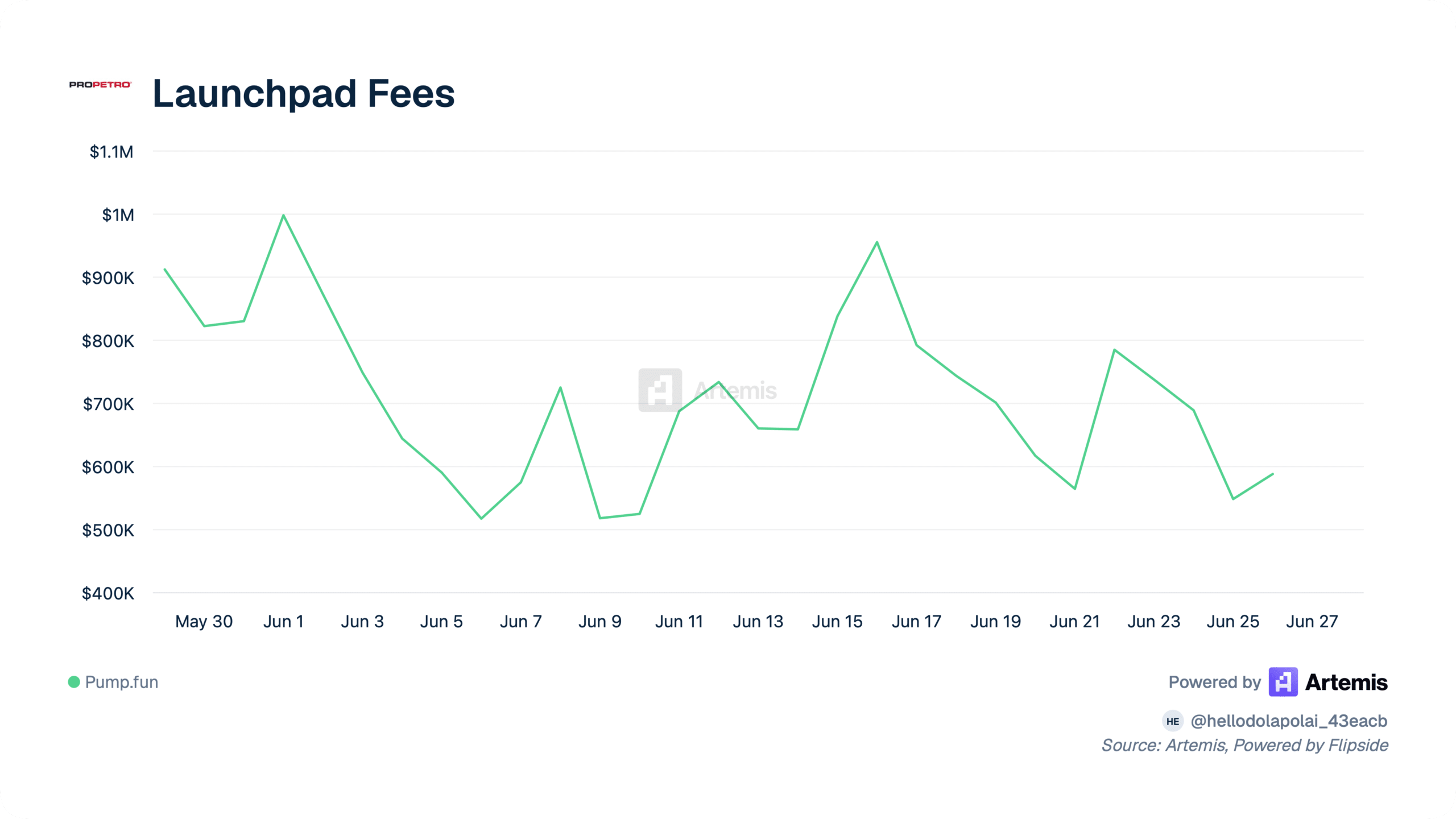
Data from Artemis showed launchpad volume and fees generated by memecoins on the platform fell 86.7% and 35.6% to $5.8 million and $587,200, respectively.
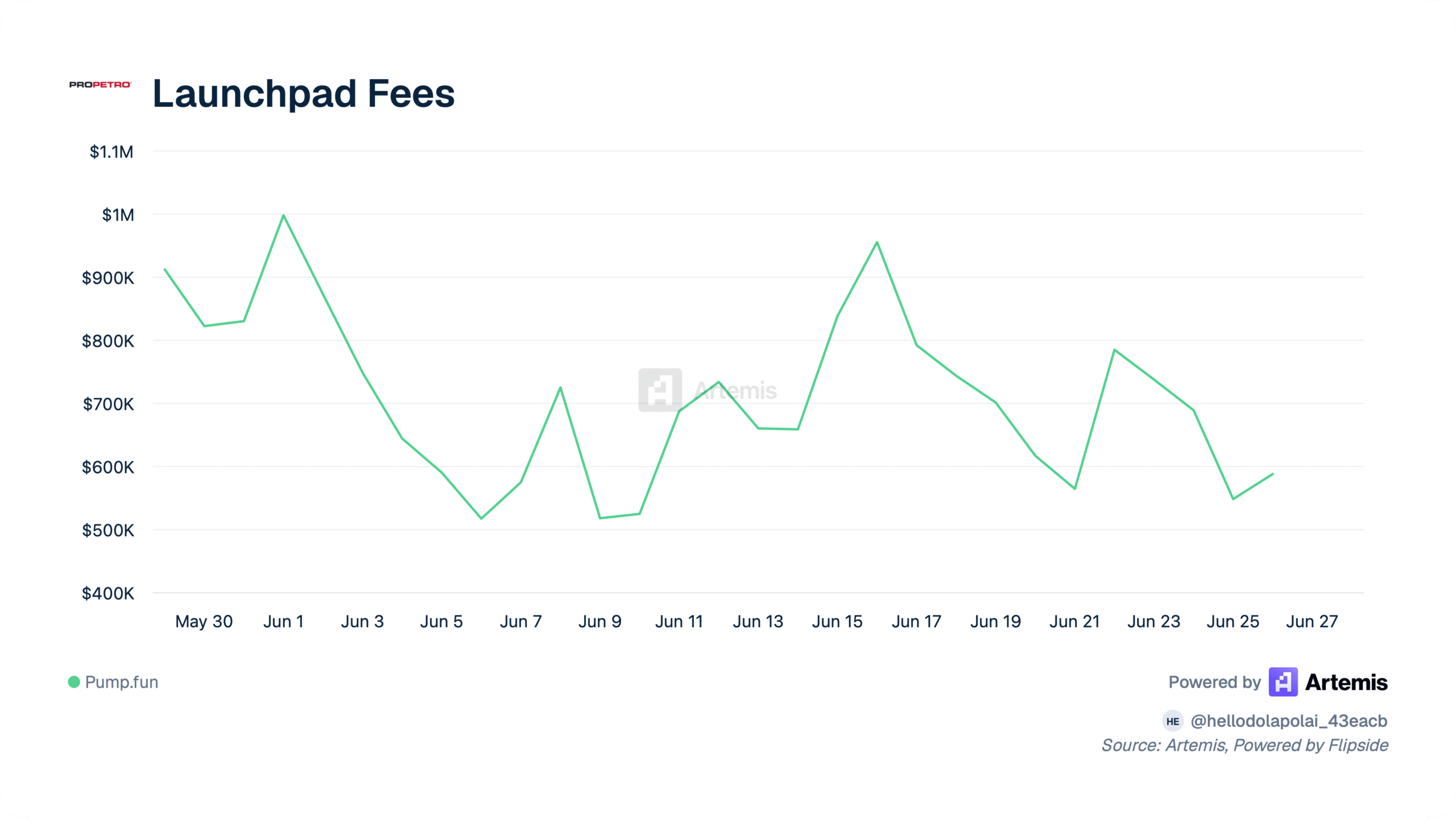
Source: Artemis

Those declines suggested user activity remained weak despite improving investor sentiment.

Lower activity reduced fee generation and limited protocol utility, making it harder for the recent price recovery to gain stronger fundamental support.

Revenue reflected the same trend.

Protocol revenue fell 23% to $147.8 million, reinforcing signs of slowing activity.

Historically, sustained token rallies have been easier to support when protocol usage improves alongside price. Until those metrics recover, PUMP’s recent optimism could remain vulnerable.


Final Summary

  • PUMP gained 12%, holder count hit a record, and TVL increased sharply, signaling renewed market interest.
  • If protocol metrics fail to recover, investor optimism may prove difficult to sustain.

Perguntas relacionadas

QWhat happened to Pump.fun's native token price recently and by how much did it surge?

APump.fun's native token, PUMP, surged 12% over the past day.

QWhat record high was reached by the PUMP token according to the article?

AThe holder count for the PUMP token reached a record high of 122,440.

QWhat metric saw an increase of roughly $15.7 million since June 26th, indicating investor commitment?

AThe Total Value Locked (TVL) increased by roughly $15.7 million, lifting it to $217.7 million.

QAccording to data from Artemis, what was the percentage decline in launchpad volume on the Pump.fun platform?

ALaunchpad volume on the Pump.fun platform fell by 86.7%.

QWhat is the main concern for the sustainability of PUMP's recent price recovery, as highlighted in the article's summary?

AThe main concern is that if protocol metrics (like revenue, fees, and launchpad volume) fail to recover, the recent investor optimism and price gains may be difficult to sustain.

Leituras Relacionadas

15 Wallets Made $312,000 Amid Alleged Rug Pull of Trump-Linked GOLD Token

Blockchain analytics firm Lookonchain identified a likely rug pull involving the Solana-based token GOLD. According to their investigation, 15 newly created wallets linked to the project's team sold 224.5 million GOLD for 3,178 SOL, netting approximately $330,000. These addresses had only spent $18,657 to acquire the tokens, yielding a profit of roughly $312,000—a 17-fold return. Suspicions arose due to the extreme concentration of the token supply. Before the sell-off, the developer held 600 million GOLD, and the 15 addresses controlled another 224.5 million. Together, they held 82.45% of the total GOLD supply, prompting Lookonchain to issue a warning. Interest in the token was fueled by promotional posts from the X account @realtrumpcoins1, which claimed a connection to the Trump Organization and was followed by Donald Trump's official account. This created a false impression of an affiliation with the former president or his business. The account posted about GOLD's launch but later deleted those posts. Trump Coins has denied any connection to the GOLD token, stating it was launched by third parties without authorization and is working with authorities to investigate. The incident occurs amid heightened scrutiny of cryptocurrency projects associated with U.S. presidential candidates, following recent calls from senators for an investigation into the TRUMP memecoin.

cryptonews.ruHá 3m

15 Wallets Made $312,000 Amid Alleged Rug Pull of Trump-Linked GOLD Token

cryptonews.ruHá 3m

OpenAI Unveils Its Own Jalapeño Chip: An Accelerator 1.5–2 Times More Efficient Than Nvidia

On August 25, 2026, OpenAI unveiled test results for its custom inference accelerator, Jalapeño. On the public InferenceX benchmark, systems using the new chip delivered 1.5–1.9x more computations per watt at peak throughput and reduced response latency by 1.7–3.6x compared to systems based on Nvidia GB200 and GB300. The chip, rated at 700W nominal power, consumed up to 550W under tested loads, with a block of 128 units reaching 1.7 exaflops in 4-bit precision. OpenAI plans to deploy Jalapeño in its infrastructure by late 2026, marking the first generation of a multi-year platform. Jalapeño was developed in collaboration with Broadcom (for the die and networking) and Celestica (for boards and racks) over nine months. It is specifically designed for OpenAI's own predictable, high-volume inference workloads around its language models, computational kernels, and data movement, unlike Nvidia's general-purpose accelerators. The initiative is backed by an agreement with Broadcom to deploy 10 GW of OpenAI's custom accelerators between late 2026 and 2029. While OpenAI will continue relying on external suppliers like Nvidia for training cutting-edge models and parts of inference, the company aims to control the processor architecture for its largest daily computational stream. This shift addresses the economics of inference: by building chips as internal components, OpenAI avoids paying the market premium associated with Nvidia's high-margin commercial GPUs, directly lowering the cost per query. This move follows a trend where major AI players (e.g., Anthropic with Google TPUs) transition to custom silicon as their inference volume becomes predictable. However, specialization risks reducing flexibility for future AI architectures and creates a single point of failure with manufacturing partners. The challenge for OpenAI will be ensuring Jalapeño remains competitive through multiple future model generations.

cryptonews.ruHá 3m

OpenAI Unveils Its Own Jalapeño Chip: An Accelerator 1.5–2 Times More Efficient Than Nvidia

cryptonews.ruHá 3m

Trading

Spot
活动图片