Prediction Markets = Market Manipulation? The Failure of Collective Wisdom and the Battle for Settlement Rights

marsbitPublicado em 2025-12-23Última atualização em 2025-12-23

Resumo

This article examines the controversial nature of prediction markets, particularly Polymarket, through three case studies, arguing that they are vulnerable to manipulation, groupthink, and battles over settlement authority, rather than being pure expressions of collective wisdom. Case 1: "Who will HBO identify as Satoshi?" Despite leaked evidence and media reports confirming the documentary would identify Peter Todd, the price for "Len Sassaman" remained high due to the community's emotional preference for a more narratively satisfying outcome. This demonstrates how narrative and emotion can cause market prices to deviate from factual evidence. Case 2: "How many gifts will Santa deliver?" Traders discovered a hardcoded number in the NORAD website's source code and drove the price of that outcome above 90%. However, this turned the market into a bet on whether the developers would change the number before the deadline, highlighting how centralized control of information sources creates exploitable opportunities. Case 3: "Israel strikes Gaza" contract. In the final hours, a coordinated effort using unverified screenshots and sell orders crashed the price of "No" to 1-2%, creating a false narrative of an attack. The contract was controversially settled as "Yes," showcasing how narrative, capital, and control over the settlement process can be weaponized to manipulate outcomes. The analysis concludes that prediction markets are not neutral but are instead arenas where media n...

Prediction markets, the current hot topic. But when you dive deep, every time you press Yes/No, the gears of fate begin to turn.

This article attempts to analyze controversial topics on prediction markets (primarily Polymarket), exploring their manipulability within binary博弈 (game theory of binary outcomes).

Case Selection

<1> Who will HBO identify as Satoshi?

<2> How many gifts will Santa deliver in 2025

<3> Israel strikes Gaza by...?

And attempts to discuss potential market intervention methods from perspectives like psychology/group effects/house game theory/mass communication.

"Who is Satoshi" Bet: The Market Refuses to Believe the Truth

Around the release of HBO's "Money Electric: The Bitcoin Mystery," a contract on Polymarket became a classic example of "narrative diverging from fact": "Who will HBO identify as Satoshi?" (October 2024).
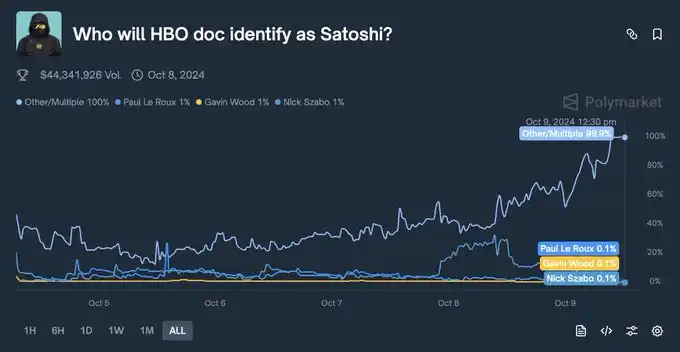
On the surface, this was a collective guessing game about the crypto world's ultimate unsolved case, with participants trying to bet on who the documentary would name as Bitcoin's creator: Len Sassaman, Hal Finney, Adam Back, or Peter Todd, who never appeared on any long conspiracy theory list.​

The vast majority of cryptocurrency community members, KOLs, and media firmly believed HBO would reveal the late cryptographer Len Sassaman. Because Len's life story fit the characteristics of Satoshi, and his tragic, legendary image aligned with HBO's narrative aesthetic.

And Len Sassaman's probability (Yes) soared to 68% - 70%.

The key lies in the timeline.

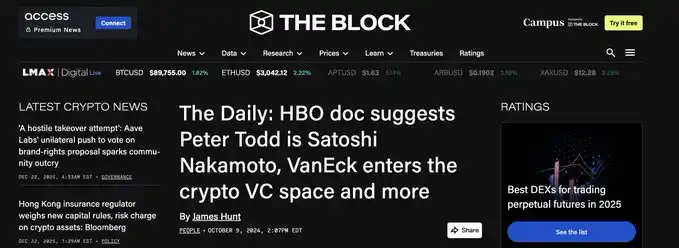
Some journalists and insiders who were invited to early media screenings began leaking clips on Twitter and dark web forums. The leaked clips and screenshots clearly showed director Cullen Hoback questioning another developer, Peter Todd, and attempting to portray him as Satoshi.

Peter Todd himself even posted on Twitter mocking the director, indirectly confirming he was a main subject of the documentary. At the same time, preview articles and headlines from multiple media outlets already used phrases like "doc identifies Peter Todd as Satoshi".​

Despite this, the most fascinating part emerged. Even with screenshots out, the price for Len Sassaman on Polymarket didn't crash, still holding at a high of 40%-50%!

Because the community refused to believe. People brainwashed each other in the comments: "This is just an HBO red herring," "Peter Todd is just a supporting character, the final big twist will definitely be Len."

At this point, opportunity arose. The odds for Peter Todd / Other options were extremely attractive (at one point only 10%-20%).

This was like "picking gold bars from the bargain bin."

——When and only when fact contradicts desire, Alpha is greatest.

People wanted it to be Len Sassaman so badly (because he is deceased, wouldn't dump Bitcoin, and has a poignant story). This emotional preference blinded rational judgment. In prediction markets, never bet on what you "hope" will happen, only bet on facts.

And the rules themselves stated: "who will HBO identify as Satoshi", not "who really is Satoshi".

Media narrative + emotional resonance. Just give the market a compelling enough story, and the price will willingly deviate from fact.

"Santa Code Gate": When Hardcoding Becomes an Option

The second incident seemed more lighthearted: the NORAD Santa Tracker project. Every Christmas, NORAD displays the "number of gifts Santa delivers" on a dedicated website. In 2025, this fun project became a guessing subject on Polymarket: "How many gifts will Santa deliver in 2025?"

Then, someone opened the browser console.

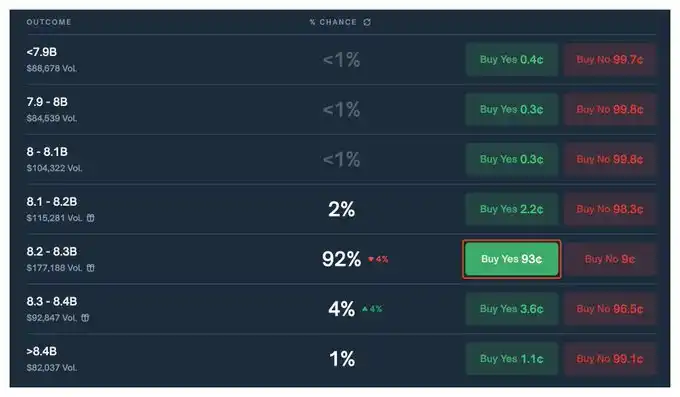
Technical traders found a hardcoded value precise to the single digit: 8,246,713,529 in the front-end JS/JSON files of noradsanta.org. This number was logically similar to the "gift count" from previous years, yet significantly lower than the reasonable range projected based on historical growth rates (8.4–8.5B), more like a temporary script filled in by a programmer rushing to meet a deadline.
In the market's eyes, this hardcode was quickly interpreted as the "ultimate answer":

  • The corresponding "8.2–8.3B" range contract price surged from around 60% to over 90%;
  • Substantial funds saw this as cashing in on an "information advantage," treating the remaining few percentage points as arbitrage for the taking.

But the真正微妙的地方在于: once the leak was widely used by traders, the hardcode itself became a triggerable variable.

The NORAD website is centrally maintained; the developers have full authority to override the pre-written value at the last moment; when "lazy developer" and "hardcode fraud" become part of the social舆论 (public opinion), the maintainers even have an incentive to change the value in real-time to prove they are not a slapdash organization.

This means that for those who bought large positions in the "8.2–8.3B=Yes" at 0.93, what they were truly betting against was not how many gifts Santa "delivered," but whether a developer would change that string of numbers in the final commit before going live.

Structurally, this market allows multiple "intervention methods" to exert significant leverage on the price.

The NORAD website is centrally maintained; the developers have full authority to override the pre-written value at the last moment. When "lazy developer" and "hardcode fraud" become part of the social narrative, the maintainers even have an incentive to change the value in real-time to prove they are not a slapdash organization.

This means that for those who bought large positions in the "8.2–8.3B=Yes" at 0.93, what they were truly betting against was not how many gifts Santa "delivered," but whether a developer would change that string of numbers in the final commit before going live.

Here, the prediction market is no longer "predicting an objective random variable," but provides a derivative field for a small group controlling the system's switches to "bet on how their actions will be interpreted by the outside world." The person writing the front-end code naturally possesses the dual power of "spoiler +随时篡改 (tampering at any time)."

Technical players deploying code crawlers early can establish positions before most people are even aware the hardcode exists; media or influencers can indirectly influence whether the maintainers adjust their strategy by amplifying the narrative of the "hardcode scandal."

Here, the prediction market is no longer about predicting an objective random variable, but provides a derivative field for a small group controlling the system's switches to bet on how their actions will be interpreted by the outside world.

"Gaza Strike" Contract: The Scripted Kill in the Pre-Dawn Market

The third incident had the most real-world impact. Thanks to @ec_unoxx's summary, the trader is @poliedge100, Teacher Little Alligator.

A contract centered on "whether Israel would strike Gaza before a specific deadline"上演了一场 (staged) an extremely "scripted" price washout in the tail-end phase临近到期 (approaching expiration).

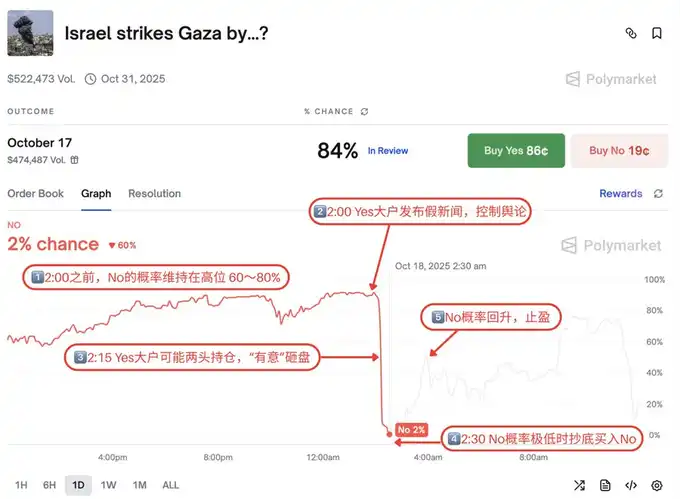
Initially, the market widely believed the probability of a large-scale strike before the deadline was limited, with the "No" price staying in the high range of 60%–80% for a long time. As time passed, "nothing happening" itself seemed to continuously reinforce the validity of "No".

Then came the familiar rhythm: pre-dawn hours +舆论攻势 (public opinion offensive) + panic selling.

  • In the platform's comments section, the "Yes" side began密集张贴 (intensively posting) unverified screenshots, local media links, even old news, creating a narrative atmosphere of "the strike has already happened, just the major media is slow to react."
  • Simultaneously, large sell orders appeared on the order book, actively breaking through (smashing through) the support for "No", pushing the price down to the "junk zone" of 1%–2%.

For holders极度依赖情绪 (extremely reliant on emotion) for information, this series of actions was enough to create an "endgame illusion":

"Since someone is selling off to escape, and the comments are all saying it happened, it must be that I missed the news."

While this panic was being manufactured, a small group of people坚持做事实核查 (persisting in fact-checking) came to a completely different conclusion from another direction:

  • Before the preset deadline, there was no sufficiently clear, consistently recognized by authoritative media, and符合合约规则定义的 (meeting the contract rule definition) evidence of an "airstrike";
  • From a textual rule perspective, "No" still had a high probability of being the final legitimate settlement result.
Thus, an asymmetric lottery ticket appeared again structurally:

  • The market price treated "No" as a 1% minor probability;
  • Textual evidence and rule interpretation suggested a现实概率 (realistic probability) far higher than 1%.

What truly sparked controversy was the scene after settlement:

  • After the tail-end session, someone proposed settling as "Yes", entering a limited dispute period;
  • Due to procedural reasons or insufficient resources from participating parties, this settlement direction was ultimately not successfully overturned;
  • The contract was最终锁定 (finally locked) as "Yes", and many who insisted on a textual rule interpretation could only argue afterwards "whether this conformed to the original rule design," but couldn't change the flow of funds.

This accident exposed the "greenhouse effect" of prediction markets极为赤裸 (extremely赤裸裸, nakedly):

  • Public opinion can cause price collapses in a short time;
  • Capital can create the false appearance of "smart money retreating" through self-directed selling;
  • Ultimate settlement power often lies in the hands of a very few parties with resources and organizational capacity.

This is no longer "deviation of collective wisdom," but a manipulation space formed by the amalgamation of narrative, capital, and rule interpretation power.

To summarize, in the three cases above, prediction markets present another picture:

  • For news initiators and media

Every prediction market can be seen as a real-time thermometer for narrative influence.

Documentary directors, PR teams, topic creators can all adjust their output rhythm by observing the order book: which candidates to continue hyping, which plots need more drama.

In some extreme cases, content creators can even "reverse" utilize the order book, writing market preferences back into the script.

  • For project parties / platforms

The ambiguity of rules, the choice of settlement sources, the design of dispute mechanisms, all directly affect "who profits from tail-end events."

Ambiguous oracles, broad discretionary power, equate to reserving a "gray space" that can be used by organized forces.

In this space, prediction markets are no longer passive "result registries," but active tools for liquidity momentum building.

  • For participants (retail investors / KOLs / communities)

Comment sections, social media, and various secondary interpretations constitute a整套 (complete set) of psychological leverage that can be exploited.

By集中发布 (centrally publishing) "seemingly authoritative" screenshots, links, out-of-context news headlines, actors can push prices from rational ranges into panic or frenzy zones in a short time.

In this structure, those with stronger discourse power (KOLs, big Vs, research accounts) naturally possess the ability to manipulate narratives.

  • For hackers and "system players"

Monitoring front-end code, data source updates, news APIs, even oracle mechanisms本身就可以成为 (can themselves become) systematic strategies.

Capturing hardcodes, configuration errors, rule edge cases in advance, and then building positions before the market reacts, is a form of high-leverage "structured alpha."

More aggressive players will directly research: how to legally or "edge" influence settlement information sources, making the world "appear" consistent with their position direction for a short time.

Finally, quoting @LeotheHorseman Teacher Horse Man's x pinned tweet:

The truthfulness of information feels irrelevant now (in both epistemological and practical senses), what people are willing to pay for is reality. Perhaps the most important proposition of the current era is how the pricing of information and the information of pricing interact with each other.


Perguntas relacionadas

QWhat is the main argument presented in the article about prediction markets like Polymarket?

AThe article argues that prediction markets are often susceptible to manipulation through narrative control, emotional bias, and the exploitation of rule ambiguities, rather than purely reflecting collective wisdom or objective reality.

QIn the HBO 'Who is Satoshi' market, why did the price for Len Sassaman remain high despite evidence pointing to Peter Todd?

AThe price remained high because the crypto community had a strong emotional preference for Len Sassaman (a deceased cryptographer with a tragic and compelling story) and collectively refused to believe the leaked evidence, dismissing it as an HBO 'red herring' or narrative misdirection.

QHow did the discovery of hardcoded data in the NORAD Santa tracker website create a unique risk for traders?

AIt created a risk because the market began betting on a fixed number, but the website's developers, who are centralized maintainers, had the power to change that number at the last minute, especially if public pressure about the lazy hardcoding made them want to prove they weren't incompetent.

QWhat three elements does the article identify as combining to form a 'manipulation space' in the Israel-Gaza contract case?

AThe three elements are narrative (spreading unverified information/rumors), capital (large sell orders to manipulate the market price), and the power to interpret rules (control over the final settlement decision).

QAccording to the article, what new role do prediction markets play for news creators and media organizations?

AThey act as a real-time thermometer for narrative influence, allowing directors, PR teams, and content creators to gauge public sentiment and potentially adjust their output or even 'write the narrative back into the script' based on market preferences.

Leituras Relacionadas

Borrowing Money from a Hundred Years Later, Building Incomprehensible AI

Tech giants like Alphabet, Amazon, Meta, and Microsoft are undergoing a radical financial transformation due to AI. Their traditional "light-asset, high-free-cash-flow" model is being dismantled by staggering capital expenditures on AI infrastructure—data centers, GPUs, and power. Combined 2026 guidance exceeds $700 billion, a 4.5x increase from 2022, causing free cash flow to plummet (e.g., Amazon's fell 95%). To fund this, they are borrowing unprecedented sums through long-dated, multi-currency bonds (e.g., Alphabet's 100-year bond). The world's most conservative capital—pensions, insurers—is now funding Silicon Valley's most speculative bet. This shift makes these companies resemble heavy-asset industrials (railroads, utilities) rather than software firms, threatening their premium valuations. Historically, such infrastructure booms (railroads, fiber optics) followed a pattern: genuine technology, overbuilding fueled by competitive frenzy, aggressive debt financing, and a crash triggered by financial conditions—not technology failure. The infrastructure remained, but many original builders and financiers did not survive. The core gamble is a "time arbitrage": using cheap debt today to build scale and lock in customers before AI capabilities commoditize. They are betting that AI revenue will materialize before debt comes due. Their positions vary: Amazon is under immediate cash pressure; Meta's path to monetization is unclear; Alphabet has a robust core business buffer; Microsoft has the shortest path from infrastructure to revenue. The contract is set: the most risk-averse global capital has lent its time to Silicon Valley, awaiting a future that is promised but uncertain.

marsbitHá 30m

Borrowing Money from a Hundred Years Later, Building Incomprehensible AI

marsbitHá 30m

The 'VVV' Concept Soars 9x in Half a Year, The New AI Narrative on Base Chain

"The article explores the 'VVV' concept as the new AI-focused narrative within the Base ecosystem, centered around the token $VVV of the privacy-focused, uncensored generative AI platform Venice, led by crypto veteran Erik Voorhees. Venice has seen significant growth in 2026, with its API users surging, partly attributed to exposure from OpenClaw. The platform now boasts over 2 million total users and 55,000 paid subscribers. Correspondingly, the $VVV token price has risen over 9x this year. Key to its performance are tokenomics designed for value accrual: reduced annual emissions, subscription revenue used for buyback-and-burn, and a unique staking mechanism. Staking $VVV yields $sVVV, which can be used to mint $DIEM tokens. Each staked $DIEM provides a daily $1 credit for using Venice's API services, creating tangible utility. The article also highlights other tokens associated with the 'VVV' narrative. $POD, the token of distributed AI network Dolphin (which co-developed Venice's default AI model), saw a massive price surge. $cyb3rwr3n, a project for a Venice credit auction market, gained attention due to perceived connections to Venice's team despite official denials. Finally, $SR of robotics platform STRIKEROBOT.AI rose after announcing a partnership with Venice for robot vision-language model development. Overall, the 'VVV' ecosystem combines AI platform growth, deflationary tokenomics, and innovative utility mechanisms, driving significant investor interest and price action in related tokens."

marsbitHá 38m

The 'VVV' Concept Soars 9x in Half a Year, The New AI Narrative on Base Chain

marsbitHá 38m

Anthropic and OpenAI Have Single-Handedly Severed the Logic of Pre-IPO Stock Tokenization

The pre-IPO stock token market is experiencing significant turmoil following strong statements from AI giants Anthropic and OpenAI. Both companies have updated their official policies, declaring that any transfer of their company shares—including sales, transfers, or assignments of share interests—without prior board approval is "invalid" and will not be recognized in their corporate records. This means buyers in such unauthorized transactions would not be recognized as shareholders and would have no shareholder rights. A major point of contention is the use of Special Purpose Vehicles (SPVs), which are legal entities commonly used by pre-IPO token platforms to pool investor funds and indirectly acquire shares from employees or early investors. The companies explicitly state they do not permit SPVs to acquire their shares, and any such transfer violates their restrictions. They warn that third parties selling shares through SPVs, direct sales, forward contracts, or stock tokens are likely engaged in fraud or are offering worthless investments due to these transfer limits. This stance directly threatens the core model of many pre-IPO token platforms, which rely on SPV structures. The announcement revealed additional risks within this model, such as complex "SPV-within-SPV" layering that obscures legal transparency, increases management fees, and creates a chain reaction risk of invalidation. Following the news, tokens like ANTHROPIC and OPENAI on platforms like PreStocks fell sharply (over 20%). The market reaction highlights a divergence: while asset-backed pre-IPO tokens plummeted, purely speculative pre-IPO futures contracts, which are bilateral bets on future IPO prices with no claim to actual shares, remained relatively stable as they are unaffected by the transfer restrictions. The industry is split on the implications. Some believe the fundamental logic of pre-IPO token trading is broken if leading companies reject SPV-held shares, potentially causing a domino effect. Others, like Rivet founder Nick Abouzeid, argue that buyers of such unofficial tokens always knowingly accepted the risk of non-recognition by the company. The statements serve as a stark risk warning and a corrective measure for a market where valuations for some AI-related pre-IPO tokens had soared to irrational levels, far exceeding recent funding round valuations.

marsbitHá 1h

Anthropic and OpenAI Have Single-Handedly Severed the Logic of Pre-IPO Stock Tokenization

marsbitHá 1h

Anthropic and OpenAI Personally Sever the Logic of Pre-IPO Crypto-Stocks

The pre-IPO token market has been rocked by strong statements from Anthropic and OpenAI. Both AI giants have updated official warnings, declaring that any sale or transfer of their company shares without explicit board approval is "invalid" and will not be recognized on their corporate records. This directly targets Special Purpose Vehicles (SPVs), the common legal structure used by pre-IPO token platforms. These platforms typically use an SPV to acquire shares from employees or early investors, then issue blockchain-based tokens representing a claim on the SPV's economic benefits. Anthropic and OpenAI's position means that if an SPV's share purchase lacked authorization, the underlying asset could be deemed worthless, nullifying the token's value. Anthropic explicitly warned that any third party selling its shares—via direct sales, forwards, or tokens—is likely fraudulent or offering a valueless investment. The crackdown highlights risks in the popular SPV model, including complex multi-layered "Russian doll" SPV structures that obscure legal ownership, add fees, and concentrate risk. If one layer is invalidated, the entire chain could collapse. Following the announcements, tokens like ANTHROPIC and OPENAI on platforms like PreStocks fell sharply (over 20%). In contrast, purely speculative pre-IPO prediction contracts remained stable, as they involve no actual share ownership. The move is seen as a corrective measure amid a market frenzy where some pre-IPO token valuations (e.g., Anthropic's token hitting a $1.4 trillion implied valuation) far exceeded recent official funding rounds. Opinions are split: some believe this undermines the core logic of pre-IPO token trading if top companies reject SPVs, while others argue buyers always assumed this legal risk when accessing unofficial channels. The statements serve as a stark warning and a potential catalyst for market de-leveraging and clearer boundaries.

Odaily星球日报Há 1h

Anthropic and OpenAI Personally Sever the Logic of Pre-IPO Crypto-Stocks

Odaily星球日报Há 1h

Trading

Spot
Futuros

Artigos em Destaque

Como comprar HOT

Bem-vindo à HTX.com!Tornámos a compra de Holo (HOT) simples e conveniente.Segue o nosso guia passo a passo para iniciar a tua jornada no mundo das criptos.Passo 1: cria a tua conta HTXUtiliza o teu e-mail ou número de telefone para te inscreveres numa conta gratuita na HTX.Desfruta de um processo de inscrição sem complicações e desbloqueia todas as funcionalidades.Obter a minha contaPasso 2: vai para Comprar Cripto e escolhe o teu método de pagamentoCartão de crédito/débito: usa o teu visa ou mastercard para comprar Holo (HOT) instantaneamente.Saldo: usa os fundos da tua conta HTX para transacionar sem problemas.Terceiros: adicionamos métodos de pagamento populares, como Google Pay e Apple Pay, para aumentar a conveniência.P2P: transaciona diretamente com outros utilizadores na HTX.Mercado de balcão (OTC): oferecemos serviços personalizados e taxas de câmbio competitivas para os traders.Passo 3: armazena teu Holo (HOT)Depois de comprar o teu Holo (HOT), armazena-o na tua conta HTX.Alternativamente, podes enviá-lo para outro lugar através de transferência blockchain ou usá-lo para transacionar outras criptomoedas.Passo 4: transaciona Holo (HOT)Transaciona facilmente Holo (HOT) no mercado à vista da HTX.Acede simplesmente à tua conta, seleciona o teu par de trading, executa as tuas transações e monitoriza em tempo real.Oferecemos uma experiência de fácil utilização tanto para principiantes como para traders experientes.

86 Visualizações TotaisPublicado em {updateTime}Atualizado em 2025.03.21

Como comprar HOT

O que é HOLO

Compreender o HOLO: O Futuro das Aplicações Descentralizadas Introdução ao HOLO, $holo No panorama em rápida evolução das criptomoedas e tecnologias descentralizadas, o HOLO, também conhecido como Holo, emergiu como um jogador notável. Este projeto inovador facilita o desenvolvimento de aplicações descentralizadas (DApps) através da sua arquitetura subjacente conhecida como Holochain. Com uma visão de criar uma ponte entre a internet centralizada que conhecemos hoje e o ecossistema descentralizado do futuro, o HOLO visa tornar as DApps acessíveis ao utilizador comum, sem os obstáculos de instalações complexas e habilidades técnicas. O que é HOLO, $holo? No seu cerne, o HOLO é uma plataforma distribuída projetada para hospedar DApps construídas sobre Holochain. Ao contrário das plataformas de blockchain tradicionais, o Holochain adota uma abordagem única ao permitir que cada aplicação funcione com o seu próprio conjunto de regras. O mandato do HOLO é conectar estas aplicações Holochain (hApps) com os utilizadores através de tecnologias web familiares. O objetivo principal do HOLO é democratizar o acesso e uso das DApps, permitindo que os utilizadores acedam a estas aplicações diretamente através de navegadores web padrão. Esta acessibilidade é fundamental para reduzir a fricção para os utilizadores médios da internet, permitindo-lhes utilizar aplicações de próxima geração sem precisar de navegar nas complexidades frequentemente associadas às criptomoedas e ao uso de DApps. Criadores do HOLO, $holo O HOLO surge da visão dos seus criadores, Arthur Brock e Eric Harris-Braun. Ambos são desenvolvedores experientes e programadores de contratos, e embarcaram no projeto em dezembro de 2016 como parte do MetaCurrency Project. Esta iniciativa estava inicialmente focada no desenvolvimento de ferramentas e tecnologias destinadas a fomentar uma economia peer-to-peer. Os seus antecedentes em programação e empreendimentos empresariais posicionaram-nos de forma única para enfrentar os desafios do desenvolvimento e hospedagem de aplicações descentralizadas. Investidores do HOLO, $holo Embora detalhes específicos sobre investidores individuais no HOLO não estejam facilmente disponíveis, é evidente que o projeto recebeu um apoio significativo e atenção da comunidade mais ampla de criptomoedas. A sua abordagem inovadora para a hospedagem de aplicações descentralizadas, juntamente com uma comunidade de apoio, alimentou o interesse e investimento no projeto. Como funciona o HOLO, $holo? O HOLO opera criando um extenso ecossistema onde os anfitriões contribuem com armazenamento e poder de processamento para as DApps baseadas em Holochain. Ao transformar os seus dispositivos ou até mesmo hardware dedicado como HoloPorts em nós de hospedagem, os indivíduos podem efetivamente monetizar os recursos não utilizados dos seus computadores. Os principais componentes funcionais do HOLO incluem: Fornecedor de Aplicações: Estas entidades compram créditos de hospedagem do HOLO, que são mantidos numa conta de reserva. Este mecanismo permite que os desenvolvedores de DApp garantam os recursos necessários para executar as suas aplicações. Anfitrião: Indivíduos ou organizações que escolhem hospedar DApps geram registos de serviço assinados à medida que respondem a pedidos dos utilizadores. Este processo assegura que todas as interações na rede sejam rastreadas e autenticadas. Prova de Serviço: Um elemento crucial da integridade operacional do HOLO, os anfitriões submetem faturas aos fornecedores de aplicações, que então validam o serviço prestado. Após a validação, os anfitriões recebem compensação na forma de créditos de hospedagem. HoloFuel: Servindo como o token nativo da rede Holo, o HoloFuel é projetado para microtransações. Este token facilita o extenso throughput de transações necessário para que a plataforma suporte bilhões de transações simultâneas de forma fluida. A sinergia combinada destes componentes assegura um ambiente de hospedagem robusto e descentralizado, impulsionando a utilidade e alcance das aplicações Holochain. Cronologia do HOLO, $holo A jornada do HOLO tem sido marcada por vários marcos desde a sua criação: Dezembro de 2016: A criação do HOLO por Arthur Brock e Eric Harris-Braun como parte do MetaCurrency Project. 2018: A emissão de um token ERC20, conhecido como HoloToken (HOT), serviu como um “IOU” que é resgatável por HoloFuel após o lançamento do projeto. Desenvolvimento Contínuo: Avanços contínuos, testes e otimização da rede Holo e HoloFuel, garantindo que o projeto permaneça na vanguarda da tecnologia de hospedagem de aplicações descentralizadas. Características Únicas do HOLO, $holo O HOLO destaca-se no campo saturado das criptomoedas e plataformas descentralizadas devido às suas características distintivas e à estrutura inovadora em que opera: Hospedagem Peer-to-Peer: O HOLO abre a porta para que qualquer pessoa se torne um anfitrião de DApps simplesmente utilizando os seus computadores. Esta democratização da hospedagem é semelhante à forma como plataformas como o Airbnb perturbaram a indústria hoteleira tradicional, capacitando indivíduos a participar na economia. Estrutura Holochain: Central para as inovações do HOLO está a própria estrutura Holochain. Posicionada como uma tecnologia de próxima geração, o Holochain possui escalabilidade sem igual, velocidades de transação rápidas, eficiência energética excepcional e custo-efetividade em comparação com tecnologias de blockchain convencionais. HoloFuel para Microtransações: O HoloFuel é meticulosamente projetado para acomodar microtransações, permitindo que a rede Holo gerencie eficientemente bilhões de transações simultaneamente. Esta capacidade é fundamental para a adoção em massa, permitindo que os desenvolvedores criem aplicações que sejam economicamente viáveis em grande escala. Conclusão O HOLO representa um avanço significativo no panorama das aplicações descentralizadas e da tecnologia blockchain. Com a sua infraestrutura robusta, abordagem amigável ao utilizador e a inovadora estrutura Holochain, o HOLO está preparado para desempenhar um papel crucial no futuro da web. Se irá melhorar as experiências quotidianas na internet ou redefinir a forma como desenvolvedores e utilizadores interagem com aplicações digitais, permanece por ver, mas o seu progresso até agora vale a pena acompanhar à medida que o mundo continua a mover-se em direção a uma economia digital descentralizada. À medida que o projeto evolui, os seus desenvolvimentos contínuos e o envolvimento da comunidade serão componentes cruciais do seu sucesso, potencialmente estabelecendo o HOLO como uma plataforma mainstream para aplicações descentralizadas. Com o crescente interesse em torno das tecnologias descentralizadas, a importância e o impacto de projetos como o HOLO só aumentarão nos anos vindouros.

79 Visualizações TotaisPublicado em {updateTime}Atualizado em 2024.12.26

O que é HOLO

Discussões

Bem-vindo à Comunidade HTX. Aqui, pode manter-se informado sobre os mais recentes desenvolvimentos da plataforma e obter acesso a análises profissionais de mercado. As opiniões dos utilizadores sobre o preço de HOT (HOT) são apresentadas abaixo.

活动图片