Popular Memecoin Platform Announces Termination of Operations Due to Funding Issues!

cryptonews.ruPublicado em 2026-08-18Última atualização em 2026-08-18

Resumo

The memecoin creation and trading platform Printr has announced it is ceasing operations due to funding difficulties. The platform will fully shut down on August 31st. The team stated that despite exploring all options over the past three months, unsustainable market conditions, insufficient funding, and a lack of distributor support made continuing impossible. As part of the wind-down, automatic settlement of all staking positions and accrued rewards has begun. These assets will be returned to users' original deposit addresses, after which staking services will end entirely. Printr has also cancelled its planned Token Generation Event (TGE) and airdrop program. The platform's user interface will close after August 31st, halting all transactions. However, tokens previously created on Printr will continue to exist independently on the blockchain. The shutdown is cited as a recent example of the pressure on early-stage projects from funding challenges and waning investor interest in the crypto sector.

Printr, a platform offering services for creating and trading cross-chain memecoins, has announced the termination of its operations due to funding difficulties. According to the company's statement, the platform will completely cease operations on August 31, and its services will become unavailable to users.

The Printr team stated that over the past three months, they have evaluated all possible options for continuing the project. However, due to current market conditions, insufficient funding, and a lack of support from distributors, continuing operations has become impossible. The statement emphasized that the decision was made after prolonged evaluations and that the platform's sustainability is no longer guaranteed.

As part of the shutdown process, the automatic settlement of all staking positions on the blockchain and accumulated staking rewards on the platform began today. The corresponding assets will be returned to the addresses from which users made their initial investments. After this process is completed, the provision of staking services will be fully terminated.

On the other hand, Printr announced the cancellation of its previously planned token generation event (TGE) and airdrop program. The project team stated that these plans will no longer be implemented as part of the shutdown process.

The Printr application's user interface will be closed after August 31, and transactions through the platform will no longer be possible. However, tokens previously created through the platform will continue to exist as independent entities on the blockchain.

Recent difficulties in accessing funding and a decline in investor interest in the crypto sector have put pressure on projects, especially those in early stages, and the closure of Printr is seen as one of the latest examples of these challenging market conditions.

*This is not investment advice.

end-content
Perguntas relacionadas

QWhy is the Memecoin platform Printr ceasing its operations?

APrintr is ceasing operations due to difficulties with funding. Specifically, the company cites challenging market conditions, insufficient financing, and a lack of support from distributors as the main reasons for the closure.

QWhat will happen to user staking positions and rewards when Printr closes?

AAll staking positions and accumulated staking rewards will be automatically settled. The corresponding assets will be returned to the original addresses from which users made their initial investments, after which the staking service will be completely terminated.

QWhat is the final date for Printr's platform to be operational?

APrintr's platform will fully cease operations on August 31st. The user interface for the Printr app will be closed after this date, and no further transactions through the platform will be possible.

QAre tokens previously created on the Printr platform affected by the shutdown?

ANo, the tokens that were created using the Printr platform will continue to exist as independent entities on the blockchain and are not directly affected by the platform's shutdown.

QWhat happened to the planned Token Generation Event (TGE) and airdrop program?

AThe previously planned Token Generation Event (TGE) and airdrop program have been canceled. The project team stated these plans will no longer be realized as part of the shutdown process.

Leituras Relacionadas

3-Month Loss of $10 Billion, DAT Companies Begin to Return to Rationality

During the recent earnings season, major Digital Asset Treasury (DAT) companies reported staggering combined losses of approximately $10 billion for Q2 and over $30 billion for the first half, primarily due to markdowns on their bitcoin holdings. However, contrary to expectations, their stock prices have rebounded from June lows, indicating the market had already priced in these losses. The key shift is a collective return to rationality. Companies like Strategy, Sharplink, and Metaplanet are now prioritizing a new core metric: increasing the amount of crypto assets per share. This marks a departure from last year's aggressive growth-at-all-costs narrative. To achieve this, they are adopting disciplined capital allocation—issuing stock to buy crypto when trading at a premium, and halting dilution or initiating buybacks when at a discount. Some, like Strategy, have even broken "never sell" pledges to uphold this discipline. A major tool enabling this strategy is the STRC model—perpetual preferred shares offering high dividends (e.g., 12-13%) to raise fixed-income capital for purchasing bitcoin. Strive, Bitmine, and Metaplanet have launched their own variants. Sharplink pursues a different path, staking its vast Ethereum holdings to generate native yield. While the premium of DAT stocks over their underlying crypto asset value has declined and may not fully return, the model is evolving rather than ending. Stripped of hype, DAT firms are becoming actively managed, leveraged thematic funds. Their survival through massive losses and continued institutional investment (with major funds adding billions to positions during downturns) suggests the industry is maturing into a more calculated, long-term business focused on compounding crypto per share.

marsbitHá 2m

3-Month Loss of $10 Billion, DAT Companies Begin to Return to Rationality

marsbitHá 2m

PI Price Forecast Remains Stable at $0.086 as Pi Network Reforms App Economy

PI price forecast remains stable around $0.086 as it continues to trade below a key descending trendline from April. The token has been consolidating in a narrow range between $0.078 and $0.086 throughout August, with major EMAs positioned above the price indicating bearish pressure. Key resistance levels are identified at the 20-day EMA ($0.08772) and the SuperTrend indicators around $0.09-$0.10. Support sits at the current price and the August range low of $0.070. Fundamentally, Pi Network announced a major change to its App Studio pricing model, set for August 24, 2026. The fixed, subsidized rate of 0.25 Pi for app creation/editing will shift to a usage-based model reflecting actual AI service costs. Subsidized rates will remain for apps demonstrating genuine user adoption. Separately, the mandatory node protocol upgrade has reached version 26.1, with only version 27.1 remaining to complete the sequence. On-chain activity shows increased transaction volume, including patterns of repeated 0.03 Pi transfers, potentially related to testing following the protocol upgrade. The bullish scenario targets a break above the $0.08772-$0.09000 resistance cluster, opening a path toward the 50-day EMA at $0.09560. The bearish risk is a breakdown below the consolidation range, potentially testing the $0.070 support level. The conclusion notes that while fundamental developments are progressing, the price chart remains technically constrained until it can decisively break above the persistent downtrend line and key moving averages.

cryptonews.ruHá 5m

PI Price Forecast Remains Stable at $0.086 as Pi Network Reforms App Economy

cryptonews.ruHá 5m

"We have long ceased to be a crypto company": Tether CEO made a statement after KPMG audit

Stablecoin giant Tether has engaged Big Four auditor KPMG to verify its reserves, including a physical count of roughly 150 tons of gold in a Swiss vault. The audit confirmed the gold is present and that Tether's total reserves exceed its liabilities by $6.8 billion. CEO Paolo Ardoino described the process as "a physically heavy exercise" in an interview with Fortune. The audit aimed to address a long-standing conspiracy theory in the crypto world that USDT is not properly backed and could face a mass default. In a significant statement, Ardoino declared, "We haven't considered ourselves a crypto company for a long time. I think we are a digital dollar and digital gold company." He noted Tether has over 650 million users globally, with a strong focus in Africa and South America, where demand for stable digital assets is high due to recurring currency devaluations. Beyond financial services, Tether has been investing in decentralized communications, agriculture, and solar-powered kiosk networks for low-cost autonomous electricity. The company's next strategic move is to provide basic AI services to its user base in developing countries. Ardoino emphasized that even in the poorest nations, most people have a mobile phone capable of running simple AI models. The goal is to offer affordable, fundamental tools in sectors like healthcare, finance, and sports for a few dollars per month, payable via Tether or other digital payments. Ardoino expressed concern about societal inequality transforming from a wealth gap into a deeper "intellectual gap."

cryptonews.ruHá 5m

"We have long ceased to be a crypto company": Tether CEO made a statement after KPMG audit

cryptonews.ruHá 5m

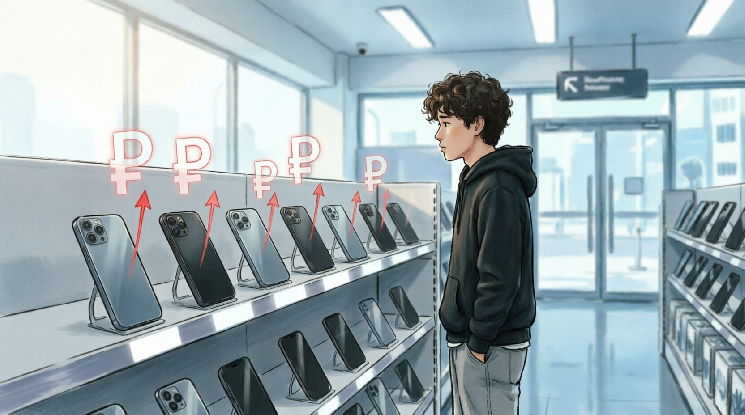
Smartphones and Computers Will Become More Expensive: Ministry of Industry and Trade Plans to Collect 136 Billion Rubles from Electronics Buyers

Russia's Ministry of Industry and Trade plans to introduce a new mandatory "technological levy" on imported and domestically produced electronics, starting December 1, 2026. Unlike earlier proposals, a previously planned 5,000-ruble cap per device has been removed from the draft rules, which could lead to significantly higher charges. The ministry estimates the levy will raise 136 billion rubles over six years, with funds earmarked to support the domestic microelectronics industry. The levy applies to electronic components and finished products like smartphones, computers, and telecommunications equipment. While businesses will formally pay the fee, the cost is expected to be passed on to consumers through higher retail prices, potentially most affecting budget devices. This move may also reduce the variety of products available if importing certain models becomes unprofitable. The plan has raised concerns. A legal conflict exists as the current law still includes the 5,000-ruble cap. Additionally, the specific rates and calculation method for devices like smartphones remain unclear. Experts compare it to a similar levy on vehicles, where rates and exemptions were frequently revised. The collected funds will supplement, not replace, other state and private investments in the microelectronics sector. The levy's ultimate impact on device affordability and industry support will depend on final regulations and implementation.

cryptonews.ruHá 8m

Smartphones and Computers Will Become More Expensive: Ministry of Industry and Trade Plans to Collect 136 Billion Rubles from Electronics Buyers

cryptonews.ruHá 8m

Trading

Spot
活动图片