Polymarket Just Dropped Its Toughest Insider‑Trading Rules Yet – But Can They Really Calm DC?

bitcoinistPublicado em 2026-03-24Última atualização em 2026-03-24

Resumo

Polymarket, the world's largest prediction market, has introduced stricter rules against insider trading and market manipulation. These updates explicitly ban trading on confidential information, illegal tips, and participation by individuals who can influence event outcomes, such as government officials or athletes. The move comes amid increased regulatory scrutiny, including a new bipartisan Senate bill targeting prediction markets. Competitor Kalshi also announced similar guardrails. Both platforms are strengthening compliance to address ethical concerns and regulatory pressures, which may lead to tighter KYC procedures and reduced tolerance for trading on non-public information.

Polymarket, the world’s largest prediction market, is rolling out new safeguards against insider trading and manipulation.

Polymarket’s Most Recent Bet

The pressure generated from the growing scrutiny that prediction markets have come under as of late seems to have done the trick. Polymarket updated its rules on Monday and shortly after, Kalshi, its main competitor, announced new guardrails that preemptively block politicians, candidates and sports insiders from trading on related markets, Bloomberg claims.

Neal Kumar, Polymarket’s chief legal officer, said in a statement that the goal of this update to the rulebook is clarifying the expectations they have for the users. “Markets thrive on clarity”, he claims:

“These rule enhancements make our expectations abundantly clear for every participant across both platforms and highlight the compliance infrastructure we have already built. As Polymarket continues to scale, we will build on our foundation with clear communication to Polymarket’s users to ensure our markets do what they do best — surface truth.”

The timing is not casual. Also on Monday, Senators Adam Schiff (D-CA) and John Curtis (R-UT) introduced a bipartisan Senate bill targeting sports‐style bets on platforms like Polymarket and Kalshi, after a string of “suspiciously well‐timed” trades. The Senate concerns go beyond the law, citing the surge of gambling culture promoted by online betting can easily lead to addiction.

What Actually Changed At Polymarket And Kalshi

Polymarket updated its Terms of Use and U.S. Rulebook with enhanced “market integrity” rules across both its DeFi platform and CFTC‐regulated U.S. exchange. The new language explicitly bans trading on stolen or confidential information when using it would violate a duty of trust or confidence (classic insider‐trading standard). It also prohibits trading on illegal tips, where a user knows or should know the person sharing the information is themselves barred from trading on it. Additionally, users who can influence the outcome of a bet, such as government officials, corporate executives, or athletes tied to the event, are barred from trading on related contracts.

The rulebook also spells out broader manipulation bans, including spoofing, wash trading, fictitious transactions, front‐running, self‐dealing and other disruptive practices. The dedicated “Market Integrity” provide tools to report suspicious activity across both platforms, highlighting a multi‐layer surveillance and enforcement framework that combines automated monitoring with human review to flag and investigate questionable trades.

Similarly, on its side, Kalshi announced expanded “guardrails” against insider trading and market manipulation, framed as a response to CFTC guidance and the latest congressional proposals. The exchange is rolling out technological screens that aim to preemptively block politicians, political candidates and campaign insiders from trading on their own races. Similar screens will bar athletes and other “relevant people”, like team staff, league insiders and other connected personnel, from trading in sports markets they are involved with.

What This Means For Traders

Prediction markets have exploded into a multi‐billion‐dollar venue for trading politics and sports, but that scale brought CFTC scrutiny, state‐level pushback and now congressional bills aimed squarely at their growth engines. Some of the critiques show valid ethic concerns. Let’s not forget that not too long ago, Argentinian authorities ordered a full national ban of Polymarket after it “predicted” inflation data back in February. On top of that, the platform faced terrible backlash recently after bettors sent death threats to Times of Israel military reporter Emanuel Fabian, following his report of an Iranian ballistic missile on March 10.

Polymarket and Kalshi are now racing to build compliance as a moat: whoever convinces regulators first may become the default institutional on‐ramp, while weaker venues risk being regulated into the ground. Traders can expect tighter KYC/surveillance and less tolerance for “edge” based on non‐public info.
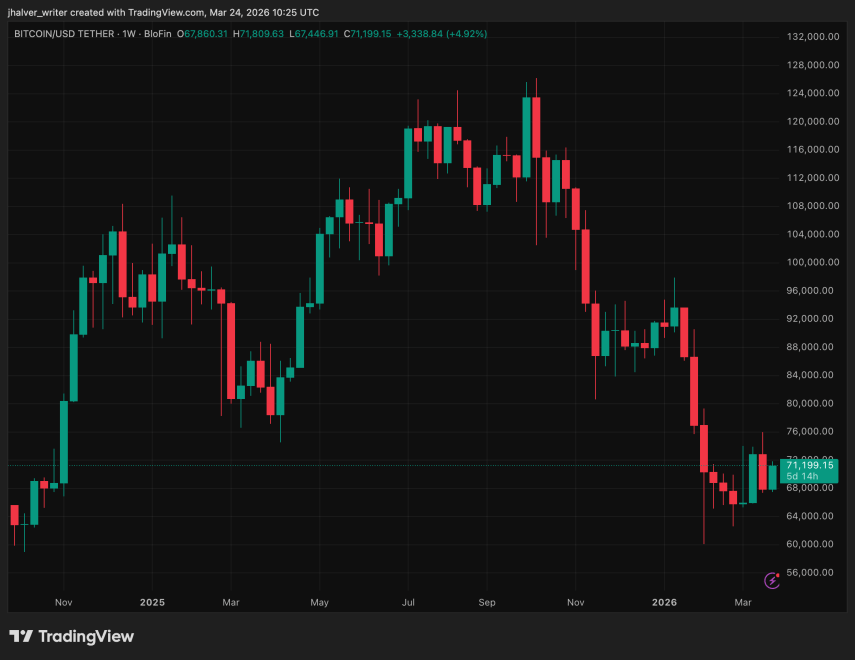
BTC’s price hangs in $71k on the daily chart. Source: BTCUSDT on Tradingview

Cover image from Perplexity, BTCUSDT chart from Tradingview

Perguntas relacionadas

QWhat are the main reasons behind Polymarket's recent update to its insider-trading rules?

APolymarket updated its rules due to growing regulatory scrutiny from the CFTC, state-level pushback, and new congressional bills targeting prediction markets, alongside a series of suspiciously well-timed trades that raised concerns about market integrity.

QWhat specific activities are now explicitly banned under Polymarket's enhanced 'market integrity' rules?

APolymarket now explicitly bans trading on stolen or confidential information that violates a duty of trust, trading on illegal tips, and trading by users who can influence the outcome of a bet. It also prohibits broader manipulation practices like spoofing, wash trading, fictitious transactions, front-running, and self-dealing.

QHow did Polymarket's main competitor, Kalshi, respond to the regulatory pressure?

AKalshi announced expanded 'guardrails' against insider trading and market manipulation, including technological screens to preemptively block politicians, candidates, and sports insiders from trading on markets related to their own events, in response to CFTC guidance and congressional proposals.

QWhat broader concerns did U.S. Senators express about prediction markets beyond insider trading?

AU.S. Senators expressed concerns that the surge of gambling culture promoted by online betting platforms can easily lead to addiction, which is why they introduced a bipartisan bill targeting sports-style bets on these platforms.

QWhat are the potential long-term implications for prediction market platforms like Polymarket and Kalshi according to the article?

AThe platforms are racing to build compliance infrastructure as a competitive moat. The one that convinces regulators first may become the default institutional on-ramp, while weaker venues risk being regulated out of existence. Traders can expect tighter KYC/surveillance and less tolerance for trading on non-public information.

Leituras Relacionadas

Within Strategy's Framework, STRC's Dividend Yield Remains at 12% as Share Price Stays Below Par Value

Michael Saylor, Executive Chairman of Strategy (MSTR), confirmed that the dividend rate for its STRC perpetual preferred shares will remain at 12.00% through August 2026. The rate has increased from 9% at its July 2025 launch to the current high via a "ratchet" mechanism, which permanently raises the rate by 0.5% whenever the share price falls below $95. This mechanism is intended to push the price back toward its $100 par value and support Strategy's "at-the-market" (ATM) program for issuing new shares to fund Bitcoin purchases. However, the mechanism has not worked as intended. STRC shares closed at $89.46 on July 31, remaining about 10-11% below par value despite the record-high dividend. Competition from rival Strive's higher-yielding SATA securities has pressured demand. The persistent discount has forced Strategy to suspend new STRC issuances via its ATM program, limiting this funding channel for Bitcoin acquisitions. STRC's struggles reflect Bitcoin's own volatility, as the preferred shares historically move in tandem. Analysts have warned the ratchet structure carries long-term, one-way risk. A law firm is investigating Strategy's ability to maintain dividend payments if Bitcoin's price stays low. Retail investors own roughly 83% of outstanding STRC shares, a group seen as prone to panic selling during downturns. In response, Strategy has established financial reserves, including a liquidity cushion covering about 26 months of dividend/interest obligations, and a $2 billion share buyback program alongside a Bitcoin monetization framework, though the company emphasized it is not obligated to sell any Bitcoin.

cryptonews.ruHá 8m

Within Strategy's Framework, STRC's Dividend Yield Remains at 12% as Share Price Stays Below Par Value

cryptonews.ruHá 8m

Analyst: Bitcoin's Price Will Drop to $60k in August, Then Rebound to $70k

Financial analyst Andrey Poroshin has provided a new forecast for Bitcoin's price dynamics in August. Poroshin, an analyst at the Bitbanker exchange, expects the cryptocurrency market to experience a downturn this month, with prices retesting the $60,000 level due to a lack of supportive macroeconomic catalysts. He noted that the recent US Federal Reserve decision to hold interest rates did not significantly impact the market, while inflation remains above the 2% target. Poroshin stated that Bitcoin is ending July under pressure from moderate volatility and a lack of new macroeconomic stimuli, leading to continued market caution. According to his base scenario, Bitcoin will drop to a range of $60,000 to $62,000 before recovering to $70,000. He pointed out that even $70,000 remains below the cost of mining in the US, which has prompted some miners to shift towards AI data center operations. Poroshin cited the winding down of BitMEX's operations as a potential catalyst for a price rebound, suggesting the exit of weaker players often coincides with market reversals and reduced short-term selling pressure. He believes Bitcoin is currently less susceptible to geopolitical shocks, such as the Iran-US conflict, and does not expect significant market changes in August related to the pending CLARITY Act. Looking ahead, Poroshin forecasts that September will bring more active price fluctuations driven by potential Fed rate decisions and possible discussions or approval of the CLARITY Act.

cryptonews.ruHá 8m

Analyst: Bitcoin's Price Will Drop to $60k in August, Then Rebound to $70k

cryptonews.ruHá 8m

Trading

Spot
活动图片