Polymarket Just Dropped Its Toughest Insider‑Trading Rules Yet – But Can They Really Calm DC?

bitcoinistPublicado em 2026-03-24Última atualização em 2026-03-24

Resumo

Polymarket, the world's largest prediction market, has introduced stricter rules against insider trading and market manipulation. These updates explicitly ban trading on confidential information, illegal tips, and participation by individuals who can influence event outcomes, such as government officials or athletes. The move comes amid increased regulatory scrutiny, including a new bipartisan Senate bill targeting prediction markets. Competitor Kalshi also announced similar guardrails. Both platforms are strengthening compliance to address ethical concerns and regulatory pressures, which may lead to tighter KYC procedures and reduced tolerance for trading on non-public information.

Polymarket, the world’s largest prediction market, is rolling out new safeguards against insider trading and manipulation.

Polymarket’s Most Recent Bet

The pressure generated from the growing scrutiny that prediction markets have come under as of late seems to have done the trick. Polymarket updated its rules on Monday and shortly after, Kalshi, its main competitor, announced new guardrails that preemptively block politicians, candidates and sports insiders from trading on related markets, Bloomberg claims.

Neal Kumar, Polymarket’s chief legal officer, said in a statement that the goal of this update to the rulebook is clarifying the expectations they have for the users. “Markets thrive on clarity”, he claims:

“These rule enhancements make our expectations abundantly clear for every participant across both platforms and highlight the compliance infrastructure we have already built. As Polymarket continues to scale, we will build on our foundation with clear communication to Polymarket’s users to ensure our markets do what they do best — surface truth.”

The timing is not casual. Also on Monday, Senators Adam Schiff (D-CA) and John Curtis (R-UT) introduced a bipartisan Senate bill targeting sports‐style bets on platforms like Polymarket and Kalshi, after a string of “suspiciously well‐timed” trades. The Senate concerns go beyond the law, citing the surge of gambling culture promoted by online betting can easily lead to addiction.

What Actually Changed At Polymarket And Kalshi

Polymarket updated its Terms of Use and U.S. Rulebook with enhanced “market integrity” rules across both its DeFi platform and CFTC‐regulated U.S. exchange. The new language explicitly bans trading on stolen or confidential information when using it would violate a duty of trust or confidence (classic insider‐trading standard). It also prohibits trading on illegal tips, where a user knows or should know the person sharing the information is themselves barred from trading on it. Additionally, users who can influence the outcome of a bet, such as government officials, corporate executives, or athletes tied to the event, are barred from trading on related contracts.

The rulebook also spells out broader manipulation bans, including spoofing, wash trading, fictitious transactions, front‐running, self‐dealing and other disruptive practices. The dedicated “Market Integrity” provide tools to report suspicious activity across both platforms, highlighting a multi‐layer surveillance and enforcement framework that combines automated monitoring with human review to flag and investigate questionable trades.

Similarly, on its side, Kalshi announced expanded “guardrails” against insider trading and market manipulation, framed as a response to CFTC guidance and the latest congressional proposals. The exchange is rolling out technological screens that aim to preemptively block politicians, political candidates and campaign insiders from trading on their own races. Similar screens will bar athletes and other “relevant people”, like team staff, league insiders and other connected personnel, from trading in sports markets they are involved with.

What This Means For Traders

Prediction markets have exploded into a multi‐billion‐dollar venue for trading politics and sports, but that scale brought CFTC scrutiny, state‐level pushback and now congressional bills aimed squarely at their growth engines. Some of the critiques show valid ethic concerns. Let’s not forget that not too long ago, Argentinian authorities ordered a full national ban of Polymarket after it “predicted” inflation data back in February. On top of that, the platform faced terrible backlash recently after bettors sent death threats to Times of Israel military reporter Emanuel Fabian, following his report of an Iranian ballistic missile on March 10.

Polymarket and Kalshi are now racing to build compliance as a moat: whoever convinces regulators first may become the default institutional on‐ramp, while weaker venues risk being regulated into the ground. Traders can expect tighter KYC/surveillance and less tolerance for “edge” based on non‐public info.
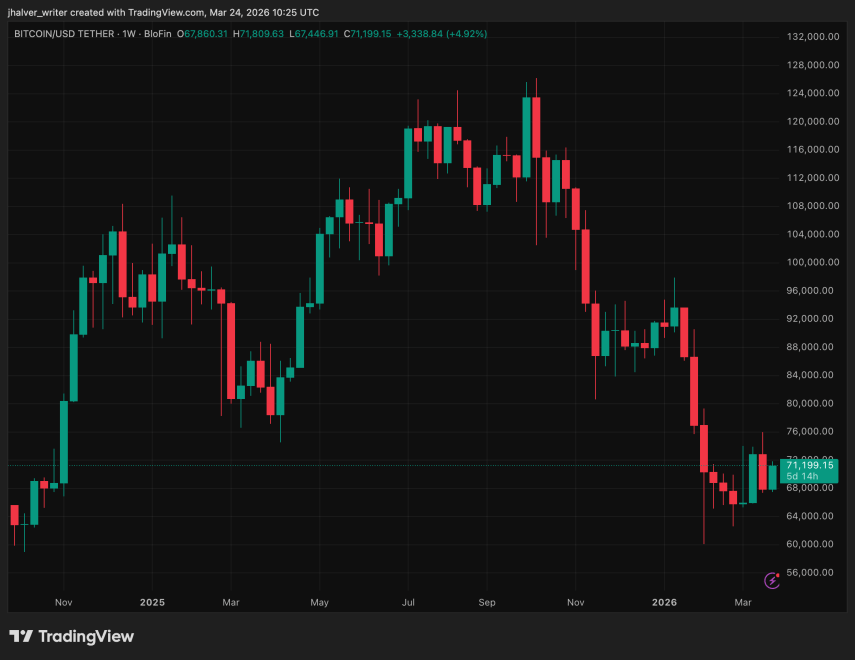
BTC’s price hangs in $71k on the daily chart. Source: BTCUSDT on Tradingview

Cover image from Perplexity, BTCUSDT chart from Tradingview

Perguntas relacionadas

QWhat are the main reasons behind Polymarket's recent update to its insider-trading rules?

APolymarket updated its rules due to growing regulatory scrutiny from the CFTC, state-level pushback, and new congressional bills targeting prediction markets, alongside a series of suspiciously well-timed trades that raised concerns about market integrity.

QWhat specific activities are now explicitly banned under Polymarket's enhanced 'market integrity' rules?

APolymarket now explicitly bans trading on stolen or confidential information that violates a duty of trust, trading on illegal tips, and trading by users who can influence the outcome of a bet. It also prohibits broader manipulation practices like spoofing, wash trading, fictitious transactions, front-running, and self-dealing.

QHow did Polymarket's main competitor, Kalshi, respond to the regulatory pressure?

AKalshi announced expanded 'guardrails' against insider trading and market manipulation, including technological screens to preemptively block politicians, candidates, and sports insiders from trading on markets related to their own events, in response to CFTC guidance and congressional proposals.

QWhat broader concerns did U.S. Senators express about prediction markets beyond insider trading?

AU.S. Senators expressed concerns that the surge of gambling culture promoted by online betting platforms can easily lead to addiction, which is why they introduced a bipartisan bill targeting sports-style bets on these platforms.

QWhat are the potential long-term implications for prediction market platforms like Polymarket and Kalshi according to the article?

AThe platforms are racing to build compliance infrastructure as a competitive moat. The one that convinces regulators first may become the default institutional on-ramp, while weaker venues risk being regulated out of existence. Traders can expect tighter KYC/surveillance and less tolerance for trading on non-public information.

Leituras Relacionadas

Agents Take Over Traffic Distribution Power: What Are Tencent, ByteDance, and Alibaba Competing For?

In the race to dominate the AI era's entry point, China's tech giants—Tencent, ByteDance, and Alibaba—are aggressively deploying AI Agents to control the future of traffic distribution. Alibaba is pursuing a dual-track "closed loop + openness" strategy. Its Qianwen app is evolving into a super-Agent integrated across its ecosystem (Taobao, Alipay, etc.) to handle complex tasks like travel planning. Concurrently, it is opening its platform to external brands (Luckin Coffee, KFC) and has launched a B2B Agent platform, "Wukong," targeting enterprise automation. Its other flagship, Quark, aims to be an "AI super search box" for information and tasks. ByteDance is executing an omnipresent "sprawl strategy." Its Doubao app boasts over 300 million monthly active users and is evolving into a default AI entry point for daily life, with plans for paid versions and e-commerce integration. Its core weapon is the Kouzi platform, a visual "AI assembly factory" for developers to build custom Agents. ByteDance is also pushing hardware integration, collaborating on AI phones and developing smart glasses to embed Doubao everywhere. Tencent is playing its long-held "ultimate card" by quietly embedding an AI Agent directly into WeChat. This Agent, accessible via a swipe, can understand user commands and automatically execute tasks by calling upon WeChat's millions of mini-programs (e.g., finding and ordering coffee). This leverages WeChat's unparalleled 1.4-billion-user ecosystem to position the app as an AI-powered "service operating system," a move that could dramatically reshape the competitive landscape. The core battleground is shifting from competing for "user screen time" to competing to be the "default execution layer" for user intent. The business model is evolving from an "attention economy" to an "intent economy," where the Agent that can most efficiently fulfill a user's need gains control over service access and token flow. This represents a fundamental change in how users connect with digital services, making the fight for the Agent入口 (entry point) a pivotal moment for redefining industry leadership in the AI age.

marsbitHá 15m

Agents Take Over Traffic Distribution Power: What Are Tencent, ByteDance, and Alibaba Competing For?

marsbitHá 15m

From Banning Doubao to Embracing Honor: Why Did WeChat Suddenly 'Change Its Face'?

The article explores the sudden shift in WeChat's strategy towards AI assistants from mobile phone manufacturers, transitioning from strict opposition to active collaboration. For over a year, WeChat fiercely resisted attempts by phone AI assistants (like ByteDance's Doubao in late 2025) to control its features via GUI automation ("simulated clicking"), citing security and data control concerns. This stance created a significant barrier for system-level AI integration. Now, Tencent has initiated A2A (Agent-to-Agent) partnerships with major phone brands like Honor, Xiaomi, OPPO, and vivo. This model allows a phone's system AI (e.g., Honor's YOYO) to parse a user's voice command and send a structured request directly to WeChat's own internal AI agent via secure APIs. WeChat then executes the action (e.g., sending a message) and returns the result. The article attributes Tencent's "change of face" to strategic pressure. While leading in social app usage, Tencent trails rivals like ByteDance and Alibaba in standalone AI app popularity. WeChat, with its vast mini-program ecosystem, is Tencent's key asset for an AI comeback. The upcoming WeChat AI agent aims to handle tasks like booking and payments within the app. However, phone system assistants remain the primary AI entry point for most users. The A2A collaboration allows Tencent to extend WeChat's AI reach to this crucial system layer while maintaining control over its core functions and data. For phone manufacturers, embracing A2A is a pragmatic move. The GUI route proved unviable due to WeChat's blocks. A2A offers a compliant path to integrate a vital service, enhancing their AI assistants' usefulness. It allows them to focus on developing their own AI ecosystems for other services while cooperating on WeChat access. The collaboration is framed as a mutual, strategic necessity: Tencent gains a distribution channel, and manufacturers gain a key functionality. The partnership relies on a "dual authorization" mechanism for security, requiring both user and app consent for each action. While questions about long-term data privacy practices remain, experts note A2A is more secure and compliant than GUI automation. Ultimately, this cooperation is seen as a tentative, calculated truce. Tencent's long-term goal is to make WeChat an AI-powered "service OS." Phone manufacturers aim to make their system AI the central user interface. Their paths may converge or clash in the future, but for now, the A2A deal represents the opening chapter in the battle for the AI-era user入口, driven by necessity and strategic calculus on both sides.

marsbitHá 1h

From Banning Doubao to Embracing Honor: Why Did WeChat Suddenly 'Change Its Face'?

marsbitHá 1h

On-Chain Figures on the Eve of Kickoff: 1.6 Billion Traded Before the World Cup Even Begins

"On-Chain Numbers on the Eve of the World Cup: $1.6 Billion Traded Before Kick-off" Analysis of on-chain markets before the 2026 FIFA World Cup reveals significant crypto integration into football. The most striking figure is the approximately **$1.6 billion** in total trading volume on the single "World Cup Winner" contract on the Polymarket prediction market platform, accumulated before a single match was played. This represents explosive growth for a sector whose annual volume surged from ~$16B in 2024 to ~$64B in 2025. The ecosystem is maturing beyond speculation. Key developments include: 1) **Infrastructure upgrades** like Polymarket's migration to native, regulated USDC stablecoin for settlements; 2) **Reliable data oracles**, such as Chainlink, being used to resolve real-world match outcomes on-chain; and 3) **Official recognition**, with FIFA appointing its first-ever "Prediction Markets" partner. Over 100 contracts now cover everything from the outright winner to individual match results and even non-sporting risks like venue relocation. This evolution marks a fundamental shift. While crypto firms are absent from FIFA's top-tier sponsor list, the technology has deeply penetrated the tournament's financial and predictive infrastructure through regulated stablecoin settlements, decentralized oracles, and new official partnership categories. The regulatory landscape remains complex and varies by jurisdiction, but on-chain markets for the World Cup are already a multi-billion-dollar reality.

marsbitHá 2h

On-Chain Figures on the Eve of Kickoff: 1.6 Billion Traded Before the World Cup Even Begins

marsbitHá 2h

Trading

Spot
Futuros
活动图片





