PIPPIN crashes 49% after $560K transfer to exchanges triggers sell-off

ambcryptoPublicado em 2026-03-17Última atualização em 2026-03-17

Resumo

PIPPIN experienced a sharp 49% price decline, falling from the $0.35–$0.40 range to around $0.19. On-chain data indicates that two wallets transferred approximately $560,000 worth of PIPPIN to Gate.io just minutes before the sell-off began. The rapid price drop triggered a cascade of long liquidations, flipping the funding rate deeply negative to -0.8. The move underscores how exchange inflows and derivatives activity can rapidly shift sentiment in low-liquidity markets. While the market is now short-dominated, the extreme positioning could also set the stage for a short-term rebound if buying interest returns.

PIPPIN recorded a sharp 49% decline over the latest trading session, with on-chain data suggesting that exchange inflows may have preceded the move.

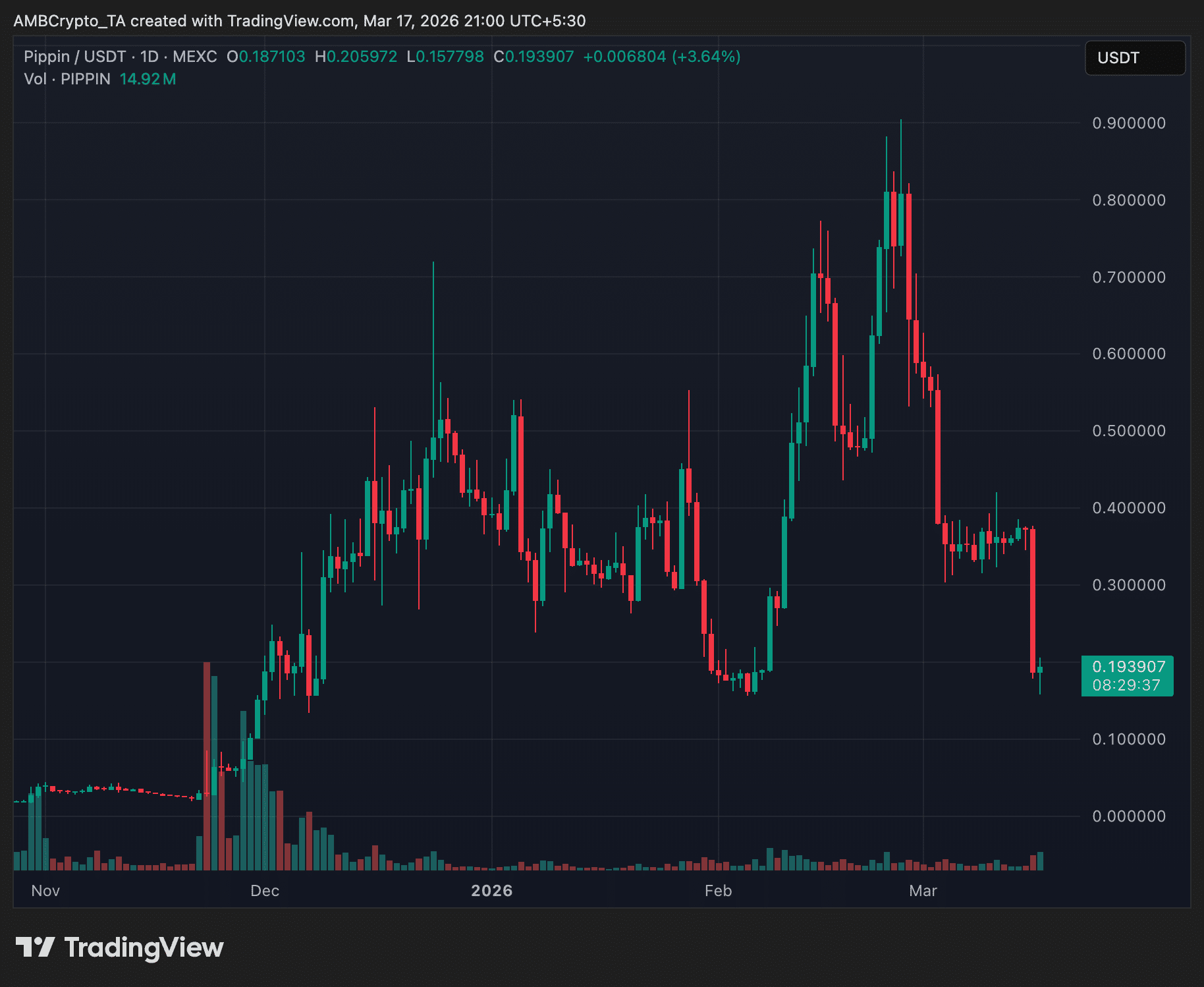
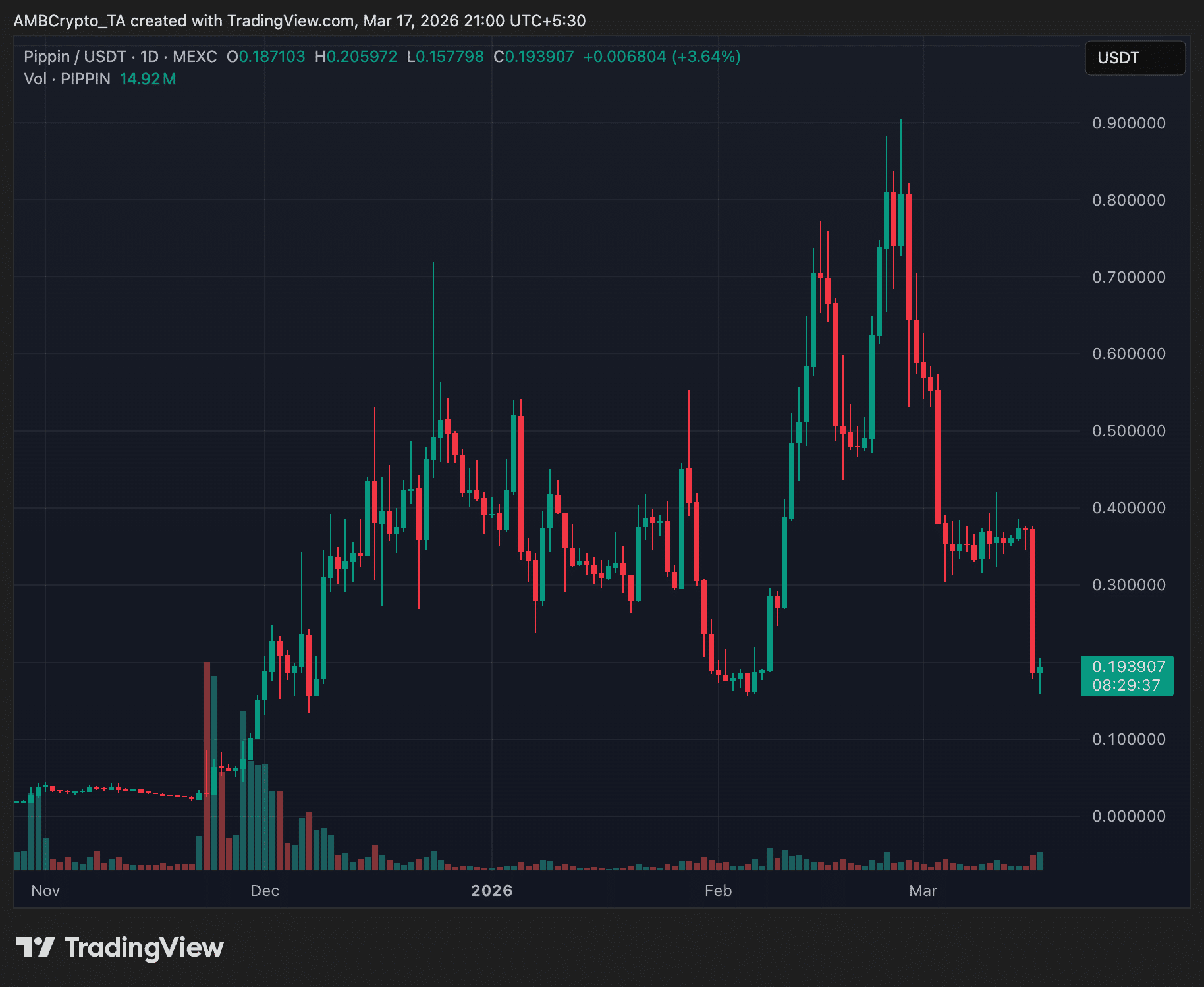
The drop pushed the token from the $0.35–$0.40 range to around $0.19, marking one of its steepest single-session losses in recent weeks.

Data from Bubblemaps showed that two wallets transferred roughly $560k in PIPPIN to deposit addresses. These addresses then routed the tokens to Gate.io at around 8:00 UTC, just minutes before the price breakdown began.

Wallet transfers preceded the sell-off

According to Bubblemaps, the transfers occurred within minutes of each other, with both wallets sending funds to exchange-linked deposit addresses shortly before the decline.

While the data does not confirm intent, the timing suggests that tokens were moved to exchanges ahead of increased selling pressure.

In crypto markets, such inflows are often monitored as potential indicators of distribution, particularly when followed by sharp price movements.

Price breakdown triggers liquidation cascade

The price chart showed a clear loss of structure before the drop accelerated. After failing to hold the $0.30 consolidation level, PIPPIN broke lower with strong momentum, accompanied by a visible spike in trading volume.
Source: TradingView

The move accelerated losses, wiping out recent gains and pushing the token back toward levels last seen in its trading range. The speed of the decline pointed to forced selling and cascading liquidations, rather than gradual profit-taking.

Funding flips as longs get wiped

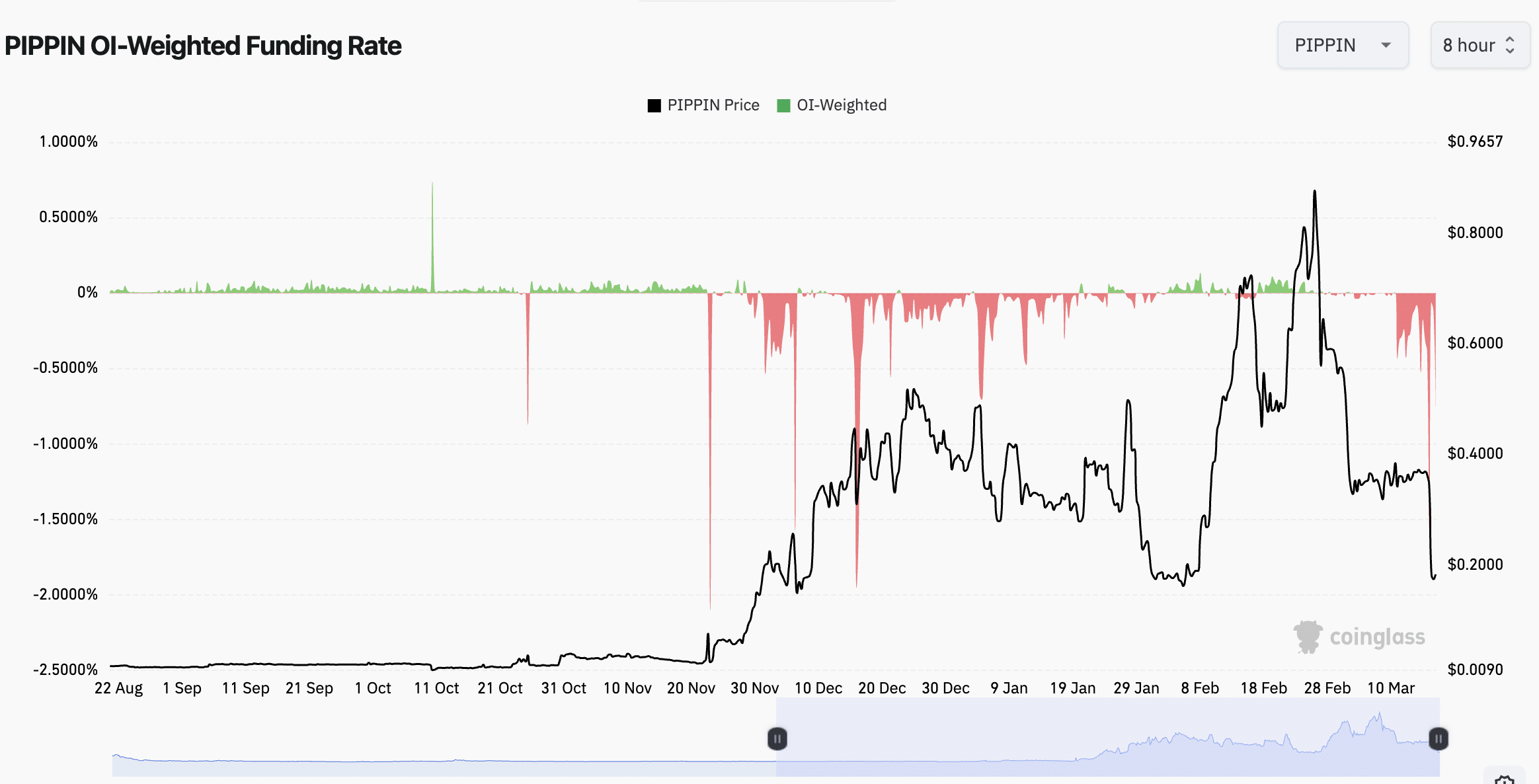
Derivatives data reinforced the liquidation narrative. The OI-weighted funding rate flipped deeply negative following the drop. As of this writing, the funding rate was -0.8, an improvement from –1.5 in the previous trading session.

This indicates that long positions were aggressively closed or liquidated during the move.
Source: Coinglass

Earlier in the cycle, funding had remained relatively stable or slightly positive, suggesting that the market was positioned for upside. The sudden reversal highlights a shift from crowded longs to short dominance, a typical pattern following a long squeeze.

What next for PIPPIN?

With funding now negative and price significantly lower, the market faces a split outlook.

On one hand, continued weakness could follow if the exchange inflows reflect a broader distribution. On the other hand, crowded short positioning may create conditions for a short-term rebound if buying interest returns.

For now, PIPPIN’s price action appears to be driven by a combination of on-chain flows, spot selling pressure, and derivatives liquidations, with the latest move underscoring how quickly sentiment can shift in low-liquidity environments.


Final Summary

  • PIPPIN’s 49% drop followed $560k in token transfers to exchanges, with timing suggesting inflows may have preceded the sell-off.
  • The move triggered long liquidations and flipped funding negative, leaving the market tilted toward shorts in the near term.

Criptomoedas em alta

Perguntas relacionadas

QWhat was the percentage decline in PIPPIN's price and what event preceded it according to on-chain data?

APIPPIN recorded a sharp 49% decline, with on-chain data suggesting that $560k in token transfers to exchanges preceded the sell-off.

QWhich exchange received the tokens from the two wallets, and what was the approximate timing of these transfers?

AThe tokens were routed to Gate.io at around 8:00 UTC, just minutes before the price breakdown began.

QWhat key price level did PIPPIN fail to hold before the drop accelerated?

APIPPIN failed to hold the $0.30 consolidation level before breaking lower with strong momentum.

QHow did the funding rate change following the price drop, and what does this indicate?

AThe OI-weighted funding rate flipped deeply negative to -0.8, indicating that long positions were aggressively closed or liquidated during the move.
QWhat are the two potential outlooks for PIPPIN's market following this event?

AThe outlook is split: continued weakness could follow if the exchange inflows reflect broader distribution, or crowded short positioning may create conditions for a short-term rebound if buying interest returns.

Leituras Relacionadas

Podcast Notes | Conversation with GSR Asset Management Head: To Determine if This Crypto Rally is Real, Just Watch the Lending Rates on Aave

Podcast Summary: Dialogue with GSR's Head of Asset Management: To Determine if This Crypto Rally is Real, Just Check Lending Rates on Aave Andy Baehr, Managing Director of Asset Management at GSR, discusses the current crypto market, characterizing it as stuck in a state of "ambivalence" with short-lived, unsustainable rallies. He outlines a simple framework: the market moves between "ambivalence" and "conviction" (sustained upward momentum). Currently, every rally resembles a single-stage rocket booster that quickly fizzles out. Baehr identifies three key signals to watch: 1) DeFi lending rates, 2) the potential passage of the CLARITY Act, and 3) the market forming a consensus on the "Fed hawkish peak." He emphasizes that the most immediate indicator for the sustainability of the recent CPI-triggered rally is the USDC borrowing rate on Aave, currently around 3.75%—close to U.S. Treasury yields. The absence of a credit spread indicates low leverage demand and a lack of market energy. He explains that a healthy, sustained rally requires layered buying pressure. Last year's rally progressed from an ETH short squeeze to crypto-native trader influx and finally to ETF inflows. Currently, this structure is missing. Other potential structural buyers like Digital Asset Treasury (DAT) companies are absent, and ETF flows have proven transient. Baehr notes that while small-cap crypto tokens outperformed large caps in Q2—a potential sign of capitation in major assets—capital is also flowing to more exciting opportunities like AI stocks and tech IPOs, leaving crypto sidelined. Regarding DeFi, he highlights that platforms like Aave provide a clear, real-time signal of leverage demand through their supply/demand-driven interest rates. A significant, sustained rate increase would signal genuine market conviction. He also observes the quiet emergence of fixed-income-like products and vaults in DeFi. On regulation, the probability of the CLARITY Act passing before the August 7th deadline has dropped linearly from 75% to below 40% on Polymarket. Baehr suggests its passage would be treated as a bullish surprise, a potent driver for price movement. However, political hurdles, including ethical clause debates and disclosures about the First Family's crypto profits, remain significant obstacles. Ultimately, the market awaits clarity on the Fed's terminal rate under Chair Warsh. Until the "Fed Solstice"—the point where the market collectively understands the peak of hawkish policy—sustained conviction will be difficult to achieve.

marsbitHá 33m

Podcast Notes | Conversation with GSR Asset Management Head: To Determine if This Crypto Rally is Real, Just Watch the Lending Rates on Aave

marsbitHá 33m

7 Months After the Collapse of Huiwang, Southeast Asia's Escrow Platforms Undergo a Major Reshuffle

Following the collapse of Huione Pay—dubbed the "Alipay of Southeast Asia"—seven months ago, the region's underground financial guarantee platform sector is undergoing a significant reshuffle. This power vacuum has been swiftly filled by emerging platforms such as XinBi, Tiger/Navigator, JinBei (renamed JinBo), Dali/Tiancheng, and FullyLight. These platforms, operating largely via Telegram and offering services like escrow for illicit transactions, have absorbed the vast user base and markets left behind by Huione. While positioning themselves as "trust intermediaries," their primary clientele consists of networks involved in online scams, money laundering, illegal gambling, and even human trafficking. For instance, the Tiger/Navigator platform explicitly provides "escrow" services for kidnapping-for-ransom operations ("强押车交易"). Data underscores the immense scale: Huione alone processed over $103 billion in cryptocurrency payments and facilitated over $31 billion through its escrow market before its downfall, linking it to Cambodia's notorious Prince Group. Since its collapse, competitors have seen explosive growth. For example, the XinBi platform has accumulated over $1.6 billion in total USDT revenue, while platforms like NewPay, OkPay (under Dali), and FullyLight Wallet collectively processed over $4.8 billion in USDT in a single year. This ecosystem thrives in regions like Cambodia and Myanmar, where regulatory gaps allow these platforms to act as critical financial infrastructure for sprawling cybercrime industries, from scam compounds to online casinos. The article concludes that the moniker "Southeast Asian Alipay" is a misnomer, obscuring the platforms' fundamental role in enabling serious criminal enterprises rather than representing legitimate financial innovation.

Odaily星球日报Há 1h

7 Months After the Collapse of Huiwang, Southeast Asia's Escrow Platforms Undergo a Major Reshuffle

Odaily星球日报Há 1h

Trading

Spot

Artigos em Destaque

Como comprar PIPPIN

Bem-vindo à HTX.com!Tornámos a compra de pippin (PIPPIN) simples e conveniente.Segue o nosso guia passo a passo para iniciar a tua jornada no mundo das criptos.Passo 1: cria a tua conta HTXUtiliza o teu e-mail ou número de telefone para te inscreveres numa conta gratuita na HTX.Desfruta de um processo de inscrição sem complicações e desbloqueia todas as funcionalidades.Obter a minha contaPasso 2: vai para Comprar Cripto e escolhe o teu método de pagamentoCartão de crédito/débito: usa o teu visa ou mastercard para comprar pippin (PIPPIN) instantaneamente.Saldo: usa os fundos da tua conta HTX para transacionar sem problemas.Terceiros: adicionamos métodos de pagamento populares, como Google Pay e Apple Pay, para aumentar a conveniência.P2P: transaciona diretamente com outros utilizadores na HTX.Mercado de balcão (OTC): oferecemos serviços personalizados e taxas de câmbio competitivas para os traders.Passo 3: armazena teu pippin (PIPPIN)Depois de comprar o teu pippin (PIPPIN), armazena-o na tua conta HTX.Alternativamente, podes enviá-lo para outro lugar através de transferência blockchain ou usá-lo para transacionar outras criptomoedas.Passo 4: transaciona pippin (PIPPIN)Transaciona facilmente pippin (PIPPIN) no mercado à vista da HTX.Acede simplesmente à tua conta, seleciona o teu par de trading, executa as tuas transações e monitoriza em tempo real.Oferecemos uma experiência de fácil utilização tanto para principiantes como para traders experientes.

597 Visualizações TotaisPublicado em {updateTime}Atualizado em 2026.06.02

Como comprar PIPPIN

Discussões

Bem-vindo à Comunidade HTX. Aqui, pode manter-se informado sobre os mais recentes desenvolvimentos da plataforma e obter acesso a análises profissionais de mercado. As opiniões dos utilizadores sobre o preço de PIPPIN (PIPPIN) são apresentadas abaixo.

活动图片













