Philippines blocks Coinbase, Gemini amid wider crackdown on unlicensed VASPs

cointelegraphPublicado em 2025-12-24Última atualização em 2025-12-24

Resumo

Amid a wider crackdown on unlicensed virtual asset service providers (VASPs), the Philippines has blocked access to major global cryptocurrency exchanges Coinbase and Gemini. The National Telecommunications Commission directed local internet service providers to restrict access to 50 platforms flagged by the central bank for operating without authorization. This action signifies a regulatory shift from informal tolerance to strict enforcement, making local licensing mandatory for market access. The country had previously banned Binance and identified other unlicensed exchanges like OKX, Bybit, and KuCoin. Meanwhile, regulated entities are expanding crypto services, with partnerships enabling stablecoin payroll and banking-integrated crypto trading.

Internet service providers (ISPs) in the Philippines began blocking major crypto trading platforms as regulators moved to enforce local licensing rules on crypto service providers.

Users reported that as of Tuesday, access to global cryptocurrency exchanges Coinbase and Gemini was unavailable in the Philippines. Cointelegraph independently confirmed that both platforms were inaccessible across multiple local ISPs.

A report by the Manila Bulletin said the ISP blocks followed an order from the National Telecommunications Commission, which directed providers to restrict access to 50 online trading platforms flagged by the Bangko Sentral ng Pilipinas (BSP), the central bank, as operating without authorization.

The central bank did not publish a full list of the platforms hit by the order. However, the change signals an ongoing shift by local regulators from informal tolerance to enforcement, making local licensing the deciding factor for crypto market access in the Philippines.
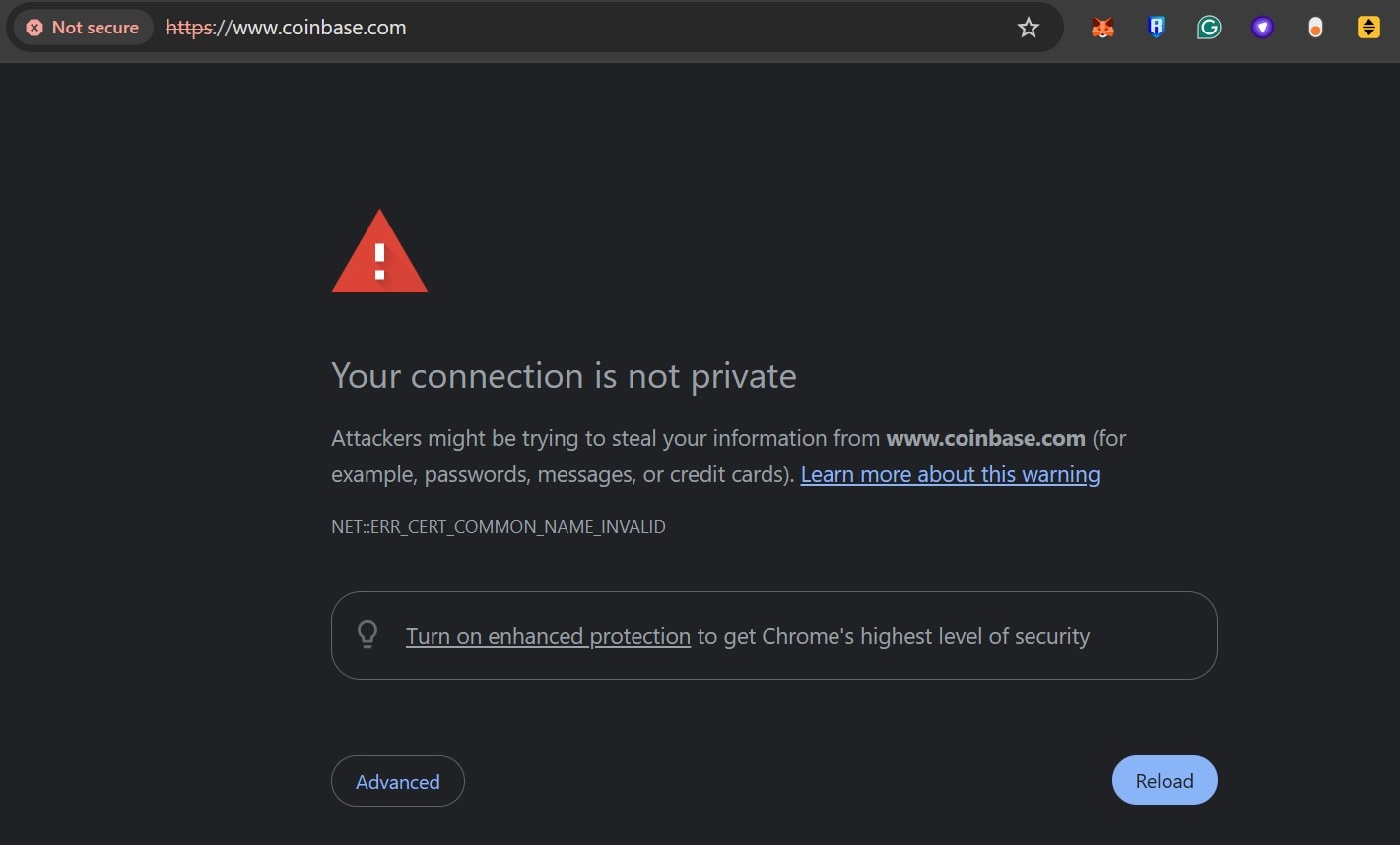
Crypto exchange Coinbase is now inaccessible in the Philippines. Source: Cointelegraph

Coinbase, Gemini join Binance in Philippines access block

While the Philippines has only recently blocked Coinbase and Gemini, the country has made enforcement moves against unlicensed crypto exchanges in the past.

In December 2023, the country started a 90-day countdown, giving Binance time to comply with local regulations before enforcing a ban on the crypto trading platform.

The Philippines Securities and Exchange Commission (SEC) said the period was meant to allow Filipinos to remove their funds from the exchange.

On March 25, 2024, the NTC ordered local ISPs to block Binance. Nearly a month later, the SEC ordered Apple and Google to block the exchange’s application from their stores.

After the ban was enforced, the Philippines SEC said it could not endorse ways for Filipinos to retrieve their funds.

More recently, the SEC identified 10 exchanges, including OKX, Bybit and KuCoin, operating without licenses.

Related: Grab deepens stablecoin push with StraitsX Web3 wallet and settlements

Regulated players roll out crypto products

While the country cracks down on unregulated platforms, compliant companies have been rolling out crypto-related infrastructure in the country.

On Nov. 19, regulated crypto exchange PDAX partnered with payroll provider Toku to let remote workers receive their salaries in stablecoins. This allows workers to convert earnings to pesos without wire fees or delays.

On Dec. 8, digital bank GoTyme rolled out crypto services in the Philippines following a partnership with US fintech firm Alpaca. With the rollout, 11 crypto assets can be bought and stored through the platform's banking application.

Magazine: Sei wallets in Xiaomi, Bhutan’s gold on Solana: Asia Express

Perguntas relacionadas

QWhy did the Philippines block access to Coinbase and Gemini?

AThe Philippines blocked access to Coinbase and Gemini because the National Telecommunications Commission, acting on an order from the central bank (BSP), directed ISPs to restrict access to these and other platforms flagged for operating without a local license.

QWhich government bodies were involved in the enforcement action against unlicensed crypto exchanges?

AThe enforcement action involved the Bangko Sentral ng Pilipinas (BSP), which flagged the unlicensed platforms, and the National Telecommunications Commission (NTC), which ordered internet service providers to block them. The Securities and Exchange Commission (SEC) was also involved in actions against other exchanges like Binance.

QWhat was the previous major enforcement action taken against an unlicensed crypto exchange in the Philippines before Coinbase and Gemini?

APrior to blocking Coinbase and Gemini, the Philippines enforced a ban on Binance. This process began with a 90-day countdown in December 2023 and culminated in the NTC ordering ISPs to block the platform in March 2024, followed by the SEC ordering its removal from app stores.

QWhat is the significance of this crackdown for the regulatory environment in the Philippines?

AThe crackdown signifies a major shift in the Philippines' regulatory stance, moving from informal tolerance to strict enforcement. It establishes local licensing as the decisive factor for crypto market access, prioritizing consumer protection and regulatory compliance.

QDespite the crackdown, what crypto-related services are being launched by compliant companies in the Philippines?

ACompliant companies are rolling out new services. Regulated exchange PDAX partnered with Toku to enable salaried payments in stablecoins, and digital bank GoTyme, in partnership with Alpaca, launched a service allowing users to buy and store 11 different crypto assets through its banking app.

Leituras Relacionadas

Lowering Expectations for BTC's Next Bull Market

The author, Alex Xu, explains his decision to significantly reduce his Bitcoin holdings (from full to ~30% of his portfolio) during the current bull cycle, citing a lowered long-term outlook for BTC's price appreciation in the next cycle. He outlines six key reasons for this reduced expectation: 1. **Diminished Growth Drivers:** The narrative of exponential user adoption has largely played out with institutional ETF adoption. The next major growth phase—adoption by sovereign national reserves or central banks—seems unlikely in the near future. 2. **Personal Opportunity Cost:** More attractive investment opportunities have emerged in other assets, such as undervalued companies. 3. **Industry-Wide Contraction:** The broader crypto industry is struggling, with most Web3 business models (SocialFi, GameFi, DePIN) failing. This overall萧条 (depression) reduces the fundamental demand and consensus for Bitcoin. 4. **Strain on Major Buyer:** MicroStrategy, a major corporate buyer of BTC, faces rising financing expenses for its debt, which could slow its purchasing rate and create significant marginal pressure on the market. 5. **Increased Competition from Gold:** The emergence of "tokenized gold" has closed the functional gap (portability, divisibility) between physical gold and Bitcoin, offering a strong competitor in the non-sovereign store-of-value space. 6. **Security Budget Concerns:** The block reward halving continues to exacerbate the long-standing issue of funding Bitcoin's network security, with new fee source explorations like Ordinals and L2s largely failing. The author's decision to hold a significant (though reduced) position reflects a cautious, not bearish, outlook. He remains open to increasing his exposure if the fundamental reasons for his skepticism change or if new positive catalysts emerge.

marsbitHá 12m

Lowering Expectations for BTC's Next Bull Market

marsbitHá 12m

Can Iran 'Control' the Strait of Hormuz?

Iran has announced a comprehensive plan to assert control over the strategic Strait of Hormuz, a critical global oil shipping chokepoint. The proposed measures include requiring all vessels to obtain Iranian permission for passage, imposing fees for security, environmental protection, and navigation management—preferably paid in Iranian rials—and absolutely banning Israeli ships. Vessels from countries deemed hostile by Iran’s top security bodies may also be barred. Analysts suggest Iran’s motives are multifaceted: increasing pressure on the U.S. and Israel by leveraging control over oil transit to influence global prices and inflation; creating a new revenue stream, potentially exceeding $7.7 billion annually, to counter Western sanctions and support postwar reconstruction; and using transit permissions as bargaining chips in future negotiations, notably with the U.S. However, the plan faces significant practical and diplomatic challenges. Enforcing comprehensive interception and fee collection in the busy waterway, patrolled by international military forces, would be difficult. The U.S. has already countering with a blockade of Iranian ports and threats to intercept any ship paying fees, potentially strangling Iran’s oil exports and fee revenue. Broad international opposition, led by European and Gulf states, and legal controversies further complicate implementation. The proposal may ultimately serve more as a negotiating tactic than a feasible policy, with its execution remaining highly uncertain.

marsbitHá 1h

Can Iran 'Control' the Strait of Hormuz?

marsbitHá 1h

Trading

Spot
Futuros
活动图片





