Peeking Through Windows, Precision Hijacking? Two Giants of Prediction Markets Engage in Corporate Espionage

foresightnews_apiPublicado em 2026-06-05Última atualização em 2026-06-05

Resumo

Polymarket, a prediction market platform, is investigating a suspected corporate espionage case involving its main rival, Kalshi. Polymarket accuses Kalshi of stealing business information and copying product launches through potentially illicit means, compiling a "plagiarism file" documenting over a dozen suspiciously coincidental product releases and marketing campaigns. Key incidents include a February 2026 free-grocery pop-up event, where Kalshi launched an almost identical campaign just nine days before Polymarket's scheduled launch, seemingly to siphon attention. Furthermore, an article leaked Kalshi's plans for a perpetual futures trading product merely an hour before Polymarket's own planned announcement for a similar tool in April 2026. Polymarket executives suspect either an internal mole or physical surveillance, noting that the office of Paradigm—a Kalshi investor—directly faces their Manhattan workspace, leading them to install dark window film. Both Paradigm and Kalshi have dismissed the allegations as baseless and ridiculous. Kalshi claims its product developments are independent and coincidental timing is merely market-driven. The rivalry intensifies as both companies secure significant funding, with Polymarket seeking a $15 billion valuation and Kalshi valued at $22 billion amid growing regulatory scrutiny of the prediction market industry.


By: Marc Vartabedian, New York Post

Compiled by: Luffy, Foresight News


The prediction market platform Polymarket is investigating a suspected case of corporate espionage by a competitor. The platform allows users to place bets on sports events, weather, and geopolitical conflicts. The company alleges its top rival, Kalshi, used improper methods to steal business information and copycat its products.


Led by its 27-year-old CEO Shayne Coplan, the New York-based prediction platform has compiled a "copycat file," documenting over a dozen suspicious incidents: the launch times and product designs of several Kalshi new offerings were strikingly similar to Polymarket's, with coincidences in release timing being alarmingly abnormal.


Matthew Modabber, head of markets at Polymarket, said in a phone interview that the coincidences were simply too many and too abnormal, suggesting a deliberate and aggressive effort to copy their business.
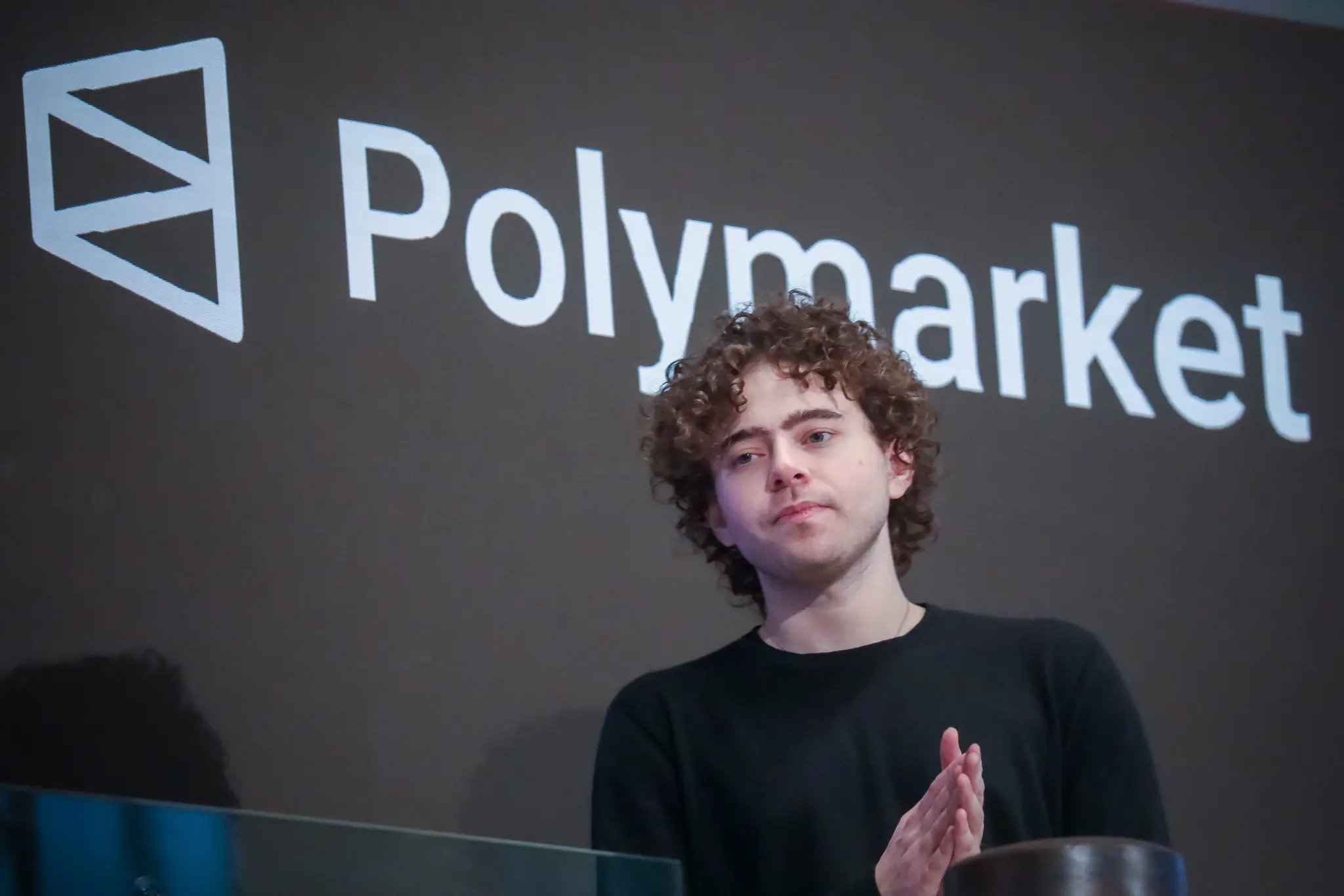

Polymarket CEO Shayne Coplan speaking at the New York Stock Exchange on November 13 last year


The executive did not disclose further details, but people familiar with the matter revealed the company internally suspects two possibilities: one is a mole planted inside Polymarket; the other is a more bizarre suspicion of surveillance.


In recent months, several employees have suggested that Paradigm, an investor in Kalshi, may have been monitoring Polymarket's Lower Manhattan office from across the street. Paradigm's office in New York's SoHo district faces Polymarket's office, with floor-to-ceiling windows offering a direct view into Polymarket's workspace, potentially even observing employees' computer screens. The street-level below houses trendy clothing stores and the upscale restaurant Balthazar.


Due to surveillance concerns, Polymarket specifically applied dark tinted window film to its office windows this spring. An internal employee stated: "The possibility of being spied on was discussed in company meetings. The final conclusion was that, given Kalshi's past conduct, such clandestine surveillance is entirely plausible."


When asked about the espionage allegations, a Paradigm spokesperson responded: "That claim is laughable." Kalshi spokesperson Jack Such responded: "The related accusations are baseless, bordering on delusional. Polymarket is welcome to spend its energy on self-investigation. Kalshi will continue to diligently improve its products."
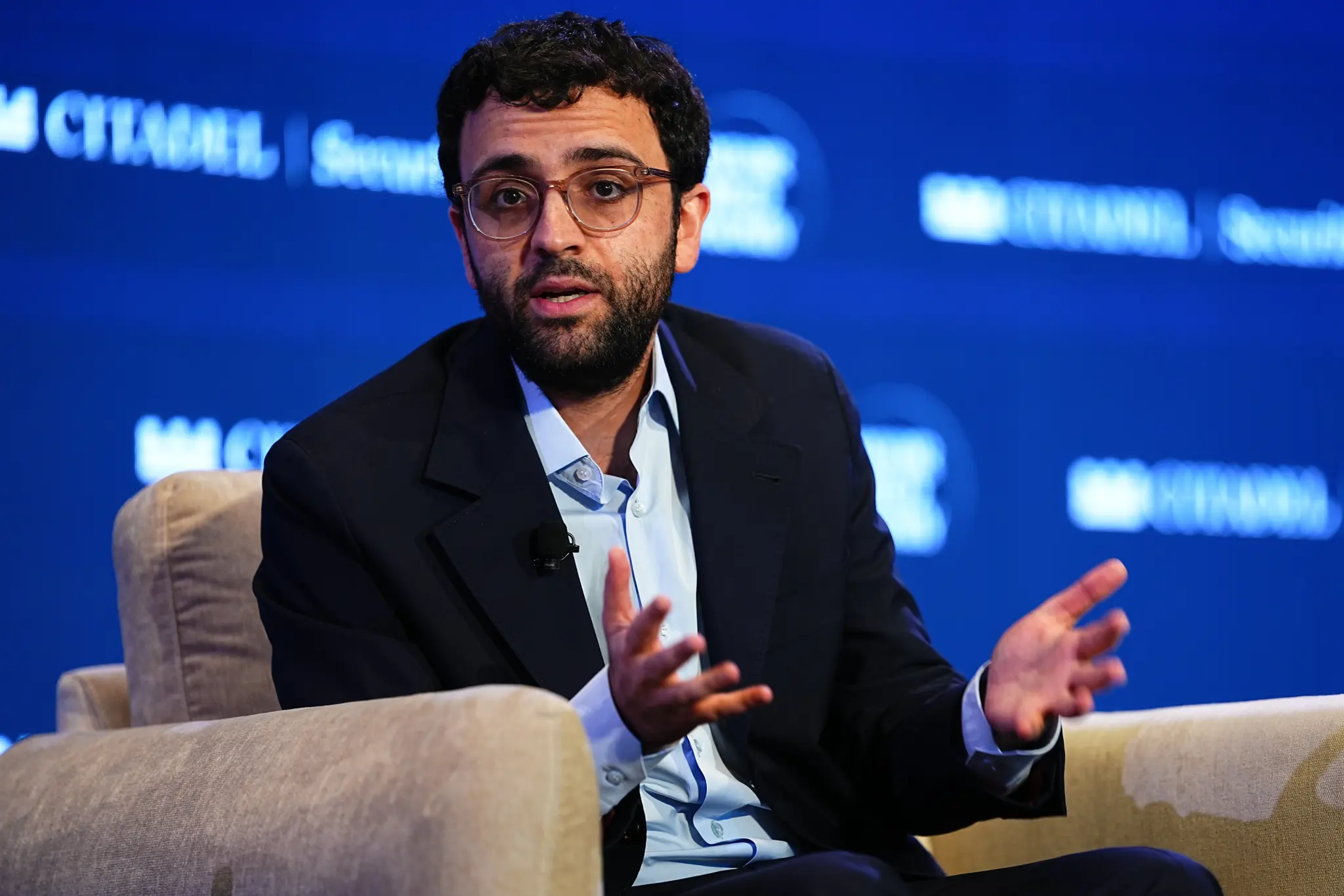

Kalshi co-founder Tarek Mansour speaking at the Semafor World Economy Summit in Washington, D.C., on April 15


Polymarket's investigation focuses on two points: how Kalshi precisely obtained advance knowledge of its new product launches and marketing campaign schedules, and what level of detail they acquired to enable such efficient and comprehensive replication.


Suspicions within the platform have been accumulating over the past year, and an incident at an offline event in February became the catalyst for the current conflict. Polymarket had been preparing a pop-up grocery store event since last November, scheduled to open in Manhattan on February 12: the first 300 in-store customers would receive free groceries. For this, they signed contracts totaling $643,380 for venue, branding, and execution.


Just nine days before Polymarket's opening, Kalshi suddenly launched an identical free grocery marketing campaign at a Westside supermarket in New York, distributing $50 grocery vouchers with the promotional slogan "Free Market," while simultaneously launching prediction markets on topics like monthly egg price increases.


A Polymarket insider claimed the move was clearly intended to divert traffic from their event. Founder Shayne, who grew up in New York, said the event held special significance for the company, and being maliciously hijacked was very disappointing for the team.


Kalshi's head of communications, Elisabeth Diana, denied copying, stating their grocery marketing plan had been in preparation for a long time and they did not obtain the competitor's event timing through an insider. Kalshi spokesperson Such added that both companies' event inspirations came from the New York Mayor's campaign platform promoting grocery subsidies.


Furthermore, since January, Polymarket had been secretly developing a spot perpetual contract trading tool, allowing users to bet on real-time price movements of assets like stocks without holding the underlying asset, originally scheduled for announcement and launch on April 21. However, just one hour before Polymarket's announcement, the tech media outlet *The Information* published an exclusive article citing anonymous sources, revealing Kalshi was about to launch a similar perpetual contract product.


Polymarket's office is located in a fashionable New York neighborhood, directly across the street from Paradigm


According to sources, Polymarket executives were furious about this.


One source said, "It seemed like they knew we would announce that day, which is very suspicious."


Such explained that Kalshi's perpetual product development started in 2024. He believed *The Information* learned about the plan from a social media teaser Kalshi posted on X on April 13. The teaser showed a video of what appeared to be an infinite loop spring toy with the caption "Timeless," which in finance refers to perpetual futures contracts, contracts that never expire.


Polymarket's "copycat file" includes over a dozen sets of screenshots comparing official announcements, social media posts, and product interfaces from both companies. An executive stated these archived cases represent only one-tenth of all similar incidents.


One page of the file records: On June 10, 2025, at 9:01 AM, Polymarket announced on X an hourly crypto price prediction product, garnering nearly 24 million impressions. On the same day at 9:00 AM, the brokerage Webull jointly announced with Kalshi the launch of an identical product. Polymarket's file notes: "Same day?"


But Such countered, stating Kalshi had already launched a similar product before June 10, 2025, and that day was merely its listing on Webull through partnership. He argued it was actually Polymarket that launched later, making it clear who copied whom.


There are also cases of advertising material collisions. On Friday, August 22 last year, Polymarket ran a Meta ad in California for football betting, with the prominent headline "Hey, California"; just one weekend later, Kalshi launched an almost identical targeted ad with the same headline.


Such stated "Hey, California" is generic promotional language, not protected by trademark or copyright. He argued that claiming corporate espionage based solely on an advertising slogan is illogical.


The feud between the two prediction platforms has intensified in 2026. U.S. lawmakers and regulators are tightening oversight of prediction markets, with the industry facing criticism related to insider trading and war gambling. Meanwhile, capital continues to pour heavily into both leading platforms.


According to data from analytics firm PitchBook, Polymarket, founded in 2020, has raised approximately $2 billion to date, with its latest funding round aiming for a valuation of $15 billion. Kalshi, founded in 2018, has raised $2.6 billion, with its latest valuation at $22 billion, double its valuation from December last year.


Perguntas relacionadas

QWhat are the two main prediction market platforms involved in the alleged corporate espionage case, as described in the article?

AThe two main prediction market platforms are Polymarket and Kalshi.

QWhat specific incident in February did Polymarket cite as a key event leading to heightened suspicions against Kalshi?

APolymarket cited an incident where, just 9 days before their planned Manhattan pop-up grocery event, Kalshi launched a similar free-groceries promotional event in New York, which Polymarket believed was an attempt to divert traffic from their own event.

QWhat two possibilities does Polymarket internally suspect regarding how Kalshi might have obtained its confidential information?

APolymarket internally suspects two possibilities: that there is a mole within Polymarket, or that Kalshi's investor Paradigm has been conducting surveillance from their office across the street.

QHow did Polymarket reportedly respond to the surveillance concerns regarding Paradigm's office location?

AIn response to the surveillance concerns, Polymarket reportedly installed dark, tinted window film on their office windows during the spring.

QAccording to the article, what was Kalshi's explanation for the coincidental timing of their perpetual futures product announcement with Polymarket's?

AKalshi's spokesperson, Such, explained that their perpetual product development started in 2024 and suggested that the media outlet The Information learned of their plans from a social media teaser Kalshi posted on April 13th, not from inside information about Polymarket's schedule.

Leituras Relacionadas

Agents Take Over Traffic Distribution Power: What Are Tencent, ByteDance, and Alibaba Competing For?

In the race to dominate the AI era's entry point, China's tech giants—Tencent, ByteDance, and Alibaba—are aggressively deploying AI Agents to control the future of traffic distribution. Alibaba is pursuing a dual-track "closed loop + openness" strategy. Its Qianwen app is evolving into a super-Agent integrated across its ecosystem (Taobao, Alipay, etc.) to handle complex tasks like travel planning. Concurrently, it is opening its platform to external brands (Luckin Coffee, KFC) and has launched a B2B Agent platform, "Wukong," targeting enterprise automation. Its other flagship, Quark, aims to be an "AI super search box" for information and tasks. ByteDance is executing an omnipresent "sprawl strategy." Its Doubao app boasts over 300 million monthly active users and is evolving into a default AI entry point for daily life, with plans for paid versions and e-commerce integration. Its core weapon is the Kouzi platform, a visual "AI assembly factory" for developers to build custom Agents. ByteDance is also pushing hardware integration, collaborating on AI phones and developing smart glasses to embed Doubao everywhere. Tencent is playing its long-held "ultimate card" by quietly embedding an AI Agent directly into WeChat. This Agent, accessible via a swipe, can understand user commands and automatically execute tasks by calling upon WeChat's millions of mini-programs (e.g., finding and ordering coffee). This leverages WeChat's unparalleled 1.4-billion-user ecosystem to position the app as an AI-powered "service operating system," a move that could dramatically reshape the competitive landscape. The core battleground is shifting from competing for "user screen time" to competing to be the "default execution layer" for user intent. The business model is evolving from an "attention economy" to an "intent economy," where the Agent that can most efficiently fulfill a user's need gains control over service access and token flow. This represents a fundamental change in how users connect with digital services, making the fight for the Agent入口 (entry point) a pivotal moment for redefining industry leadership in the AI age.

marsbitHá 1h

Agents Take Over Traffic Distribution Power: What Are Tencent, ByteDance, and Alibaba Competing For?

marsbitHá 1h

From Banning Doubao to Embracing Honor: Why Did WeChat Suddenly 'Change Its Face'?

The article explores the sudden shift in WeChat's strategy towards AI assistants from mobile phone manufacturers, transitioning from strict opposition to active collaboration. For over a year, WeChat fiercely resisted attempts by phone AI assistants (like ByteDance's Doubao in late 2025) to control its features via GUI automation ("simulated clicking"), citing security and data control concerns. This stance created a significant barrier for system-level AI integration. Now, Tencent has initiated A2A (Agent-to-Agent) partnerships with major phone brands like Honor, Xiaomi, OPPO, and vivo. This model allows a phone's system AI (e.g., Honor's YOYO) to parse a user's voice command and send a structured request directly to WeChat's own internal AI agent via secure APIs. WeChat then executes the action (e.g., sending a message) and returns the result. The article attributes Tencent's "change of face" to strategic pressure. While leading in social app usage, Tencent trails rivals like ByteDance and Alibaba in standalone AI app popularity. WeChat, with its vast mini-program ecosystem, is Tencent's key asset for an AI comeback. The upcoming WeChat AI agent aims to handle tasks like booking and payments within the app. However, phone system assistants remain the primary AI entry point for most users. The A2A collaboration allows Tencent to extend WeChat's AI reach to this crucial system layer while maintaining control over its core functions and data. For phone manufacturers, embracing A2A is a pragmatic move. The GUI route proved unviable due to WeChat's blocks. A2A offers a compliant path to integrate a vital service, enhancing their AI assistants' usefulness. It allows them to focus on developing their own AI ecosystems for other services while cooperating on WeChat access. The collaboration is framed as a mutual, strategic necessity: Tencent gains a distribution channel, and manufacturers gain a key functionality. The partnership relies on a "dual authorization" mechanism for security, requiring both user and app consent for each action. While questions about long-term data privacy practices remain, experts note A2A is more secure and compliant than GUI automation. Ultimately, this cooperation is seen as a tentative, calculated truce. Tencent's long-term goal is to make WeChat an AI-powered "service OS." Phone manufacturers aim to make their system AI the central user interface. Their paths may converge or clash in the future, but for now, the A2A deal represents the opening chapter in the battle for the AI-era user入口, driven by necessity and strategic calculus on both sides.

marsbitHá 3h

From Banning Doubao to Embracing Honor: Why Did WeChat Suddenly 'Change Its Face'?

marsbitHá 3h

Trading

Spot
Futuros
活动图片




