OpenAI Restarts Robotics Business After Six Years, Short-term Bets on Assistive Robots

marsbitPublicado em 2026-06-02Última atualização em 2026-06-02

Resumo

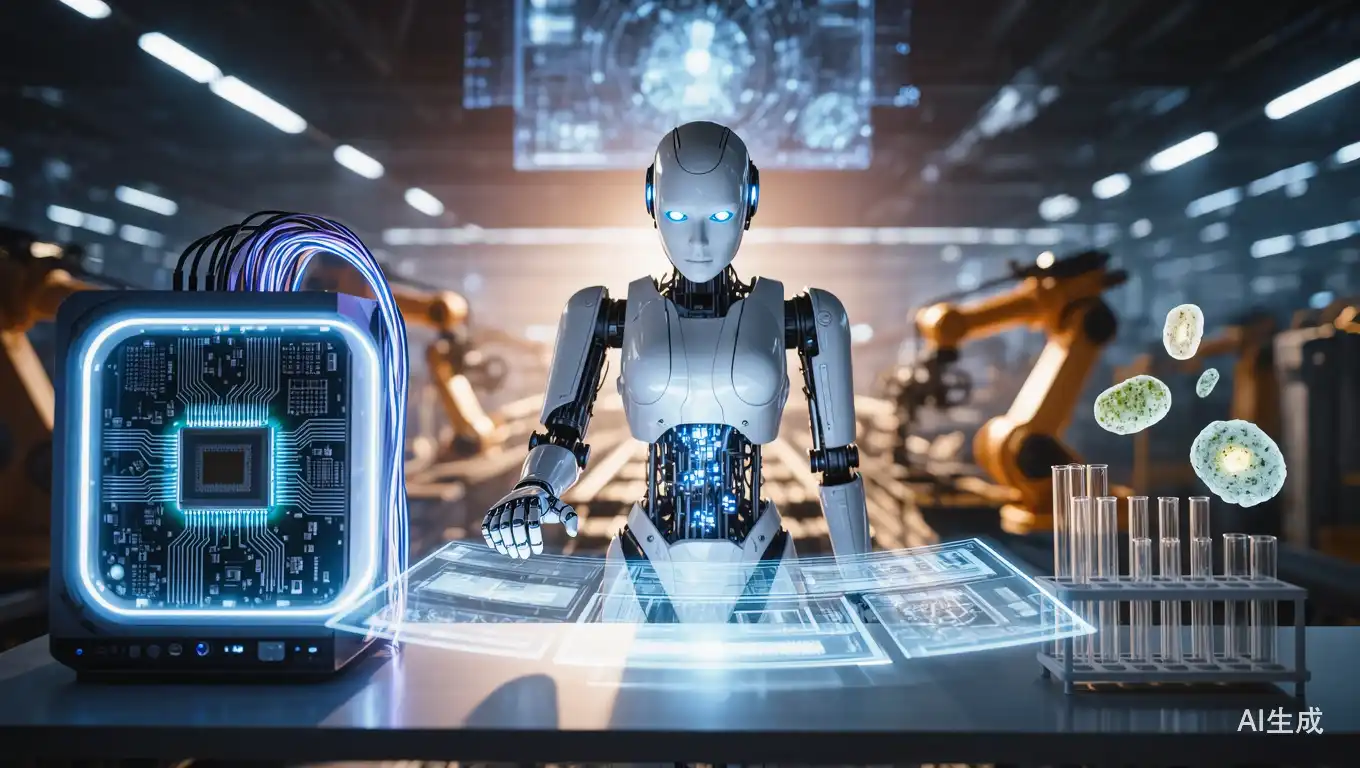
On June 1st, OpenAI CEO Sam Altman announced the company's entry into the physical robotics arena, launching a new "OpenAI Robotics" team. The strategy has short and long-term goals: developing robots to assist technical workers with infrastructure in the near term, and envisioning personal robots for everyone eventually. This marks a return to robotics for OpenAI, which had a team from 2016-2019 before disbanding it to focus on large language models like GPT, leading to ChatGPT. The revival stems from the rapid progress of an internal "Worldsim" research project, now led by Sora co-creator Aditya Ramesh, and a shift in strategy following the end of a partnership with humanoid robotics firm Figure AI in early 2025 due to technical disagreements. OpenAI's approach leverages its leading AI models and "world model" capabilities, aiming to build the "brain" first before the physical body. The move also serves to present a new growth narrative—embodied AI and expansion into the physical world—ahead of its planned 2026 IPO, potentially helping to address investor concerns over its significant ongoing losses.

On June 1, a recruitment post shared by OpenAI CEO Sam Altman on social media officially announced the company's entry into the physical robotics track. Altman stated that the company is forming a new team named "OpenAI Robotics" and is publicly recruiting full-stack hardware, operations, systems, and machine learning engineers. The goal is to "co-program and build robots that are truly useful to society."

According to Altman's explanation, OpenAI's robotics strategy has both short-term and long-term goals. In the short term, OpenAI focuses on developing robots that can assist technical workers in building future infrastructure. In the long run, the company envisions a future where every person can own a personal robot capable of fulfilling various needs.

Altman revealed that the move into robotics is based on the rapid development of an internal OpenAI research project called "Worldsim." This project evolved over the past year into OpenAI Robotics, led by the company's Research Vice President, Aditya Ramesh, a core developer of the text-to-image model DALL·E and the video generation model Sora. The project's foundation lies in the deep integration and co-design of robotics hardware research and machine learning research.

OpenAI's return to the robotics field is, in fact, a "comeback." As early as the company's founding days, robotics technology was a crucial direction in its exploration of Artificial General Intelligence (AGI). Between 2016 and 2019, OpenAI successively launched the reinforcement learning benchmark environment OpenAI Gym, the open-source robot simulation platform Roboschool, and successfully developed a dexterous robotic hand named Dactyl.

In 2019, OpenAI, using reinforcement learning and "Automatic Domain Randomization" (ADR) technology, trained an AI system that enabled a humanoid robotic hand to successfully solve a Rubik's Cube. This research proved the feasibility of the technical path of training in a simulation environment and then transferring the capabilities to a real robot. However, due to the scarcity of robotics training data and slow iteration at that time, contrasted with the vast and easily accessible text and image data on the internet, OpenAI made a strategic decision around 2020: to disband the robotics team and concentrate resources on the development of large language models represented by the GPT series. This decision ultimately led to the creation of ChatGPT.

In the following years, OpenAI ignited the global large model boom with its ChatGPT series of products, becoming the world's highest-valued AI unicorn. According to multiple media reports, OpenAI secretly submitted a draft IPO prospectus on May 22, planning to go public as early as September 2026. In its latest round of financing completed in March of this year, OpenAI's valuation reached $852 billion. Institutions like Deutsche Bank predict its listing valuation could exceed $1 trillion, with a fundraising scale potentially reaching $60 billion, potentially making it one of the largest tech IPOs in U.S. public market history.

Nevertheless, OpenAI also faces significant pressure from substantial losses. The company is projected to incur a full-year loss of approximately $14 billion in 2026, with cash burn expected to further expand. It might not achieve cash flow break-even until 2030 at the earliest. Its gross margin is only about 33%, with the high inference costs of AI models being the primary reason for eroding profits.

During the years after disbanding its in-house robotics team, OpenAI did not completely abandon the robotics track. Instead, it adopted a "multi-point investment" strategy through its venture fund, successively investing in several robotics startups, including the Norwegian humanoid robot company 1X Technologies, the American humanoid robot star company Figure AI, and Physical Intelligence.

The most notable collaboration was with Figure AI in February 2024. At that time, OpenAI not only participated in Figure AI's $675 million Series B funding round but also announced the development of a dedicated multimodal AI model for Figure's humanoid robots. Just 13 days after the partnership was announced, the Figure 01 humanoid robot equipped with the OpenAI model demonstrated fluent natural language interaction, object recognition, and autonomous operation capabilities.

However, this collaboration lasted less than a year. In February 2025, Figure AI founder Brett Adcock officially announced the termination of the partnership with OpenAI, opting to independently develop an end-to-end robot AI model. The primary reason for the breakdown was a divergence in technical approaches. Figure believed that general-purpose large models could not adapt to the hardware requirements of robots; it was essential to create a vertically integrated end-to-end model. This also prompted OpenAI, after a six-year hiatus, to choose to "revive" its robotics team, personally entering the field and upgrading robotics from an "investment" to an "internal strategic business."

Simultaneously, this is also OpenAI's move to outline a new growth narrative for the capital market ahead of its IPO. It aims to show investors a grand vision of transitioning from pure software to a software-hardware combination and expanding from the virtual world to the physical world. The company hopes to use the "embodied intelligence" story to hedge against market concerns about the sustainability of its business model and its massive losses.

OpenAI's advantage in entering the robotics field lies in its globally leading AI large model capabilities, particularly its "world model" for understanding and simulating the physical world. Its technical path may differ from many companies starting with hardware platforms, instead following a logic of "first build the brain, then grow the body." This means first enabling the AI to understand physical laws through a powerful world model, then infusing that capability into physical robots. If successful, this software- and algorithm-defined hardware approach could reshape the R&D model of the robotics industry.

This article is from "Jiemian News," author: Li Kefeng

Perguntas relacionadas

QWhy is OpenAI restarting its robotics business after six years?

AOpenAI is restarting its robotics business primarily due to the rapid development of its internal 'Worldsim' research project, which evolved into 'OpenAI Robotics'. Additionally, a strategic partnership breakdown with Figure AI over technical disagreements on AI model integration for robots prompted the company to bring robotics back as an in-house strategic business, moving beyond mere investment.

QWhat are the short-term and long-term goals for OpenAI's new robotics strategy?

AOpenAI's short-term goal is to develop robots capable of assisting technical workers in building future infrastructure. Its long-term vision is to create personal robots for everyone that can fulfill various needs.

QWhat was the outcome and significance of OpenAI's Dactyl robotic hand research in 2019?

AIn 2019, OpenAI successfully trained an AI system to solve a Rubik's Cube using a Dactyl robotic hand. This research demonstrated the feasibility of training AI in simulation and transferring that capability to a real-world robot, proving a key technical pathway.

QHow did OpenAI's collaboration with Figure AI in 2024 proceed and end?

AIn February 2024, OpenAI invested in Figure AI's funding round and developed a multimodal AI model for its humanoid robot. The integrated robot demonstrated impressive capabilities within 13 days. However, the partnership ended in February 2025 when Figure AI decided to build its own end-to-end AI model, citing that general-purpose large models couldn't adequately meet specific robot hardware requirements.

QWhat is OpenAI's potential approach to developing robots, according to the article?

AOpenAI's potential approach is described as 'building the brain first, then the body.' This means focusing first on developing a powerful 'world model' AI that understands physical laws, and then instilling that capability into physical robots. This software and algorithm-first approach could potentially reshape robotics R&D.

Leituras Relacionadas

NVIDIA CPU Advances, China's RISC-V Responds: Semiconductor Deep Dive - Part Four

NVIDIA is set to launch its new Vera AI data center CPU in China as early as August, with high pricing. While this move offers a new option, it highlights China's continued dependence on foreign-controlled Arm architecture. In response, the Chinese semiconductor industry is increasingly turning to RISC-V as a strategic alternative for achieving high-performance computing autonomy. The article explores the concept of the "impossible triangle" in CPU development—balancing prosperity, control, and autonomy—and posits that RISC-V's open-source, modular nature offers a unique path to achieving all three. While RISC-V is already dominant in embedded systems, the focus is now shifting to data centers and AI workloads. China has become a global hotspot for RISC-V development, driven by AI-driven compute demand, supply chain concerns from export controls, cost benefits of open-source, and strong policy support. Multiple Chinese companies have reportedly crossed the key performance threshold of 15 SPECint per GHz, a benchmark for entering the high-performance CPU club. Progress extends beyond single-core benchmarks. Companies are developing complete computing subsystems, including commercial-grade coherent network-on-chip (NoC) technology and server processors with up to 40 cores that strictly adhere to the RVA23 standard to ensure software compatibility. Real-world applications are emerging in areas like video transcoding and edge AI. However, significant challenges remain. The RISC-V ecosystem faces fragmentation, immature toolchains and verification processes, and gaps in single-core performance and energy efficiency compared to mature x86 and Arm architectures. The formidable software moat, epitomized by NVIDIA's CUDA, is a long-term hurdle. In conclusion, while RISC-V cannot immediately replace offerings like NVIDIA's Vera, it represents a viable long-term path for China to develop a self-sufficient, high-performance CPU ecosystem. The journey is acknowledged to be long and arduous, requiring sustained effort to overcome technical and ecosystem challenges.

marsbitHá 4h

NVIDIA CPU Advances, China's RISC-V Responds: Semiconductor Deep Dive - Part Four

marsbitHá 4h

My Coding Betting Dashboard is Profiting, but Polymarket is Truly Not a Good Place for 'Arbitrage'

The author built a custom monitoring dashboard for Polymarket, a prediction market platform, and tested it with $1,600, achieving over 30% returns. However, the core argument is that Polymarket is not a good venue for traditional arbitrage. The dashboard has two main sections: a "Portfolio Dashboard" for tracking active positions with key metrics like total capital, P&L, and a risk-control module using a tier system (T1, T2, T3), and an "Opportunity Watchlist" for monitoring markets. The article details a critical structural trap in binary markets: a bet with a high perceived probability of success still carries a 100% loss risk if wrong. The author's T1/T2/T3 system is designed to manage this by limiting position sizes based on conviction and time horizon, emphasizing that high confidence should not equal high concentration. A key insight is the danger of "pseudo-diversification"—betting on different markets driven by the same underlying variable. The author concludes that Polymarket offers few true low-risk, arbitrage opportunities. It is instead a high-risk environment where wins can create a false sense of mastery, leading to large losses. The platform is better viewed as a training ground for honing judgment through disciplined, framework-driven betting rather than a reliable income source. The tools help transform intuition into structured, rule-based decisions to mitigate the risk of catastrophic errors.

marsbitHá 7h

My Coding Betting Dashboard is Profiting, but Polymarket is Truly Not a Good Place for 'Arbitrage'

marsbitHá 7h

WeChat AI Card Hands-On Guide: Has the AI Shopping Era Arrived?

**"WeChat AI Card" Practical Test Guide: Has the Era of AI Shopping Arrived?** WeChat has officially launched the "AI Exclusive Card," a feature integrated into its Workbuddy AI assistant. This card is designed to handle payments for AI-initiated purchases. Our hands-on test reveals it's not yet a tool for fully autonomous AI shopping, but rather a controlled payment layer for AI agents. The AI Card functions as an isolated sub-wallet within WeChat Pay. Users must bind the card and transfer funds into it from their main wallet. Crucially, every transaction requires explicit user confirmation via smartphone scan; AI cannot spend autonomously. Currently accessible through the Workbuddy agent, the card targets specific digital consumption scenarios: purchasing paid content (reports, data), calling paid APIs/tools, and subscribing to services. Its design prioritizes security and control by separating funds and mandating approval for each payment. We tested a real-world scenario: ordering bubble tea via Workbuddy using a "Meituan Life Assistant" skill. The process encountered multiple hurdles: high "skill" usage costs (exceeding daily free credits), and most importantly, while a payment was successfully initiated, the AI purchased an incorrect product (a mismatched group-buy coupon instead of the desired drink). This highlights the current limitation: the **AI Card only solves the payment step**. The broader challenge lies in the **AI agent's execution chain**—accurately understanding intent, navigating third-party platforms, selecting the right product, and ensuring proper fulfillment. The payment succeeded, but the purchase failed to meet the user's need. In conclusion, the WeChat AI Exclusive Card is a cautious, early-step experiment in AI commerce. It provides a secure, user-controlled payment method for agent interactions but is not yet capable of reliable, end-to-end complex purchases. For now, it's best used for low-value, low-risk digital services with careful user verification at each step. The vision of AI handling complete shopping tasks remains a work in progress.

marsbitHá 9h

WeChat AI Card Hands-On Guide: Has the AI Shopping Era Arrived?

marsbitHá 9h

Trading

Spot
Futuros
活动图片