OpenAI, Open-Sourced

marsbitPublicado em 2026-07-30Última atualização em 2026-07-30

Resumo

OpenAI has open-sourced its code security tool, Codex Security CLI. The tool, which originated from the private beta project Aardvark in October 2025, is designed to automatically discover, verify, and fix vulnerabilities in codebases. It functions as an application security agent, first analyzing a repository to build a threat model, then identifying and ranking vulnerabilities based on real-world impact, and finally testing them in a sandbox for validation. According to OpenAI, in its first 30 days, the tool scanned over 1.2 million commits, uncovering 792 critical and 10,561 high-severity vulnerabilities, with a reported reduction of over 50% in false positives upon repeated scans of the same repositories. However, initial user experiences on platforms like Hacker News highlighted significant issues, particularly concerning cost and reliability. Developers reported failed scans that consumed substantial portions of API rate limits and incurred high expenses, with one user noting a cost of approximately $13 for an aborted run. The high cost is attributed to the tool's default configuration, which uses the premium GPT-5.6-sol model with inference intensity set to "extra-high." The release follows public statements by NVIDIA's Jensen Huang advocating for open-source AI. While OpenAI has open-sourced the application-layer CLI and SDK, the core AI models remain proprietary. The move opens the door for community development and potential adaptations of the tool.

OpenAI has finally become "Open" once again!

Recently, OpenAI officially announced: it has quietly released an open-source code security tool—Codex Security CLI.
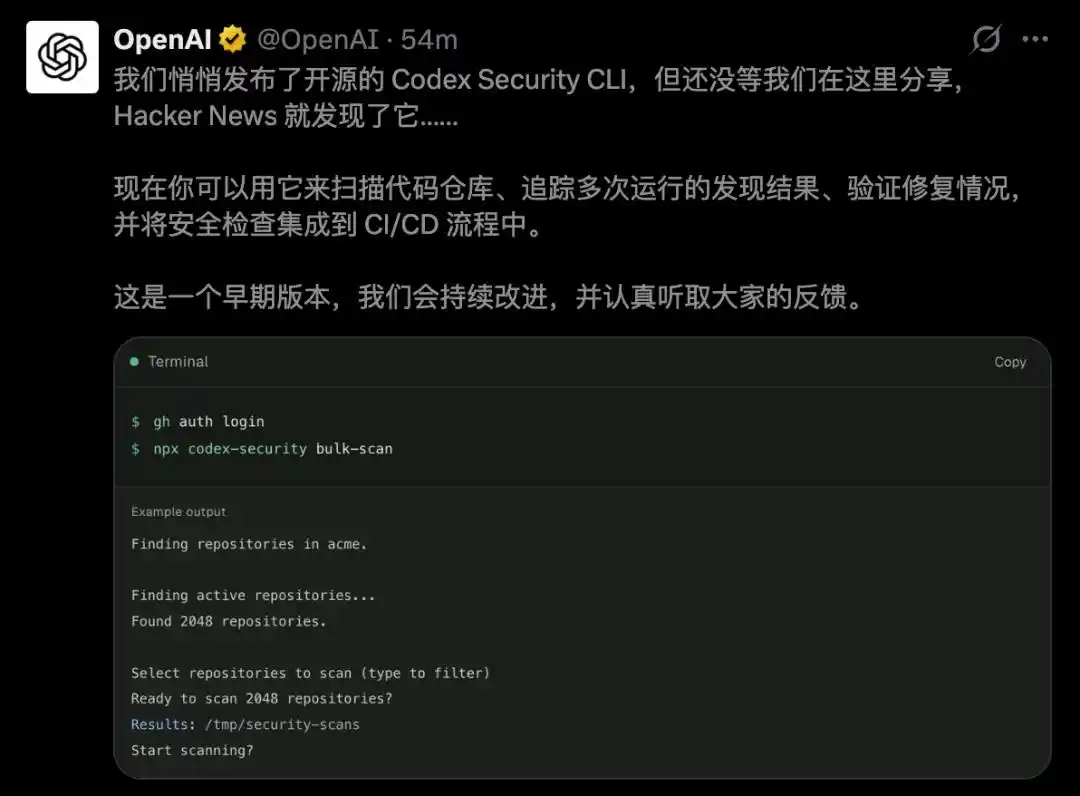
Previously, someone on Hacker News discovered it first, sparking instant discussions, and GitHub stars surged to 1.2k.

Seeing that it could no longer be kept hidden, OpenAI had no choice but to come forward and claim it.

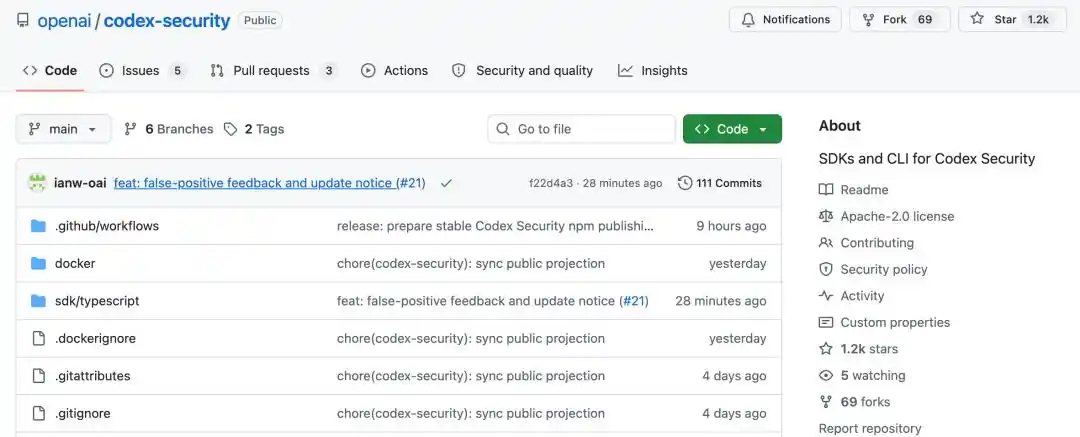
GitHub address: https://github.com/openai/codex-security

A few days ago, Jensen Huang personally stepped in, publicly expressing strong support for open-source AI, and soon after, OpenAI officially joined the camp.

Little did we expect that the surprise would come so quickly, as the heavyweight open-source masterpiece was unveiled almost instantly.

It has to be said, Huang's words still carry significant weight!
OpenAI's Code Security Tool is Now Open-Source

The "star" of this open-source release is codex-security, comprising a CLI and a TypeScript SDK.

Its core functionality is very straightforward, focusing on a "combo punch": automatically discovering vulnerabilities in a codebase, verifying them, and fixing them.
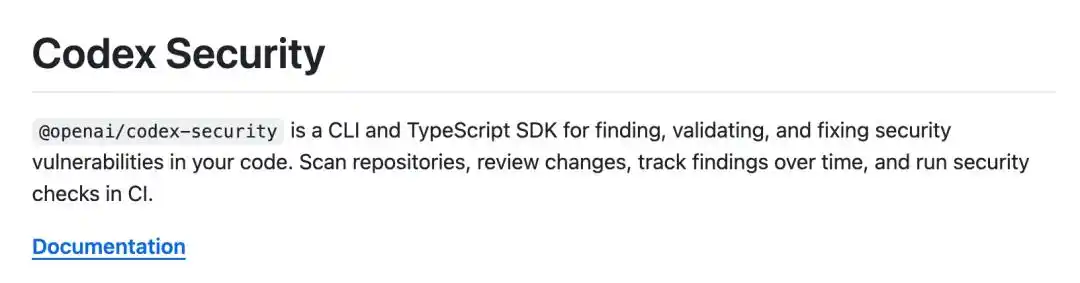
It's designed to be ready-to-use; the entire workflow can be run with just three lines of commands:

  • npm install @openai/codex-security
  • npx codex-security login
  • npx codex-security scan .

For CI runs, logging in isn't required; just configure an OPENAI_API_KEY.

The requirements are Node.js 22 or higher, Python 3.10 or higher, plus access to Codex Security.

1.2 Million Commits, 792 Critical Vulnerabilities

Strictly speaking, Codex Security isn't a completely "new species".

It evolved from the private beta project Aardvark in October 2025 and was renamed and launched as a research preview version on March 6th this year.

The most hardcore aspect of this tool lies in its positioning—an application security agent.
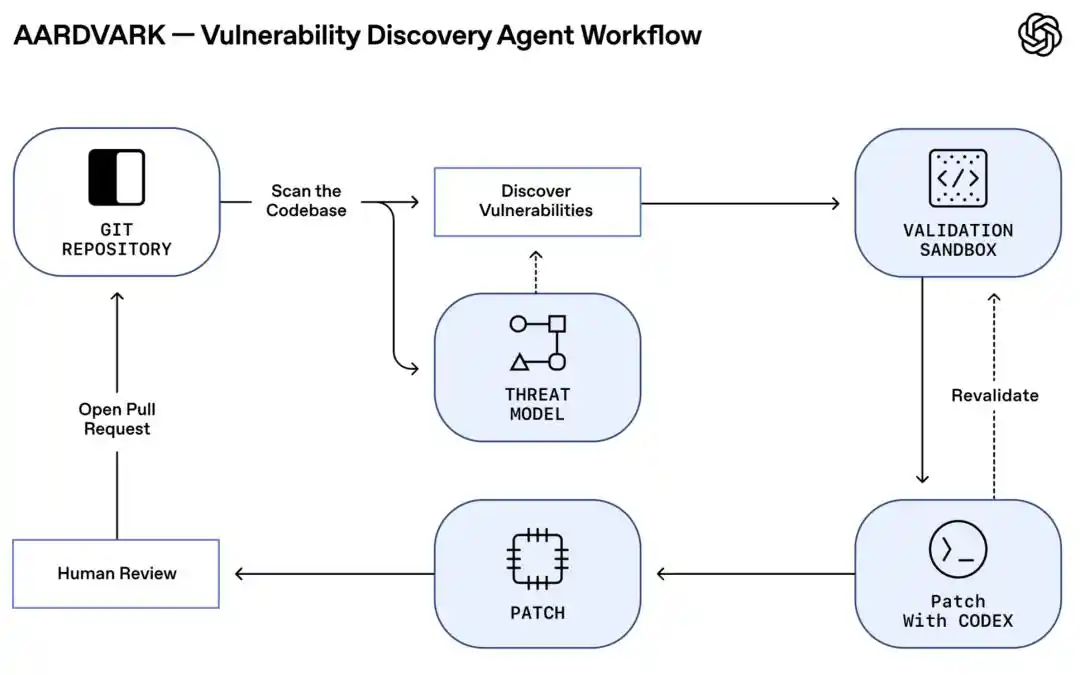
Codex Security truly dives deep into the underlying code to understand what your system is actually doing. Its workflow is divided into three steps:

First, it reads the entire repository to generate an editable threat model, figuring out what the project does and where it's most exposed;

Then, based on this context, it searches for vulnerabilities and ranks them by their real-world impact;

Finally, it throws suspicious issues into a sandbox for real stress testing, only reporting those that can be verified.

Looking at its track record, it's indeed quite formidable.

In its first 30 days online, it scanned over 1.2 million commits, uncovering 792 critical severity findings and 10,561 high severity findings.

OpenAI also mentioned that for the same batch of repositories scanned repeatedly, the false positive rate dropped by over 50%.

The First Batch of Early Adopters, Bills Exploded

No matter how grand the official promises are, they can't compare to the "real-world test disasters" that immediately surfaced among developers.

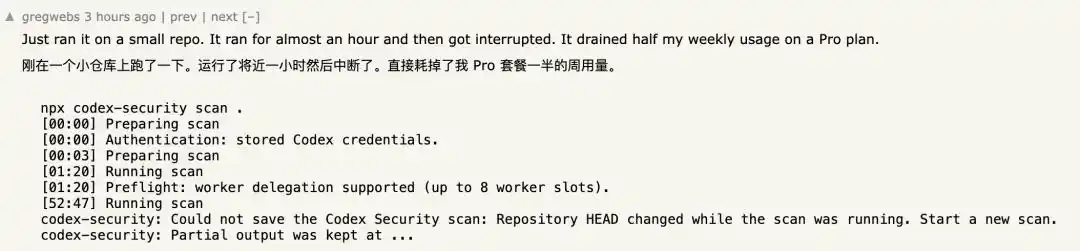
On HN, a developer named gregwebs tested it on a small repository and directly posted the utterly devastating terminal logs.

Preparation started at 0:03, scanning began at 1:20, ran all the way to 52:47, and finally, a line of red text popped up—the repository HEAD changed during scanning, please start over.

Not only did it waste an hour, but this single run also consumed half of his Pro plan's weekly quota.
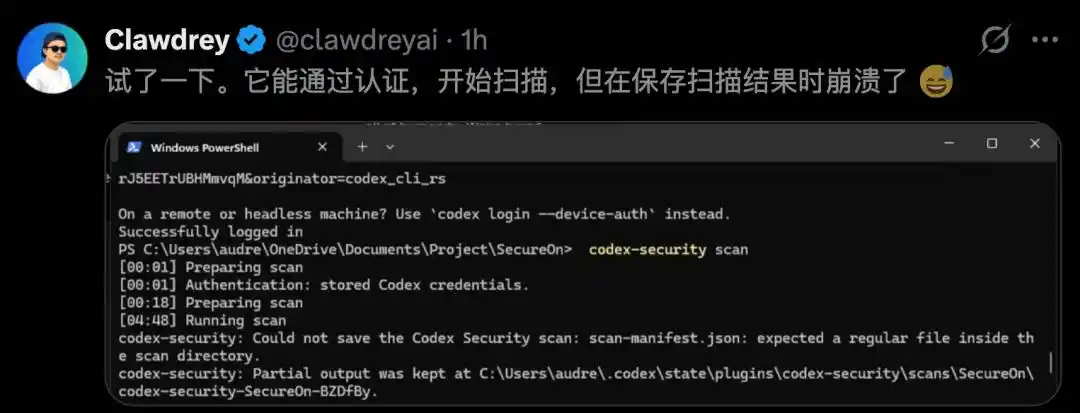
Another user, Quai, had it worse. The scan hit account rate limits right after starting, and the tool retried for a minute before giving up.

The tool did hint that "partial results have been preserved," but he couldn't find an obvious way to use them in the next scan. This failed run cost about $13.

Why is it so expensive? Just look at the default configuration and the answer becomes clear.

Codex Security defaults to calling gpt-5.6-sol and brutally cranks the "reasoning effort" up to extra-high.

It's important to know that Sol is the most "premium" tier in the GPT-5.6 family, with API pricing as high as $5 per 1M input tokens and $30 per 1M output tokens.
Huang Kicked Things Off, OpenAI Took a Step

Just after Jensen Huang publicly voiced strong support for open-source AI, OpenAI brought out Codex Security.
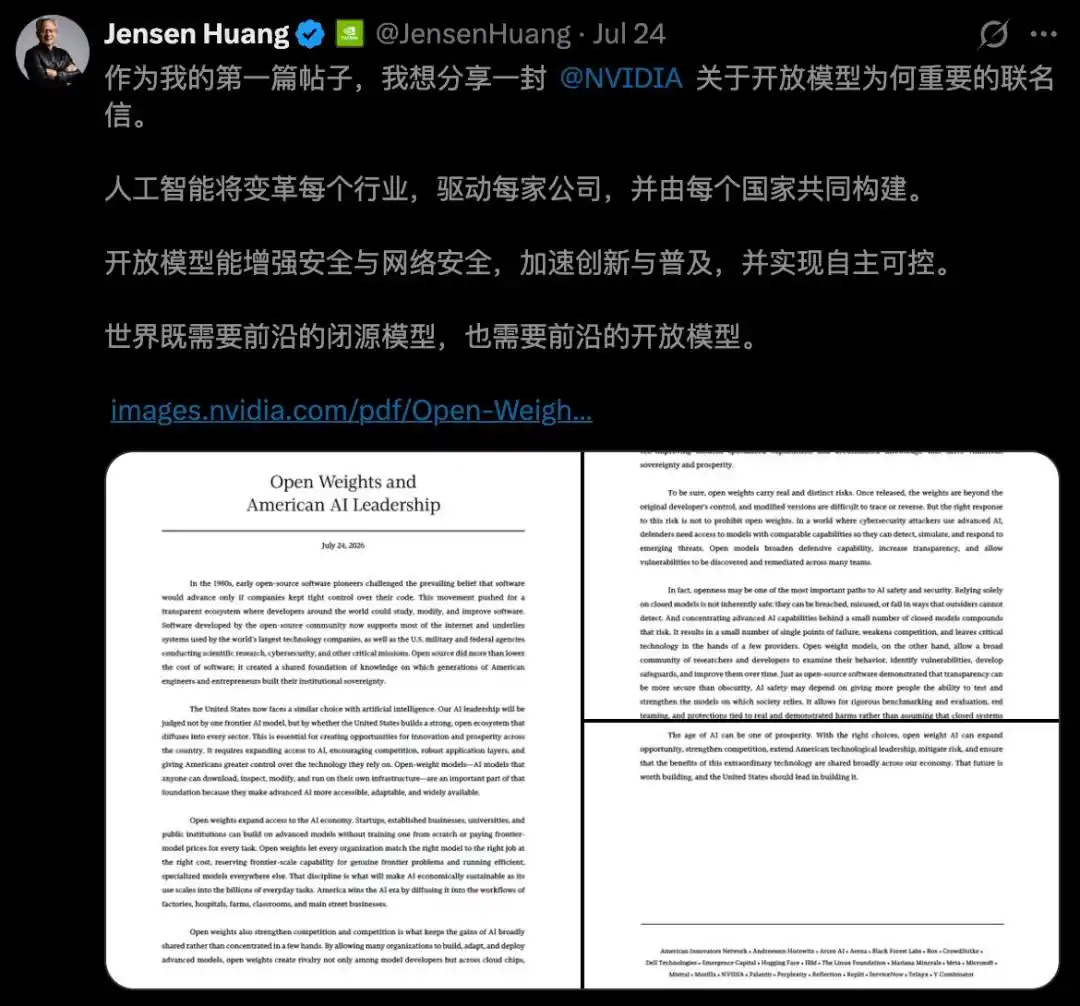

However, don't interpret this "open-source" move as too generous just yet.

OpenAI's step is quite calculated: they've open-sourced the application-layer shell, while the model layer is still tightly held in their own hands.

Regardless, the Pandora's box of agents taking over code security has been opened.

Next, it's up to developers to see how they can hack and modify this open-source artifact, using the magic of the community to counter OpenAI's own magic.

References:

https://x.com/gdb/status/2082235089539526690?s=20

https://x.com/OpenAI/status/2082263717916586117?s=20

This article is from WeChat public account "AI Era", author: ASI Revelations

Perguntas relacionadas

QWhat did OpenAI recently open-source, and what is its primary function?

AOpenAI recently open-sourced Codex Security CLI, a tool designed to automatically detect, validate, and fix security vulnerabilities in codebases.

QWhat commands are needed to run the basic workflow of the open-sourced tool?

AThe basic workflow requires three commands: `npm install @openai/codex-security`, `npx codex-security login`, and `npx codex-security scan .`.

QWhat were some of the early user complaints regarding the Codex Security tool?

AEarly users complained about high costs, slow scans, account rate-limiting, and the tool's default use of the expensive `gpt-5.6-sol` model with the `extra-high` reasoning setting.

QAccording to the article, what significant results did Codex Security achieve in its first 30 days?

AIn its first 30 days, Codex Security scanned over 1.2 million commits and identified 792 critical and 10,561 high-severity findings.

QHow does the article characterize the nature of OpenAI's 'open-sourcing' of Codex Security?

AThe article characterizes it as a strategic move where OpenAI open-sourced the application layer (the CLI/SDK) but keeps the core model layer proprietary and under its control.

Leituras Relacionadas

Now the Greatest Regret Is to My Family: Crypto Experts Took a Stumble in the Stock Market

Summary: This article examines the significant losses recently suffered by cryptocurrency traders and influencers who ventured into the stock market, specifically by heavily investing in AI-related and semiconductor storage stocks. The narrative centers on the dramatic reversal in the Korean and US equity markets in late July, with stocks like SK Hynix and related leveraged ETFs experiencing historic plunges, erasing massive gains. The analysis highlights several key factors behind the "flip." Traders, accustomed to crypto's high volatility and frustrated by a stagnant market, chased the apparent momentum in AI-themed equities. Many made fatal mistakes: applying high-leverage strategies common in crypto (e.g., 2x ETFs, on-chain perpetual contracts) to stocks, and failing to understand the distinct rules of different stock markets (like Korean pre-market trading). This led to widespread liquidations, especially when a thin Korean pre-market trade triggered a cascading flash crash on a decentralized exchange. Post-crash reflections from prominent figures reveal deep regret and self-criticism. They acknowledge misjudging their expertise, overestimating their edge against sophisticated institutional players, and the dangers of leverage. The article concludes that while such setbacks are part of trading, surviving long-term requires recognizing one's limitations and the inherent risks of cross-market strategies.

marsbitHá 3m

Now the Greatest Regret Is to My Family: Crypto Experts Took a Stumble in the Stock Market

marsbitHá 3m

US Senate Makes Important Amendments to "Conflict of Interest" Section of Cryptocurrency Bill

The U.S. Senate has taken a key step regarding the CLARITY Act, which could shape the future of the U.S. crypto market. On July 29, Senators Tom Tillis and Ruben Gallego finalized amendments to the bill's "conflict of interest" rules, one of its most contentious aspects. The bipartisan bill aims to tighten restrictions on high-level federal officials' ties to digital assets. The new text, crafted as an alternative to a White House-endorsed ethics code, is expected to impose stricter rules limiting officials' ability to issue or directly participate in digital asset projects. However, with Congress entering an August recess and the revised text not yet reviewed by much of the Senate, the bill's timeline is uncertain. Senate Majority Leader John Thune indicated a procedural vote could occur between July 29 and August 1 but expressed doubt the full bill could pass before the break. The House-approved CLARITY Act, passed in July 2025, has been under Senate negotiation for over a year. Key goals of the CLARITY Act include clarifying jurisdictional boundaries between the SEC and CFTC, setting rules for digital commodity spot markets, and addressing topics like stablecoin yields, DeFi, and illicit financing. The stablecoin yield provisions could significantly impact U.S.-based DeFi protocols, exchanges, and issuers, affecting their global competitiveness. The outcome is being closely watched by both the U.S. and global digital asset markets.

cryptonews.ruHá 59m

US Senate Makes Important Amendments to "Conflict of Interest" Section of Cryptocurrency Bill

cryptonews.ruHá 59m

Pavel Durov Designated as a Terrorist in Russia. What Does This Mean for Telegram Users?

Pavel Durov, the founder of Telegram, has been added to Russia's list of terrorists and extremists by Rosfinmonitoring, as published on July 30. The entry includes his name and date of birth. The designation follows an announcement by the Russian Federal Security Service (FSB) on July 29, which charged Durov with aiding terrorist activity. The FSB alleges that a Telegram dating bot named "DaiVinchik" was used to recruit 46 individuals for attacks on police and arson, orchestrated by Ukrainian special services. The FSB also accuses Telegram's administration of failing to remove channels and bots used by Ukrainian intelligence and extremist groups. Durov is reportedly subject to an international arrest warrant. Inclusion on the Rosfinmonitoring list leads to significant restrictions: the freezing of Durov's bank accounts and assets, severe limitations on financial transactions, and a ban on election participation, media interaction, and event organization. Transfers to his accounts may be considered terrorism financing. For ordinary Russian Telegram users, purchasing Telegram Premium is not classified as financing terrorism, according to an IT expert. General use of the messenger—messaging, managing channels—does not automatically make a user a participant in extremist activity. There has been no official decision to ban Telegram itself. It is noted that French authorities are also investigating Durov over allegations of inadequate measures against criminal activity on the platform and insufficient cooperation with law enforcement. Durov denies all charges.

cryptonews.ruHá 1h

Pavel Durov Designated as a Terrorist in Russia. What Does This Mean for Telegram Users?

cryptonews.ruHá 1h

Trading

Spot
活动图片