On April 24, 2026, the preview version of DeepSeek V4 was officially released.
This domestic large model, featuring a Pro version with 1.6 trillion parameters and a Flash version with 284 billion parameters, has launched its core selling point into the market: a million-token context window, now a free standard across all official services. Almost simultaneously, across the ocean, OpenAI rolled out GPT-5.5, which boasts more immense computing power and richer Agent functionalities, but at a significantly higher price.
Translated into plain language, "a million-token context" means that AI is no longer a "goldfish" that can only remember your last few sentences. Instead, it has become a "super brain" capable of devouring the entire "Three-Body Problem" trilogy in one go, understanding a two-hour movie in a second, and even picking out your typos along the way.
To give a direct example: you could throw all your company's contracts, emails, and financial reports from the past three years at V4 and have it find that违约 clause hidden in the 47th-page attachment for you. In the past, this required a team of lawyers; now, it's free.
GPT-5.5 has put a clear price tag on this super brain: $5 per million input tokens and $30 per million output tokens for the standard version. The GPT-5.5 Pro version, aimed at high-level tasks, is priced at a staggering $30 per million input tokens and $180 per million output tokens.
But according to DeepSeek's official pricing, V4-Flash costs only ¥0.2 RMB per million input tokens with cache hits and ¥2 RMB for output. Even the top-tier closed-source model competitor, V4-Pro, costs ¥1 RMB for cache-hit input, ¥12 RMB for cache-miss input, and only ¥24 RMB for output.
People always thought the China-U.S. AI competition was a race of model capabilities. In reality, it has long since diverged into a clash of business models.
OpenAI was once the dragon-slaying youth shouting "benefit all humanity," but is now selling exquisitely packaged, expensive condominiums. DeepSeek, however, is turning AI into a utility like water, electricity, and gas with nearly free computing power.
As OpenAI becomes a shrewd contractor, why is DeepSeek recklessly turning cutting-edge AI into free tap water? What undercurrents lie behind this shift in pricing power?
The Cold Wind of Ulanqab
The decisive battle of large models is being fought in server rooms at -20°C in Inner Mongolia.
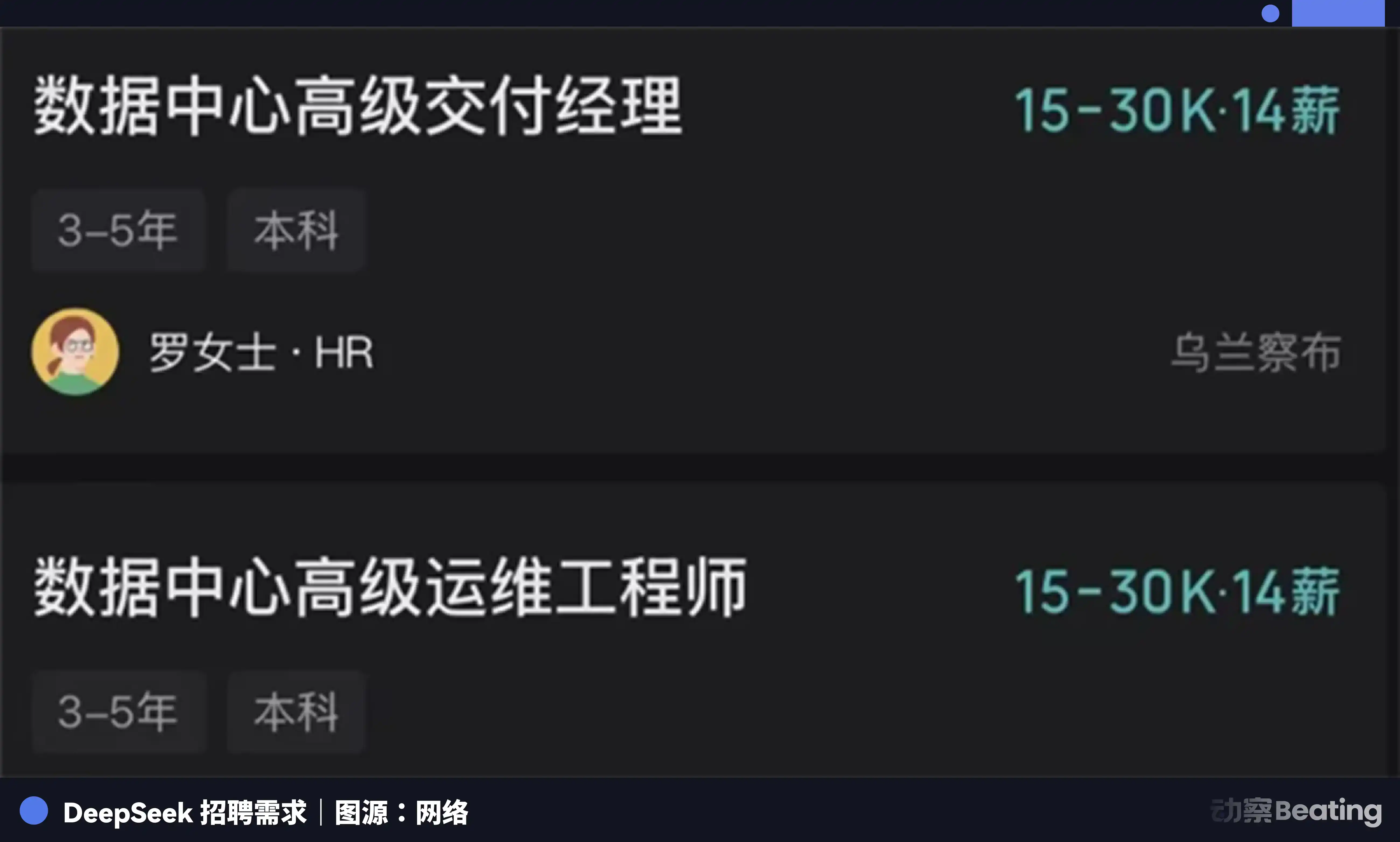
Shortly before the release of V4, DeepSeek's job postings included an unexpected position: Senior Data Center Delivery Manager and Senior Operations Engineer, with a monthly salary of up to ¥30,000 RMB, 14 months' pay, stationed in Ulanqab, Inner Mongolia.
This was a company that prided itself on being "light-asset, pure, and focused solely on algorithms." Over the past two years, their proudest label was "leveraging minimal resources for maximum impact," having trained DeepSeek-R1 for less than $6 million, which sent the U.S. stock AI sector plummeting.
But V4's massive computing demands, coupled with the increasingly tight U.S. computing power blockade, shattered this light-asset idyll.
In 2025, the U.S. Department of Commerce further tightened export controls on AI chips to China. NVIDIA's H100 and H800 were already cut off, and even the downgraded H20 was added to the control list. This meant that DeepSeek's future computing power expansion had to fully transition to Huawei's Ascend ecosystem. In V4's release notes, the official statement clearly indicated that the new model received "Huawei Ascend support" and hinted that after the bulk release of Ascend 950 super nodes in the second half of the year, the Pro version's price would see a significant reduction.
This shift isn't something that can be done by tweaking a few lines in the adaptation layer of the code. It requires building a complete domestic computing infrastructure from the ground up, at the physical level.
V4's trillion-parameter scale (pre-trained on 33 trillion tokens), combined with the enormous computational demands of a million-token context, means you need thousands of Ascend chips, server rooms to house them, power grids to supply these rooms, and an operations team to keep these machines from crashing in the -20°C cold wind.
Liang Wenfeng has shifted his methodology from the bit world to the atomic world. Computing power ultimately takes root in reinforced concrete and power lines.
On one side are the AI elites in Silicon Valley, wearing plaid shirts, coding, and sipping hand-brewed coffee. On the other are the operations staff bundled in military coats, guarding server rooms deep in the grasslands of Inner Mongolia. This contrast forms the backdrop of China's AI resistance against the computing power blockade. The cold wind of Ulanqab has become China's AI's strongest physical advantage.
Transitioning from a pure algorithm company to a "heavy-asset" player building its own server rooms means DeepSeek has bid farewell to the guerrilla warfare era of "small force, big miracles" and officially donned the armor of heavy infantry. The cost of this transformation is enormous: building server rooms, buying chips, laying network cables—each is a bottomless pit. More importantly, this heavy-asset model means operational costs will rise exponentially, while DeepSeek's commercial revenue remains extremely limited. This pricing strategy is essentially trading losses for ecosystem and free access for infrastructure话语权.
How long can a once-stubborn hardliner, who refused all giants and subsidized AI with his own quantitative trading money, last in the face of this bottomless pit?
The $44 Billion Compromise
In April, news broke that DeepSeek was launching its first external funding round, targeting a valuation of 300 billion RMB (approximately $44 billion), planning to increase capital by 50 billion, with 30 billion raised externally. Rumors swirled about Tencent and Alibaba vying to get in.
Many assumed this was because building server rooms is too expensive. But in reality, the core driver behind DeepSeek's fundraising, besides buying GPUs, is that "pure technical idealism" is no match for the giant's talent meat grinder.
During the critical冲刺 phase of V4's development, domestic tech giants launched a疯狂 targeted poaching campaign against DeepSeek. From the second half of 2025 to now, at least five core R&D members from DeepSeek have confirmed their departure. First-generation model core author Wang Bingxuan went to Tencent, V3 core contributor Luo Fuli was poached by Lei Jun with an annual salary of tens of millions to Xiaomi, and R1 core author Guo Daya joined ByteDance's Seed team.
This is the赤裸裸 operation of the market economy. When your competitors hold infinite ammunition, and you insist on operating with自有资金, the talent market becomes your weakest link. You can ask geniuses to work overtime for lower pay to change the world, but when a giant slaps a check for millions in cash and stock options on the table, promising unlimited computing resources, the pricing power of idealism is no longer in your hands.
Liang Wenfeng's dilemma is one faced by every entrepreneur trying to build a "slow company" in China. In a market where giants can buy out anyone with money, the path of "no fundraising, no commercialization, just technology" is an extreme luxury. Its cost is that you must accept that your team could be cleared out by opponents with money at any time.
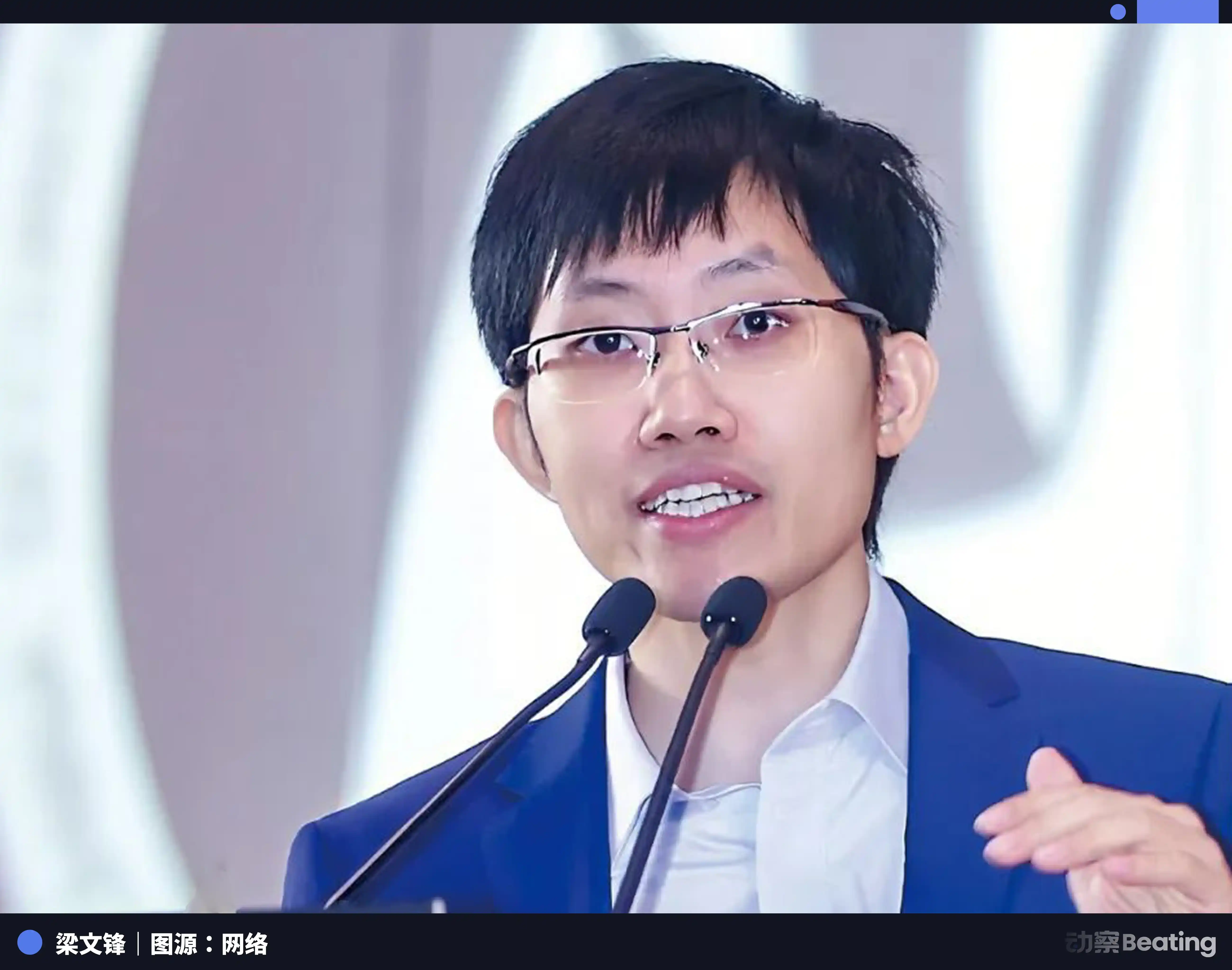
This 300 billion RMB valuation fundraising is not Liang Wenfeng's compromise with capital; it is his war to ransom his V4 R&D lineup from the giants. He must sit at the capital table and use the same real money to give those who stay a sufficient reason to continue staying.
The potential entry of Tencent and Alibaba means DeepSeek is no longer that lonely, purely technical idealist. It has become a company with external shareholders and commercial pressures. The cost of this transformation is that the "research freedom不受外部压力干扰" that Liang once prided himself on will inevitably be diluted.
But he had no choice.
When idealism is forced to don the armor of capital, where does the confidence to keep this massive machine running, to keep the Ulanqab server rooms humming day and night, truly come from?
Another Kind of "Scale is All You Need"
The answer isn't in the algorithms; it's in the power grid.
Silicon Valley's biggest anxiety isn't a lack of chips; it's a lack of electricity. Musk is疯狂 building super data centers in Memphis, Tennessee. OpenAI is even discussing investing in nuclear power plants. Microsoft announced the restart of the Three Mile Island nuclear power plant in Pennsylvania to power AI data centers. The end of computing power is electricity—an极其冰冷的 physical reality.
In the U.S., the electricity consumption of a large AI data center is equivalent to the daily usage of a medium-sized city. And the U.S. power grid is an aging network built in the 1950s, slow to expand, regionally fragmented, and utterly unable to keep up with the computing power expansion of the AI era.
What supports China's AI catch-up with the U.S. is not just those algorithm geniuses earning tens of millions, but also those默默无闻 ultra-high-voltage transmission lines.
The reason Ulanqab's data center could rise from the ground is thanks to Inner Mongolia's abundant green electricity and China's world-leading power grid dispatch capability. Public data shows that Ulanqab's green power installed capacity reaches 19.402 million kW, accounting for about 65.9% of the total. Local low-cost green electricity is about 50% cheaper than in eastern regions. Coupled with an average annual temperature of only 4.3°C, the natural cooling period is nearly 10 months, saving 20% to 30% on equipment energy consumption.
When DeepSeek V4 runs, what truly fuels it is China's vast and extremely cheap power infrastructure. This is "scale is all you need" in another dimension.
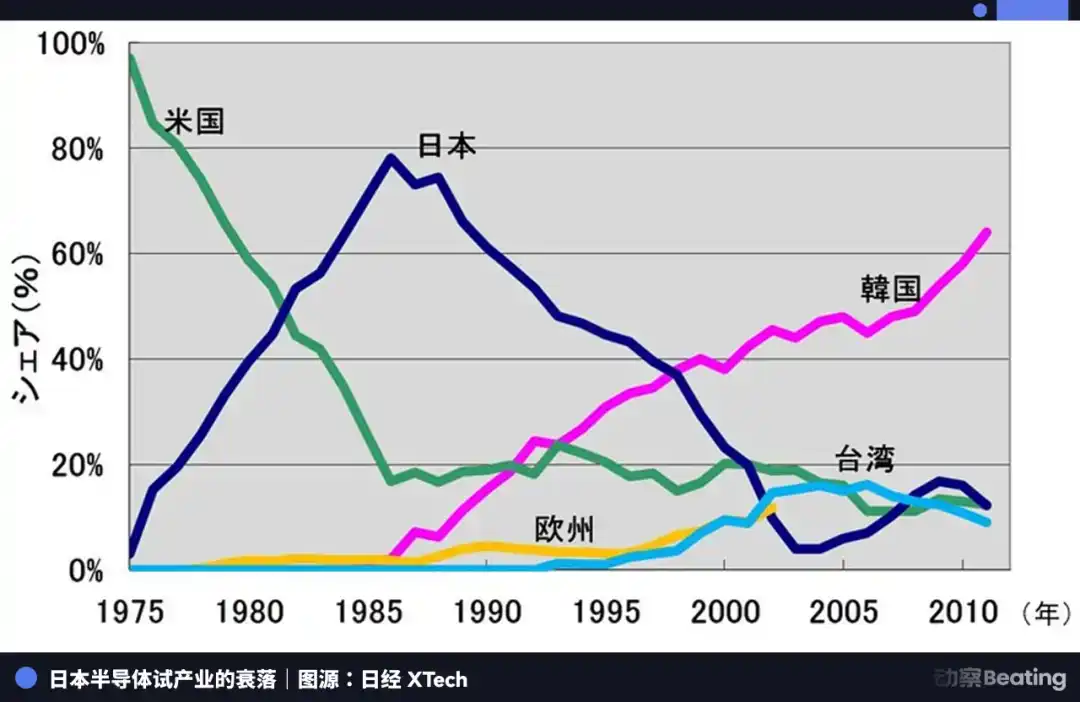
There is an极其有趣且残酷 historical parallel here. In 1986, the U.S. used the U.S.-Japan Semiconductor Agreement to cripple Japan's semiconductor industry, forcing Japan to open its market and accept price controls. Japan's global semiconductor market share fell from 40% in 1986 to 15% in 2011. It took Japan thirty years to recover.
Today, the U.S. is trying to lock down Chinese AI with the same logic: blockading chips, restricting computing power, cutting off technical supply chains. But China's path of counterattack is completely different from Japan's. Japan's failure back then lay in its semiconductor industry's high dependence on U.S. technology licensing and market access. Once cut off, it lost its ability to survive independently. China's AI counterattack, however, is rebuilding from the most basic physical infrastructure: making its own chips, building its own server rooms, laying its own power grids, open-sourcing its own models.
This is an极其笨重,极其耗钱, but also极其难以被 "strangled" path. While Silicon Valley builds gorgeous巴别塔 in the cloud, China digs trenches in the mud.
If the cloud computing power battle is an极其惨烈的 heavy-asset war of attrition, besides building server rooms and laying power lines in Inner Mongolia, is there another way to escape cloud hegemony?
Escaping the Cloud
As Silicon Valley giants build larger and larger data centers, even planning computing clusters on the scale of hundreds of billions of dollars like OpenAI, China's line of counterattack has quietly moved underground.
The ultimate weapon against the U.S. computing power blockade is not building a chip stronger than the H100, but stuffing large models into everyone's手机.
Since we can't match the heavy firepower in云端机房, we move the battlefield back to 1.4 billion smartphones and edge devices. This is a classic guerrilla warfare tactic, and one that is extremely difficult to blockade. You can ban the export of high-end GPUs, but you can't confiscate every Chinese person's cell phone.
In 2026, amid the computing power anxiety triggered by DeepSeek, Chinese phone manufacturers Xiaomi, OPPO, and vivo began a疯狂 "on-device shift." They are no longer satisfied with merely using the phone as a display calling cloud APIs. Through extreme model distillation and compression, they have forcefully stuffed a miniaturized super brain into国产手机 costing a few thousand RMB.
The core of this technical route is "distillation." Simply put, it uses a super large model (the teacher) to train a small model (the student), allowing the small model to learn the teacher's "way of thinking" rather than memorizing all the teacher's "knowledge." After extreme distillation and量化压缩, a large model that originally required hundreds of GPUs to run is compressed to only 1.2GB to 2.5GB in size and can run smoothly on a mobile phone chip.
Mobile AI applications like MNN Chat already allow users to run a distilled version of DeepSeek R1 locally on their phones. The significance of this on-device AI is that you don't need a constant 5G connection, nor do you need to pay Silicon Valley giants a $100 monthly subscription fee. The large model is in your pocket, it can run offline, and it doesn't cost a cent for cloud computing power.
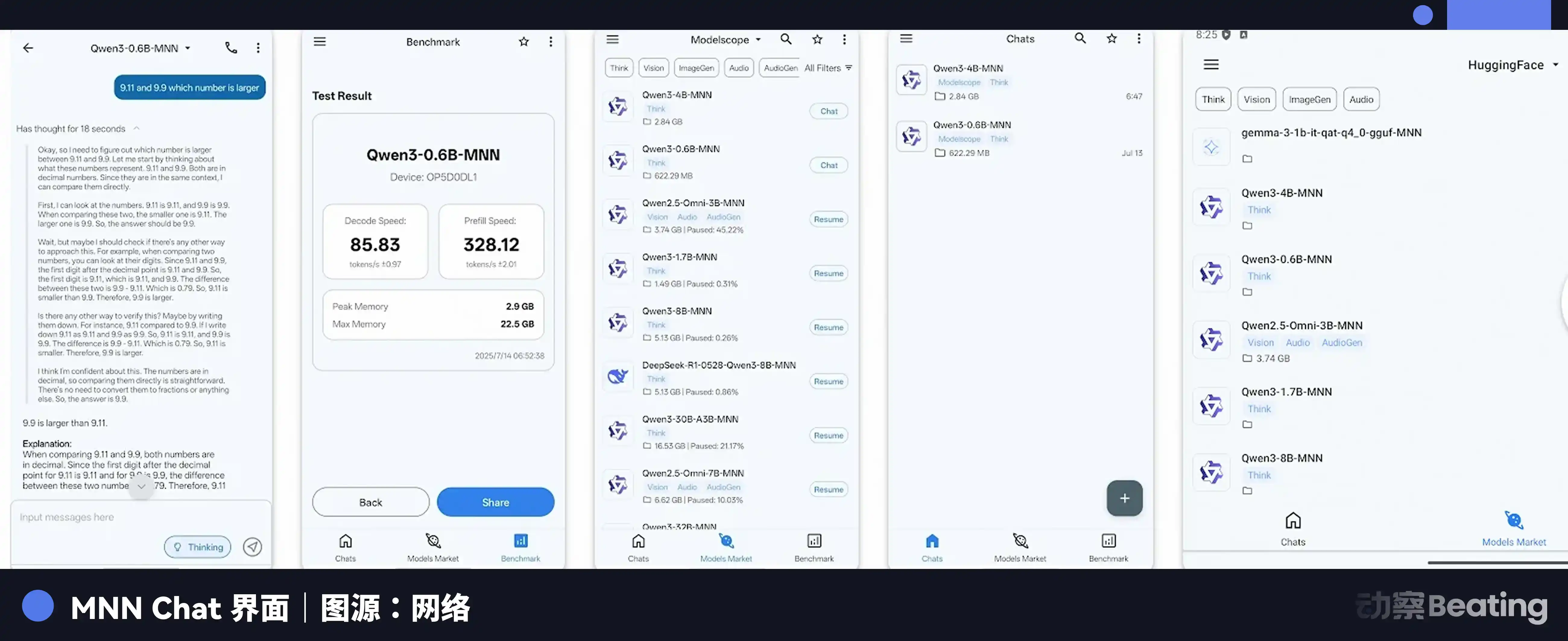
If I can't afford to build a super boiler room for central heating, then I'll give every household a small stove.
Of course, on-device AI is not perfect. Limited by the computing power and memory of手机芯片, the capability ceiling of on-device models is far lower than that of cloud-based super-large models. It can help you write an email, translate a passage, or summarize an article, but if you want it to derive a complex mathematical theorem or analyze a几百-page legal contract, it will still fall short.
But that's enough. Because for the vast majority of ordinary people, the AI they need was never that super brain that can derive mathematical theorems, but a "personal assistant" that can help them handle daily琐事.
When large models become extremely cheap and can even be put in your pocket, how will they change the corners of the world forgotten by Silicon Valley?
Digital Inclusion for the Global South
If you're sitting in a Manhattan office with panoramic glass walls, you probably think GPT-5.5's price hike to $100 is worth it because it can write a perfect M&A financial report for you in a second.
But if you're standing in a maize field in Uganda, East Africa, facing crops withering due to abnormal climate, no one can afford a $100 subscription fee because the average monthly income in Uganda is less than $150.
Silicon Valley giants are discussing how to rule the world with AI, while Ugandan farmers and poor students in Southeast Asia are entering the digital age for the first time, thanks to DeepSeek's open source.
GPT-5.5 serves those who can pay, and its corpus is almost entirely in English. If you ask it a question in Swahili or Javanese, it not only stumbles in its回答, but the tokens consumed are several times that of English. Silicon Valley giants have主动放弃 these边缘 markets due to "low commercial return."
And China's open-source models have become the digital infrastructure of the Global South.
In Uganda, the local NGO Sunbird AI used Qwen, a Chinese open-source model, to fine-tune the Sunflower system, expanding the number of supported local languages from 6 to 31 at once. This system is now deployed in the Ugandan government's agricultural extension system, sending planting advice to farmers in Swahili.
In Malaysia, a tech company used an open-source base to fine-tune an AI model compliant with Islamic law (Sharia), supporting not only Malay and Indonesian but also ensuring output content meets the religious and cultural standards of the Muslim market. From Indonesia's digital identity system to Swahili medical Q&A in Kenya, Chinese technology is渗透进 the underlying social architecture of these countries.
Data released in early 2026 by OpenRouter, the world's largest AI model API aggregation platform, showed that Chinese AI models' token consumption on the platform surpassed that of U.S. competitors for the first time. In one统计周, the top 10 popular models globally consumed 8.7 trillion tokens, with Chinese models accounting for about 61%.
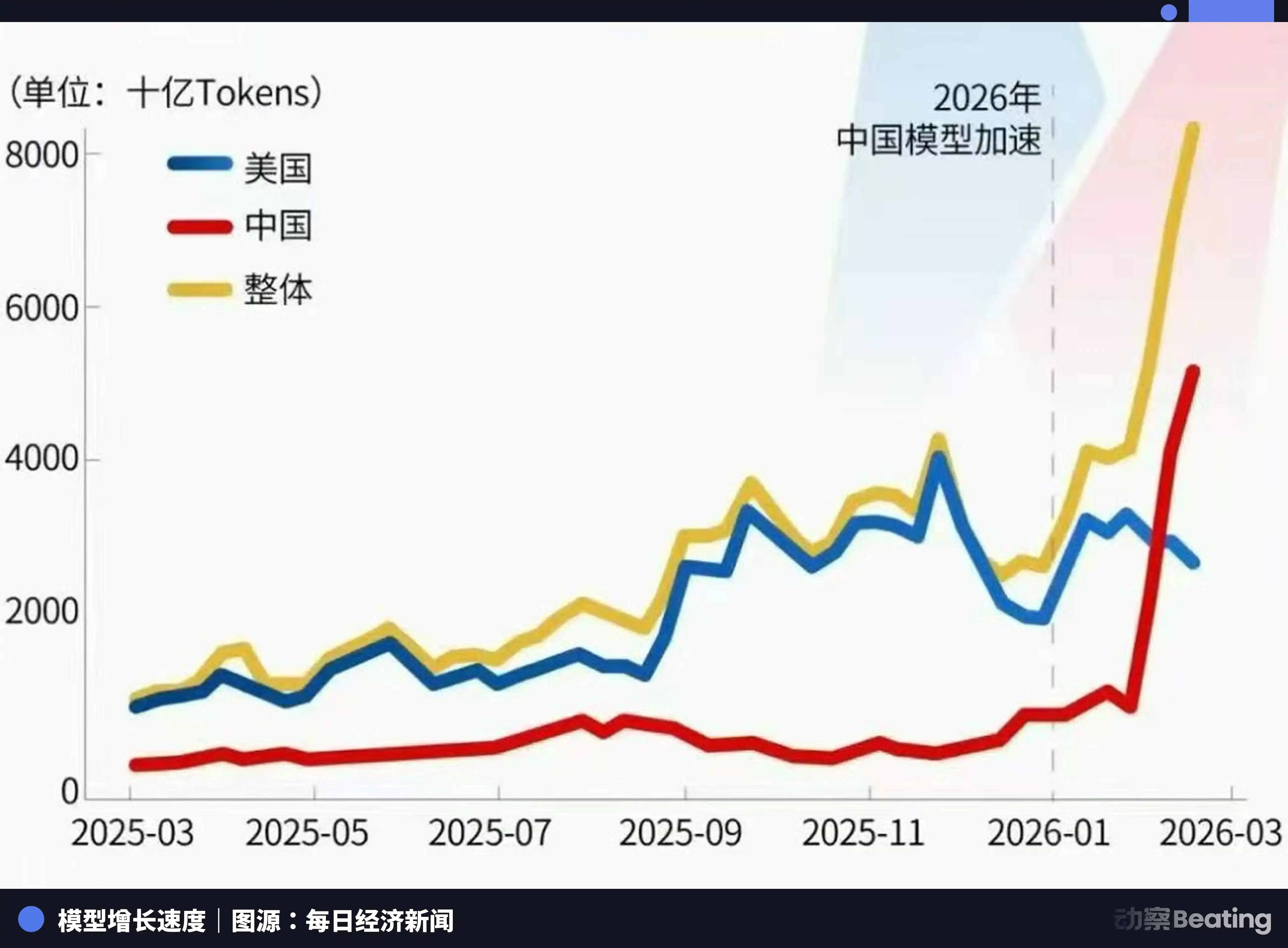
Open source has broken the U.S. monopoly on AI话语权, allowing resource-poor developing countries to leap across the digital divide. This isn't some grand narrative of China-U.S. hegemony; it's the true "encirclement of the cities from the countryside" of the AI era.
China's AI open-source strategy is objectively becoming an extremely effective "soft power" export. While Silicon Valley giants build high walls in the cloud, trying to become the new digital landlords, those "技术难民" who can't afford the rent have finally found their own spark in the soil of open source and on-device computing.
Tap Water
Technology should never have been a高高在上 luxury item.
Silicon Valley built extremely exquisite condominiums with strict access, open only to VIPs. But we built a water pipe leading to千家万户.
The starting point of this pipe is in the -20°C server room in Inner Mongolia, in the roar of ultra-high-voltage transmission lines, in the war for a 300 billion valuation. Every section of it is heavy, expensive, and full of compulsion and compromise. Liang Wenfeng once wanted to build a pure technology company, but reality forced him to build server rooms, raise funds, and compete with giants for talent. He had no choice because he chose a harder path: not to make AI a luxury, but to turn it into tap water.
And the end point of this pipe is in a国产手机 costing a few thousand RMB, in the rough fingers of a Ugandan farmer, in the lives of every ordinary person yearning to cross the digital divide.
No matter how high the walls of computing power are built, they cannot stop tap water flowing to lower ground.