OCC boss says ‘no justification’ to judge banks and crypto differently

cointelegraphPublicado em 2025-12-09Última atualização em 2025-12-09

Resumo

OCC Acting Comptroller Jonathan Gould stated that crypto companies seeking federal bank charters should be treated equally with traditional financial institutions, arguing there is "no justification" for differential treatment of digital assets. He emphasized that banks should not be confined to outdated technologies and noted that custody services have long been electronic. Gould revealed the OCC received 14 new bank applications this year, including from digital asset firms, nearly matching the total from the past four years. He dismissed concerns from traditional banks about crypto charters, stating such opposition risks stifling innovation, and expressed confidence in the OCC's ability to supervise crypto-native banks fairly.

Crypto companies seeking a US federal bank charter should be treated no differently than other financial institutions, says Jonathan Gould, the head of the Office of the Comptroller of the Currency (OCC).

Gould told a blockchain conference on Monday that some new charter applicants in the digital or fintech spaces could be seen as offering novel activities for a national trust bank, but noted “custody and safekeeping services have been happening electronically for decades.”

“There is simply no justification for considering digital assets differently,” he added. “Additionally, it is important that we do not confine banks, including current national trust banks, to the technologies or businesses of the past.”

The OCC regulates national banks and has previously seen crypto companies as a risk to the banking system. Only two crypto banks are OCC-licensed: Anchorage Digital, which has held a charter since 2021, and Erebor, which got a preliminary banking charter in October.

Crypto “should have” a way to supervision

Gould said that the banking system has the “capacity to evolve from the telegraph to the blockchain.”

He added that the OCC had received 14 applications to start a new bank so far this year, “including some from entities engaged in novel or digital asset activities,” which was nearly equal to the number of similar applications that the OCC received over the last four years.
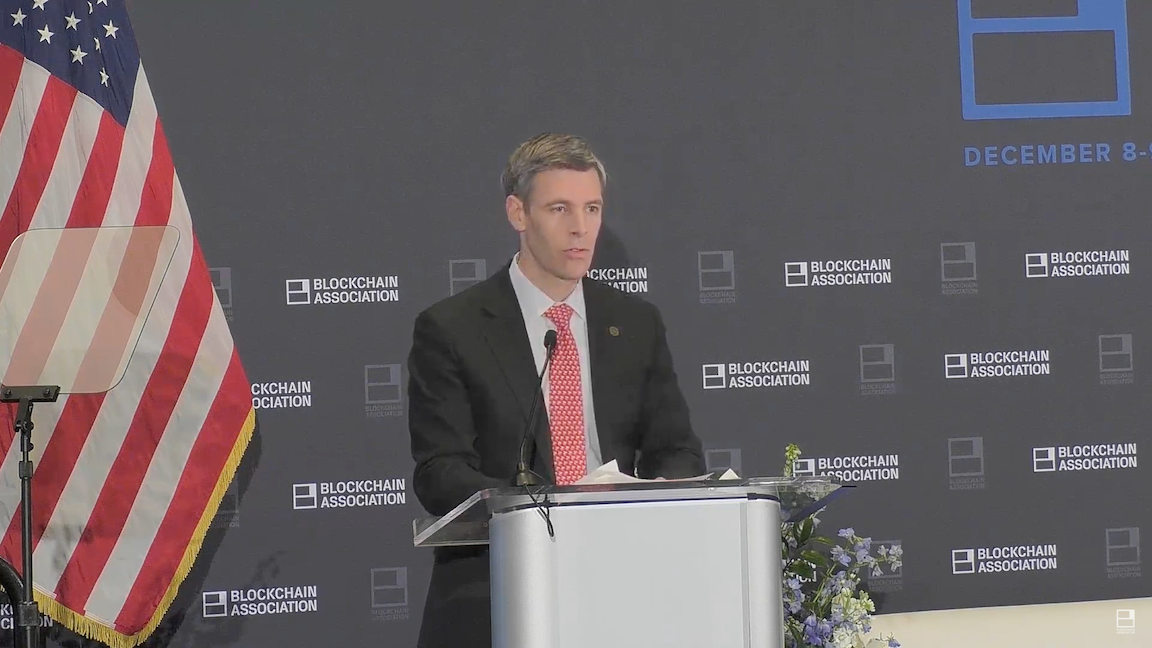
Comptroller of the Currency Jonathan Gould giving remarks at the 2025 Blockchain Association Policy Summit. Source: YouTube

“Chartering helps ensure that the banking system continues to keep pace with the evolution of finance and supports our modern economy,” he added. “That is why entities that engage in activities involving digital assets and other novel technologies should have a pathway to become federally supervised banks.”

Gould brushes off banks’ concerns

Gould noted that banks and financial trade groups had raised concerns about crypto companies getting banking charters and the OCC’s ability to oversee them.

Related: Argentina weighs letting traditional banks trade crypto: Report

“Such concerns risk reversing innovations that would better serve bank customers and support local economies,” he said. “The OCC has also had years of experience supervising a crypto-native national trust bank.”

Gould said the regulator was “hearing from existing national banks, on a near daily basis, about their own initiatives for exciting and innovative products and services.”

“All of this reinforces my confidence in the OCC’s ability to effectively supervise new entrants as well as new activities of existing banks in a fair and even-handed manner,” he added.

Legal Panel: Crypto wanted to overthrow banks, now it’s becoming them in stablecoin fight

Leituras Relacionadas

XRP Ledger Daily Fees Drop Below $400 As Network Activity Question Returns

The XRP Ledger is drawing attention as daily network fees have fallen below $400. While low fees align with XRPL's design for affordable transactions and are often seen as a strength, the metric can also serve as an indicator of network demand and paid transaction volume. This data point of around $3,100 in weekly fee burn highlights the stark contrast with higher-fee chains like Ethereum and Bitcoin. The development fuels an ongoing debate. Proponents view low fees as a sign of efficiency and accessibility, while critics may question if the network is generating sufficient high-value activity relative to its market cap and payments-focused narrative. The article cautions against overstating the finding, noting a single low-fee day does not signify network failure. It instead adds context to discussions about XRPL's usage, especially alongside Ripple's broader initiatives in stablecoins (RLUSD), AI payments, and enterprise infrastructure. The report recommends monitoring for a fee rebound, checking transaction counts for a fuller picture, and confirming the trend via native explorers like Bithomp. It frames the story within a larger market shift where on-chain data, protocol updates, and infrastructure developments are becoming crucial alongside price action. The editorial stance is to present the verified data, explain its significance for assessing network activity, and avoid hype, positioning it as part of the daily crypto conversation.

bitcoinistHá 31m

XRP Ledger Daily Fees Drop Below $400 As Network Activity Question Returns

bitcoinistHá 31m

Trading

Spot
Futuros
活动图片




