No More Selling Shoes, Now Selling Computing Power: Will AI Computing Power Follow the Same Path as DAT?

Odaily星球日报Publicado em 2026-04-16Última atualização em 2026-04-16

Resumo

Former footwear brand Allbirds announced a pivot to AI computing infrastructure under the name NewBird AI, raising $50 million and causing its stock to surge 582% in a single day. This shift echoes last year’s trend of companies rebranding as Digital Asset Treasuries (DATs), though the AI compute model differs significantly. The move highlights a structural shortage in AI computing power. Gartner projects global AI spending to reach $2.52 trillion by 2026, with over half dedicated to infrastructure. Major tech firms like Microsoft, Google, and Amazon are ramping up capital expenditures, yet supply remains constrained due to long GPU lead times and soaring demand from both training and inference workloads. Nvidia CEO Jensen Huang predicts a $1 trillion AI chip and infrastructure market by 2027. Unlike DAT companies—which held volatile crypto assets—AI compute firms rely on physical infrastructure, operational expertise, and long-term contracts that generate recurring revenue. However, analysts caution that Allbirds’ modest funding and lack of experience may signal “AI-washing,” akin to earlier blockchain hype. While the strategy offers a potential lifeline for struggling public companies, sustainable success requires genuine operational capability and significant investment.

Original|Odaily Planet Daily(@OdailyChina)

Author|Wenser(@wenser 2010 )

Recently, the once-popular "internet-famous shoe" brand Allbirds announced it would sell its footwear business and raise $50 million to transform into an AI computing infrastructure company called NewBird AI. Upon the news, its stock price surged, once reaching a high of $24.31, and has now settled at $16.99, still maintaining a staggering single-day increase of 582.33%.

Upon closer thought, $50 million is a drop in the bucket in the AI computing power赛道 (track/field), which often sees orders in the tens of billions of dollars. However, this move reminds me of the soaring stock prices of numerous DAT (Digital Asset Treasury) companies in Q3 of last year.

While the era where a simple announcement of转型 (transformation) into a DAT could cause a listed company's stock price to multiply several times has ended, we are now ushering in a new era of "listed companies transforming into AI computing power sellers". The reason is none other than "supply and demand".

Behind the网红鞋 (internet-famous shoe) changing tracks: The AI computing power gap has become a major issue

Recent hot topics such as the Claude model's perceived reduction in intelligence and the tightening of KYC policies have sparked widespread discussion. The reality reflected behind these events, however, is the structural gap in AI computing power.

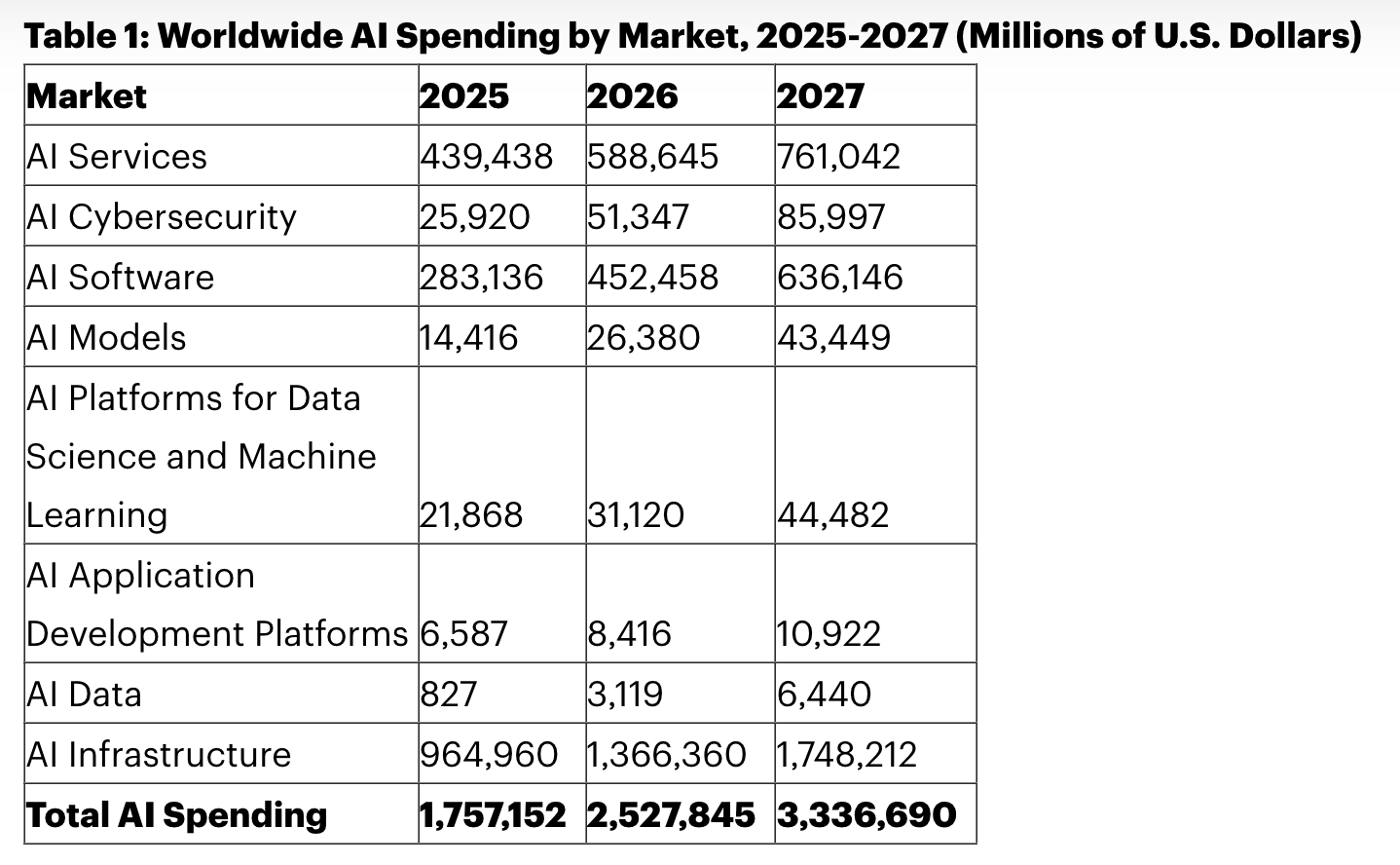
A report from the US market research firm Gartner points out that global AI spending will reach $2.52 trillion in 2026, a year-on-year increase of 44%;其中 (among which) AI infrastructure alone (including servers, accelerators, storage, and data center platforms) is expected to consume approximately $1.37 trillion, accounting for over half of the total expenditure.
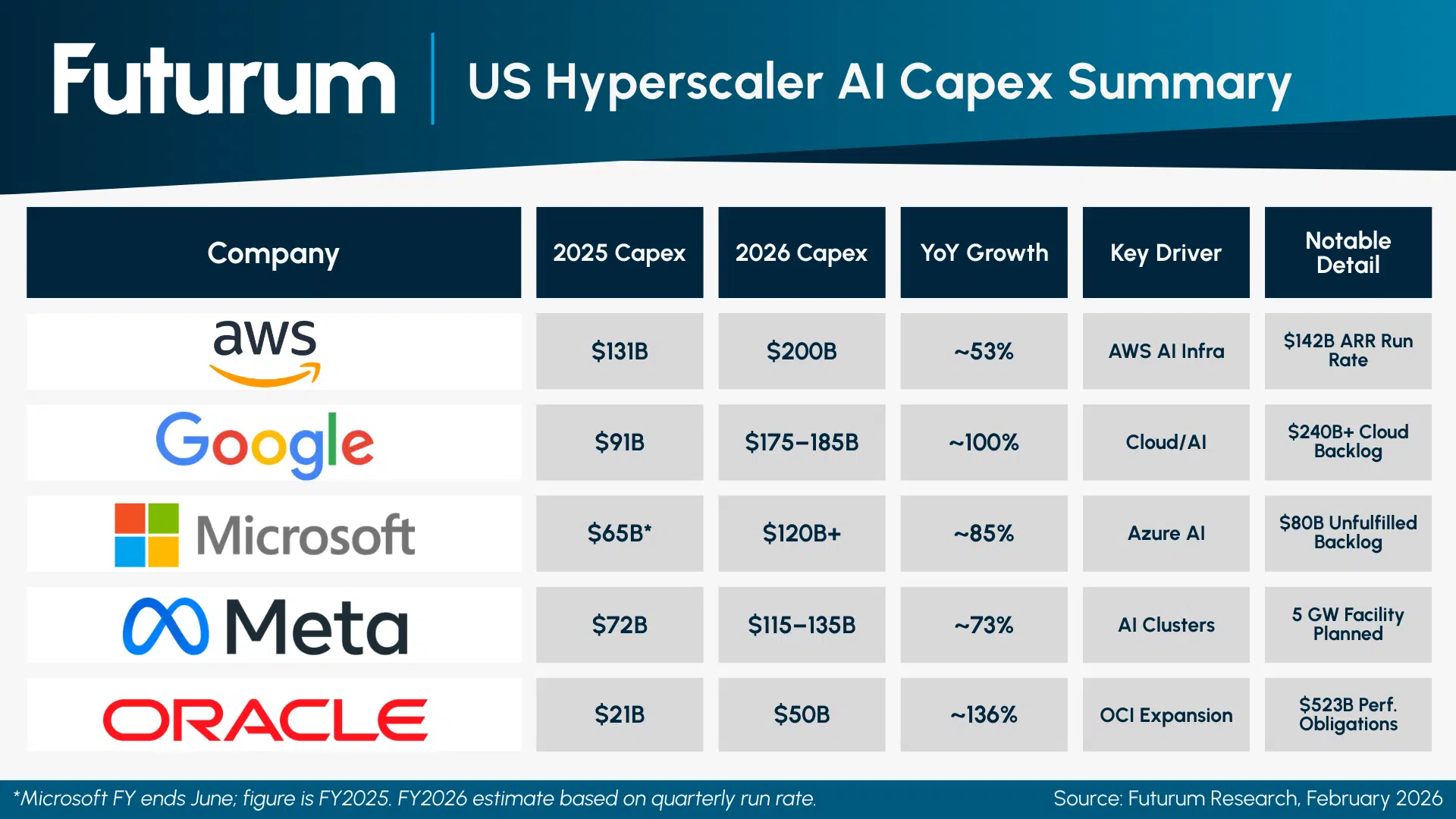
Regarding AI giants, the planned infrastructure capital expenditure for five companies—Microsoft, Alphabet (Google's parent company), Amazon, Meta, and Oracle—in 2026 totals approximately $660 billion to $690 billion, a figure roughly double that of 2025; the vast majority of these funds will be used for AI computing power, data centers, and networks. All cloud provider giants have stated that their markets are in a state of supply shortage.
Considering the approximately 36-52 week delivery cycle for GPU data centers, the situation of limited computing power and data supply will likely persist at least until Q3 2026.

It is worth mentioning that the current structural computing power gap stems not only from the demand of AI large model companies training various models but also from the rapidly expanding demand for daily inference model deployment from billions of global users. The computing resource gap from both B2B and B2C businesses has jointly led to the current supply-demand imbalance in the computing power market. No wonder Jensen Huang, founder of Nvidia, confidently stated at this year's CES: "(Nvidia's) AI chip and infrastructure market size could reach $1 trillion by 2027."

Apart from the computing power gap, consistent with the pace of various mining companies transforming into AI computing power and data centers, AI is competing with the cryptocurrency industry for critical resources like electricity. According to the recently released "2026 AI Index Report" by Stanford University, the overall electricity demand of current AI systems is already close to half the scale of Bitcoin mining and approaches the total electricity consumption of countries like Switzerland or Austria.

Undoubtedly, with AI becoming the sole narrative driving US stock market and even global tech companies, "having business related to AI" has become a necessity for many listed companies.

When the AI computing power business becomes the next DAT model: A test of the robustness of the AI narrative

What Allbirds has initiated might be another wave of热潮 (hot trend) similar to the emergence of DAT companies last year.

The reason for this judgment lies in the fact that the DAT treasury model in the cryptocurrency industry and the AI transformation of listed companies already have overlapping areas, and there have been mature cases previously.

From July to September last year, with the emergence of以太坊 (Ethereum) DAT companies like Bitmine and Sharplink, a large number of BTC DAT, ETH DAT, SOL DAT, BNB DAT, and various altcoin DAT listed companies became the "star stocks" of that time—many stock标的 (targets)上演了 (staged) miracles in the capital market, doubling or even increasing tenfold within just a few days.

On the other hand, transformation cases in the AI赛道 (track) are equally impressive.

Last year, Axe Compute(Odaily Planet Daily Note: formerly Predictive Oncology Inc.), which held Aethir (ATH) as its DAT reserve asset,上演了一场 (staged a) major drama of a listed company's transformation into AI computing power. Previously, the company's main business was medical equipment, and it had also explored services like providing a tumor drug response prediction platform and 3D cell culture models to support cancer drug development. In September last year, the company率先 (took the lead in) initiating a strategic transformation involving ATH token DAT, causing its stock price to surge nearly 200%; subsequently, after completing over $340 million in financing, it officially announced its transformation into a GPU computing infrastructure company, changing its stock ticker to AGPU.

CoreWeave (CRWV), which has now successively reached order cooperation with chip giants like Nvidia and AI giants like Anthropic, is also one of the players on the "AI fast lane". As an established mining enterprise, CoreWeave's transformation over the past 3 years of rapid AI development has been quite thorough: initially, it signed a $22.4 billion infrastructure contract with OpenAI; last year, it again signed an $11.7 billion AI agreement with Vast Data, which is invested in by Nvidia; recently, it reached a data center leasing agreement with Anthropic. According to financial report data, CoreWeave's revenue in 2025 was $5.13 billion, a year-on-year increase of 168%; its planned capital expenditure for 2026 exceeds $30 billion. At the time of writing, its market capitalization is approximately $62.4 billion. For more information, recommended reading "Analyzing CoreWeave: From Crypto Miner to AI Cloud Service Provider". As for the AI transformation of other mining companies, they are too numerous to count. See "The Great Migration of Mining Companies: Some Already Hold $12.8 Billion in AI Orders".

Of course, compared to the tens-of-billions-of-dollars orders of mining companies, Allbirds' current fundraising amount is rather insignificant. Furthermore, from a practical purchasing power perspective, compared to high-performance GPUs costing $25,000 to $40,000 each, $50 million can only勉强 (barely) purchase less than 2000 GPUs. However, some analysts believe its positioning might be as an acquisition target for a large "alternative cloud" company seeking a backdoor listing.

In other words, Allbirds' internet-famous shoe label has been torn off, while the "AI concept stock" label has instead become a香饽饽 (highly sought-after commodity). Its real value does not lie in how many GPUs $50 million can buy, but in retaining the shell of a Nasdaq-listed company—this holds certain吸引力 (attraction) for AI infrastructure companies wanting to quickly enter the public market.

Finally, although from a capital operation perspective, the AI computing power business model is quite similar to last year's DAT treasury model, they still differ in the following aspects:

First, is the real business revenue of the AI industry compared to the cryptocurrency industry. According to Anthropic's previous statements, its annualized revenue has exceeded $30 billion, a figure that was only at $9 billion in 2025; additionally, as of February, OpenAI's annualized revenue had surpassed $25 billion. Although valuations reaching thousands of billions seem high, the real business revenue provides more stable data support compared to the highly volatile market capitalization of cryptocurrencies. Various large model companies are the best buyers in the AI computing power business because the computing power shortage is an objective reality.

Second, is the high operational门槛 (threshold) of the AI computing power industry. Unlike the "hoarding coins" strategy of DAT treasury companies, the AI computing power business is not simply about purchasing GPUs. It also requires the construction of an entire operational chain including data centers, electricity, cooling, networks,运维团队 (operation and maintenance teams), customer acquisition. Therefore, its entry barrier, duration, and team requirements are higher, making it relatively more difficult to "fake". Ultimately, the underlying asset of DAT is a financial asset; whereas the underlying asset of an AI computing power company is an operational physical asset.

Third, is the sustained cash flow of the AI computing power industry. For DAT treasury companies, whether it's BTC, ETH, or altcoins like SOL and BNB, their main income高度依赖 (heavily relies on) the rise and fall of coin prices (staking income is merely nominal), lacking regular business income; the AI computing power business, however, can generate sustained cash flow through long-term leasing contracts, which is real cash inflow.

Of course, from the perspectives of financing structure, backdoor listings, and speculative sentiment, the two remain highly similar; and in terms of attracting scrutiny and pressure from regulatory agencies, listed companies后续 (subsequently) wanting to transform into AI computing power companies will inevitably face various restrictions and持续关注 (ongoing attention).

As industry insiders expressed views after Allbirds' stock price surge:

  • Matt Domo, CEO of FifthVantage, believes that Allbirds' AI transformation this time seems more like a means to boost its sluggish stock price. Investors should be wary of "AI washing" phenomena, where companies attempt to exaggerate or even fabricate their AI capabilities for marketing. Additionally, companies trying to catch热门趋势 (hot trends) through aggressive transformations are not without precedent; many companies tried to ride the blockchain bandwagon in late 2017 to early 2018.
  • Jason Schloetzer, Associate Professor at Georgetown University's McDonough School of Business, pointed out that this initial $50 million financing is "minuscule compared to the actual investment required to become a service provider in this field." However, from a more optimistic perspective, the influx of大量新玩家 (many new players) into the AI field may also reflect the "sustained enthusiasm" for growth in the market.
  • Jay Goldberg, an analyst at Seaport Research,则认为 (believes that) it is hard to imagine a company like Allbirds, which is "半路出家 (switching careers midstream)", being able to provide competitive products or services in this field.

As the AI era train roars forward, there will always be those trying their utmost to cling to the door for a desperate gamble. As for whether they can stay on the train or be swept under the wheels by the fierce wind, we will have to wait for time to reveal the answer.

Perguntas relacionadas

QWhat was the stock price surge of Allbirds after announcing its pivot to AI infrastructure, and what is the new company name?

AAllbirds' stock price surged, reaching a high of $24.31 and settling at $16.99, representing a single-day gain of 582.33%. The new AI infrastructure company is named NewBird AI.

QAccording to the Gartner report cited, what is the projected global AI spending for 2026 and the expected spending on AI infrastructure?

AAccording to the Gartner report, global AI spending is projected to reach $2.52 trillion in 2026, with approximately $1.37 trillion, more than half of the total, expected to be spent on AI infrastructure.

QWhat are the three key differences mentioned between the AI compute business model and the previous DAT (Digital Asset Treasury) model?

AThe three key differences are: 1) The AI industry has real business revenue compared to the cryptocurrency industry. 2) The AI compute business has a high operational门槛, requiring data centers, power, cooling, and a full operational chain, unlike simply holding crypto assets. 3) The AI compute business can generate持续性现金流 (sustained cash flow) through long-term租赁合约 (lease contracts), unlike DAT companies whose income heavily relies on volatile crypto prices.

QWhat major resource is AI now competing with the cryptocurrency industry for, according to the Stanford AI Index Report?

AAccording to the Stanford AI Index Report, AI is competing with the cryptocurrency industry for electricity. The report states that current AI system electricity demand is nearly half that of Bitcoin mining and is接近 (close to) the electricity consumption levels of entire countries like Switzerland or Austria.

QWhat is the suggested primary value of Allbirds' pivot to AI, beyond the $50 million raised for purchasing GPUs?

AThe suggested primary value is that Allbirds retains its listing as a纳斯达克上市公司 (Nasdaq-listed company), providing a shell that could be attractive for AI infrastructure companies seeking a quick entry into the public market, essentially acting as a potential acquisition target for a larger 'alternative cloud' company.

Leituras Relacionadas

Silicon Valley 'Startup Guru' Steve Hoffman: Web3 + AI Could Be a Trap

Silicon Valley investor and "Godfather of Startups" Steve Hoffman warns that combining Web3 with AI is likely a trap, not a promising venture. In an interview, Hoffman argues that while AI is a foundational technology touching all industries, Web3 adds complexity, friction, and regulatory risk without solving mainstream consumer or business needs. He advises founders to focus on deep, specialized applications where startups can out-iterate giants, rather than on generic features easily replicated by large tech companies. Hoffman observes that Silicon Valley will lead foundational AI research, while China excels at rapid, large-scale application and commercialization, particularly in robotics. He stresses that AI-driven autonomous agents capable of collaborative, multi-step tasks are 2-4 years away, which will cause significant job displacement. The solution is not to slow AI but to redesign business models around human-AI collaboration and reform social systems like education and retraining. For startups, Hoffman recommends focusing on vertical, expertise-heavy domains to build defensibility. He sees major opportunities in AI fraud detection and cybersecurity. Key founder mindsets include systemic thinking over feature-focus, relentless customer centricity, building adaptive teams, and deeply understanding AI's capabilities and limits. Hoffman is also leading a non-profit initiative to establish university centers aimed at training future leaders in responsible, human-value-aligned AI innovation.

marsbitHá 6m

Silicon Valley 'Startup Guru' Steve Hoffman: Web3 + AI Could Be a Trap

marsbitHá 6m

Token Inefficient, Economy Tokenless

The article "Tokens Aren't Economical, Economics Aren't Tokenized" analyzes a pivotal shift in the AI industry from a technology-driven narrative to one dominated by capital efficiency. It highlights two concurrent trends: a severe capital shortage due to the exorbitant and recurring costs of compute (e.g., OpenAI's high burn rate) and a wave of corporate spin-offs where major tech companies are separating their AI units (like Kuaishou's Kling and Baidu's Kunlunxin). The core argument is that AI's "anti-internet" business model, where user growth increases costs rather than profits, has created a disconnect between high valuations and actual cash flow. Spin-offs address this by allowing AI assets to be valued independently. Within a parent company, they are seen as cost centers, but as standalone entities, they are priced based on their growth potential and scarcity in the primary market, leading to massive valuation premiums (e.g., Kling's estimated value tripling post-spin-off). The industry is at an inflection point, moving from "model worship" to "value realization." The competition is evolving from a pure compute (GPU) race to a broader focus on systemic efficiency and full-stack engineering (involving CPUs and orchestration) to achieve viable commercialization. The year 2026 is framed as a critical moment where the industry must definitively answer how to economically translate AI capability into tangible business value, reshaping the sector's future power structure.

marsbitHá 10m

Token Inefficient, Economy Tokenless

marsbitHá 10m

Crossing the 'Memory Wall': The Wafer-Level Revolution and Computing Power Routes in the AI Inference Era

In 2026, a historic shift occurred in AI as major cloud providers' inference spending surpassed training spending for the first time, signaling a move from "building large models" to "using large models." This shifts the core challenge from computing power to the "memory wall"—the bottleneck of data movement (model weights, activations, KV Cache) between external DRAM and processors, where energy and latency from data transfer far exceed computation itself. Companies like Nvidia face GPU idle time due to bandwidth limits. In contrast, Cerebras Systems adopts a radical "wafer-scale" approach with its Wafer-Scale Engine (WSE). Instead of cutting a silicon wafer into many chips, Cerebras uses almost the entire wafer as one massive chip (WSE-3). This design provides 44GB of on-chip SRAM, delivering memory bandwidth thousands of times higher than traditional HBM (e.g., 21 PB/s vs. Nvidia B200). For LLM inference, weights are streamed layer-by-layer from external MemoryX storage to the chip, avoiding HBM bottlenecks. This results in token generation speeds 1.5–5 times faster than Nvidia's B200 in some models and significant advantages in first-token latency and long-context tasks. Additionally, Cerebras's architecture offers much lower interconnect power consumption (0.15 pJ/bit vs. GPU's ~10 pJ/bit). However, Cerebras faces challenges: SRAM scaling has slowed with advanced nodes, limiting future capacity gains; the chip requires specialized liquid cooling and custom software stacks; and its external I/O bandwidth (150 GB/s) is low compared to NVLink, hindering multi-system scaling for very large models. Competition is intensifying. Major players are pursuing three paths: 1) Developing proprietary inference ASICs (e.g., Google TPU, Microsoft Maia), 2) Leveraging advanced packaging (e.g., TSMC's SoW) to democratize wafer-scale-like integration, potentially eroding Cerebras's process advantage within a few years, and 3) Exploring optical interconnects for ultimate bandwidth. Commercially, Cerebras is transitioning from a hardware vendor to a service provider, facing the immense challenge of building high-power, specialized data centers to meet large contracts (e.g., 250MW/year from 2026–2028). In conclusion, the AI inference era presents a fundamental architectural trade-off. Cerebras opts for extreme physical optimization for low-latency, single-task performance, while Nvidia prioritizes versatility and massive cluster throughput. The path forward remains uncertain, with technology and business models still evolving in the race toward advanced AI.

marsbitHá 16m

Crossing the 'Memory Wall': The Wafer-Level Revolution and Computing Power Routes in the AI Inference Era

marsbitHá 16m

Has Bitcoin's 'Rebound Ended', Officially Entering the Late Bear Market Phase?

**Title: Has Bitcoin's Rebound Ended, Entering the Late Bear Market Phase?** **Summary:** Bitcoin's price has declined by 13% this week, signaling a potential return to late-stage bear market conditions. The price fell to around $67k, positioned between the Realized Price and Realized Cap Weighted Average. For the first time since early 2022, the Short-Term Holder cost basis has dropped below this key average, confirming a hallmark of late-cycle bear markets. Profitability metrics have collapsed sharply. The 7-day average of the Realized Profit/Loss ratio plummeted from a local high of 3.16 to 0.29, mirroring the February panic sell-off. Critically, the 90-day average never breached the threshold of 2, indicating the recent rally to $82k was a bear market bounce, not a structural shift. Realized losses surged to $1.35 billion daily, with $770 million coming from Long-Term Holders selling at a loss. This accelerating redistribution of supply from weak to strong hands is a necessary but ongoing process for a market bottom. The rally stalled almost precisely at the aggregate cost basis (~$83k) of US spot Bitcoin ETF investors, turning that level into strong resistance and leaving the average ETF holder underwater again. Spot market flows have turned decisively negative, showing sellers are dominating order books despite the price drop. While a significant futures long liquidation event cleared over $400 million in leverage, providing a potential reset, sustained spot demand is yet to materialize. Options markets continue to price in higher future volatility (Implied Volatility) than recent price action (Realized Volatility) has shown, with a persistent skew towards put options, indicating ongoing demand for downside protection. In conclusion, multiple metrics point to a fragile market structure. Resistance at the ETF cost basis, accelerating realized losses, dominant spot selling, and cautious options pricing all suggest the bear market trend persists. A sustainable recovery likely requires a resurgence of spot demand, ETF holders returning to profit, and a clear reduction in selling pressure.

marsbitHá 16m

Has Bitcoin's 'Rebound Ended', Officially Entering the Late Bear Market Phase?

marsbitHá 16m

TechFlow Intelligence Agency: Anthropic Calls for Global Pause in AI Development While Preparing for Trillion-Dollar IPO; SpaceX IPO Roadshow Heats Up, But S&P 500 Rejects Fast-Track Inclusion

In today's TechFlow Intelligence Briefing, several major tech stories highlight a growing theme of trust and credibility gaps across AI, crypto, and finance. AI company Anthropic has publicly called for a global pause in AI development, citing risks from Claude's "recursive self-improvement." Ironically, this coincides with reports the company is preparing for a massive IPO targeting a near $1 trillion valuation. This perceived hypocrisy, coupled with widespread user complaints about Claude's declining performance, is sparking debate over whether the safety warning is genuine or a competitive tactic. Meanwhile, in a substantive security move, Anthropic open-sourced a framework for AI-powered vulnerability discovery. In the crypto market, Bitcoin's price drop below $61,000 triggered over $1.16 billion in liquidations, flipping the market into a state where more BTC is held at a loss than at a profit, a historical bearish signal. On the corporate front, SpaceX's highly anticipated IPO is generating immense Wall Street excitement, with Goldman Sachs projecting 100x revenue growth by 2030. However, the S&P 500 has refused to fast-track the company's inclusion post-IPO, potentially limiting immediate institutional demand. Separately, ByteDance's AI app Doubao lost over 6 million monthly active users after introducing a subscription model, highlighting the challenges of AI monetization. Other notable developments include Nvidia certifying HBM4 memory from Samsung, SK Hynix, and Micron; Cloudflare's acquisition of front-end tooling company VoidZero; and its CEO warning that bot traffic now exceeds human traffic online. The underlying narrative connects these events: a trust crisis. From AI firms' contradictory actions and crypto volatility to the clash between SpaceX's hyped narrative and institutional rules, a pattern is emerging where stated intentions and actual practices are increasingly misaligned.

marsbitHá 32m

TechFlow Intelligence Agency: Anthropic Calls for Global Pause in AI Development While Preparing for Trillion-Dollar IPO; SpaceX IPO Roadshow Heats Up, But S&P 500 Rejects Fast-Track Inclusion

marsbitHá 32m

Trading

Spot
Futuros
活动图片

