Nietzsche Penguin Soars 6000x in a Week, Solana Meme Coin Reforging Glory?

marsbitPublicado em 2026-01-26Última atualização em 2026-01-26

Resumo

The article discusses the resurgence of Solana meme coins, focusing on $PENGUIN (Nietzschean Penguin), which recently listed on Binance Alpha—the first "pure" Solana meme coin to do so in over a year. The token is inspired by a viral clip from Werner Herzog’s 2007 documentary, featuring a penguin walking alone toward certain death, symbolizing nihilism and defiance of societal norms. The meme gained renewed popularity on social media in 2025, often paired with the phrase "But Why," reflecting a desire for personal freedom and self-exploration. The narrative took a political turn when the White House X account posted an image of the penguin carrying a US flag alongside Donald Trump, referencing Trump’s repeated interest in purchasing Greenland. The posts framed Trump’s ambition as a form of heroic, "America-first" determination, despite widespread ridicule. This politicization amplified $PENGUIN’s appeal, drawing comparisons to earlier politically-themed meme coins like $PNUT. The token’s rapid growth—reaching a $100 million market cap within 10 days—and its Binance Alpha listing have sparked optimism among crypto traders, seen as a potential revival for Solana meme coins and renewed institutional support. The piece concludes by questioning whether this momentum can be leveraged into sustained success.

How long has it been since Binance Alpha last listed a Solana meme coin? The previous Solana meme coin listed on Binance Alpha was JELLYJELLY ($JELLY) on February 26, 2025, nearly a year ago.

The reason for $JELLY's listing wasn't 'pure'; it was related to an incident with Hyperliquid. If we set stricter standards and exclude AI meme coins like Zerebro and elizaOS that can 'get things done,' the last pure Solana meme coin listed on Binance Alpha without other factors was Fartcoin, on December 18, 2024.

We have finally waited for another Solana meme coin to be listed on Binance Alpha—$PENGUIN (Nietzschean Penguin).

The token's story originates from a viral clip in the 2007 documentary "Encounters at the End of the World" by German director Werner Herzog. In that clip, a penguin turns its back on its colony and heads toward the ocean—the source of food and life.

To reach the ocean, it ventures alone inland, heading toward distant mountains, with the faraway sea being 5,000 kilometers away. Everyone knows this means hunger and cold, exhaustion and certain death.

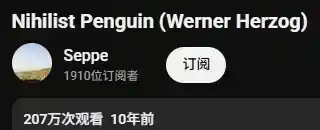
By the mid-2010s, this video had gained widespread popularity due to its "nihilistic" interpretation. In late August 2015, YouTube user Seppe uploaded this clip to YouTube titled "Nihilistic Penguin," and this version quickly went viral, garnering nearly 2 million views to date.
This old meme has gradually regained vitality on TikTok and Instagram since the beginning of this year. Just as the meme's name "Nietzsche Penguin/Nihilistic Penguin" suggests, the related viral videos and memes almost always feature the keyword "But Why." People worldwide use this meme to question themselves—but why must my life be lived this way?

Society tells us we should find a good job, get married, have children, and avoid thinking about meaningless or impractical things. But isn't the meaning of life precisely about exploring life's purpose in the way we desire? They ask us why, but there is no why—it's simply what we want to do. Living authentically, disregarding世俗的眼光, is about transcending oneself.

If this meme had followed its original development path, $PENGUIN would have been similar to $NEET, both reflecting contemporary people's desire to escape the世俗 'system,' pursue freedom, and awaken self-awareness. However, the White House's use of this meme has added a new layer of meaning, transforming this meme coin from a social media trend/consciousness-raising meme coin into a political one.

Yesterday at 6 a.m., the White House X account posted a tweet saying, "Embrace the penguin," accompanied by an image of the "Nietzsche Penguin" holding an American flag and walking alongside Trump toward the distant mountains.

At 10:30 p.m. the same day, the White House X account again quoted this tweet, adding, "This penguin never cared what those who didn't understand it thought."

These two tweets coincided with Trump once again publicly expressing his interest in acquiring Greenland. Trump first proposed this idea in 2019, and after the tumultuous journey of leaving office and winning the election again, he still hasn't given up on his desire for Greenland.

This desire, in the eyes of most people, is yet another crazy delusion. The White House's use of this meme amplifies the personal angle of exploring life's meaning, emphasizing Trump's disregard for ridicule and practical obstacles, instead portraying his 'madness' as a heroic, America-first pursuit.

The aforementioned image sparked widespread mockery. Netizens pointed out that there are no penguins in the Arctic, and such a basic error is as anti-intellectual as Trump's suggestion during the pandemic to inject disinfectant to kill the virus. However,有趣的是, many netizens also升华ed this image further, linking Trump's proposal to buy Greenland to the 1867 purchase of Alaska from Russia, viewing it as America's "Manifest Destiny"—the unique mission to expand influence, spread systems, or acquire resources.

And there are no penguins in the Arctic? No matter, if Trump wants it, Trump gets it. This was interpreted as a Trump-style humor, conveying a "reality doesn't matter, will does" spirit of triumphing over nature through human effort.

By this point, we can already understand why $PENGUIN is being anticipated by crypto players with expectations similar to $PNUT. This anticipation also resonates with the reality of Solana meme coins—after that glorious meme season, it has been too long since we last saw a meme coin突破 $100 million market cap within 10 days of deployment.

Binance Alpha listing a pure Solana meme coin again after more than a year has also excited crypto players, seen as Binance once again opening its arms to Solana meme coins and the beginning of Solana meme coins reforging their glory.

This time, we dare to dream—will we truly get it?

Perguntas relacionadas

QWhat is the significance of the $PENGUIN (Nietzschean Penguin) meme coin being listed on Binance Alpha?

AIt marks the first 'pure' Solana meme coin listing on Binance Alpha in over a year, signaling a potential resurgence and renewed institutional interest in the Solana meme coin ecosystem.

QWhat is the origin of the $PENGUIN meme, and why is it called 'Nietzschean Penguin'?

AThe meme originates from a scene in Werner Herzog's 2007 documentary 'Encounters at the End of the World,' depicting a penguin walking alone toward certain death. It gained a 'nihilistic' interpretation online, leading to the name 'Nietzschean Penguin' or 'Nihilist Penguin'.

QHow did the White House's use of the 'Nietzschean Penguin' meme change its meaning?

AThe White House used an image of the penguin carrying a US flag and walking with Donald Trump to reframe the meme from a personal quest for meaning into a political symbol, portraying Trump's persistence in pursuing seemingly impossible goals, like buying Greenland, as a form of heroic, 'America First' determination.

QWhy is the $PENGUIN coin compared to $PNUT and seen as having significant potential?

AIt is compared to $PNUT due to its rapid growth and the high expectations from the crypto community, fueled by its massive cultural and political relevance, achieving a $100 million market cap within 10 days of deployment—a feat not seen since the last Solana meme season.

QWhat does the Binance Alpha listing of $PENGUIN represent for the future of Solana meme coins?

AThe listing is viewed as Binance reopening its doors to Solana meme coins after a long hiatus, potentially heralding a new era of growth and legitimacy for the category, often referred to as 'reforging the glory' of Solana meme coins.

Leituras Relacionadas

When Doing Cryptocurrency Payment, the First Thing is Licenses, What is the Second?

When launching a crypto payment business, obtaining the necessary licenses is the crucial first step. However, the second, and arguably more critical, step is designing a comprehensive operational framework that forms a coherent business loop. This loop must be clearly understood and executable by all stakeholders: banks, payment partners, exchanges, on-chain analytics providers, regulators, and your internal team. Many projects mistakenly believe a single license permits all operations. Licenses merely grant entry; they don't define how the specific business functions. The real challenge lies in detailing every aspect of the workflow. This involves clarifying the customer base, the flow of fiat and crypto assets, the settlement process, and establishing clear lines of responsibility for risks like AML compliance, sanctions screening, chargebacks, and regulatory inquiries. A robust framework must answer seven core questions: Who are the clients and merchants? Who collects fiat and crypto? Who handles conversion and custody? And who is ultimately accountable for compliance and risk management? Projects often fail not from a lack of licensing, but during due diligence when they cannot convincingly explain these operational details. Therefore, beyond securing licenses, the priority must be constructing a closed-loop system. This system ensures the business model is transparent, risks are managed, responsibilities are delineated, contracts are aligned, and the entire process is comprehensible to partners and regulators. The true competitive edge in crypto payments lies not in acquiring a license quickly, but in integrating licensing, banking, compliance, and operations into a sustainable and executable whole.

marsbitHá 22m

When Doing Cryptocurrency Payment, the First Thing is Licenses, What is the Second?

marsbitHá 22m

Arthur Hayes Analysis: AI Bubble Nears Burst, Crypto Market Faces Short-Term Pressure

Arthur Hayes argues that the current AI market is a bubble poised to burst, which will exert downward pressure on the crypto market in the near term. The core trigger is rising oil prices due to the US-Iran conflict and a blockade of the Strait of Hormuz. Higher energy costs directly increase the operational expenses of AI data centers, squeezing profit margins for companies like Google, Anthropic, and OpenAI. Hayes predicts that persistent inflation from high oil prices will force Trump, in a bid to win the November election, to turn public sentiment against the AI industry. He may propose regulations and taxes on data centers and AI companies to appeal to voters concerned about costs and job displacement. Such political rhetoric could shatter market confidence. Furthermore, the market is unlikely to healthily absorb the massive concurrent IPOs of SpaceX, Anthropic, and OpenAI, which together seek valuations in the trillions. The combination of soaring energy costs, overwhelming equity supply, and negative political pressure will puncture the AI bubble. Hayes notes that nearly all new USD liquidity since 2022 has flowed into AI, leaving crypto like Bitcoin behind. When the AI bubble bursts, liquidity will contract sharply, pulling down all risk assets, including cryptocurrencies. In response, Hayes's fund, Maelstrom, has sold all AI-related stocks and non-core cryptocurrencies. It maintains core positions in Bitcoin and Ethereum while increasing exposure to energy sector equities, betting on rising oil and gas prices. He expects Bitcoin to bottom after the AI-led market decline, before rallying again with future monetary easing.

Foresight NewsHá 36m

Arthur Hayes Analysis: AI Bubble Nears Burst, Crypto Market Faces Short-Term Pressure

Foresight NewsHá 36m

To C, To B, and the Next Big Thing Called To A

After To C and To B, the Next Wave is To A: Serving AI Agents In a recent quarterly earnings call, Meituan's Wang Xing introduced a new concept: To A (To Agent), signifying that future business services will increasingly target AI Agents as primary clients, not just consumers or merchants. This shift implies that internet giants must now consider how to make their services more appealing for AI Agents to recommend, fundamentally altering traditional distribution logic. This "To A era" is prompting an unusual trend of alliances among major tech companies. Unlike previous competitive battles, firms like Meituan, Tencent, JD.com, Huawei, OPPO, and OpenAI are rapidly forming partnerships. The reason is strategic: as AI Agents become the primary user interface, handling tasks from a single command (e.g., "Book a Japanese restaurant for tomorrow"), the risk for platforms is being bypassed entirely. Companies are positioning themselves within this new value chain. Three primary strategies are emerging: 1. **Super-Entry Points + Service Providers:** Platforms like Tencent's Yuanbao, WeChat, and ChatGPT aim to be the first-stop Agent, integrating various services (food delivery, shopping, travel) from partners like Meituan and JD.com. 2. **Apps as Callable Services:** Companies like Meituan, JD.com, and Uber are ensuring their core services remain accessible and callable by external Agents, shifting from front-end apps to back-end capabilities. 3. **System-Level Agent Entry Points:** Smartphone makers (Huawei, Honor, OPPO) are leveraging their OS-level AI assistants to control the initial user command, redistributing it to relevant service apps. While alliances offer mutual benefit—entry points gain service capabilities, and service providers gain traffic—inherent conflicts of interest exist. A dominant Agent platform could eventually attempt to connect directly with suppliers (restaurants, hotels), bypassing current aggregators like Meituan or Ctrip. Other unresolved challenges include the potential for Agent recommendations to become a new form of paid ranking and unclear accountability for faulty recommendations. The current rush to form alliances is a defensive move by service providers to secure their position before the landscape solidifies. In this To A-driven restructuring, the greatest risk is not losing the race but failing to hear the starting gun.

marsbitHá 45m

To C, To B, and the Next Big Thing Called To A

marsbitHá 45m

The More Lifelike the Robot, the More Terrifying? Unveiling the 'Uncanny Valley Effect' in the Era of Humanoid Robots

As humanoid robots become increasingly lifelike, they confront a significant psychological barrier known as the "Uncanny Valley Effect," a concept proposed by Japanese roboticist Masahiro Mori in 1970. This phenomenon describes a dip in human comfort and acceptance when robots appear almost, but not perfectly, human. Minor imperfections in facial expressions, eye movements, or skin texture trigger a subconscious sense of unease, as the brain detects something trying, yet failing, to mimic a person. Examples range from the controversial human-like robot Sophia to animated characters in films like *The Polar Express*. The effect poses a key design challenge for robotics companies. Some, like Boston Dynamics, avoid it entirely by creating highly capable but visibly mechanical robots. Others, like Hanson Robotics, push for greater human likeness despite the risk. For consumer robots, especially in homes, most manufacturers opt for stylized or clearly mechanical designs to ensure broader acceptance. While the Uncanny Valley remains a powerful force, its impact may diminish over time through technological advancements that achieve near-perfect realism or through generational familiarity as people grow accustomed to interacting with humanoid machines. Ultimately, navigating this psychological frontier requires as much understanding of human perception as of robotics technology itself.

marsbitHá 45m

The More Lifelike the Robot, the More Terrifying? Unveiling the 'Uncanny Valley Effect' in the Era of Humanoid Robots

marsbitHá 45m

Trading

Spot
Futuros

Artigos em Destaque

O que é MEME 2.0

Memecoin 2.0: A Ascensão do $MEME 2.0 no Mundo das Criptomoedas Introdução No panorama em constante evolução das criptomoedas, um novo concorrente surgiu. Memecoin 2.0, simbolizado como $MEME 2.0, eleva o conceito de moedas meme a um novo nível emocionante. Como um subproduto do Memecoin original, este projeto capturou a atenção da comunidade crypto ao mudar o foco de incentivos financeiros típicos para uma experiência envolvente e divertida. Operando na blockchain Ethereum, Memecoin 2.0 redefine audaciosamente o envolvimento da comunidade na esfera crypto. O que é Memecoin 2.0, $MEME 2.0? No seu cerne, Memecoin 2.0 é um projeto de criptomoeda que prioriza o espírito comunitário e a diversão associada à cultura meme. Ao contrário das criptomoedas convencionais, que se concentram em casos de uso práticos e benefícios tangíveis, Memecoin 2.0 distingue-se ao abraçar o lado mais leve da moeda digital. O projeto existe sem promessas de utilidade, um roteiro estruturado ou retornos financeiros, focando em vez disso em fomentar uma comunidade vibrante centrada em memes e no prazer partilhado. Ao fazer isso, aproveita a crescente tendência da cultura meme no espaço online, tornando-se num jogador único no mundo dos ativos digitais. Criador do Memecoin 2.0, $MEME 2.0 Apesar de extensa pesquisa sobre as origens do Memecoin 2.0, a identidade explícita do seu criador continua desconhecida. Esta anonimidade não é incomum na comunidade crypto, onde muitos projetos são liderados por indivíduos ou grupos que preferem ficar nos bastidores. A falta de informações publicamente disponíveis sobre o criador pode ser vista como um movimento estratégico, colocando os holofotes no envolvimento da comunidade em vez de na notoriedade individual dentro do espaço. Investidores do Memecoin 2.0, $MEME 2.0 As informações sobre os investidores ou o financiamento do Memecoin 2.0 são escassas. Esta ausência de detalhes pode sugerir que o projeto é autofinanciado ou que o seu foco na comunidade, em vez de estruturas de investimento tradicionais, atraiu um tipo diferente de apoiador. Como o mundo das moedas memes geralmente envolve mais envolvimento de base do que investimento institucional, esta abordagem alinha-se ao ethos de projetos orientados pela comunidade. Como Funciona o Memecoin 2.0, $MEME 2.0? O Memecoin 2.0 opera inteiramente na blockchain Ethereum, aproveitando as suas robustas características de segurança e escalabilidade. Ao aproveitar os pontos fortes da Ethereum, o Memecoin 2.0 pode oferecer um ambiente seguro para interações dos utilizadores enquanto assegura que as transações são eficientes e custo-efetivas. Uma das características únicas do Memecoin 2.0 reside na sua estrutura orientada pela comunidade. O valor e a popularidade do token $MEME 2.0 derivam da participação ativa dos seus utilizadores, em vez de uma utilidade inerente. Este design reforça o foco do projeto no aspecto de entretenimento das criptomoedas, implicando que o riso e o envolvimento da comunidade são as verdadeiras moedas que impulsionam o seu sucesso. Além disso, o projeto insere-se no ecossistema mais amplo das moedas meme, onde o valor de cada moeda meme oscila com base na cultura, nas tendências e no envolvimento da comunidade, em vez de nos princípios económicos tradicionais. Linhas do Tempo do Memecoin 2.0, $MEME 2.0 Para melhor entender a evolução e os marcos do Memecoin 2.0, aqui está uma linha do tempo que destaca eventos significativos na sua história: 2024: O início do Memecoin 2.0 é reconhecido como um desdobramento do Memecoin original, estabelecendo-se dentro do contexto próspero das moedas meme enquanto opera na blockchain Ethereum. 13 de Julho de 2024: O Memecoin 2.0 posiciona-se oficialmente como uma moeda meme centrada na comunidade na rede Ethereum, enfatizando a sua abordagem centrada no entretenimento que convida os utilizadores a participar e envolver-se no seu crescimento. Pontos Chave Sobre o Memecoin 2.0, $MEME 2.0 Várias características críticas definem o Memecoin 2.0: Abordagem Centrada na Comunidade: A missão primária do Memecoin 2.0 é criar uma experiência comunitária divertida e envolvente, capitalizando o prazer coletivo derivado da cultura meme. Construído na Ethereum: Operar na blockchain Ethereum fornece ao projeto uma infraestrutura essencial que garante segurança e escalabilidade. Falta de Utilidade ou Roteiro: Numa notável divergência das criptomoedas tradicionais, o Memecoin 2.0 não promete quaisquer características utilitárias ou retornos financeiros, reafirmando o seu compromisso com o envolvimento da comunidade e a participação social. Foco na Cultura Meme: Ao abraçar os aspectos humorísticos e culturais do fenómeno meme, o Memecoin 2.0 fornece uma plataforma para que os utilizadores se envolvam com a crypto offline e online. Contexto Adicional: A Importância das Moedas Meme As moedas meme emergiram como uma classe distinta de criptomoeda, frequentemente impulsionadas pelo humor e por uma abordagem leve ao comércio. Estas moedas geralmente carecem de utilidade significativa ou roteiros de desenvolvimento, atraindo os utilizadores com a promessa de diversão, interação comunitária e relevância cultural. No panorama do ecossistema crypto mais amplo, as moedas meme revive a importância do envolvimento da comunidade, resistindo contra abordagens exclusivamente orientadas para o lucro. Projetos como o Memecoin 2.0 inauguram uma era em que o entretenimento pode harmonizar-se com aspirações financeiras, transformando a blockchain numa plataforma para criatividade e interação social. Conclusão O Memecoin 2.0, ou $MEME 2.0, representa uma nova onda de criptomoeda que prioriza o envolvimento da comunidade em detrimento de estruturas financeiras rígidas. Com um foco no humor e na interação social, capitaliza a fascinação em torno da cultura meme. Ao operar na blockchain Ethereum, o Memecoin 2.0 aproveita as capacidades da tecnologia, enquanto mantém um compromisso firme com o valor de entretenimento da moeda digital. À medida que o espaço em torno das criptomoedas continua a evoluir, o Memecoin 2.0 serve como um testemunho da ideia de que o futuro dos ativos digitais pode muito bem depender de experiências partilhadas, risadas e conexões comunitárias sólidas. No mundo imprevisível da crypto, talvez a alegria possa ser tão valiosa quanto o ganho financeiro tradicional.

32 Visualizações TotaisPublicado em {updateTime}Atualizado em 2024.12.03

O que é MEME 2.0

Como comprar MEME

Bem-vindo à HTX.com!Tornámos a compra de Memeland (MEME) simples e conveniente.Segue o nosso guia passo a passo para iniciar a tua jornada no mundo das criptos.Passo 1: cria a tua conta HTXUtiliza o teu e-mail ou número de telefone para te inscreveres numa conta gratuita na HTX.Desfruta de um processo de inscrição sem complicações e desbloqueia todas as funcionalidades.Obter a minha contaPasso 2: vai para Comprar Cripto e escolhe o teu método de pagamentoCartão de crédito/débito: usa o teu visa ou mastercard para comprar Memeland (MEME) instantaneamente.Saldo: usa os fundos da tua conta HTX para transacionar sem problemas.Terceiros: adicionamos métodos de pagamento populares, como Google Pay e Apple Pay, para aumentar a conveniência.P2P: transaciona diretamente com outros utilizadores na HTX.Mercado de balcão (OTC): oferecemos serviços personalizados e taxas de câmbio competitivas para os traders.Passo 3: armazena teu Memeland (MEME)Depois de comprar o teu Memeland (MEME), armazena-o na tua conta HTX.Alternativamente, podes enviá-lo para outro lugar através de transferência blockchain ou usá-lo para transacionar outras criptomoedas.Passo 4: transaciona Memeland (MEME)Transaciona facilmente Memeland (MEME) no mercado à vista da HTX.Acede simplesmente à tua conta, seleciona o teu par de trading, executa as tuas transações e monitoriza em tempo real.Oferecemos uma experiência de fácil utilização tanto para principiantes como para traders experientes.

273 Visualizações TotaisPublicado em {updateTime}Atualizado em 2026.06.02

Como comprar MEME

Discussões

Bem-vindo à Comunidade HTX. Aqui, pode manter-se informado sobre os mais recentes desenvolvimentos da plataforma e obter acesso a análises profissionais de mercado. As opiniões dos utilizadores sobre o preço de MEME (MEME) são apresentadas abaixo.

活动图片