Neel Kashkari Slams Crypto as “Utterly Useless”

TheNewsCryptoPublicado em 2026-02-20Última atualização em 2026-02-20

Resumo

Neel Kashkari, President of the Federal Reserve Bank of Minneapolis, criticized cryptocurrencies as "utterly useless," arguing they lack functional utility and rely on misleading marketing. Speaking at the 2026 Midwest Economic Outlook Summit, he contrasted crypto's minimal real-world economic impact with the tangible benefits of AI. He specifically dismissed claims about crypto's efficiency in cross-border payments, using a personal example of sending money to the Philippines. Kashkari emphasized that converting crypto to local currency remains costly and impractical for everyday use like buying groceries. He urged policymakers to reject vague industry explanations, describing them as "buzzword salad," and warned that current systems already handle transactions efficiently. His comments highlight growing tension between central bank skepticism and expanding commercial crypto adoption.

The President of the Federal Reserve Bank of Minneapolis, Neel Kashkari, criticised the cryptocurrency industry on February 19, describing digital assets as utterly useless and defined by word salad marketing instead of functional utility.

Kashkari attended the 2026 Midwest Economic Outlook Summit, in which he questioned the fundamental value proposition of cryptocurrencies and stablecoins. In the fireside chat, he compared the tangible economic effect of AI with the decade-long history of crypto, which he claims has failed to amalgamate into the real economy.

Kashkari was mainly dubious of the claim that crypto excels at cross-border payments. He also used a personal example for describing the issues of sending money to family in the Philippines.

While proponents claim crypto offers quick transfers, Kashkari claimed the logic falls apart at the point of sale. The president further questioned the audience: how does someone buy groceries with it?

They still have to change it to the local currency, and that is still expensive. What advocates are actually stating is that if everyone in the world used the same platform, friction would fade, but countries are not going to surrender their own monetary policies.

The Dissatisfaction from the Industry

The Fed official requested the public and policymakers to stop settling for vague explanations. He explained most of the rhetoric of the industry as a buzzword salad, mentioning that most revolutions provided by stablecoins are so far handled efficiently by current domestic tools such as Venmo or Zelle.

He also warned, “Ask the most fundamental questions and do not settle for nonsense. Whenever I make people actually explain how this thing really works, there is just nothing there.”

The remarks underscore an increasing divide in 2026 between the scepticism of the central bank and the broadening of the commercial sector, coming just hours following the announcement of the CME Group to move toward 24/7 crypto derivatives trading to meet institutional demand.

Highlighted Crypto News Today:

White House Renews Stablecoin Rewards Talks

TagsCryptoCryptocurrencyNeela Kashkari

Criptomoedas em alta

Perguntas relacionadas

QWhat did Neel Kashkari criticize about the cryptocurrency industry on February 19?

ANeel Kashkari criticized the cryptocurrency industry, describing digital assets as utterly useless and defined by word salad marketing instead of functional utility.

QAt which event did Kashkari question the fundamental value of cryptocurrencies and stablecoins?

AKashkari questioned the fundamental value of cryptocurrencies and stablecoins at the 2026 Midwest Economic Outlook Summit.

QWhat specific claim about crypto's utility did Kashkari express doubt about?

AKashkari was mainly dubious of the claim that crypto excels at cross-border payments.

QAccording to Kashkari, what is the main issue with using crypto for everyday purchases like groceries?

AKashkari stated that the main issue is that crypto still has to be converted to local currency, which is expensive, and the logic falls apart at the point of sale.

QWhat did Kashkari warn the public and policymakers to do regarding the crypto industry's explanations?

AKashkari warned the public and policymakers to stop settling for vague explanations and buzzword salad, and to ask the most fundamental questions and not settle for nonsense.

Leituras Relacionadas

Debate: Korean Workers Fear Unemployment, While Musk Envisions a Society 'Without Work'?

While South Korean auto workers fear job losses from robotics, Elon Musk envisions a future where AI and robots render most work optional. This article explores the growing tension between immediate anxieties over automation and long-term visions of a post-work society. The piece begins with recent strikes at Hyundai's Korean plants, where unions, amid standard wage negotiations, also sought job guarantees against advancing robotics—specifically mentioning Boston Dynamics' Atlas. This reflects how anxiety about technological displacement is emerging even before robots are fully capable of replacing skilled labor on assembly lines. The author argues that while current robotics still struggle with the nuanced, experiential knowledge of veteran workers, the *perception* of imminent replacement is fueling social conflict prematurely. This modern "Luddite" sentiment is compared to the 19th-century English textile workers who smashed machines. Historically, Luddites weren't simply anti-technology; they were protesting the rapid devaluation of their skills and the unequal distribution of productivity gains. Similarly, today's workers ask who will bear the cost of transition and share in the new wealth created by machines. In contrast, figures like Elon Musk propose an optimistic endpoint: with AI and robotics driving extreme abundance, the link between work and survival could break. He suggests concepts like "Universal High Income" could allow society to share the technological bounty, transforming work from a necessity into a choice. The core challenge, however, lies in the transition. The author notes that technology's benefits diffuse slowly, while its disruptive costs—job losses, skill obsolescence—can be concentrated and immediate. The risk is a painful interim period where productivity gains are captured by a few before new social contracts, safety nets, and retraining systems are established. The conclusion calls for proactive governance. Just as past industrial revolutions gave rise to labor standards and social safety nets, the robotics era needs its own frameworks. These should address job transition support, distribution of productivity gains, safety liability, and ethical deployment. Embracing such "constraints" is not opposition to progress but a necessary step to ensure technology benefits society broadly. The discussion sparked by Hyundai's workers, therefore, is not premature but essential.

marsbitHá 3m

Debate: Korean Workers Fear Unemployment, While Musk Envisions a Society 'Without Work'?

marsbitHá 3m

CATL Invests in a 00s Graduate from Harbin Institute of Technology

Contemporary Amperex Technology Co., Limited (CATL) has exclusively invested in the Pre-A round of RoboParty, a company founded by 22-year-old Huang Yi. A former student at Harbin Institute of Technology, Huang built a bipedal humanoid robot in his dorm room and later dropped out to launch RoboParty in Shanghai. The company focuses on developing a fully open-source platform for humanoid robots, combining self-developed hardware, operating systems (Party OS), and foundational models. RoboParty's strategy emphasizes open-source collaboration to accelerate development and build a developer ecosystem, positioning itself as foundational infrastructure for embodied AI. Since its 2025 founding, the team—composed largely of top-tier university graduates—has secured six funding rounds in eight months, with investors including Matrix Partners, Xiaomi, and now CATL. This investment by CATL's corporate venture arm signals strong industry confidence in RoboParty's potential for real-world manufacturing and complex scenarios. Huang Yi prioritizes technological excellence and developer community growth over rapid commercialization. The company has already garnered significant interest from developers and research institutions globally. With a focus on continuous, rapid iteration and open innovation, RoboParty aims to prove the versatility of humanoid robots and drive the field toward an open-source future.

marsbitHá 6m

CATL Invests in a 00s Graduate from Harbin Institute of Technology

marsbitHá 6m

Will SpaceX's First Quarterly Report Rescue Its Stock Price Under the Pressure of 1.2 Billion Shares Unlocking?

SpaceX is set to release its first quarterly earnings report since going public, a key test for its stock which has declined 20% from its IPO price. Approximately 9.12 billion shares are set to unlock on August 6, with an additional 3.19 billion following a week later, creating potential selling pressure from early investors. A strong report may be the only catalyst to reverse the downtrend. The report will cover three segments: Space, Connectivity (Starlink), and AI. The AI business, centered on the merged xAI, is the biggest uncertainty. While it generated $818 million in revenue last quarter, it also reported a $2.5 billion operating loss and $7.7 billion in capital expenditures. New data center rental agreements with Anthropic and Google, particularly the substantial $1.25 billion monthly deal with Anthropic, add significant revenue variability this quarter. Investors await guidance on AI's future outlook and the timeline for launching AI computing satellites via Starship. Starlink remains the stable profit driver, ending last quarter with 10.3 million subscribers. Key metrics will be user growth, average revenue per user (ARPU), and enterprise/government contract backlogs. The Space segment, which posted a $657 million operating loss last quarter, will be scrutinized for updates on Starship development following its 13th test flight and the pace of Falcon 9 launches, many of which support internal Starlink deployment. Wall Street expects Q2 revenue of around $6.9 billion and EBITDA of $2.1 billion. However, as this is the first earnings report, analyst forecasts lack a historical baseline and could see significant variance. With a current market cap of ~$1.4 trillion and a high valuation, the market's reaction post-earnings will hinge on the report's strength, the magnitude of post-lockup selling, and ongoing investor concerns.

marsbitHá 7m

Will SpaceX's First Quarterly Report Rescue Its Stock Price Under the Pressure of 1.2 Billion Shares Unlocking?

marsbitHá 7m

Soaring 20% Then Dropping 5%: When Will the Bottom of the Korean Stock Market Be?

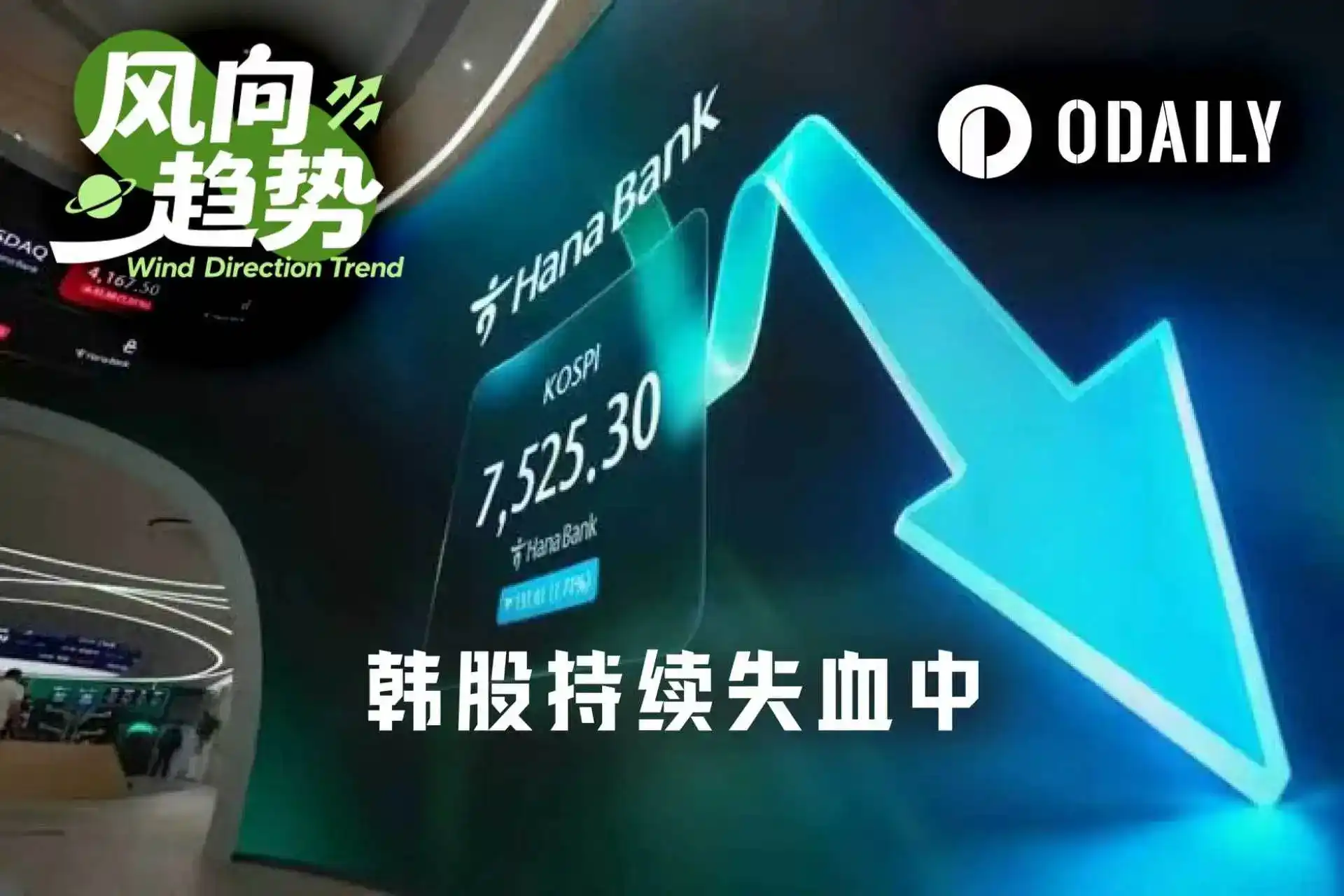
"South Korean stocks face a turbulent period as the KOSPI index, after a 20% surge, fell 5% to 6257 points. The market is grappling with severe issues: over 500,000 leveraged retail accounts have been liquidated, and more than 24 trillion won has flowed from stocks into bank deposits for safety. This reflects a significant loss of market liquidity and shaken investor confidence. In response, Korean financial regulators are taking action. They have tripled the minimum保证金 (margin) requirement for single-stock leveraged ETF trades to 30 million won and are considering granting themselves "emergency intervention" powers. These could include capping leverage ratios and setting investment limits on these ETFs, seen by many as amplifying market volatility. Initial results show a 75% drop in these products' trading volume post-regulation. The market downturn has political repercussions, pushing President Yoon Suk-yeol's approval rating to a new low. Meanwhile, foreign investors made a record net purchase of 7.18 trillion won during a recent rebound, while domestic retail investors sold off massively. Morgan Stanley has upgraded South Korean stocks to "overweight," citing the ongoing "leverage unwinding" and potential for a 36% upside, with giants like Samsung Electronics and SK Hynix providing valuation support. However, analysts caution that the market's structure remains vulnerable to foreign capital flows, and the current low may not be the bottom."

marsbitHá 22m

Soaring 20% Then Dropping 5%: When Will the Bottom of the Korean Stock Market Be?

marsbitHá 22m

Trading

Spot

Artigos em Destaque

O que é $BANK

Bank AI: Um Passo Revolucionário no Futuro da Banca Introdução Em uma era marcada por avanços rápidos na tecnologia, o Bank AI está na interseção da inteligência artificial (IA) e dos serviços bancários. Este projeto inovador visa redefinir o panorama financeiro, melhorando a eficiência operacional, as medidas de segurança e as experiências dos clientes através do poder da IA. Ao embarcarmos nesta exploração do Bank AI, iremos aprofundar no que o projeto implica, suas dinâmicas operacionais, seu contexto histórico e marcos significativos. O que é o Bank AI? No seu cerne, o Bank AI representa uma iniciativa transformadora com o objetivo de integrar a inteligência artificial em várias operações bancárias. Este projeto aproveita as capacidades da IA para automatizar processos, melhorar os protocolos de gestão de risco e melhorar a interação com os clientes através de serviços personalizados. Os principais objetivos do Bank AI incluem: Automatização das Funções Bancárias: Ao aproveitar as tecnologias de IA, o Bank AI visa automatizar tarefas rotineiras, reduzindo o peso sobre os recursos humanos e aumentando a eficiência. Gestão de Risco Melhorada: O projeto utiliza algoritmos de IA para prever e identificar riscos, fortalecendo assim as medidas de segurança contra fraudes e outras ameaças. Personalização dos Serviços Bancários: O Bank AI foca em oferecer produtos e serviços financeiros ajustados, analisando dados e comportamentos dos clientes. Melhoria da Experiência do Cliente: A implementação de soluções impulsionadas por IA, como chatbots e assistentes virtuais, visa proporcionar aos usuários interações mais humanizadas, revolucionando a forma como os clientes se envolvem com os bancos. Com esses objetivos, o Bank AI posiciona-se como um ator crucial para tornar a banca mais eficiente, segura e centrada no usuário. Quem é o Criador do Bank AI? Os detalhes sobre o criador do Bank AI permanecem desconhecidos. Assim, nenhuma pessoa ou organização específica foi identificada nas informações disponíveis. O anonimato que cerca a origem do projeto levanta questões, mas não diminui a sua ambiciosa visão e objetivos. Quem são os Investidores do Bank AI? Semelhante ao criador do projeto, informações específicas sobre os investidores ou organizações que apoiam o Bank AI não foram divulgadas. Sem essas informações, é difícil delinear o apoio financeiro e institucional que pode estar impulsionando o projeto para frente. No entanto, a importância de ter uma sólida base de investimento é fundamental para sustentar o desenvolvimento em um campo tão inovador. Como Funciona o Bank AI? O Bank AI opera em várias frentes inovadoras, focando em fatores únicos que o diferenciam das estruturas bancárias tradicionais. Abaixo estão as principais características operacionais: Automatização: Ao aplicar algoritmos de aprendizado de máquina, o Bank AI automatiza vários processos manuais dentro dos bancos. Isso resulta na redução dos custos operacionais e permite que os trabalhadores humanos redirecionem os seus esforços para atividades mais estratégicas. Gestão de Risco Avançada: A integração da IA nas práticas de gestão de risco equipa os bancos com ferramentas para prever com precisão potenciais ameaças, como fraudes, garantindo que as informações e ativos dos clientes permaneçam seguros. Recomendações Financeiras Personalizadas: Através do aprendizado contínuo a partir das interações com os clientes, os sistemas de IA desenvolvem uma compreensão sutil das necessidades dos usuários, permitindo oferecer conselhos adaptados sobre decisões financeiras. Interações Melhoradas com os Clientes: Utilizando chatbots e assistentes virtuais alimentados por IA, o Bank AI permite uma experiência de cliente mais envolvente, permitindo que os usuários tenham suas dúvidas resolvidas rapidamente, reduzindo assim os tempos de espera e melhorando os níveis de satisfação. Juntas, estas características operacionais posicionam o Bank AI como um pioneiro no setor bancário, estabelecendo novos padrões para a prestação de serviços e a excelência operacional. Cronologia do Bank AI Compreender a trajetória do Bank AI requer uma análise do seu contexto histórico. Abaixo está uma cronologia que destaca marcos e desenvolvimentos importantes: Início de 2010: A conceituação da integração da IA nos serviços bancários começou a ganhar atenção à medida que instituições bancárias reconheciam os potenciais benefícios. 2018: Ocorreu um aumento significativo na implementação de tecnologias de IA, quando os bancos começaram a usar ferramentas de IA como chatbots para atendimento ao cliente básico e sistemas de gestão de risco para melhorar o tratamento de segurança. 2023: A sofisticação da IA continuou a avançar, com a introdução de IA generativa para tarefas mais complexas, como processamento de documentos e análise de investimentos em tempo real. Este ano marcou um salto significativo nas capacidades proporcionadas aos bancos pela tecnologia de IA. 2024-Estado Atual: Neste ano, o Bank AI está em uma trajetória ascendente, com pesquisas e desenvolvimentos em andamento prontos para aprimorar ainda mais as capacidades nas operações bancárias. A exploração contínua das aplicações de IA sugere desenvolvimentos emocionantes por vir. Pontos Chave Sobre o Bank AI Integração da IA na Banca: O Bank AI foca na adoção da inteligência artificial para simplificar os processos bancários e melhorar as experiências dos usuários. Automatização e Foco em Gestão de Risco: O projeto enfatiza fortemente essas áreas, visando transferir o peso das tarefas rotineiras enquanto melhora as estruturas de segurança através de análises preditivas. Soluções Bancárias Personalizadas: Ao aproveitar os dados dos clientes, o Bank AI possibilita serviços bancários ajustados que atendem às necessidades individuais dos usuários. Compromisso com o Desenvolvimento: O Bank AI permanece comprometido com contínuas pesquisas e esforços de desenvolvimento, garantindo a sua adaptabilidade e relevância contínua à medida que a tecnologia continua a evoluir. Conclusão Em resumo, o Bank AI exemplifica um passo crucial em frente na indústria bancária, aproveitando a inteligência artificial para remodelar paradigmas operacionais, melhorar a segurança e promover a satisfação do cliente. Apesar das lacunas de informação em torno do criador e dos investidores, os objetivos claros e os mecanismos funcionais do Bank AI fornecem uma base sólida para sua evolução contínua. À medida que a tecnologia de IA continua a avançar e se fundir com o setor bancário, o Bank AI está bem posicionado para impactar significativamente o futuro dos serviços financeiros, aprimorando a maneira como entendemos e interagimos com a banca.

108 Visualizações TotaisPublicado em {updateTime}Atualizado em 2024.12.03

O que é $BANK

Como comprar BANK

Bem-vindo à HTX.com!Tornámos a compra de Lorenzo Protocol (BANK) simples e conveniente.Segue o nosso guia passo a passo para iniciar a tua jornada no mundo das criptos.Passo 1: cria a tua conta HTXUtiliza o teu e-mail ou número de telefone para te inscreveres numa conta gratuita na HTX.Desfruta de um processo de inscrição sem complicações e desbloqueia todas as funcionalidades.Obter a minha contaPasso 2: vai para Comprar Cripto e escolhe o teu método de pagamentoCartão de crédito/débito: usa o teu visa ou mastercard para comprar Lorenzo Protocol (BANK) instantaneamente.Saldo: usa os fundos da tua conta HTX para transacionar sem problemas.Terceiros: adicionamos métodos de pagamento populares, como Google Pay e Apple Pay, para aumentar a conveniência.P2P: transaciona diretamente com outros utilizadores na HTX.Mercado de balcão (OTC): oferecemos serviços personalizados e taxas de câmbio competitivas para os traders.Passo 3: armazena teu Lorenzo Protocol (BANK)Depois de comprar o teu Lorenzo Protocol (BANK), armazena-o na tua conta HTX.Alternativamente, podes enviá-lo para outro lugar através de transferência blockchain ou usá-lo para transacionar outras criptomoedas.Passo 4: transaciona Lorenzo Protocol (BANK)Transaciona facilmente Lorenzo Protocol (BANK) no mercado à vista da HTX.Acede simplesmente à tua conta, seleciona o teu par de trading, executa as tuas transações e monitoriza em tempo real.Oferecemos uma experiência de fácil utilização tanto para principiantes como para traders experientes.

459 Visualizações TotaisPublicado em {updateTime}Atualizado em 2026.06.02

Como comprar BANK

Discussões

Bem-vindo à Comunidade HTX. Aqui, pode manter-se informado sobre os mais recentes desenvolvimentos da plataforma e obter acesso a análises profissionais de mercado. As opiniões dos utilizadores sobre o preço de BANK (BANK) são apresentadas abaixo.

活动图片