Musk Poaches the Web3 Prodigy Who Laid the Foundation for the Aave App

marsbitPublicado em 2026-03-26Última atualização em 2026-03-26

Resumo

Elon Musk has recruited Benji Taylor, a 26-year-old design prodigy and former design lead at Base, to lead design at X (formerly Twitter). Taylor, who began his career at 16 and gained early recognition for his creative work, is known for his groundbreaking contributions to Web3 and consumer app design. He founded Los Feliz Engineering (LFE), where he created Honk—a real-time chat app with no send button or message history—which gained a cult following before shutting down due to product-market fit challenges. Later, he developed Family, a highly praised self-custody crypto wallet often regarded as one of the best-designed in the industry. LFE was acquired by Aave Labs in 2023, and Taylor’s work became foundational to the Aave App’s user experience. His recruitment signals Musk’s continued interest in integrating crypto and payment features into X, leveraging Taylor’s rare expertise in social apps, crypto UX, and minimalist design. Taylor has expressed that his motivation lies in building at scale and reaching billions of users—a goal now within reach at X.

At 1:00 AM Beijing time on March 26, former Base Design Lead Benji Taylor announced that he is joining Musk's X and will lead design efforts.
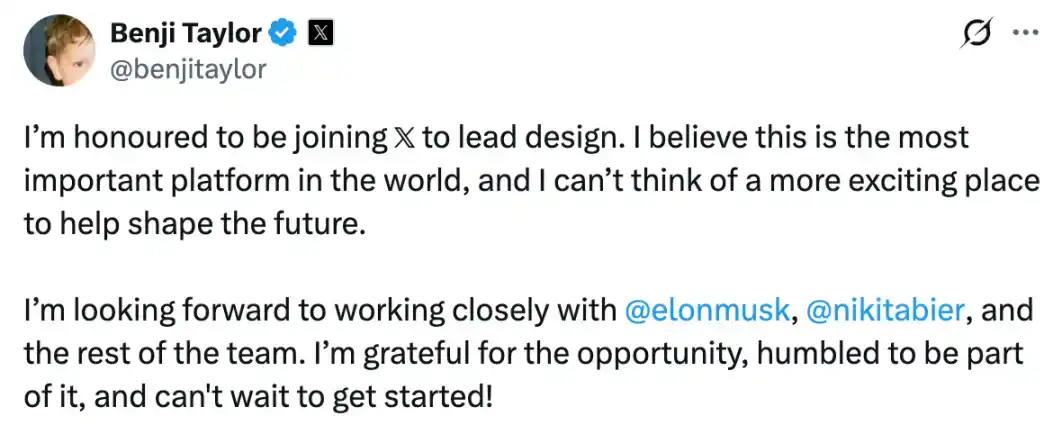
Personnel changes are never big news in the Web3 industry, but this post reaching nearly 15 million reads tells me things are not that simple.

After a deeper look, I realized this person is far from just the Base Design Lead.

Rebellion and Talent

Benji Taylor is only about 26 years old, likely a standard "Gen Z".

Unlike most conventional life paths, Benji Taylor was already somewhat famous by the age of 16. In 2016, this 16-year-old "Creative Director" from London, UK, was interviewed by the renowned British fashion and culture magazine 《Dazed》.

At an age when many are still studying hard in high school classrooms, Benji Taylor was already making huge waves across the Atlantic. Numerous artists, including Ram Riddlz and A$AP Ant, had collaborated with him. Not only that, he also found time to develop apps, design his own playing cards, and start his own design company, Next Exit.

These weren't things he *started* doing at 16; they were things he had already *done*. According to the interview, Next Exit had been operating for at least a year.

"To be honest, I'm not great at art, I just have a lot of ideas and decide to put them into practice."

In Benji Taylor's view, homogeneous design styles disgusted him. As someone who considered himself not great at art, he still felt his work surpassed that of many others.

In this interview from a decade ago, Benji Taylor displayed a maturity beyond his years. Besides expressing dissatisfaction with homogenized education, when asked for advice for other young creatives, he said:

"Be more self-aware and understand that things don't just happen by themselves. School doesn't guarantee you a job, nor does it guarantee a happy and stable life. You're young, maybe still living with your parents, not paying rent—take advantage of that. Every penny you earn is profit, why wait until real life knocks you down?"

From Honk to Aave

Around 2020, Benji Taylor came to the US. Soon after, a company named Los Feliz Engineering (LFE), after the first community he lived in upon arriving, was established.

The first product launched by this company was a blockbuster.

In December 2020, Honk burst onto the scene. The app was initially promoted on TikTok, where a single video garnered over 140k likes.

Honk's design was ingenious: the app had no send button; inputted chat content was displayed to the other party character by character. You could see the person you were chatting with modifying and deleting content, like a "live chat." Additionally, the app had no chat history; once you left the chatroom, all historical content was permanently deleted.
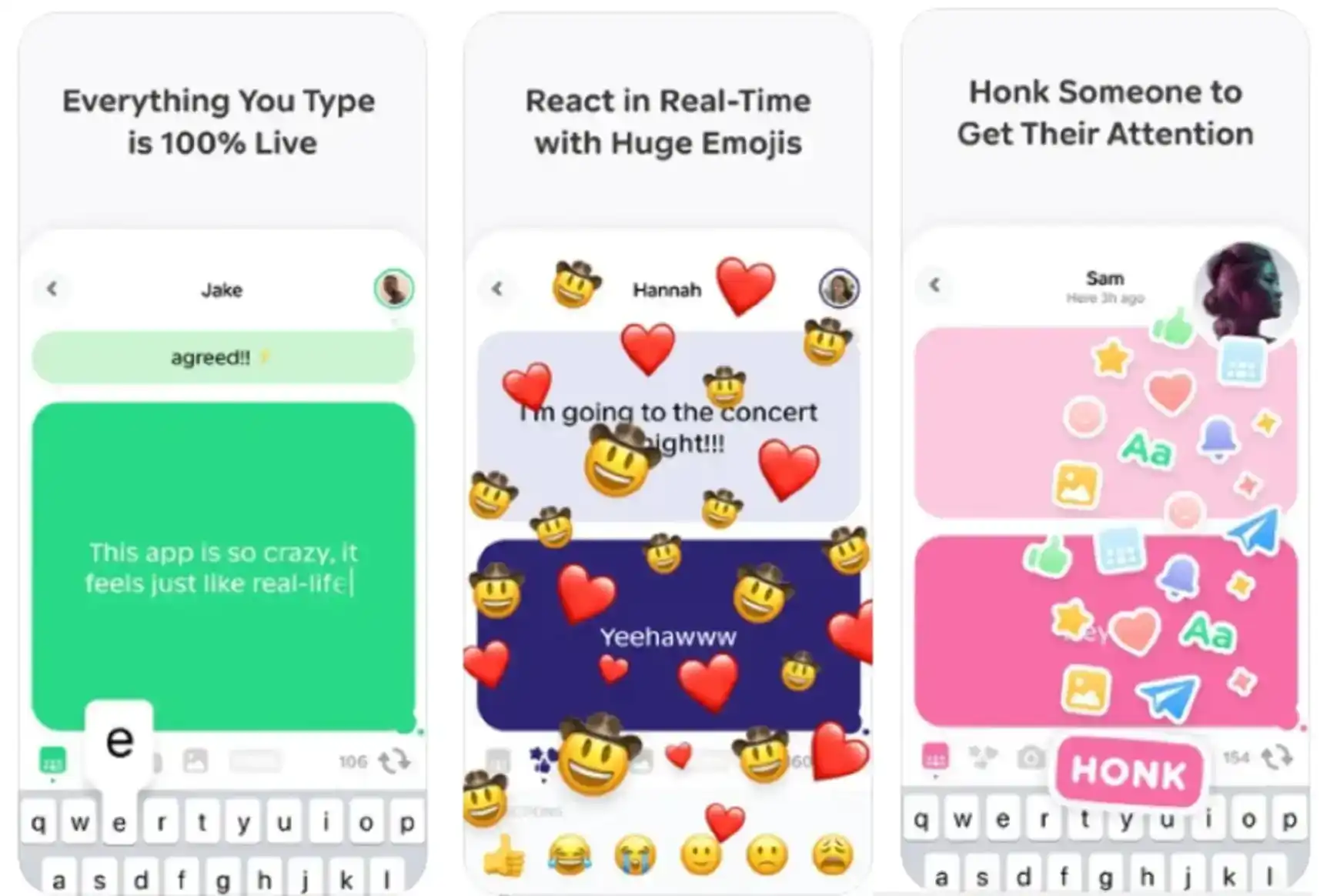
If you wanted to pull someone into a chatroom, you could send a "Honk"; the other person would receive a prominent notification that someone was "calling" them. This method of translating the experience of offline, face-to-face chatting into an online format through mechanism design was very novel.

In 2021, Honk expanded from熟人社交 (acquaintance social) to陌生人社交 (stranger social). Users could randomly match with strangers using a function similar to WeChat's "Shake." At its peak, Honk's open rate even surpassed Instagram's. By the time it was shut down, Honk had accumulated 2.6 billion characters input, 170 million "Honks" sent, and hundreds of millions of image, audio, and video exchanges. It gained a loyal user base in fields like fashion and tech.

That's right, this app was shut down years ago. Although highly praised by its users, and even today many product managers and designers miss this "honkish" style, the product's PMF (Product-Market Fit) was genuinely challenged.

The core reason was that the app required both parties to be online simultaneously. Furthermore, Honk had no group chat and never launched an Android version.

Perhaps this app was god-like in certain niche circles, but a social app seems destined to fail without enough people.

In 2022, the LFE team began developing Family, a self-custody cryptocurrency wallet focused on design.
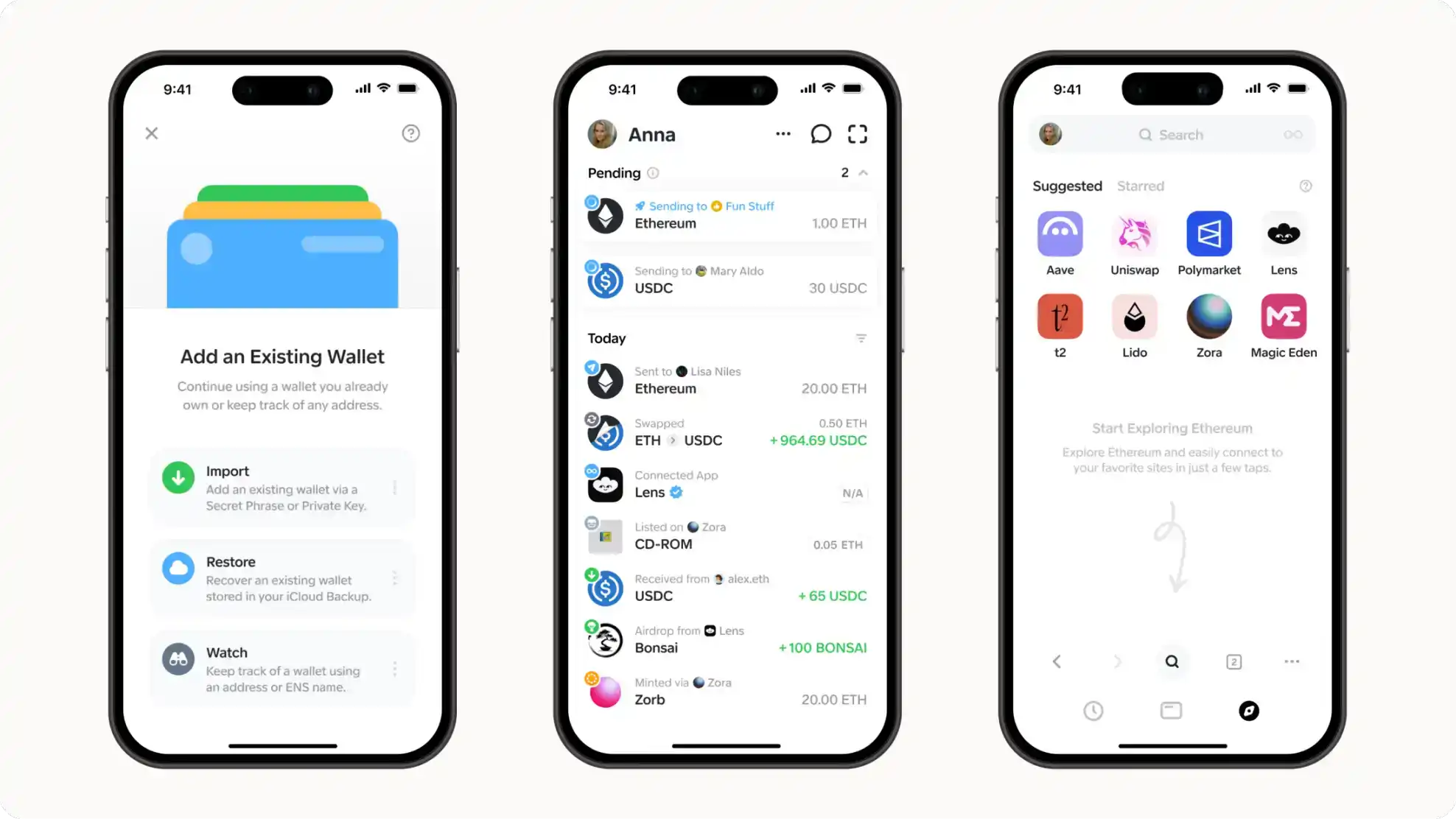
If you've seen wallet apps with interfaces resembling the one in the image above, they might have been inspired by Benji Taylor's design. This wallet product was also highly praised within the industry, with many users calling it the "best体验 (experience)加密钱包 (crypto wallet)." Of course, you might not have heard of this wallet because they really didn't do well in market promotion.

Perhaps frustrated that good products weren't gaining market recognition, Benji Taylor decided to leverage a platform. In 2023, LFE was acquired by Aave Labs. Concurrently, Honk was shut down, while the Family wallet continued operating. Unfortunately, this wallet was also abandoned in February this year. Aave's explanation was a focus on DeFi business, believing that attracting users to Web3 requires designing for specific purposes, not a通用型 (general-purpose) wallet.

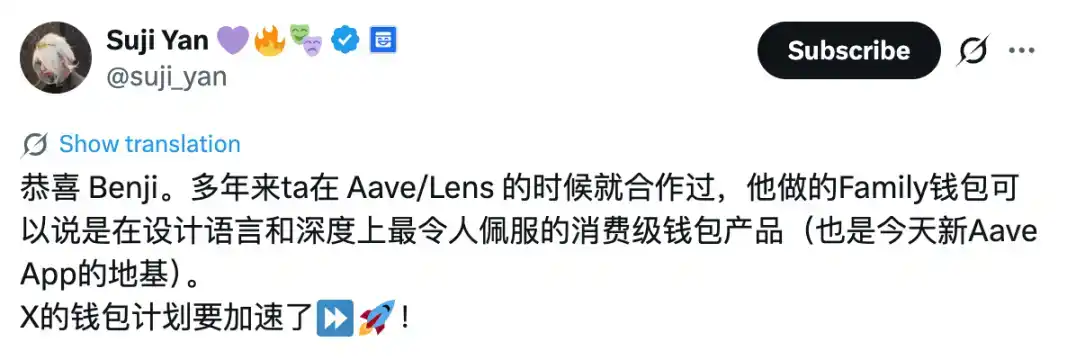
Suji, founder of Mask Network (which acquired Lens), also said on X today that the Family wallet was the most impressive consumer-grade wallet product in terms of design language and depth, and was the foundation of the Aave App.
In October 2025, Benji Taylor left Aave and joined Base as Head of Design. If you pay attention, you'll notice that the more well-known mobile Apps in the Web3 industry today definitely include Aave and Base. An investor in the industry once told me that the mobile App experience for most Web3 products is abysmal. With far more global mobile users than PC users, the fact that only the PC experience is passable is also a hindrance to Web3's user expansion.

This is partly due to imperfect infrastructure and the complications brought by decentralization, which make many processes impossible to simplify. But precisely because of this, only designers like Benji Taylor can create mobile applications for Web3 that might be considered just及格 (passing) by Web2 standards.

The Man Chosen by Musk

The fact that the extremely picky Musk personally tweeted to welcome his加入 (joining) speaks volumes.

There is much speculation on X about his arrival. Some believe that Nikita Bier, the product lead who served as an advisor to Solana Labs, combined with the former Base design lead, their cryptocurrency industry backgrounds suggest Musk intends to add more cryptocurrency-related features to X.

Others speculate that his experience with social apps and crypto wallets could aid X's encrypted communication app X Chat and payment products.

Benji Taylor himself provided the answer:
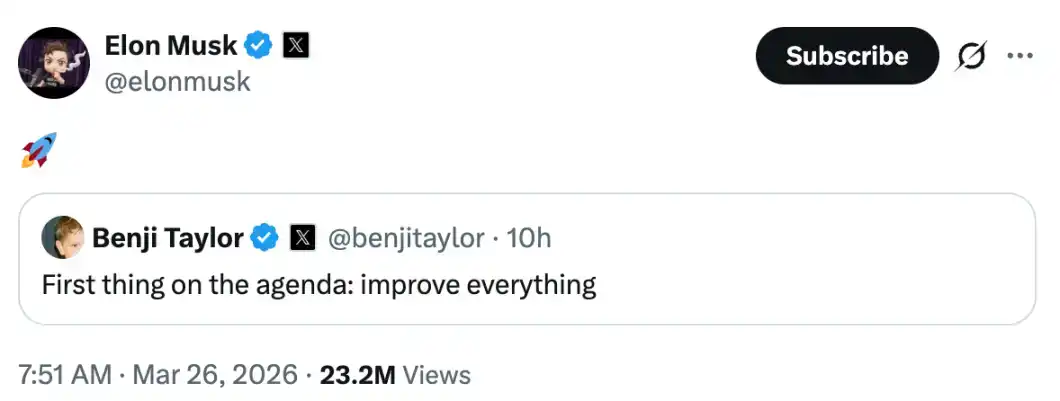
In the past, this brilliantly talented young man created many astonishing designs, but from a purely commercial perspective, they seemed曲高和寡 (too highbrow to be popular). After several years of ups and downs, it's believed that within this company integrating social app X, AI model xAI, and Mars-aiming SpaceX, Benji Taylor can utilize his talent to the fullest.

AI's design capabilities are not weak, but the highest level of审美 (aesthetics) does not come from billions or trillions of parameters; it stems from the innate gifts of geniuses.


Criptomoedas em alta

Perguntas relacionadas

QWho is Benji Taylor and what is his new role at X?

ABenji Taylor is a 26-year-old design prodigy who previously worked as the design lead at Base and was instrumental in the development of Aave App. He has recently joined Elon Musk's X to lead the design team.

QWhat was Benji Taylor's first major product after moving to the US, and what made it unique?

ABenji Taylor's first major product was Honk, a social app launched in 2020. It was unique because it featured live typing without a send button, no chat history, and a 'Honk' notification to invite others into chat rooms, mimicking real-time, in-person conversations.

QWhy did Honk eventually fail despite its innovative design?

AHonk failed primarily because it required both users to be online simultaneously, lacked group chat functionality, and never released an Android version, which limited its user base and product-market fit.

QWhat was the name of the self-custody cryptocurrency wallet developed by Benji Taylor's team, and how was it received?

AThe self-custody cryptocurrency wallet was called Family. It was highly praised within the industry, with many users considering it the 'best-experienced crypto wallet' due to its design language and depth, though it struggled with market推广.

QWhat are the speculations about Benji Taylor's role at X regarding cryptocurrency?

ASpeculations suggest that Benji Taylor's experience with crypto products, combined with his background in social apps, might help X integrate more cryptocurrency-related features, such as enhancing X Chat for encrypted communications or developing payment products.

Leituras Relacionadas

A 'Overlooked' Market Event: Joint US-Japan-South Korea Intervention, Rare US Treasury Involvement, and Bessent's Quiet 'Market Rescue'?

Summary: The United States, Japan, and South Korea executed their largest coordinated foreign exchange intervention in nearly 30 years. The action targeted depreciation pressure on the Japanese yen and South Korean won. This move is seen as a significant effort by the US to stabilize the financial markets of its key allies and prevent the spillover of risks. Key details: * Japan reportedly intervened on July 30 using approximately 8.45 trillion yen (about $52.8 billion). South Korean authorities also intervened that day, selling dollars to support the won. * Notably, the US Treasury Department intervened directly in yen markets for the first time in roughly 30 years. The New York Fed, reportedly acting on behalf of the Treasury, sold euros to buy yen via Goldman Sachs and Morgan Stanley on July 31. Analysts view the use of the euro-yen pair as a way to alleviate yen pressure without adding selling pressure to the US dollar. * Prior to the action, the New York Fed conducted "rate checks" on both USD/JPY and EUR/JPY, a newer signaling tool that falls between verbal and physical intervention. The intervention is interpreted as going beyond traditional currency stabilization. Analysts, such as Michael Hartnett of Bank of America, suggest it resembles a "Price Keeping Operation" for the AI era. The core US objectives are perceived to be: 1. Preventing rapid yen depreciation from triggering a sharp rise in Japanese government bond yields. 2. Containing financial stress from spreading across Asian markets like South Korea and Japan. 3. Reducing the risk of disorderly capital flows impacting the US bond market. This coordinated action underscores the importance of Japan and South Korea as critical partners in the US semiconductor and AI supply chain. Stabilizing their financial markets is seen as vital to mitigating risks to the broader tech industry and the US market itself. The intervention coincides with market pressures, including the KOSDAQ index hitting a low since October 2022. While seen as a move to control volatility, some analysts caution it may not fundamentally reverse existing market trends.

marsbitHá 4m

A 'Overlooked' Market Event: Joint US-Japan-South Korea Intervention, Rare US Treasury Involvement, and Bessent's Quiet 'Market Rescue'?

marsbitHá 4m

Will the Federal Reserve Definitely Raise Interest Rates in September? How Will Cryptocurrencies and US Stocks Bear the Pressure?

In early August 2024, market expectations for a September Federal Reserve rate hike surged dramatically, from below 50% to over 80%, driven by renewed inflation concerns. This shift followed a contentious July FOMC meeting where a 9-3 vote to hold rates revealed a growing hawkish faction advocating for an immediate hike, citing prolonged above-target inflation. The key catalyst is escalating conflict near the Strait of Hormuz, which has pushed oil prices up approximately 20% in July, threatening to reignite inflation. The next critical data point is the July CPI report on August 12th; a hot reading could solidify hike expectations. For crypto assets, particularly Bitcoin, this represents near-term pressure. Bitcoin continues to exhibit high-beta, risk-on characteristics, making it sensitive to tightening liquidity and higher opportunity costs. However, historical precedent suggests that if a hike is perceived as the cycle's end rather than its start, the negative impact may be brief, with markets quickly pivoting to anticipate future rate cuts. U.S. stocks, especially crypto-linked equities like Coinbase and high-valuation tech stocks, face amplified volatility. Higher rates increase discount rates in valuation models, pressuring growth stocks. This coincides with a pivotal tech earnings season where investor focus has shifted from massive AI capital expenditures to demonstrable revenue and cash flow generation. Companies with negative cash flows and weak growth narratives could see severe pressure if a September hike materializes, as financing costs would rise. Key indicators to watch include oil prices, upcoming inflation data, and Fed commentary at events like the Jackson Hole symposium.

Odaily星球日报Há 4m

Will the Federal Reserve Definitely Raise Interest Rates in September? How Will Cryptocurrencies and US Stocks Bear the Pressure?

Odaily星球日报Há 4m

From South Korea to the United States: Blue-Collar Jobs Are Becoming Increasingly Popular, Thanks to AI

AI is reshaping the labor market's value proposition. The traditional four-year college degree is losing its appeal as a guaranteed career path, while skilled blue-collar trades like electricians, welders, and plumbers are experiencing historic demand and wage premiums. This shift is driven by dual pressures: AI's displacement of certain white-collar roles and a booming need for physical infrastructure and data center construction. Data confirms the trend. In the U.S., vocational school revenue surged, and a significant portion of recent layoffs are AI-related. Surveys show a majority of Gen Z adults plan to pursue blue-collar work, citing better job security against AI automation. Vocational education interest has exploded recently. Experts cite a psychological shift as younger generations seek tangible, AI-resistant careers and avoid high student debt. In many cases, salaries for skilled trades now match or exceed those requiring a bachelor's degree. In South Korea, semiconductor vocational high schools boast near-total employment, with graduates securing high-paying roles at companies like Samsung. The shortage is structural, exacerbated by a retiring baby boomer workforce and massive infrastructure projects. Companies like JPMorgan Chase, Meta, and Lowe's are investing heavily in training programs. However, overcoming historical stigma and a "perception gap" around trade careers remains a key challenge to closing the talent gap.

marsbitHá 1h

From South Korea to the United States: Blue-Collar Jobs Are Becoming Increasingly Popular, Thanks to AI

marsbitHá 1h

Trading

Spot

Artigos em Destaque

Como comprar AAVE

Bem-vindo à HTX.com!Tornámos a compra de Aave Protocol (AAVE) simples e conveniente.Segue o nosso guia passo a passo para iniciar a tua jornada no mundo das criptos.Passo 1: cria a tua conta HTXUtiliza o teu e-mail ou número de telefone para te inscreveres numa conta gratuita na HTX.Desfruta de um processo de inscrição sem complicações e desbloqueia todas as funcionalidades.Obter a minha contaPasso 2: vai para Comprar Cripto e escolhe o teu método de pagamentoCartão de crédito/débito: usa o teu visa ou mastercard para comprar Aave Protocol (AAVE) instantaneamente.Saldo: usa os fundos da tua conta HTX para transacionar sem problemas.Terceiros: adicionamos métodos de pagamento populares, como Google Pay e Apple Pay, para aumentar a conveniência.P2P: transaciona diretamente com outros utilizadores na HTX.Mercado de balcão (OTC): oferecemos serviços personalizados e taxas de câmbio competitivas para os traders.Passo 3: armazena teu Aave Protocol (AAVE)Depois de comprar o teu Aave Protocol (AAVE), armazena-o na tua conta HTX.Alternativamente, podes enviá-lo para outro lugar através de transferência blockchain ou usá-lo para transacionar outras criptomoedas.Passo 4: transaciona Aave Protocol (AAVE)Transaciona facilmente Aave Protocol (AAVE) no mercado à vista da HTX.Acede simplesmente à tua conta, seleciona o teu par de trading, executa as tuas transações e monitoriza em tempo real.Oferecemos uma experiência de fácil utilização tanto para principiantes como para traders experientes.

469 Visualizações TotaisPublicado em {updateTime}Atualizado em 2026.06.02

Como comprar AAVE

Discussões

Bem-vindo à Comunidade HTX. Aqui, pode manter-se informado sobre os mais recentes desenvolvimentos da plataforma e obter acesso a análises profissionais de mercado. As opiniões dos utilizadores sobre o preço de AAVE (AAVE) são apresentadas abaixo.

活动图片