Multicoin Co-founder: PropAMM is Changing the Perception That 'Decentralization is Slower'

比推Publicado em 2026-03-13Última atualização em 2026-03-13

Resumo

Multicoin Capital co-founder Kyle Samani argues that PropAMM (Proactive Automated Market Maker) is one of the most significant innovations in market microstructure in decades, challenging the long-held belief that decentralized systems are inherently slower than centralized ones. In traditional centralized exchanges (CEXs), market makers co-locate servers and engage in constant bidirectional communication with the exchange, leading to latency due to data transmission delays. In contrast, PropAMM on Solana runs market-making algorithms directly on the blockchain, eliminating the need for inter-server communication. Price updates occur within the same physical silicon, drastically reducing latency. PropAMM already offers narrower spreads for SOL-USDC spot trading on Solana than major CEXs. Samani predicts it will dominate on-chain trading for spots, perpetuals, and prediction markets this year. Current challenges include ensuring best execution for takers due to private algorithms and non-deterministic routing across multiple PropAMMs, but solutions from aggregators like Jupiter, dFlow, and Phoenix are expected. Upcoming Solana upgrades—such as higher compute limits, reduced slot times, and improved network latency—will further enhance PropAMM performance, solidifying its advantage over traditional systems.

Author: Kyle Samani, Multicoin Co-founder

Compiled by: Azuma, Odaily Planet Daily

Original Title: Multicoin Co-founder: Is Decentralization Always Slower Than Centralization? PropAMM is Breaking This Bias


Editor's Note: The man who knows how to hype Solana best, Multicoin Capital's former co-founder Kyle Samani, who recently made a high-profile exit from the industry, is back!

Last night, Kyle Samani published a long Thread on his personal X account. In the post, Kyle Samani once again demonstrated his highly persuasive "hype" (not meant derogatorily) rhetoric, using "efficiency"—a shortcoming in the decentralized narrative—as a breakthrough point. He detailed how Solana ecosystem's currently promoted PropAMM will catch up to or even surpass traditional centralized models in efficiency, arguing that PropAMM is one of the most important innovations in market microstructure in recent years, or even decades.

Below is the original content:

PropAMM is one of the most important innovations in market microstructure in recent years, and perhaps even one of the most significant in decades.

To help everyone understand this conclusion, let's first look at how market makers (MMs) quote prices on traditional centralized exchanges (CEXs).

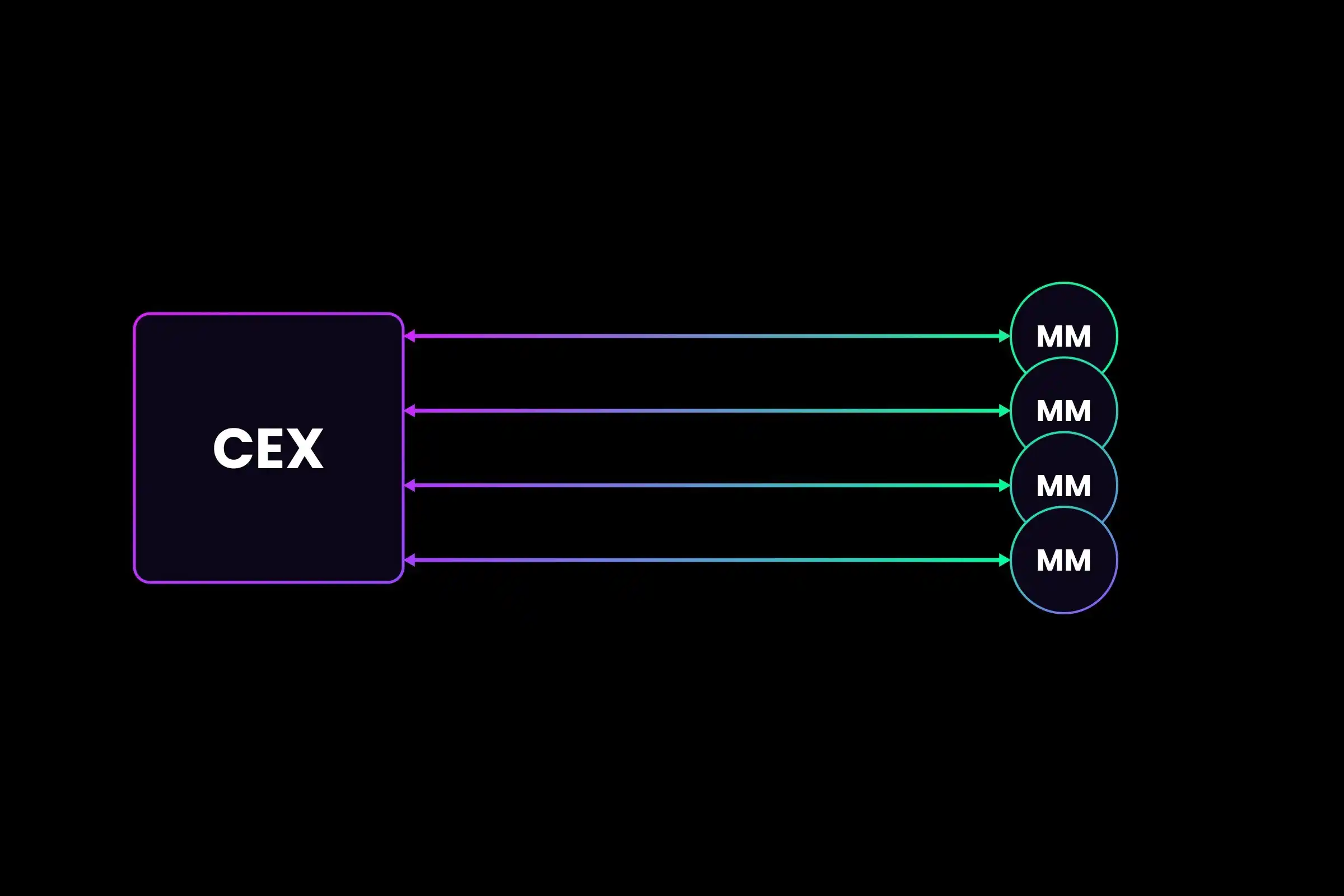
Market makers typically engage in physical co-location with the exchange. Each market maker runs an algorithm on a server and connects to another server running the exchange's system via network cables of uniform length (e.g., 50 meters).

Market makers and exchanges constantly send large data streams back and forth. Whenever a market maker sends an order to the exchange—whether it's a limit order, cancellation, or market order—the exchange needs to broadcast this information to all other market makers; then, other market makers resend their own orders based on the new information; this cycle repeats indefinitely.

Here is a simple diagram.
Now let's look at how PropAMM works on the Solana mainnet.

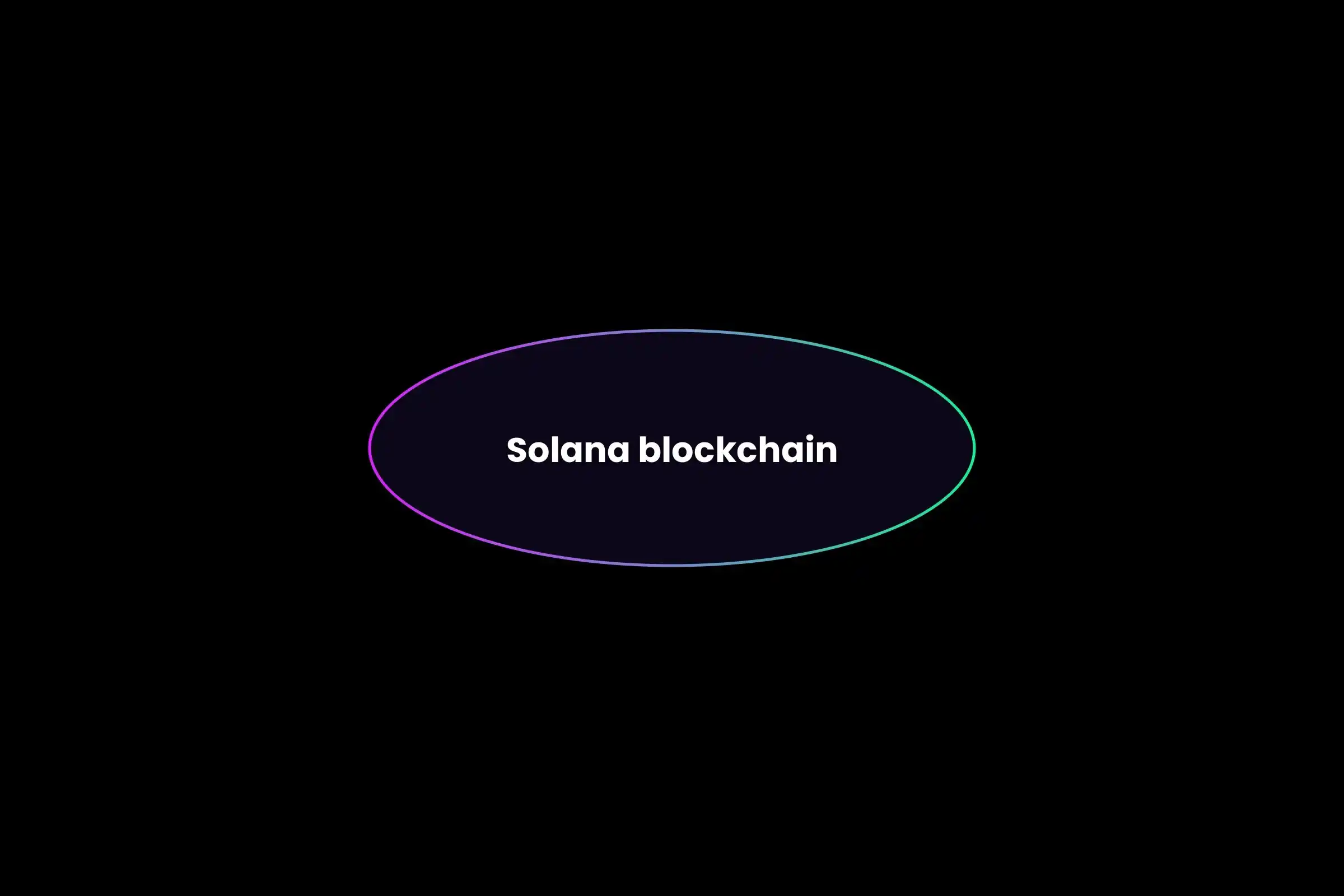
The beauty of PropAMM on Solana is that the blockchain itself directly "hosts" the market maker algorithm. This means the system no longer needs to send billions of messages back and forth between market makers and the exchange; the market-making algorithm will operate directly on the same physical machine as the exchange.

The new diagram is as follows. (That's right, only the Solana blockchain is needed!)
There has long been a common view in the cryptocurrency industry that decentralized systems must be slower (have higher latency) than centralized systems because they require communication between global nodes.

But if you reframe the issue, on-chain hosted algorithms may actually have lower latency than traditional centralized exchanges in finance.

Why is that? The reason is that the latency required for PropAMM to update prices only involves electrons moving within the same physical silicon chip. For example, if the last market order causes a change in the SOL-USD price, this information is immediately visible to all PropAMMs and used for pricing the next market order. Everything happens within the same silicon chip; there is no longer a need for two-way communication between servers.

It is worth noting that PropAMM does require frequent oracle updates, but this is not a problem and does not change the overall fact I mentioned above.

The most critical point remains that when the exchange—in this case, the Solana blockchain—directly hosts the PropAMM algorithm, the market maker's pricing changes in real-time within the same physical silicon chip.

PropAMM has already become the dominant mechanism for SOL-USDC spot quotes on Solana, with narrower spreads than all major CEXs. I expect this market structure to become the dominant model for on-chain trading this year, including spot, perpetual contracts (perps), and even prediction markets.

The biggest challenge for PropAMM is that there is currently no way to ensure that the taker always gets the best execution, because:

· The algorithms of all PropAMMs are not public (which is reasonable, as traditional market-making algorithms are also private);

· When routing trades between multiple PropAMMs, the result is non-deterministic.

However, this problem can be solved. I expect all relevant aggregator teams to launch solutions this year, such as Jupiter and dFlow for spot, and Phoenix for contracts.

Current PropAMM is still not fully optimized and is subject to various limitations of the Solana blockchain itself. This year, Solana will roll out a series of major upgrades that will significantly enhance PropAMM's performance, including:

1. Higher CU (Compute Unit) limits per transaction and larger transaction sizes;

2. Higher CU limits per block;

3. Alpenglow: Reducing slot time from 400ms to 100–150ms;

4. DoubleZero: Reducing global network latency;

5. Application-controlled execution;

6. Multiple concurrent leaders.

If PropAMM on the Solana mainnet can already offer narrower quotes than all CEXs without these upgrades, imagine how powerful their performance will become as these upgrades are gradually implemented.


Twitter:https://twitter.com/BitpushNewsCN

BitPush TG Discussion Group:https://t.me/BitPushCommunity

BitPush TG Subscription: https://t.me/bitpush

Original link:https://www.bitpush.news/articles/7619419

Perguntas relacionadas

QWhat is PropAMM and why is it considered a major innovation in market microstructure?

APropAMM is a mechanism on the Solana blockchain where the market maker algorithms are directly hosted on the blockchain itself. It is considered a major innovation, potentially one of the most significant in decades, because it eliminates the need for billions of messages to be sent between market makers and a centralized exchange. By running on the same physical machine as the 'exchange' (the blockchain), it can achieve lower latency and tighter spreads than traditional centralized systems.

QHow does PropAMM on Solana achieve lower latency compared to traditional centralized exchanges (CEXs)?

APropAMM achieves lower latency because the market maker algorithms are hosted directly on the Solana blockchain. This means that price updates and order changes happen within the same physical silicon, as electrons move internally on a chip. There is no need for bidirectional communication between separate servers for market makers and the exchange, which is a requirement in the traditional co-location model of CEXs.

QWhat is the current dominant application of PropAMM on Solana and what are its future expected use cases?

ACurrently, PropAMM is the dominant mechanism for SOL-USDC spot quotes on Solana, offering narrower spreads than major CEXs. It is expected to become the dominant model for on-chain trading this year, expanding into spots, perpetual contracts (perps), and even prediction markets.

QWhat is the main challenge currently facing PropAMM, and what are the proposed solutions?

AThe main challenge is ensuring that a taker (the party taking liquidity) gets the best possible trade execution. This is difficult because the PropAMM algorithms are not public (which is standard for proprietary trading algorithms) and because routing trades across multiple PropAMMs is non-deterministic. Solutions are expected from aggregation teams like Jupiter and dFlow for spot trading, and Phoenix for contracts.

QWhat upcoming Solana upgrades are expected to significantly improve PropAMM performance?

ASeveral major Solana upgrades are expected to boost PropAMM performance: 1. Higher CU (Compute Unit) limits per transaction and larger transaction sizes. 2. A higher CU limit per block. 3. Alpenglow, which will reduce slot time from 400ms to 100-150ms. 4. DoubleZero, which will reduce global network latency. 5. Application-controlled execution. 6. Multiple concurrent leaders.

Leituras Relacionadas

Goldman Sachs: July Smashes Through Crowded Trades, U.S. Stock Bull Market Not Broken but Harder to Navigate

Goldman Sachs: July Sees Crowded Trades Unwound, U.S. Bull Market Intact but Getting Tougher. The U.S. stock market in July did not see an index-level crash, but rather a significant unwinding of speculative positions. While the S&P 500 remained stable—trading within a narrow 3.5% range and staying within 2% of its high—underlying market dynamics were volatile. Heavily crowded trades, particularly in high-momentum tech, AI-linked stocks, and Asian strategies, faced severe pressure and forced deleveraging. Data indicates this was a meaningful cleanse, not a minor adjustment. Global tech exposure saw its largest sell-off in over five years, leverage in Korean equity ETFs plummeted, and Goldman's prime brokerage recorded the largest gross exposure reduction since late 2022. Leverage on momentum factors among fundamental long/short clients fell to the 28th percentile of its one-year range. The AI trade narrative shifted from pure potential to a focus on tangible returns. While Meta failed to show clear AI monetization, Microsoft and Amazon provided evidence that massive capital expenditure is translating into scalable revenue and product growth, preventing a blanket sell-off of the AI sector. The Federal Reserve's more opaque communication style and volatility in long-end Treasury yields have introduced new friction, particularly for rate-sensitive growth and tech stocks. The broader outlook for U.S. equities remains favorable, supported by a strong economy, robust earnings, and substantial AI capital expenditure. However, risk/reward is no longer cheap, and the market's upward elasticity has weakened. The Nasdaq 100's trajectory—up 12% year-to-date despite significant pullbacks—illustrates that the bull trend persists but the path is becoming more difficult. The key lesson from July is that the market no longer rewards crowded, highly leveraged trades, requiring more disciplined and liquid portfolio approaches.

marsbitHá 57m

Goldman Sachs: July Smashes Through Crowded Trades, U.S. Stock Bull Market Not Broken but Harder to Navigate

marsbitHá 57m

Interview with Robinhood Executive: Meme + Tokenized US Stocks as "Barbell" Customer Acquisition Strategy, All Business Lines Achieve Hundreds of Millions in Revenue

Interview with Robinhood executive Johann Kerbrat reveals the company's "barbell" customer acquisition strategy for its new Robinhood Chain, combining meme tokens with tokenized stocks. Three weeks after mainnet launch, the chain has seen over $3B in weekly DEX volume and 105M transactions. Kerbrat explains the logic behind the permissionless chain: meme tokens attract DeFi users, while tokenized real-world assets (RWA), currently over 90 US stocks and ETFs accessible in 120+ countries, serve global users. The goal is to bring Robinhood's 27 million funded accounts on-chain by simplifying DeFi with a user-friendly interface, exemplified by features like Robinhood Earn which offers yield without requiring wallet management. Built on Arbitrum's technology stack for its speed, low cost, and Ethereum's security, the chain focuses on financial products like Earn, spot trading, and perpetuals. Kerbrat downplays direct competition with platforms like Base, emphasizing the goal of expanding the overall market for on-chain assets. He details selective partnerships (e.g., Morpho, Lighter) based on compliance, unique UX, and differentiation. While regulatory clarity is pending for US perpetuals, the expansion continues via Bitstamp in Europe. Finally, Kerbrat positions Robinhood as a "super app" integrating stocks, options, crypto, banking, and AI trading, with all major business lines generating hundreds of millions in revenue. For the chain, current priority is driving adoption over maximizing gas fee revenue.

marsbitHá 3h

Interview with Robinhood Executive: Meme + Tokenized US Stocks as "Barbell" Customer Acquisition Strategy, All Business Lines Achieve Hundreds of Millions in Revenue

marsbitHá 3h

Fidelity Q3 Report: BTC, ETH, and SOL Continue to Build Bottoms; How Much Further Will This Crypto Bear Market Go?

Fidelity's Q3 Crypto Signal Report analyzes the current bear market, noting Bitcoin (BTC), Ethereum (ETH), and Solana (SOL) are in a prolonged bottoming phase. Key indicators like the weighted Net Unrealized Profit/Loss (NUPL) have turned negative (-0.01), signaling the market is slightly below its aggregate cost basis, with BTC acting as the primary stabilizing asset. BTC's dominance has risen to 68%, indicating a lack of capital rotation to other digital assets. Performance has been weak across the board, with BTC, ETH, and SOL down significantly year-to-date. Market sentiment is depressed, exacerbated by substantial outflows from spot ETPs and a challenging macro environment. The report compares the current ~203-day downtrend to historical ~300-day bottoming cycles, suggesting the process may be two-thirds complete, with late 2026 as a potential timeframe to monitor. For Bitcoin, NUPL at 0.09 indicates cautious sentiment, while momentum signals remain negative. The Yardstick metric points to potential undervaluation relative to network security (hashrate). Ethereum's NUPL is deep in the "capitulation" zone at -0.43, a historically positive signal for future returns, though its momentum and network fee revenue are negative. Solana shows the deepest NUPL at -0.72 but demonstrates relative resilience in on-chain activity and stablecoin transfer volume. The report concludes that while several metrics are near historical capitulation levels, a definitive market bottom has not yet been established. The path forward likely involves continued consolidation, with BTC's relative strength and fundamental on-chain usage for ETH and SOL providing key areas for investor observation.

marsbitHá 3h

Fidelity Q3 Report: BTC, ETH, and SOL Continue to Build Bottoms; How Much Further Will This Crypto Bear Market Go?

marsbitHá 3h

Trading

Spot
活动图片