Morning Post | Trump Media Group Releases Q1 Financial Report; Top Three DeFi Applications Return Nearly $100 Million in Revenue to Token Holders in 30 Days; Michael Saylor Shares Bitcoin Tracker Info Again

链捕手Publicado em 2026-05-11Última atualização em 2026-05-11

Resumo

**Title: Daily Briefing | Trump Media Group Releases Q1 Report; Top 3 DeFi Apps Return Nearly $100M to Token Holders; Michael Saylor Signals Potential Bitcoin Buy** **Summary:** Key developments in the past 24 hours include: * **Economic Outlook:** Goldman Sachs has pushed back its forecast for the next two Federal Reserve interest rate cuts to December 2026 and March 2027, citing persistent inflationary pressures from energy costs. This delayed timeline is expected to tighten liquidity flow into risk assets, including cryptocurrencies. * **DeFi & Revenue:** Data from DefiLlama shows that three leading DeFi applications—Hyperliquid, Pump.fun, and EdgeX—collectively distributed $96.3 million in revenue to their token holders over the last 30 days. This trend highlights a shift in the crypto community's focus towards real protocol earnings and sustainable economic models. * **Corporate Bitcoin Moves:** Michael Saylor, founder of MicroStrategy (note: referred to as 'Strategy' in the text, likely a typographical error), has signaled potential upcoming Bitcoin purchases by posting a "Bitcoin Tracker" update, following a pattern that typically precedes the company's official disclosure of new acquisitions. * **Market Integrity:** Prediction market platform Polymarket announced updates to address platform issues, including identifying and banning clusters of accounts involved in "ghost-fill" activities and implementing measures to prevent bulk account creation. * **Regu...

Compiled by: ChainCatcher


Key Updates:

  • Trump Media Group Q1 Report: Approximately $400 Million Unrealized Loss on BTC and Other Crypto Asset Investments
  • Michael Saylor Shares Bitcoin Tracker Info Again, May Disclose Acquisition Data Next Week
  • Bank of England Governor: Stablecoin Regulation Could Trigger Tussle Between US and International Regulators
  • Data: Top Three DeFi Applications Return Nearly $100 Million in Revenue to Token Holders in 30 Days
  • Strategy CEO Clarifies Bitcoin Sale Conditions: Will Only Sell When Beneficial to Shareholders
  • Bank of England Governor: Stablecoin Regulation Could Trigger Tussle Between US and International Regulators

What significant events occurred in the past 24 hours?

Goldman Sachs Delays Fed Rate Cut Forecasts to December 2026, Citing Inflation Pressure

ChainCatcher News, Goldman Sachs has postponed its forecast for the next two Fed rate cuts to December 2026 and March 2027. The report points out that energy cost pass-through could keep core Personal Consumption Expenditures (PCE) inflation around 3% for all of 2026, above the Fed's 2% target. Previously, the International Monetary Fund (IMF) also predicted core PCE wouldn't return to 2% until early 2027 at the earliest.

Goldman Sachs US economists believe that cooling monthly data and a weakening labor market must precede rate cuts. On April 29, the Fed maintained the federal funds rate at 3.50% to 3.75%, a meeting that saw four dissenting votes, the most since 1992. According to CME FedWatch data, the market probability of rates remaining unchanged at the June 17 meeting is 93.4%. Lindsay Rosner of Goldman Sachs Asset Management previously stated that hawks might prevail at the June FOMC meeting. For the crypto market, delayed rate cuts tighten liquidity flowing into risk assets, and a stronger dollar tends to suppress crypto asset valuations.

Data: Top Three DeFi Applications Return Nearly $100 Million in Revenue to Token Holders in 30 Days

ChainCatcher News, According to DefiLlama data, three relatively active DeFi applications—Hyperliquid, EdgeX, and Pump.fun—collectively distributed $96.3 million in revenue to token holders over the past 30 days. Hyperliquid led with $50.95 million, returning all revenue directly to holders with zero incentive spending; Pump.fun returned $22.09 million to holders from its $38.81 million total revenue; EdgeX distributed $23.26 million from its $8.26 million protocol revenue, indicating it may have utilized reserves or other income sources.

Annualized data shows Hyperliquid generated $946 million in revenue over the past year, Pump.fun $481 million, and EdgeX $236 million. This trend reflects the crypto community's shift from focusing on trading volume to actual revenue. Yearn.Finance founder Andre Cronje noted that DeFi in 2026 is no longer just a speculative venue but is becoming the backend infrastructure for the on-chain economy, with a stablecoin market of $320 billion, decentralized exchange monthly spot trading volume exceeding $160 billion, and perpetual contract DEX monthly trading volume reaching $540 billion.

Michael Saylor Shares Bitcoin Tracker Info Again, May Disclose Acquisition Data Next Week

ChainCatcher News, Strategy founder Michael Saylor has again shared information related to the Bitcoin Tracker.

Based on previous patterns, Strategy has always disclosed Bitcoin acquisition information the day after such related messages are posted.

Polymarket: Identified and Banned Multiple 'Ghost-Fill' Account Clusters, Will Strengthen Ban Mechanism

ChainCatcher News, Polymarket announced the latest progress on feature updates, including the rollout of latency spam mitigation measures to ensure order placement and cancellation operations, fixing the "insufficient balance/authorization" error, with another core issue affecting limit buy orders expected to be resolved in the coming days.

Additionally, Polymarket stated it has identified and banned multiple "ghost-fill" account clusters. The relevant accounts were all created before the deposit wallet system went live. Any account exhibiting "ghost-fill" behavior will be identified and banned, and the deposit wallet system will also prevent violators from mass-creating new accounts. More updates to resolve previous legacy issues will be released in the coming week.

South Korean National Tax Service Pilots Delegating Seized Virtual Assets to Private Custodian Management for First Time

ChainCatcher News, According to News1, the South Korean National Tax Service is piloting the delegation of seized virtual assets to private crypto custody institutions for safekeeping and management for the first time, with the trial planned to run until the end of this year.

Major South Korean custody institutions such as KODA, KDAC, Hecto WalletOne, BDACS, and InfiniteBlock are preparing to participate. Although the pilot project's budget is only about $5,800, the industry believes gaining a reference case as a "South Korean National Tax Service project" holds symbolic significance.

Meme Hot List

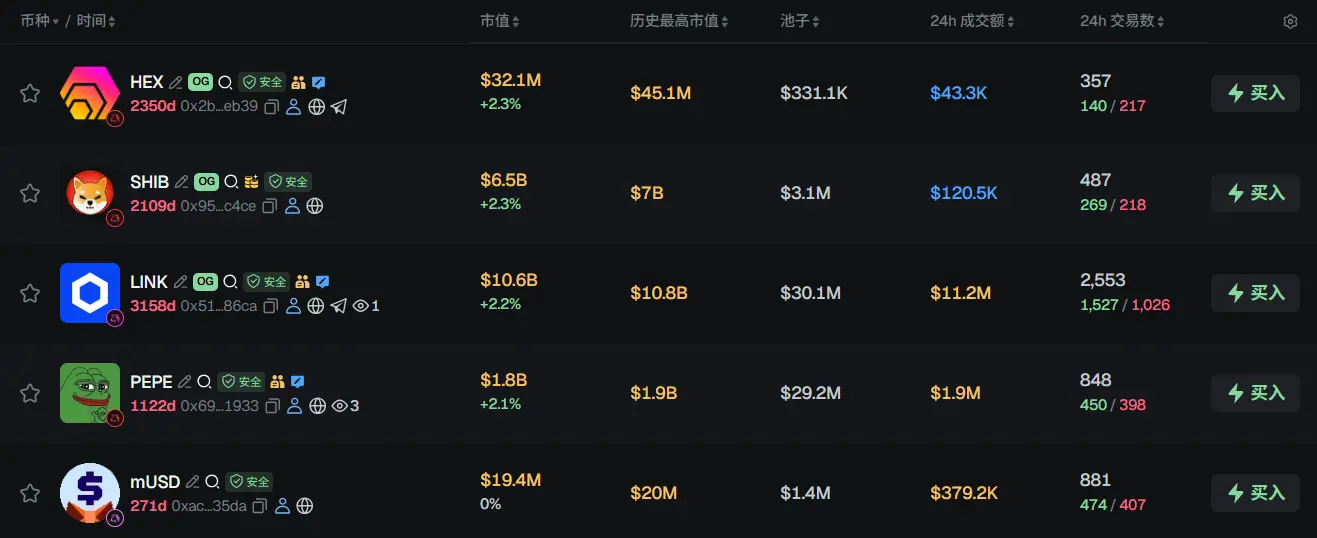
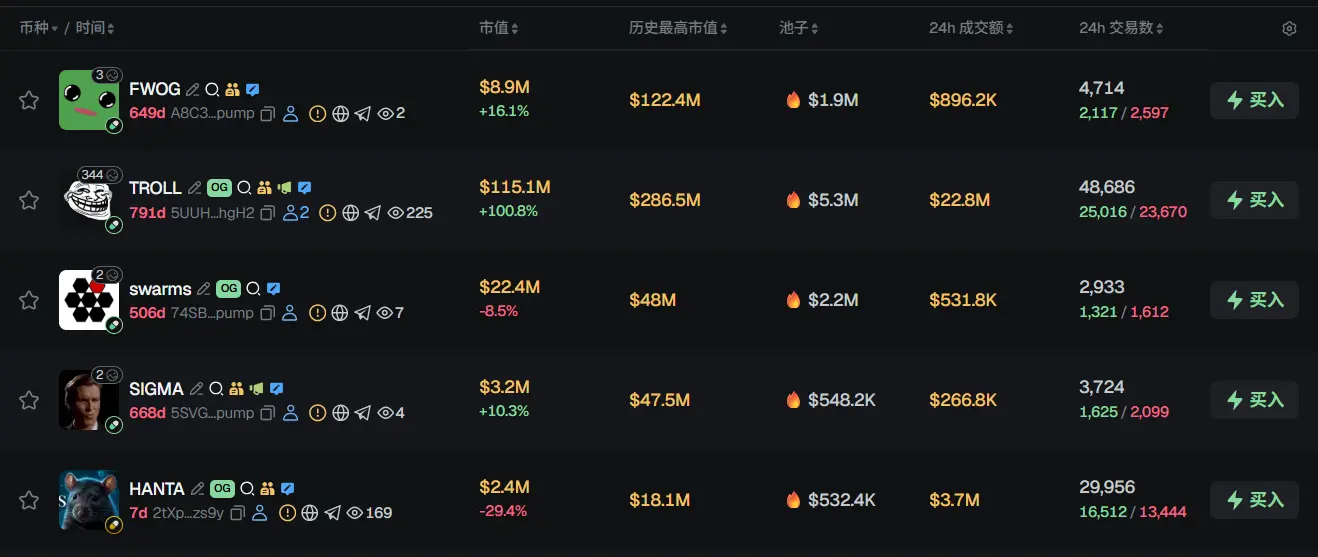
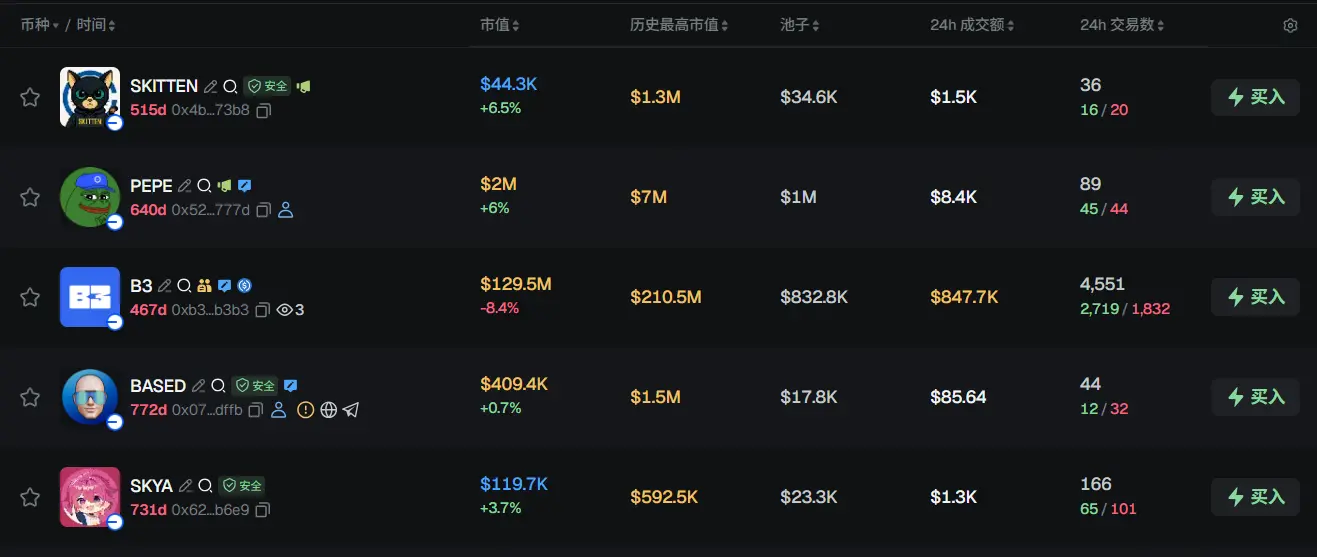
According to data from meme token tracking and analysis platform GMGN, as of 09:00 on May 11, 2026,

The top five trending ETH tokens over the past 24h are: HEX, SHIB, LINK, PEPE, mUSD
The top five trending Solana tokens over the past 24h are: FWOG, TROLL, swarms, SIGMA, HANTA
The top five trending Base tokens over the past 24h are: SKITTEN, PEPE, B3, BASED, SKYA
Which great articles are worth reading from the past 24 hours?

Perguntas relacionadas

QWhat was the reported net loss on BTC and other crypto asset investments for Trump Media Group in its Q1 financial report?

ATrump Media Group reported an unrealized loss of approximately $4 billion on its BTC and other crypto asset investments in its Q1 financial report.

QAccording to the article, which three DeFi applications returned nearly $1 billion in revenue to token holders in the past 30 days?

AAccording to DefiLlama data, Hyperliquid, EdgeX, and Pump.fun returned a combined $963 million in revenue to token holders over the past 30 days.

QWhat specific event does the article suggest typically follows Michael Saylor's release of Bitcoin Tracker information, based on previous patterns?

ABased on previous patterns, following Michael Saylor's release of Bitcoin Tracker information, MicroStrategy typically discloses its bitcoin acquisition data the next day. The article suggests next week may see such a disclosure.

QWhat major reason did Goldman Sachs give for pushing back its forecast of the Federal Reserve's next two interest rate cuts to December 2026 and March 2027?

AGoldman Sachs cited persistent inflation pressure as the main reason, noting that energy cost pass-throughs could keep core PCE inflation around 3% throughout 2026, which is above the Fed's 2% target.

QWhat is a key trend highlighted by Yearn.Finance founder Andre Cronje regarding the current state of DeFi (Decentralized Finance) in 2026?

AAndre Cronje highlighted that DeFi in 2026 is no longer just a venue for speculation but is evolving into the backend infrastructure for the on-chain economy, with significant market sizes such as a $3.2 trillion stablecoin market.

Leituras Relacionadas

The Value Distribution of Stablecoins

**Summary: The Value Distribution of Stablecoins** The article argues that stablecoins are evolving from mere trading tools into broader channels for dollar access. It divides the stablecoin ecosystem into four layers to analyze how value is distributed: 1. **Issuance Layer:** Mints stablecoins, holds reserve assets, and captures the spread between reserve yield and user costs (e.g., Tether, Circle). This layer currently earns the largest profit margin. 2. **Infrastructure Layer:** Connects stablecoins to the traditional financial system, handling fiat on/off-ramps, banking integration, compliance (KYC/AML), and asset management (e.g., Bridge, BVNK). This is the "unglamorous" but critical work, building the essential bridges between crypto and real-world finance. 3. **Acquiring/Distribution Layer:** Integrates stablecoins into merchant systems, manages payment flows, and provides enterprise financial software (e.g., Stripe, Coinbase). They act as the access point for businesses. 4. **Application Layer:** The end-users and businesses that ultimately use stablecoins for payments, settlements, or as a store of value. They benefit from convenience but have little pricing power. The core thesis is that while the issuance layer currently dominates profits, the often-overlooked **infrastructure layer holds significant long-term potential**. The real challenge and barrier to mass adoption is not the on-chain transfer of stablecoins (which is simple), but the complex "last mile" integration into existing business workflows, banking systems, and regulatory frameworks across different countries. Companies in this layer are currently in a "land grab" phase, investing heavily to build networks, secure bank partnerships, and establish compliance pathways. While their position is currently pressured by the profitable issuers above and distribution platforms below, the article suggests that if stablecoins become a default financial rail for businesses, the infrastructure providers who have done the hard work of integration will ultimately gain strong pricing power and become entrenched, essential players.

marsbitHá 4h

The Value Distribution of Stablecoins

marsbitHá 4h

The Value Distribution of Stablecoins

The Value Distribution of Stablecoins The article argues that stablecoins are evolving from a mere trading tool into a broad "dollar channel." It analyzes the industry's value chain through four layers: 1. **Issuance Layer (e.g., Tether, Circle):** The top layer that mints stablecoins, holds reserve assets, and captures the thickest interest rate spread. 2. **Infrastructure Layer (e.g., Bridge, BVNK):** Connects stablecoins to the traditional financial system, handling critical but complex "dirty work" like fiat on/off-ramps, banking integration, compliance (KYC/AML), and cross-border settlement. 3. **Acquiring/Distribution Layer (e.g., Stripe, Coinbase):** Embeds stablecoins into merchant systems, manages payment flows, and integrates with enterprise software. 4. **Application Layer:** End-users and businesses that ultimately use stablecoins for payments, settlement, or storing value. The author posits that while the issuance layer currently captures the most profit, the most overlooked and potentially critical layer is infrastructure. The core challenge for stablecoin adoption isn't the on-chain transfer (which is simple), but bridging the gap between blockchain and the real-world financial system. This involves solving practical problems for businesses: fiat conversion, reconciliation, tax handling, and user onboarding. Infrastructure companies are currently in a difficult "land-grab" phase—building networks, securing banking relationships, and achieving compliance country-by-country. They face pressure from both the profitable issuance layer above and distribution platforms below. However, the author suggests this layer is building a crucial moat. Once stablecoins become a default business rail, the infrastructure players who have done the hard work of integration may gain significant, durable value and pricing power.

链捕手Há 4h

The Value Distribution of Stablecoins

链捕手Há 4h

How to Do Research Well: Deliberately Practice the Real Skills That Matter

No one truly teaches you how to do research. You're often given a desk, a pre-selected problem, and vague instructions to "create something new." Consequently, many people reverse-engineer the job based on visible outputs—papers, posts, announcements—learning only how to *appear* like a researcher rather than how to *become* one. True research capability is built from stacking small, trainable skills, nearly all of which can be developed through deliberate practice. **Pick Your Own Problem:** Most researchers absorb problems from advisors or trends, lacking the underlying reasoning. Choosing a problem you genuinely care about, as John Schulman advises, leads to original work. Develop "taste" like a muscle: predict experiment outcomes, guess paper results from methods, and track which findings remain important over time. **Upgrade Your Inputs:** Relying on shared reading lists (arXiv hot lists, filtered group chats) leads to unoriginal conclusions. Undervalued old literature often holds crucial insights (e.g., MoE, LSTM, backpropagation). Richard Sutton's "The Bitter Lesson" or Claude Shannon's 1952 talk on creative thinking are more predictive than lengthy modern surveys. Breadth matters as much as depth: draw from neuroscience, mechanism design, hardware knowledge, and honest statistics. Read papers directly, especially appendices and limitations sections. **Write Everything Down:** As Paul Graham noted, writing exposes flaws in seemingly mature ideas. Writing is the cheapest defense against self-deception. Following Feynman's principle, Darwin programmatically wrote down facts contradicting his theory to combat memory bias. Maintain a detailed log of hypotheses, setups, predictions, results, and updated understandings. Reviewing past logs fosters essential humility.

marsbitHá 6h

How to Do Research Well: Deliberately Practice the Real Skills That Matter

marsbitHá 6h

Trading

Spot
Futuros
活动图片