Morning Post | Trump Media Group Releases Q1 Financial Report; Top Three DeFi Applications Return Nearly $100 Million in Revenue to Token Holders in 30 Days; Michael Saylor Shares Bitcoin Tracker Info Again

链捕手Publicado em 2026-05-11Última atualização em 2026-05-11

Resumo

**Title: Daily Briefing | Trump Media Group Releases Q1 Report; Top 3 DeFi Apps Return Nearly $100M to Token Holders; Michael Saylor Signals Potential Bitcoin Buy** **Summary:** Key developments in the past 24 hours include: * **Economic Outlook:** Goldman Sachs has pushed back its forecast for the next two Federal Reserve interest rate cuts to December 2026 and March 2027, citing persistent inflationary pressures from energy costs. This delayed timeline is expected to tighten liquidity flow into risk assets, including cryptocurrencies. * **DeFi & Revenue:** Data from DefiLlama shows that three leading DeFi applications—Hyperliquid, Pump.fun, and EdgeX—collectively distributed $96.3 million in revenue to their token holders over the last 30 days. This trend highlights a shift in the crypto community's focus towards real protocol earnings and sustainable economic models. * **Corporate Bitcoin Moves:** Michael Saylor, founder of MicroStrategy (note: referred to as 'Strategy' in the text, likely a typographical error), has signaled potential upcoming Bitcoin purchases by posting a "Bitcoin Tracker" update, following a pattern that typically precedes the company's official disclosure of new acquisitions. * **Market Integrity:** Prediction market platform Polymarket announced updates to address platform issues, including identifying and banning clusters of accounts involved in "ghost-fill" activities and implementing measures to prevent bulk account creation. * **Regu...

Compiled by: ChainCatcher


Key Updates:

  • Trump Media Group Q1 Report: Approximately $400 Million Unrealized Loss on BTC and Other Crypto Asset Investments
  • Michael Saylor Shares Bitcoin Tracker Info Again, May Disclose Acquisition Data Next Week
  • Bank of England Governor: Stablecoin Regulation Could Trigger Tussle Between US and International Regulators
  • Data: Top Three DeFi Applications Return Nearly $100 Million in Revenue to Token Holders in 30 Days
  • Strategy CEO Clarifies Bitcoin Sale Conditions: Will Only Sell When Beneficial to Shareholders
  • Bank of England Governor: Stablecoin Regulation Could Trigger Tussle Between US and International Regulators

What significant events occurred in the past 24 hours?

Goldman Sachs Delays Fed Rate Cut Forecasts to December 2026, Citing Inflation Pressure

ChainCatcher News, Goldman Sachs has postponed its forecast for the next two Fed rate cuts to December 2026 and March 2027. The report points out that energy cost pass-through could keep core Personal Consumption Expenditures (PCE) inflation around 3% for all of 2026, above the Fed's 2% target. Previously, the International Monetary Fund (IMF) also predicted core PCE wouldn't return to 2% until early 2027 at the earliest.

Goldman Sachs US economists believe that cooling monthly data and a weakening labor market must precede rate cuts. On April 29, the Fed maintained the federal funds rate at 3.50% to 3.75%, a meeting that saw four dissenting votes, the most since 1992. According to CME FedWatch data, the market probability of rates remaining unchanged at the June 17 meeting is 93.4%. Lindsay Rosner of Goldman Sachs Asset Management previously stated that hawks might prevail at the June FOMC meeting. For the crypto market, delayed rate cuts tighten liquidity flowing into risk assets, and a stronger dollar tends to suppress crypto asset valuations.

Data: Top Three DeFi Applications Return Nearly $100 Million in Revenue to Token Holders in 30 Days

ChainCatcher News, According to DefiLlama data, three relatively active DeFi applications—Hyperliquid, EdgeX, and Pump.fun—collectively distributed $96.3 million in revenue to token holders over the past 30 days. Hyperliquid led with $50.95 million, returning all revenue directly to holders with zero incentive spending; Pump.fun returned $22.09 million to holders from its $38.81 million total revenue; EdgeX distributed $23.26 million from its $8.26 million protocol revenue, indicating it may have utilized reserves or other income sources.

Annualized data shows Hyperliquid generated $946 million in revenue over the past year, Pump.fun $481 million, and EdgeX $236 million. This trend reflects the crypto community's shift from focusing on trading volume to actual revenue. Yearn.Finance founder Andre Cronje noted that DeFi in 2026 is no longer just a speculative venue but is becoming the backend infrastructure for the on-chain economy, with a stablecoin market of $320 billion, decentralized exchange monthly spot trading volume exceeding $160 billion, and perpetual contract DEX monthly trading volume reaching $540 billion.

Michael Saylor Shares Bitcoin Tracker Info Again, May Disclose Acquisition Data Next Week

ChainCatcher News, Strategy founder Michael Saylor has again shared information related to the Bitcoin Tracker.

Based on previous patterns, Strategy has always disclosed Bitcoin acquisition information the day after such related messages are posted.

Polymarket: Identified and Banned Multiple 'Ghost-Fill' Account Clusters, Will Strengthen Ban Mechanism

ChainCatcher News, Polymarket announced the latest progress on feature updates, including the rollout of latency spam mitigation measures to ensure order placement and cancellation operations, fixing the "insufficient balance/authorization" error, with another core issue affecting limit buy orders expected to be resolved in the coming days.

Additionally, Polymarket stated it has identified and banned multiple "ghost-fill" account clusters. The relevant accounts were all created before the deposit wallet system went live. Any account exhibiting "ghost-fill" behavior will be identified and banned, and the deposit wallet system will also prevent violators from mass-creating new accounts. More updates to resolve previous legacy issues will be released in the coming week.

South Korean National Tax Service Pilots Delegating Seized Virtual Assets to Private Custodian Management for First Time

ChainCatcher News, According to News1, the South Korean National Tax Service is piloting the delegation of seized virtual assets to private crypto custody institutions for safekeeping and management for the first time, with the trial planned to run until the end of this year.

Major South Korean custody institutions such as KODA, KDAC, Hecto WalletOne, BDACS, and InfiniteBlock are preparing to participate. Although the pilot project's budget is only about $5,800, the industry believes gaining a reference case as a "South Korean National Tax Service project" holds symbolic significance.

Meme Hot List

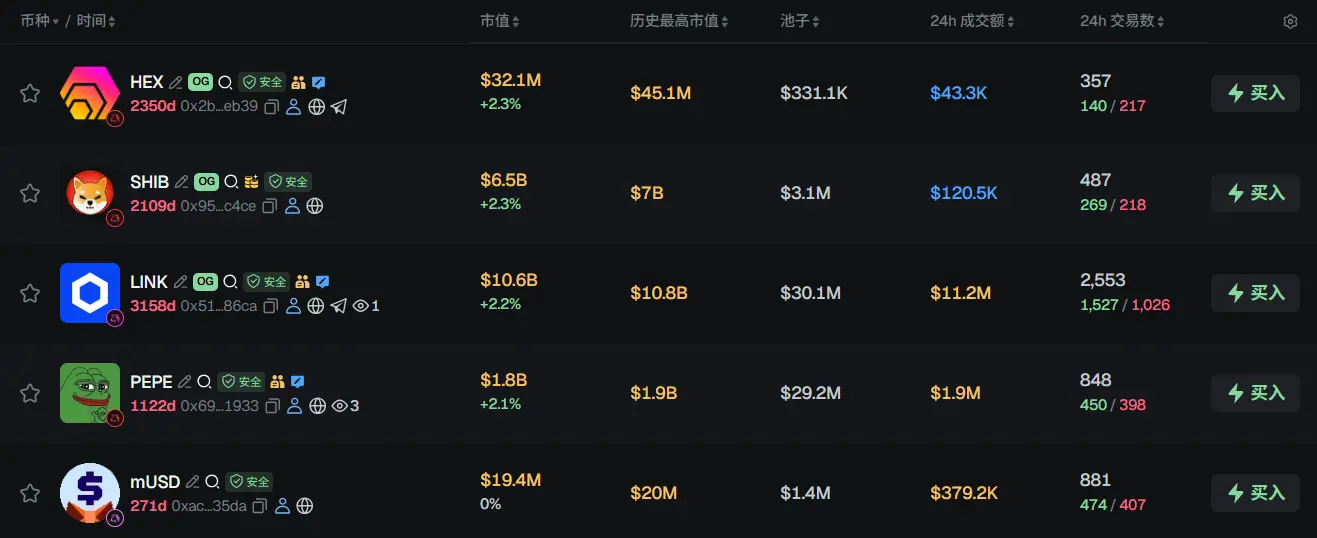
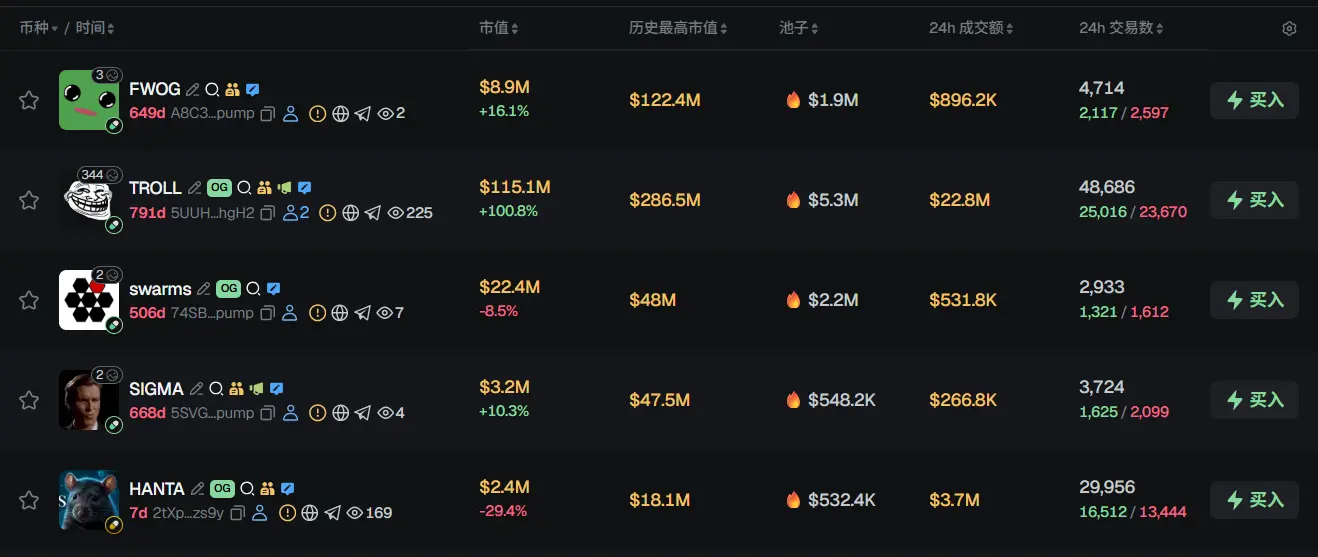
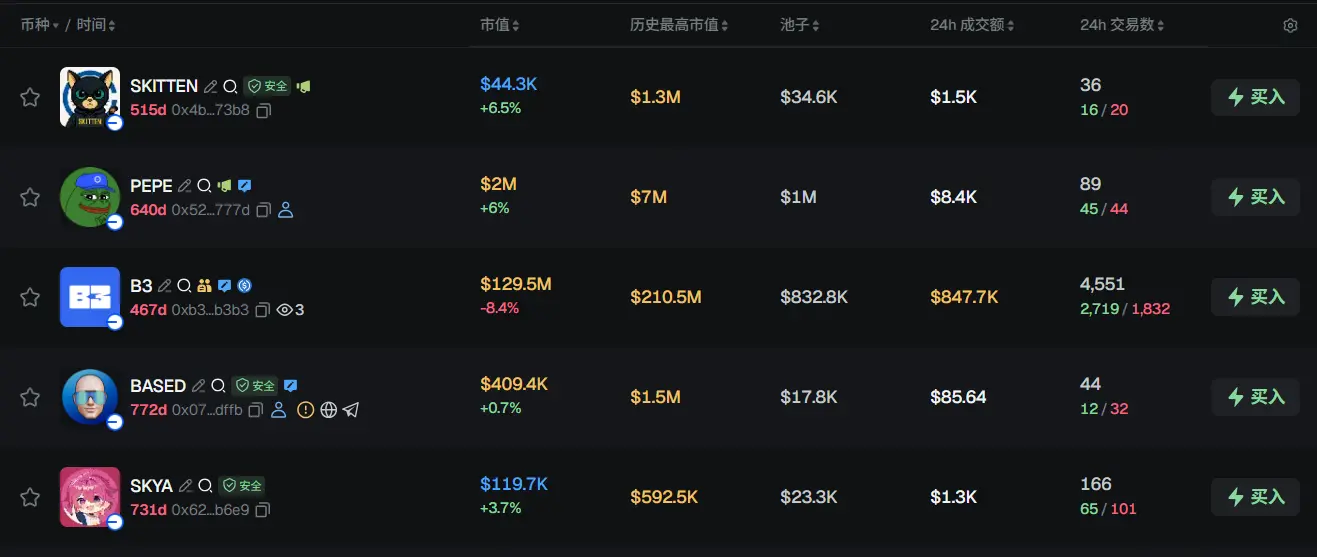
According to data from meme token tracking and analysis platform GMGN, as of 09:00 on May 11, 2026,

The top five trending ETH tokens over the past 24h are: HEX, SHIB, LINK, PEPE, mUSD
The top five trending Solana tokens over the past 24h are: FWOG, TROLL, swarms, SIGMA, HANTA
The top five trending Base tokens over the past 24h are: SKITTEN, PEPE, B3, BASED, SKYA
Which great articles are worth reading from the past 24 hours?

Perguntas relacionadas

QWhat was the reported net loss on BTC and other crypto asset investments for Trump Media Group in its Q1 financial report?

ATrump Media Group reported an unrealized loss of approximately $4 billion on its BTC and other crypto asset investments in its Q1 financial report.

QAccording to the article, which three DeFi applications returned nearly $1 billion in revenue to token holders in the past 30 days?

AAccording to DefiLlama data, Hyperliquid, EdgeX, and Pump.fun returned a combined $963 million in revenue to token holders over the past 30 days.

QWhat specific event does the article suggest typically follows Michael Saylor's release of Bitcoin Tracker information, based on previous patterns?

ABased on previous patterns, following Michael Saylor's release of Bitcoin Tracker information, MicroStrategy typically discloses its bitcoin acquisition data the next day. The article suggests next week may see such a disclosure.

QWhat major reason did Goldman Sachs give for pushing back its forecast of the Federal Reserve's next two interest rate cuts to December 2026 and March 2027?

AGoldman Sachs cited persistent inflation pressure as the main reason, noting that energy cost pass-throughs could keep core PCE inflation around 3% throughout 2026, which is above the Fed's 2% target.

QWhat is a key trend highlighted by Yearn.Finance founder Andre Cronje regarding the current state of DeFi (Decentralized Finance) in 2026?

AAndre Cronje highlighted that DeFi in 2026 is no longer just a venue for speculation but is evolving into the backend infrastructure for the on-chain economy, with significant market sizes such as a $3.2 trillion stablecoin market.

Leituras Relacionadas

Opinion: AI Bubble Bursts, Bitcoin and Other Risky Assets Are the First to Be Impacted

BIS Warns AI Investment Boom Could Trigger Market Stress, Impacting Bitcoin First The Bank for International Settlements (BIS) warns that a potential bursting of the "AI bubble" could tighten liquidity and severely impact risk assets like Bitcoin in the near term. Major tech firms are projected to spend over $1 trillion on AI infrastructure in 2025-2026. The BIS cautions that if returns fail to meet expectations, a sudden withdrawal of financing could turn this investment boom into a prolonged bust, creating ripple effects across financial markets. While AI holds long-term economic promise, the current scale and speed of investment, coupled with intense competition and physical bottlenecks (e.g., semiconductors, power grids), mirror historical bubbles. The report highlights that the AI funding web—spanning corporate debt, private credit, and complex vendor agreements—makes systemic risks harder to see. A disappointment in AI adoption could transmit stress through this chain, widening credit spreads and pressuring weaker borrowers. For Bitcoin, the initial reaction to such a market shock would likely be defensive. As liquidity tightens, investors typically sell liquid assets first, and Bitcoin often trades in line with other risk assets during portfolio de-risking. Recent correlations, like Bitcoin's drop following a sharp decline in South Korea's stock market, support this view. However, the longer-term outcome for Bitcoin depends on the policy response. If an AI-driven credit crunch forces central banks to inject liquidity and ease policy eventually, it could reignite Bitcoin's narrative as a hedge against monetary debasement. Yet, traders betting on this outcome may first have to endure significant market volatility and potential price declines.

marsbitHá 47m

Opinion: AI Bubble Bursts, Bitcoin and Other Risky Assets Are the First to Be Impacted

marsbitHá 47m

South Korea Reaps Riches, America Turns Hostile

The US has filed a collective antitrust lawsuit in California against Samsung, SK Hynix, and US-based Micron, alleging they colluded to create a "RAMpocalypse" by slashing traditional DRAM production and raising prices 700% over four years amid the AI boom. This lawsuit targets the heart of the AI supply chain: High Bandwidth Memory (HBM), critical for Nvidia's GPUs. Currently, SK Hynix (57%), Samsung (22%), and Micron (21%) dominate global HBM production. The case highlights a deeper US concern: in the AI era, South Korea, through its HBM dominance, is capturing an estimated 35% of global AI profits, second only to the US (49%). SK Hynix's operating profit margin recently hit a record 72%. In response to the lawsuit, South Korea announced a massive $800 trillion won investment to build four new chip plants, doubling down on its strategic position. Analysts see the lawsuit not merely as a consumer price issue but as strategic pressure. It aims to support Micron's US manufacturing expansion (subsidized by the CHIPS Act) and secure America's share of AI profits by bringing more HBM production onshore. However, South Korea's rapid execution and massive cash flow from current HBM sales give it a significant speed advantage over US build-out timelines. The conflict underscores a fundamental shift: AI infrastructure like GPUs and HBM is becoming a new form of strategic national resource, akin to oil. While Nvidia and Korean memory giants are interdependent, the struggle over profit distribution and industrial sovereignty in this new landscape is just beginning. This lawsuit may be the first major skirmish in the AI resource wars.

marsbitHá 59m

South Korea Reaps Riches, America Turns Hostile

marsbitHá 59m

Trading

Spot
活动图片