Morning Post | Michael Saylor Says This Week's Buy Was Bonds, Not Bitcoin; StablR Suffers Attack Losing Approximately $2.8 Million; US Congress Reintroduces Bitcoin Reserve Bill

链捕手Publicado em 2026-05-25Última atualização em 2026-05-25

Resumo

This cryptocurrency industry digest covers key developments from May 25. MicroStrategy's Michael Saylor clarified the company purchased bonds, not Bitcoin, this week. In regulatory news, the US Congress reintroduced a Bitcoin reserve bill, with Republican backing aiming to accumulate 5% of global supply. The legal and audit firms for the collapsed FTX agreed to a $66 million settlement over fraud allegations. Several CFTC officials skeptical of prediction market oversight were reportedly suspended and forced out. On the security front, the StablR stablecoin was attacked and de-pegged, resulting in an estimated $2.8 million loss for the attacker. The Ethereum Foundation faced criticism, though a researcher defended its core protocol-building mission over influencing ETH's price. Market data from GMGN showed the top 24-hour trending meme tokens on ETH were HEX, SHIB, LINK, PEPE, and mUSD. On Solana, leaders were TROLL, neet, WORLDCUP, HANTA, and Buttcoin. Base chain's top tokens included TOSHI, KEYCAT, BRETT, CLANKER, and LUNA. Featured articles included an a16z analysis arguing tokenization, or real-world assets (RWA), is fundamentally transforming asset nature and financial systems, with the market growing tenfold to ~$34 billion in two years. Another piece deconstructed Hyperliquid's success through a five-layer financial stack framework, emphasizing the critical importance of building from a robust settlement layer upward.

Compiled by: ChainCatcher


Key News:

  • Former FTX Law Firm and Auditor Agree to Pay $66 Million to Settle Fraud Allegations
  • StablR Stablecoin Depegs After Attack, Attacker Profited Approximately $2.8 Million
  • Ethereum Foundation Frequently Criticized, Researcher Defends Its Mission is to Build Protocol, Not Pump ETH
  • Multiple CFTC Officials Who Questioned Prediction Market Regulation Suspended and Forced to Resign
  • US Congress Reintroduces Bitcoin Reserve Bill, Republicans Plan to Push for Accumulating 5% of Global Bitcoin
  • Michael Saylor: This Week's Buy Was Bonds, Not Bitcoin

What Happened in the Past 24 Hours?

US Congress Reintroduces Bitcoin Reserve Bill, Republicans Plan to Push for Accumulating 5% of Global Bitcoin

Meme Top Charts

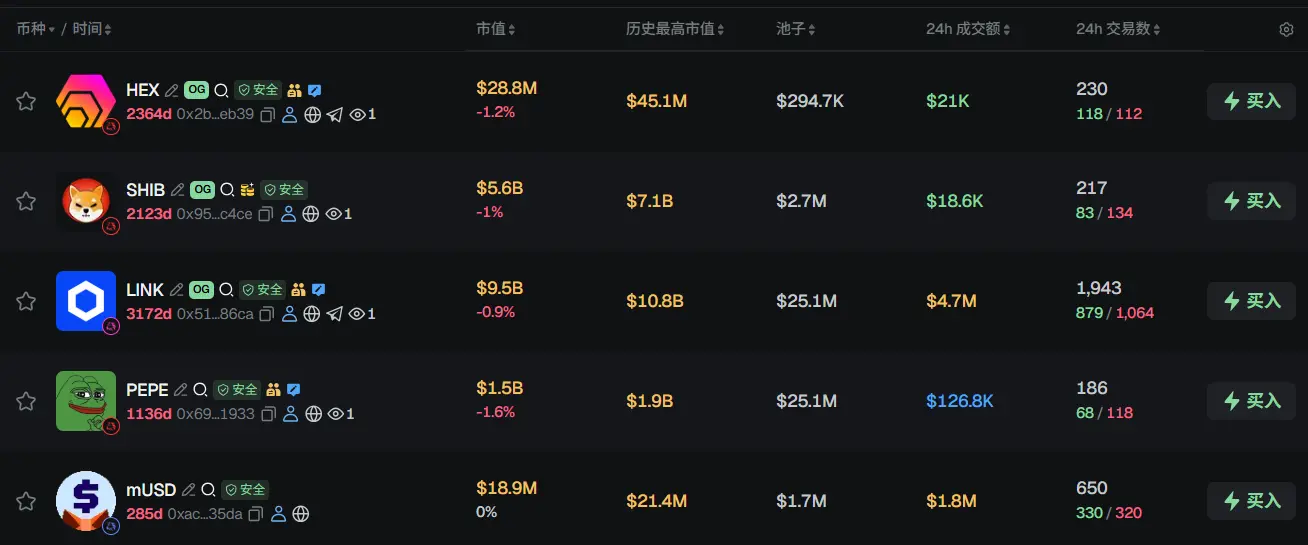
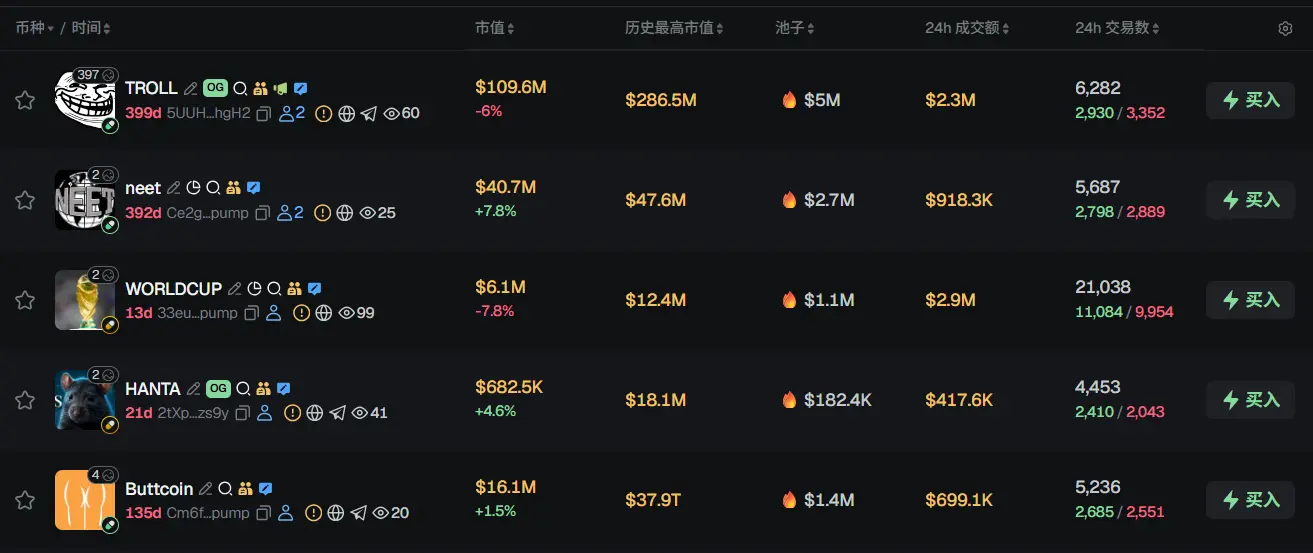
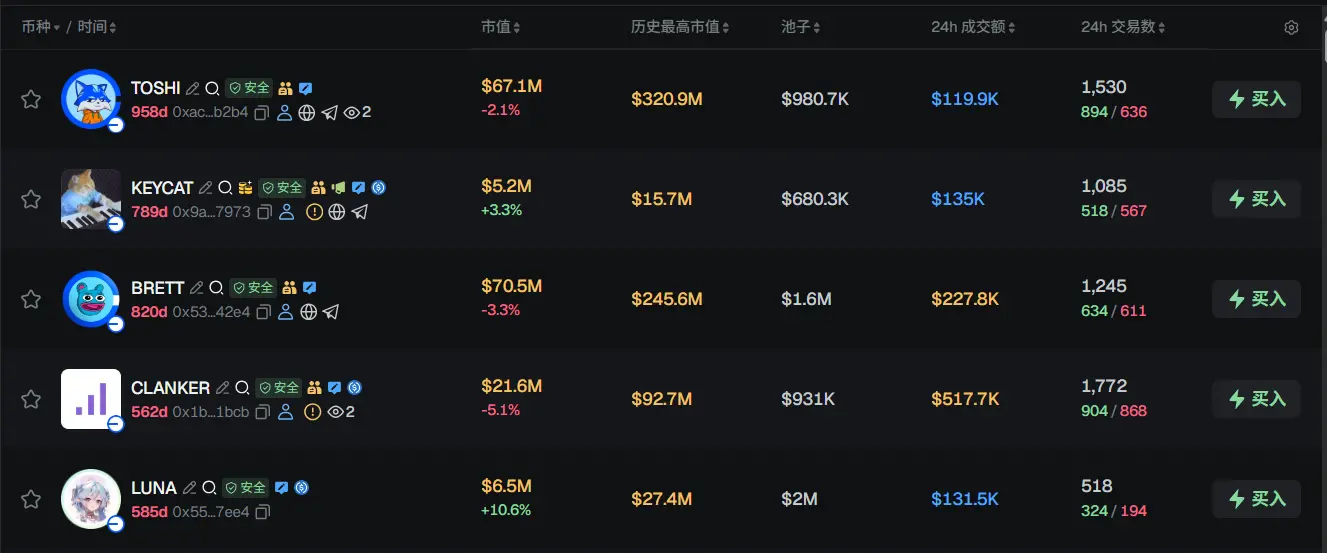
According to meme token tracking and analysis platform GMGN market data, as of May 25th, 09:00,

Top 5 popular ETH tokens in the past 24h are: HEX, SHIB, LINK, PEPE, mUSD
Top 5 popular Solana tokens in the past 24h are: TROLL, neet, WORLDCUP, HANTA, Buttcoin
Top 5 popular Base tokens in the past 24h are: TOSHI, KEYCAT, BRETT, CLANKER, LUNA
What are the Must-Read Articles in the Past 24 Hours?

a16z: 7 Charts to Understand How Tokenization Changes the Nature of Assets

Tokenized Assets, also known as 'Real World Assets (RWA)', are changing the form of assets, how they flow, and how the financial system is built.

Just last month, the tokenized asset market size surpassed $30 billion, currently hovering around $34 billion (excluding stablecoins). This scale is roughly equivalent to a regional bank or a top-tier university endowment fund. While still very small compared to the global financial system, it is already large enough to have real impact.

Just two years ago, the tokenized asset market was less than $3 billion, but then the market underwent dramatic changes: the US GENIUS Act brought a clearer regulatory framework for stablecoins, institutional-grade on-chain infrastructure matured, and a large number of financial institutions began deploying blockchain technology almost simultaneously. It was under the push of these factors that the tokenized asset market grew 10-fold in less than two years.

Decoding the Secret to Hyperliquid's Success Through a Five-Layer Financial Stack

The construction of institutional-grade financial infrastructure often follows a pattern. You don't start with the most expressive product and then work backwards.

You start with the settlement layer, prove it works under stress, and then unlock all the features that depend on it.

The New York Stock Exchange didn't add derivatives before it had a well-functioning stock market. The Chicago Mercantile Exchange didn't launch options before it launched futures.

This order is not arbitrary. The order of the foundational layers determines the possibilities of the superstructure.

Hyperliquid understands this well.

Perguntas relacionadas

QWhat is Michael Saylor's recent purchase, according to the title and the 'Important News' section of the article?

AAccording to the article, Michael Saylor stated that the purchase made this week was bonds, not Bitcoin.

QWhat is the reported loss from the StablR attack mentioned in the article?

AThe StablR stablecoin project suffered an attack resulting in a loss of approximately 2.8 million USD.

QWhat legislation related to Bitcoin is being promoted again by the US Congress, as per the article?

AThe US Congress is once again promoting a Bitcoin reserve bill. Specifically, Republicans are reportedly pushing a plan to accumulate 5% of the world's Bitcoin.

QWhich two companies related to FTX agreed to a settlement over fraud allegations, and for what amount?

AFTX's former law firm and auditing agency agreed to pay 66 million USD to settle fraud allegations.

QWhat is the core argument made by the Ethereum Foundation researcher mentioned in the 'Important News' section?

AThe researcher defended the Ethereum Foundation, stating that its mission is to build the protocol, not to pump the price of ETH.

Leituras Relacionadas

SpaceX, OpenAI, Anthropic: The Three AI Giants Racing for IPO, Which One Is Worth Betting On?

SpaceX, OpenAI, and Anthropic are poised for historic IPOs within weeks, potentially raising a combined $180 billion—a sum exceeding the entire internet bubble's fundraising. The hosts of the Limitless Podcast argue this isn't just individual company financing but an unprecedented capital concentration for AI infrastructure, driven by an insatiable need for compute, data centers, power, and chips. SpaceX's IPO is notable for reportedly changing market index rules to allow faster inclusion, potentially funneling trillions in passive retirement funds into its stock, despite its unproven space-based data center business model. In contrast, Anthropic demonstrates explosive growth, with ARR reportedly hitting $45 billion and approaching profitability, fueled by strong enterprise adoption of products like Claude Code. Google's separate $80 billion raise highlights the immense capital pressure, even for giants. The discussion acknowledges bubble risks but leans optimistic. The hosts contend the massive spending is building essential physical infrastructure for the next technological era. A key bottleneck isn't capital but the real-world limits of chip manufacturing and construction speed. As long as demand for AI compute outstrips supply, this investment cycle represents a foundational build-out rather than a purely financial bubble. All three companies are seen as foundational bets on the future, with Anthropic often cited as the most immediately compelling due to its proven revenue trajectory.

marsbitHá 2h

SpaceX, OpenAI, Anthropic: The Three AI Giants Racing for IPO, Which One Is Worth Betting On?

marsbitHá 2h

From 'Old Guys' to 'New Favorites': How AI Is Revaluing Old Infrastructure from Dell to Nokia?

From "Vintage Tech" to "New AI Darlings": How AI Revalues Old Infrastructure One year ago, tech giants like Dell, Nokia, Cisco, and Western Data were seen as slow-growth, low-valuation stories, far from the AI spotlight dominated by players like Nvidia. Now, these legacy tech stocks are gaining market attention, sparking debate on whether this is genuine industry revaluation or a temporary narrative. As AI moves from model parameters to real-world data centers, the market is recognizing companies with proven delivery and infrastructure capabilities. This shift marks a change in the AI investment thesis: from pure model and GPU focus to the complex systems engineering required for deployment. Companies like Dell, HPE, and Corning are being revalued not for being "sexy" AI innovators, but for their decades of accumulated expertise in supply chains, enterprise delivery, and infrastructure—assets that have become critical in the AI buildout phase. The revaluation is unfolding across three key infrastructure lines: 1. **Servers & System Integration:** Dell and HPE are emerging as crucial system integrators or "general contractors" for AI data centers, translating GPU orders into complete, deployable server racks integrated with power, cooling, and networking. 2. **Networking & Connectivity:** AI's scale demands robust high-speed connections. Corning (fiber optics), Nokia (AI-RAN, 6G), and Cisco (data center switches) are gaining importance for enabling efficient data transfer within and between AI clusters. 3. **Storage:** Beyond high-speed memory (HBM/DRAM), the AI data explosion is driving demand for high-capacity hard drives (HDDs) from companies like Western Digital and Seagate to handle training data, logs, and cold storage cost-effectively. For this revaluation to be substantive and not just a narrative, three criteria are key: 1) Concrete AI-related order and revenue growth (e.g., Dell's AI server sales), 2) Upward revisions to company financial guidance, and 3) Sustainable improvements in profit quality, not just top-line revenue spikes. In essence, AI's transition to a real construction phase is re-pricing "old assets" against "new demand." The opportunity, however, is selective. Only those legacy firms that are demonstrably integrated into the capital expenditure chains of data center and enterprise AI deployment are likely to experience a true "logic re-rating" rather than just a temporary valuation bounce.

marsbitHá 2h

From 'Old Guys' to 'New Favorites': How AI Is Revaluing Old Infrastructure from Dell to Nokia?

marsbitHá 2h

Trading

Spot
Futuros

Artigos em Destaque

Como comprar BILL

Bem-vindo à HTX.com!Tornámos a compra de Billions Network (BILL) simples e conveniente.Segue o nosso guia passo a passo para iniciar a tua jornada no mundo das criptos.Passo 1: cria a tua conta HTXUtiliza o teu e-mail ou número de telefone para te inscreveres numa conta gratuita na HTX.Desfruta de um processo de inscrição sem complicações e desbloqueia todas as funcionalidades.Obter a minha contaPasso 2: vai para Comprar Cripto e escolhe o teu método de pagamentoCartão de crédito/débito: usa o teu visa ou mastercard para comprar Billions Network (BILL) instantaneamente.Saldo: usa os fundos da tua conta HTX para transacionar sem problemas.Terceiros: adicionamos métodos de pagamento populares, como Google Pay e Apple Pay, para aumentar a conveniência.P2P: transaciona diretamente com outros utilizadores na HTX.Mercado de balcão (OTC): oferecemos serviços personalizados e taxas de câmbio competitivas para os traders.Passo 3: armazena teu Billions Network (BILL)Depois de comprar o teu Billions Network (BILL), armazena-o na tua conta HTX.Alternativamente, podes enviá-lo para outro lugar através de transferência blockchain ou usá-lo para transacionar outras criptomoedas.Passo 4: transaciona Billions Network (BILL)Transaciona facilmente Billions Network (BILL) no mercado à vista da HTX.Acede simplesmente à tua conta, seleciona o teu par de trading, executa as tuas transações e monitoriza em tempo real.Oferecemos uma experiência de fácil utilização tanto para principiantes como para traders experientes.

205 Visualizações TotaisPublicado em {updateTime}Atualizado em 2026.06.02

Como comprar BILL

Discussões

Bem-vindo à Comunidade HTX. Aqui, pode manter-se informado sobre os mais recentes desenvolvimentos da plataforma e obter acesso a análises profissionais de mercado. As opiniões dos utilizadores sobre o preço de BILL (BILL) são apresentadas abaixo.

活动图片