MicroStrategy Sells BTC Without a Price Drop, Is STRC's Rebound Truly Good News?

marsbitPublicado em 2026-08-13Última atualização em 2026-08-13

Resumo

The cryptocurrency market is currently experiencing extreme quiet, with BTC weekly trading volume at its lowest since 2023 and implied volatility hitting bottom. Liquidity is thin, as evidenced by a muted price reaction to CPI data. The market's primary issue is a lack of active participants, not just news. Options data shows traders are pricing in higher short-term downside risks. Market makers' gamma positioning suggests a critical support zone between $61,000 and $60,000; a break below could accelerate a downturn. Two developments are being interpreted bullishly: MicroStrategy (MSTR) selling a small portion of its BTC without causing a price crash, and the rebound of its preferred shares (STRC) from lows near $73 to over $95. However, an alternative bearish interpretation exists. The low liquidity means large entities cannot exit sizable positions easily. A STRK recovery towards $100 could provide the buying pressure these sellers need to finally offload BTC, making the apparent利好 (positive news) actually improve selling conditions. STRC faces a structural ceiling at $100 because MSTR has signaled it will issue new shares around that price, capping upside and inviting short sellers. While recent buybacks boosted the price, they haven't solved this core problem. If STRK cannot sustainably break $100, concerns will grow about MSTR needing to sell BTC for funding. Finally, the Bitfinex Long positions indicator, which typically moves inversely to BTC price, has become inef...

The silence of the market is frightening.
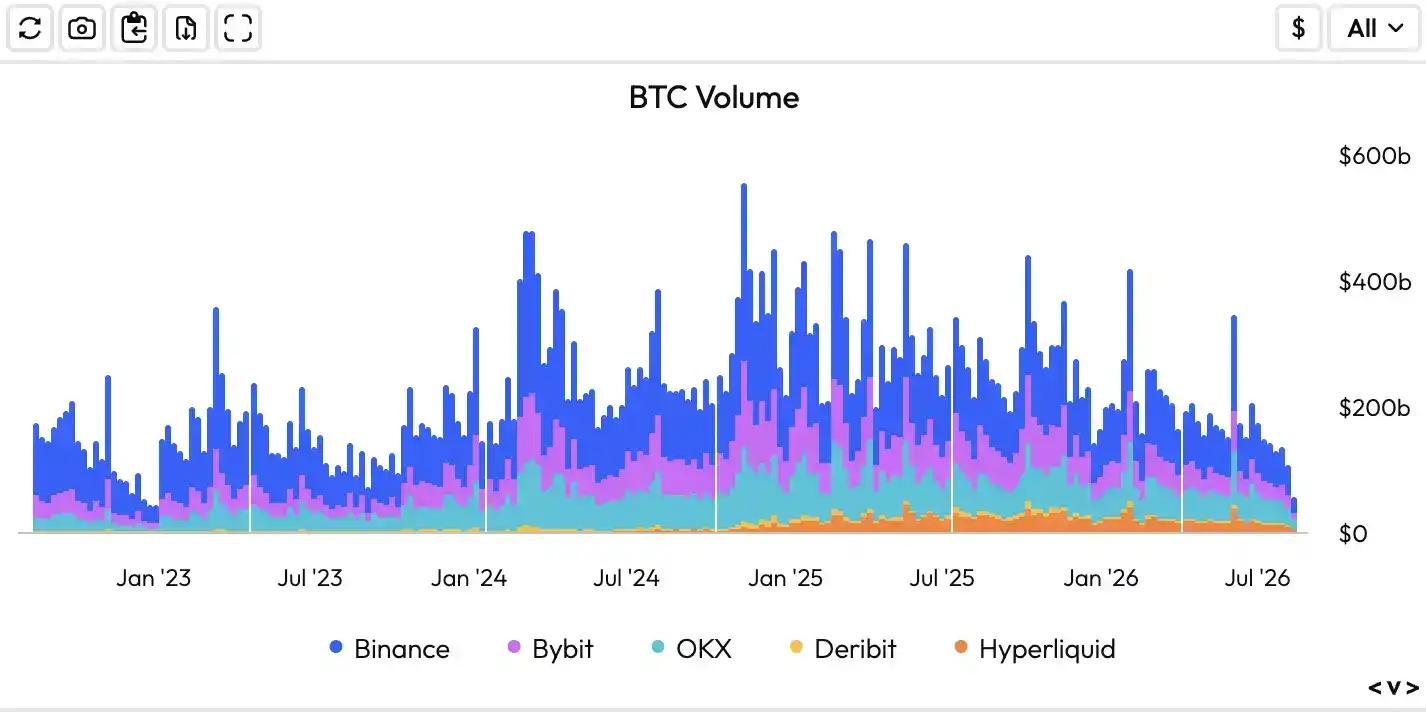
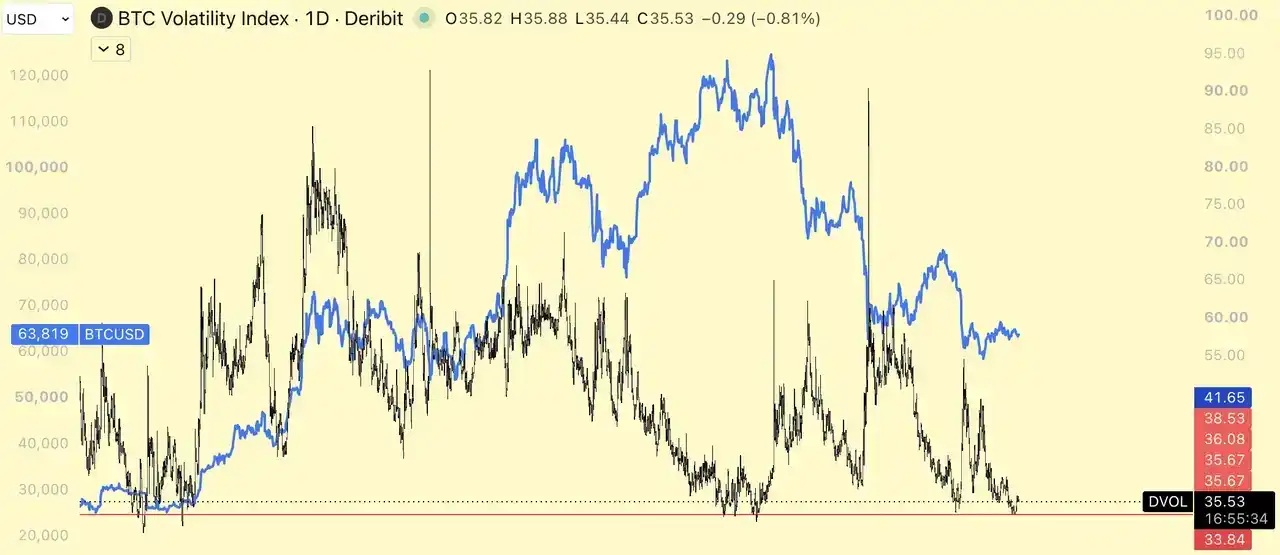
BTC weekly trading volume has fallen to its lowest level since 2023. Deribit's BTC volatility index DVOL also bottomed last week.
Liquidity is equally scarce. Last night at 20:30, CPI data was released. At the moment of the CPI announcement, BTC quickly fell from $64,450 to around $64,100, then rebounded to near $64,300 before declining again.
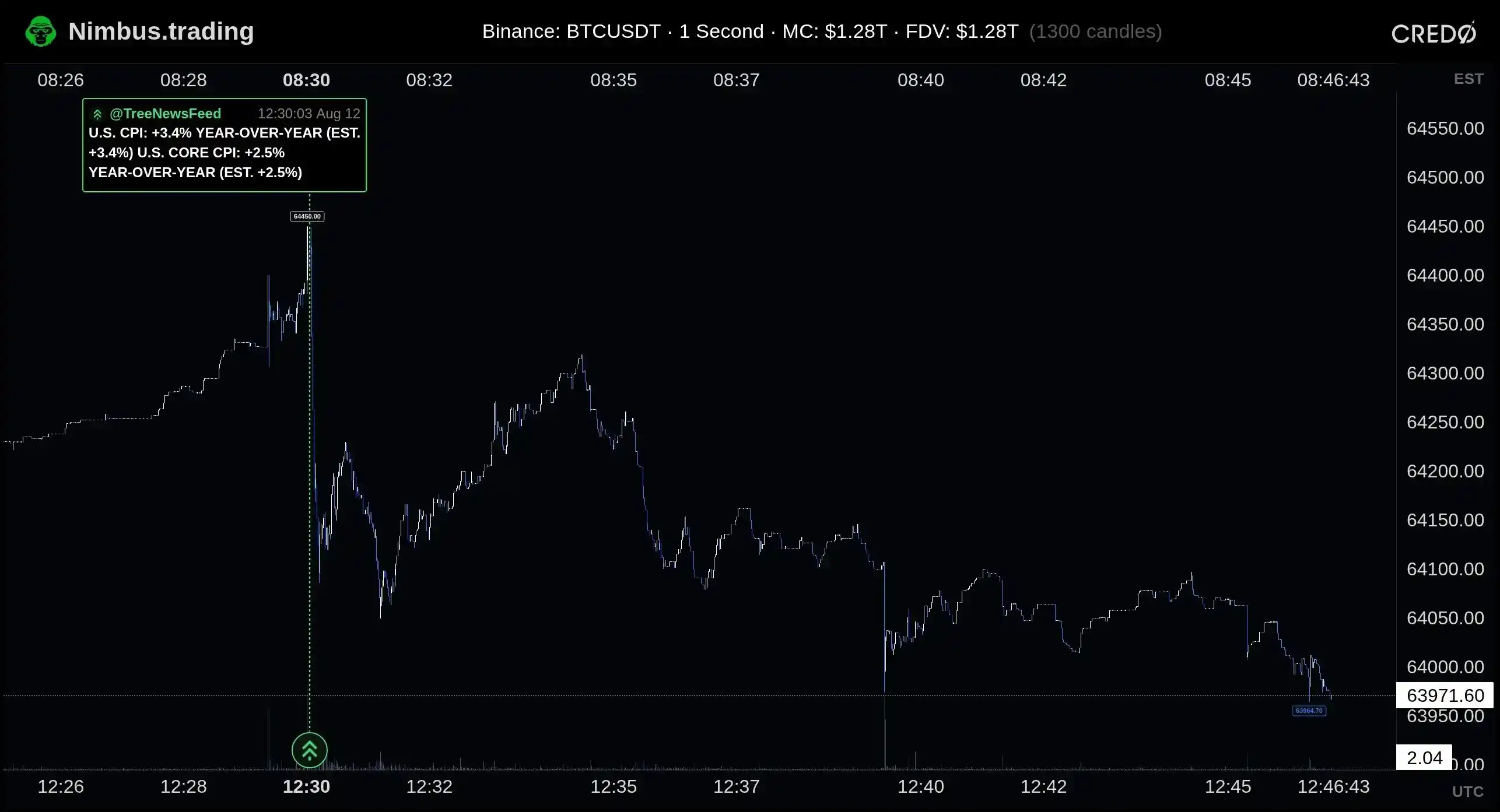
An hour later, when US stocks opened, BTC saw few participants. Apart from short-lived capital flows from cross-market arbitrage, the market failed to establish a new direction. BTC prices are easily moved now, but there aren't enough traders willing to follow through and extend the trend.
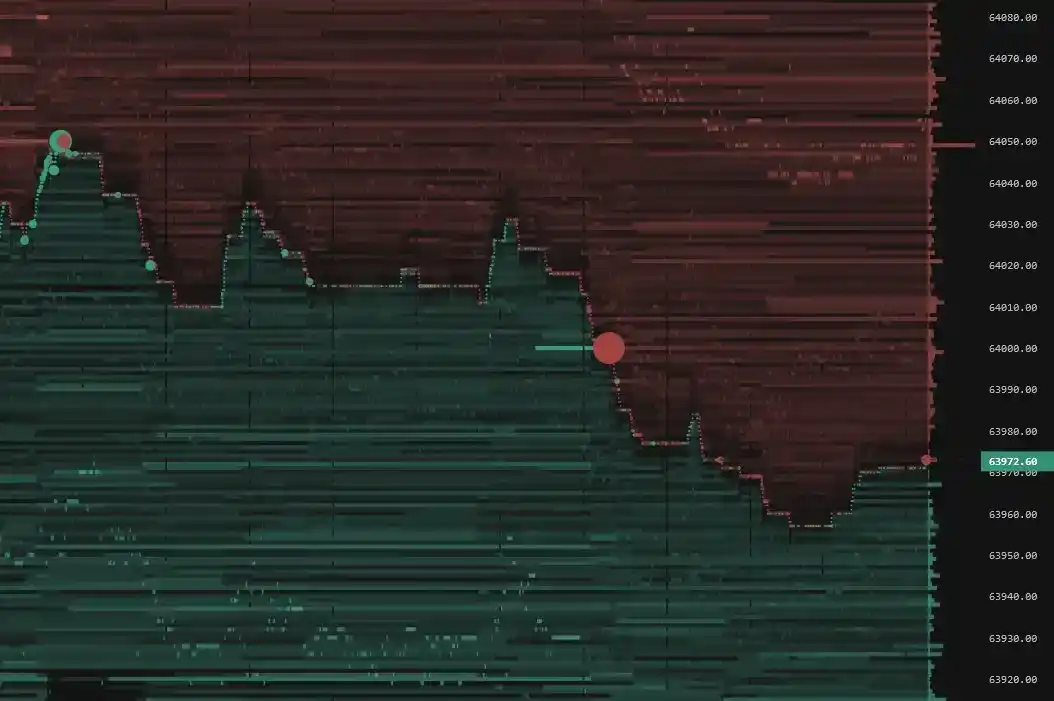
The market lacks more than just a single piece of good or bad news.

It lacks participants.

Options Market

Let's look at the options data.

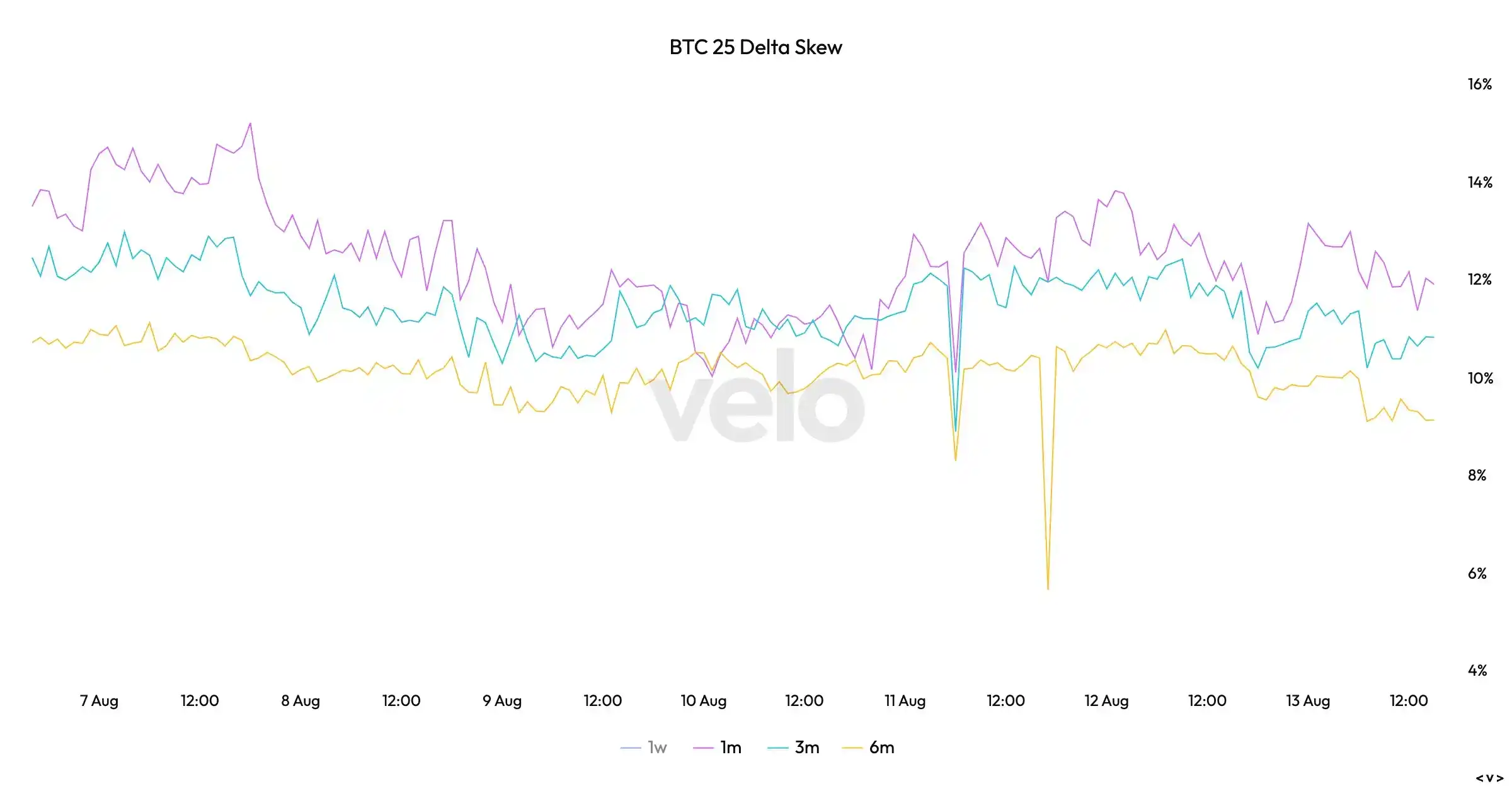
BTC 25 Delta Skew measures the implied volatility difference between put and call options with similar deltas. The curves for one-month, three-month, and six-month tenors in the chart are all in positive territory, approximately 12%, 10.7%, and 9.1% respectively. Shorter tenors show higher skew. Traders' demand for short-term downside protection is significantly higher than their pricing for long-term risks.
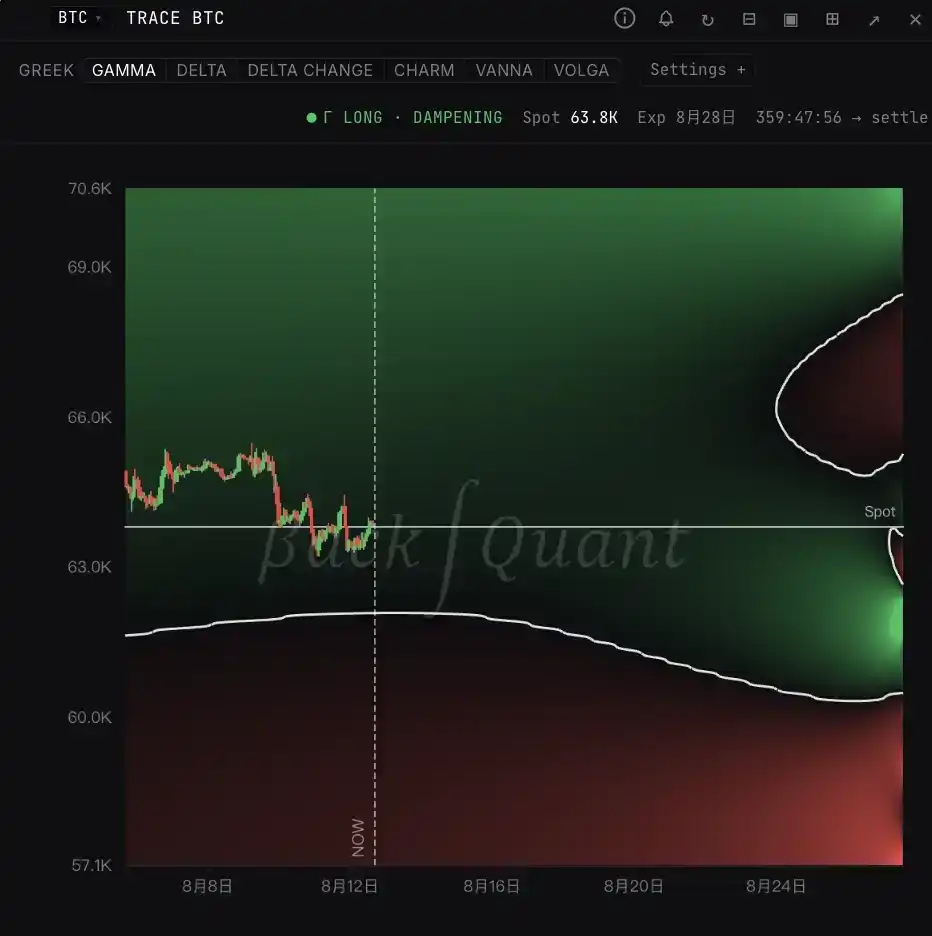
The aggregate Gamma heatmap for the end of the month provides more specific price boundaries. Currently, the market remains in a long gamma, volatility-suppressing zone. Market makers buy on price dips and sell on rallies; their hedging actions pull prices back into the range. The gamma flip zone is located near $61,000 to $60,000. As long as BTC stays above this boundary, market maker hedging absorbs volatility; if the price falls below the boundary, positions shift to short gamma, forcing market makers to continue selling during declines—their hedging behavior switches from a stabilizer to an accelerator.
If You Don't Buy, Who Do We Sell To?

Many traders are citing two changes to support a bullish view. Saylor sold several hundred million dollars worth of BTC in batches over the past month, about 0.13% of MicroStrategy's holdings, yet the BTC price remained roughly flat. Meanwhile, STRC rebounded from lows around $73 to $95.45, just a step away from $100. Saylor sells BTC without causing a sell-off, and STRC recovers most of its losses—the market naturally interprets this as bad news already being digested.

The problem is, given the current low-liquidity, low-volatility market conditions, an alternative explanation exists for the above phenomena.

Large entities still have spot holdings to exit, but the current trading volume cannot absorb large sell orders. They have temporarily paused selling simply because the order book is too thin. When STRC returns to $100, potentially bringing fresh buying interest for BTC, it might offer these entities what could be their last exit opportunity.

Good news can improve selling conditions.

This path explains why BTC consolidated during Saylor's minor selling spree and also suggests why pressure risks remain even after Saylor resumes buying. The variable determining the price is how MicroStrategy's orders compare to the entire market's potential selling pressure. Looking solely at Saylor's buys or sells doesn't provide a complete answer.

A reasonable counterargument is: large entities have previously faced volatile events and MicroStrategy's buying support, so why haven't they completed their exit? The historical trend offers a rather pessimistic answer. After the previous round of STRC restoring fund flows and MicroStrategy providing spot demand, BTC subsequently experienced a rapid decline, settling near $59,000 and entering a prolonged consolidation.

Furthermore, option positions have set $61,000 to $60,000 as the volatility amplification zone. Once large spot sell orders push the price into the negative gamma region, the next bottom is likely to form.

The Dilemma of STRC

MicroStrategy recently increased its dollar reserves by $650 million and repurchased $109 million worth of STRC. The company disclosed that these actions extended the dollar reserve coverage period by 143 days to 2.7 years and narrowed STRC's Bitcoin credit spread by 10 basis points. Including operations from the previous week, the two-week repurchase scale is approximately $190 million.

This money pulled STRC back to $95 but did not solve the most critical problem.
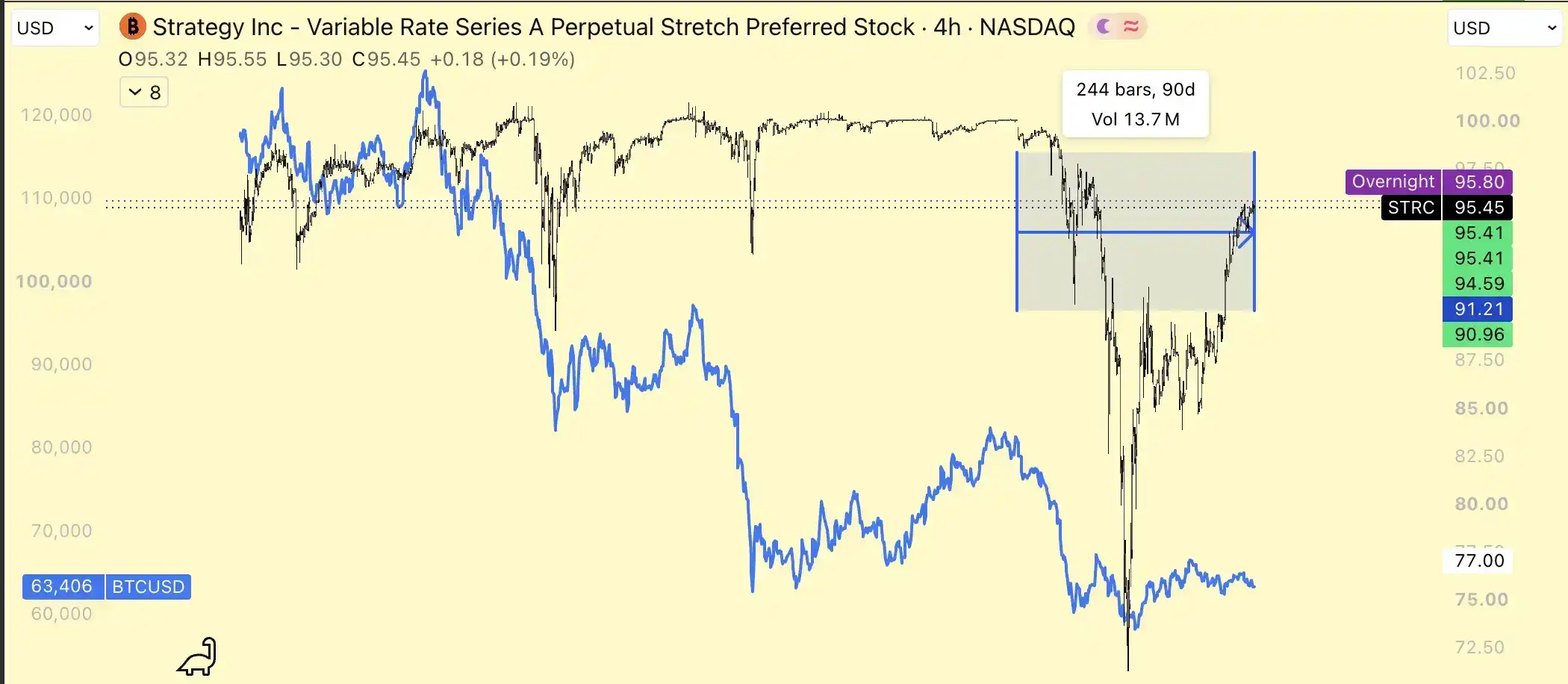
STRC must return to $100.

MicroStrategy issues additional STRC shares at-market near $100. This essentially tells the market that whenever the share price approaches $100, the company will issue more new shares. Consequently, all holders who bought below $100 will sell near $99.9. Even if the STRC price reaches $100, it will immediately be sold back below $100 by these sellers. Short sellers can also sell borrowed shares near $99.9, wait for the price to drop back to $95, buy them back to cover, and earn roughly a $5 per share profit.

The biggest risk in this trade is STRC breaking above $100 and continuing to rise, forcing short sellers to cover at higher prices. However, MicroStrategy itself adding supply near $100 actively caps that upside potential. The more the market believes the company will issue shares at $100, the more willing traders are to sell early at $99.9, making it harder for STRC to truly sustain above $100.

As long as this rule remains unchanged, if the roughly $190 million repurchase still cannot help STRC reclaim $100, the market will continue to question where the next funds to buy STRC will come from, and concerns about BTC liquidation will rise accordingly. MicroStrategy's actions of replenishing dollar reserves while repurchasing STRC already indicate the company's current priority is repairing the financing side; resuming net purchases of BTC is still secondary.

Shorting is not a free trade either. Short sellers need to borrow STRC first, then sell it on the market. During the holding period, they must pay an annualized securities lending rate exceeding 50% and compensate for a dividend yield of about 12%, resulting in a combined annualized cost of over 60%. The longer the stock price remains stuck near $100, the more these fees eat into profits.

Because STRC issuance dilutes upside potential, short sellers rarely face the risk of sustained price increases. If MicroStrategy stopped issuing STRC at $100, and STRC rose from $99.9 to $102-$105, short sellers would immediately face a paper loss of $2.1 to $5.1 per share. Some shorts, forced to cut losses, would have to buy back STRC, and their buying would further push up the price, triggering a short squeeze.

The securities lending fee determines how long shorts can hold, and MicroStrategy's issuance rule determines whether they need to cut losses early. As long as issuance starts at $100, it will attract short sellers.

The capital allocation contradiction hasn't disappeared either. When MSTR's mNAV is below 1, continuing to sell common stock dilutes the per-share value for common shareholders. Repurchasing STRC without raising dividends or repurchasing MSTR provides more direct protection for preferred shareholders. The company sees a longer dollar reserve coverage period and a narrower Bitcoin credit spread, while common shareholders calculate who bears the cost of this repair.

Bitfinex Long

Bitfinex Long positions typically exhibit an inverse relationship with BTC price. When BTC falls, large long positions on Bitfinex often increase; when BTC rises, these long positions gradually decrease. The market is accustomed to using this inverse relationship as a positioning indicator to observe whether large funds are accumulating BTC during price weakness.
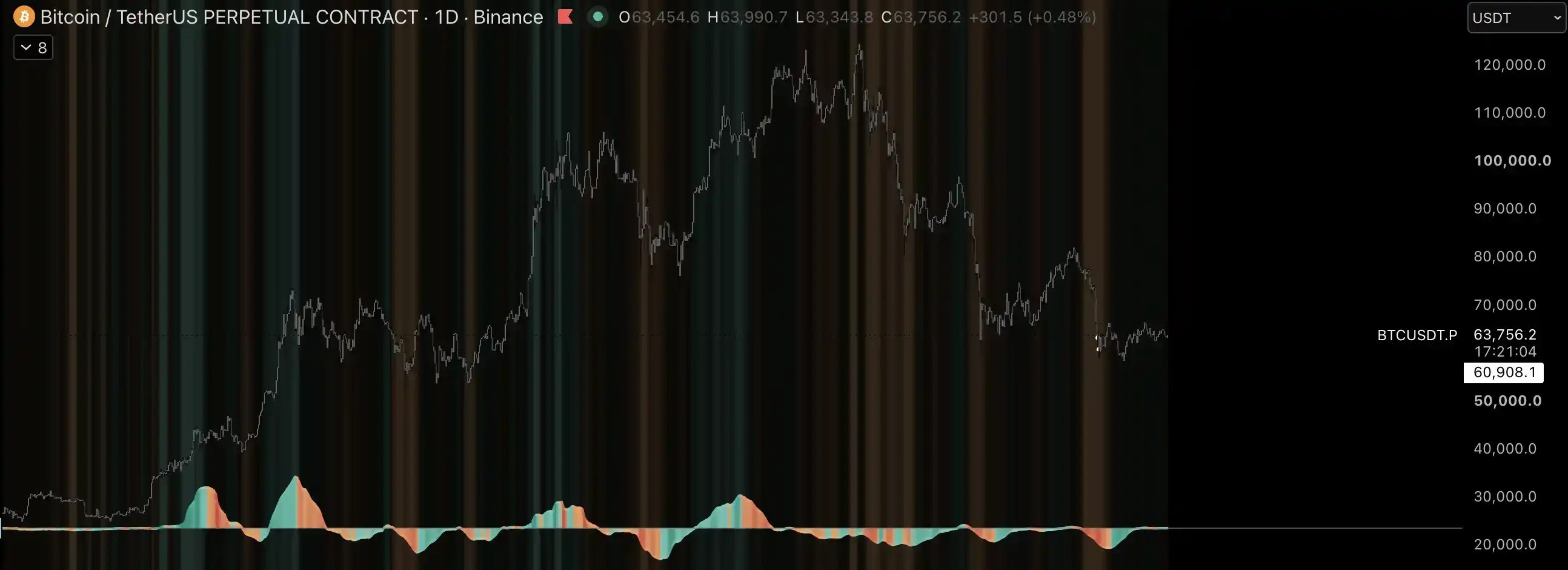
Bitfinex Long Rate of Change (Inverted) Indicator

Recently, this indicator has failed. The rate of change for Bitfinex Long has dropped to its lowest level since the end of the 2022 bear market. While BTC consolidates around the $60,000s, Bitfinex long positions have neither increased nor decreased significantly, offering no directional signal for the next price move.

BTC's "savior" has turned into "Satan."

Criptomoedas em alta

Perguntas relacionadas

QAccording to the article, what does the low transaction volume and stagnant BTC price indicate about the current market?

AThe low transaction volume and stagnant BTC price indicate a severe lack of market participants and liquidity, making the market susceptible to being moved by small trades but lacking the sustained momentum to establish a clear new direction.

QWhat is the significance of the 61,000 to 60,000 USD price level for BTC according to the options market data mentioned?

AThe 61,000 to 60,000 USD price level is identified as the gamma flip zone in the options market. Below this level, market makers' hedging behavior would switch from absorbing volatility (long gamma) to amplifying sell-side pressure (short gamma), potentially accelerating a price decline.

QWhy does the article suggest that STRK's rebound to near 100 USD might not be a genuine bullish signal for BTC?

AThe article suggests the rebound might not be bullish because it could provide large entities holding BTC an improved exit opportunity in a thin market. Furthermore, STRK's own structure, where Strategy issues new shares near 100 USD, creates a selling wall that caps its price, limiting its ability to sustainably drive positive sentiment for BTC.

QWhat is the core dilemma facing STRK's price action as explained in the article?

AThe core dilemma is that Strategy's rule of issuing new STRK shares at or near 100 USD creates a self-imposed price ceiling. It encourages selling just below that level (e.g., at 99.9 USD) by both holders and short sellers, making it extremely difficult for the price to sustainably break above and hold 100 USD.

QWhat does the recent behavior of the 'Bitfinex Long' indicator imply, according to the article?

AThe recent behavior implies the 'Bitfinex Long' indicator has become ineffective. Its change rate has fallen to multi-year lows and shows no clear correlation with BTC price movements, failing to provide the usual signal about whether large capital is accumulating or distributing during price weakness.

Leituras Relacionadas

Investing 300 Million Yuan in a Leap to Optical Chips: Can Jinzi Ham, with Its History of Repeated Cross-Industry Setbacks, Succeed This Time?

Jinzi Ham, a Chinese listed company traditionally known for its "Jinhua Ham," is making a significant 3 billion yuan bet by investing in the semiconductor sector. Through its wholly-owned subsidiary Jinzi Semiconductor, the company has completed two rounds of funding totaling 3 billion yuan to acquire up to a 20% stake in Zhongsheng Microelectronics, a company specializing in high-speed optical communication chips for AI and data centers. This move comes as Jinzi Ham faces pressure on its core business. The company reported its first semi-annual net loss since its 2010 IPO in the first half of 2026, with revenue from its ham products dropping significantly. Changing consumer preferences towards low-salt, low-fat diets and a broader market contraction for cured meats have impacted its traditional operations. The investment in Zhongsheng Micro represents Jinzi Ham's latest attempt to find a new growth engine through cross-sector diversification. Historically, such ventures have yielded poor results. Past forays into rare earth minerals (2013-2017), internet finance (2014-2016), healthcare (2016-2018), and computing power (2023) mostly ended in divestment or losses, failing to create sustainable value and sometimes dragging down overall profitability. The current chip investment carries similar risks. Zhongsheng Micro is currently loss-making, and its high valuation presents potential impairment risks. While the deal includes performance guarantees and an IPO/repurchase clause by 2029 to mitigate risk, the fundamental disconnect between ham production and advanced semiconductor manufacturing remains a major challenge. The article questions whether this "chase for light" in the optical chip sector will break the company's cycle of failed diversification or become another short-term gamble on a hot trend.

marsbitHá 4m

Investing 300 Million Yuan in a Leap to Optical Chips: Can Jinzi Ham, with Its History of Repeated Cross-Industry Setbacks, Succeed This Time?

marsbitHá 4m

Fidelity Bets on ETH Staking Dividends, Small Ethereum ETFs Face Survival Crisis

On August 12th, Fidelity announced plans to introduce staking and quarterly cash dividends to its Fidelity Ethereum Fund (FETH). According to amended filings, the fund can stake up to 100% of its Ethereum holdings, with Fidelity retaining 85% of gross staking rewards. After covering operational expenses, the remaining net rewards will be distributed to investors as cash dividends. Fidelity may also sell some ETH to fund these payouts. FETH, with approximately $1.34 billion in assets under management (AUM), ranks fourth among U.S. spot Ethereum ETFs. It follows leaders like BlackRock's iShares Ethereum Trust ETF ($7.21B AUM) and Grayscale's Ethereum Trust ETF ($3.46B AUM). This move aligns with a trend, as Grayscale and 21Shares have already added staking to their Ethereum products, while BlackRock launched a separate staked ETF. Currently, about 33% of Ethereum's supply is staked, yielding an annualized reward rate of roughly 2.6%. ETF net yields for investors are typically lower due to fees and the need to maintain liquidity buffers. For example, Grayscale's ETHE has a gross yield of 2.75% but a net yield of 2.11% after sponsor and custodian fees. Analysts estimate Fidelity's net yield for investors may fall between 1.5% and 2%. The introduction of staking rewards by major players like Fidelity is expected to intensify competition in the Ethereum ETF market, potentially drawing assets away from smaller funds that lack this feature. The market is already highly concentrated, with the top five Ethereum ETFs holding over 98% of the total AUM. This trend mirrors the Bitcoin ETF market, where smaller funds like Hashdex's DEFI have faced liquidation due to insufficient scale.

marsbitHá 7m

Fidelity Bets on ETH Staking Dividends, Small Ethereum ETFs Face Survival Crisis

marsbitHá 7m

Chip Giant with 700 Billion Market Cap Sees Soaring Inventory

"Chips Giant with 700 Billion Market Cap Sees Inventory Soar" In its 2026 first-half financial report, Cambricon, a leading Chinese AI chip design company, reported significant growth in both revenue and profit. Revenue reached 59.96 billion yuan, up 108.13% year-on-year, while net profit grew 122.61% to 23.11 billion yuan. However, a major point of investor focus was the sharp rise in the company's inventory, which surged 66.83% from the end of the previous year to 82.48 billion yuan. This inventory now represents 45.32% of its total assets. The increase is primarily attributed to a substantial growth in raw materials (up 77.95% to 52.78 billion yuan) and work-in-process with contract manufacturers (up 61.85% to 24.18 billion yuan). Cambricon management explained that the inventory build-up was due to increased purchases of raw materials and outsourced processing. The company acknowledged the risk of inventory impairment should market conditions change. Industry analysts noted that as a fabless chip designer, such inventory accumulation is a strategic move to secure wafer capacity. However, it carries significant risk due to the industry's rapid technological iteration. If downstream demand slows, the company could face substantial inventory write-downs. Additionally, Cambricon's prepayments soared nearly threefold to 29.14 billion yuan. Brokerage analyses interpret the concurrent rise in prepayments and inventory as a positive indicator, suggesting strong future order fulfillment and pointing towards significant revenue growth in the third quarter. Despite strong operational metrics, the company's cash and cash equivalents have shown a declining trend over the past three years, dropping to 6.26 billion yuan by mid-2026. Cambricon's stock price hit a historic high of 1,620 yuan per share in June, briefly pushing its market capitalization above one trillion yuan. As of August 13th, its share price was 1,105.5 yuan, with a total market cap of approximately 694.6 billion yuan.

marsbitHá 52m

Chip Giant with 700 Billion Market Cap Sees Soaring Inventory

marsbitHá 52m

Trading

Spot

Artigos em Destaque

O que é BITCOIN

Compreender o HarryPotterObamaSonic10Inu (ERC-20) e a Sua Posição no Espaço Cripto Nos últimos anos, o mercado de criptomoedas assistiu a um aumento na popularidade das moedas meme, cativando não apenas os traders, mas também aqueles que procuram envolvimento comunitário e valor de entretenimento. Entre estes tokens únicos está o HarryPotterObamaSonic10Inu (ERC-20), um projeto intrigante que mistura referências culturais no tecido das criptomoedas. Este artigo explora os principais aspetos do HarryPotterObamaSonic10Inu, examinando os seus mecanismos, a sua ética orientada pela comunidade e o seu envolvimento com o vasto panorama cripto. O que é o HarryPotterObamaSonic10Inu (ERC-20)? Como o nome sugere, o HarryPotterObamaSonic10Inu é uma moeda meme construída na blockchain Ethereum, classificada sob o padrão ERC-20. Ao contrário das criptomoedas tradicionais, que podem enfatizar a utilidade prática ou o potencial de investimento, este token prospera no valor de entretenimento e na força da sua comunidade. O projeto visa promover um ambiente onde utilizadores envolvidos possam reunir-se, partilhar ideias e participar em atividades inspiradas por diversos fenómenos culturais. Uma característica notável do HarryPotterObamaSonic10Inu é a zero taxa sobre transações. Este elemento atraente visa encorajar a negociação e o envolvimento da comunidade, isento de encargos adicionais que podem desencorajar os traders de pequena escala. A oferta total da moeda está fixada em mil milhões de tokens, uma cifra que marca a sua intenção de manter uma circulação substancial dentro da comunidade. Criador do HarryPotterObamaSonic10Inu (ERC-20) As origens do HarryPotterObamaSonic10Inu estão um pouco envoltas em mistério; os detalhes sobre o criador permanecem desconhecidos. O desenvolvimento deste token carece de uma equipa identificável ou de um plano explícito, o que não é raro no setor das moedas meme. Em vez disso, o projeto surgiu de forma orgânica, com o seu progresso a depender fortemente do entusiasmo e da participação da sua comunidade. Investidores do HarryPotterObamaSonic10Inu (ERC-20) No que diz respeito a investimentos externos e apoios, o HarryPotterObamaSonic10Inu também permanece ambíguo. O token não lista quaisquer fundações de investimento conhecidas ou apoio organizacional significativo. Em vez disso, o “sangue vital” do projeto é a sua comunidade de base, que informa o seu crescimento e sustentabilidade através da ação coletiva e do envolvimento no espaço cripto. Como Funciona o HarryPotterObamaSonic10Inu (ERC-20)? Como uma moeda meme, o HarryPotterObamaSonic10Inu opera principalmente fora dos quadros tradicionais que muitas vezes governam o valor dos ativos. Existem vários aspetos distintivos que definem como o projeto funciona: Transações Sem Taxas: Sem taxas sobre transações, os utilizadores podem comprar e vender o token livremente, sem a preocupação de custos ocultos. Envolvimento da Comunidade: O projeto prospera na interação da comunidade, aproveitando plataformas de redes sociais para criar entusiasmo e facilitar a participação. Discussões, partilha de conteúdo e envolvimento são elementos cruciais que ajudam a expandir o seu alcance e a fomentar a lealdade entre os apoiantes. Sem Utilidade Prática: Deve ser notado que o HarryPotterObamaSonic10Inu não oferece utilidade concreta dentro do ecossistema financeiro. Em vez disso, é classificado como um token principalmente para entretenimento e atividades comunitárias. Referência Cultural: O token incorpora de forma inteligente elementos da cultura popular para atrair interesse, conectando-se tanto com entusiastas de memes como com seguidores de criptomoedas. HarryPotterObamaSonic10Inu exemplifica como as moedas meme operam de forma diferente de projetos de criptomoedas mais tradicionais, entrando no mercado como construções sociais inovadoras em vez de ativos utilitários. Linha do Tempo do HarryPotterObamaSonic10Inu (ERC-20) A história do HarryPotterObamaSonic10Inu é marcada por vários marcos notáveis: Criação: O token surgiu de um meme viral, capturando a imaginação de muitos entusiastas de criptomoedas. Datas específicas de criação não estão disponíveis, sublinhando a sua ascensão orgânica. Listagem em Exchanges: O HarryPotterObamaSonic10Inu conseguiu entrar em várias exchanges, permitindo um acesso e negociação mais fáceis pela comunidade. Iniciativas de Envolvimento da Comunidade: Atividades contínuas direcionadas a melhorar a interação comunitária, incluindo concursos, campanhas em redes sociais e geração de conteúdo por fãs e defensores. Planos de Expansão Futura: O roteiro do projeto inclui o lançamento de uma coleção de NFTs, mercadorias e um site de eCommerce relacionado aos seus temas culturais, envolvendo ainda mais a comunidade e tentando adicionar mais dimensões ao seu ecossistema. Pontos-Chave sobre o HarryPotterObamaSonic10Inu (ERC-20) Natureza Orientada pela Comunidade: O projeto prioriza a contribuição coletiva e a criatividade, assegurando que o envolvimento dos utilizadores está na vanguarda do seu desenvolvimento. Classificação como Moeda Meme: Representa o epítome da criptomoeda baseada em entretenimento, destacando-se dos veículos de investimento tradicionais. Sem Afiliação Direta com o Bitcoin: Apesar da semelhança no nome do ticker, o HarryPotterObamaSonic10Inu é distinto e não tem qualquer relação com o Bitcoin ou outras criptomoedas estabelecidas. Foco na Colaboração: O HarryPotterObamaSonic10Inu é projetado para criar um espaço de colaboração e partilha de histórias entre os seus detentores, proporcionando uma via para a criatividade e o fortalecimento da comunidade. Perspectivas Futuras: A ambição de expandir além da sua premissa inicial para NFTs e mercadorias delineia um caminho para o projeto potencialmente entrar em avenidas mais mainstream dentro da cultura digital. À medida que as moedas meme continuam a capturar a imaginação da comunidade cripto, HarryPotterObamaSonic10Inu (ERC-20) destaca-se devido aos seus laços culturais e abordagem centrada na comunidade. Embora possa não se encaixar no molde típico de um token orientado para utilidade, a sua essência reside na alegria e camaradagem fomentadas entre os seus apoiantes, destacando a natureza em evolução das criptomoedas em uma era cada vez mais digital. À medida que o projeto continua a desenvolver-se, será importante observar como as dinâmicas comunitárias influenciam a sua trajetória no panorama em constante mudança da tecnologia blockchain.

2.3k Visualizações TotaisPublicado em {updateTime}Atualizado em 2024.12.03

O que é BITCOIN

Como comprar BTC

Bem-vindo à HTX.com!Tornámos a compra de Bitcoin (BTC) simples e conveniente.Segue o nosso guia passo a passo para iniciar a tua jornada no mundo das criptos.Passo 1: cria a tua conta HTXUtiliza o teu e-mail ou número de telefone para te inscreveres numa conta gratuita na HTX.Desfruta de um processo de inscrição sem complicações e desbloqueia todas as funcionalidades.Obter a minha contaPasso 2: vai para Comprar Cripto e escolhe o teu método de pagamentoCartão de crédito/débito: usa o teu visa ou mastercard para comprar Bitcoin (BTC) instantaneamente.Saldo: usa os fundos da tua conta HTX para transacionar sem problemas.Terceiros: adicionamos métodos de pagamento populares, como Google Pay e Apple Pay, para aumentar a conveniência.P2P: transaciona diretamente com outros utilizadores na HTX.Mercado de balcão (OTC): oferecemos serviços personalizados e taxas de câmbio competitivas para os traders.Passo 3: armazena teu Bitcoin (BTC)Depois de comprar o teu Bitcoin (BTC), armazena-o na tua conta HTX.Alternativamente, podes enviá-lo para outro lugar através de transferência blockchain ou usá-lo para transacionar outras criptomoedas.Passo 4: transaciona Bitcoin (BTC)Transaciona facilmente Bitcoin (BTC) no mercado à vista da HTX.Acede simplesmente à tua conta, seleciona o teu par de trading, executa as tuas transações e monitoriza em tempo real.Oferecemos uma experiência de fácil utilização tanto para principiantes como para traders experientes.

4.9k Visualizações TotaisPublicado em {updateTime}Atualizado em 2026.06.02

Como comprar BTC

O que é $BITCOIN

OURO DIGITAL ($BITCOIN): Uma Análise Abrangente Introdução ao OURO DIGITAL ($BITCOIN) OURO DIGITAL ($BITCOIN) é um projeto baseado em blockchain que opera na rede Solana, com o objetivo de combinar as características dos metais preciosos tradicionais com a inovação das tecnologias descentralizadas. Embora partilhe um nome com o Bitcoin, frequentemente referido como “ouro digital” devido à sua percepção como uma reserva de valor, o OURO DIGITAL é um token separado projetado para criar um ecossistema único dentro da paisagem Web3. O seu objetivo é posicionar-se como um ativo digital alternativo viável, embora os detalhes sobre as suas aplicações e funcionalidades ainda estejam em desenvolvimento. O que é o OURO DIGITAL ($BITCOIN)? OURO DIGITAL ($BITCOIN) é um token de criptomoeda explicitamente projetado para uso na blockchain Solana. Em contraste com o Bitcoin, que fornece um papel amplamente reconhecido como armazenamento de valor, este token parece focar em aplicações e características mais amplas. Aspectos notáveis incluem: Infraestrutura Blockchain: O token é construído na blockchain Solana, conhecida pela sua capacidade de lidar com transações de alta velocidade e baixo custo. Dinâmicas de Oferta: O OURO DIGITAL tem um fornecimento máximo limitado a 100 quatrilhões de tokens (100P $BITCOIN), embora os detalhes sobre o seu fornecimento circulante ainda não tenham sido divulgados. Utilidade: Embora as funcionalidades precisas não estejam explicitamente delineadas, existem indicações de que o token poderia ser utilizado para várias aplicações, potencialmente envolvendo aplicações descentralizadas (dApps) ou estratégias de tokenização de ativos. Quem é o Criador do OURO DIGITAL ($BITCOIN)? Neste momento, a identidade dos criadores e da equipa de desenvolvimento por trás do OURO DIGITAL ($BITCOIN) permanece desconhecida. Esta situação é típica entre muitos projetos inovadores no espaço da blockchain, particularmente aqueles alinhados com finanças descentralizadas e fenómenos de moedas meme. Embora tal anonimato possa fomentar uma cultura orientada pela comunidade, intensifica as preocupações sobre governança e responsabilidade. Quem são os Investidores do OURO DIGITAL ($BITCOIN)? As informações disponíveis indicam que o OURO DIGITAL ($BITCOIN) não tem apoiantes institucionais conhecidos ou investimentos proeminentes de capital de risco. O projeto parece operar num modelo peer-to-peer focado no apoio e adoção da comunidade, em vez de rotas de financiamento tradicionais. A sua atividade e liquidez estão principalmente situadas em exchanges descentralizadas (DEXs), como a PumpSwap, em vez de plataformas de negociação centralizadas estabelecidas, destacando ainda mais a sua abordagem de base. Como Funciona o OURO DIGITAL ($BITCOIN) A mecânica operacional do OURO DIGITAL ($BITCOIN) pode ser elaborada com base no seu design de blockchain e nas características da rede: Mecanismo de Consenso: Ao aproveitar o exclusivo proof-of-history (PoH) da Solana combinado com um modelo de proof-of-stake (PoS), o projeto assegura uma validação eficiente das transações, contribuindo para o alto desempenho da rede. Tokenomics: Embora mecanismos deflacionários específicos não tenham sido extensivamente detalhados, o vasto fornecimento máximo de tokens implica que pode atender a microtransações ou casos de uso de nicho que ainda estão por definir. Interoperabilidade: Existe o potencial para integração com o ecossistema mais amplo da Solana, incluindo várias plataformas de finanças descentralizadas (DeFi). No entanto, os detalhes sobre integrações específicas permanecem não especificados. Cronologia de Eventos Chave Aqui está uma cronologia que destaca marcos significativos relacionados ao OURO DIGITAL ($BITCOIN): 2023: O lançamento inicial do token ocorre na blockchain Solana, marcado pelo seu endereço de contrato. 2024: O OURO DIGITAL ganha visibilidade ao tornar-se disponível para negociação em exchanges descentralizadas como a PumpSwap, permitindo que os utilizadores o negociem contra SOL. 2025: O projeto testemunha atividade de negociação esporádica e potencial interesse em envolvimentos liderados pela comunidade, embora não tenham sido documentadas parcerias ou avanços técnicos notáveis até ao momento. Análise Crítica Forças Escalabilidade: A infraestrutura subjacente da Solana suporta altos volumes de transações, o que pode aumentar a utilidade do $BITCOIN em vários cenários de transação. Acessibilidade: O potencial preço de negociação baixo por token pode atrair investidores de retalho, facilitando uma participação mais ampla devido a oportunidades de propriedade fracionada. Riscos Falta de Transparência: A ausência de apoiantes, desenvolvedores ou um processo de auditoria publicamente conhecidos pode gerar ceticismo em relação à sustentabilidade e confiabilidade do projeto. Volatilidade do Mercado: A atividade de negociação depende fortemente do comportamento especulativo, o que pode resultar em volatilidade significativa dos preços e incerteza para os investidores. Conclusão O OURO DIGITAL ($BITCOIN) surge como um projeto intrigante, mas ambíguo, dentro do ecossistema em rápida evolução da Solana. Embora tente aproveitar a narrativa do “ouro digital”, a sua divergência do papel estabelecido do Bitcoin como reserva de valor sublinha a necessidade de uma diferenciação mais clara da sua utilidade pretendida e estrutura de governança. A aceitação e adoção futuras dependerão provavelmente da abordagem da atual opacidade e da definição mais explícita das suas estratégias operacionais e económicas. Nota: Este relatório abrange informações sintetizadas disponíveis até outubro de 2023, e desenvolvimentos podem ter ocorrido além do período de pesquisa.

450 Visualizações TotaisPublicado em {updateTime}Atualizado em 2025.05.13

O que é $BITCOIN

Discussões

Bem-vindo à Comunidade HTX. Aqui, pode manter-se informado sobre os mais recentes desenvolvimentos da plataforma e obter acesso a análises profissionais de mercado. As opiniões dos utilizadores sobre o preço de BTC (BTC) são apresentadas abaixo.

活动图片