Author: Jae, PANews
The old game is no longer viable. MicroStrategy (MSTR), the world's largest corporate holder of Bitcoin, is choosing to face reality.
On June 29th, an 8-K filing submitted by MicroStrategy to the SEC (U.S. Securities and Exchange Commission) marked a phase-ending point for its longstanding "mindless accumulation" persona. It was replaced by a set of defensive measures under a new "Digital Credit Capital Framework."
Following the news, both the company's common stock (MSTR) and its Series C Preferred Stock (STRC) surged over 12%. The market cast a vote of confidence in MicroStrategy's self-renewal amidst this crisis, but the believers fell silent.
Flywheel Halt + Credit Crisis: MicroStrategy Pushed Into a Corner by $14 Billion Unrealized Loss
In the past, MicroStrategy's business model was a typical "Wall Street perpetual motion machine": Issue more stock to buy Bitcoin → Increase Net Asset Value (NAV) per share → Drive up stock premium → Issue more stock again.
However, the counterforce of Bitcoin's price cycle has ground this machine to a halt.
To date, MicroStrategy holds 847,363 Bitcoins, with an average purchase cost of approximately $75,651 per coin. With the market price of Bitcoin plummeting to under $60,000, its paper loss exceeds $13 billion.
The fuel for the flywheel was: mNAV (Market Cap / Bitcoin NAV) must be greater than 1. When Bitcoin crashes and MSTR's mNAV falls below the critical threshold of 1, the market values MicroStrategy even below the liquidation value of its Bitcoin holdings, causing the flywheel to stop.
Pressure on the credit side is equally heavy. As the most liquid and actively traded primary financing tool, the price of STRC has crashed, once hitting a historic low of $71.25, representing a discount of over 28% from its $100 face value. This means the ATM (At-The-Market) equity offering channel has effectively closed. Forcing an offering at a deep discount not only constitutes a substantive loss of capital but also further dilutes the equity of existing shareholders.
Industry criticism and legal actions have followed closely. The Rosen Law Firm initiated an investigation into MicroStrategy's disclosure compliance. Ripple CEO Brad Garlinghouse condemned it as "unsustainable financial engineering," and economist Peter Schiff bluntly stated that Michael Saylor "destroyed shareholder value."
Cornered on a precipice, MicroStrategy must re-prove its viability to the market.
Five Pillars to Reconstruct the Capital Edifice: $2B Securities Buyback + $1.25B BTC Liquidation
To repair the credit anchor and restart the financing chain, MicroStrategy CEO Phong Le proposed: The company must transition from one-way capital issuance to active capital management. Consequently, MicroStrategy unveiled the "Digital Credit Capital Framework," attempting to support its teetering valuation and liquidity with five pillars.
Pillar One: A $2.55 Billion "Reserve Cushion." As of the end of June, MicroStrategy holds approximately $2.55 billion in cash reserves. Under the new rules, this money can only be used for paying preferred stock dividends and interest on existing debt. Any other use requires special board authorization.
Based on the current annual fixed expenses of about $1.76 billion, this reserve covers roughly 17.4 months, far exceeding the board's set minimum alert level of 12 months.
DeFi researcher Chen Mo pointed out that MicroStrategy placing cash reserves first likely aligns with market expectations. Preserving STRC means preserving credit. If confidence is restored, the possibility of subsequent financing remains.
Pillar Two: Increase STRC Dividend Rate to 12%. Starting July 1st, the annualized dividend rate for STRC was raised from 11.5% to 12%, and the payout frequency changed from monthly to bi-weekly. MicroStrategy aims to lure STRC back to the $99-$100 face value range with high yields. Once it returns to par value, the ATM financing channel can reopen.
Pillar Three: Up to $1 Billion in Preferred Stock Buybacks. The board authorized the repurchase of all issued Series C Preferred Stock. When irrational sell-offs occur in the secondary market and securities are severely discounted, MicroStrategy will prioritize propping up STRC.
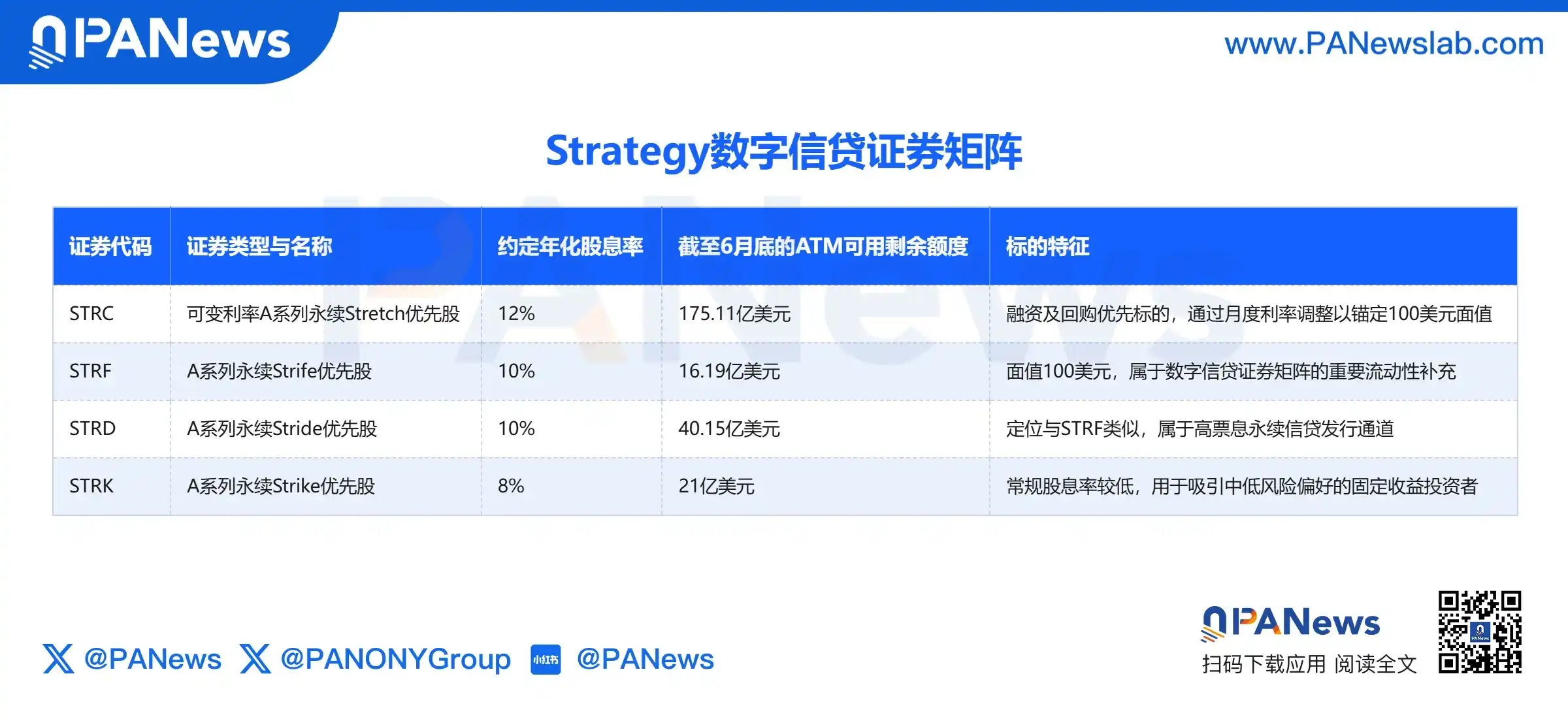
Pillar Four: Up to $1 Billion in Common Stock Buybacks. When management believes the MSTR price is significantly below its intrinsic value, buybacks are the most effective "tourniquet," helping to increase Bitcoin per share and enhance long-term shareholder equity.
Pillar Five: Up to $1.25 Billion Bitcoin Liquidation Plan. The board authorized the company to sell portions of its Bitcoin holdings in an orderly and phased manner. Proceeds will be used to replenish reserves, repurchase securities, or pay interest. In the past, MicroStrategy's BTC was a "dead asset," almost exclusively accumulated. Now, it becomes a flexible credit backing and liquidity buffer.
This is the most unexpected pillar in the entire framework. The "buy only, never sell" belief formally yields to the reality of "dynamic management." Notably, while MicroStrategy had previously sold small amounts of Bitcoin to "test" market sentiment, when the formal selling plan was announced, the market reaction seemed calm, with Bitcoin's price remaining stable around $60,000.
CryptoQuant analyst Axel Adler noted that as MicroStrategy continues financing and capital management through Bitcoin-related assets, Bitcoin's role is evolving from a pure value reserve tool into a critical liquidity infrastructure within the company's capital operations system.
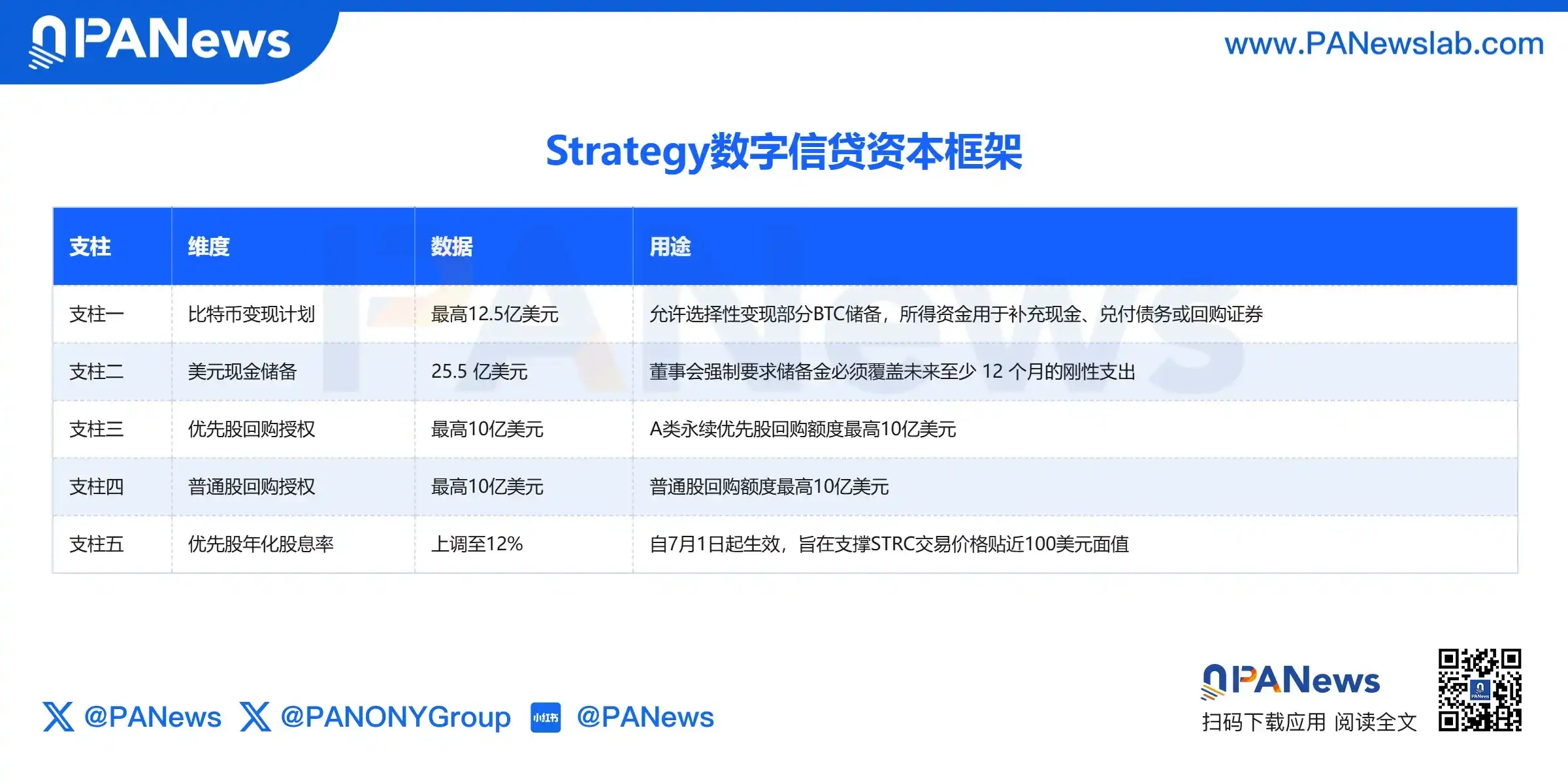
With this combination of moves, MicroStrategy has pushed its total available liquidity to $3.8 billion ($2.55B cash + $1.25B BTC liquidation capacity), extending the coverage period for fixed expenses to 25.9 months. According to Bitmine calculations, based on rolling 36-month cycles since 2009, the probability of Bitcoin posting negative returns is less than 0.8%. A 26-month reserve size is sufficient for MicroStrategy to safely navigate volatility during a bear market phase. In other words, even in a bear market, MicroStrategy can survive for at least two years.
The essence of the new framework is: Guide secondary market prices through up to $2 billion in securities buybacks, repair mNAV to above 1, thereby reopening the financing channels, and then use the raised funds to buy Bitcoin.
From "expansion through issuance" to "support through buybacks," MicroStrategy's strategic focus has shifted from pursuing Bitcoin holding scale to maintaining the health of its capital structure and the smoothness of its financing channels.
Crypto analyst Lan Hu clarified: "MicroStrategy's pure HODL model of 'inflow only' has inherent fragility under a high fixed-cost structure. They are now starting to build defensive tools while retaining offensive capabilities. Based on this framework, MicroStrategy can use a limited amount of BTC to buy time and credit stability in stress-test scenarios, similar to establishing a lender-of-last-resort mechanism for 'digital credit' products, where the last lender is their own BTC reserves. For BTC, this is a long-term positive, breaking the previous market expectation. MicroStrategy gains sustainability and is no longer a ticking time bomb."
The Heaviest Cost Behind the Redemption: A Crack in the Faith
While MicroStrategy's capital management transformation props up a liquidity umbrella, it also quietly plants a double-edged sword for the Bitcoin market.
First, the annual $1.76 billion in fixed expenses is the source of "blood loss." Even if MicroStrategy stops buying Bitcoin, it must fork out this massive sum every year. With its traditional business's cash-generating ability declining and Bitcoin not yielding interest, this model essentially bets that Bitcoin will outperform its double-digit cost of capital. If Bitcoin remains stagnant for an extended period, its cash reserves will eventually be depleted by interest payments.
Second, the correlation coefficient between STRC and BTC has reached as high as 0.7. The defensive nature of STRC is being eroded. What should be a low-volatility fixed-income-like preferred stock now moves in sync with high-volatility Bitcoin. If Bitcoin plunges again, the 12% coupon might not compensate for the secondary market discount, potentially accelerating capital flight, which in turn could again shake the pricing foundation of the Digital Credit Capital Framework.
The most profound impact is that the $1.25 billion BTC liquidation plan could lead to a crack in the faith. MicroStrategy previously enjoyed a valuation premium because the market viewed it as a pure proxy asset that would "never sell Bitcoin." Now, with the board publicly approving a selling quota—though a rational financial defense—it undoubtedly tears a gash in the faith of Bitcoin bulls: it has shifted from a major buyer of Bitcoin to a potential source of sell-side pressure.
This reversal of expectations could lead to sustained selling pressure in the Bitcoin market, similar to the persistent redemptions seen after GBTC converted to an ETF. If future MicroStrategy 8-K filings disclose substantive selling records, or if interest expenses force a large-scale, triggered sell-off, it could spark a market-wide panic sell-off.
Moving forward, investors need to closely monitor two signals:
-
Execution progress of the $2 billion buyback: Whether the STRC price returns near its $100 face value will determine the speed of mNAV repair and, consequently, whether the capital engine can be reignited.
-
The first shot of Bitcoin liquidation: MicroStrategy's first substantive Bitcoin selling operation and the market's absorption of it.
From the faith-driven persona of all-in Bitcoin buying to the calculated persona of capital operations, MicroStrategy's transformation marks a pivotal inflection point in DAT capital management history. It is no longer a one-way accumulation machine but is beginning to manage its balance sheet dynamically, akin to how a central bank might, by regulating its own "base money (BTC)" and "credit derivation (Preferred Stock/Common Stock)."
This is both a self-rescue and an evolution.
Whether the "Digital Credit Balancing Act" succeeds will not only determine MicroStrategy's own ceiling but also provide a referenceable blueprint for global DAT capital allocation strategies.