Meta Spent $90 Billion to Close the Metaverse, $2 Billion to Let AI Live in Your Computer

marsbitPublicado em 2026-03-19Última atualização em 2026-03-19

Resumo

Meta spent $90 billion to build the metaverse, only to shut down its flagship VR platform, Horizon Worlds, on June 15. The virtual world, launched in 2021 with great fanfare, failed to attract a meaningful user base despite massive investment. Its closure marks a symbolic end to Meta’s ambitious—and costly—bet on the metaverse, which accumulated nearly $90 billion in losses over seven years. Simultaneously, Meta is aggressively pivoting to AI. It acquired AI startup Manus for $2 billion, which recently launched a desktop version allowing AI to operate directly on users' local machines—reading files, running apps, and executing commands. In contrast to the metaverse’s weak adoption, Manus reached one million paid users within eight months. The shift is stark: Meta is cutting 20% of its workforce—around 15,000 jobs—and reallocating nearly its entire $115–135 billion capital expenditure budget toward AI infrastructure. This abrupt turn reflects industry-wide FOMO (fear of missing out) on AI, similar to the metaverse hype half a decade ago. Companies like Block, Shopify, and Amazon are also slashing jobs to fund AI investments. While Meta faces internal challenges—including delayed AI models and executive departures—its drastic realignment underscores a broader trend: the consensus has shifted from virtual worlds to ambient AI. The question remains whether this new bet will prove more sustainable than the last.

Author: Curry, Deep Tide TechFlow

On October 28, 2021, Mark Zuckerberg stood next to a legless virtual avatar and announced the company's name change from Facebook to Meta.

At the time, he said the metaverse would reach one billion people within a decade, host hundreds of billions of dollars in digital commerce, and provide job opportunities for millions of creators and developers.

That year, the metaverse was the sexiest concept on Earth.

Microsoft talked about building a metaverse version of Teams, NVIDIA launched Omniverse, Nike opened a virtual store on Roblox... No one wanted to miss the boat.

Meta didn't just buy a ticket; it bought the entire ship.
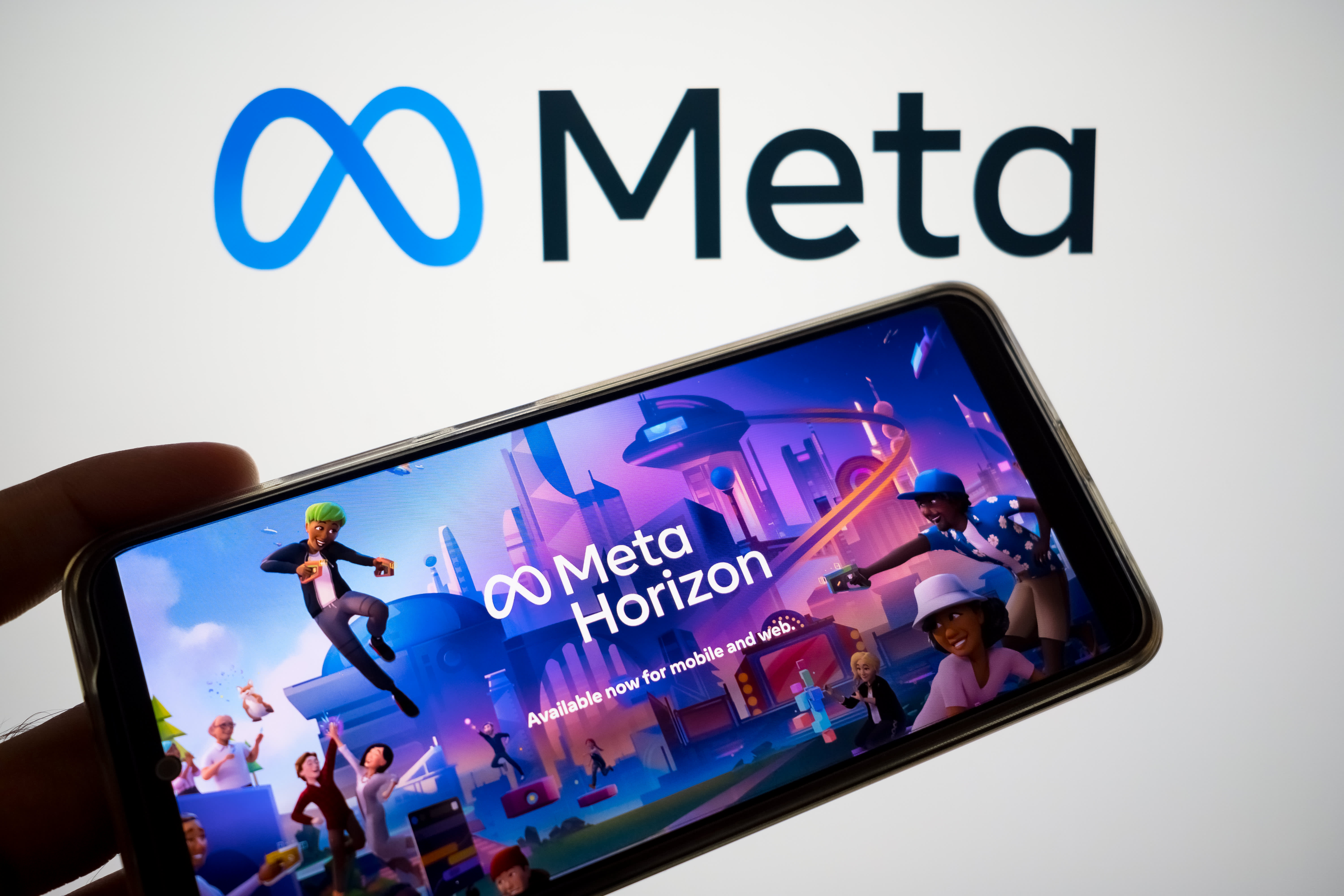
Looking back now, the product Horizon Worlds can be understood as the core evidence for Meta's rebranding story—you put on a headset, enter a virtual world, and hang out, play, and hold meetings with other people's cartoon avatars.

When it launched at the end of 2021, it was the flagship project personally endorsed by Zuckerberg. But four and a half years later, one billion people have not come to play.

On March 17, Meta posted an announcement on its community forum: the VR version of Horizon Worlds will be completely shut down on June 15, at which point the app will be removed from Quest headsets and the virtual world will no longer be accessible. A mobile version will remain available and continue to operate.

It's a bit like a restaurant closing its dine-in service and only keeping takeout, but this restaurant was originally built for dine-in.

The department footing the bill is called Reality Labs. Its cumulative operating losses over seven years are close to $90 billion. It lost $6 billion in the most recent quarter alone, with revenues of less than $1 billion, not even covering one-sixth of the losses.

In January of this year, this department laid off over 1,000 people, shut down multiple VR content studios, and canceled almost all ongoing virtual world projects.

The boat ticket everyone was afraid of missing in 2021—now the ship has sunk, and the ticket is still clutched in their hands.

In mid-March, Reuters reported that Meta was planning to lay off about 20% of its workforce, nearly 15,000 people. If implemented, this would be the largest round of layoffs since 2022.

At the same time, Meta's capital expenditure budget for this year is $115 to $135 billion, almost entirely poured into AI infrastructure.

Shut down the virtual world, lay off one-fifth of the people, and pour all the saved money and freed-up positions into AI.

The day the news came out, Meta's stock price still rose by 3%. When Zuckerberg said he would go all-in on the metaverse in 2021, the capital market applauded the same way.

The answer was already on the table the day before Horizon Worlds announced its shutdown.

Virtual World Closes, Personal Computer Steps In

On March 16, Manus, acquired by Meta for a hefty $2 billion, launched its desktop version.

It features a function called "My Computer" that brings AI down from the cloud directly into your local machine: reading files, opening applications, running terminal commands.

This happened the day before Horizon Worlds announced its shutdown.

The year Horizon Worlds launched, the experience was like this:

You spend a couple thousand dollars on a Quest headset, put it on, adjust the pupil distance, draw a safety boundary, and then enter a cartoon-style virtual lobby. The people inside have no legs and float around to move. You can explore themed worlds, play mini-games, and chat with strangers' virtual avatars.

After half an hour, the headset starts pressing on your face. After an hour, some people start feeling dizzy.

Meta spent four years and $90 billion on this lobby. The result is that it never disclosed active user numbers. Not for secrecy, but because it wouldn't look good.

The Manus Desktop experience is like this:

You download an application, open it, and type a sentence. For example, "Organize the thousands of files in my Downloads folder by type." It scans your hard drive, automatically creates subfolders, and automatically sorts and archives everything, all without you touching the keyboard.
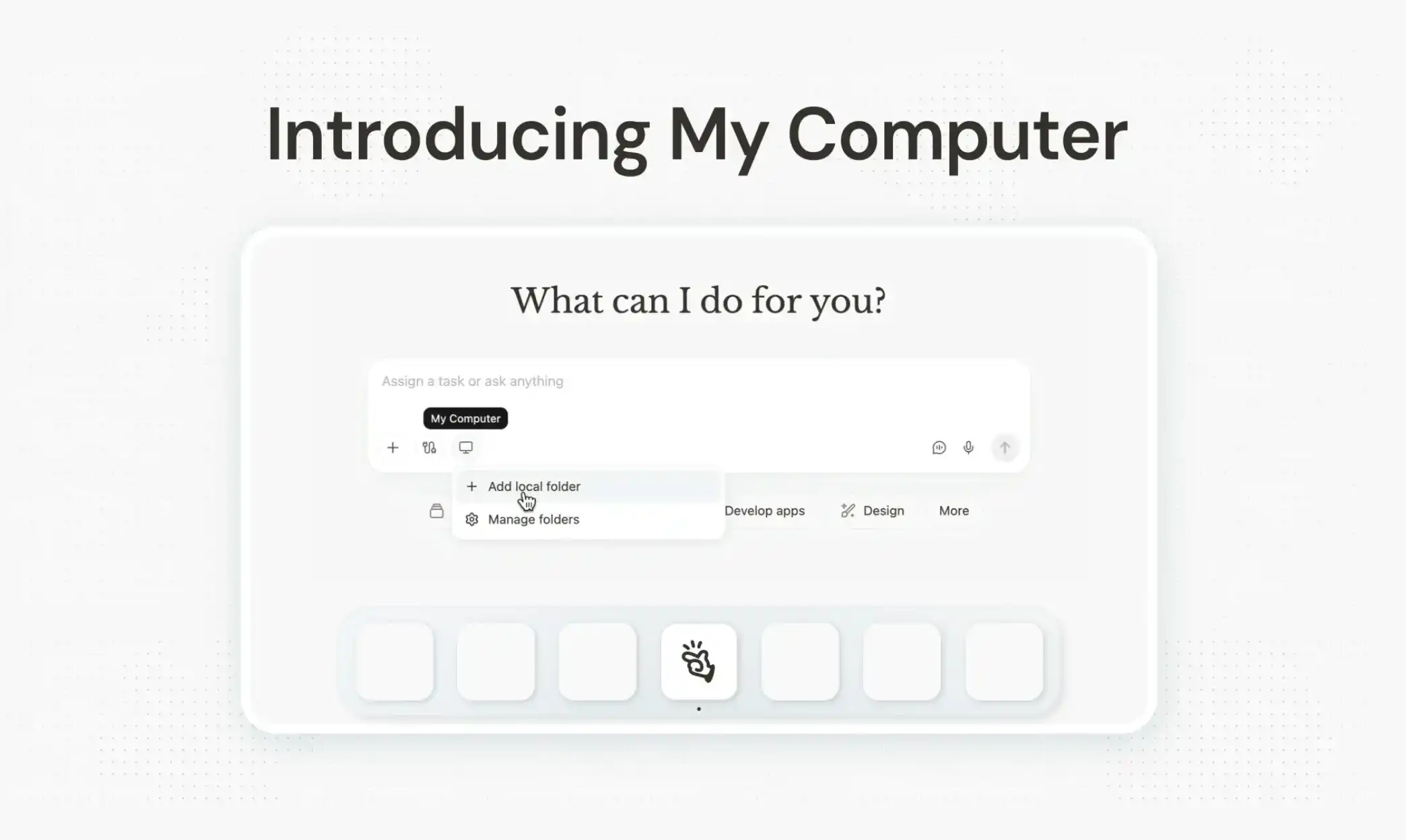
In a demo, someone had it write a macOS application from scratch in a local development environment; it took 20 minutes. Don't forget, Manus reached one million paid users within eight months of its previous launch, with annualized revenue exceeding $100 million.

When everyone says Meta overpaid for Manus, perhaps compare it to the now-shut-down metaverse project Horizon Worlds.

A product that spent $90 billion trying to get you into a virtual world, and no one came. A product that spent $2 billion to come into your real desktop, has real revenue and use cases—which one would you choose?

The same company, the same week, shut down the former and bet on the latter.

It used to be Meta building a world for you to come to. Now it's AI coming through the screen to you.

But having the right direction doesn't mean the path is smooth. After this U-turn, Meta doesn't exactly look more at ease.

The Metaverse and AI Might Be the Same Kind of FOMO

If you only read the headlines, Meta now looks like a company making one blunder after another.

The metaverse burned $90 billion and was shut down. The flagship AI model, Avocado, originally scheduled for release in March, was delayed to May after internal testing found its reasoning and programming lagged behind同期 (contemporary) products from Google, OpenAI, and Anthropic.

The previous generation, Llama 4, was released last year to a lukewarm reception, failing to stir much excitement in the developer community. It was reported that the company even internally discussed temporarily licensing Google's Gemini to fill in for its own products—a company spending $135 billion on AI infrastructure, needing to borrow someone else's model.

Chief AI Scientist Yann LeCun left to start his own company; the new AI head, Alexandr Wang, poached from Scale AI for $14.3 billion, hasn't yet delivered results...

Layoffs of 20%, shutting down the metaverse, model delays—the news from just one week painted a picture of a company that doesn't know what it's doing.

But if you shift your gaze away from Meta and look at the entire industry, you'll notice one thing:

Everyone is doing the exact same thing, embracing AI wholeheartedly.

In February of this year, Block's CEO Jack Dorsey announced laying off 4,000 people, nearly half the company. The layoff letter had no embellishments, stating directly that intelligent tools have changed how companies are built and operated, and smaller teams can achieve more. The stock price rose 25% that night.

Shopify's CEO sent a new rule to the whole company: from now on, if you want to request more headcount, first prove that AI can't do the job.

Amazon cut 16,000 jobs in January and targeted its robotics department in March. Atlassian laid off 1,600 people, saying it would pour all resources into AI enterprise software.

In the first 74 days of 2026, 166 tech companies laid off nearly 56,000 people in total.

Does this picture feel familiar?

2021 was like this too. After Zuckerberg renamed Meta, Microsoft talked about a metaverse Teams, NVIDIA pushed Omniverse, Nike opened a virtual store on Roblox, Disney established a metaverse division, Shanghai and Seoul released metaverse strategic plans...

Everyone was chasing the same direction. Everyone was afraid of missing out.

Five years have passed. The direction has changed, but the way of chasing hasn't.

Last time, the consensus was "the metaverse is the next computing platform." Meta spent $90 billion proving this consensus wrong. This time, the consensus is "AI can replace everything." Every company is cutting staff, slashing budgets, and pouring the saved money into AI.

There's only one difference: the last consensus has been disproven; this one hasn't yet.

But consensus is consensus. Its characteristic is that everyone believes it simultaneously, and then everyone discovers they were wrong simultaneously. The time difference in the middle is the speed at which money burns.

Meta isn't a company that's dumber than others. It just places bigger bets than anyone else each time, so when the consensus flips, its fall is the loudest.

In 2021, the whole industry bet on the metaverse, and Meta changed its name. In 2026, the whole industry is betting on AI, and Meta is laying off a fifth of its people.

Looking back five years from now, did everyone bet right on this round of AI?

No one knows. But we all know that when this question was asked in 2021, everyone's answer was also "of course we did."


Perguntas relacionadas

QWhat was the main reason for Meta to shut down Horizon Worlds VR version?

AHorizon Worlds failed to attract a significant user base despite massive investment, with Meta never disclosing active user numbers due to poor performance.

QHow much cumulative operating loss did Meta's Reality Labs department incur over seven years?

AReality Labs incurred cumulative operating losses of nearly $90 billion over seven years.

QWhat is the key feature of Meta's newly launched Manus Desktop application?

AManus Desktop features 'My Computer' functionality, allowing AI to operate directly on a user's local computer to perform tasks like file organization and application development without manual input.

QHow did Meta's stock market react to the news of restructuring and AI investment?

AMeta's stock price rose by 3% following announcements of restructuring,裁员, and increased AI investment, similar to the positive market response during its initial metaverse push.

QWhat broader industry trend does the article compare Meta's AI shift to?

AThe article compares Meta's AI shift to the earlier metaverse trend, noting that both involved industry-wide FOMO (fear of missing out), with companies aggressively reallocating resources to pursue the perceived next big technological paradigm.

Leituras Relacionadas

ZEC Co-Founder Responds to Orchard Vulnerability: No Signs of Theft, Orchard Pool to Be Sealed

ZEC Co-Founder Addresses Orchard Vulnerability: No Signs of Theft, Plans to Sunset Orchard Pool A security vulnerability was recently discovered in Zcash's Orchard shielded pool, raising key concerns. The primary questions are whether the flaw was exploited, if user funds are safe, whether users can verify the total ZEC supply, and if other similar vulnerabilities exist. Analysis suggests the vulnerability was likely not exploited prior to its discovery. It was found proactively by a researcher using specialized tools, not due to an active breach. The development team and mining pools acted quickly to contain the issue. Typical financially-motivated attacks would likely have left visible on-chain evidence, which has not been observed. User funds in Orchard are considered safe and should be recoverable, assuming no prior exploitation. If the flaw was never used, all legitimate funds can be withdrawn. The article outlines risks associated with moving funds to transparent addresses or other pools, but concludes that leaving assets in place is a reasonable option. Currently, users cannot independently verify that the total ZEC supply hasn't been inflated due to this bug. However, the planned Ironwood network upgrade is designed to resolve this. It will permanently close the Orchard pool to new deposits and internal transfers, allowing only withdrawals. This mechanism will cap total withdrawals at the amount of legitimately deposited funds, enabling anyone to cryptographically verify the supply post-upgrade. Multiple teams, including Shielded Labs, have conducted extensive audits focused on counterfeiting vulnerabilities, assisted by advanced AI tools. No additional flaws of this type have been found so far, increasing confidence that no other similar undisclosed vulnerabilities exist. In summary, evidence indicates the Orchard bug was probably not used, user funds are secure, and no other counterfeiting flaws are currently known. The upcoming Ironwood upgrade will restore users' ability to independently verify the total ZEC supply, closing this chapter.

Foresight NewsHá 6m

ZEC Co-Founder Responds to Orchard Vulnerability: No Signs of Theft, Orchard Pool to Be Sealed

Foresight NewsHá 6m

Microsoft Announces Commercial-Grade Quantum Computer to be Completed in Three Years: Will the Boots Land?

Microsoft announces plans to build a commercially viable quantum computer by 2029, a significant acceleration from the previous industry consensus of a decade. The breakthrough is fueled by their new Majorana 2 quantum chip, which boasts a record-breaking average qubit lifetime of 20 seconds—a 1,000-fold reliability improvement over its predecessor. This leap was achieved by leveraging topological qubits, a theoretically more stable technology using Majorana zero modes, and switching the core superconducting material from aluminum to lead. Crucially, Microsoft's "Discovery" agentic AI platform accelerated the R&D process. AI agents autonomously analyzed vast experimental data, optimized manufacturing parameters (like the lead alloy composition), and solved issues like "ghost noise," dramatically speeding up experimentation. While the 20-second coherence time is a landmark, challenges remain: scaling from 12 qubits to the millions needed for practical applications, managing compilation costs, and verifying quantum results. Skeptics call for peer-reviewed data, and questions persist about whether even 20 seconds is sufficient for complex algorithms like breaking RSA encryption. The race is on with other approaches (superconducting, trapped ions), but Microsoft's confidence in its topological roadmap signals a potential shortcut to a scalable quantum future.

marsbitHá 25m

Microsoft Announces Commercial-Grade Quantum Computer to be Completed in Three Years: Will the Boots Land?

marsbitHá 25m

Is There Really a "World Cup Curse" in the Market?

Is there really a "World Cup Curse" affecting markets? Historical data shows global equity markets often underperform during the tournament. The S&P 500 has averaged negative returns of -1.5% to -2.11% across 19 World Cups since 1950, with declines in 58% of events. China's Shanghai Composite fell in 71% of tournaments since 1994. Studies confirm reduced trading activity during matches, with volumes dropping significantly, especially when a home nation plays. A team's loss can also lead to negative sentiment and selling pressure in its domestic market the next day. However, the "curse" may be partly attributed to seasonal weakness. Many tournaments are held in June-July, a historically weaker period for stocks ("Sell in May and go away"). The 2022 Qatar World Cup, held in November-December, saw a smaller drop in trading volume compared to summer events, suggesting timing plays a role. The cryptocurrency market's performance during World Cups has been mixed and largely driven by its own major catalysts (e.g., Mt. Gox hack, FTX collapse, halving cycles) rather than the tournament. Investment opportunities have shifted over time. Traditional beneficiaries like TV manufacturers have seen fading returns as streaming platforms become the core viewing channel. Classic consumer plays like beer and sportswear face challenges from changing consumption trends. Newer digital assets, like fractionalized collectible player cards on blockchain, have seen explosive growth. While gambling is a traditional sector, prediction markets are emerging. In conclusion, while a statistical correlation exists, the World Cup's direct impact on markets is likely limited and intertwined with seasonal patterns. With lower liquidity during the event, the simplest strategy for many might be to step back from trading and enjoy the games.

marsbitHá 32m

Is There Really a "World Cup Curse" in the Market?

marsbitHá 32m

Trading

Spot
Futuros
活动图片




