March's Top Meme Coin Already Booked? The Brainwashing Abstract Meme 'My Sword and Shield' Is Going Viral

比推Publicado em 2026-03-07Última atualização em 2026-03-07

Resumo

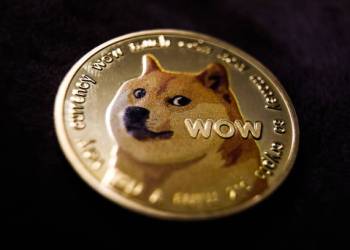
A new Chinese meme coin called "My Sword and Shield" (also referred to by its English-derived origin phrase "What the dog doing?") has rapidly gained significant traction in March. Launched on Solana, its market capitalization surged from $1.8 million to a high of $6.6 million within a week, with a 264% increase in 24-hour trading volume reaching nearly $8 million at the time of writing. The meme originates from a popular internet sound effect often used in short videos when dogs exhibit funny or confusing behavior. Its Chinese misheard version, "我的刀盾" (wǒ de dāo dùn), became a viral sensation on platforms like Douyin and Bilibili, accumulating millions of views. Early investors saw substantial returns; for instance, one trader turned a $740 investment into nearly $8,000 in profits. The token has attracted over 5,100 holders, with a gradual shift toward more decentralized ownership. Capitalizing on this cultural momentum, the GENG platform has launched a token named "What the Dog Doing" (WTDD), providing another entry point for community engagement. The project exemplifies how strong cultural consensus and high social media engagement can drive value in the volatile meme coin market. Note: DYOR (Do Your Own Research) is advised as meme coins are highly speculative and risky.

If you can only pay attention to one meme coin in March, it must be "My Sword and Shield".

According to GMGN data, within a week of its launch, the Chinese meme coin "My Sword and Shield" (My sword and shield) saw its market cap soar from $1.8 million to a high of $6.6 million.

As of the time of writing, it has a 24-hour increase of 264%, with a 24h trading volume of nearly $8 million, making it one of the best-performing memes on Solana. (Contract address: 6iA73gWCKkLWKbVr8rgibV57MMRxzsaqS9cWpgKBpump)
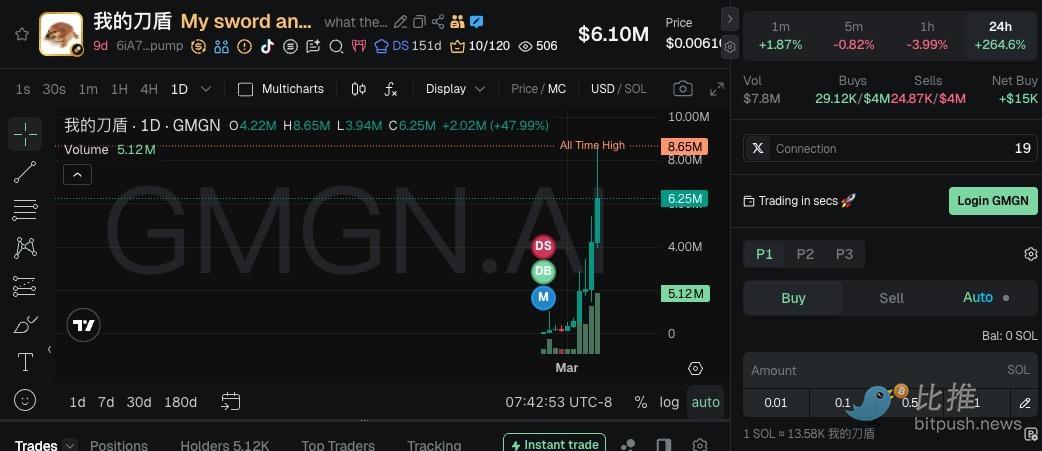
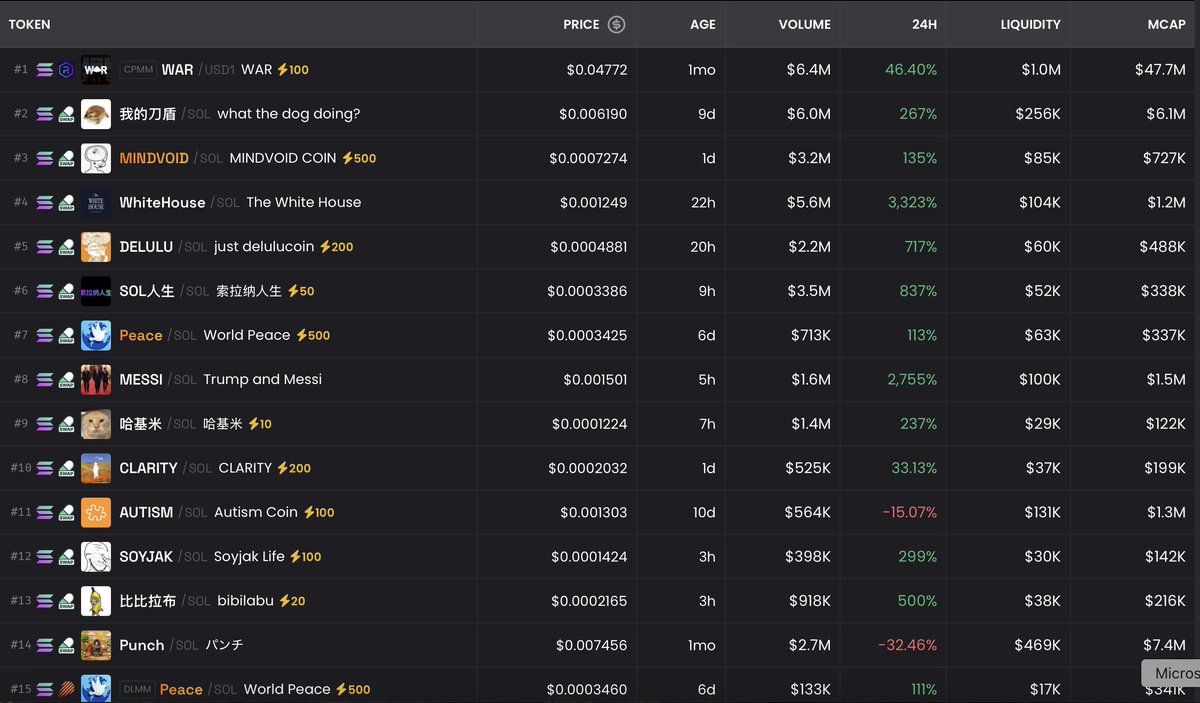
On-chain data shows that among the early large holders, a trader with the ID Cowboy bought $740 worth when the token's market cap was only $290,000, and is now sitting on a paper gain of 1900%. After partially selling, they netted a profit of $7,930. While you were just having fun watching "My Sword and Shield" videos on Douyin, some people have already turned it into real money.

What exactly is the "My Sword and Shield" meme?

The original phrase is actually in English: 「What the dog doing?」. Yes, it's that simple.

This voiceover, filled with surprise and a bit of teasing, can be traced back to funny videos from the 2010s to the early 2020s. Back then, whenever a dog did something confusing—staring at a wall, wagging its butt like dancing, or striking weird poses—this sound effect would冷不丁 (suddenly) pop up in the video edit.

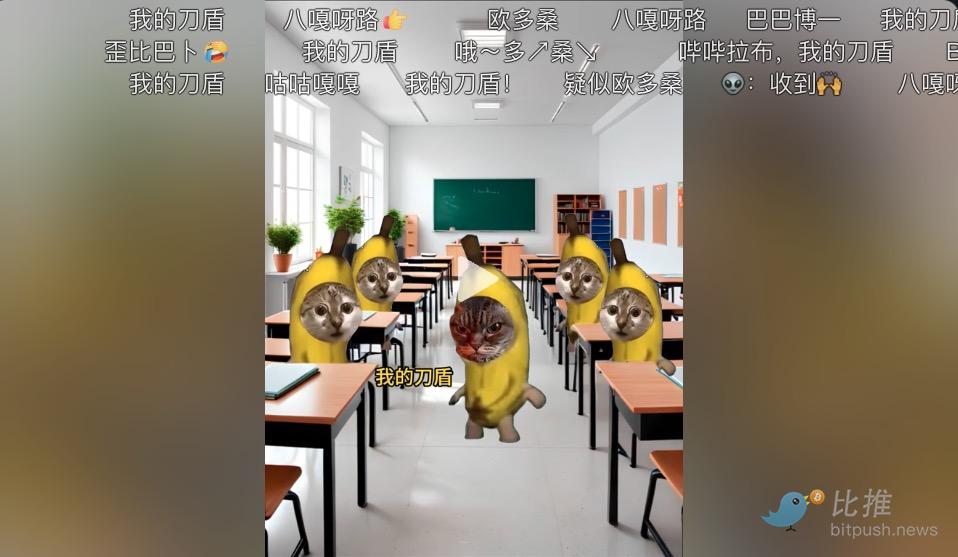
This meme crossed over to the Chinese internet. Netizens on Douyin, Bilibili, and TikTok started creating misheard lyric (空耳) versions. Because of the fast speech and rough accent/audio quality, it sounded like they were shouting "我的刀盾" (wǒ de dāo dùn - my sword and shield). The humor derived from this phonetic misalignment恰好踩中了 (perfectly hit) the sweet spot for short video users: the more absurd, the more brainwashing.

From Bilibili to Douyin, from "My Sword and Shield Invading Earth" to "New Breed of Sword and Shield Dog", related topics have garnered over ten million views.
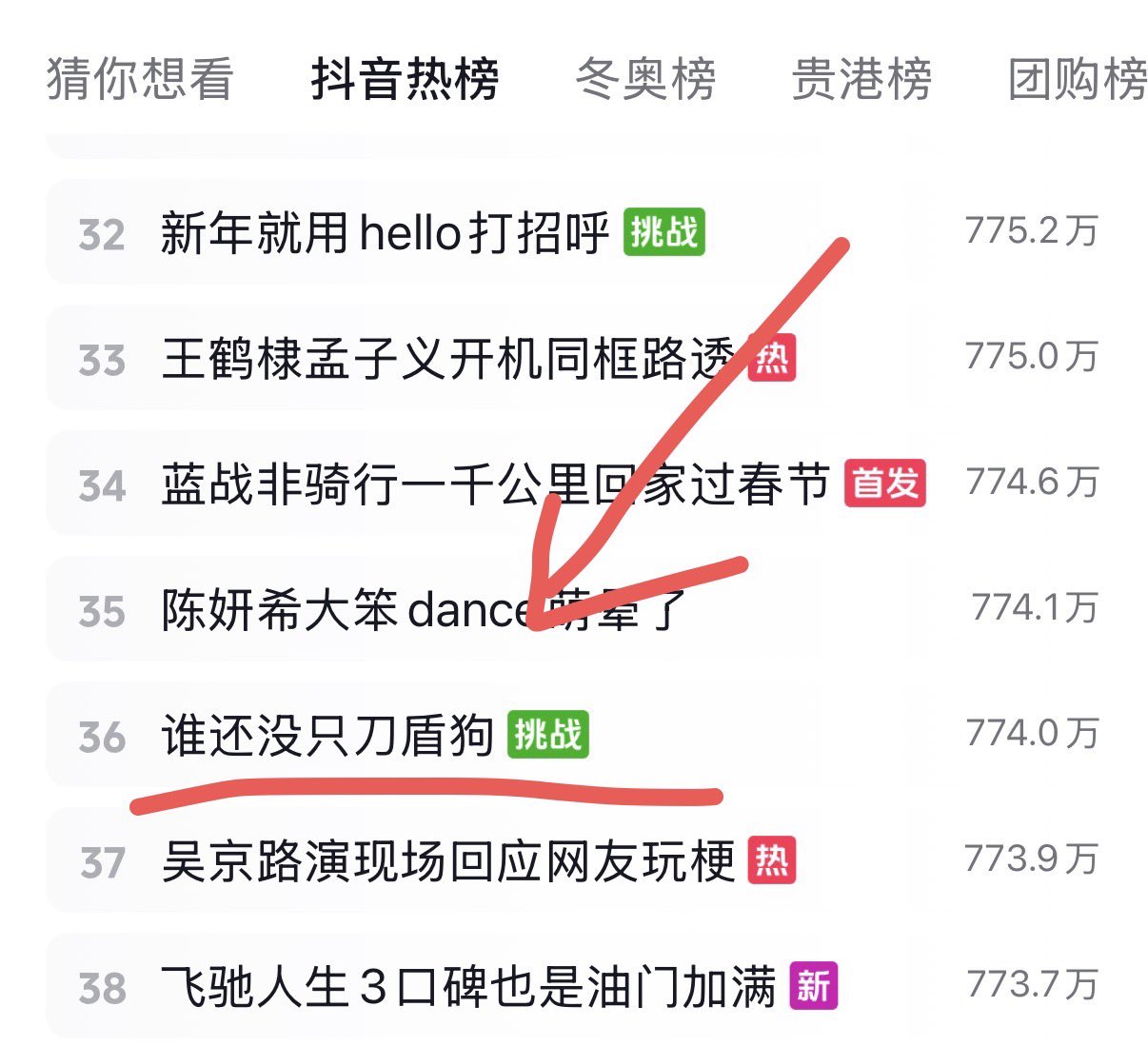
The netizens' creative adaptations are even more diverse: "My Sword and Shield Hydraulic Edition", "Even the Master Can't Control My Sword and Shield Anymore", "When My Little Brother Learned My Sword and Shield"... This is probably what the madness of a meme looks like.
March's Top Meme Coin Already Booked? GENG Platform Launches Homonymous Token

Judging by the data, "My Sword and Shield" already has all the characteristics of a top meme coin: strong cultural consensus, high virality, early wealth creation effect, and continuously pouring liquidity. The low barrier to entry and high activity of the Solana ecosystem provide the perfect soil for such Chinese meme coins.
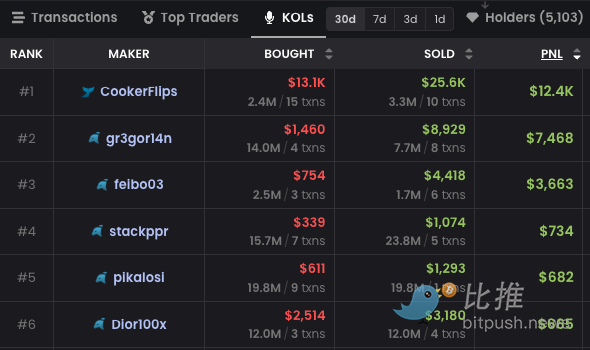
DexTools data shows that since its launch, the number of holders of this meme on SOL has grown from a few hundred initially to over 5,100, with relatively分散 (decentralized) distribution. Although some large holders still exist—the Top 10 control about 16%-26% of the supply, Top 20 about 25%—compared to the early concentration where the Top 70 once held 68%, the chips have gradually moved towards community distribution. On-chain monitoring shows that some "smart money" addresses also quietly entered early, adding fuel to this rally.

As the original热度 (heat/hype) continues to ferment, the GENG platform has now launched the homonymous asset "My Sword and Shield" (WTDD), providing a new entry point for the Chinese community users.

As an emerging community-driven issuance platform, GENG is committed to bringing culturally resonant internet memes into the on-chain ecosystem.

When "My Sword and Shield" moves from Douyin comment sections to on-chain, it carries not just a funny sound effect, but a generation's shared internet memory. In the world of meme coins, consensus is value, and cultural resonance is the deepest form of consensus.

If you are interested in abstract memes, you might want to explore "My Sword and Shield" on GENG .

Of course, the world of meme coins is always full of uncertainty. But at least this March, "My Sword and Shield" has made everyone remember its name with a 264% gain in 6 days.

GENG Official Website: https://geng.one/

"My Sword and Shield" Token Page: https://geng.one/launchpad/token/?mint=4KJbSkxpKHWXrh5LtcAzHjgHRh1hJzy9d6gnAuqwgeng

Contract Address: 4KJbSkxpKHWXrh5LtcAzHjgHRh1hJzy9d6gnAuqwgeng

Note: DYOR, Meme coins are highly volatile, please participate rationally.


Twitter:https://twitter.com/BitpushNewsCN

Bitpush TG Discussion Group:https://t.me/BitPushCommunity

Bitpush TG Subscription: https://t.me/bitpush

Original link:https://www.bitpush.news/articles/7617514

Perguntas relacionadas

QWhat is the 'My sword and shield' meme coin and why is it gaining popularity?

AThe 'My sword and shield' meme coin is a cryptocurrency based on the Chinese internet meme derived from the English phrase 'What the dog doing?'. It gained popularity due to its absurd and humorous nature, high cultural resonance, and strong community consensus, leading to significant price increases and trading volume.

QWhat was the performance of the 'My sword and shield' meme coin in its first week?

AIn its first week, the market capitalization of 'My sword and shield' surged from $1.8 million to a high of $6.6 million, with a 264% increase in 24 hours and nearly $8 million in trading volume, making it one of the best-performing memecoins on Solana.

QHow did the 'What the dog doing?' meme evolve into 'My sword and shield' in Chinese culture?

AThe English phrase 'What the dog doing?' was adapted through misheard lyrics (空耳) on platforms like Douyin, Bilibili, and TikTok. The fast pronunciation and rough accent made it sound like '我的刀盾' (My sword and shield) in Chinese, creating a humorous and viral effect that resonated with users.

QWhat role did the GENG platform play in the 'My sword and shield' meme coin ecosystem?

AThe GENG platform launched the同名代币 'My sword and shield' (WTDD), providing an entry point for the Chinese community to explore the meme coin. GENG aims to bring culturally resonant internet memes into the blockchain ecosystem, leveraging community-driven发行.

QWhat precautions should investors take when considering participation in meme coins like 'My sword and shield'?

AInvestors should DYOR (Do Your Own Research) and participate rationally, as meme coins are highly volatile and unpredictable. The article emphasizes that while there may be significant gains, the market is filled with uncertainty and risks.

Leituras Relacionadas

Blocked Its Own Treasure, WeChat AI Steps Up

Tencent's stock surged over 10% on June 2nd amid reports that WeChat, with 1.43 billion monthly users, is finalizing tests for a native AI Agent. The reported feature, accessible by swiping right from the main interface, allows users to issue commands in natural language. The AI then decomposes tasks and automatically calls upon relevant Mini Programs within WeChat to complete actions like ordering food, booking tickets, or making payments, creating a closed-loop service execution system. This strategic shift follows the internal conflict and subsequent "blocking" of Tencent's standalone AI app, Yuanbao, by WeChat for violating sharing rules during a 2026 Spring Festival promotion. The incident highlighted a lack of internal consensus and exposed the weakness of competing in the standalone AI assistant arena against rivals like ByteDance's Doubao (345M MAU) and Alibaba's Qianwen. The new WeChat AI Agent aims to leverage WeChat's unique assets—its massive user base, standardized Mini Program APIs, WeChat Pay, and identity system—to move from simple content generation to actual task execution. Analysts note this changes the competitive landscape from model benchmarks to which AI can connect to more real-world services. However, success depends on key variables: the capability of Tencent's underlying Hunyuan model, managing massive inference costs, and redesigning incentives for Mini Program developers whose traffic might be bypassed. The move is seen as an attempt to keep user service intent within WeChat's ecosystem as AI begins to redefine how users access services.

marsbitHá 42m

Blocked Its Own Treasure, WeChat AI Steps Up

marsbitHá 42m

ByteDance Adopts Arm CPUs, Jensen Huang: So Sad I Didn't Buy Arm

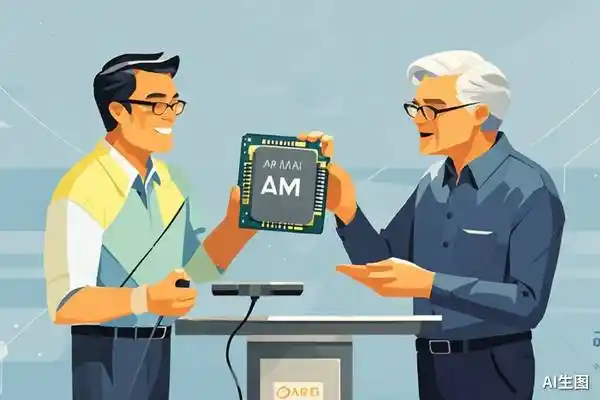
**Summary:** At Computex 2026, Arm CEO Rene Haas announced that ByteDance and Oracle have adopted Arm's self-designed Arm AGI data center CPU. The company expects significant revenue growth from this product, projecting $20 billion in demand for the 2027/2028 fiscal years. Haas noted that restricting AI-capable CPUs from the US to China is nearly impossible due to their widespread applications. Arm's stock has surged dramatically this year, notably rising 16% after NVIDIA's Arm-based Vera CPU and RTX Spark announcements. A highlight was the informal, humorous on-stage conversation between Haas and NVIDIA CEO Jensen Huang. Huang joked about NVIDIA's failed attempt to acquire Arm and playfully lamented selling his Arm shares. Both executives showed a clear sense of camaraderie and shared regret over the missed merger. Key technical topics were discussed: 1. **AI PC Design:** Huang explained NVIDIA's RTX Spark superchip (with a 20-core Arm CPU) is designed for future AI agents that will autonomously run and use tools on PCs, blending local and cloud processing. 2. **Agent vs. OS:** Huang emphasized the operating system remains crucial, as AI agents rely on its APIs and tools to function. 3. **Growth Constraints:** He identified the shift to "useful AI" that generates profitable tokens as a primary driver for immense, almost limitless, computational demand. Haas outlined Arm's strategy across PC and data centers. For PCs, Arm collaborates with partners like NVIDIA and MediaTek, offering its compute subsystem (CSS) for custom SoCs. In data centers, its Arm AGI CPU (built on TSMC's 3nm process) has gained major partners including OpenAI, Meta, and now ByteDance and Oracle. Arm presented a multi-year roadmap for its in-house CPU line. The article concludes that while GPUs dominated the AI training race, the explosion of AI agents is shifting significant focus to CPUs for inference, state management, and tool orchestration. The industry is trending towards vertical integration, with companies like cloud providers designing chips and chip/IP firms offering full solutions, all competing to deliver more efficient computing per watt.

marsbitHá 1h

ByteDance Adopts Arm CPUs, Jensen Huang: So Sad I Didn't Buy Arm

marsbitHá 1h

New Wall Street Play: Yen Shorts Still Adding, But Japan Stocks Don't Rely on Carry Trade Unwinding

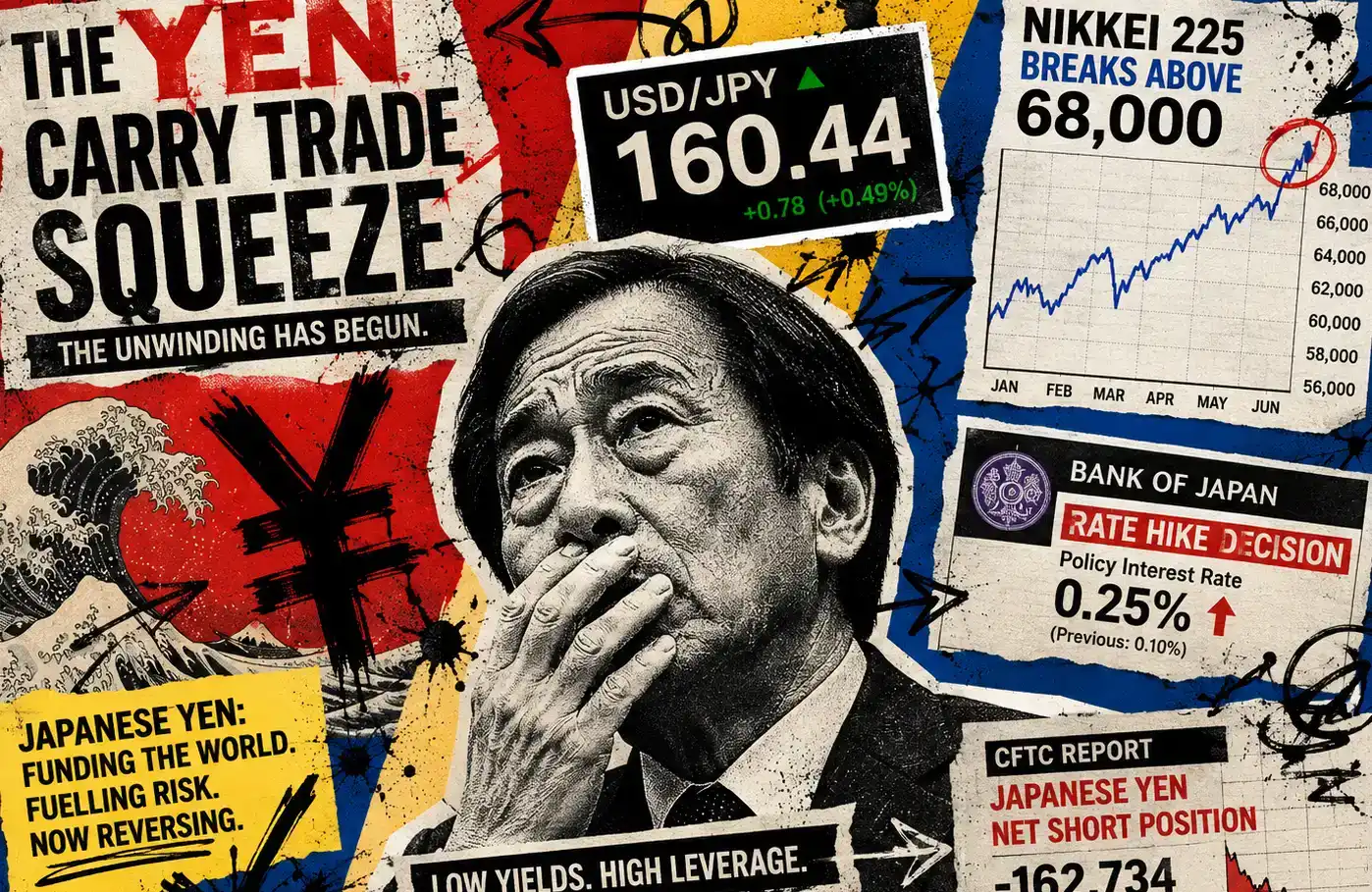
On June 3rd, USD/JPY hit 160.44, its highest level since July 2024, while the Nikkei 225 surged past 68,000 points. Contrary to popular narratives of an imminent "carry trade unwind" akin to August 2024, data reveals a more complex picture. Speculative net short positions in yen futures have actually increased, reaching -114,667 contracts by late May, suggesting traders are doubling down rather than retreating. Meanwhile, Japan's Finance Ministry conducted its largest-ever single-round FX intervention (11.73 trillion yen) in April-May but failed to hold the 160 yen line. The Nikkei's rally is not driven by carry trade dynamics. Foreign investors are aggressively buying Japanese stocks, with net purchases in 2026 running nearly 16 times higher than 2025 levels. This inflow is concentrated in AI and semiconductor-related stocks like SoftBank and Socionext, fueled by positive sector outlooks, rather than being a flight from unwinding yen shorts. Furthermore, the Nikkei has continued climbing despite the Bank of Japan's (BOJ) rate hikes to 0.75%. This disconnect exists because the current equity boom is fueled by AI-driven foreign investment, not reliant on cheap yen funding. However, this relationship remains fragile. Should the BOJ hike rates further (e.g., to 1.0%) while dollar weakness increases carry trade costs, the trajectories of the yen and Japanese stocks could reconverge, potentially triggering volatility.

marsbitHá 1h

New Wall Street Play: Yen Shorts Still Adding, But Japan Stocks Don't Rely on Carry Trade Unwinding

marsbitHá 1h

Broadcom's Q3 Guidance Misses Expectations by $12 Billion, After-Hours Trading Plummets Over 13%, AI Narrative "Cooling"?

On June 3, Broadcom released record Q2 FY26 results with revenue of $22.19B, up 48% YoY, and AI chip sales of $10.8B, up 143%. Adjusted EPS of $2.44 beat estimates. However, its Q3 AI semiconductor revenue guidance of $16B, while up over 200% YoY, fell roughly $1.2B (7%) short of analyst consensus expectations of $17.2B. This miss, coupled with slightly weaker-than-expected software revenue, triggered a severe market reaction. CEO Hock Tan maintained the FY26 AI revenue outlook of over $100B but did not raise it, disappointing investors who had priced in more robust growth. The stock plummeted over 13% in after-hours trading, erasing roughly $270B in market cap. The sell-off extended to peers like Marvell. A key concern for markets, particularly for Chinese optical module suppliers, was Tan's comment that the contribution of AI networking (e.g., Ethernet switches, optical interconnect chips) to AI revenue, currently near 40%, is expected to normalize to around 30% over time, signaling a potential peak in growth for that segment. Despite the guidance shortfall, Tan reiterated that AI demand remains "insatiable" and reaffirmed the long-term target of exceeding $100B in AI revenue by FY27. The reaction highlights the heightened sensitivity and premium valuation placed on AI-exposed stocks, where anything less than stellar guidance can prompt significant profit-taking. The broader question is whether this represents a cooling AI narrative or a correction in overstretched valuations.

marsbitHá 1h

Broadcom's Q3 Guidance Misses Expectations by $12 Billion, After-Hours Trading Plummets Over 13%, AI Narrative "Cooling"?

marsbitHá 1h

Trading

Spot
Futuros

Artigos em Destaque

O que é MEME 2.0

Memecoin 2.0: A Ascensão do $MEME 2.0 no Mundo das Criptomoedas Introdução No panorama em constante evolução das criptomoedas, um novo concorrente surgiu. Memecoin 2.0, simbolizado como $MEME 2.0, eleva o conceito de moedas meme a um novo nível emocionante. Como um subproduto do Memecoin original, este projeto capturou a atenção da comunidade crypto ao mudar o foco de incentivos financeiros típicos para uma experiência envolvente e divertida. Operando na blockchain Ethereum, Memecoin 2.0 redefine audaciosamente o envolvimento da comunidade na esfera crypto. O que é Memecoin 2.0, $MEME 2.0? No seu cerne, Memecoin 2.0 é um projeto de criptomoeda que prioriza o espírito comunitário e a diversão associada à cultura meme. Ao contrário das criptomoedas convencionais, que se concentram em casos de uso práticos e benefícios tangíveis, Memecoin 2.0 distingue-se ao abraçar o lado mais leve da moeda digital. O projeto existe sem promessas de utilidade, um roteiro estruturado ou retornos financeiros, focando em vez disso em fomentar uma comunidade vibrante centrada em memes e no prazer partilhado. Ao fazer isso, aproveita a crescente tendência da cultura meme no espaço online, tornando-se num jogador único no mundo dos ativos digitais. Criador do Memecoin 2.0, $MEME 2.0 Apesar de extensa pesquisa sobre as origens do Memecoin 2.0, a identidade explícita do seu criador continua desconhecida. Esta anonimidade não é incomum na comunidade crypto, onde muitos projetos são liderados por indivíduos ou grupos que preferem ficar nos bastidores. A falta de informações publicamente disponíveis sobre o criador pode ser vista como um movimento estratégico, colocando os holofotes no envolvimento da comunidade em vez de na notoriedade individual dentro do espaço. Investidores do Memecoin 2.0, $MEME 2.0 As informações sobre os investidores ou o financiamento do Memecoin 2.0 são escassas. Esta ausência de detalhes pode sugerir que o projeto é autofinanciado ou que o seu foco na comunidade, em vez de estruturas de investimento tradicionais, atraiu um tipo diferente de apoiador. Como o mundo das moedas memes geralmente envolve mais envolvimento de base do que investimento institucional, esta abordagem alinha-se ao ethos de projetos orientados pela comunidade. Como Funciona o Memecoin 2.0, $MEME 2.0? O Memecoin 2.0 opera inteiramente na blockchain Ethereum, aproveitando as suas robustas características de segurança e escalabilidade. Ao aproveitar os pontos fortes da Ethereum, o Memecoin 2.0 pode oferecer um ambiente seguro para interações dos utilizadores enquanto assegura que as transações são eficientes e custo-efetivas. Uma das características únicas do Memecoin 2.0 reside na sua estrutura orientada pela comunidade. O valor e a popularidade do token $MEME 2.0 derivam da participação ativa dos seus utilizadores, em vez de uma utilidade inerente. Este design reforça o foco do projeto no aspecto de entretenimento das criptomoedas, implicando que o riso e o envolvimento da comunidade são as verdadeiras moedas que impulsionam o seu sucesso. Além disso, o projeto insere-se no ecossistema mais amplo das moedas meme, onde o valor de cada moeda meme oscila com base na cultura, nas tendências e no envolvimento da comunidade, em vez de nos princípios económicos tradicionais. Linhas do Tempo do Memecoin 2.0, $MEME 2.0 Para melhor entender a evolução e os marcos do Memecoin 2.0, aqui está uma linha do tempo que destaca eventos significativos na sua história: 2024: O início do Memecoin 2.0 é reconhecido como um desdobramento do Memecoin original, estabelecendo-se dentro do contexto próspero das moedas meme enquanto opera na blockchain Ethereum. 13 de Julho de 2024: O Memecoin 2.0 posiciona-se oficialmente como uma moeda meme centrada na comunidade na rede Ethereum, enfatizando a sua abordagem centrada no entretenimento que convida os utilizadores a participar e envolver-se no seu crescimento. Pontos Chave Sobre o Memecoin 2.0, $MEME 2.0 Várias características críticas definem o Memecoin 2.0: Abordagem Centrada na Comunidade: A missão primária do Memecoin 2.0 é criar uma experiência comunitária divertida e envolvente, capitalizando o prazer coletivo derivado da cultura meme. Construído na Ethereum: Operar na blockchain Ethereum fornece ao projeto uma infraestrutura essencial que garante segurança e escalabilidade. Falta de Utilidade ou Roteiro: Numa notável divergência das criptomoedas tradicionais, o Memecoin 2.0 não promete quaisquer características utilitárias ou retornos financeiros, reafirmando o seu compromisso com o envolvimento da comunidade e a participação social. Foco na Cultura Meme: Ao abraçar os aspectos humorísticos e culturais do fenómeno meme, o Memecoin 2.0 fornece uma plataforma para que os utilizadores se envolvam com a crypto offline e online. Contexto Adicional: A Importância das Moedas Meme As moedas meme emergiram como uma classe distinta de criptomoeda, frequentemente impulsionadas pelo humor e por uma abordagem leve ao comércio. Estas moedas geralmente carecem de utilidade significativa ou roteiros de desenvolvimento, atraindo os utilizadores com a promessa de diversão, interação comunitária e relevância cultural. No panorama do ecossistema crypto mais amplo, as moedas meme revive a importância do envolvimento da comunidade, resistindo contra abordagens exclusivamente orientadas para o lucro. Projetos como o Memecoin 2.0 inauguram uma era em que o entretenimento pode harmonizar-se com aspirações financeiras, transformando a blockchain numa plataforma para criatividade e interação social. Conclusão O Memecoin 2.0, ou $MEME 2.0, representa uma nova onda de criptomoeda que prioriza o envolvimento da comunidade em detrimento de estruturas financeiras rígidas. Com um foco no humor e na interação social, capitaliza a fascinação em torno da cultura meme. Ao operar na blockchain Ethereum, o Memecoin 2.0 aproveita as capacidades da tecnologia, enquanto mantém um compromisso firme com o valor de entretenimento da moeda digital. À medida que o espaço em torno das criptomoedas continua a evoluir, o Memecoin 2.0 serve como um testemunho da ideia de que o futuro dos ativos digitais pode muito bem depender de experiências partilhadas, risadas e conexões comunitárias sólidas. No mundo imprevisível da crypto, talvez a alegria possa ser tão valiosa quanto o ganho financeiro tradicional.

32 Visualizações TotaisPublicado em {updateTime}Atualizado em 2024.12.03

O que é MEME 2.0

Como comprar MEME

Bem-vindo à HTX.com!Tornámos a compra de Memeland (MEME) simples e conveniente.Segue o nosso guia passo a passo para iniciar a tua jornada no mundo das criptos.Passo 1: cria a tua conta HTXUtiliza o teu e-mail ou número de telefone para te inscreveres numa conta gratuita na HTX.Desfruta de um processo de inscrição sem complicações e desbloqueia todas as funcionalidades.Obter a minha contaPasso 2: vai para Comprar Cripto e escolhe o teu método de pagamentoCartão de crédito/débito: usa o teu visa ou mastercard para comprar Memeland (MEME) instantaneamente.Saldo: usa os fundos da tua conta HTX para transacionar sem problemas.Terceiros: adicionamos métodos de pagamento populares, como Google Pay e Apple Pay, para aumentar a conveniência.P2P: transaciona diretamente com outros utilizadores na HTX.Mercado de balcão (OTC): oferecemos serviços personalizados e taxas de câmbio competitivas para os traders.Passo 3: armazena teu Memeland (MEME)Depois de comprar o teu Memeland (MEME), armazena-o na tua conta HTX.Alternativamente, podes enviá-lo para outro lugar através de transferência blockchain ou usá-lo para transacionar outras criptomoedas.Passo 4: transaciona Memeland (MEME)Transaciona facilmente Memeland (MEME) no mercado à vista da HTX.Acede simplesmente à tua conta, seleciona o teu par de trading, executa as tuas transações e monitoriza em tempo real.Oferecemos uma experiência de fácil utilização tanto para principiantes como para traders experientes.

268 Visualizações TotaisPublicado em {updateTime}Atualizado em 2026.06.02

Como comprar MEME

Discussões

Bem-vindo à Comunidade HTX. Aqui, pode manter-se informado sobre os mais recentes desenvolvimentos da plataforma e obter acesso a análises profissionais de mercado. As opiniões dos utilizadores sobre o preço de MEME (MEME) são apresentadas abaixo.

活动图片