Long Queue at Tencent's Door to Receive "Lobster", an Heavily Advertised Exchange Accused of Being a Scam?!

比推Publicado em 2026-03-07Última atualização em 2026-03-07

Resumo

BitPush News reported on several trending topics in the crypto and tech space. A notable event involved a large gathering at Tencent’s headquarters, where nearly a thousand developers and AI enthusiasts queued to install OpenClaw (also referred to as “Lobster”), an AI agent framework, with assistance from Tencent Cloud engineers. Attendees received “Lobster birth certificates,” leading to online commentary comparing the event to past promotional campaigns and speculating about Tencent’s underlying testing motives. Another topic discussed the efficiency of AI in trading, with a sarcastic post highlighting automated trading tools that facilitate rapid financial losses. The article also addressed allegations against a heavily advertised cryptocurrency exchange, accused of being a potential scam or internal manipulative platform (“内盘”). Critics claimed the platform promotes fake pre-IPO equity opportunities and described the crypto influencer landscape as an echo chamber with little genuine investor participation. Finally, the piece mentioned U.S. labor market data which showed a loss of 92,000 jobs in February and a rise in the unemployment rate to 4.4%, sparking discussions about economic health and a possible wave of layoffs.

Hello dear readers~

What have the KOLs in the crypto circle been talking about in the past 24 hours?

Note: The following content is compiled from the X platform and represents personal opinions. It does not represent the stance of this platform and should not be considered as investment advice.

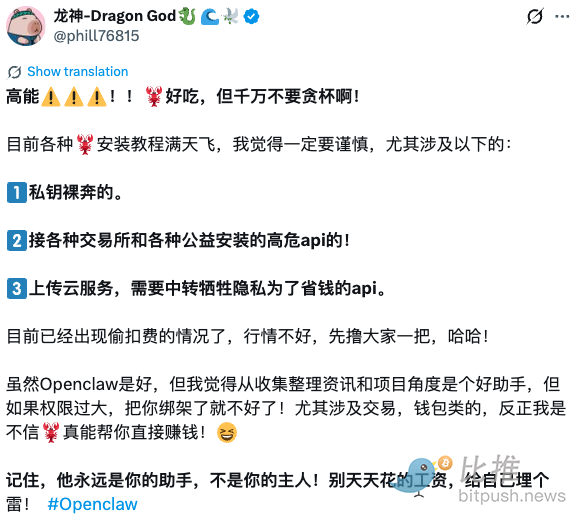
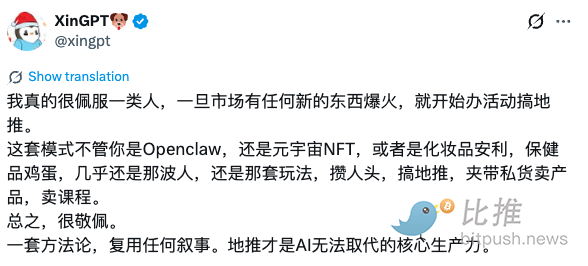
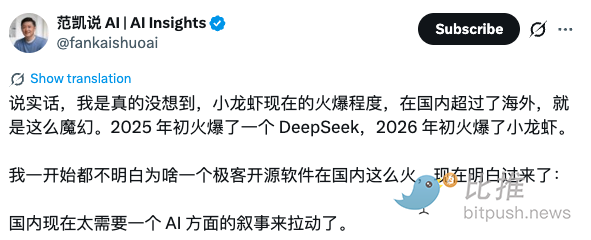
OpenClaw Tencent Free Installation Event: Every Generation Has Its Own Eggs to Receive

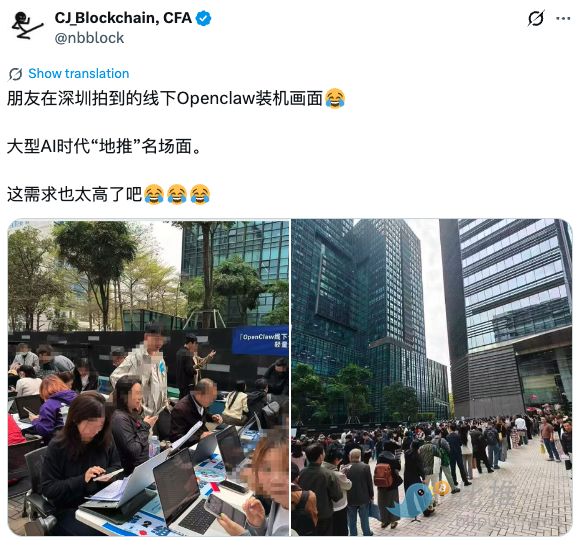
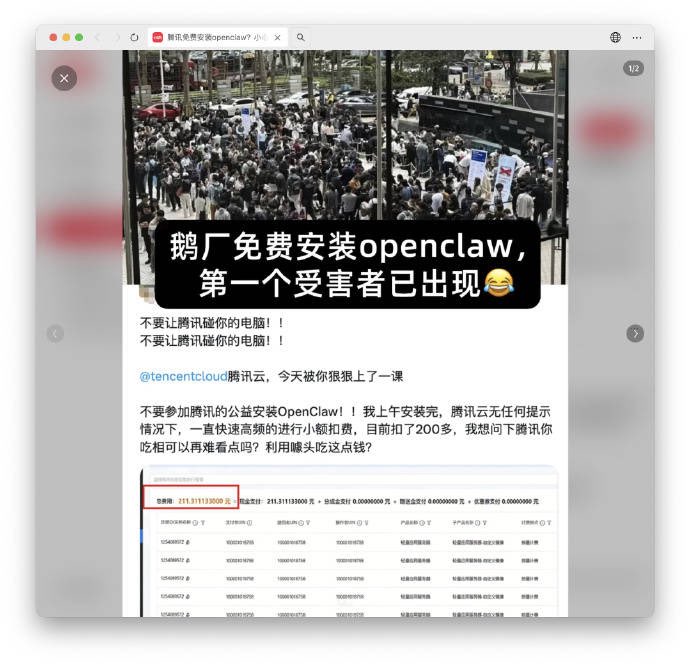
On February 6th, a long queue formed at the door of Tencent (鹅厂): Nearly a thousand developers and AI enthusiasts reportedly came to Tencent Tower and, with the assistance of Tencent Cloud engineers, completed the cloud installation of OpenClaw (commonly known as "Lobster"), collectively becoming "cloud lobster farmers." Some Tencent employees said the last time such a large scene occurred was during the New Year's red envelope distribution.
极速赛车开奖官网历史记录

Popular Comments:

Install it first. You might not use it, but you must have it!

I feel like they installed the Tencent Cloud version. It's said that小龙虾 (little lobster) birth certificates were also handed out on site, clearly stating Tencent Cloud. Tencent doesn't do this for no reason; it feels like a form of灰度测试 (gray scale testing).

In 2023, it was ground promotion for Web3; in 2024, for大模型API (large model APIs); in 2025, for Agent frameworks. The salespeople in Shenzhen's Huaqiangbei are always at the forefront of the times, just reprinting flyers with a different logo each time.

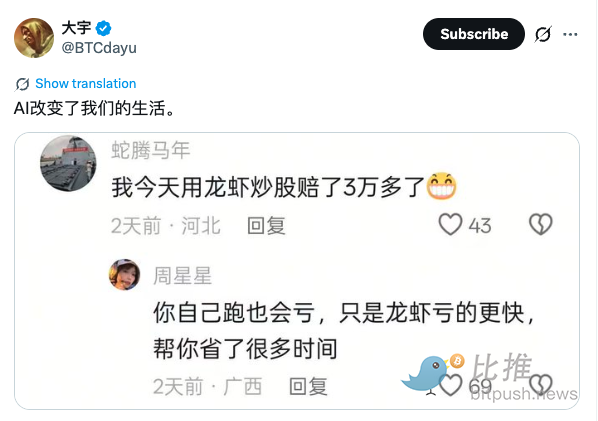
AI Makes Our Lives Better??

Well, losing money also requires efficiency.
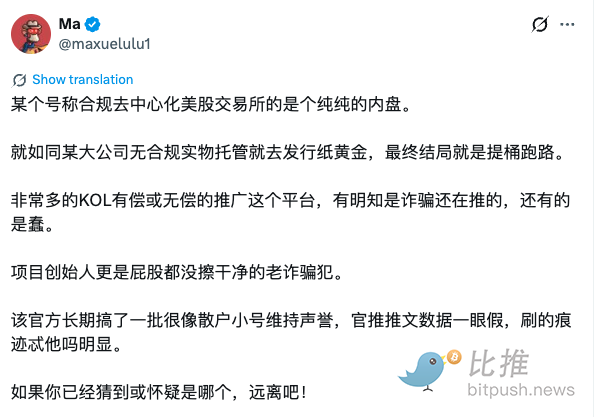
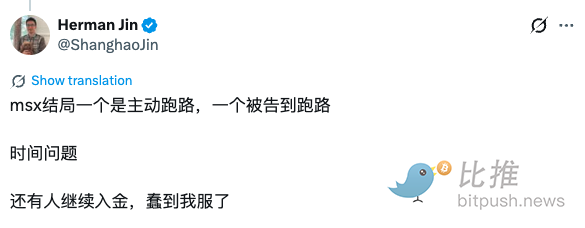
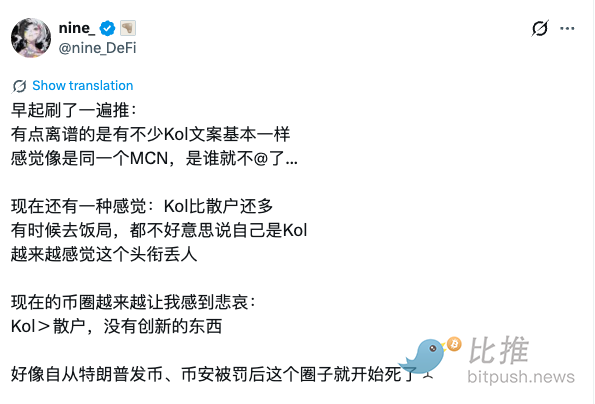
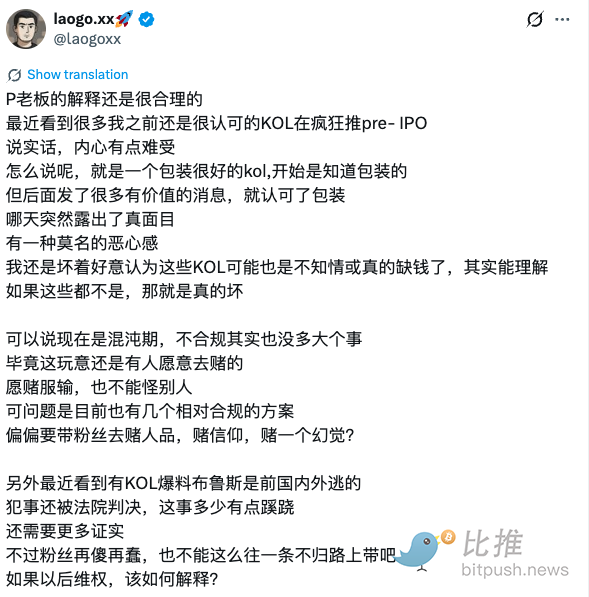
More Crypto KOLs Than Retail Investors? Is a Certain Exchange an Inside Job?
Popular Replies:

Ads are just copy-pasting and sending it once, with minor changes, haha.

The current crypto circle has indeed become a self-indulgent scene for KOLs; everyone is copying each other's homework, while真正的散户 (real retail investors) have become rare.

If this isn't a scam, what is? Because the essence is that MSX claims to sell you pre-IPO equity opportunities, but in reality, you are buying air, equity that can never be兑现 (cashed out).

Non-Farm Payroll Data Interpretation and Market Impact

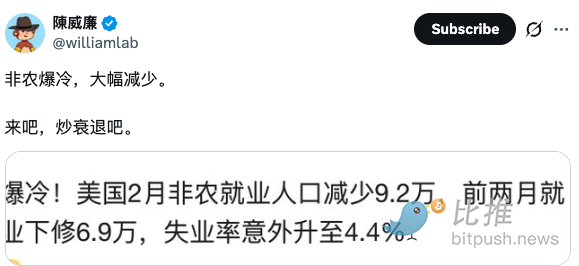
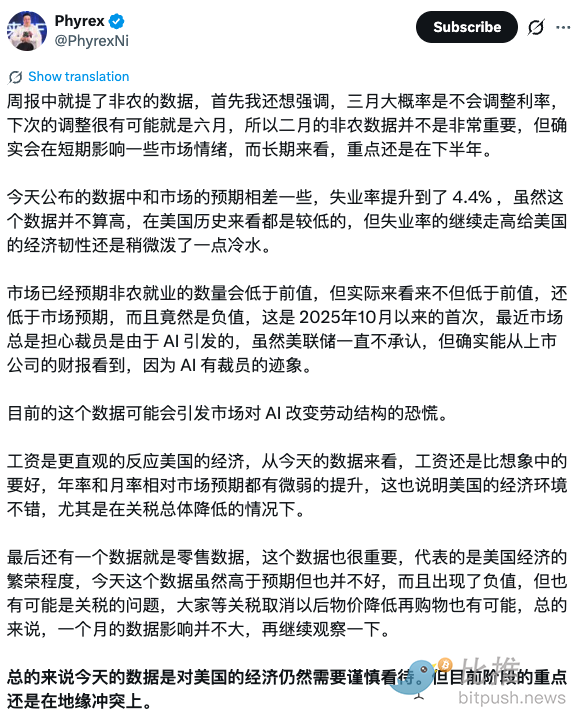
Data shows that U.S. employers surprisingly cut jobs in February, and the unemployment rate rose, raising questions about the health of the labor market. According to data released by the Bureau of Labor Statistics (BLS) on Friday, non-farm payrolls decreased by 92,000 last month, after a strong start to the year. The unemployment rate climbed to 4.4%.

Extended reading:Is It the End for Workers? The 2026 Layoff Wave Has Just Begun...


Twitter:https://twitter.com/BitpushNewsCN

Bitpush TG Discussion Group:https://t.me/BitPushCommunity

Bitpush TG Subscription: https://t.me/bitpush

Original article link:https://www.bitpush.news/articles/7617605

Perguntas relacionadas

QWhat was the main event that took place at Tencent's headquarters on February 6th?

ANearly a thousand developers and AI enthusiasts queued up at Tencent's headquarters to have OpenClaw (commonly known as 'Lobster') installed on the cloud with the assistance of Tencent Cloud engineers, collectively becoming 'cloud lobster farmers'.

QWhat is OpenClaw, and what did participants receive during the event?

AOpenClaw, colloquially referred to as 'Lobster,' is an AI agent framework. Participants received assistance in installing it on the cloud and were also given a 'lobster birth certificate' that clearly stated it was from Tencent Cloud.

QAccording to the article, what is a major criticism of a certain cryptocurrency exchange?

AThe exchange is accused of being a scam or an internal盘 (internal trading盘), where KOLs are heavily promoting it, but it is suggested that users are essentially buying 'air'—non-existent equity that can never be兑现 (realized or cashed out).

QWhat was the unexpected data from the US Bureau of Labor Statistics (BLS) regarding non-farm payrolls?

AThe data showed that US employers unexpectedly cut 92,000 jobs in February, and the unemployment rate rose to 4.4%, which raised questions about the health of the labor market.

QWhat historical comparison did a Tencent employee make regarding the scale of the OpenClaw event?

AA Tencent employee stated that the last time there was such a large commotion was during the New Year when红包 (red envelopes containing money) were distributed.

Leituras Relacionadas

Gensyn AI: Don't Let AI Repeat the Mistakes of the Internet

In recent months, the rapid growth of the AI industry has attracted significant talent from the crypto sector. A persistent question among researchers intersecting both fields is whether blockchain can become a foundational part of AI infrastructure. While many previous AI and Crypto projects focused on application layers (like AI Agents, on-chain reasoning, data markets, and compute rentals), few achieved viable commercial models. Gensyn differentiates itself by targeting the most critical and expensive layer of AI: model training. Gensyn aims to organize globally distributed GPU resources into an open AI training network. Developers can submit training tasks, nodes provide computational power, and the network verifies results while distributing incentives. The core issue addressed is not decentralization for its own sake, but the increasing centralization of compute power among tech giants. In the era of large models, access to GPUs (like the H100) has become a decisive bottleneck, dictating the pace of AI development. Major AI companies are heavily dependent on large cloud providers for compute resources. Gensyn's approach is significant for several reasons: 1) It operates at the core infrastructure layer (model training), the most resource-intensive and technically demanding part of the AI value chain. 2) It proposes a more open, collaborative model for compute, potentially increasing resource utilization by dynamically pooling idle GPUs, similar to early cloud computing logic. 3) Its technical moat lies in solving complex challenges like verifying training results, ensuring node honesty, and maintaining reliability in a distributed environment—making it more of a deep-tech infrastructure company. 4) It targets a validated, high-growth market with genuine demand, rather than pursuing blockchain integration without purpose. Ultimately, the boundaries between Crypto and AI are blurring. AI requires global resource coordination, incentive mechanisms, and collaborative systems—areas where crypto-native solutions excel. Gensyn represents a step toward making advanced training capabilities more accessible and collaborative, moving beyond a niche controlled by a few giants. If successful, it could evolve into a fundamental piece of AI infrastructure, where the most enduring value in the AI era is often created.

marsbitHá 5h

Gensyn AI: Don't Let AI Repeat the Mistakes of the Internet

marsbitHá 5h

Why is China's AI Developing So Fast? The Answer Lies Inside the Labs

A US researcher's visit to China's top AI labs reveals distinct cultural and organizational factors driving China's rapid AI development. While talent, data, and compute are similar to the West, Chinese labs excel through a pragmatic, execution-focused culture: less emphasis on individual stardom and conceptual debate, and more on teamwork, engineering optimization, and mastering the full tech stack. A key advantage is the integration of young students and researchers who approach model-building with fresh perspectives and low ego, prioritizing collective progress over personal credit. This contrasts with the US culture of self-promotion and "star scientist" narratives. Chinese labs also exhibit a strong "build, don't buy" mentality, preferring to develop core capabilities—like data pipelines and environments—in-house rather than relying on external services. The ecosystem feels more collaborative than tribal, with mutual respect among labs. While government support exists, its scale is unclear, and technical decisions appear driven by labs, not state mandates. Chinese companies across sectors, from platforms to consumer tech, are building their own foundational models to control their tech destiny, reflecting a broader cultural drive for technological sovereignty. Demand for AI is emerging, with spending patterns potentially mirroring cloud infrastructure more than traditional SaaS. Despite challenges like a less mature data industry and GPU shortages, Chinese labs are propelled by vast talent, rapid iteration, and deep integration with the open-source community. The competition is evolving beyond a pure model race into a contest of organizational execution, developer ecosystems, and industrial pragmatism.

marsbitHá 7h

Why is China's AI Developing So Fast? The Answer Lies Inside the Labs

marsbitHá 7h

3 Years, 5 Times: The Rebirth of a Century-Old Glass Factory

Corning, a 175-year-old glass company, is experiencing a dramatic revival as a key player in AI infrastructure, driven by surging demand for high-performance optical fiber in data centers. AI data centers require vastly more fiber than traditional ones—5 to 10 times as much per rack—to handle high-speed data transmission between GPUs. This structural demand shift, coupled with supply constraints from the lengthy expansion cycle for fiber preforms, has created a significant supply-demand gap. Nvidia has invested in Corning, along with Lumentum and Coherent, in a $4.5 billion total commitment to secure the optical supply chain for AI. Corning's competitive edge lies in its expertise in producing ultra-low-loss, high-density, and bend-resistant specialty fiber, which is critical for 800G+ and future 1.6T data rates. Its deep involvement in co-packaged optics (CPO) with partners like Nvidia further solidifies its position. While not the largest fiber manufacturer globally, Corning's revenue from enterprise/data center clients now exceeds 40% of its optical communications sales, and it has secured multi-year supply agreements with major hyperscalers including Meta and Nvidia. Financially, Corning's optical communications revenue has surged, doubling from $1.3 billion in 2023 to over $3 billion in 2025. Its stock price has risen nearly 6-fold since late 2023. Key future catalysts include the rollout of Nvidia's CPO products and the scale of undisclosed customer agreements. However, risks include high current valuations and potential disruption from next-generation technologies like hollow-core fiber. The company's long-term bet on light over electricity, maintained even through the telecom bubble crash, is now being validated by the AI boom.

marsbitHá 7h

3 Years, 5 Times: The Rebirth of a Century-Old Glass Factory

marsbitHá 7h

Trading

Spot
Futuros
活动图片