KuCoin Institutional Premiere 2026 Highlights Long-Term Growth and Market Resilience

TheNewsCryptoPublicado em 2026-02-13Última atualização em 2026-02-13

Resumo

The inaugural KuCoin Institutional Premiere 2026, held in Hong Kong, emphasized long-term structural growth and institutional engagement over short-term price volatility. KuCoin CEO BC Wong and COO Ethan Cheng highlighted the importance of building credibility through discipline, transparency, and robust risk management during challenging market periods. Discussions centered on portfolio risk management, liquidity dynamics, execution efficiency, and security requirements, reflecting a shift toward structural stability and resilience. The event underscored that institutional participation in digital assets is increasingly driven by fundamentals rather than speculation, signaling the maturation of the cryptocurrency market.

A continuous focus on long-term structural growth and institutional participation was underlined during the first KuCoin Institutional Premiere 2026, which took place in Hong Kong. This event took place against the background of the recent movement of Bitcoin.

A total of over one hundred institutional customers and partners from various marketplaces across the world were present at the event. The Chief Executive Officer of KuCoin, BC Wong, and the Chief Operating Officer, Ethan Cheng, gave introductory comments in which they discussed the wider context of the current market cycle. Rather than basing conversation on short-term pricing swings, both CEOs focused on a broader fundamental question: how institutions and service providers may enhance long-term trust, governance standards, and operational resilience during times of downturn.
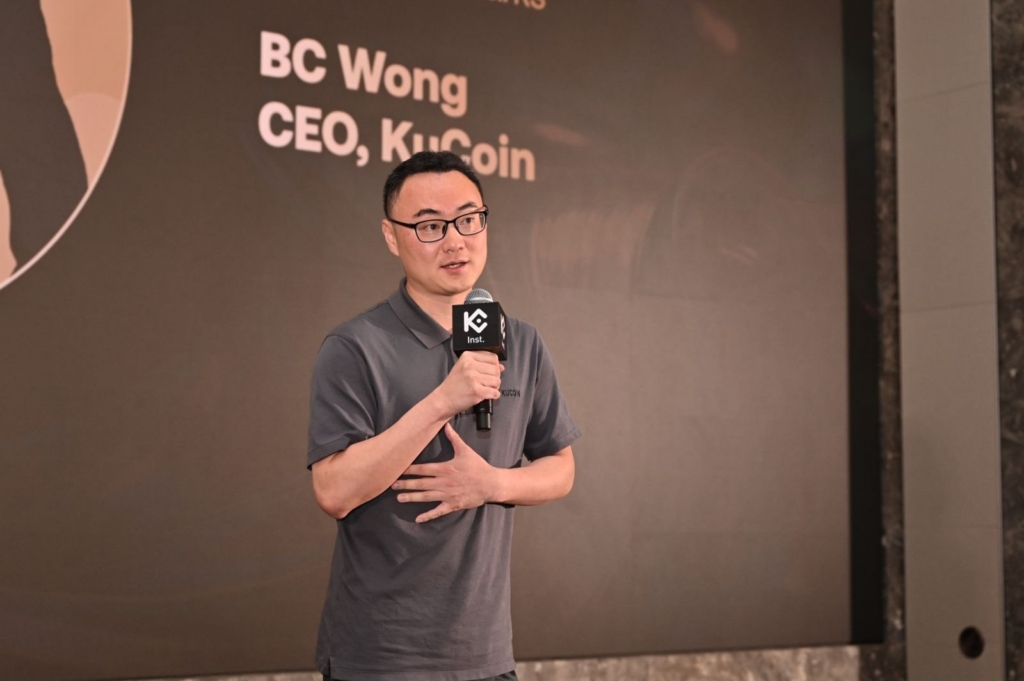
BC Wong, CEO of KuCoin, said:

“Volatility is a natural feature of digital asset markets. Long-term credibility is built not in periods of expansion, but through discipline, transparency, and robust risk management when market conditions are challenging.”

Ethan Cheng, COO of KuCoin, added:

“Institutional engagement in digital assets is increasingly driven by structural fundamentals rather than short-term price movements. Periods of volatility reinforce the importance of long-term alignment and risk-aware participation.”

This change in focus was mirrored in the conversations that took place throughout the evening. The viewpoints of the representatives of the institutions were discussed and shared about the management of portfolio risk, liquidity dynamics, execution efficiency, and security requirements. In a market climate that is more conservative, the conversation focused less on short-term success and more on how to preserve structural stability, responsiveness, and transparency in the market.

Amid the event, which was KuCoin Institutional’s first annual meeting of its sort, it acted as both a reflection on previous collaboration and an affirmation of ongoing commitment amid a period of less activity. A cautious posture was communicated to industry players during a gathering that took place in the midst of market uncertainties.

Although prices are subject to change, institutional discourse and structural development continue. The top actors in the sector have given a clear signal to the wider financial world, which is that the institutional underpinning of cryptocurrency is no longer founded on speculation, but rather on the methodical development of a mature, global market structure.


TagsexchangeKuCoin

Perguntas relacionadas

QWhat was the main focus of the KuCoin Institutional Premiere 2026 event according to the article?

AThe main focus was on long-term structural growth, institutional participation, and building long-term trust, governance standards, and operational resilience during market downturns, rather than short-term price movements.

QWhich KuCoin executives spoke at the event and what key points did they emphasize?

ACEO BC Wong emphasized that long-term credibility is built through discipline, transparency, and robust risk management during challenging market conditions. COO Ethan Cheng added that institutional engagement is increasingly driven by structural fundamentals rather than short-term price movements.

QWhat topics were discussed by institutional representatives during the event?

AThey discussed portfolio risk management, liquidity dynamics, execution efficiency, security requirements, and how to preserve structural stability, responsiveness, and transparency in the market.

QHow does the article characterize the current institutional approach to cryptocurrency markets?

AThe article states that institutional involvement is no longer primarily based on speculation but on the methodical development of a mature, global market structure, focusing on long-term alignment and risk-aware participation.

QWhere did the KuCoin Institutional Premiere 2026 take place and what was significant about this event?

AThe event took place in Hong Kong and it was KuCoin Institutional's first annual meeting of its kind, serving as both a reflection on previous collaboration and an affirmation of ongoing commitment during a period of market uncertainty.

Leituras Relacionadas

Once-Popular Web3 Enters Wave of Layoffs

The once-hot Web3 industry is experiencing a severe wave of layoffs. While many companies attribute job cuts to AI-driven restructuring, the primary reason is often financial pressure. The Web3 sector, at the intersection of tech and finance, has been hit particularly hard. Employees at major cryptocurrency exchanges report sudden, impersonal layoffs—often with system access revoked overnight—and minimal or no severance. Common tactics include setting impossible performance targets or terminating employees for minor policy violations. The working atmosphere has become toxic, marked by intense monitoring, excessive meetings, and management obsessed with control and internal politics rather than product innovation. The industry's core business model is collapsing. Exchange revenue from trading fees and listing charges has plummeted due to a decline in quality projects and retail investor exodus. Events like the massive forced liquidation on October 10th further shattered confidence. Competition from on-chain derivatives platforms and prediction markets is intensifying the downturn. As layoffs continue, displaced workers struggle to find new opportunities. Many transition to the AI sector, but face significant bias from traditional finance and even some AI firms, which view crypto industry experience with suspicion. The current downturn appears more structural than cyclical, driven by unsustainable practices, internal strife, and a failure to innovate, raising questions about the industry's future trajectory.

marsbitHá 47m

Once-Popular Web3 Enters Wave of Layoffs

marsbitHá 47m

Sales Drop 26% But Prices Rise? Xiaomi's Dilemma

Xiaomi, facing a significant 26.3% year-on-year decline in global smartphone shipments in Q2 2026, has implemented its third price hike of the year. On August 2nd, prices were raised for nine models, including the flagship Mi 17 series (up 400-500 yuan) and Redmi K90/Turbo 5 series (up 300 yuan). This move completes a pattern where cost pressure, originating from surging memory chip prices, has climbed from entry-level to mid-range and now flagship products. The primary driver is a severe supply squeeze on consumer-grade DRAM and NAND flash memory, as major manufacturers like Samsung shift advanced capacity to more profitable HBM for AI applications. According to Xiaomi President Lu Weibing, memory prices for the same configuration have skyrocketed nearly fourfold since Q1 2025, adding roughly 1500 yuan to the cost of a mainstream 12GB+512GB phone. IDC estimates consumer memory costs have risen nearly 300% year-on-year. While the price increases hurt demand and contributed to the sales slump, Xiaomi's strategy of reducing entry-level models and upgrading its product mix also played a role. Domestically, its market share in China fell to 12% (5th place), while leaders Huawei and Apple saw shipments grow over 24%. To mitigate future risks, Xiaomi is accelerating its in-house "Surge" chip development and optimizing memory configurations across its lineup. Xiaomi is not alone; major brands like OPPO, vivo, and Apple have already raised prices in 2026, with industry insiders predicting another round of increases (200-800 yuan) in the second half. A full-scale industry-wide涨价 cycle is underway, forcing both manufacturers and consumers to recalibrate their strategies and purchasing decisions amid sustained cost pressures.

marsbitHá 58m

Sales Drop 26% But Prices Rise? Xiaomi's Dilemma

marsbitHá 58m

Trading

Spot
活动图片