Kraken Reveals Extortion Demands After Client Data Incident: ‘We Will Not Pay’, Security Chief Says

bitcoinistPublicado em 2026-04-14Última atualização em 2026-04-14

Resumo

Kraken, a major US crypto exchange, has publicly refused extortion demands from a criminal group following two incidents of unauthorized access to limited client support data. Chief Security Officer Nick Percoco stated the exchange identified and terminated access for individuals involved, emphasizing that no systems were breached and user funds remained safe. Approximately 2,000 client accounts (0.02% of users) were affected. Kraken is cooperating with law enforcement and industry partners to investigate what it describes as insider recruitment efforts targeting multiple sectors. The incident has sparked community concerns over insider threats and data security, drawing comparisons to a similar past event at Coinbase.

Kraken, the US’s second-largest crypto exchange, has rejected extortion threats from a criminal group after two incidents of unauthorized access to limited client support data in the past year, reigniting investors’ concerns about insider threats.

Kraken Fights Back Extortion Demands

On Monday, Kraken’s Chief Security Officer (CSO), Nick Percoco, revealed that a criminal group is extorting the crypto exchange, threatening to release videos of their systems exposing client data.

In a security update, the CSO affirmed that Kraken had identified and shut down two instances of inappropriate access to limited client support data since 2025. Per the post, the crypto exchange received a tip about a video shared on a criminal forum. The video reportedly showed access to Kraken’s client support system.

The exchange “immediately launched an investigation and quickly identified the individual involved as a member of our support team,” Percoco explained, “Their access was revoked immediately, a full investigation was conducted, additional security controls were put in place and a limited number of affected clients were notified.”

More recently, they received another tip with a new video showing similar activity, prompting a new investigation to identify the parties involved, terminate their access, and notify the affected clients.

“Shortly after access was terminated, we began receiving extortion demands,” the security chief stated. “The criminals threatened to distribute materials from both the February 2025 incident and the recent incident to media outlets and on social media if we did not comply.”

Percoco emphasized that the exchange’s systems were never breached and funds were never at risk. In addition, he noted that “only a very small number” of client accounts, approximately 2,000 or 0.02% of clients, were potentially viewed across both incidents.

Kraken has now publicly rejected the criminal demands, declaring that they “will not pay these criminals” and “will not ever negotiate with bad actors.”

In the announcement, the exchange highlighted that it has been collaborating with industry partners and law enforcement to “investigate and disrupt insider recruitment efforts targeting not only crypto companies, but also gaming and telecommunications organizations.”

Based on intelligence gathered from the two incidents and extensive analysis, Kraken believes there is sufficient evidence to identify and arrest all individuals involved, but did not share additional details as the investigation continues. However, they urged anyone with relevant information to contact the exchange directly.

This incident comes just a month after Kraken scored a major victory for the crypto industry, becoming the first crypto company with direct access to the Federal Reserve’s core payment system after winning the Kansas City Fed’s approval for a Fed master account.

Crypto Community Raises Insider Access Concerns

Crypto investors and Kraken users online reacted to the news, questioning the exchange about the details of the two incidents and criticizing the exchange for offshoring customer support staff.

“So, basically, you outsourced it to shady third-party companies (or even worse, your internal recruiters are sleeping), and you got hacked twice or more. You made your customers vulnerable to wrench attacks,” an X user wrote under Percoco’s post.

However, details of whether the inappropriate data access was from an in-house support team or an overseas third-party support staff have not been revealed yet.

Another crypto community member pushed back on Kraken’s “very small number” of clients clarification, asserting that “this is not the metric you think it is... of those 2000 accounts, they are probably the ones with balances worth wrench attacking.”

Others drew a parallel between this incident and Coinbase’s data breach controversy from last year. For context, Coinbase CEO Brian Armstrong revealed in May 2025 that malicious actors had bribed a handful of support contractors overseas to access the company’s internal tools.

This led to the leak of names, email addresses, limited transaction records, and partial Social Security numbers of around 1% of the exchange’s users. Then, the attackers attempted to blackmail Coinbase using the breached information, demanding a $20 million Bitcoin (BTC) ransom for the sensitive data.

Reuters later alleged that Coinbase had been aware of the customer data leak months before it disclosed it, also raising concerns about transparency and insider threats.
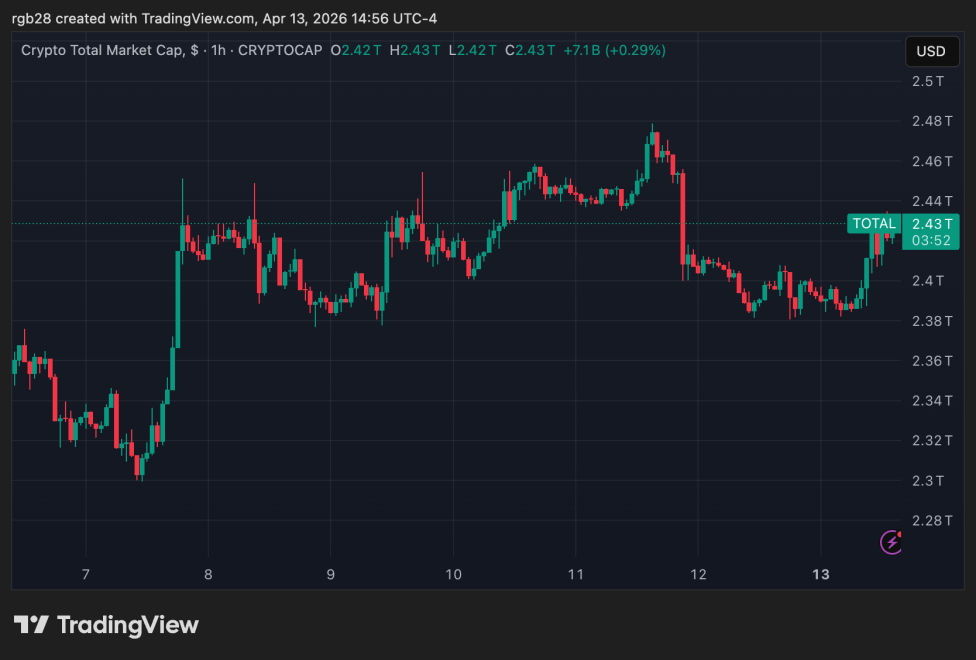
The total crypto market capitalization is at $2.43 trillion in the one-week chart. Source: TOTAL on TradingView


Perguntas relacionadas

QWhat did Kraken's Chief Security Officer reveal about the extortion demands?

AKraken's CSO Nick Percoco revealed that a criminal group is extorting the crypto exchange by threatening to release videos of their systems exposing client data, and that Kraken will not pay or negotiate with these criminals.

QHow many client accounts were potentially affected by the unauthorized access incidents at Kraken?

AApproximately 2,000 client accounts, or 0.02% of Kraken's clients, were potentially viewed across both incidents.

QWhat was the nature of the security incidents at Kraken, according to the company?

AThe incidents involved two instances of unauthorized access to limited client support data by individuals who were members of the support team, but the company's core systems were never breached and client funds were never at risk.

QHow did the crypto community react to Kraken's announcement of the security incidents?

AThe community questioned the details of the incidents, criticized the exchange for potentially offshoring customer support staff, and expressed concern that the affected accounts might be high-value targets for 'wrench attacks'.

QWhat parallel was drawn between this Kraken incident and another crypto exchange?

AThe incident was compared to Coinbase's data breach from May 2025, where malicious actors bribed overseas support contractors to access internal tools, leading to a data leak and a subsequent extortion attempt.

Leituras Relacionadas

Anthropic Cries Wolf: Is the AGI Threat Real, or Just an IPO Story?

Anthropic has published an article titled "When AI builds itself," discussing the emerging concept of "recursive self-improvement," where AI begins to actively participate in designing, training, testing, and optimizing its own subsequent versions. The company presents internal data showing that by May 2026, over 80% of code merged into its codebase was written by Claude, its AI model. Claude's capabilities have expanded to handling complex, open-ended engineering tasks, achieving a 76% success rate in such areas, and even contributing to research processes, such as optimizing code performance and conducting AI safety experiments. Anthropic outlines an evolution from human-driven development to AI-assisted workflows, culminating in the current stage where AI agents can autonomously write, run, and delegate code. The company cautions that the path toward a "closed loop," where AI continuously improves itself, is becoming visible. It calls for coordinated global mechanisms to potentially slow or pause frontier AI development to allow safety research and societal structures to catch up. However, the timing of this warning coincides with Anthropic's preparations for an IPO, framing the narrative not just as a safety concern but also as a demonstration of Claude's advanced capabilities and its integral role in accelerating Anthropic's own R&D—creating a potential "flywheel" effect for competitive advantage. This contrasts with OpenAI's recent, more policy-oriented discussion of the same risks, highlighting the competitive dynamics in the AI industry as companies position themselves in both the technological and regulatory landscape.

marsbitHá 23m

Anthropic Cries Wolf: Is the AGI Threat Real, or Just an IPO Story?

marsbitHá 23m

BIT Research: ETF Purchases Have Slowed, Strategy (MicroStrategy) Has Slowed, What Else Can Drive Bitcoin's Rise?

Market Refocus on Inflation and Rate Expectations Weighs on Bitcoin Currently, the market is in a phase of macro-repricing dominated by inflation and interest rate expectations. Bitcoin, which previously benefited from easy liquidity and low inflation, is seeing its core bullish drivers weaken. These drivers were market expectations for interest rate cuts and strong inflows from Bitcoin ETFs and institutions like MicroStrategy (referred to as "Strategy" in the text). The logic has shifted. Recent high inflation data (e.g., CPI hitting 3.8% in a May 2026 report) has caused the market to sharply reduce its rate cut expectations for 2025 and even price in potential hikes. This is a key constraint for Bitcoin, as it lacks cash flows and is highly sensitive to rate expectations. Concurrently, institutional capital flows have slowed significantly. Following the hot CPI data, Bitcoin ETFs saw accelerated outflows, with around $4.3 billion leaving over a period. MicroStrategy's ability to keep adding substantial Bitcoin to its balance sheet is also diminishing. Together, ETF and MicroStrategy holdings total roughly $110 billion, but their momentum as growth engines is cooling. In summary, Bitcoin's current pressure stems not from its own fundamentals but from a changing macro environment. As long as inflation stays elevated, Bitcoin is likely to remain in a consolidating phase. However, historically, inflation eventually peaks. Once it recedes and rate cut expectations rebuild, institutional capital could return, potentially fueling a new and more robust recovery phase for Bitcoin.

marsbitHá 31m

BIT Research: ETF Purchases Have Slowed, Strategy (MicroStrategy) Has Slowed, What Else Can Drive Bitcoin's Rise?

marsbitHá 31m

Earning 1000 Trillion in Half a Year, 'Pocketing' 20 Million per Capita: This Round of Wealth Creation in the Korean Stock Market is Unprecedented in Scale

The South Korean stock market is experiencing an unprecedented wealth surge in 2026, with household equity and fund asset values soaring by over 1,000 trillion KRW (~$730bn) year-to-date. This translates to an average per capita wealth increase of roughly 20 million KRW, fueled by a historic 109% rally in the KOSPI index. The boom is driven by three converging forces: an AI-driven semiconductor supercycle boosting giants like Samsung and SK Hynix; the government's "Value-Up" market reforms addressing long-standing corporate governance issues; and aggressive real estate regulations that have locked capital within financial markets, preventing profits from flowing back into property. This has triggered a wealth effect, boosting high-end consumption significantly. However, the gains are highly concentrated. The two semiconductor behemoths account for over half the index's value, but retail investors own relatively low stakes in them, systematically missing the biggest rallies. Wealth and consumption benefits are skewed towards luxury goods and imported cars, bypassing mainstream retail. Further risks stem from excessive leverage, with high trading volume in leveraged ETFs, and a market sentiment heavily reliant on the AI sector's fortunes and speculative rumors. While this cycle marks a potential shift from real estate to equities as a primary wealth generator for Koreans, its sustainability, amid structural imbalances and leverage, remains a critical test.

marsbitHá 36m

Earning 1000 Trillion in Half a Year, 'Pocketing' 20 Million per Capita: This Round of Wealth Creation in the Korean Stock Market is Unprecedented in Scale

marsbitHá 36m

Trading

Spot
Futuros
活动图片




