Korean Stock Market Crashes, Are Koreans Rushing into Crypto Again? This Project Team Got Slammed...

比推Publicado em 2026-03-05Última atualização em 2026-03-05

Resumo

Amid a significant downturn in the South Korean stock market, there is growing discussion about Korean retail investors shifting heavily into cryptocurrency as an alternative. Observers note that Koreans have a strong cultural tendency toward leverage and speculative investment, which may be driving renewed interest in crypto assets like Bitcoin, seen as a potential safe haven during economic instability. Bitcoin’s price recovery and increased institutional buying are also highlighted, with price targets such as $87,000 and even $100,000 being discussed. Some attribute Bitcoin’s strength to its perceived reliability during times of geopolitical tension. Additionally, former U.S. President Donald Trump is mentioned as pushing for clearer cryptocurrency regulation, which could bring more certainty to the market—though some express skepticism about his motives. The article also covers controversy around the project "Opinion" on the BSC chain, which has drawn criticism for its handling of user rewards and airdrops, leading to broader discussions about the sustainability of airdrop models and the need for genuine user engagement rather than speculative farming. The content is compiled from social media platforms and does not constitute investment advice.

Hello dear readers~

What were the crypto KOLs talking about in the past 24 hours?

Note: The following content is compiled from the X platform and represents personal opinions. It does not represent the stance of this platform and certainly does not constitute investment advice.

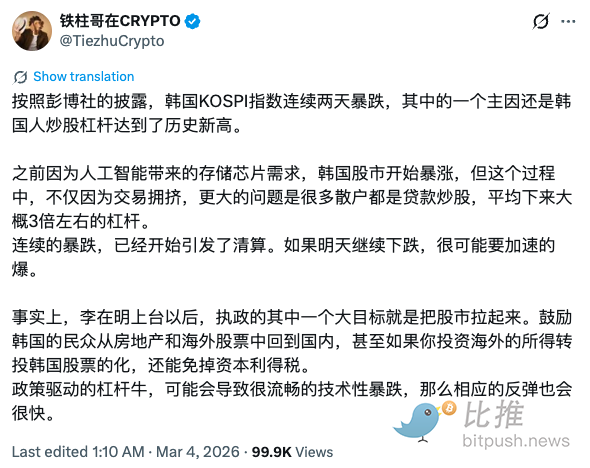
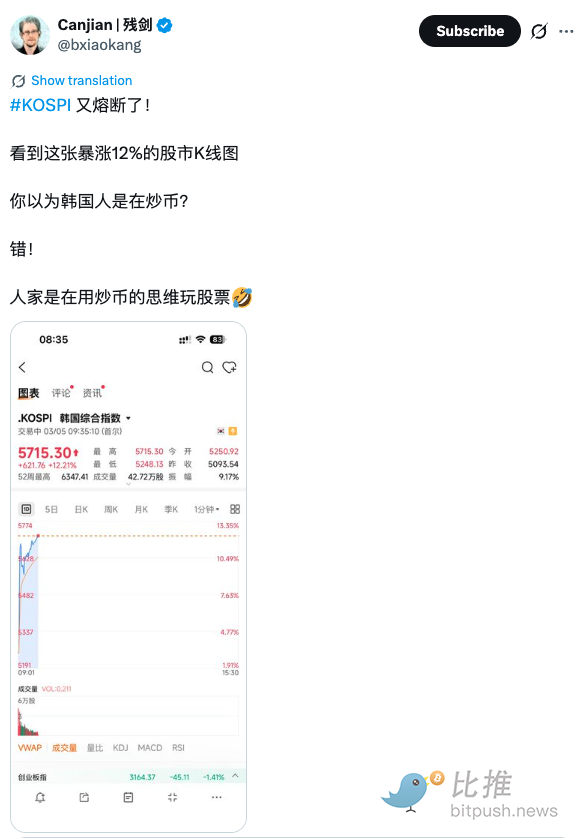
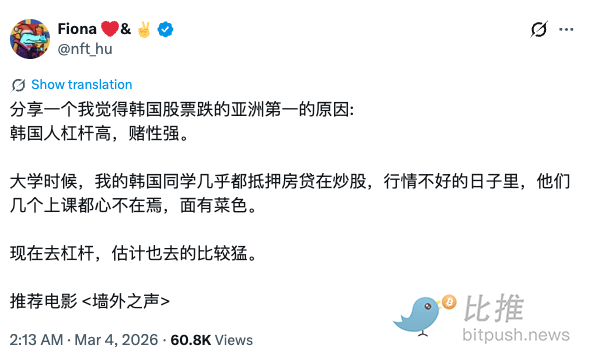
Koreans' Love for Leverage is in Their DNA
Popular Replies:

Koreans' love for leverage is in their DNA. The stock market crashes, the crypto market picks up the slack.

Addicted to gambling. Koreans' speculative nature is number one in Asia.

South Korea's household debt level has always been high. The impact of the past few major deleveraging operations has been very significant.

This wave of Korean Won depreciation + stock market爆仓 (liquidation), BTC's safe-haven属性 (attribute) has been verified again, Koreans are rushing in.

Koreans should already be on their way, Upbit trading volume is about to explode, right?

FOMO indiscriminately, classic Korean retail investor style.

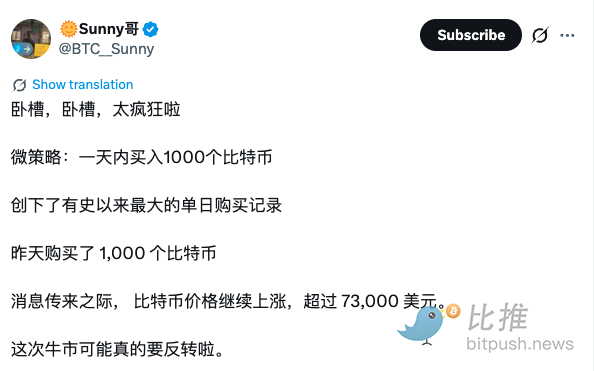
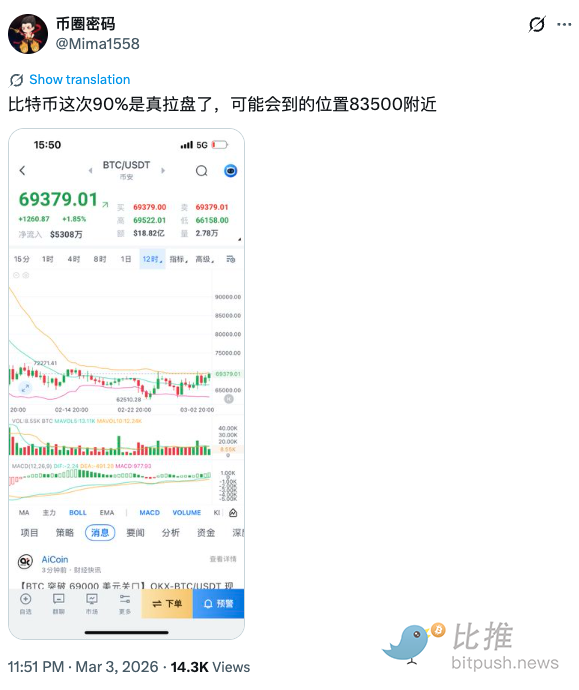
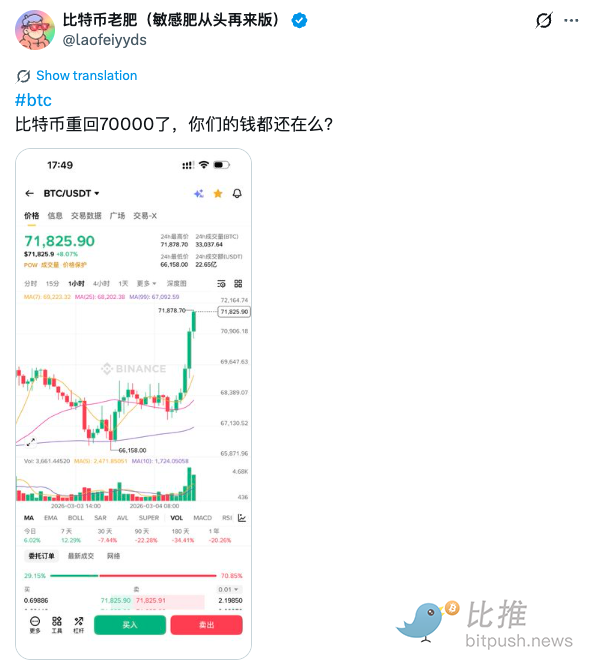
BTC Price Rebounds, Institutions Buying
Popular Replies:

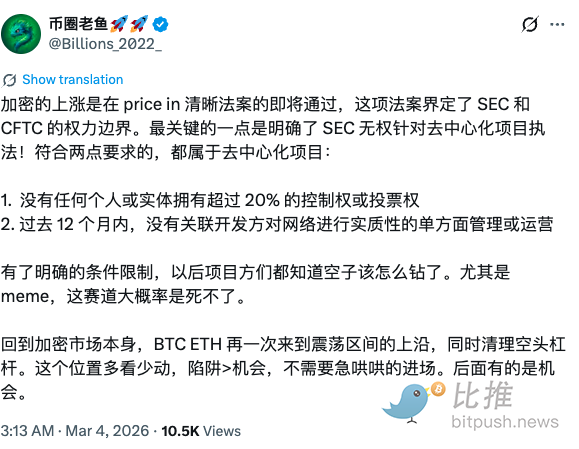
71000—78000—87000, these are all key points if it rallies.

First break 73500, if that happens, next is 83300.

Money in, people in, target $100k,绝对不提前下车 (absolutely not getting off early this time)!

War has made people understand that Bitcoin is reliable.

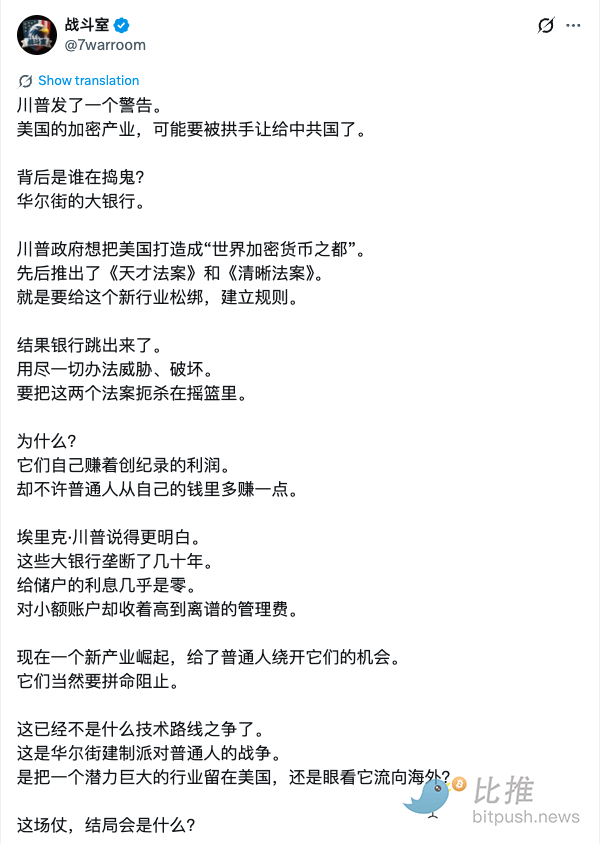
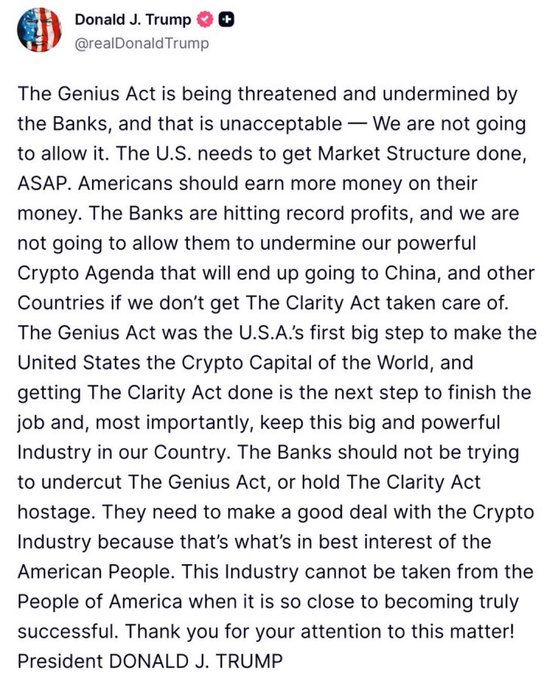
Trump Personally Pushing Crypto Bill!

Popular Replies:

If a clear bill isn't pushed forward, the market might徘徊 (linger) for a long time again. The crypto industry is actually welcoming the most friendly president now. If it's not pushed during Trump's term, there's a high probability of getting beaten up again later.

Feels like Trump's tweet means the talks broke down, seems like a negative?

不会是缺军费,再来收割一波把? (Could it be lacking military funds, coming to harvest another wave?)

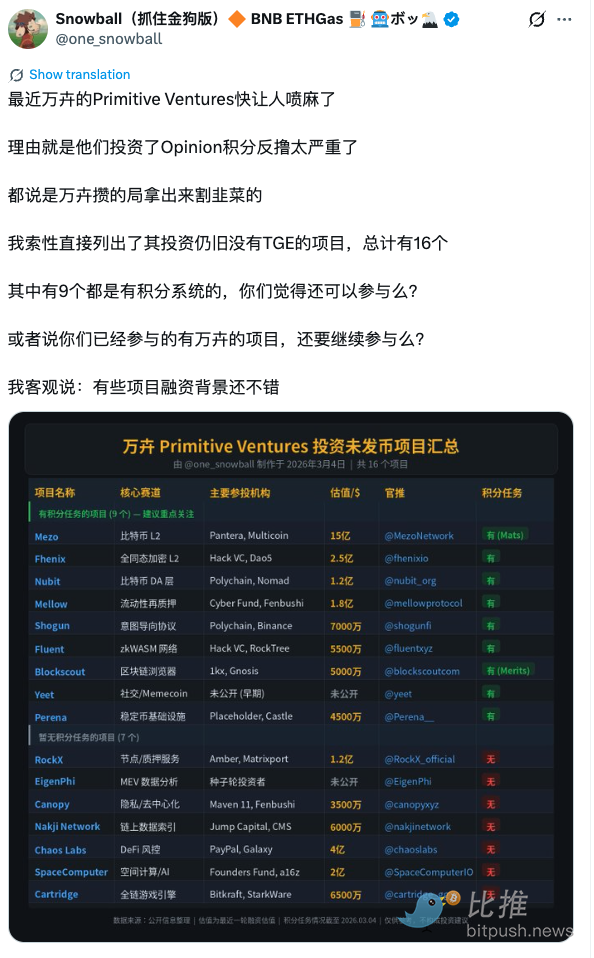
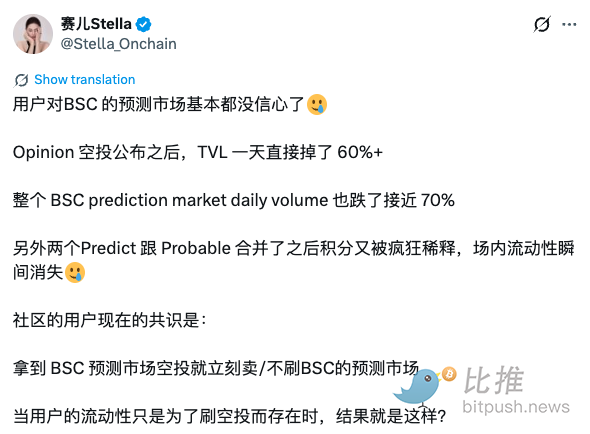
Opinion Controversy
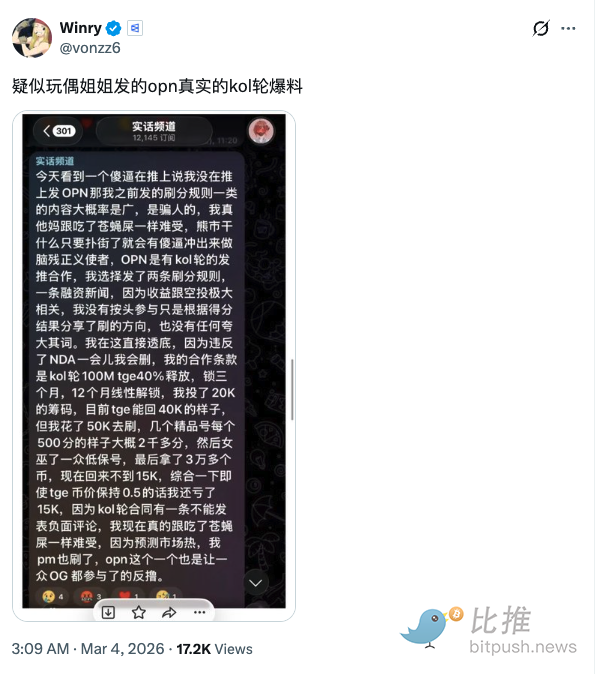
Popular Replies:

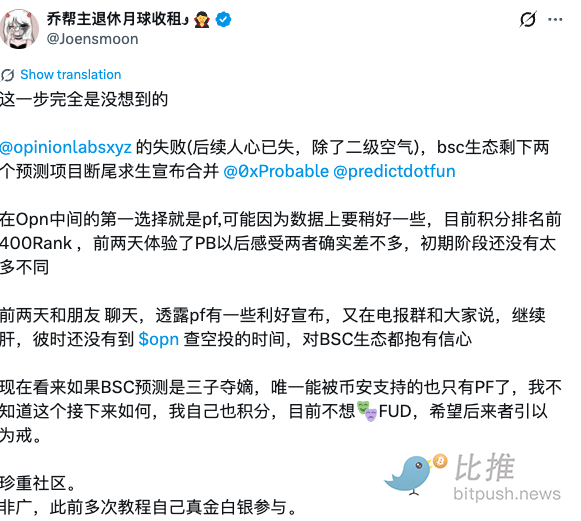
Opinion ruined the prediction track on BSC, who dares to touch BNB Chain prediction projects in the future;

Learn from River, they compensated for二级 (secondary market) losses, Opinion directly反撸 (screwed people over);

I actually think there's no need to骂 (curse) the investment institutions:

  1. These were all the project's decisions

  2. Couldn't get on bn without前期数据 (early data)

  3. Tokens given out were basically picked up by the secondary market, no one is picking them up now

  4. The logic of airdrops has changed, those bringing data without real cash flow will be淘汰 (eliminated), and no one will use them either

  5. The farming era has ended, what's next is real payment for tokens


Twitter:https://twitter.com/BitpushNewsCN

Bitpush TG Discussion Group:https://t.me/BitPushCommunity

Bitpush TG Subscription: https://t.me/bitpush

Original article link:https://www.bitpush.news/articles/7616877

Perguntas relacionadas

QWhat is the main reason discussed in the article for Koreans turning to the cryptocurrency market?

AThe article suggests that Koreans are turning to the cryptocurrency market as a safe haven after the Korean stock market crash, leveraging their inherent tendency for high-risk investments and speculation.

QHow did the community react to the Opinion project mentioned in the article?

AThe community criticized the Opinion project for mismanaging the BSC prediction track, accusing it of exploiting users without compensation, unlike other projects that offered reimbursements for losses.

QWhat role is former President Trump playing in the cryptocurrency space according to the article?

AThe article states that former President Trump is personally advancing cryptocurrency legislation, which is seen as a positive development for the industry, though some speculate it might be a tactic to raise funds.

QWhat are the key Bitcoin price levels mentioned by traders in the article?

ATraders identified key Bitcoin price levels at $71,000, $78,000, and $87,000, with $73,500 and $83,300 being critical resistance points to watch for further gains.

QWhat is the article's perspective on the changing dynamics of airdrops and token distribution?

AThe article notes that the era of meaningless airdrops is ending, and future token distributions will require genuine user engagement and financial contributions, rather than just data farming.

Leituras Relacionadas

From Theft to Re-entry: How Was $292 Million "Laundered"?

A sophisticated crypto laundering operation was executed following the $292 million hack of Kelp DAO on April 18. The attack, attributed to the North Korean Lazarus group, began with anonymous infrastructure preparation using Tornado Cash to fund wallets untraceably. The hacker exploited a vulnerability in Kelp’s cross-chain bridge, stealing 116,500 rsETH. To avoid crashing the market, the attacker used Aave and Compound as laundering tools—depositing the stolen rsETH as collateral to borrow $190 million in clean, liquid ETH. This move triggered a bank run on Aave, causing an $8 billion drop in TVL. After consolidating funds, the attacker fragmented them across hundreds of wallets to evade detection. A major breakpoint was THORChain, where over $460 million in volume—30 times its usual activity—was processed in 24 hours, converting ETH into Bitcoin. This shift to Bitcoin’s UTXO model exponentially increased tracing complexity by shattering funds into countless untraceable fragments. The final destination was Tron-based USDT, the primary channel for illicit crypto flows. From there, funds were cashed out via OTC brokers in China and Southeast Asia, using unlicensed underground banks and UnionPay networks outside Western sanctions scope. Ultimately, the laundered money supports North Korea’s weapons programs, which rely heavily on crypto hacking for foreign currency. The incident underscores structural challenges in DeFi: its openness, composability, and lack of central control make such laundering not just possible, but inherently difficult to prevent.

marsbitHá 1h

From Theft to Re-entry: How Was $292 Million "Laundered"?

marsbitHá 1h

Google and Amazon Simultaneously Invest Heavily in a Competitor: The Most Absurd Business Logic of the AI Era Is Becoming Reality

In a span of four days, Amazon announced an additional $25 billion investment, and Google pledged up to $40 billion—both direct competitors pouring over $65 billion into the same AI startup, Anthropic. Rather than a typical venture capital move, this signals the latest escalation in the cloud wars. The core of the deal is not equity but compute pre-orders: Anthropic must spend the majority of these funds on AWS and Google Cloud services and chips, effectively locking in massive future compute consumption. This reflects a shift in cloud market dynamics—enterprises now choose cloud providers based on which hosts the best AI models, not just price or stability. With OpenAI deeply tied to Microsoft, Anthropic’s Claude has become the only viable strategic asset for Google and Amazon to remain competitive. Anthropic’s annualized revenue has surged to $30 billion, and it is expanding into verticals like biotech, positioning itself as a cross-industry AI infrastructure layer. However, this funding comes with constraints: Anthropic’s independence is challenged as it balances two rival investors, its safety-first narrative faces pressure from regulatory scrutiny, and its path to IPO introduces new financial pressures. Globally, this accelerates a "tri-polar" closed-loop structure in AI infrastructure, with Microsoft-OpenAI, Google-Anthropic, and Amazon-Anthropic forming exclusive model-cloud alliances. In contrast, China’s landscape differs—investments like Alibaba and Tencent backing open-source model firm DeepSeek reflect a more decoupled approach, though closed-source models from major cloud providers still dominate. The $65 billion bet is ultimately about securing a seat at the table in an AI-defined future—where missing the model layer means losing the cloud war.

marsbitHá 7h

Google and Amazon Simultaneously Invest Heavily in a Competitor: The Most Absurd Business Logic of the AI Era Is Becoming Reality

marsbitHá 7h

Trading

Spot
Futuros
活动图片