Kim Kardashian's Sister's Account Hacked to Promote Memecoin

cryptonews.ruPublicado em 2026-08-25Última atualização em 2026-08-25

Resumo

The Instagram account of Kylie Jenner, Kim Kardashian's sister, was hacked to promote a memecoin. The first post, appearing on August 24th, urged her 39 million followers to follow her on the memecoin launch platform Pump.fun. A second post minutes later included a ticker and a full Solana contract address, accompanied by a message encouraging followers to trade. Both posts were deleted within minutes. However, in that short time, the market capitalization of the promoted token, `kylie`, briefly surged to an all-time high of $1.21 million before crashing over 90% to below $120,000 following a major sell-off. Analysis by SolanaFloor revealed the token was launched on Pump.fun just moments before the fake posts. This incident is part of a broader pattern. Hackers have previously compromised accounts of rapper 50 Cent, actor Dean Norris, and investor Keith Gill (Roaring Kitty) for similar memecoin promotions. Blockchain researcher 'Specter' linked these hacks, along with the compromise of Pepe the Frog creator Matt Furie's and WinRAR's accounts, to a single group. This group's activities, including promoting tokens through hijacked accounts and laundering funds across blockchains, have generated over $14 million.

The first post appeared on the @KylieJenner page late on Monday night, August 24. The author of the publication invited the account's 39 million followers to follow Jenner on the memecoin launch platform Pump.fun. Approximately two minutes later, a second post was published—this one included the ticker and full Solana contract address with the note:

"Well then, let's try some trading... Follow me on Pump.fun, cutekjenner."

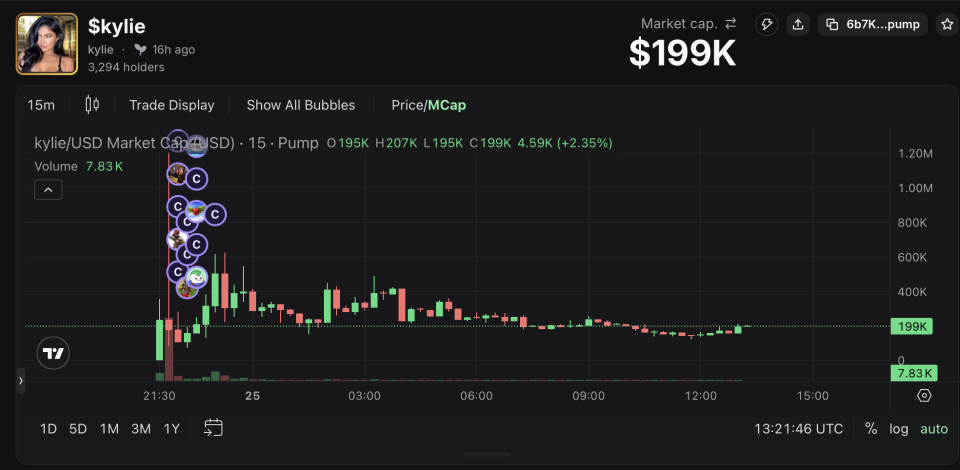
Both posts were deleted just a few minutes after publication. In that time, the market capitalization of the $kylie token managed to reach its all-time high of $1.21 million. Instantly, following a massive sell-off, the token's capitalization plummeted by over 90% to below $120,000.

Before being deleted, the messages garnered approximately 50,000 and 33,000 views respectively. The token with the specified contract address was launched on the Pump.fun platform moments before the first post from the fake Jenner appeared, according to analysis by the company SolanaFloor.
Previously, scammers hacked the accounts of rapper 50 Cent and actor Dean Norris and also used them to promote memecoins. In May, the long-inactive account of investor Keith Gill, Roaring Kitty, suddenly began promoting the RKC token—its market cap briefly reached $12 million before sharply collapsing.

An anonymous blockchain researcher using the alias Specter discovered that the hacks of Gill's account, "Pepe the Frog" creator Matt Furie's account, and the WinRAR project's account on social network X were carried out by the same group of attackers. The group's total revenue, including from promoting tokens through hijacked accounts and laundering funds through various blockchains, exceeded $14 million.

end-content

Perguntas relacionadas

QWhose social media account was reportedly hacked to promote a memecoin, according to the article?

AThe social media account of Kylie Jenner, the sister of Kim Kardashian, was reportedly hacked.

QOn which platform were followers directed to subscribe to promote the memecoin?

AFollowers were directed to subscribe on the memecoin launch platform Pump.fun.

QWhat was the approximate peak market capitalization of the promoted 'kylie' token?

AThe market capitalization of the 'kylie' token reached a peak of approximately $1.21 million.

QBesides Kylie Jenner's account, which other celebrities' accounts were mentioned as being hacked for similar purposes?

AThe accounts of rapper 50 Cent, actor Dean Norris, and investor Keith Gill (Roaring Kitty) were also mentioned as being hacked for similar memecoin promotions.

QAccording to a blockchain researcher, what was the total revenue generated by the hacking group responsible for these attacks?

AAccording to the anonymous blockchain researcher Specter, the hacking group's total revenue exceeded $14 million.

Leituras Relacionadas

BPI: Digital Gold Least Popular Bitcoin Narrative, as Implementation Methods Defy Concepts

A national study by the Bitcoin Policy Institute (BPI) reveals that the "digital gold" narrative for Bitcoin holds little appeal for everyday Americans. The research, conducted with Cygnal and Neighborhood Bitcoin, involved surveys and focus groups with registered voters. Key barriers to adoption included concerns over control of the asset, security, accessibility, and ease of use. Messaging focused on personal control (e.g., "you decide how much") or Bitcoin as "freedom money" (savings that can't be frozen by banks or governments) resonated much more strongly than the "digital gold" concept. The study also found potential buyers are more influenced by stories from peers like friends, family, or financial advisors than by abstract narratives. After exposure to effective messages, the share of those "extremely" or "very" interested in owning Bitcoin rose from 19% to 24%. A separate Federal Reserve Bank of Cleveland research paper analyzed household data from 2018-2025. It found that expectations of Bitcoin's returns were a stronger driver of ownership than all demographic factors combined. For example, in 2021, Bitcoin holders expected a 22% annual return versus just 7% for non-holders. An experiment in 2025 showed that informing participants about Bitcoin's past performance (14.3% return) increased their planned crypto investments by 47% and raised their likelihood of purchasing by 23%. U.S. household crypto ownership grew from under 2% in 2018 to about 12% in 2025.

cryptonews.ruHá 39m

BPI: Digital Gold Least Popular Bitcoin Narrative, as Implementation Methods Defy Concepts

cryptonews.ruHá 39m

Trading

Spot
活动图片