Kevin Warsh Emerges as a Surprise Contender: How Did an Inflation Hawk Become a Top Candidate for Fed Chair?

marsbitPublicado em 2025-12-18Última atualização em 2025-12-18

Resumo

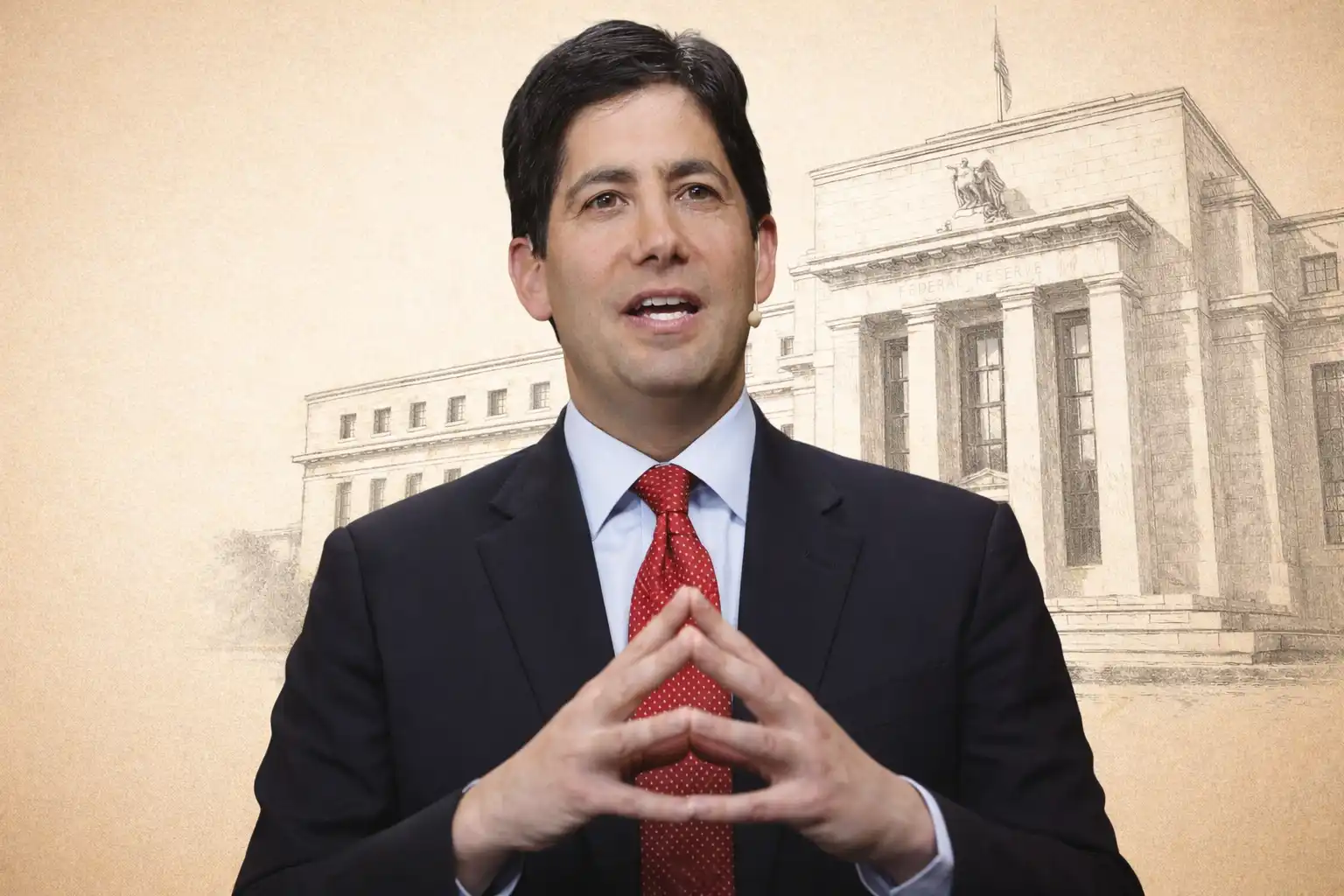
Kevin Warsh, a former Federal Reserve governor known for his hawkish stance on inflation, has unexpectedly re-emerged as a top contender for the next Fed chair, competing against Trump’s longtime economic advisor Kevin Hassett. President Trump has indicated his next Fed pick will aggressively cut interest rates, a priority for his administration. Warsh brings a blend of Wall Street experience, academic credentials, and prior Fed service during the 2008 financial crisis. Despite his historical skepticism toward quantitative easing and concerns over inflation, Warsh has recently signaled openness to rate cuts, aligning with Trump’s demands. He has proposed a “rate cuts plus balance sheet reduction” strategy to reconcile stimulus with inflation control. Hassett, by contrast, is seen as a loyalist who would more directly implement Trump’s preference for looser monetary policy. However, some within Trump’s circle question his technical competence compared to Warsh’s deeper central banking experience. The competition reflects a broader tension between professional independence and political alignment. Warsh is viewed as more institutionally cautious, while demonstrating recent flexibility, whereas Hassett advocates for a Fed more directly responsive to the White House. The outcome will significantly influence the Fed’s future direction and perceived independence.

Author: Zen, PANews

Trump recently stated that he will announce the next Federal Reserve Chair "soon" and emphasized that the new chair would significantly lower interest rates. Trump's final selection is expected to be announced in early 2026. As the White House's screening for the next Fed Chair enters its final stage, former Federal Reserve Governor Kevin Warsh has unexpectedly re-emerged as a core candidate.

Against the backdrop of the Trump team publicly advocating for faster and deeper rate cuts, Warsh's return has drawn attention. He possesses both the central banking experience of participating in decision-making during the financial crisis and a long-standing critique of the Fed's excessive balance sheet expansion and policy direction shifts.

Now, Warsh, who is poised to potentially unseat the "shadow chair," faces a more practical test: how to meet the White House's expectations for low interest rates while simultaneously ensuring market confidence in the Fed's independence.

The Making of an "Inflation Hawk"

Kevin Warsh was born in 1970 and grew up in New York State in a business-oriented family. He graduated from Stanford University and earned a Juris Doctor degree from Harvard Law School. After completing his studies, Warsh embarked on a Wall Street career, working for years in Morgan Stanley's investment banking division, specializing in mergers and acquisitions and rising to the position of Executive Director. This Wall Street experience gave him a deep understanding of financial market operations, which proved highly valuable later when he entered public service.

In 2002, Warsh left Wall Street and turned to politics. He joined the team of then-President George W. Bush, serving as Special Assistant to the President for Economic Policy and working on domestic financial and capital market policies. In 2006, at just 35 years old, Warsh was nominated by President Bush to the Board of Governors of the Federal Reserve System, becoming one of the youngest Fed governors in history.

During his tenure at the Fed, he was responsible for liaising with international entities like the G20, accumulating extensive monetary policy experience. During the 2008 financial crisis, Governor Warsh worked closely with then-Chairman Ben Bernanke and New York Fed President Tim Geithner to help financial institutions weather the storm and participated in decisions regarding the Fed's launch of unconventional measures like quantitative easing (QE).

However, Warsh consistently maintained a cautious stance towards overly accommodative monetary policy, worrying that QE could lead to inflationary risks. Shortly after the launch of the second round of QE, he resigned from the Board prematurely in March 2011, a move widely seen as related to his concerns about QE and inflation risks. Warsh's demonstration of principled independence also earned him a reputation as an "inflation hawk" in financial circles.

After leaving the Fed, Warsh returned to his roots, shifting towards academia and think tanks, remaining active on the forefront of economic policy discussions. He became a Distinguished Visiting Fellow at the Hoover Institution at Stanford University and taught at the business school, focusing his research on monetary policy and financial stability. Simultaneously, Warsh was invited to join influential institutions like the Group of Thirty, frequently authoring media articles criticizing the Fed's overly loose policy orientation.

It is worth noting that Warsh also boasts prominent connections: his wife is from the renowned Estée Lauder family, and his father-in-law, Ronald Lauder, is an old friend and major supporter of President Trump. This provides Warsh with unique networking resources in both political and business circles. Tempered by experiences in government, Wall Street, and academia, Warsh has gradually built an image combining policy expertise and market insight, laying a solid foundation for his bid for higher office.

How Did Warsh Break Through Mid-Race?

After Trump's return to the White House, the new administration began the process of identifying a successor to Jerome Powell as the next Fed Chair. Initially, it was widely believed that Trump's chief economic advisor, Kevin Hassett, had the best chances. Hassett served as Chairman of the Council of Economic Advisers during Trump's first term, had long followed Trump's lead, was seen as a close confidant of the president, and was dubbed the "shadow chair" by outsiders.

However, Warsh unexpectedly emerged mid-race as a candidate, winning the favor of Trump's team. In early December, Trump revealed that his choice for Fed Chair had narrowed down to "two Kevins"—Hassett and Warsh. Warsh's strong rise has elevated him to a position where he can rival Hassett. Trump stated, "I think both Kevins are excellent," hinting that the final choice would be between the two.

Warsh's ability to catch up is closely tied to his active efforts. Trump disclosed that he had met with Warsh at the White House in mid-December, during which Warsh directly expressed support for rate cuts. Trump claimed that Warsh believed current rates "should be lower," a view aligning with his own demand for a more accommodative monetary environment. Having both professional background and a willingness to align with policy direction, particularly迎合 (catering to) the White House's demands on interest rates, this somewhat alleviated Trump's previous concerns about his hawkish stance.

Furthermore, Warsh's network of connections also played a role. Wall Street heavyweights like JPMorgan Chase CEO Jamie Dimon expressed support for Warsh leading the Fed. Dimon indicated in private settings that while Hassett might cut rates more aggressively in the short term, Warsh, with his richer central banking experience, was the steadier choice in the long run.

Moreover, changing evaluations of the candidates within Trump's inner circle contributed to Warsh's breakthrough. Media reports disclosed that some Trump administration officials privately expressed concerns about Hassett's capabilities. These insiders believed that during his tenure as Director of the National Economic Council, Hassett had no outstanding practical decision-making ability beyond promoting Trump's policies. Such reservations led some Trump aides to question whether Hassett was suited for the highly technical role of Fed Chair.

In contrast, Warsh, with his experience as a Fed governor and market expertise, was deemed more competent. This tension between "loyalty" and "expertise" created a博弈 (game) within Trump's team: on one hand, the president's political advisors valued Hassett's absolute loyalty to Trump; on the other hand, economic officials like Treasury Secretary Scott Bessent leaned towards Warsh, who possessed professional credibility.

Mid-December reports indicated that Trump had personally interviewed Warsh; it was uncertain if he would meet other candidates. However, mainstream analysis suggested the competition had increasingly focused on the "two Kevins" by year-end. The process of breaking through mid-race also shows that Warsh is adept at strategizing, mobilizing connections, and flexibly adjusting his stance according to the situation. For the Trump camp, he brings both professional credibility and political flexibility, which is precisely why he has become a top contender for the 2025 Fed Chair position.

The Battle of the Two Kevins

Due to differences in background and orientation, the economic policy proposals and approaches of the "two Kevins" also show distinct variations.

On monetary policy, Warsh has long been known as an "inflation hawk,"始终保持警惕 (always maintaining vigilance) towards measures like quantitative easing. He strongly focuses on long-term inflation risks, emphasizing the central bank must maintain resolve in controlling prices. Hassett, coming from an academic economic advisory background and not a career central banker, has a stance on monetary policy that changes more with political needs.

Under Trump's influence, Hassett's recent remarks have trended dovish, publicly calling for the Fed to increase the pace of rate cuts to stimulate growth. Comparing the two, Warsh's image is more that of a traditional central banker, cautious and focused on long-term stability; Hassett appears more as a strategist灵活迎合 (flexibly catering to) political intentions. As JPMorgan CEO Dimon evaluated, Hassett might cut rates more aggressively in the short term, while Wash embodies deeper policy expertise and a steadier立场 (stance).

However, it is noteworthy that Warsh has recently adjusted his policy proposals to move closer to Trump. In a Wall Street Journal op-ed published in November, Warsh proposed simultaneously cutting interest rates and significantly shrinking the Fed's balance sheet, thereby兼顾 (balancing) stimulating the economy and guarding against inflation. This combination of "rate cuts + balance sheet reduction" is seen as a concession and adaptation of his traditional hawkish stance: allowing rates to fall first but回收流动性 (mopping up liquidity) by reducing the scale of bonds held by the Fed to prevent inflation from rising. In contrast, Hassett has not proposed similar technical balancing measures; he prefers direct and sweeping rate cuts, believing this can immediately boost economic growth.

There are also clear differences in their attitudes towards curbing inflation. Warsh has bluntly criticized the Powell-led Fed for "making unwise mistakes in dealing with inflation." He proposes that "inflation is a choice," arguing that the high inflation in recent years was largely due to Fed policy errors, not an unavoidable force. Therefore, Warsh advocates that the new chair must strictly adhere to the price stability goal, prioritizing inflation control.

Based on this理念 (philosophy), he opposes simply attributing economic overheating and a tight labor market as causes of inflation, criticizing the Fed's past "dogma" of blaming inflation on excessive economic growth. Instead, Warsh believes that by increasing productivity and理顺供给 (smoothing out supply), higher growth and employment can be achieved without triggering inflation. Unlike Warsh's emphasis on the Fed's own responsibility, Hassett's stance on inflation is more politically colored.

The issue of the Fed's independence and political neutrality is a point of particular external concern. The differences in their concepts will not only reflect their personal styles but also profoundly impact the reputation and functional positioning of the Federal Reserve as an institution in the coming years.

Warsh, as a former Fed official,深知 (is deeply aware of) the value of central bank independence. He emphasized professional integrity during his 2017 bid for the chair nomination and demonstrated a degree of independent principle by resigning due to policy disagreements. Even though he has compromised somewhat this time to meet Trump's demand for lower rates, Warsh is still seen as a member of the financial elite, relatively reserved and steady in style. Trump has privately expressed不完全信任 (incomplete trust) in "Bush-era elites" like Warsh, worrying that he might be too independent and too polished to be fully controllable.

In comparison, Hassett has publicly argued that the Fed has become "politicized" and needs new leadership to align with the president's agenda. Even though Hassett has recently begun to constantly emphasize that he would ensure central bank independence upon taking office, he实质上仍主张 (still essentially advocates) for monetary policy to be more closely serve the goals of the administration. This aligns highly with Trump's public demands: Trump has repeatedly stated that the next Fed Chair "should listen to me" and demanded that his opinion be sought before interest rate decisions.

In summary, Kevin Warsh,凭借 (relying on) his unique resume and flexible strategy during the selection process, has successfully跻身 (joined the ranks of) the top candidates for the 2025 Fed Chair. His experiences in government, Wall Street, and academia add significant weight, and his interactions with President Trump's camp also demonstrate a pragmatic side. In comparison with his main competitor, Kevin Hassett, Wash demonstrates stronger professional independence and monetary policy experience, while Hassett excels in loyalty and political acumen. Their分歧 (divergences) on core economic policies reflect the different paths the Fed might face in the future: adhering to the independence and steadiness of a traditional central bank, or迎合 (catering to) political demands for looser policy and growth.

In the analysis and reporting of mainstream media, this contest between the "two Kevins" is not just a personnel battle but also a博弈 (game) concerning the Fed's independence and policy orientation. Regardless of who ultimately wins, investors in the US and globally are closely watching how the final victor of this tug-of-war will define the next chapter of the Federal Reserve.


Perguntas relacionadas

QWho are the two main candidates for the next Federal Reserve Chairman as mentioned in the article, and what are their respective backgrounds?

AThe two main candidates are Kevin Warsh and Kevin Hassett. Kevin Warsh is a former Federal Reserve Governor with a background in Wall Street (Morgan Stanley) and served in the Bush administration. Kevin Hassett is Trump's former chief economic advisor and former Chairman of the Council of Economic Advisers, known for his close alignment with Trump.

QWhy is Kevin Warsh, historically known as an inflation hawk, considered a candidate despite Trump's desire for lower interest rates?

ADespite his hawkish reputation, Warsh has recently adjusted his stance to align with Trump by expressing support for lower interest rates. He proposed a combination of 'rate cuts + balance sheet reduction' to stimulate the economy while controlling inflation, demonstrating flexibility that appealed to Trump's team.

QWhat role did Kevin Warsh play during the 2008 financial crisis?

ADuring the 2008 financial crisis, Kevin Warsh, as a Federal Reserve Governor, worked closely with Chairman Ben Bernanke and New York Fed President Tim Geithner. He helped financial institutions navigate the crisis and participated in decisions to implement unconventional measures like quantitative easing.

QWhat are the key differences in policy approach between Kevin Warsh and Kevin Hassett regarding the Federal Reserve's independence?

AKevin Warsh, as a former Fed official, values central bank independence and has a reputation for professional integrity. Kevin Hassett, however, has argued that the Fed has become too political and should align more closely with the presidential agenda, which matches Trump's desire for a chairman who would 'listen to him'.

QHow did Kevin Warsh's personal connections and Wall Street support influence his candidacy?

AWarsh's wife is from the Estée Lauder family, and his father-in-law, Ronald Lauder, is a longtime friend and supporter of Trump, providing valuable political and business connections. Additionally, Wall Street figures like JPMorgan CEO Jamie Dimon expressed support for Warsh, citing his extensive central banking experience as a稳健 choice.

Leituras Relacionadas

Bloomberg Uncovered: How Do China's Wealthy Circumvent the Annual $50,000 Limit to Transfer Assets?

**Summary: How Wealthy Chinese Circumvent $50,000 Annual Foreign Exchange Limits** Despite China's strict capital controls, including an annual $50,000 per person foreign exchange quota, an estimated $150 billion in funds still leaves the country annually via various gray and underground channels. This report outlines the evolution of China's "capital wall" and the methods used to bypass it. **The Evolving Capital Controls:** * **Foundation (1994):** The system of "current account convertibility with strict capital account controls" was established. * **Quota Set (2007):** The $50,000 individual annual forex purchase limit was formalized. * **Crackdown Begins (2015-2017):** Following market volatility, enforcement tightened. Banks were required to scrutinize transactions, and channels like using UnionPay cards for Hong Kong insurance premiums or buying overseas property were blocked. * **Digital & Legal Upgrades (2024-2026):** Enhanced algorithms now flag suspicious patterns (e.g., "smurfing"). The Common Reporting Standard (CRS) provides Chinese tax authorities with data on citizens' offshore accounts. Unlicensed cross-border brokers have been targeted. **Five Primary Methods for Moving Capital:** 1. **Underground Banking / "Hawala" (Duiqiao):** The largest-scale method. No money crosses borders. Clients pay RMB to a domestic account; an overseas associate deposits equivalent foreign currency into the client's offshore account. Risks include high fees, account freezes, and legal penalties. 2. **"Smurfing" or "Ant Moving":** Using multiple individuals' $50,000 quotas to pool funds for one offshore recipient. Increasingly detected by anti-money laundering algorithms. 3. **Trade Invoice Manipulation:** Businesses over-invoice imports or under-invoice exports via offshore shell companies, creating a pretext to transfer excess funds abroad under the guise of trade. 4. **Channel Migration:** After a crackdown on internet brokers, funds flow toward more compliant but costly channels like major banks' cross-border wealth management services or Qualified Domestic Institutional Investor (QDII) quotas. 5. **Structural Arrangements:** High-net-worth individuals use complex, high-cost legal structures involving offshore trusts, insurance, and investment migration programs to transfer asset ownership. **Regulatory Response: Focusing on People, Not Just Money** The current strategy extends oversight from enterprises to **individual residents**. Tools like CRS allow retroactive visibility into offshore assets. Cryptocurrencies, once seen as a potential loophole, are now actively monitored and prosecuted as an illegal channel. The underlying driver remains: with significant wealth concentrated among millions of affluent households seeking diversification amid domestic economic shifts, the incentive to move assets offshore persists despite regulatory barriers.

marsbitHá 11m

Bloomberg Uncovered: How Do China's Wealthy Circumvent the Annual $50,000 Limit to Transfer Assets?

marsbitHá 11m

Ethereum's Ballmer Moment: As Everyone Is Bearish, the Circulating Supply Is Disappearing

"Ethereum's Ballmer Moment: Circulation Shrinks Amid Bearish Sentiment" Amid widespread bearish sentiment, with prominent figures like Bankless founder David Hoffman selling ETH and young developers flocking to Solana, some argue Ethereum is entering its "Ballmer era"—akin to Microsoft's perceived stagnation under Steve Ballmer. While surface-level criticisms about slow protocol development, cautious leadership, and competitive pressure are valid, underlying fundamentals tell a different story. Approximately 30% of ETH is staked, major holders like BitMine are accumulating, and spot ETFs continue to absorb supply. Regulatory clarity, including the SEC/CFTC's March ruling on staking rewards and the potential passage of the CLARITY Act, is transforming crypto from a regulatory threat into a legitimized framework. This institutionalization, alongside a shrinking circulating supply (with net issuance around 0.23% annually), creates significant buy-side pressure independent of fee-based value capture. The broader crypto total addressable market is expanding through regulated stablecoins, tokenized assets, and institutional adoption. While public chains face competition from permissioned alternatives, the winning model appears to be permissioned assets settling on public chains like Ethereum and Solana. The author advocates a non-maximalist, barbell strategy: holding ETH for its institutional role and supply squeeze, SOL for consumer/throughput trends, BTC as a macro hedge, and a basket of next-gen L1s. Key bullish drivers for ETH include rapid circulation shrinkage, potential Q2 staked ETF approvals, regulatory tailwinds solidifying its role as a default settlement layer, and the optionality of an eventual "Satya moment" leadership shift. Despite bearish consensus, the current setup—where crypto is "not hot" and regulatory groundwork is being laid—presents a compelling investment opportunity. The crypto cycle's focus may have shifted to AI, but blockchain infrastructure is gaining a legal and institutional foothold precisely while attention is elsewhere.

marsbitHá 11m

Ethereum's Ballmer Moment: As Everyone Is Bearish, the Circulating Supply Is Disappearing

marsbitHá 11m

Claude Code Introduces Dynamic Workflows: Enabling AI to Form Teams and Collaborate

Claude Code introduces dynamic workflows, enabling AI to coordinate teams of specialized agents for complex tasks. This transforms Claude from a code assistant into a programmable workbench. Workflows address key limitations of single-agent systems: agentic laziness (premature task completion), self-preferential bias (favoring own outputs), and goal drift (losing sight of original objectives). The system allows Claude to dynamically create execution frameworks using JavaScript. It can split tasks, dispatch parallel agents for isolated work (e.g., in separate worktrees), implement adversarial validation, run tournaments, and synthesize results. This multi-agent approach is valuable for tasks requiring deep research, factual verification, code migration, root cause analysis, large-scale triage, and qualitative sorting. Key patterns include: classify-and-route, fan-out-and-synthesize, adversarial verification, generate-and-filter, tournaments, and loop-until-done. While token usage is higher, workflows excel where tasks resemble programming—needing problem decomposition, isolated context, hypothesis testing, and handling many details. They extend Claude Code's utility beyond technical work to areas like business plan review, resume screening, and naming brainstorm. The feature is not a universal solution but points to a future where AI tool competitiveness depends on organizing reliable, reusable, and auditable execution flows for complex goals.

marsbitHá 52m

Claude Code Introduces Dynamic Workflows: Enabling AI to Form Teams and Collaborate

marsbitHá 52m

Hyperliquid, Wall Street's 24/7 Trading Convenience Store

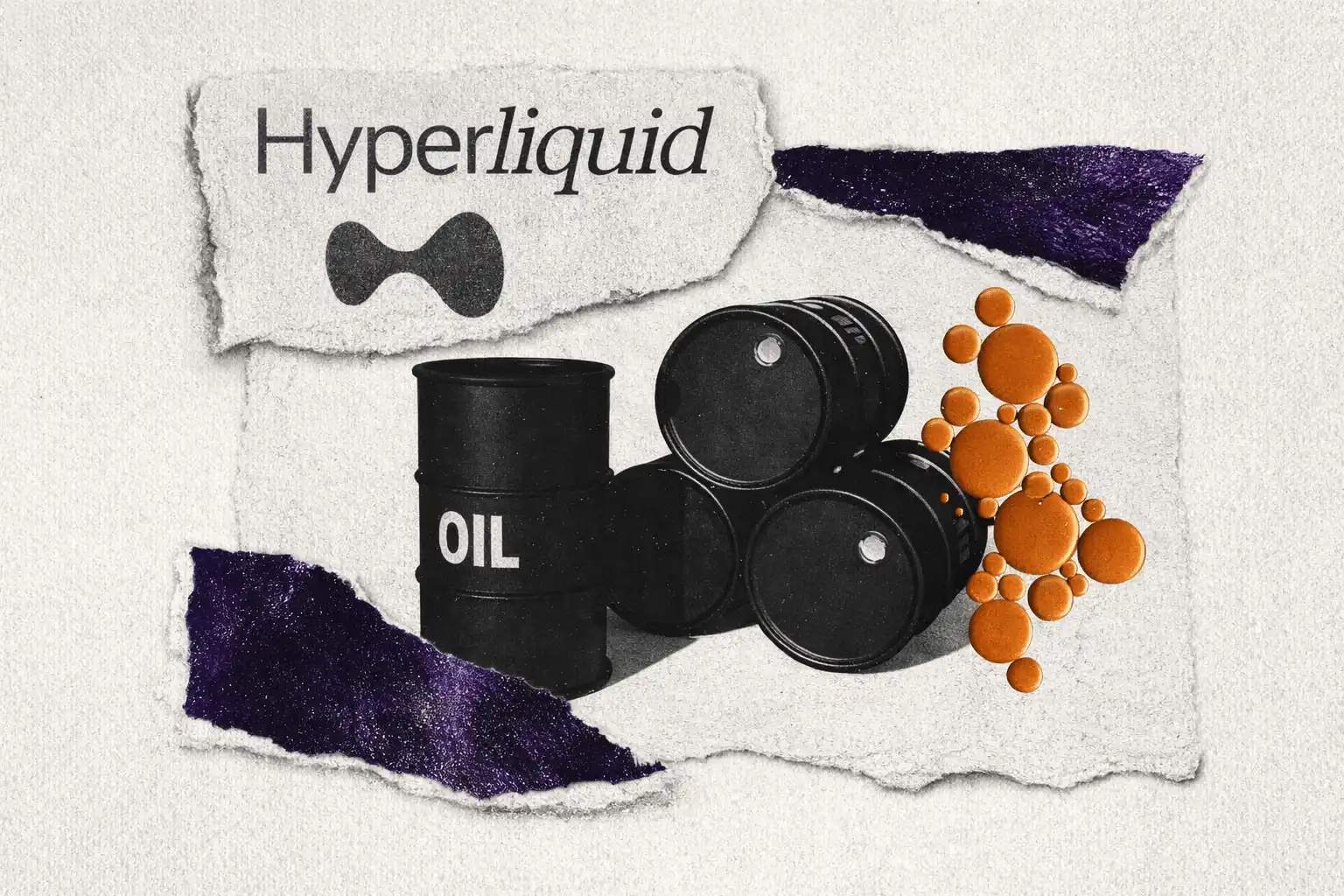
Hyperliquid: The 24/7 Trading "Convenience Store" for Wall Street Hyperliquid, a decentralized cryptocurrency exchange, has become a go-to platform for Wall Street traders seeking to trade around the clock, especially during traditional market closures. Founded by Jeff Yan, a former quantitative trader, after the FTX collapse, the platform emphasizes user self-custody of assets. It offers a wide range of perpetual contracts—leveraged derivatives with no expiry—on assets from Bitcoin and crude oil to the S&P 500 and even pre-IPO companies like SpaceX. A notable example involves a hedge fund trader who capitalized on geopolitical news over a weekend, securing a 243% return on oil derivatives before markets reopened. The platform, run by just 11 employees, generated approximately $800 million in revenue last year, and its native token HYPE has seen significant growth. Its rise highlights the merging of traditional finance and crypto. While U.S. users are currently restricted, recent CFTC rule changes could open access. The platform is known for its transparency, having processed $10 billion in liquidations during a market crash while competitors faltered. Regulators warn of the high risks and complexity of perpetual contracts for retail investors. Key to its appeal is a strong community culture, direct engagement with founders, and a simple interface. Despite rules against VPN use, it attracts global users with its permissionless approach. Hyperliquid plans to expand into prediction markets and options, aiming to eventually host all financial activity.

marsbitHá 52m

Hyperliquid, Wall Street's 24/7 Trading Convenience Store

marsbitHá 52m

Trading

Spot
Futuros

Artigos em Destaque

Como comprar BILL

Bem-vindo à HTX.com!Tornámos a compra de Billions Network (BILL) simples e conveniente.Segue o nosso guia passo a passo para iniciar a tua jornada no mundo das criptos.Passo 1: cria a tua conta HTXUtiliza o teu e-mail ou número de telefone para te inscreveres numa conta gratuita na HTX.Desfruta de um processo de inscrição sem complicações e desbloqueia todas as funcionalidades.Obter a minha contaPasso 2: vai para Comprar Cripto e escolhe o teu método de pagamentoCartão de crédito/débito: usa o teu visa ou mastercard para comprar Billions Network (BILL) instantaneamente.Saldo: usa os fundos da tua conta HTX para transacionar sem problemas.Terceiros: adicionamos métodos de pagamento populares, como Google Pay e Apple Pay, para aumentar a conveniência.P2P: transaciona diretamente com outros utilizadores na HTX.Mercado de balcão (OTC): oferecemos serviços personalizados e taxas de câmbio competitivas para os traders.Passo 3: armazena teu Billions Network (BILL)Depois de comprar o teu Billions Network (BILL), armazena-o na tua conta HTX.Alternativamente, podes enviá-lo para outro lugar através de transferência blockchain ou usá-lo para transacionar outras criptomoedas.Passo 4: transaciona Billions Network (BILL)Transaciona facilmente Billions Network (BILL) no mercado à vista da HTX.Acede simplesmente à tua conta, seleciona o teu par de trading, executa as tuas transações e monitoriza em tempo real.Oferecemos uma experiência de fácil utilização tanto para principiantes como para traders experientes.

182 Visualizações TotaisPublicado em {updateTime}Atualizado em 2026.06.02

Como comprar BILL

O que é ATWO

I. Introdução ao ProjetoArena Two é uma plataforma interativa descentralizada que permite aos fãs desempenhar um papel ativo e tokenizado nos resultados de eventos em tempo real. Ao contrário dos modelos tradicionais de transmissão que reduzem os fãs a espectadores passivos, a Arena Two utiliza a tecnologia blockchain para permitir que os fãs votem diretamente em tempo real e influenciem os resultados em campo.II. Informação sobre o TokenNome do token: ATWO(Arena Two)III. Links RelacionadosWebsite:https://arenatwo.com/Exploradores:https://basescan.org/token/0x499D35eBE6cEe9B2Ac35Fd003fcBbeeB9CFc7B32Twitter:https://x.com/arenatwoXNota: A introdução ao projeto provém dos materiais publicados ou fornecidos pela equipa oficial do projeto, que é apenas para referência e não constitui aconselhamento de investimento. A HTX não se responsabiliza por quaisquer perdas diretas ou indiretas resultantes.

148 Visualizações TotaisPublicado em {updateTime}Atualizado em 2026.06.02

O que é ATWO

Como comprar ATWO

Bem-vindo à HTX.com!Tornámos a compra de Arena Two (ATWO) simples e conveniente.Segue o nosso guia passo a passo para iniciar a tua jornada no mundo das criptos.Passo 1: cria a tua conta HTXUtiliza o teu e-mail ou número de telefone para te inscreveres numa conta gratuita na HTX.Desfruta de um processo de inscrição sem complicações e desbloqueia todas as funcionalidades.Obter a minha contaPasso 2: vai para Comprar Cripto e escolhe o teu método de pagamentoCartão de crédito/débito: usa o teu visa ou mastercard para comprar Arena Two (ATWO) instantaneamente.Saldo: usa os fundos da tua conta HTX para transacionar sem problemas.Terceiros: adicionamos métodos de pagamento populares, como Google Pay e Apple Pay, para aumentar a conveniência.P2P: transaciona diretamente com outros utilizadores na HTX.Mercado de balcão (OTC): oferecemos serviços personalizados e taxas de câmbio competitivas para os traders.Passo 3: armazena teu Arena Two (ATWO)Depois de comprar o teu Arena Two (ATWO), armazena-o na tua conta HTX.Alternativamente, podes enviá-lo para outro lugar através de transferência blockchain ou usá-lo para transacionar outras criptomoedas.Passo 4: transaciona Arena Two (ATWO)Transaciona facilmente Arena Two (ATWO) no mercado à vista da HTX.Acede simplesmente à tua conta, seleciona o teu par de trading, executa as tuas transações e monitoriza em tempo real.Oferecemos uma experiência de fácil utilização tanto para principiantes como para traders experientes.

80 Visualizações TotaisPublicado em {updateTime}Atualizado em 2026.06.02

Como comprar ATWO

Discussões

Bem-vindo à Comunidade HTX. Aqui, pode manter-se informado sobre os mais recentes desenvolvimentos da plataforma e obter acesso a análises profissionais de mercado. As opiniões dos utilizadores sobre o preço de A (A) são apresentadas abaixo.

活动图片