Jane Street's Three Sins: Insider Trading, Index Manipulation, and the Bitcoin 'Morning Massacre'

marsbitPublicado em 2026-02-26Última atualização em 2026-02-26

Resumo

Jane Street, a highly profitable quantitative trading firm, faces serious allegations across multiple continents. In the U.S., Terraform Labs’ bankruptcy trustee has sued Jane Street, accusing it of insider trading related to the May 2022 collapse of Terra Luna. The suit claims Jane Street withdrew $85 million from a liquidity pool just minutes after Terraform secretly removed $150 million, allegedly using non-public information from a former intern. The action allegedly helped trigger a $40 billion crash. Simultaneously, in India, the Securities and Exchange Board (SEBI) has accused Jane Street of manipulating the Bank Nifty index through a “pump-and-dump” scheme over 18 expiration dates, resulting in alleged illegal profits of ~$580 million. Jane Street has been barred from Indian markets and is appealing. Additionally, Bitcoin traders had observed a pattern of sharp sell-offs at 10 AM ET—dubbed the "10 AM Crashes"—coinciding with U.S. market open, which many attributed to Jane Street’s trading activity. Notably, Jane Street is an authorized participant of BlackRock’s IBIT Bitcoin ETF, holding significant shares. After the Terra lawsuit was filed, the predictable sell-offs stopped, and Bitcoin saw a notable price rebound. The broader implication is the risk of market manipulation by privileged intermediaries within ETF structures—a problem Bitcoin was designed to overcome. If Jane Street halts its alleged manipulative strategies due to legal pressure, a major selling pre...

Author: Roberto Rios (@peruvian_bull)

Compiled by: Deep Tide TechFlow

Deep Tide Introduction: Jane Street is the most profitable quantitative trading company in Wall Street history, yet few know of its existence—until this week when it was accused of insider trading leading to the Terra Luna crash, while also embroiled in a $560 million index manipulation lawsuit in India. This article connects Jane Street's alleged manipulation of Terra Luna, market manipulation in India, and the daily 10 a.m. Bitcoin dump known as the "10 AM Smash" into a complete investigative chain, with timelines and data that withstand scrutiny. Bitcoin's rebound today may be tied to this story.

Full Text Below:

The most powerful trading company you've never heard of was just caught with its hand in the cookie jar. Twice. On two different continents.

And Bitcoin, finally, is set free because of it.

Follow me:

Jane Street Group is a New York-based quantitative trading firm. They have no CEO.
By their own description, the company operates like an "anarchist commune." In just the first nine months of 2025, they recorded net trading revenue of $24 billion, surpassing the $20.5 billion for all of 2024. In Q2 2025 alone, they achieved $10.1 billion—the highest quarterly trading revenue ever recorded by any company in Wall Street history.

By any measure, Jane Street is the most profitable trading institution on Earth.

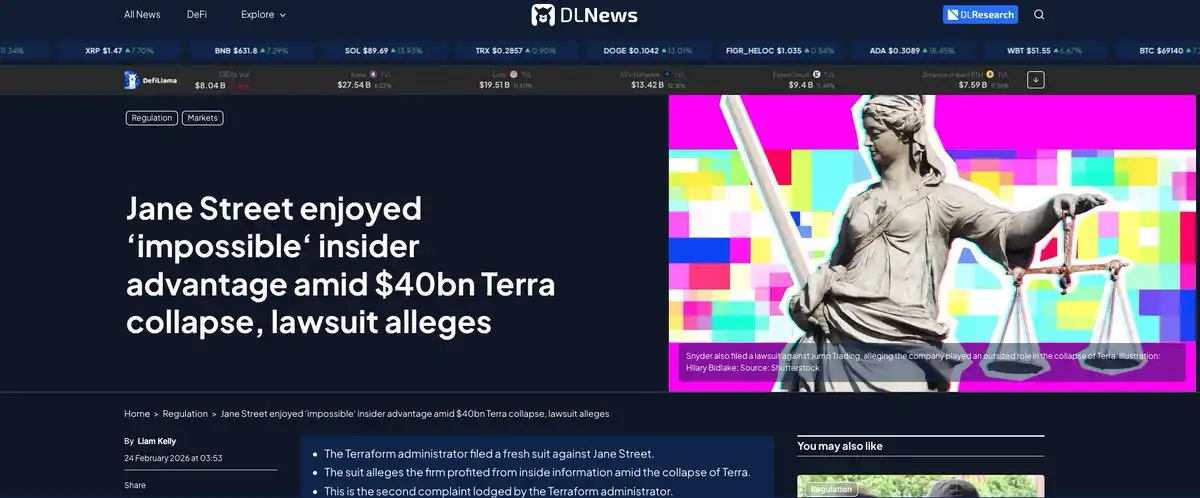
And just this week, the Terraform Labs bankruptcy administrator filed a lawsuit in Manhattan federal court, accusing Jane Street of using insider information to position itself ahead of and profit from the May 2022 collapse of Terra Luna. That crash wiped out $40 billion in value and triggered a chain reaction that ultimately brought down Celsius, Three Arrows Capital, and FTX.

The logic of the accusation is stunningly simple.
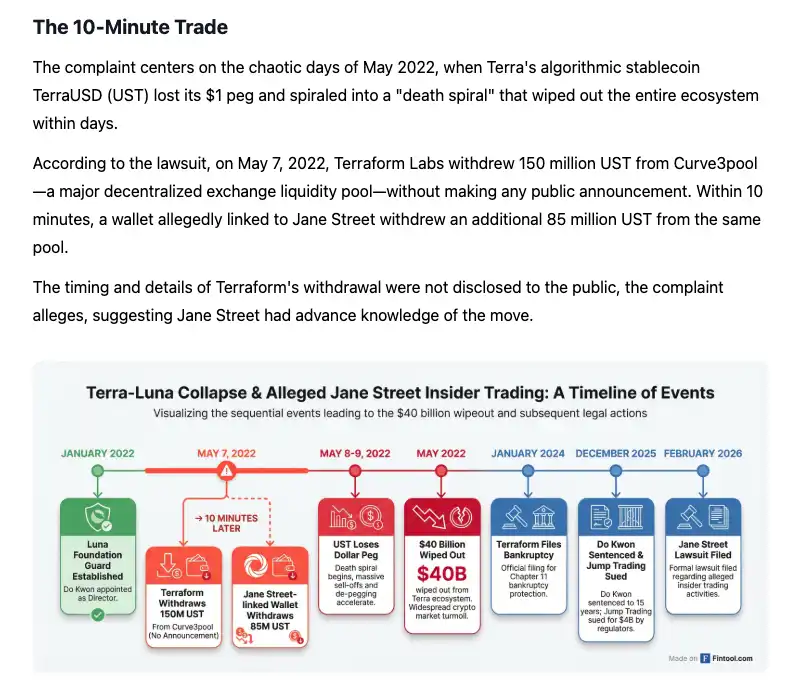
On May 7, 2022, Terraform Labs quietly withdrew $150 million in UST from the Curve 3pool, a major decentralized liquidity pool. No announcement, just a silent liquidity withdrawal.

Ten minutes later, a wallet linked to Jane Street withdrew $85 million from the same liquidity pool.

A full ten minutes.
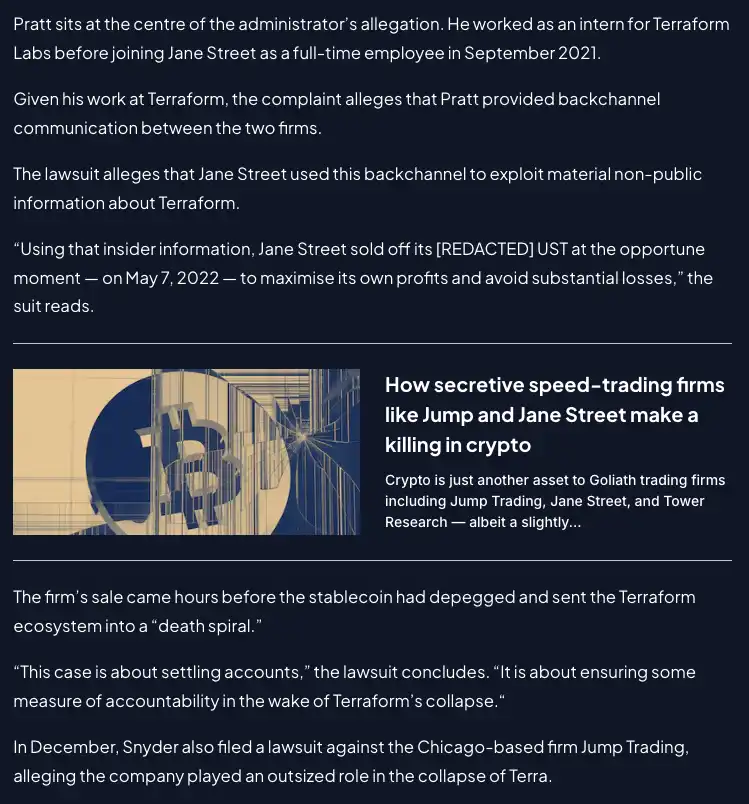
The lawsuit alleges that a former intern at Terraform, Bryce Pratt, who joined Jane Street as a full-time employee in September 2021, established a secret communication channel with his former colleagues at Terraform. He is accused of directly conveying material non-public information about Terraform's liquidity operations to Jane Street's trading desk.

The lawsuit names four defendants: Jane Street Group LLC, co-founder Robert Granieri, and employees Bryce Pratt and Michael Huang.

The bankruptcy administrator's statement cuts to the chase: The trades executed by Jane Street "would not have been possible without access to material non-public information to which they were exclusively privy."

It gets worse. The lawsuit alleges that Jane Street's withdrawal helped trigger the de-pegging of UST, pushing the entire Terraform ecosystem into a death spiral. LUNA fell from over $80 to near zero. $40 billion evaporated. Ordinary people lost everything—retirement savings, education funds, a lifetime of accumulation, gone in days.
Jane Street's response? They call it a "desperate move by those with their backs against the wall," "baseless allegations."

But the problem is, this isn't their first time.

In July 2025, the Securities and Exchange Board of India (SEBI) brought one of the largest market manipulation charges in Indian history against Jane Street. SEBI's investigation found that on 18 derivative expiry days between January 2023 and March 2025, Jane Street executed a textbook pump-and-dump manipulation of the Bank Nifty index.
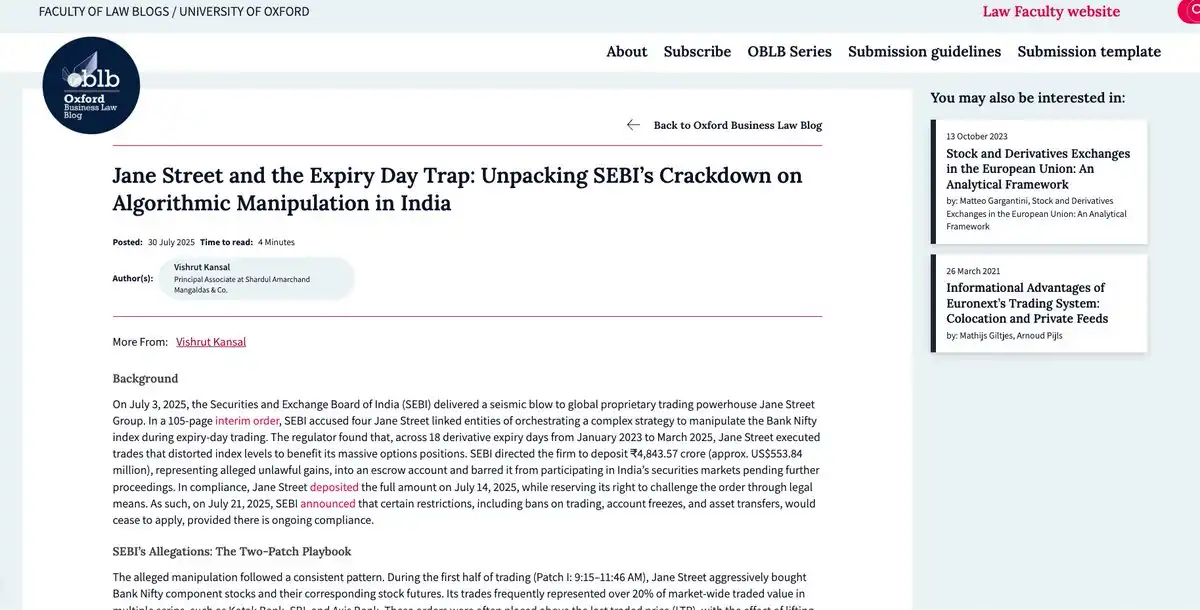
The operation was mechanically precise:

Morning: Jane Street's algorithms heavily bought Bank Nifty component stocks and futures, pushing the index up 1% to 1.3%. SEBI found that on some trading days, Jane Street alone contributed to the entire positive price impact of the index.

Simultaneously, they built large short option positions, primarily selling calls and buying puts, with the size of their options positions severely disproportionate to their stock holdings. SEBI found that, in delta equivalent terms, their options positions were 7.3 times larger than their stock and futures positions. This wasn't hedging, this wasn't arbitrage; this was directional manipulation with extra steps.

Afternoon: They reversed and sold all the stocks bought in the morning, the index fell, the short options profited, rinse and repeat, every expiry day.

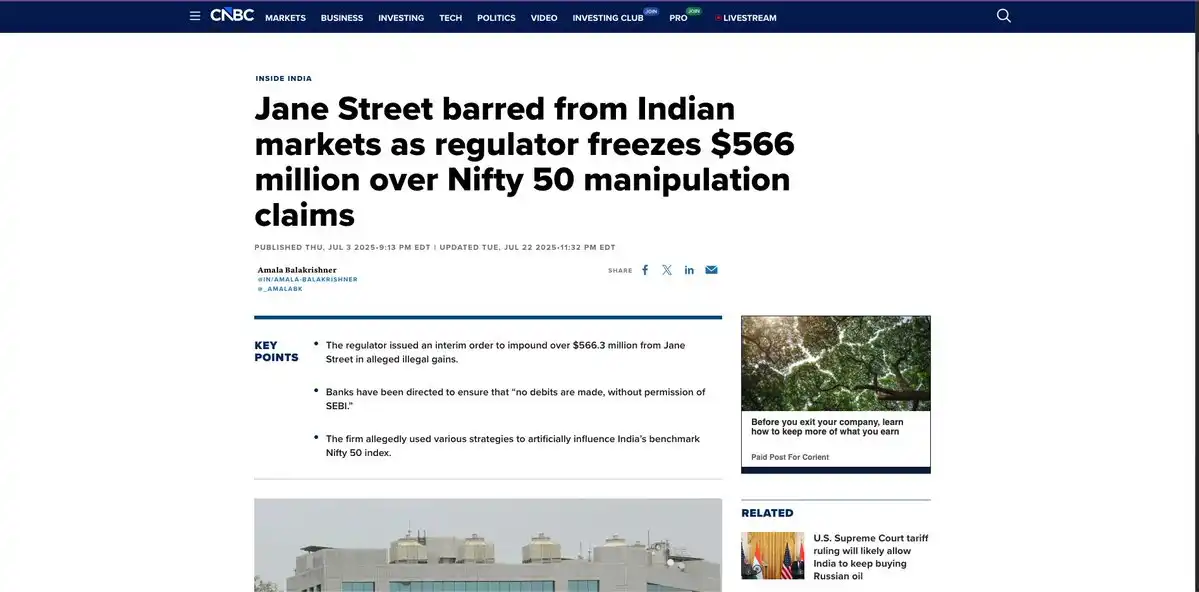
SEBI's ruling: Illegal profits of 4.843 billion rupees, approximately $580 million. They characterized Jane Street's actions as a "deliberately designed means to manipulate the settlement price." SEBI also specifically noted that Jane Street continued this strategy even after the National Stock Exchange of India issued a clear warning in February 2025.

SEBI's wording was unusually harsh, rare for a regulator: "The integrity of the market, and the trust of millions of small investors and traders, can no longer be held hostage to the machinations of such an untrustworthy participant."

Jane Street was banned from the Indian securities market. They deposited over $560 million into an escrow account and immediately appealed. As of today, the case is still under review at the Securities Appellate Tribunal in India.
Now, about Bitcoin.

Since November 2025, Bitcoin traders noticed a strange pattern: every morning around 10 a.m. ET—coinciding with the US stock market open—heavy selling would hit BTC and related ETF shares.

This pattern was eerily consistent. Bitcoin would rise during Asian and European trading hours, only to be suppressed as soon as New York opened.

(See: https://www.tradingview.com/news/newsbtc:f65a83ede094b:0-is-jane-street-manipulating-bitcoin-the-viral-theory-explained/)
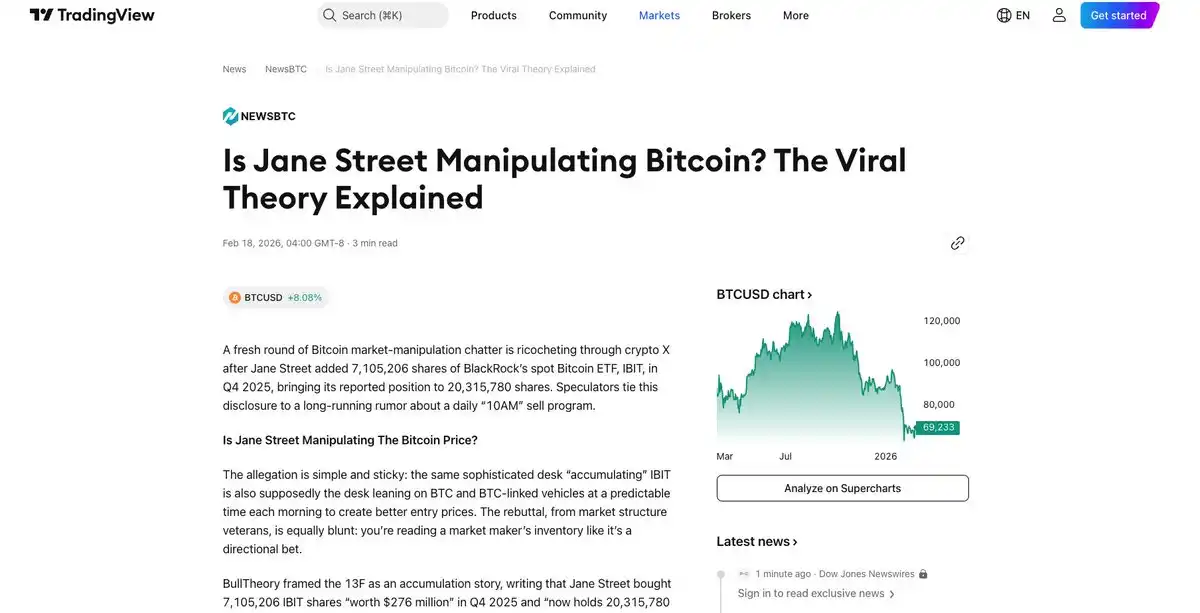
The numbers were staggering. Charts from December 2025 showed BTC falling from $89,700 to $87,700 in minutes on some days, liquidating $171 million in leveraged long positions before the price recovered. This occurred on December 1st, 5th, 8th, 10th, 12th, 15th, and repeated throughout January and February 2026.

Crypto Twitter dubbed it the "10 AM Smash."
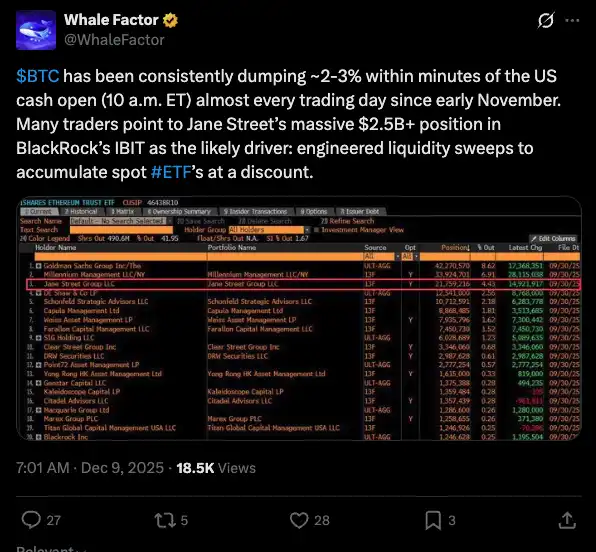
Fingers pointed squarely at Jane Street, for good reason. Jane Street is one of only four Authorized Participants for BlackRock's IBIT, the world's largest spot Bitcoin ETF. The other three are Virtu Americas, J.P. Morgan Securities, and Marex. As an Authorized Participant, Jane Street has the unique ability to create and redeem ETF shares, meaning they have direct access to the pipeline for Bitcoin moving in and out of the institutional wrapper.
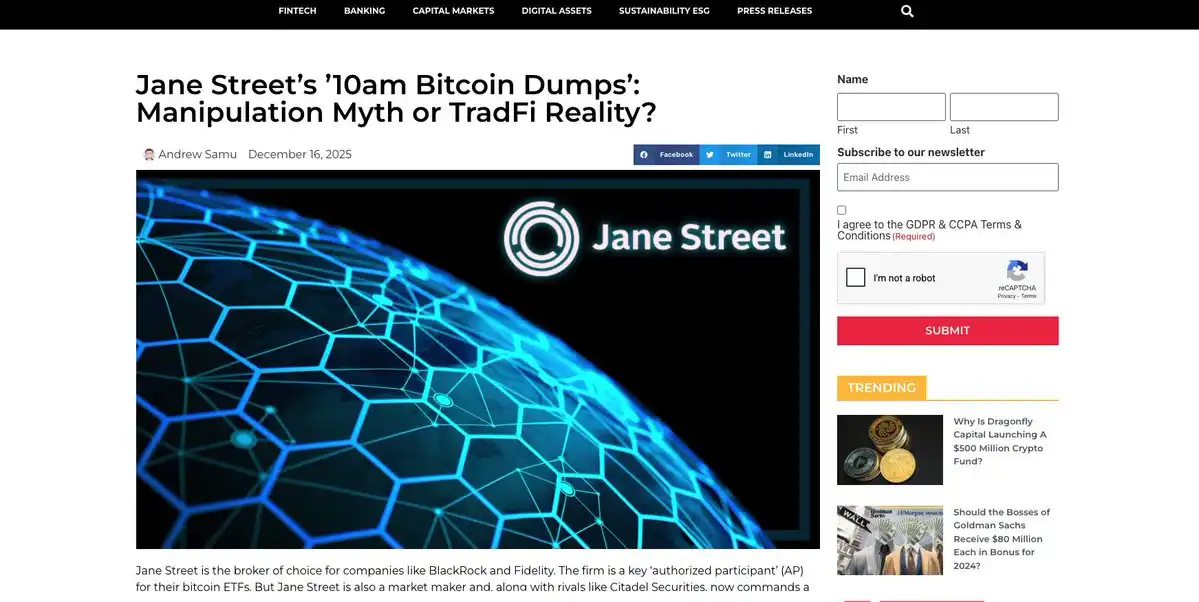
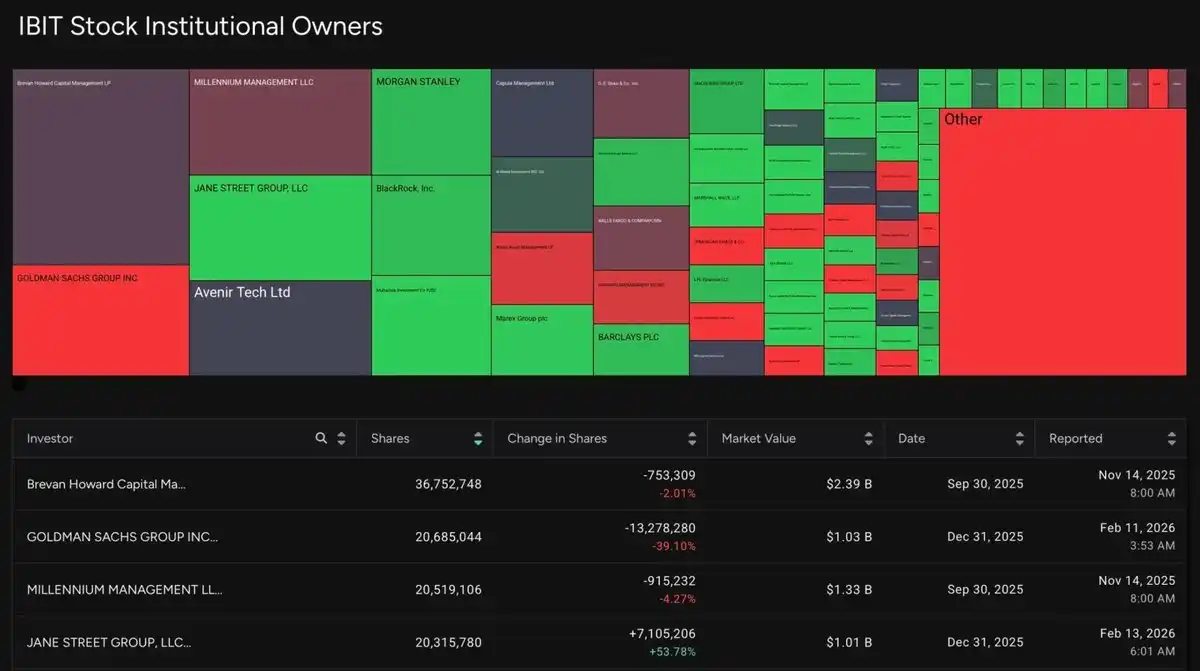
Their 13F filings confirm massive holdings. Jane Street held $5.7 billion worth of IBIT shares as of Q3 2025. In Q4, they added another $276 million, bringing their total holdings to over 20 million shares, worth approximately $790 million at year-end prices. At their peak, they held nearly $2.5 billion in IBIT.
But one thing was suspicious: While allegedly selling spot BTC every morning, Jane Street increased its MSTR (Strategy, formerly MicroStrategy) position by 473% in Q4 2025, buying 951,187 shares worth approximately $121 million. This happened while major funds like BlackRock and Vanguard were selling billions of dollars worth of MSTR.

Think about what this implies: Sell BTC at the open, push the price down, liquidate leveraged longs, buy back lower. Meanwhile, heavily buy the most leveraged Bitcoin proxy on the market, waiting for the inevitable price recovery.

Glassnode co-founders Jan Happel and Yann Allemann, through their Negentropic account on X, reignited this theory, linking the algorithmic trading patterns to the filing of the Terraform lawsuit. The Milk Road account amplified the message further, describing "persistent whispers" about institutional trading desks executing a "very specific and conspiratorial playbook."
Then, the lawsuit came. Then, something unexpected happened.

After the Terraform lawsuit against Jane Street was filed, the "10 AM Smash"... didn't happen. For the first time in months, Bitcoin wasn't suppressed at the US market open; instead, it rose.
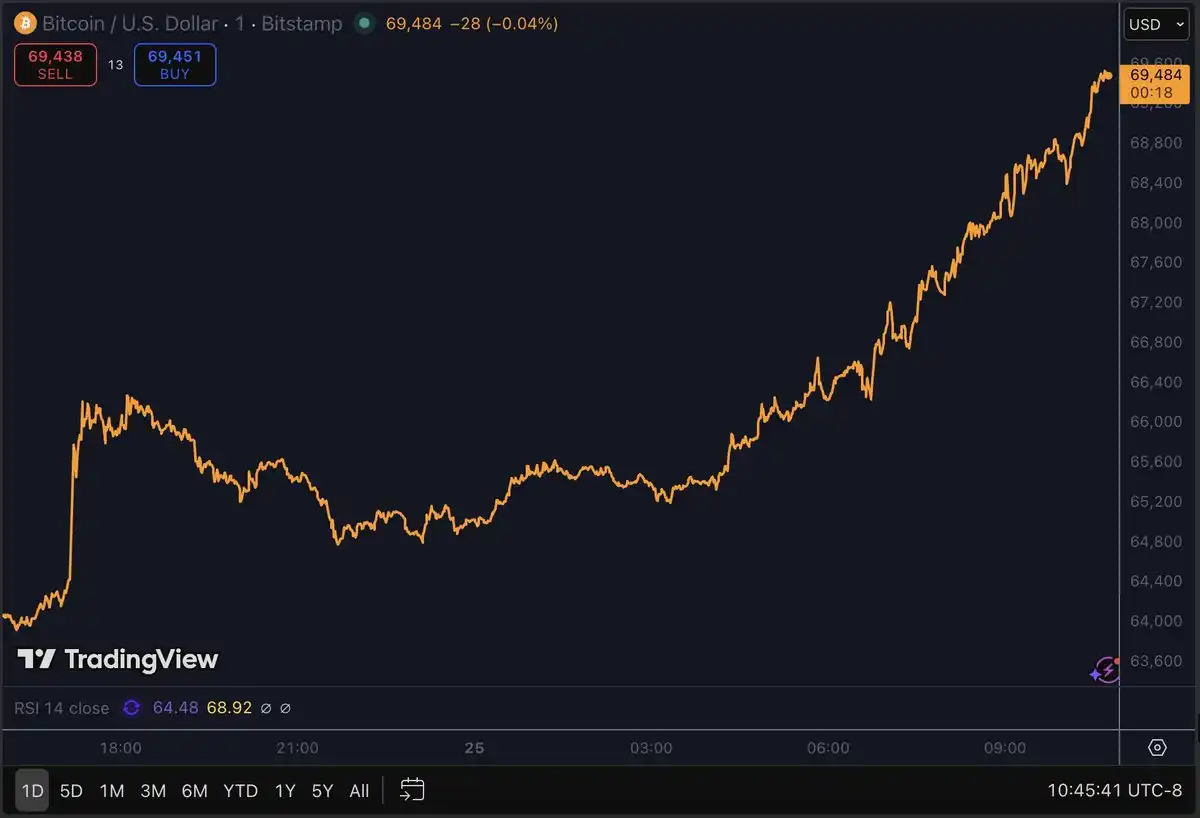
Today, February 25, 2026, Bitcoin surged over 3%, breaking through multiple resistance levels, trading above $68,000, just days after threatening to fall below $60,000. $323 million in short positions were liquidated. The Stochastic RSI hit 100. ETFs saw a net inflow of $257.7 million for the day, the highest since early February.

https://x.com/peruvian_bull/status/2026730420168192432?s=20

The pattern broke.

I want to be careful here. Correlation does not equal causation. Multiple factors were at play simultaneously: Trump's State of the Union, oversold technicals, short covering. The Fear & Greed Index was at 11, extreme fear, which is often a contrarian turning point. The RSI had fallen to 15.80, a reading not seen since the COVID crash of 2020, which was followed by a 1400% rally. But the timing coincidence is hard to ignore.

Rumors circulated on X that Jane Street was "forced to shut down its trading algorithms" after the lawsuit was filed. Jane Street told Cointelegraph these were "baseless speculative allegations." Whether they were forced to stop or paused out of legal prudence, the result was the same:

The selling pressure vanished.

What this really means for Bitcoin.

Bitcoin spot ETFs were supposed to be the great equalizer. Institutional access, regulated products, BlackRock's stamp of approval. And they have been wildly successful—IBIT alone has attracted over $20 billion in inflows since launch.

But the ETF structure introduced something Bitcoin was specifically designed to escape: trusted intermediaries with privileged access to the pipeline.

When the SEC approved Bitcoin spot ETFs in January 2024, it required cash-only creation and redemption. Whenever shares needed to be created or redeemed, someone had to actually buy or sell Bitcoin. And the firms with access to this process—the Authorized Participants—held a structural advantage over every other market participant.

In September 2025, the SEC approved in-kind creation and redemption for IBIT, meaning Authorized Participants could now exchange Bitcoin directly for ETF shares, bypassing the fiat step. This gave Jane Street, Virtu, J.P. Morgan, and Marex more direct control over the flow of Bitcoin in and out of the largest institutional wrapper.
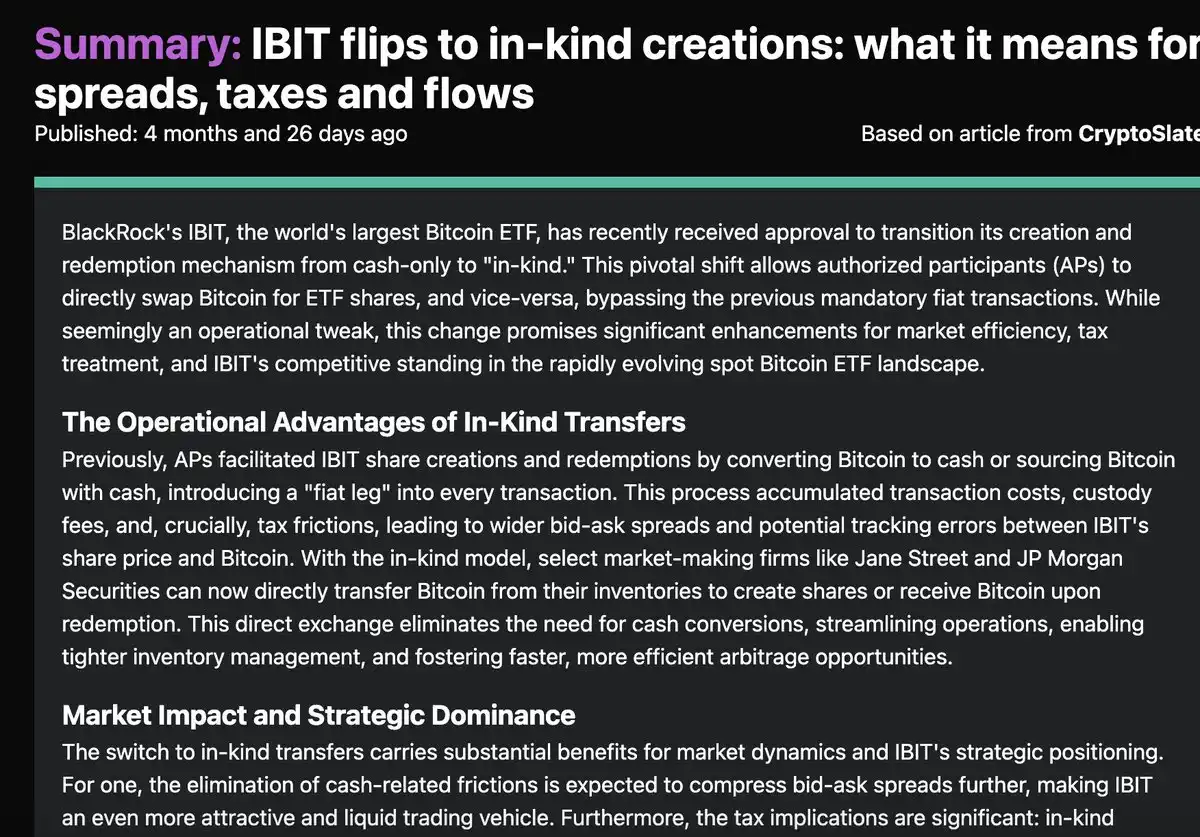
The "10 AM Smash" is essentially a symptom of the same disease that has plagued the gold market for decades.

I wrote about this in "The Final Gold Game Begins": Paper trading against paper trading, where the institutions with the most access to the pipeline can move the price before the rest of the market can react.

https://x.com/peruvian_bull/status/1778146092279861279?s=20

J.P. Morgan traders Gregg Smith and Michael Nowak were convicted of placing fraudulent orders in the precious metals futures market, a scheme that lasted eight years and involved thousands of illegal trades. J.P. Morgan paid a $920 million settlement. Deutsche Bank paid $30 million for the same behavior. UBS, HSBC, and six individual traders all faced CFTC charges for anti-fraud violations.

Same playbook, different asset.

Every time, these firms call it "market making," "arbitrage," "hedging." The euphemisms are endless, the result always the same: The little guy gets carved up, and the insiders capture the spread.

So, where do we go from here?

The broader structural picture hasn't changed. $4.5 billion in ETF net outflows in the first eight weeks of 2026 looks concerning, but Strategy (Saylor's company) just bought $39 million worth of BTC, accounting for 99% of all public company purchases in that period. The big players aren't selling; they were waiting for the algorithms to do their work.
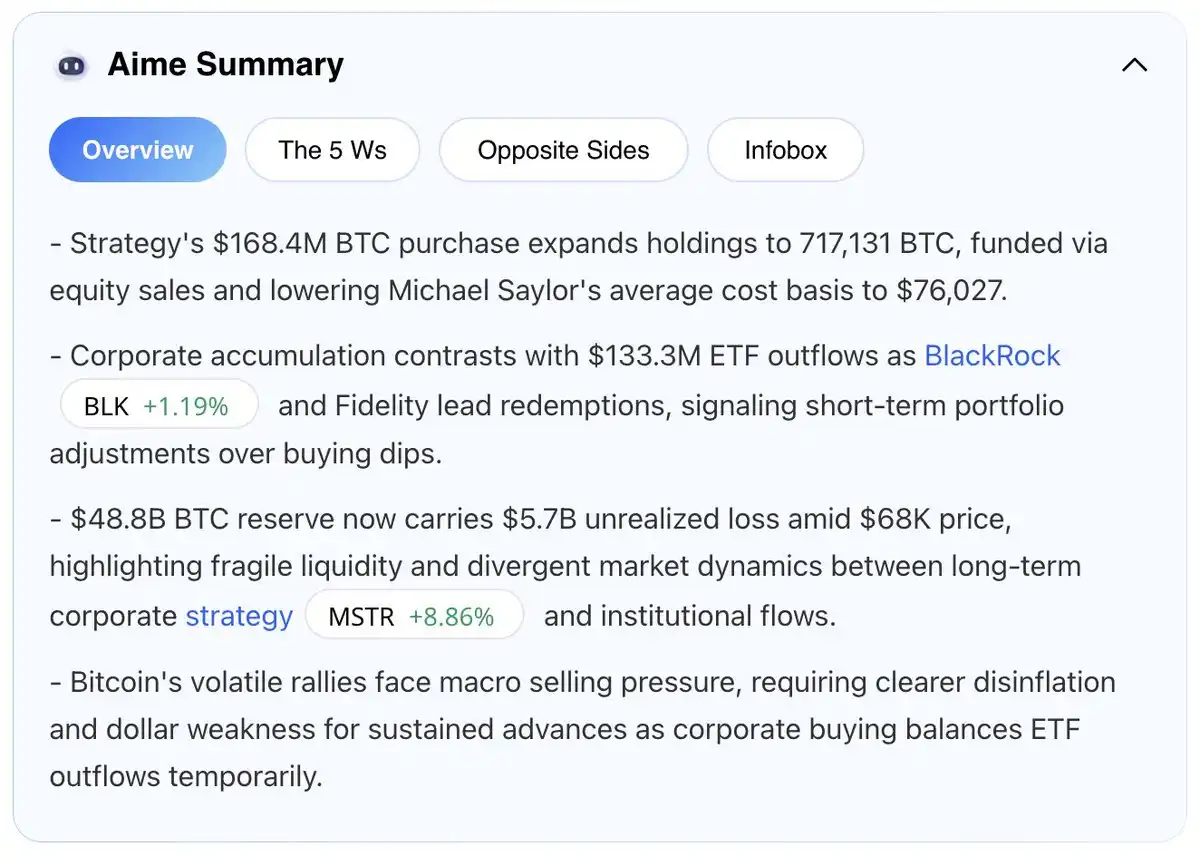
And perhaps, just now, the algorithms are finished.

If Jane Street—whether due to legal exposure, regulatory scrutiny on multiple continents, or simple self-preservation—has been forced to retreat from its alleged daily selling program, it means a persistent structural resistance that has suppressed Bitcoin for four months has been removed.

Bitcoin was born for this moment. A monetary system that doesn't rely on trusted intermediaries, doesn't need Authorized Participants, and cannot be front-run by messages from a former intern passed through a secret pipeline to a trading desk.

But don't forget how we got here. The very firms that were supposed to "make markets" and "provide liquidity" are the same ones accused of front-running a collapse, manipulating a national stock index, and running an algorithmic selling program daily against the very asset their ETF was supposed to track.

This is the very system Bitcoin was designed to replace.
Perguntas relacionadas

QWhat are the three main allegations against Jane Street Group as detailed in the article?

AThe three main allegations are: 1) Insider trading related to the Terra Luna collapse, 2) Market manipulation of the Bank Nifty index in India, and 3) The daily '10 a.m. slaughter' of Bitcoin at the U.S. market open.

QWhat specific evidence is cited in the lawsuit regarding Jane Street's alleged insider trading in the Terra Luna case?

AThe lawsuit states that ten minutes after Terraform Labs secretly withdrew $150 million in UST from the Curve3pool on May 7, 2022, a wallet linked to Jane Street withdrew $85 million from the same pool. It alleges a former Terraform intern turned Jane Street employee, Bryce Pratt, established a secret communication channel to pass non-public information.

QHow did the Indian regulatory body SEBI characterize Jane Street's trading activity, and what was the financial penalty?

ASEBI characterized Jane Street's activity as 'a deliberately designed means of manipulating the settlement price.' They alleged illegal profits of 4.843 billion rupees (approximately $580 million at the time) and banned Jane Street from the Indian securities market.

QWhat is the '10 a.m. slaughter' theory, and why was Jane Street suspected of being behind it?

AThe '10 a.m. slaughter' refers to the theory that Bitcoin faced consistent, heavy selling pressure at precisely 10 a.m. EST (U.S. market open). Jane Street was suspected because it is an Authorized Participant for the iShares Bitcoin Trust (IBIT), giving it unique access to the creation/redemption mechanism for Bitcoin ETF shares, and its trading patterns and large holdings were seen as correlating with the sell-offs.

QAccording to the author, what broader systemic issue does the alleged '10 a.m. slaughter' represent for Bitcoin?

AThe author argues it represents the same issue that has plagued gold markets: a system where trusted intermediaries (like Authorized Participants) with privileged access to the market pipeline can move prices before the rest of the market reacts, undermining the very trustless, intermediary-free system Bitcoin was designed to create.

Leituras Relacionadas

Trading

Spot
Futuros

Artigos em Destaque

O que é BITCOIN

Compreender o HarryPotterObamaSonic10Inu (ERC-20) e a Sua Posição no Espaço Cripto Nos últimos anos, o mercado de criptomoedas assistiu a um aumento na popularidade das moedas meme, cativando não apenas os traders, mas também aqueles que procuram envolvimento comunitário e valor de entretenimento. Entre estes tokens únicos está o HarryPotterObamaSonic10Inu (ERC-20), um projeto intrigante que mistura referências culturais no tecido das criptomoedas. Este artigo explora os principais aspetos do HarryPotterObamaSonic10Inu, examinando os seus mecanismos, a sua ética orientada pela comunidade e o seu envolvimento com o vasto panorama cripto. O que é o HarryPotterObamaSonic10Inu (ERC-20)? Como o nome sugere, o HarryPotterObamaSonic10Inu é uma moeda meme construída na blockchain Ethereum, classificada sob o padrão ERC-20. Ao contrário das criptomoedas tradicionais, que podem enfatizar a utilidade prática ou o potencial de investimento, este token prospera no valor de entretenimento e na força da sua comunidade. O projeto visa promover um ambiente onde utilizadores envolvidos possam reunir-se, partilhar ideias e participar em atividades inspiradas por diversos fenómenos culturais. Uma característica notável do HarryPotterObamaSonic10Inu é a zero taxa sobre transações. Este elemento atraente visa encorajar a negociação e o envolvimento da comunidade, isento de encargos adicionais que podem desencorajar os traders de pequena escala. A oferta total da moeda está fixada em mil milhões de tokens, uma cifra que marca a sua intenção de manter uma circulação substancial dentro da comunidade. Criador do HarryPotterObamaSonic10Inu (ERC-20) As origens do HarryPotterObamaSonic10Inu estão um pouco envoltas em mistério; os detalhes sobre o criador permanecem desconhecidos. O desenvolvimento deste token carece de uma equipa identificável ou de um plano explícito, o que não é raro no setor das moedas meme. Em vez disso, o projeto surgiu de forma orgânica, com o seu progresso a depender fortemente do entusiasmo e da participação da sua comunidade. Investidores do HarryPotterObamaSonic10Inu (ERC-20) No que diz respeito a investimentos externos e apoios, o HarryPotterObamaSonic10Inu também permanece ambíguo. O token não lista quaisquer fundações de investimento conhecidas ou apoio organizacional significativo. Em vez disso, o “sangue vital” do projeto é a sua comunidade de base, que informa o seu crescimento e sustentabilidade através da ação coletiva e do envolvimento no espaço cripto. Como Funciona o HarryPotterObamaSonic10Inu (ERC-20)? Como uma moeda meme, o HarryPotterObamaSonic10Inu opera principalmente fora dos quadros tradicionais que muitas vezes governam o valor dos ativos. Existem vários aspetos distintivos que definem como o projeto funciona: Transações Sem Taxas: Sem taxas sobre transações, os utilizadores podem comprar e vender o token livremente, sem a preocupação de custos ocultos. Envolvimento da Comunidade: O projeto prospera na interação da comunidade, aproveitando plataformas de redes sociais para criar entusiasmo e facilitar a participação. Discussões, partilha de conteúdo e envolvimento são elementos cruciais que ajudam a expandir o seu alcance e a fomentar a lealdade entre os apoiantes. Sem Utilidade Prática: Deve ser notado que o HarryPotterObamaSonic10Inu não oferece utilidade concreta dentro do ecossistema financeiro. Em vez disso, é classificado como um token principalmente para entretenimento e atividades comunitárias. Referência Cultural: O token incorpora de forma inteligente elementos da cultura popular para atrair interesse, conectando-se tanto com entusiastas de memes como com seguidores de criptomoedas. HarryPotterObamaSonic10Inu exemplifica como as moedas meme operam de forma diferente de projetos de criptomoedas mais tradicionais, entrando no mercado como construções sociais inovadoras em vez de ativos utilitários. Linha do Tempo do HarryPotterObamaSonic10Inu (ERC-20) A história do HarryPotterObamaSonic10Inu é marcada por vários marcos notáveis: Criação: O token surgiu de um meme viral, capturando a imaginação de muitos entusiastas de criptomoedas. Datas específicas de criação não estão disponíveis, sublinhando a sua ascensão orgânica. Listagem em Exchanges: O HarryPotterObamaSonic10Inu conseguiu entrar em várias exchanges, permitindo um acesso e negociação mais fáceis pela comunidade. Iniciativas de Envolvimento da Comunidade: Atividades contínuas direcionadas a melhorar a interação comunitária, incluindo concursos, campanhas em redes sociais e geração de conteúdo por fãs e defensores. Planos de Expansão Futura: O roteiro do projeto inclui o lançamento de uma coleção de NFTs, mercadorias e um site de eCommerce relacionado aos seus temas culturais, envolvendo ainda mais a comunidade e tentando adicionar mais dimensões ao seu ecossistema. Pontos-Chave sobre o HarryPotterObamaSonic10Inu (ERC-20) Natureza Orientada pela Comunidade: O projeto prioriza a contribuição coletiva e a criatividade, assegurando que o envolvimento dos utilizadores está na vanguarda do seu desenvolvimento. Classificação como Moeda Meme: Representa o epítome da criptomoeda baseada em entretenimento, destacando-se dos veículos de investimento tradicionais. Sem Afiliação Direta com o Bitcoin: Apesar da semelhança no nome do ticker, o HarryPotterObamaSonic10Inu é distinto e não tem qualquer relação com o Bitcoin ou outras criptomoedas estabelecidas. Foco na Colaboração: O HarryPotterObamaSonic10Inu é projetado para criar um espaço de colaboração e partilha de histórias entre os seus detentores, proporcionando uma via para a criatividade e o fortalecimento da comunidade. Perspectivas Futuras: A ambição de expandir além da sua premissa inicial para NFTs e mercadorias delineia um caminho para o projeto potencialmente entrar em avenidas mais mainstream dentro da cultura digital. À medida que as moedas meme continuam a capturar a imaginação da comunidade cripto, HarryPotterObamaSonic10Inu (ERC-20) destaca-se devido aos seus laços culturais e abordagem centrada na comunidade. Embora possa não se encaixar no molde típico de um token orientado para utilidade, a sua essência reside na alegria e camaradagem fomentadas entre os seus apoiantes, destacando a natureza em evolução das criptomoedas em uma era cada vez mais digital. À medida que o projeto continua a desenvolver-se, será importante observar como as dinâmicas comunitárias influenciam a sua trajetória no panorama em constante mudança da tecnologia blockchain.

1.2k Visualizações TotaisPublicado em {updateTime}Atualizado em 2024.12.03

O que é BITCOIN

Como comprar BTC

Bem-vindo à HTX.com!Tornámos a compra de Bitcoin (BTC) simples e conveniente.Segue o nosso guia passo a passo para iniciar a tua jornada no mundo das criptos.Passo 1: cria a tua conta HTXUtiliza o teu e-mail ou número de telefone para te inscreveres numa conta gratuita na HTX.Desfruta de um processo de inscrição sem complicações e desbloqueia todas as funcionalidades.Obter a minha contaPasso 2: vai para Comprar Cripto e escolhe o teu método de pagamentoCartão de crédito/débito: usa o teu visa ou mastercard para comprar Bitcoin (BTC) instantaneamente.Saldo: usa os fundos da tua conta HTX para transacionar sem problemas.Terceiros: adicionamos métodos de pagamento populares, como Google Pay e Apple Pay, para aumentar a conveniência.P2P: transaciona diretamente com outros utilizadores na HTX.Mercado de balcão (OTC): oferecemos serviços personalizados e taxas de câmbio competitivas para os traders.Passo 3: armazena teu Bitcoin (BTC)Depois de comprar o teu Bitcoin (BTC), armazena-o na tua conta HTX.Alternativamente, podes enviá-lo para outro lugar através de transferência blockchain ou usá-lo para transacionar outras criptomoedas.Passo 4: transaciona Bitcoin (BTC)Transaciona facilmente Bitcoin (BTC) no mercado à vista da HTX.Acede simplesmente à tua conta, seleciona o teu par de trading, executa as tuas transações e monitoriza em tempo real.Oferecemos uma experiência de fácil utilização tanto para principiantes como para traders experientes.

3.9k Visualizações TotaisPublicado em {updateTime}Atualizado em 2025.03.21

Como comprar BTC

O que é $BITCOIN

OURO DIGITAL ($BITCOIN): Uma Análise Abrangente Introdução ao OURO DIGITAL ($BITCOIN) OURO DIGITAL ($BITCOIN) é um projeto baseado em blockchain que opera na rede Solana, com o objetivo de combinar as características dos metais preciosos tradicionais com a inovação das tecnologias descentralizadas. Embora partilhe um nome com o Bitcoin, frequentemente referido como “ouro digital” devido à sua percepção como uma reserva de valor, o OURO DIGITAL é um token separado projetado para criar um ecossistema único dentro da paisagem Web3. O seu objetivo é posicionar-se como um ativo digital alternativo viável, embora os detalhes sobre as suas aplicações e funcionalidades ainda estejam em desenvolvimento. O que é o OURO DIGITAL ($BITCOIN)? OURO DIGITAL ($BITCOIN) é um token de criptomoeda explicitamente projetado para uso na blockchain Solana. Em contraste com o Bitcoin, que fornece um papel amplamente reconhecido como armazenamento de valor, este token parece focar em aplicações e características mais amplas. Aspectos notáveis incluem: Infraestrutura Blockchain: O token é construído na blockchain Solana, conhecida pela sua capacidade de lidar com transações de alta velocidade e baixo custo. Dinâmicas de Oferta: O OURO DIGITAL tem um fornecimento máximo limitado a 100 quatrilhões de tokens (100P $BITCOIN), embora os detalhes sobre o seu fornecimento circulante ainda não tenham sido divulgados. Utilidade: Embora as funcionalidades precisas não estejam explicitamente delineadas, existem indicações de que o token poderia ser utilizado para várias aplicações, potencialmente envolvendo aplicações descentralizadas (dApps) ou estratégias de tokenização de ativos. Quem é o Criador do OURO DIGITAL ($BITCOIN)? Neste momento, a identidade dos criadores e da equipa de desenvolvimento por trás do OURO DIGITAL ($BITCOIN) permanece desconhecida. Esta situação é típica entre muitos projetos inovadores no espaço da blockchain, particularmente aqueles alinhados com finanças descentralizadas e fenómenos de moedas meme. Embora tal anonimato possa fomentar uma cultura orientada pela comunidade, intensifica as preocupações sobre governança e responsabilidade. Quem são os Investidores do OURO DIGITAL ($BITCOIN)? As informações disponíveis indicam que o OURO DIGITAL ($BITCOIN) não tem apoiantes institucionais conhecidos ou investimentos proeminentes de capital de risco. O projeto parece operar num modelo peer-to-peer focado no apoio e adoção da comunidade, em vez de rotas de financiamento tradicionais. A sua atividade e liquidez estão principalmente situadas em exchanges descentralizadas (DEXs), como a PumpSwap, em vez de plataformas de negociação centralizadas estabelecidas, destacando ainda mais a sua abordagem de base. Como Funciona o OURO DIGITAL ($BITCOIN) A mecânica operacional do OURO DIGITAL ($BITCOIN) pode ser elaborada com base no seu design de blockchain e nas características da rede: Mecanismo de Consenso: Ao aproveitar o exclusivo proof-of-history (PoH) da Solana combinado com um modelo de proof-of-stake (PoS), o projeto assegura uma validação eficiente das transações, contribuindo para o alto desempenho da rede. Tokenomics: Embora mecanismos deflacionários específicos não tenham sido extensivamente detalhados, o vasto fornecimento máximo de tokens implica que pode atender a microtransações ou casos de uso de nicho que ainda estão por definir. Interoperabilidade: Existe o potencial para integração com o ecossistema mais amplo da Solana, incluindo várias plataformas de finanças descentralizadas (DeFi). No entanto, os detalhes sobre integrações específicas permanecem não especificados. Cronologia de Eventos Chave Aqui está uma cronologia que destaca marcos significativos relacionados ao OURO DIGITAL ($BITCOIN): 2023: O lançamento inicial do token ocorre na blockchain Solana, marcado pelo seu endereço de contrato. 2024: O OURO DIGITAL ganha visibilidade ao tornar-se disponível para negociação em exchanges descentralizadas como a PumpSwap, permitindo que os utilizadores o negociem contra SOL. 2025: O projeto testemunha atividade de negociação esporádica e potencial interesse em envolvimentos liderados pela comunidade, embora não tenham sido documentadas parcerias ou avanços técnicos notáveis até ao momento. Análise Crítica Forças Escalabilidade: A infraestrutura subjacente da Solana suporta altos volumes de transações, o que pode aumentar a utilidade do $BITCOIN em vários cenários de transação. Acessibilidade: O potencial preço de negociação baixo por token pode atrair investidores de retalho, facilitando uma participação mais ampla devido a oportunidades de propriedade fracionada. Riscos Falta de Transparência: A ausência de apoiantes, desenvolvedores ou um processo de auditoria publicamente conhecidos pode gerar ceticismo em relação à sustentabilidade e confiabilidade do projeto. Volatilidade do Mercado: A atividade de negociação depende fortemente do comportamento especulativo, o que pode resultar em volatilidade significativa dos preços e incerteza para os investidores. Conclusão O OURO DIGITAL ($BITCOIN) surge como um projeto intrigante, mas ambíguo, dentro do ecossistema em rápida evolução da Solana. Embora tente aproveitar a narrativa do “ouro digital”, a sua divergência do papel estabelecido do Bitcoin como reserva de valor sublinha a necessidade de uma diferenciação mais clara da sua utilidade pretendida e estrutura de governança. A aceitação e adoção futuras dependerão provavelmente da abordagem da atual opacidade e da definição mais explícita das suas estratégias operacionais e económicas. Nota: Este relatório abrange informações sintetizadas disponíveis até outubro de 2023, e desenvolvimentos podem ter ocorrido além do período de pesquisa.

92 Visualizações TotaisPublicado em {updateTime}Atualizado em 2025.05.13

O que é $BITCOIN

Discussões

Bem-vindo à Comunidade HTX. Aqui, pode manter-se informado sobre os mais recentes desenvolvimentos da plataforma e obter acesso a análises profissionais de mercado. As opiniões dos utilizadores sobre o preço de BTC (BTC) são apresentadas abaixo.

活动图片














