Is Your Account Still Blocked? Rosfinmonitoring Gets Direct Access to SBP and 'Mir'

cryptonews.ruPublicado em 2026-08-25Última atualização em 2026-08-25

Resumo

Starting September 1, 2026, Russia's Federal Law No. 461-FZ grants Rosfinmonitoring (the Federal Financial Monitoring Service) direct access to transaction data from the National Payment Card System (NSPK), the operator of the Mir payment card system and the Faster Payments System (SBP). This allows the agency to bypass individual banks when reconstructing transaction trails for anti-money laundering (AML) purposes. The data, provided free of charge and without requiring customer consent or court orders, includes information on operations via SBP, the unified QR-code, and Mir cards, with no minimum transaction threshold. Customers will not be notified when their data is shared. The law does not introduce new taxes, automatic account freezes, or new enforcement powers. If suspicious activity is identified under existing AML laws, existing procedures with banks and law enforcement will apply. The agreement's specific terms between Rosfinmonitoring and NSPK, including the scope and historical depth of accessible data, are not public. The change centralizes access to a vast volume of domestic payments, potentially speeding up financial investigations. However, it also creates a single point of concentration for sensitive data and reduces transparency for cardholders, as customers are not informed about data requests. Observers note a global trend of expanding supervisory powers, with differences in the Russian model being the non-public agreement and the lack of customer notifi...

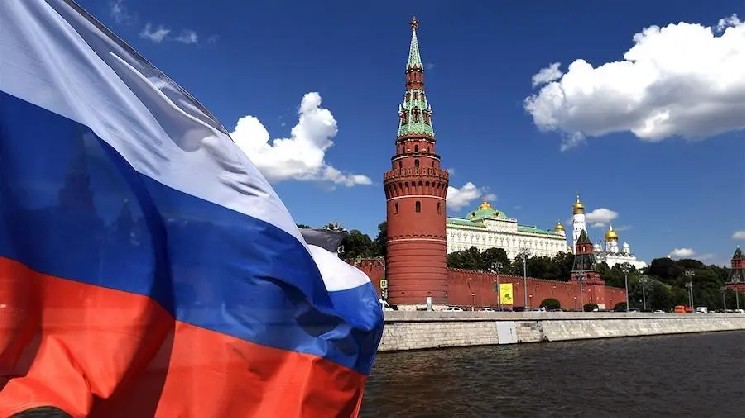
Effective September 1, 2026, Federal Law No. 461-FZ comes into force, granting Rosfinmonitoring the right to directly receive information from the National Payment Card System (NPCS) regarding transactions using the Bank of Russia's Fast Payment Service (FPS), the universal payment code, and Mir payment cards. The agency confirmed that the amendments are aimed at expanding data sources for the anti-money laundering system — as reported by the Federal Financial Monitoring Service.

A significant portion of domestic Russian transfers passes through the NPCS infrastructure — transactions on Mir cards, payments via the Fast Payment System (SBP), and transfers using the unified QR code. Previously, to reconstruct the chain of fund movement, Rosfinmonitoring had to send requests to each bank separately. Now, a significant part of the route can be obtained directly from the NPCS, bypassing individual credit institutions.

What the Agency Will Get

The information will be provided free of charge through a personal account or, in particular, via the Unified System of Interdepartmental Electronic Interaction (SMEV). At the same time:

  • no minimum transaction amount for a request is established by law;
  • requests are not limited to transactions made after September 1, 2026;
  • customer consent or a court order for data transfer is not required;
  • customers are not notified about the fact of information transfer — the NPCS is directly prohibited from disclosing this fact.

The procedure for interaction — timelines, methods of providing information, its volume and composition — will be determined by a separate agreement between Rosfinmonitoring and the NPCS, which is concluded in coordination with the Central Bank. The terms of this agreement are not publicly disclosed, so the exact boundaries of access — what specific transaction history the agency can retrieve and whether bulk selections are permitted — are currently unknown.

What the Law Does Not Change

The law does not introduce new taxes, automatic account freezes, or other coercive measures. If, as a result of data analysis, Rosfinmonitoring sees signs falling under the scope of Law No. 115-FZ (the law "On Counteracting the Legalization (Laundering) of Proceeds from Crime and the Financing of Terrorism") — transit schemes, cash withdrawals, or a network of linked cards — further actions will follow the already existing procedure: requests for documents, interaction with banks, tax and law enforcement agencies. The inspection mechanism itself does not change — the speed of obtaining source data changes.

The NPCS performs the functions of an operational and payment clearing center for Mir cards and the SBP, as well as the operator of the unified QR code, which is why the main volume of domestic payments in the country passes through it.

The changes will primarily affect those operations that were previously difficult to track through individual banks — transfers between different cards and services will now be visible as part of a single picture through the NPCS infrastructure. At the same time, the new data acquisition channel does not affect blockchain technology — it deals exclusively with ruble payments within the Russian payment system.

AI Opinion

From a data architecture perspective, a direct channel between the supervisory authority and the payment infrastructure operator eliminates intermediaries but simultaneously creates a single point of concentration for sensitive information — the technical vulnerability of such a node becomes more significant than the vulnerability of an individual bank. A similar vector of strengthening supervisory powers is noticeable outside Russia as well: since mid-2025, the European agency AMLA has gained the right to directly supervise the EU's largest banks and impose fines, bypassing the previous multi-step coordination procedures. The difference in the Russian model lies in the absence of a public text of the agreement between Rosfinmonitoring and the NPCS and in the prohibition of notifying the customer about the fact of data transfer, which reduces the transparency of the mechanism specifically for the cardholder.

Whether the volume of such requests will remain limited to the purposes of anti-money laundering control, or whether law enforcement practice will over time expand the scope of the law's application — is a question whose answer will only be shown by future enforcement practice.

end-content
Perguntas relacionadas

QWhat new powers does Rosfinmonitoring receive under Federal Law No. 461-FZ starting from September 1, 2026?

AStarting from September 1, 2026, under Federal Law No. 461-FZ, Rosfinmonitoring will gain the right to directly obtain information from the National Payment Card System (NPCS) about transactions using the Bank of Russia's fast payments service, the universal payment code, and Mir payment cards. This provides a direct data channel to a major domestic payments hub, bypassing the need to request information from each individual bank separately for significant parts of payment trails.

QWhat are some key conditions for the data provision from the NPCS to Rosfinmonitoring?

AThe data will be provided free of charge. There is no minimum transaction amount threshold for requests, and requests are not limited to transactions occurring after the law's effective date of September 1, 2026. Crucially, neither customer consent nor a court order is required for the data transfer. Furthermore, customers are not notified about the fact of their data being transferred, and the NPCS is explicitly prohibited from disclosing this fact to them.

QDoes the new law introduce automatic account freezes or new taxes?

ANo, the law does not introduce new taxes, automatic account blockings, or other coercive measures. Its primary function is to accelerate the acquisition of initial transaction data. If Rosfinmonitoring's analysis of the data reveals signs falling under the anti-money laundering and counter-terrorism financing law (115-FZ), any subsequent enforcement actions will proceed according to existing procedures involving requests for documents and interaction with banks, tax, and law enforcement agencies.

QAccording to the article's 'AI Opinion' section, what are two key differences between the Russian model and the EU's AMLA model?

AAccording to the 'AI Opinion' section, two key differences are: 1) The Russian model lacks the public disclosure of the specific agreement between Rosfinmonitoring and the NPCS, and 2) The Russian model includes a prohibition on notifying the customer that their data has been transferred. This is contrasted with the EU's AMLA, which received direct supervisory powers over large banks but operates within a different framework, with the article noting these aspects reduce transparency for the cardholder in Russia.

QWhat is the main practical impact of this law on financial transaction monitoring in Russia?

AThe main practical impact is a significant increase in the speed and efficiency of obtaining transaction data for anti-money laundering (AML) monitoring. Previously, to trace fund flows across different banks and services (like cards and fast payments), Rosfinmonitoring had to send separate requests to each bank involved. Now, a substantial part of this payment trail can be obtained directly from the NPCS, which processes the core volume of domestic payments, thereby creating a more unified view of transactions across the entire national payment system.

Leituras Relacionadas

Upbit Accelerates Token Listings: Total Trading Volume Halved, New Tokens Support Nearly 30% Share

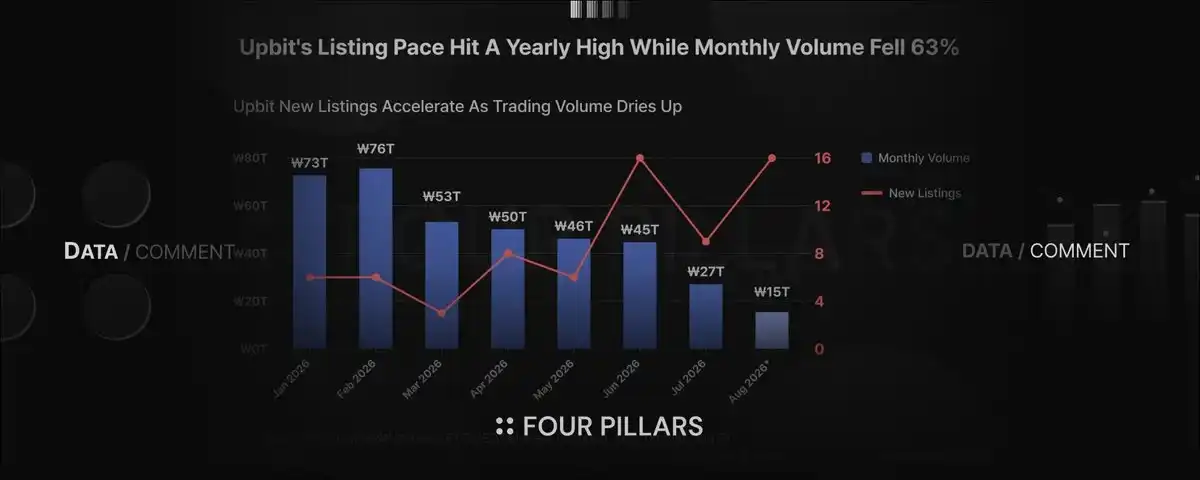
In the second half of 2026, Upbit significantly accelerated its pace of listing new cryptocurrencies, even as the overall Korean won-denominated trading market cooled rapidly. Monthly trading volume on Upbit plunged 63%, from KRW 72.7 trillion in January to KRW 27.1 trillion in July, with Bitcoin prices also falling. Contrary to the conventional logic of listing more during bull markets, Upbit intensified new listings during this downturn. New listings have become a crucial lever for Upbit to sustain trading activity in a bear market. By August, 61 new tokens listed in 2026 were collectively contributing nearly 30% of Upbit's total won trading volume, up from just 5% in January. This means roughly a quarter of the platform's fee revenue now comes from these newly listed assets. Standout performers like CHIP, RE, SLX, and CAP achieved significant individual market share shortly after listing, while new stablecoin listings contributed negligible volume. This strategy highlights a shift: the "Upbit listing premium," once a sought-after event to attract new capital, is increasingly used as a defensive tool to stabilize fee income amid shrinking overall volume. While the premium effect persists, indicating remaining genuine demand, its frequent use risks diluting the long-term strategic value and scarcity of Korean won liquidity access. Upbit's approach reflects a broader challenge for Asian centralized exchanges: relying on short-term listing tools to maintain operations during macro weakness, potentially at the cost of eroding long-term competitive foundations.

marsbitHá 5m

Upbit Accelerates Token Listings: Total Trading Volume Halved, New Tokens Support Nearly 30% Share

marsbitHá 5m

Trading

Spot
活动图片