Is There Really a "World Cup Curse" in the Market?

marsbitPublicado em 2026-06-15Última atualização em 2026-06-15

Resumo

Is there really a "World Cup Curse" affecting markets? Historical data shows global equity markets often underperform during the tournament. The S&P 500 has averaged negative returns of -1.5% to -2.11% across 19 World Cups since 1950, with declines in 58% of events. China's Shanghai Composite fell in 71% of tournaments since 1994. Studies confirm reduced trading activity during matches, with volumes dropping significantly, especially when a home nation plays. A team's loss can also lead to negative sentiment and selling pressure in its domestic market the next day. However, the "curse" may be partly attributed to seasonal weakness. Many tournaments are held in June-July, a historically weaker period for stocks ("Sell in May and go away"). The 2022 Qatar World Cup, held in November-December, saw a smaller drop in trading volume compared to summer events, suggesting timing plays a role. The cryptocurrency market's performance during World Cups has been mixed and largely driven by its own major catalysts (e.g., Mt. Gox hack, FTX collapse, halving cycles) rather than the tournament. Investment opportunities have shifted over time. Traditional beneficiaries like TV manufacturers have seen fading returns as streaming platforms become the core viewing channel. Classic consumer plays like beer and sportswear face challenges from changing consumption trends. Newer digital assets, like fractionalized collectible player cards on blockchain, have seen explosive growth. While gambling i...

The 2026 FIFA World Cup is set to kick off on June 11th. For a long time, a theory known as the "World Cup Curse" has circulated in the market, suggesting that during World Cup tournaments, major global stock markets often perform weakly, with trading volume significantly shrinking.

Whether you're ready with beer and peanuts to enjoy the matches or plan to trade in the market while watching, we can examine whether the "World Cup Curse" is a real phenomenon. What lies behind the data, and what are the reasons for this observed phenomenon?

Examining the "World Cup Curse" Through Data

Looking at historical data, the performance of major global stock markets during World Cup periods has generally been poor. Taking the US S&P 500 Index as an example, during the 19 World Cup tournaments from 1950 to 2022, the S&P 500's average expected return during the events was approximately -1.5% to -2.11%.
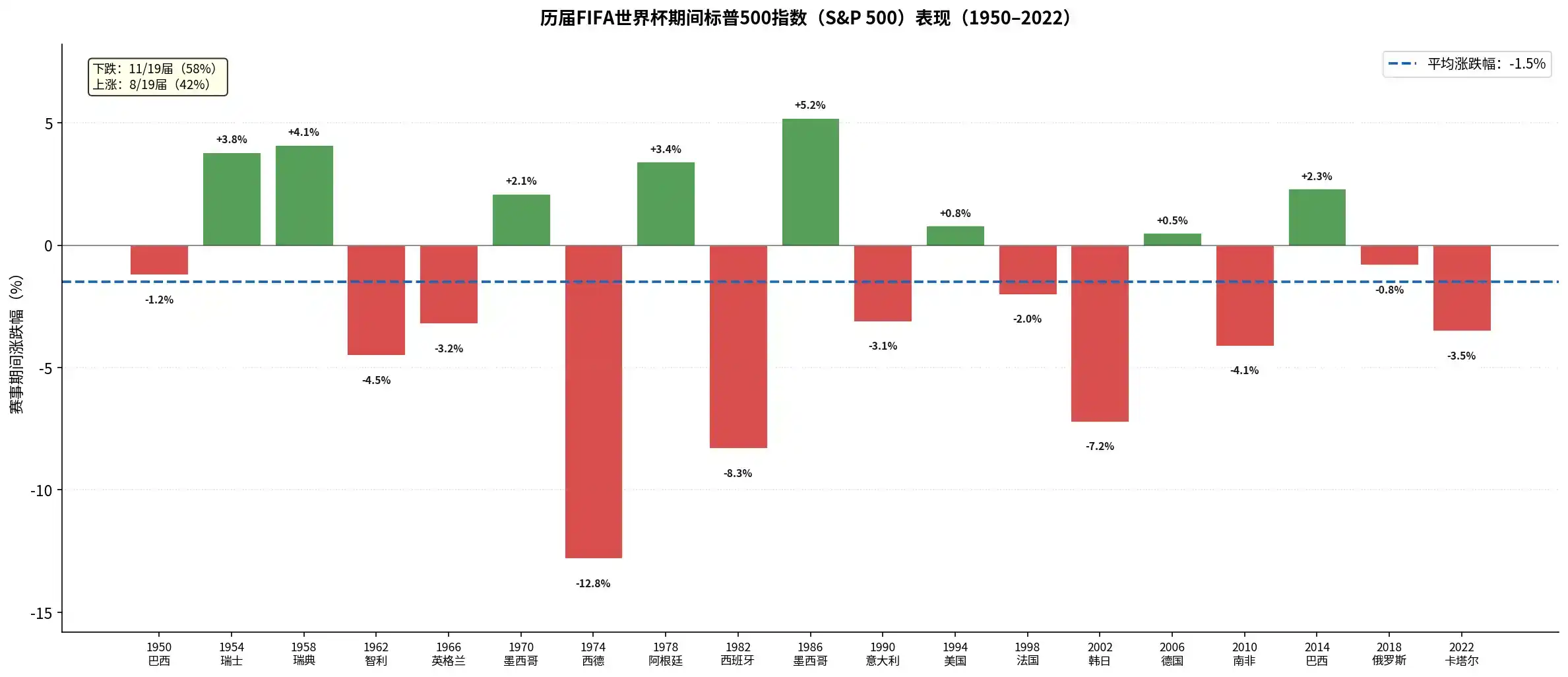
As shown in the chart above, the S&P 500 recorded negative returns in 11 out of the past 19 World Cups (a 58% rate). Notably, in recent years, US stocks declined during the 2010 South Africa World Cup (-4.1%), the 2018 Russia World Cup (-0.8%), and the 2022 Qatar World Cup (-3.5%).

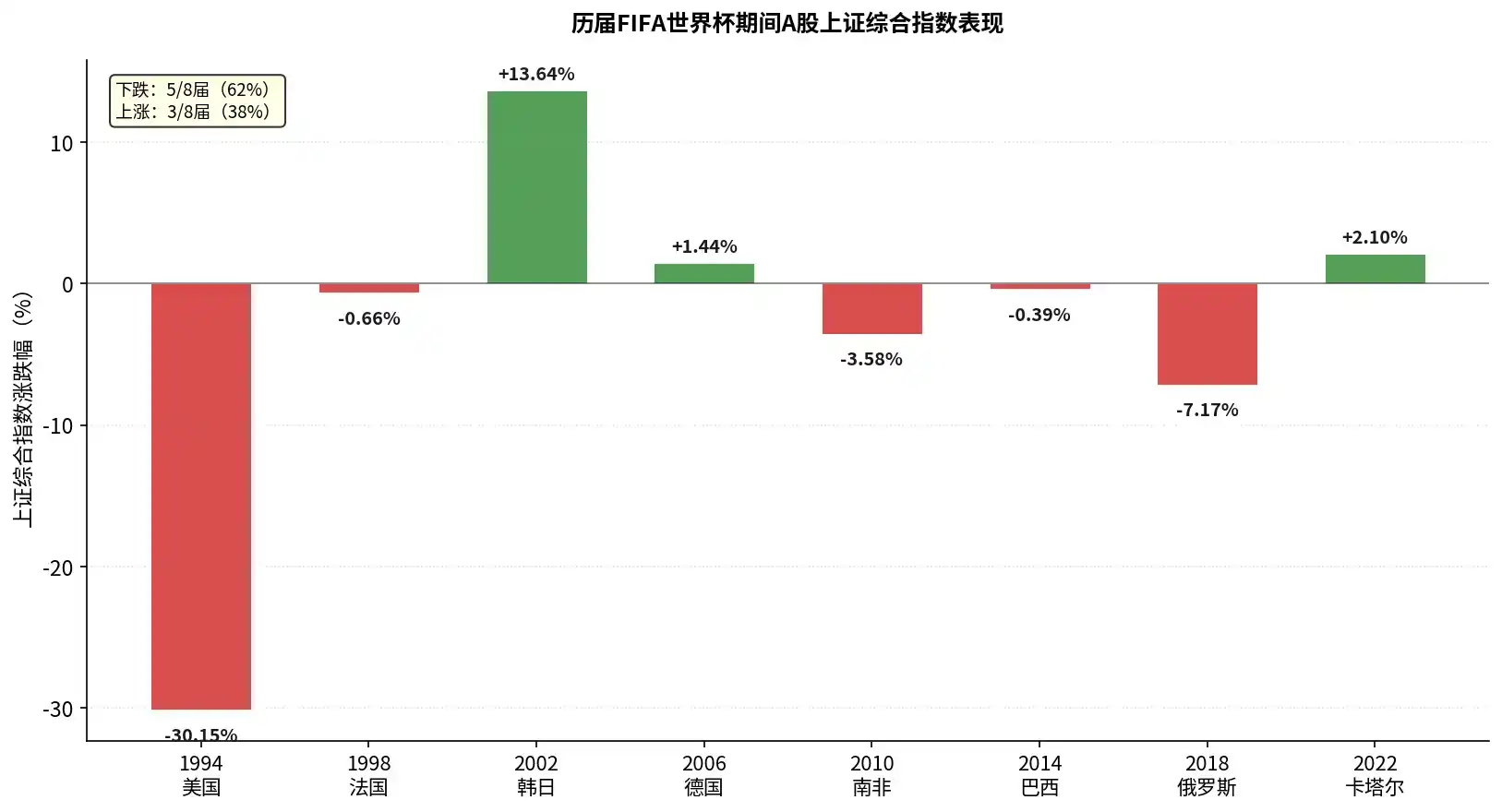
The A-share market has not been spared either. Statistics show that in the 7 World Cup periods since 1994, the Shanghai Composite Index fell 5 times, a decline probability as high as 71%. Among them, the index plunged 30.15% during the 1994 US World Cup and fell 7.17% during the 2018 Russia World Cup. It only posted gains during the 2002 World Cup (stimulated by favorable policies) and the 2006 World Cup (during a super bull market).
Now let's look at the cryptocurrency market:

- 2010 South Africa World Cup period: rose about 15%

- 2014 Brazil World Cup period: fell about 7.1%

- 2018 Russia World Cup period: fell about 16.5%

- 2022 Qatar World Cup period: rose about 4.3%

With the data presented, let's analyze the reasons.

Causes of the "World Cup Curse"

Does the World Cup really have a significant impact on market performance? It has an impact, but not a major one.

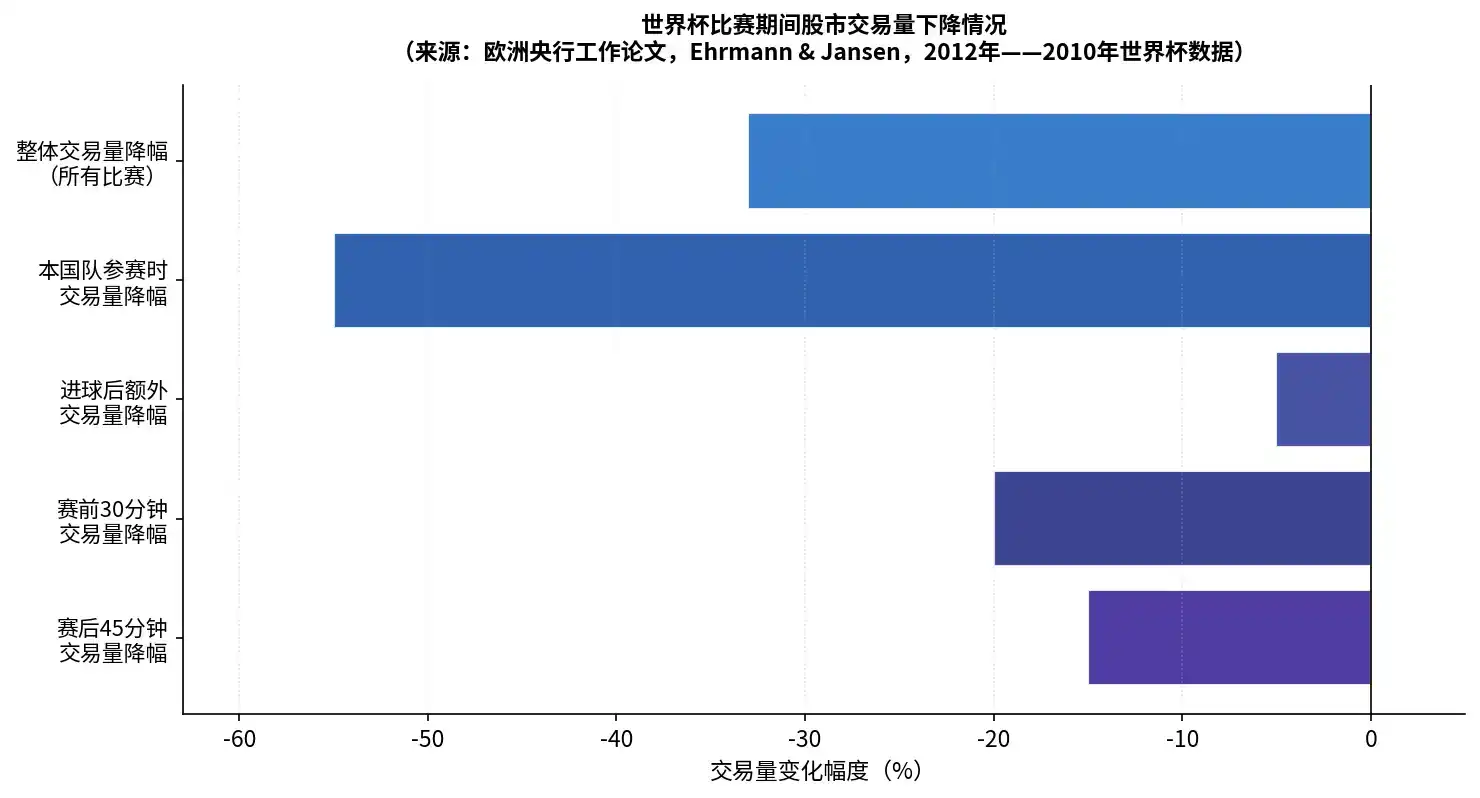
First, looking at the impactful part. A paper from the European Central Bank (ECB) analyzed minute-level trading data from 15 international stock exchanges during the 2010 World Cup. The study found that stock market trading activity indeed decreased during World Cup matches:

- Overall trading volume dropped by about 33% compared to normal levels.

- When the home country's national team was playing, trading volume plummeted by 55%, and the number of trades fell by 45%.

- Key events in matches (like goals) led to a further 5% drop in trading volume.
Match results also affect the mood of fans in various countries. Research found that when a country's national team lost a World Cup match, that country's stock market often showed significant negative abnormal returns on the next trading day (up to 49 basis points). This negative sentiment from a match loss does spill over into investment decisions, leading to market sell-offs.

But why is the impact considered not major? Wall Street has an old adage, "Sell in May and go away." The stock market itself exhibits seasonal patterns, with May through October typically being the weakest performance period of the year (especially June-August). Traditional summer World Cups (June-July) happen to fall within this seasonal lull window.
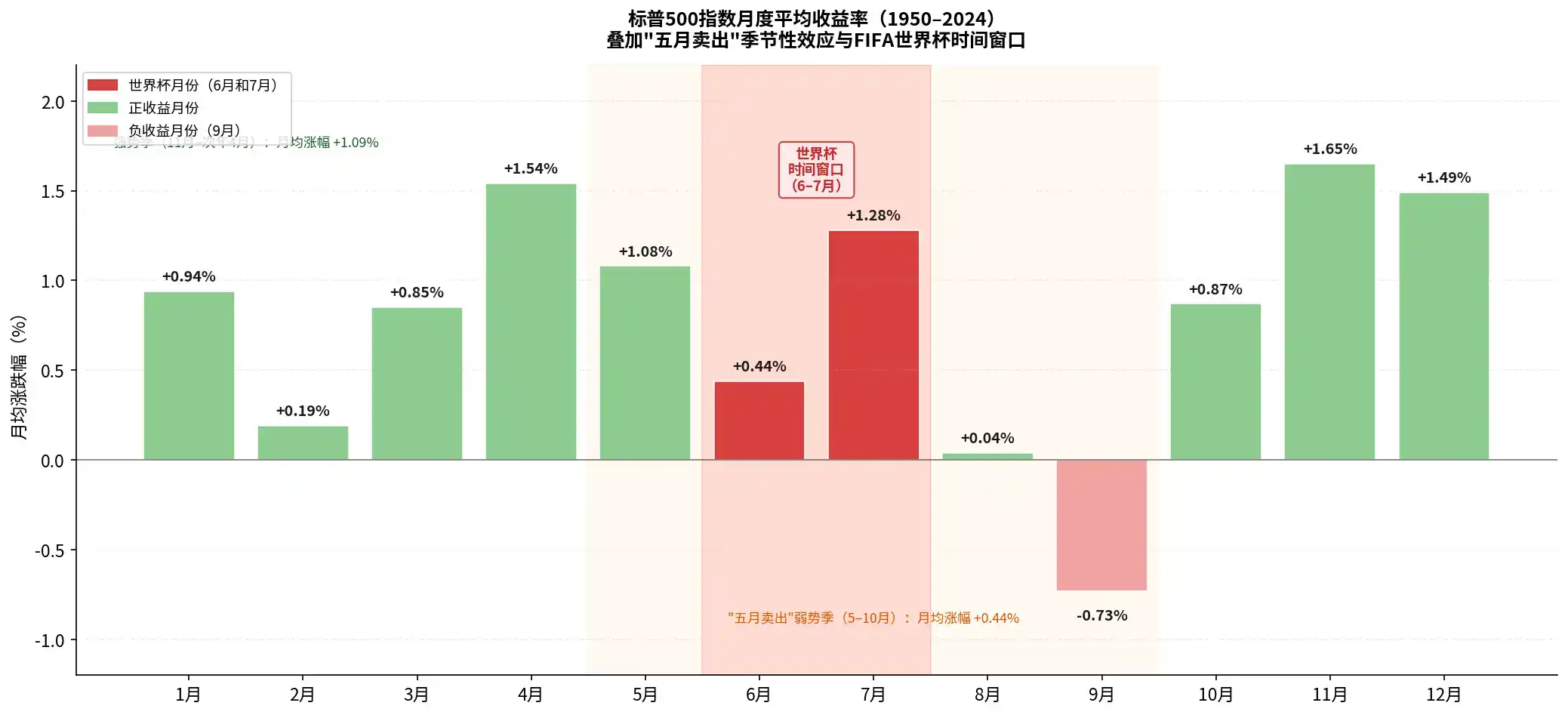
As shown in the chart above, among the average monthly returns throughout the year, June (+0.44%) and August-September are often the most lackluster or even negative months. This means traditional summer World Cups (typically held from mid-June to mid-July) coincide with the window in the year when the stock market has the least upward momentum.

The 2022 Qatar World Cup was the first World Cup historically held in the Northern Hemisphere winter (November-December). This unique timing provides a "controlled experiment" to test the above theory.
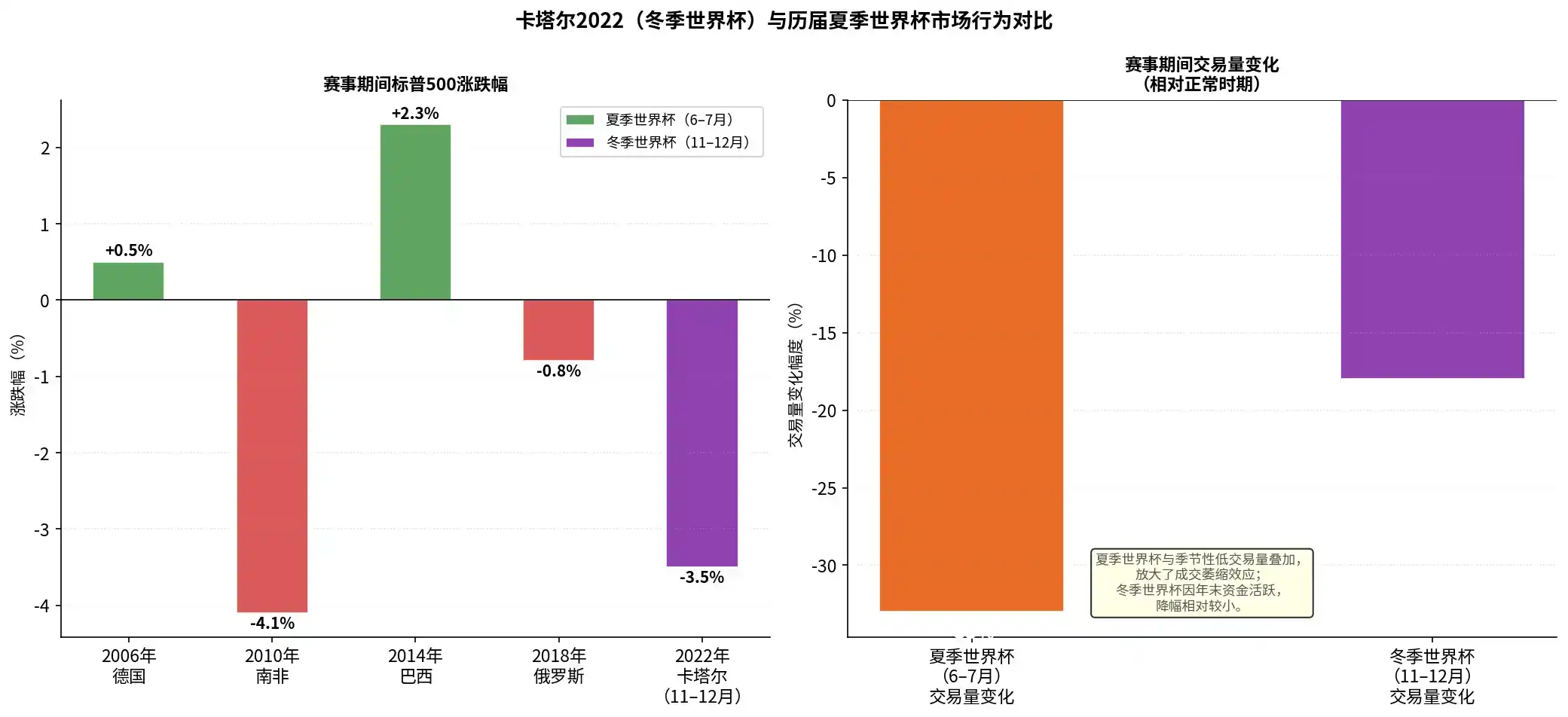
Although the S&P 500 still fell 3.5% during the Qatar World Cup (mainly driven by the Fed's aggressive rate hikes), looking at trading activity, the decline in trading volume during the winter World Cup (about -18%) was significantly smaller than during traditional summer World Cups (-33%). This suggests that when the World Cup is detached from the summer lull, its liquidity-draining effect on the market weakens. This also indicates that a significant portion of the "World Cup Curse" should be attributed to the seasonal low of June-July itself.

Compared to the stock market, the cryptocurrency market better proves that the World Cup's influence on markets isn't significant. From Bitcoin's inception to now, during the 4 World Cups, its price movements can actually be traced to more direct catalysts:

- 2010 South Africa World Cup: On May 22, 2010, a story we're all familiar with happened—programmer Laszlo Hanyecz used 10,000 bitcoins to buy two pizzas, completing Bitcoin's first real-world goods transaction, giving it initial real-world value consensus. Three days after the World Cup closing ceremony (July 17, 2010), the famous Mt.Gox exchange officially launched, marking Bitcoin's entry into the era of organized trading.

- 2014 Brazil World Cup period: Bitcoin was in a bear market following the burst of the 2013 bull market (which peaked above $1,100). In February 2014, Mt.Gox, then the world's largest Bitcoin exchange, declared bankruptcy after losing hundreds of thousands of bitcoins to a hack, dealing a devastating blow to the entire industry. During the World Cup, market sentiment remained fragile. Additionally, on June 27, the US Department of Justice auctioned nearly 30,000 bitcoins seized from the "Silk Road," further increasing selling pressure and uncertainty in the market.

- 2018 Russia World Cup period: A bear market adjustment following the end of the 2017 bull run. The ICO bubble had burst, and global regulation was tightening comprehensively. During the World Cup, the crypto market faced continuous negative news. On June 22, the major Korean exchange Bithumb was hacked, losing $30 million. In early July, the US SEC again delayed/rejected multiple Bitcoin ETF applications.

- 2022 Qatar World Cup period: In early November 2022 (the week before the World Cup opening), FTX collapsed. Meanwhile, the Fed announced a 50-basis-point rate hike on December 13, with continued tightening of macro liquidity, adding insult to injury.

It's also important to consider that Bitcoin, as an asset traded 24/7 globally, is less affected by traditional seasonal holiday patterns. Its own 4-year "halving cycle" is very pronounced. In the face of macro liquidity and its own cyclicality, the World Cup effect is essentially negligible.

Investment Opportunities During the World Cup

With technological advancement and changes in consumption habits, the landscape of World Cup beneficiary industries has changed over the past two decades (2006-2026).

In the past, we all watched the World Cup on TV. During the 2006 and 2010 World Cups, traditional TV and set-top box manufacturers often achieved significant excess returns.

But by the 2018 Russia World Cup, although traditional TV broadcasting rights revenue still accounted for a large portion, the excess returns for TV manufacturers had dropped to 0. By 2022, domestic TV sales during the World Cup decreased rather than increased, with the industry seeing both volume and price declines. Related listed companies' stock prices also underperformed the broader market.
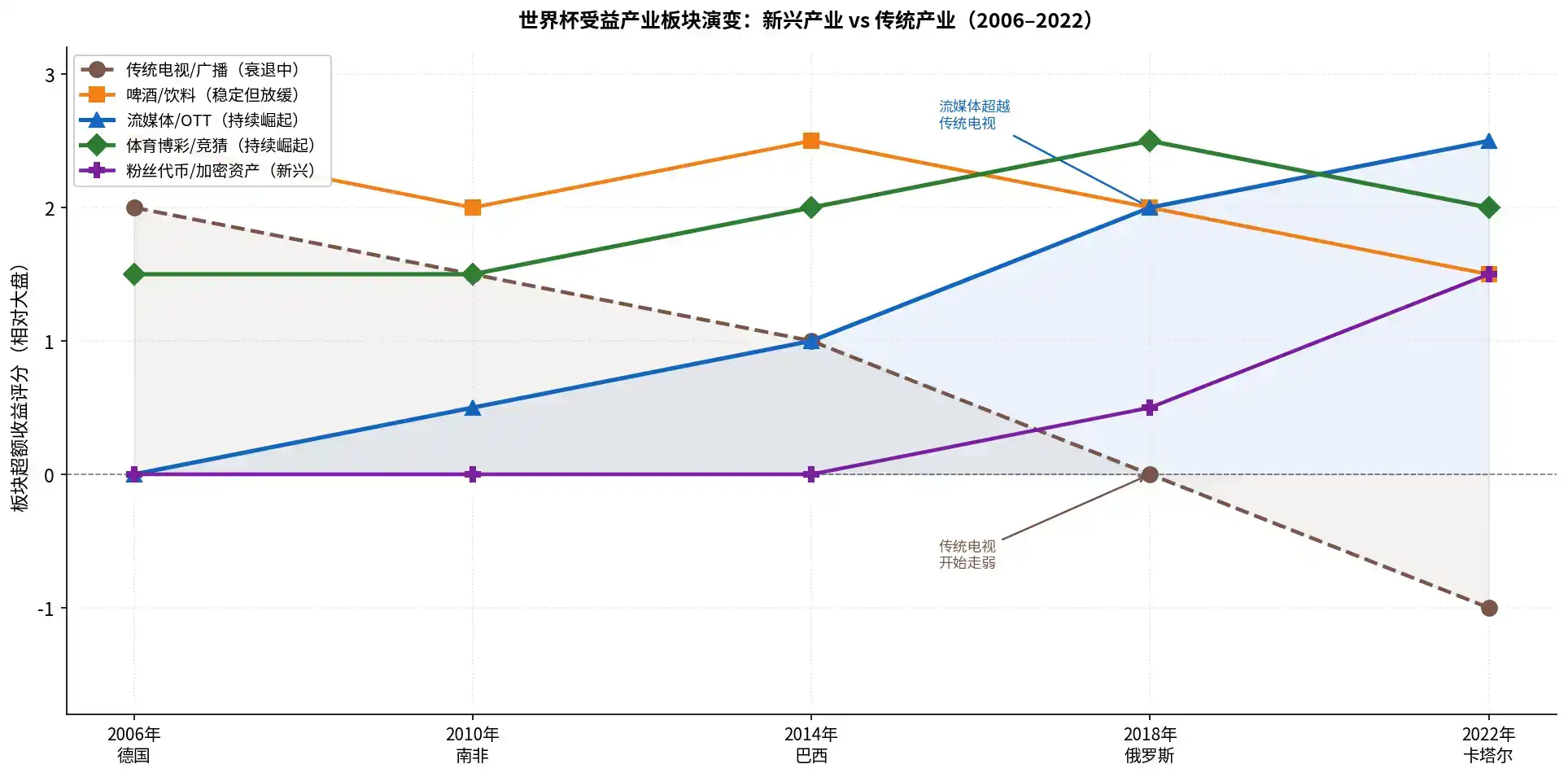
Streaming has officially replaced traditional TV as the core channel for watching the World Cup. The 2022 Qatar World Cup set a new record for streaming viewership. If you're bullish on World Cup viewership, perhaps more attention should be paid to streaming companies with exclusive broadcasting rights that can convert viewership into revenue.

Beer and sporting goods (like Nike, Adidas) are classic World Cup consumer categories, and their sector performance has been stable across past World Cups, but they also face slowing growth challenges in recent years.

Data from investment bank Jefferies shows that global beer sales grew by 3.6% during both the 2006 and 2010 World Cups. However, data from IWSR indicates that from 2014 to 2024, global overall beer consumption actually fell by 3%, with younger generations leaning more towards low-alcohol or alcohol-free beverages.

This means stocks like Budweiser and Tsingtao aren't hopeless, but new beverage stocks, new-style bars popular with young people, etc., might also perform well.

And compared to buying jerseys and shoes, young people might prefer trading cards, which can highlight advantages on-chain. For example, on the Base chain's fractionalized card platform Grail, the token price for Cristiano Ronaldo cards has surged nearly a hundredfold since May 5, and the token price for Kylian Mbappé cards has risen nearly 300-fold since May 5.

Sports betting is also a classic World Cup beneficiary sector, but the growth of prediction markets has been very rapid as well, though there aren't very good investment vehicles for prediction markets yet.

Conclusion

For a good World Cup viewing experience, stepping away from the market to relax is actually a good choice.

Israeli economists Guy Kaplanski and Haim Levy published a paper in the *Journal of Financial and Quantitative Analysis* in 2010 (cited over 261 times), which stated:

"The average return of the US stock market during World Cup periods is -2.58%, while the average return for all trading days in the same periods is +1.21%. The most natural investment strategy is to short stocks before the World Cup kicks off, which would further reinforce the stock price decline effect."

Although there's no famous instance of directly liquidating positions due to the World Cup, the World Cup window is indeed a period of poor liquidity. Regardless of the specific reasons for market movements being directly related to the World Cup, enjoying the World Cup itself might be the best defensive posture for facing a period of weaker market liquidity.


Perguntas relacionadas

QWhat is the 'World Cup Curse' in financial markets, and what does historical data show about its effect on major stock indices?

AThe 'World Cup Curse' refers to the observed phenomenon where global major stock markets tend to underperform and experience a significant drop in trading volume during the FIFA World Cup tournament. Historical data shows that during the 19 World Cups from 1950 to 2022, the S&P 500 index had an average expected return of approximately -1.5% to -2.11%, with negative returns recorded in 11 out of 19 instances (58%).

QAccording to the article, what are the two main reasons discussed for the existence of the 'World Cup Curse'?

AThe article discusses two main reasons: 1) Direct impact: Reduced market activity as investor attention shifts to matches. Studies show trading volume drops significantly, especially during games involving the home country. Also, negative investor sentiment following a national team's loss can lead to selling pressure. 2) Seasonal factors: Traditional summer World Cups (June-July) coincide with a historically weak seasonal period for stock markets, such as the 'Sell in May and go away' pattern, which naturally depresses performance.

QHow did the 2022 Qatar Winter World Cup serve as a 'controlled variable experiment' regarding the curse?

AThe 2022 Qatar World Cup, held in November-December, served as a 'controlled variable experiment' because it was the first World Cup not held in the traditional summer period. While the S&P 500 still fell 3.5% (primarily due to aggressive Fed rate hikes), the decline in trading volume (about -18%) was significantly smaller than the average drop seen during summer World Cups (-33%). This suggests the seasonal market weakness in summer is a major contributing factor to the curse.

QWhat shift in beneficiary industries for the World Cup has occurred over the past two decades, as mentioned in the article?

AOver the past two decades (2006-2026), the beneficiary industry landscape has shifted from traditional TV and television set manufacturers to streaming media platforms. While traditional TV sponsorships were key in 2006-2010, by 2022, streaming platforms with exclusive broadcasting rights became the core channel for viewership. Traditional sectors like beer and sportswear remain stable but face growth challenges, while new trends like tokenized digital collectibles (e.g., crypto-based player cards) have emerged.

QWhat investment strategy is suggested by the research from Guy Kaplanski and Haim Levy, and what is the article's concluding advice for investors during the World Cup?

AThe research by Kaplanski and Levy suggests a natural investment strategy of shorting stocks before the World Cup begins, based on the historically negative average returns during the tournament. The article's concluding advice is that, regardless of the direct causal link to the World Cup, the period is characterized by lower liquidity. Therefore, disengaging from the market to enjoy the World Cup itself might be the best defensive stance for investors.

Leituras Relacionadas

The Changing Landscape: What Are Crypto VCs Experiencing?

Title: The Shifting Landscape of Crypto Venture Capital The era of dedicated crypto venture capital funds is undergoing a significant transformation. Once essential for navigating the sector's complexity and high risk, these specialized funds are now facing an identity crisis as the market matures. This shift mirrors historical patterns in other specialized investment classes like cleantech and SPACs, where initial information advantages dissipate as technologies become mainstream and integrated into existing industry frameworks. The article argues that crypto is reaching a critical inflection point, transitioning from a "building phase" to an "integration phase." Major players like Stripe, BlackRock, and Visa now engage with crypto not for its novel mechanics but as a foundational financial infrastructure. Their needs—regulatory compliance, banking partnerships, distribution channels—align with traditional fintech, a domain easily understood by large, generalist funds like Sequoia and Founders Fund. This evolution creates a "barbell effect" within the VC landscape. On one end are massive, diversified platforms that can incorporate crypto as one vertical among many. On the other are small, nimble funds focused on niche, experimental projects. The middle ground—medium-sized dedicated crypto funds—is being squeezed out. Their typical fund size makes it impossible to generate sufficient returns solely from early-stage crypto bets, yet they cannot compete with giants for later-stage deals. Consequently, leading crypto-native firms like Paradigm and Framework Ventures are expanding into AI, robotics, and other sectors, driven partly by LP pressure for better returns amid a broader VC DPI crisis. Others, like Dragonfly and a16z, have narrowed their crypto focus predominantly to financial infrastructure like stablecoins, reframing the sector's core narrative. For crypto entrepreneurs, this consolidation presents challenges. While generalist funds offer larger checks and broader resources, crypto projects now compete fiercely with AI for attention and capital within these firms. Furthermore, the long-term, non-commercial foundational work that built the ecosystem—funded by dedicated crypto VCs—is less likely to attract generalist capital focused on direct returns. The conclusion is that "crypto investor" as a standalone category is becoming obsolete, akin to "internet investor." Crypto is becoming a baseline infrastructure layer. The future will see a barbell structure: large-scale growth financing handled by generalist funds, while pioneering, speculative projects are funded by small, specialized vehicles. The dedicated crypto funds of the 2017-2021 boom, which incubated core infrastructure, are giving way to this new, bifurcated reality.

Foresight NewsHá 14m

The Changing Landscape: What Are Crypto VCs Experiencing?

Foresight NewsHá 14m

As Consensus Accelerates, What Are Young Investors Betting On?

Title: As Consensus Forms Faster, What Are Young Investors Betting On? In the rapid evolution of tech investment, a new generation of young investors is navigating a landscape where AI, robotics, commercial aerospace, and quantum computing are advancing simultaneously. Traditional investment logic based on financial models is giving way to a need for deep technical understanding and the ability to act before industry consensus forms. An analysis of trends from the "WAIC FUTURE TECH" list of young investment leaders reveals key shifts in focus. The first major trend is the movement of AI from the digital screen into the physical world. Investment is shifting from large language models and chatbots towards embodied AI, robotics, AI hardware, and edge computing. While demonstrations generate excitement, the real challenge lies in achieving scalable, reliable, and cost-effective delivery in complex real-world environments like factories and logistics. Success depends not just on algorithms but on the integration of sensors, actuators, and control systems. Second, the competitive focus for large models is moving beyond raw capability toward building an "intelligence flywheel." The goal is to create self-reinforcing systems where user interaction generates data, improving the model, which in turn enhances the user experience and attracts more engagement. Companies that successfully embed AI into workflows to create these closed-loop systems can build lasting value that isn't easily erased by the next model upgrade. Third, facing a potential bottleneck in high-quality human-generated data, investors are looking at new underlying technologies. Reinforcement learning and self-play, as demonstrated by AlphaGo Zero, offer paths for AI to generate its own experience. Scientific foundation models, which aim to build general AI capabilities for fields like life sciences and materials discovery, represent a non-consensus direction that could unlock new frontiers of knowledge and data. Finally, in deep-tech areas like quantum computing, commercial aerospace, and space-based infrastructure, patient capital is essential. These fields have long, uncertain development and validation cycles involving complex engineering, supply chains, and regulations. Investment here requires a long-term view, focusing on foundational team capabilities and the eventual emergence of market demand, even if commercial returns are distant. Collectively, these trends illustrate how young investors are adapting to a new era. They are learning to make earlier, technically-informed judgments, balance hype with real-world viability, and provide the patient capital needed to build the deep-tech foundations of the future.

marsbitHá 42m

As Consensus Accelerates, What Are Young Investors Betting On?

marsbitHá 42m

Can Japan Buy Growth with AI? Will the Bond Market Believe It?

Japan's cabinet has introduced the 2026 Basic Policy on Economic and Fiscal Management and Reform, shifting its primary fiscal target. The new framework moves away from the traditional annual primary balance goal and instead prioritizes a stable reduction of the debt-to-GDP ratio. This change is tied to a strategy of increased "responsible proactive fiscal" spending, aiming to boost long-term growth through investments in strategic sectors like AI, semiconductors, energy, and robotics. The government estimates total public and private investment in 62 key technologies could exceed 370 trillion yen by 2040. The market reaction has been mixed and cautious. While equity markets may respond to policy signals, bond markets are focused on fiscal credibility. Concerns center on whether the weakening of the clear primary balance anchor could lead to looser fiscal discipline. If investors doubt that these strategic investments will generate sufficient productivity gains, tax revenue, and nominal growth to outpace rising interest costs, they may demand higher yields on Japanese Government Bonds (JGBs). Recent volatility in the yen and JGB yields, with the 10-year yield briefly reaching 2.9%, reflects this skepticism. The success of this new framework hinges on two factors: whether Japan can achieve a nominal growth rate consistently higher than its long-term interest rates, and whether future budgets demonstrate disciplined control over bond issuance. The government's narrative is that strategic investment is essential to break Japan's cycle of low growth, aging, and labor shortages. However, the bond market will continuously assess the credibility of this plan, pricing the risk that it may represent fiscal expansion rather than a viable growth strategy.

marsbitHá 1h

Can Japan Buy Growth with AI? Will the Bond Market Believe It?

marsbitHá 1h

Trading

Spot
活动图片




